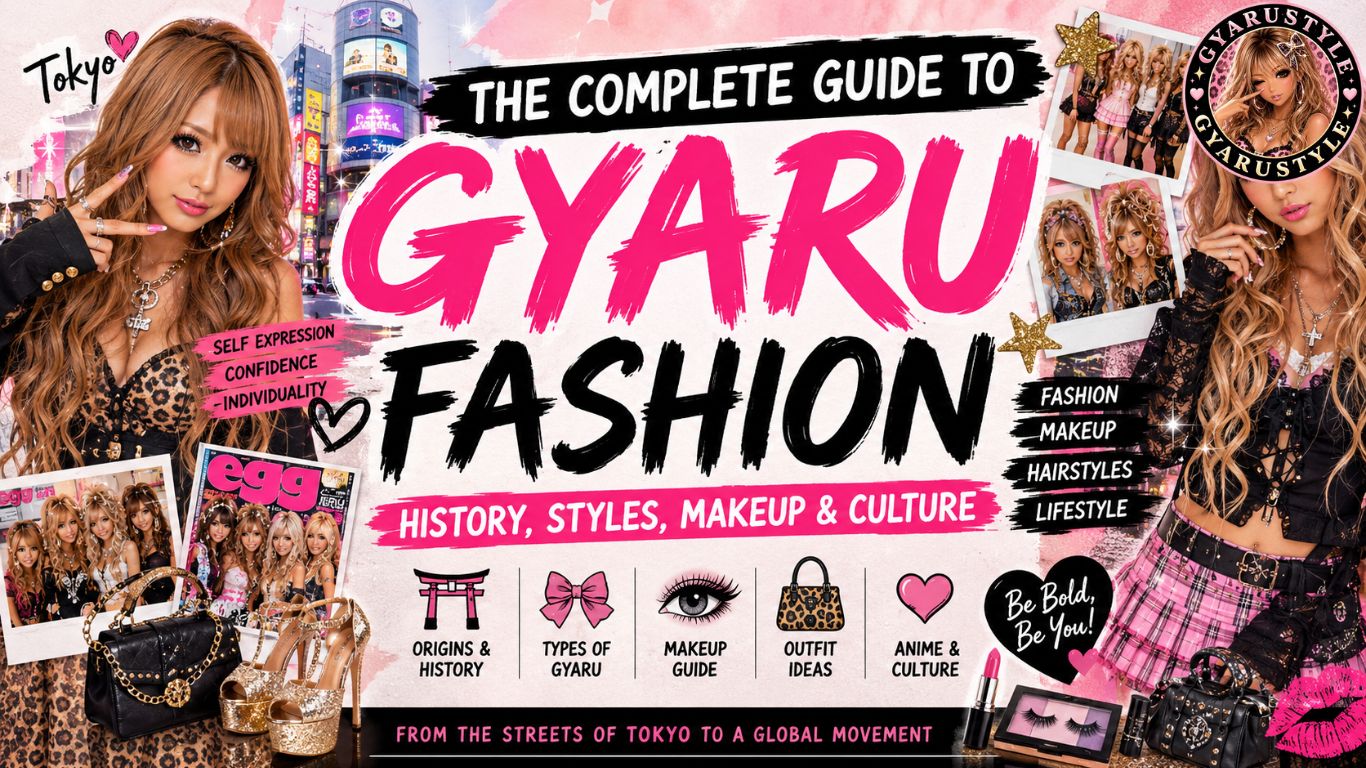
Few Japanese fashion movements have had the cultural impact, visual distinctiveness, and lasting influence of Gyaru fashion. Instantly recognizable for its bold makeup, dramatic hairstyles, trend-setting outfits, and rebellious attitude, Gyaru emerged as far more than a clothing trend. It became a statement of individuality, self-expression, and resistance to traditional expectations placed on young women in Japan.
For many people outside Japan, the first introduction to Gyaru comes through anime, social media, or photos of fashionable young women walking through Tokyo’s bustling shopping districts. While the aesthetic often attracts attention because of its striking appearance, the story behind Gyaru is much deeper. The movement reflects decades of changing beauty standards, youth culture, consumer trends, and social attitudes within Japanese society.
Today, Gyaru continues to evolve. Although its peak popularity occurred during the late 1990s and early 2000s, the style has experienced renewed interest through TikTok, Instagram, online fashion communities, and a new generation of enthusiasts who appreciate its creativity and confidence. Modern Gyaru incorporates both classic and contemporary influences, making it more accessible than ever for newcomers interested in exploring Japanese street fashion.
This guide explores everything you need to know about Gyaru fashion, including its origins, cultural significance, major substyles, makeup techniques, fashion trends, and modern revival. Whether you’re completely new to the subculture or looking to deepen your understanding, this comprehensive resource will help you navigate one of Japan’s most fascinating fashion movements.
What Is Gyaru?
At its core, Gyaru is a Japanese fashion subculture centered around individuality, confidence, glamour, and self-expression. Unlike many traditional fashion movements that emphasize conformity or subtle elegance, Gyaru embraces visibility. The style encourages experimentation with clothing, makeup, hairstyles, and accessories to create a highly personalized appearance.
The movement first gained traction among Japanese teenage girls who wanted to challenge conventional beauty ideals. During the rise of Gyaru, mainstream expectations often favored modest behavior, natural appearances, dark hair, and conservative fashion choices. Gyaru intentionally moved in the opposite direction by celebrating bold makeup, dyed hair, tanned skin, fashionable clothing, and expressive personalities.
One of the reasons Gyaru remains so influential is its flexibility. Rather than existing as a single fashion style, it functions as an umbrella term encompassing numerous substyles. Some versions emphasize glamour and luxury, while others focus on cute aesthetics, rock-inspired fashion, or dramatic makeup techniques. This diversity allows individuals to adapt Gyaru to their own tastes while still participating in the broader community.
Beyond appearance, Gyaru has always represented a mindset. Confidence, social freedom, and independence are recurring themes throughout the subculture’s history. Many longtime participants describe Gyaru as an attitude as much as a fashion choice. The emphasis on self-expression helped distinguish it from many other youth fashion movements and contributed to its enduring popularity.
Gyaru at a Glance
| Element | Description |
|---|---|
| Origin | Japan |
| Peak Popularity | Late 1990s–2000s |
| Core Values | Individuality, confidence, self-expression |
| Signature Features | Dramatic makeup, styled hair, trendy outfits |
| Major Substyles | Ganguro, Himekaji, Agejo, Onee, Rokku |
| Modern Status | Active global subculture |
Gyaru Meaning Explained
The word “Gyaru” comes from the English word “gal.” The term gained popularity in Japan during the 1970s after a jeans advertising campaign used the phrase “Gals.” Over time, Japanese youth adopted and transformed the term into “Gyaru,” giving it a unique cultural meaning that extended far beyond its English origins.
While “gal” in English simply refers to a girl or young woman, Gyaru developed into a distinct identity associated with fashion-forward youth culture. By the 1990s, the word no longer described just a demographic group—it represented an entire lifestyle characterized by trend awareness, social confidence, and distinctive aesthetics.
Understanding the meaning of Gyaru requires recognizing its cultural context. The subculture emerged during a period when many young Japanese women sought greater freedom in how they presented themselves. Gyaru offered an alternative to traditional expectations, encouraging experimentation and individuality in both appearance and behavior.
This cultural significance explains why many enthusiasts resist reducing Gyaru to makeup or clothing alone. While fashion is certainly important, the deeper meaning of Gyaru involves embracing self-expression and rejecting the idea that everyone should look or behave the same way. That philosophy continues to attract followers today, even as specific trends and styles evolve.
History of Gyaru Fashion
The history of Gyaru is a fascinating story of cultural transformation, youth rebellion, and fashion innovation. Although many people associate Gyaru with the 1990s and 2000s, its roots can be traced back several decades earlier.
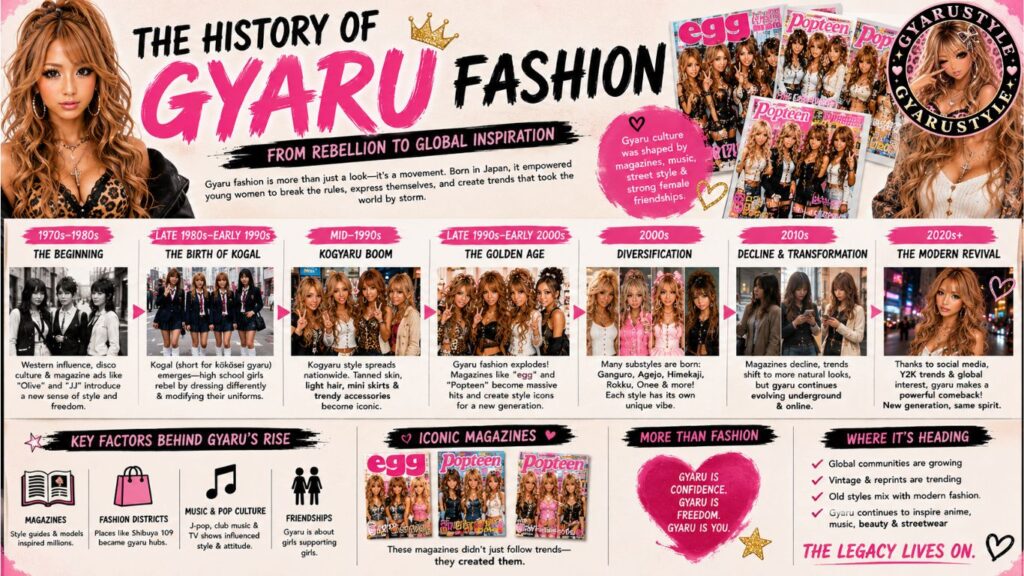
Japan experienced significant economic growth during the 1970s and 1980s, leading to increased exposure to Western fashion, media, and beauty standards. Young people became increasingly interested in international trends, particularly those originating from the United States and Europe. Influences such as blonde hair, tanned skin, designer clothing, and celebrity culture began appearing within Japanese youth fashion circles.
As these influences spread, a growing number of young women started experimenting with styles that contrasted sharply with traditional Japanese beauty ideals. Instead of emphasizing pale skin and understated elegance, they embraced fashionable clothing, dyed hair, and bold accessories. These early experiments laid the foundation for what would eventually become Gyaru culture.
The rise of large shopping centers and youth-oriented fashion districts further accelerated the movement. Areas such as Shibuya 109 became gathering places for trend-conscious young consumers eager to discover the latest styles. Fashion magazines amplified these trends, creating a feedback loop between influencers, brands, and everyday enthusiasts.
The Kogal and Kogyaru Era
The 1990s marked a turning point for Gyaru. During this period, Kogal and Kogyaru styles became highly visible throughout Japan. These fashion trends often involved modifying school uniforms with shorter skirts, loose socks, fashionable accessories, and carefully styled hair.
Although media coverage frequently focused on the visual aspects of Kogal culture, the phenomenon represented broader social changes. Young women were increasingly interested in defining their own identities rather than strictly following established norms. Fashion became one of the most visible ways to communicate that independence.
Magazines dedicated to youth fashion helped popularize these styles nationwide. Readers eagerly copied outfits, hairstyles, and makeup looks featured in monthly issues, contributing to the rapid growth of the subculture.
The Golden Age of Gyaru
The late 1990s and early 2000s are often considered the golden age of Gyaru fashion. During this period, the movement expanded into numerous substyles, each with its own aesthetic identity.
Fashion magazines became cultural institutions. Dedicated publications showcased emerging trends, interviewed influential figures, and provided styling guides that shaped the tastes of an entire generation. Popular models became celebrities, and their fashion choices often influenced consumer behavior across Japan.
The period also saw the rise of iconic substyles such as Ganguro, Agejo, and Himekaji. Each introduced unique interpretations of the Gyaru philosophy, proving that the subculture could evolve while maintaining its core emphasis on individuality and self-expression.
For many fashion historians, this era represents one of the most influential youth fashion movements in modern Japanese history. Its impact extended beyond clothing, influencing beauty trends, consumer culture, media representation, and social attitudes.
Decline and Modern Revival
By the early 2010s, Gyaru’s mainstream popularity began to decline. Changing fashion preferences, economic shifts, and the rise of minimalist aesthetics reduced the visibility of many traditional Gyaru styles. Some fashion magazines closed, and certain brands disappeared from the market.
However, the story did not end there.
Social media platforms introduced new opportunities for niche communities to connect. Former enthusiasts began sharing archival photos, styling guides, and historical content online. At the same time, younger generations discovered Gyaru through YouTube, Instagram, TikTok, and anime-inspired fashion communities.
Rather than disappearing, Gyaru adapted. Modern interpretations often blend classic elements with contemporary fashion trends, creating fresh styles that appeal to today’s audiences. This revival demonstrates the enduring appeal of a movement built on creativity, confidence, and individuality.
Why Did Gyaru Become Popular?
Understanding Gyaru’s popularity requires looking beyond clothing and makeup. The movement succeeded because it resonated with broader social and cultural changes occurring in Japan.
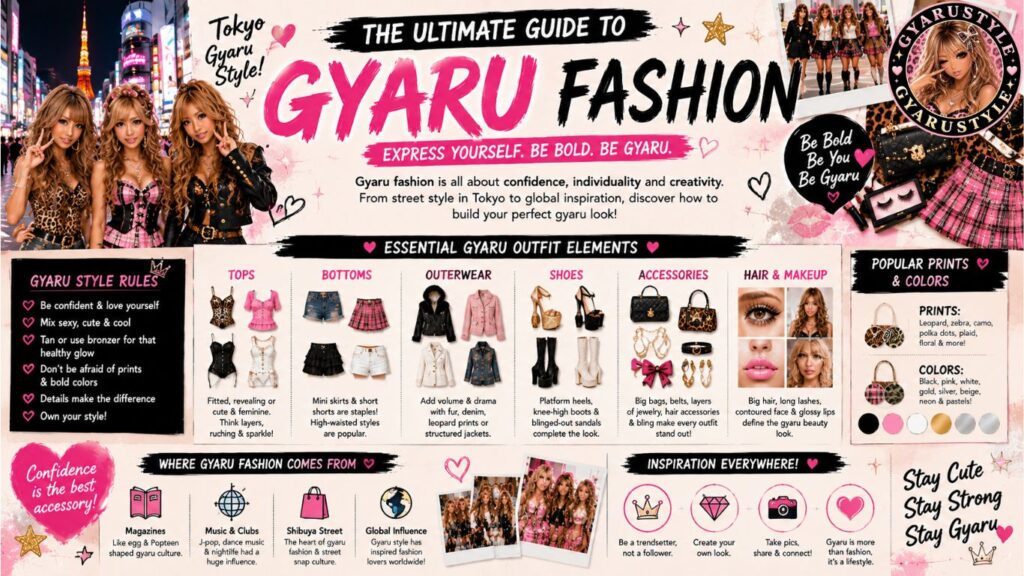
Many young women felt constrained by traditional expectations regarding appearance, behavior, and lifestyle choices. Gyaru offered an alternative vision of femininity—one that emphasized confidence, visibility, and personal freedom. Instead of trying to fit established standards, participants were encouraged to create their own identities.
Fashion also became increasingly accessible during Japan’s economic boom years. Young consumers had greater purchasing power, and brands responded by creating products specifically designed for emerging youth markets. Trend-focused shopping destinations became cultural hubs where fashion enthusiasts could discover new styles and connect with like-minded individuals.
Media played a crucial role as well. Fashion magazines transformed ordinary models into influential trendsetters. Readers could follow styling advice, makeup tutorials, and shopping recommendations while participating in a larger fashion community. This constant flow of inspiration helped sustain the movement’s momentum for years.
Perhaps most importantly, Gyaru made fashion fun. The subculture encouraged experimentation, creativity, and self-expression at a level rarely seen in mainstream fashion at the time. Participants could continuously reinvent their appearance while remaining part of a supportive community that celebrated individuality.
Even today, these same qualities continue to attract new followers. In a world increasingly shaped by social media and personal branding, the confidence and creativity associated with Gyaru remain surprisingly relevant. While the styles themselves have evolved, the core message of self-expression continues to resonate with fashion enthusiasts around the globe.
Types of Gyaru Fashion
One of the biggest misconceptions about Gyaru fashion is that it refers to a single look. In reality, Gyaru is an umbrella subculture that contains numerous styles, each with its own aesthetics, beauty standards, fashion influences, and social identity. While all Gyaru substyles share a foundation of self-expression and trend-conscious styling, they can appear dramatically different from one another.
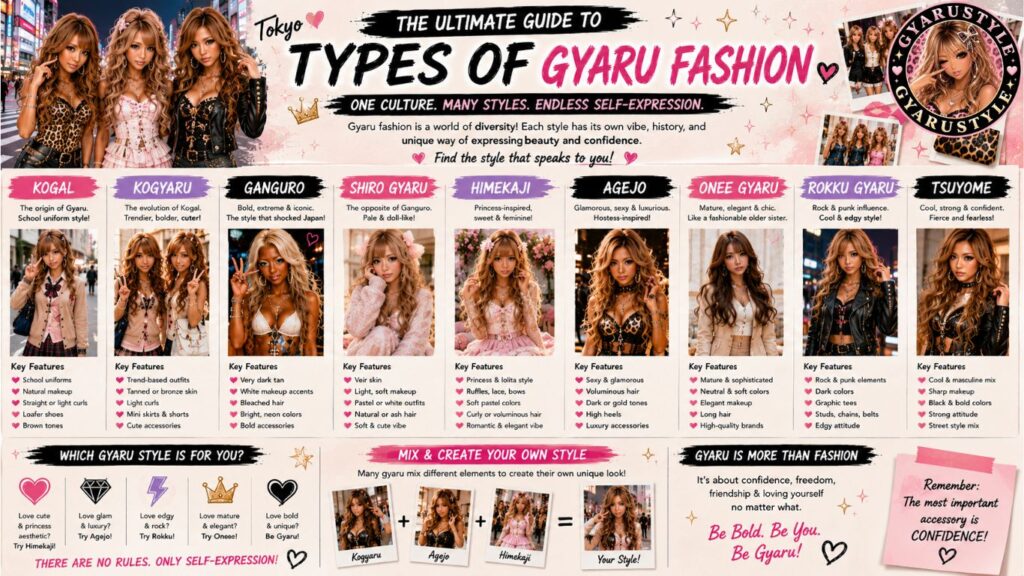
This diversity is one reason Gyaru remained relevant for so many years. As fashion trends changed, new substyles emerged while older ones evolved. Some emphasized luxury and glamour, others focused on cute femininity, while some pushed beauty standards to their most extreme forms. Rather than forcing members into a rigid mold, the subculture encouraged experimentation and personal interpretation.
For beginners, understanding these substyles is essential because choosing a direction makes building outfits, selecting makeup techniques, and developing a personal aesthetic much easier. Someone drawn to princess-inspired elegance may find Himekaji appealing, while those who prefer edgy fashion might gravitate toward Rokku Gyaru. The beauty of the movement lies in its flexibility—there is no single “correct” way to be Gyaru.
The following styles represent some of the most influential and recognizable branches of the Gyaru fashion family. Together, they illustrate how one youth movement evolved into a rich and diverse cultural phenomenon.
Kogal Explained
Kogal is often considered one of the foundational styles that helped bring Gyaru into the mainstream during the 1990s. The term generally refers to high school girls who modified their uniforms and incorporated fashion-forward elements into their everyday appearance. While media coverage often sensationalized the movement, Kogal played a significant role in shaping modern Japanese youth fashion.
The classic Kogal look featured shortened skirts, oversized cardigans, loose socks, trendy handbags, and carefully styled hair. These modifications transformed standard school uniforms into highly personalized fashion statements. The style reflected a growing desire among young women to express individuality while navigating the expectations of school life.
What made Kogal particularly influential was its accessibility. Unlike some later Gyaru substyles that required extensive makeup or expensive clothing, Kogal could be achieved through creative styling and small adjustments. This allowed the look to spread rapidly among teenagers throughout Japan.
Beyond aesthetics, Kogal represented a cultural shift. It signaled a generation increasingly willing to challenge traditional expectations and define its own identity through fashion. Many trends that later became associated with broader Gyaru culture can be traced back to the creativity and confidence of the Kogal movement.
Kogyaru Explained
The term Kogyaru is closely related to Kogal and is often used interchangeably in discussions of 1990s Japanese youth fashion. However, Kogyaru generally refers to younger participants who embraced the emerging Gyaru aesthetic through school-inspired fashion, trendy accessories, and increasingly bold beauty choices.
As the style evolved, Kogyaru fashion began incorporating dyed hair, tanned skin, designer items, and fashion magazine influences. What started as modified school uniforms gradually expanded into a broader lifestyle centered around consumer culture and trend awareness.
Fashion magazines frequently highlighted Kogyaru trends, helping transform local styles into nationwide phenomena. Young readers closely followed popular models and influencers, recreating outfits and makeup looks featured in magazine spreads. This relationship between media and fashion played a major role in accelerating the growth of the subculture.
Today, Kogyaru remains an important chapter in Gyaru history because it demonstrates how youth culture can evolve from relatively simple fashion modifications into a powerful social movement. Many of the beauty standards, shopping habits, and style philosophies associated with modern Gyaru emerged during this formative period.
Ganguro Explained
Among all Gyaru substyles, Ganguro is arguably the most recognizable and controversial. Emerging in the late 1990s, Ganguro deliberately challenged conventional Japanese beauty ideals through dramatic tanning, bleached hair, heavy makeup, and highly stylized fashion.
At a time when pale skin was widely considered a beauty standard in Japan, Ganguro enthusiasts embraced deep tans as a form of self-expression. Combined with light-colored hair, white eye makeup, exaggerated lashes, and colorful clothing, the resulting appearance stood in sharp contrast to mainstream expectations.
For outsiders, Ganguro was often misunderstood. Media portrayals frequently focused on its shock value without examining the cultural motivations behind the movement. Many participants viewed the style as a rejection of restrictive beauty standards and a celebration of individuality. The dramatic aesthetic served as a visible statement that challenged conventional ideas of attractiveness.
Despite criticism, Ganguro became one of the most influential chapters in Gyaru history. Its bold visual language continues to inspire fashion enthusiasts, makeup artists, and cultural researchers interested in youth rebellion and beauty culture.
Key Features of Ganguro
| Feature | Description |
|---|---|
| Skin Tone | Deep artificial tan |
| Hair Color | Blonde, silver, orange, or light brown |
| Makeup | Heavy white highlights and dramatic eyes |
| Fashion | Bright colors and bold accessories |
| Goal | Maximum visual impact |
Shiro Gyaru vs Ganguro
While Ganguro embraced dramatic tanning, Shiro Gyaru developed as a contrasting aesthetic that maintained many traditional Gyaru fashion principles while avoiding dark skin tones. The word “Shiro” means white, reflecting the style’s preference for lighter complexions.
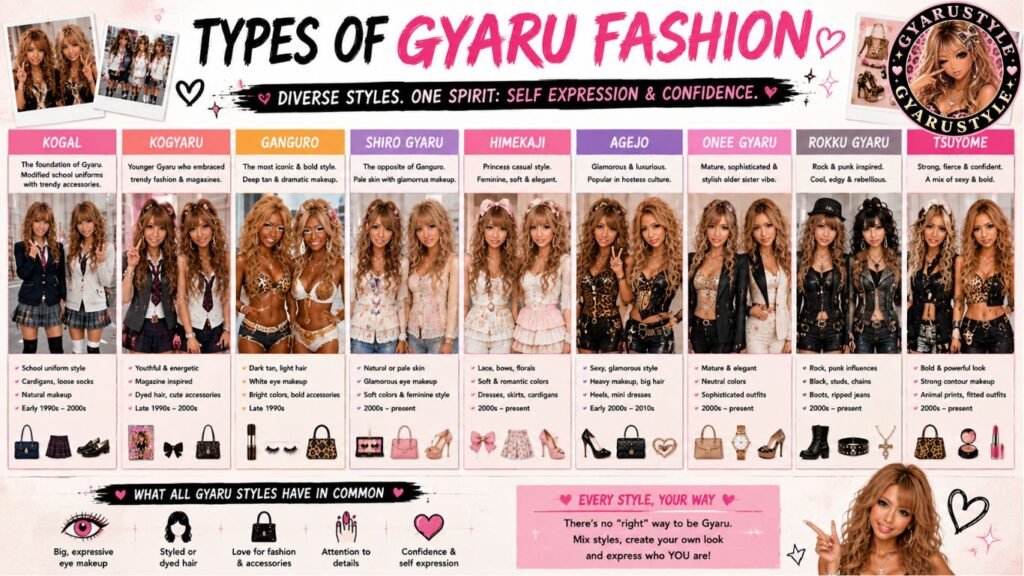
Shiro Gyaru retains many hallmark elements of the subculture, including enlarged eye makeup, false lashes, fashionable clothing, and carefully styled hair. However, the overall appearance tends to look softer and more polished compared to Ganguro’s intentionally extreme aesthetic.
The contrast between these two styles demonstrates the diversity within Gyaru culture. Both celebrate fashion, beauty, and self-expression, yet they achieve those goals through very different visual approaches. This flexibility has allowed the movement to appeal to a wider audience over time.
Comparison Table
| Feature | Shiro Gyaru | Ganguro |
|---|---|---|
| Skin Tone | Natural or light | Deep tan |
| Makeup | Glamorous and polished | Dramatic and high-contrast |
| Popularity Today | Higher | Niche |
| Beginner Friendly | Yes | More challenging |
| Visual Impact | Moderate | Extreme |
Himekaji Fashion Guide
Himekaji combines the elegance of princess-inspired fashion with the relaxed comfort of casual wear. The name blends “Hime” (princess) and “Kaji” (casual), creating a style that feels feminine, romantic, and approachable.
Unlike Ganguro’s dramatic appearance, Himekaji focuses on soft colors, delicate details, floral prints, lace accents, and sophisticated silhouettes. The style often incorporates cardigans, dresses, skirts, bows, and carefully coordinated accessories. The overall effect is polished without appearing overly formal.
Many fashion enthusiasts are drawn to Himekaji because it translates easily into everyday wardrobes. While still distinctly connected to Gyaru culture, the style can be adapted for casual outings, social events, and even certain professional environments. This versatility helped make it one of the most commercially successful Gyaru substyles.
Himekaji also influenced numerous Japanese fashion brands that catered to consumers seeking a balance between femininity and practicality. Even today, many modern Japanese fashion trends continue to borrow elements from this beloved aesthetic.
Agejo Gyaru Guide
Agejo emerged during the 2000s and became synonymous with luxury, glamour, and nightlife-inspired fashion. The style gained significant popularity among women working in Japan’s hostess industry, although its influence eventually expanded far beyond those circles.
Agejo fashion emphasizes sophistication and visual impact. Common elements include fitted dresses, animal prints, high heels, elaborate hairstyles, rhinestone accessories, and highly polished makeup. Compared to other Gyaru styles, Agejo often projects a more mature and glamorous image.
The makeup associated with Agejo typically features dramatic eye enlargement techniques, contouring, false lashes, and glossy lips. Hair is equally important, with voluminous curls and elaborate styling frequently serving as focal points of the overall look.
What distinguishes Agejo from many other substyles is its emphasis on luxury aesthetics. The goal is not simply to look fashionable but to create an image of confidence, elegance, and sophistication. This focus helped Agejo become one of the defining looks of the late-2000s Gyaru era.
Onee Gyaru Style
Onee Gyaru represents a mature evolution of traditional Gyaru fashion. The word “Onee” can be interpreted as “older sister,” reflecting a style that appeals to women seeking a more refined and adult appearance.
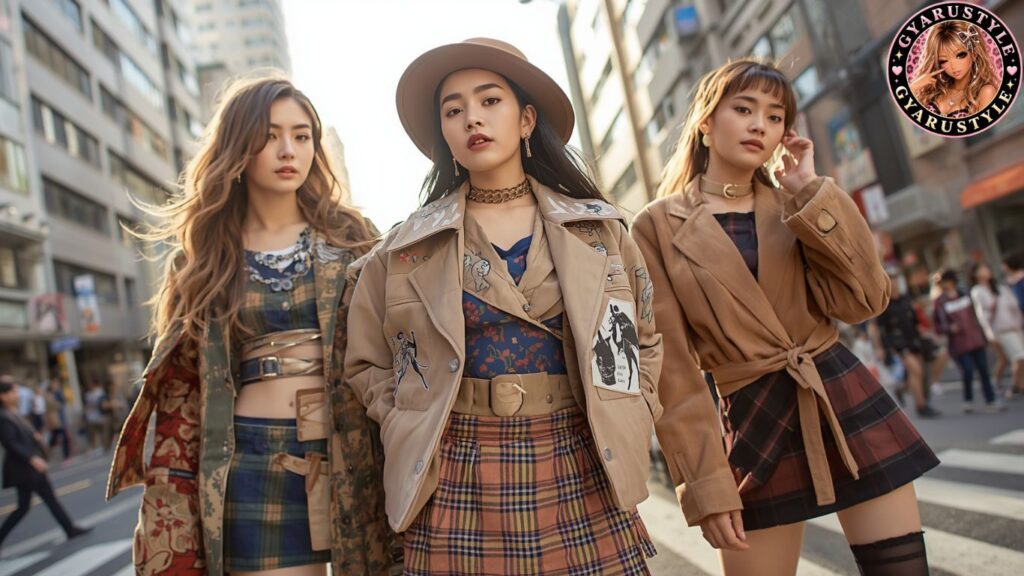
While youthful energy remains part of the aesthetic, Onee Gyaru tones down many of the exaggerated elements associated with earlier substyles. Makeup becomes more subtle, clothing silhouettes become more sophisticated, and color palettes often shift toward neutral or elegant tones.
Onee Gyaru proved particularly popular among women transitioning from teenage fashion into adult life. It allowed enthusiasts to maintain their connection to Gyaru culture while adapting their appearance to changing lifestyles and professional responsibilities.
Today, many contemporary interpretations of Gyaru draw inspiration from Onee styling because it offers a practical balance between fashion-forward expression and everyday wearability.
Rokku Gyaru Explained
Rokku Gyaru blends traditional Gyaru aesthetics with rock and punk influences. The result is a bold, edgy style characterized by darker color palettes, leather elements, graphic prints, studs, and statement accessories.
Unlike the sweet femininity of Himekaji or the luxury focus of Agejo, Rokku embraces a rebellious attitude. Black clothing, ripped fabrics, chunky footwear, and dramatic eye makeup are common features. The style often incorporates influences from Western rock music and alternative fashion scenes.
Despite its darker aesthetic, Rokku remains unmistakably Gyaru. Enlarged eyes, carefully styled hair, and fashion-conscious coordination continue to play important roles. Rather than abandoning the subculture’s core values, Rokku reinterprets them through a more aggressive and unconventional lens.
This fusion of influences demonstrates the adaptability of Gyaru culture and its ability to absorb inspiration from multiple fashion movements.
Tsuyome Gyaru
Tsuyome, which roughly translates to “strong style,” emphasizes confidence, glamour, and bold visual presentation. The aesthetic sits somewhere between Ganguro’s dramatic impact and Onee Gyaru’s sophistication.
Strong contouring, defined eye makeup, fashionable clothing, and confident styling choices characterize the look. Animal prints, fitted silhouettes, and statement accessories frequently appear in Tsuyome wardrobes.
The style appeals to individuals who enjoy commanding attention without fully embracing the extreme aesthetics associated with historical Ganguro fashion. It offers a powerful visual presence while remaining adaptable to modern fashion environments.
Many contemporary influencers who identify with Gyaru culture incorporate Tsuyome elements into their personal styling, making it one of the most relevant substyles in today’s fashion landscape.
Gyaruo: Male Gyaru Fashion
Although Gyaru is often associated with women, male participants known as Gyaruo have been part of the subculture for decades. Gyaruo developed alongside female Gyaru fashion and embraced many of the same values, including individuality, trend awareness, and bold self-expression.
Classic Gyaruo fashion often featured tanned skin, styled hair, designer-inspired clothing, fitted silhouettes, and attention-grabbing accessories. Hairstyles played an especially important role, with elaborate cuts and styling techniques helping define the overall look.
Like female Gyaru fashion, Gyaruo evolved over time. Modern interpretations tend to blend traditional elements with contemporary streetwear, luxury fashion, and influencer culture. While less visible internationally, Gyaruo remains an important reminder that Gyaru has always been a broader cultural movement rather than a style limited to one gender.
The existence of Gyaruo also highlights one of Gyaru’s most enduring strengths: its ability to adapt, evolve, and welcome diverse forms of self-expression while remaining true to its core philosophy of individuality and confidence.
Japanese Gyaru Fashion Explained
Fashion is the most visible aspect of Gyaru culture, but reducing Gyaru to clothing alone misses what makes the style so influential. At its heart, Gyaru fashion is about creating a look that feels intentional, expressive, and unmistakably personal. While trends have changed over the decades, one principle has remained constant: a Gyaru outfit should communicate confidence before anything else.
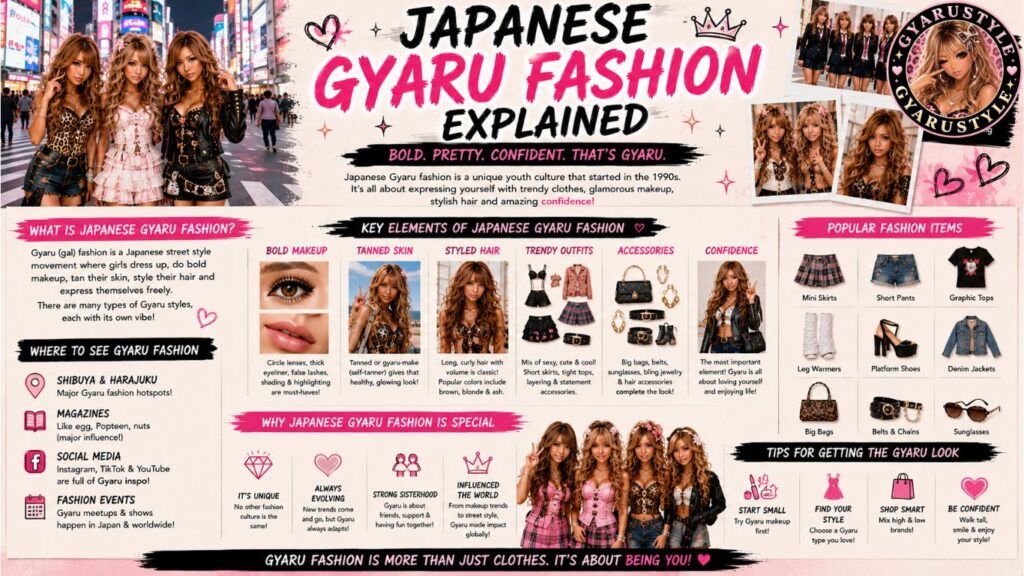
Unlike minimalist fashion movements that prioritize blending in, Gyaru encourages standing out. Colors, textures, accessories, hairstyles, and makeup work together to create a coordinated visual identity. Even when individual pieces appear simple, the overall styling is often highly deliberate. A fitted jacket, statement handbag, platform shoes, and carefully chosen jewelry can transform an ordinary outfit into something distinctly Gyaru.
One reason Japanese Gyaru fashion became so influential is its adaptability. The style evolved alongside changing trends rather than remaining frozen in a specific era. During the late 1990s, many looks emphasized bold experimentation and dramatic silhouettes. By the mid-2000s, luxury-inspired styles gained popularity. Today’s Gyaru enthusiasts often combine classic elements with contemporary fashion, creating outfits that feel both authentic and modern.
This ability to evolve has helped Gyaru remain relevant long after many other youth fashion trends disappeared. Whether someone prefers glamorous Agejo fashion, romantic Himekaji styling, or edgy Rokku influences, the core philosophy remains the same: fashion should be a form of self-expression rather than a set of rigid rules.
Core Fashion Principles
Although Gyaru encompasses numerous substyles, several foundational principles appear throughout the movement. Understanding these principles is often more important than memorizing specific trends because they help explain why certain outfits feel authentically Gyaru.
The first principle is intentional styling. Gyaru fashion rarely looks accidental. Every piece contributes to a cohesive image, whether the goal is elegance, glamour, sweetness, or rebellion. Hair, makeup, clothing, and accessories work together rather than competing for attention.
The second principle is confidence. Many iconic Gyaru looks are bold enough that they require self-assurance to wear successfully. This confidence is often considered just as important as the clothing itself. Longtime community members frequently emphasize attitude as a defining characteristic of the subculture.
The third principle is trend awareness. Historically, Gyaru communities closely followed emerging fashion movements, adapting and reinterpreting them through a uniquely Gyaru lens. This willingness to evolve prevented the style from becoming stagnant and continues to influence modern interpretations today.
Signature Clothing Pieces
While every substyle has its own wardrobe staples, several items have become closely associated with Gyaru fashion over the years.
| Clothing Item | Why It’s Popular |
|---|---|
| Mini skirts | Creates youthful, fashion-forward silhouettes |
| Platform shoes | Adds height and visual impact |
| Fitted dresses | Common in Agejo and Onee styles |
| Oversized sweaters | Popular in casual Gyaru looks |
| Faux fur pieces | Frequently used in winter styling |
| Statement handbags | Adds luxury-inspired elements |
| Knee-high boots | Common across multiple substyles |
| Layered accessories | Enhances personalization |
These pieces are not mandatory, but they appear frequently throughout Gyaru fashion history and continue to influence modern styling.
Gyaru Outfit Guide
One of the most exciting aspects of entering the Gyaru world is building outfits. Unlike some fashion subcultures that require strict adherence to specific rules, Gyaru offers considerable flexibility. The challenge lies not in following a formula but in learning how to combine clothing, accessories, hair, and makeup into a cohesive look.
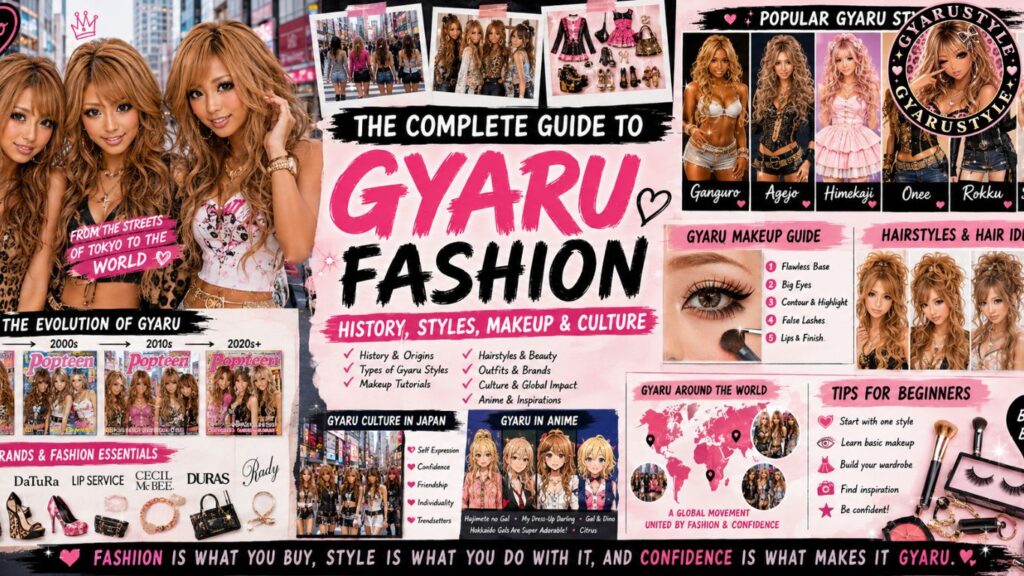
For beginners, it is often tempting to purchase dramatic pieces immediately. However, experienced Gyaru enthusiasts typically recommend building a foundation first. A small collection of versatile clothing can support multiple outfit combinations and help newcomers discover which substyle suits them best.
As confidence grows, styling becomes increasingly sophisticated. Many advanced Gyaru looks appear effortless but actually involve careful consideration of proportions, textures, colors, and accessories. Understanding these relationships helps elevate an outfit from simply fashionable to unmistakably Gyaru.
The most successful outfits balance individuality with cohesion. Every element should contribute to a unified visual story rather than feeling disconnected. This principle applies whether the outfit is inspired by classic Ganguro, elegant Onee fashion, or contemporary social media trends.
Best Gyaru Outfits for Beginners
Newcomers often assume they need a complete wardrobe overhaul to start dressing in Gyaru fashion. In reality, a few strategic pieces can create surprisingly authentic looks.
A beginner-friendly outfit might include a fitted top, short skirt, knee-high boots, oversized cardigan, and carefully chosen accessories. Combined with basic Gyaru-inspired makeup and styled hair, these pieces can create a recognizable aesthetic without requiring a large financial investment.
Neutral color palettes are often easier to work with initially because they allow experimentation with accessories and makeup. Once comfortable, beginners can gradually incorporate bolder colors, prints, and statement pieces.
One of the most common mistakes among newcomers is focusing exclusively on clothing while neglecting hair and makeup. In Gyaru culture, styling is holistic. Even a simple outfit can feel authentic when paired with appropriate beauty techniques and confident presentation.
Intermediate Styling Ideas
As experience grows, many enthusiasts begin experimenting with more specialized substyles. This stage often involves learning how to coordinate colors, layer clothing effectively, and incorporate trend-specific details.
Intermediate stylists frequently start mixing influences from multiple substyles. For example, someone might combine Himekaji-inspired femininity with modern Onee sophistication. These combinations create personalized looks while remaining rooted in Gyaru culture.
Accessories become increasingly important at this stage. Jewelry, handbags, belts, sunglasses, and hairpieces can dramatically alter the mood of an outfit. Learning how to use accessories strategically is often what separates beginner looks from more polished styling.
Another valuable skill is understanding balance. If an outfit features dramatic clothing, softer accessories may create harmony. Conversely, simpler outfits can benefit from bold statement pieces that draw attention and reinforce the overall aesthetic.
Advanced Gyaru Coordination
Advanced Gyaru styling requires a deep understanding of proportion, fashion history, and visual storytelling. Experienced enthusiasts often create outfits that reference specific eras, magazines, or substyles while incorporating modern influences.
At this level, coordination extends beyond individual pieces. Hair color, nail art, makeup style, footwear, and even posture contribute to the overall presentation. The goal is to create a complete fashion identity rather than simply assembling attractive clothing.
Advanced stylists also develop a strong understanding of context. They know how to adapt Gyaru fashion for different seasons, occasions, and environments without losing the subculture’s distinctive spirit. This adaptability is one reason many longtime enthusiasts remain involved in the community for years.
How to Dress Like a Gyaru Girl
For many readers, the ultimate question is practical: how do you actually start dressing like a Gyaru? While there is no universal formula, a structured approach makes the process significantly easier.
The first step is choosing a substyle. Attempting to emulate every branch of Gyaru simultaneously often creates confusion. Beginners should explore images, magazines, and community content to identify the aesthetics they find most appealing.
The second step is building a wardrobe gradually. Rather than purchasing dozens of items immediately, focus on versatile staples that can support multiple outfits. This approach reduces costs while allowing personal preferences to develop naturally.
The third step involves learning the beauty aspects of the culture. Makeup and hairstyles are central to Gyaru identity. Even simple techniques can dramatically increase authenticity when combined with appropriate clothing.
Step-by-Step Beginner Roadmap
- Choose a Gyaru substyle.
- Build a foundation wardrobe.
- Learn basic Gyaru makeup.
- Practice hairstyling techniques.
- Add accessories gradually.
- Follow modern Gyaru creators for inspiration.
- Experiment and refine your personal style.
The final step—and perhaps the most important—is developing confidence. Gyaru has always celebrated individuality. The goal is not perfect imitation but authentic self-expression through fashion.
Seasonal Gyaru Fashion
One reason Gyaru remains practical despite its reputation for dramatic styling is its adaptability across seasons. Successful enthusiasts adjust fabrics, layers, and accessories while maintaining the core aesthetic.
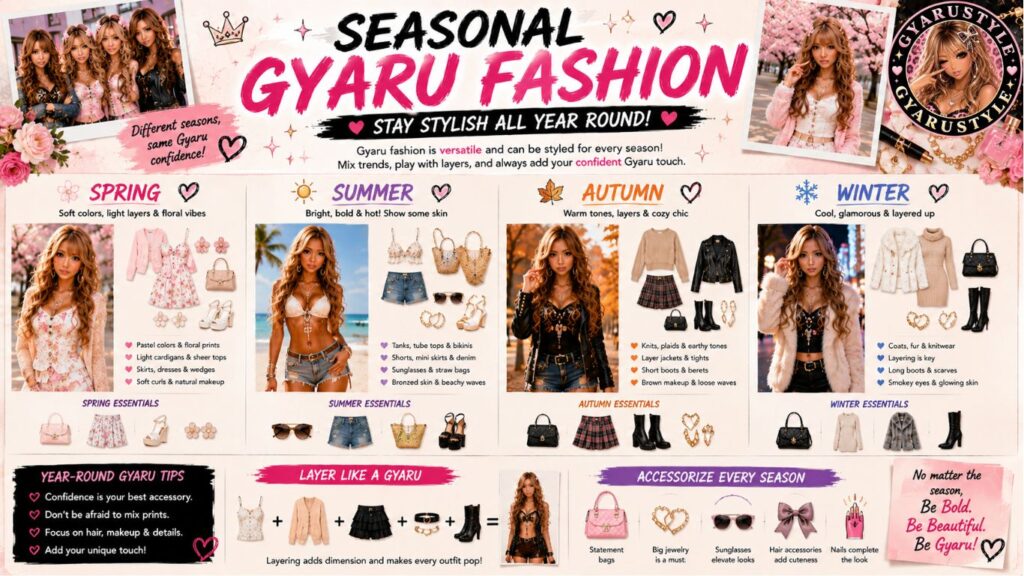
Summer Gyaru fashion often emphasizes lightweight fabrics, bright colors, and playful accessories. Mini skirts, shorts, fitted tops, and sandals frequently appear during warmer months. Many classic summer looks embrace a carefree, energetic atmosphere that reflects the subculture’s youthful roots.
Winter styling presents different challenges but also creates opportunities for creative layering. Faux fur jackets, knee-high boots, oversized sweaters, scarves, and textured accessories become important components of seasonal outfits. Rather than minimizing visual impact, winter Gyaru often amplifies it through luxurious materials and dramatic silhouettes.
Seasonal adaptation demonstrates the practicality of Gyaru fashion. Rather than existing solely as a niche aesthetic, the style can function throughout the year when approached thoughtfully.
Summer vs Winter Gyaru
| Element | Summer Gyaru | Winter Gyaru |
|---|---|---|
| Fabrics | Lightweight | Layered and textured |
| Footwear | Sandals, wedges | Boots, platforms |
| Colors | Bright and vibrant | Rich and dramatic |
| Accessories | Sunglasses, jewelry | Fur, scarves, hats |
| Styling Focus | Playful energy | Glamorous layering |
Gyaru Clothing Brands
Throughout Gyaru history, specific fashion brands played major roles in shaping trends and defining substyles. These companies did more than sell clothing—they helped establish visual identities for entire generations of fashion enthusiasts.
Brands associated with Himekaji often emphasized romantic details, soft colors, and feminine silhouettes. Agejo-focused labels leaned toward glamorous designs, luxury-inspired aesthetics, and eye-catching embellishments. Meanwhile, Rokku-inspired brands incorporated darker palettes and alternative influences.
Many classic Gyaru brands achieved cult status because they perfectly captured the spirit of their respective eras. Vintage pieces from these labels remain highly sought after by collectors and longtime enthusiasts.
For modern readers, however, authenticity matters less than understanding the design principles behind these brands. Contemporary fashion retailers often offer similar silhouettes and aesthetics, making it possible to create convincing Gyaru outfits without hunting for rare archival pieces.
Where to Buy Gyaru Fashion in the USA
Finding Gyaru fashion in the United States is much easier today than it was a decade ago. Global shipping, online marketplaces, and social media communities have expanded access to Japanese fashion significantly.
Many enthusiasts source clothing through Japanese resale platforms, international fashion retailers, and secondhand marketplaces. Vintage pieces can offer historical authenticity, while modern alternatives provide affordability and convenience.
When shopping, focus on silhouettes and styling potential rather than labels alone. A well-coordinated outfit built from accessible pieces often looks more authentic than expensive clothing styled without understanding the culture.
For beginners, the most effective strategy is combining versatile basics with carefully selected statement pieces. This approach creates flexibility while avoiding unnecessary spending.
Authentic vs Modern Gyaru Styling
One of the most interesting discussions within today’s community concerns authenticity. Some enthusiasts prefer recreating specific historical eras with remarkable accuracy, while others embrace contemporary interpretations that blend Gyaru influences with modern fashion trends.
Neither approach is inherently superior. Historical recreation preserves important cultural traditions and offers valuable educational insights. Modern adaptation keeps the subculture relevant and accessible to new audiences.
The strongest contemporary Gyaru stylists often draw inspiration from both approaches. They understand the history, appreciate the classic aesthetics, and adapt those influences to fit current fashion landscapes.
This balance between tradition and innovation has helped Gyaru survive long after many youth fashion movements faded from public attention. Its ability to evolve while retaining a distinct identity remains one of its greatest strengths.
Expert Styling Tip
When building a Gyaru wardrobe, focus on creating coordinated looks rather than collecting random trend pieces. The most memorable Gyaru outfits succeed because every element—from hair and makeup to shoes and accessories—works together to tell a cohesive fashion story.
Gyaru Makeup Guide
If fashion is the foundation of Gyaru culture, makeup is arguably its most recognizable feature. Throughout the history of the subculture, makeup has played a central role in shaping identity, distinguishing substyles, and communicating personal creativity. In many cases, a Gyaru look can be identified immediately through its makeup alone, even before the clothing is noticed.
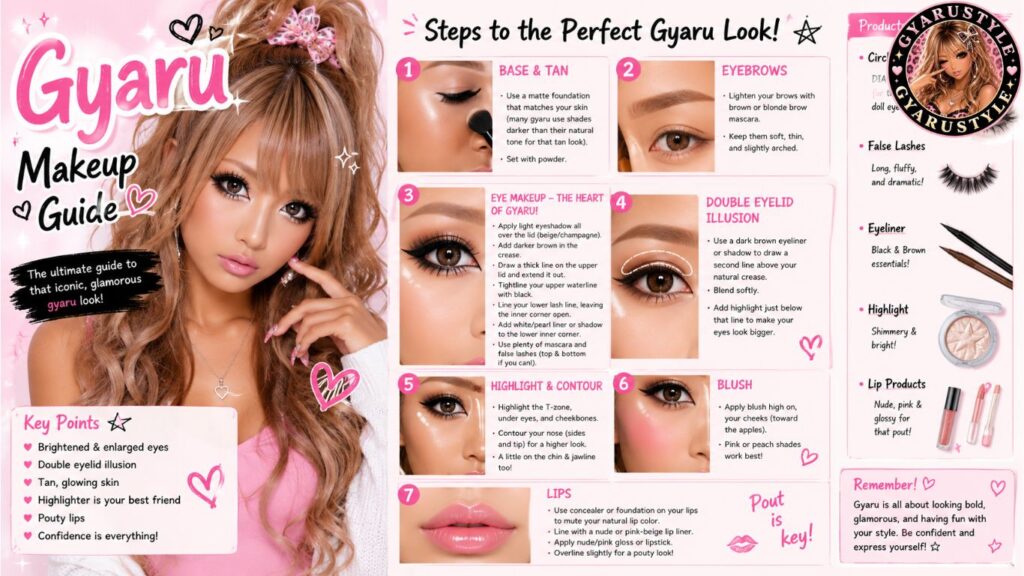
Unlike conventional beauty trends that often aim for subtle enhancement, Gyaru makeup embraces transformation. The goal is not simply to emphasize existing features but to create a stylized version of oneself. Enlarged eyes, dramatic lashes, carefully sculpted facial contours, and distinctive lip techniques have all become hallmarks of the aesthetic. While specific trends have evolved over the decades, the underlying philosophy remains consistent: makeup should be expressive, intentional, and visually impactful.
For beginners, Gyaru makeup can initially seem intimidating. Online tutorials frequently showcase highly advanced looks that require considerable skill and practice. However, the reality is that most enthusiasts build their abilities gradually. Understanding the core principles behind the style is far more important than mastering every technique immediately.
One of the reasons Gyaru makeup continues to influence beauty communities worldwide is its creativity. Many techniques that were once considered unconventional—such as dramatic contouring, false lashes, and eye enlargement effects—have since become common in mainstream beauty culture. In many ways, Gyaru helped pioneer approaches that are now widely recognized throughout the global makeup industry.
Traditional Gyaru Makeup
Traditional Gyaru makeup emerged during the late 1990s and early 2000s, a period when the subculture was experiencing explosive growth throughout Japan. The aesthetic reflected the era’s fascination with glamour, individuality, and visual transformation. Compared to today’s beauty trends, classic Gyaru makeup often appears more dramatic and experimental.
One defining characteristic was the emphasis on enlarging the eyes. Makeup artists and enthusiasts used eyeliner, false lashes, highlighting techniques, and circle lenses to create the illusion of larger, doll-like eyes. This approach became one of the most recognizable aspects of the subculture and remains influential today.
Complexion techniques also varied depending on the substyle. Ganguro enthusiasts often combined deep tanning with high-contrast white highlights around the eyes and nose. Other Gyaru styles favored more balanced skin tones while still emphasizing contour and dimension. The common thread was a willingness to manipulate conventional beauty standards in pursuit of a distinctive aesthetic.
Traditional Gyaru makeup also reflected the influence of fashion magazines. Publications regularly featured tutorials, product recommendations, and celebrity-inspired looks, helping standardize certain techniques while encouraging experimentation. These magazines served as educational resources for an entire generation of fashion-conscious young women.
Modern Gyaru Makeup
While modern Gyaru remains connected to its historical roots, contemporary makeup trends have become more refined and adaptable. Social media platforms have introduced new influences, blending classic Gyaru techniques with current beauty trends from around the world.
Today’s enthusiasts often favor softer contouring, cleaner blending, and more wearable color palettes. Eye enlargement remains important, but the overall execution tends to appear more polished than many historical examples. This evolution has helped make Gyaru accessible to newcomers who appreciate the aesthetic but may not want an extremely dramatic appearance.
Modern Gyaru creators frequently experiment with hybrid styles that incorporate Korean beauty trends, Western glamour techniques, and anime-inspired aesthetics. Rather than replacing traditional methods, these influences expand the possibilities available within the subculture. As a result, contemporary Gyaru makeup is arguably more diverse than ever before.
The rise of social media has also transformed how techniques are shared. Instead of relying exclusively on magazines, enthusiasts now learn through tutorials, livestreams, community forums, and influencer content. This global exchange of ideas has accelerated innovation while helping preserve classic methods for future generations.
Step-by-Step Gyaru Makeup Tutorial
Learning Gyaru makeup becomes significantly easier when broken into individual stages. While advanced looks can involve numerous techniques, most styles follow a similar structure that focuses on creating balance between the eyes, complexion, and overall facial proportions.
The process begins with skin preparation. Smooth, hydrated skin provides a reliable foundation for the dramatic elements that follow. Many experienced enthusiasts prioritize skincare because even the most impressive eye makeup can be undermined by uneven texture or poor foundation application.
Next comes complexion work. Depending on the desired substyle, this may involve foundation, concealer, contouring, highlighting, and bronzing. The goal is to create dimension while establishing the overall mood of the look. Softer styles typically use subtle contouring, while more dramatic aesthetics emphasize stronger facial structure.
Eye makeup serves as the centerpiece of most Gyaru looks. Eyeliner, lashes, eyeshadow, and highlighting techniques work together to create the enlarged-eye effect that has become synonymous with the subculture. The specific intensity varies by style, but the eyes almost always remain the primary focal point.
Basic Gyaru Makeup Process
| Step | Purpose |
|---|---|
| Skincare | Creates smooth base |
| Foundation | Evens complexion |
| Contour | Adds facial definition |
| Eyeshadow | Builds depth |
| Eyeliner | Enlarges eyes |
| False Lashes | Creates dramatic impact |
| Highlight | Enhances dimension |
| Lips | Completes the balance |
For beginners, consistency is more important than complexity. Mastering these fundamentals provides a strong foundation for more advanced techniques later.
Gyaru Eye Makeup Guide
Few elements define Gyaru makeup more strongly than the eyes. Eye enlargement techniques have been central to the subculture for decades, helping create the glamorous, doll-like appearance associated with many iconic looks.
The philosophy behind Gyaru eye makeup differs from conventional beauty trends. Rather than simply emphasizing natural eye shape, the goal is often to create the illusion of entirely different proportions. Strategic placement of eyeliner, lashes, highlights, and shadows allows enthusiasts to reshape the visual appearance of their eyes dramatically.
Lower-eye makeup is particularly important. While many mainstream beauty routines focus primarily on the upper lid, Gyaru techniques often devote significant attention to the lower lash line. This approach helps create the illusion of larger, rounder eyes and contributes to the characteristic “droopy eye” effect seen in many styles.
Eye makeup also serves as one of the clearest distinctions between different Gyaru substyles. Ganguro, Agejo, Himekaji, and Onee fashion each interpret enlargement techniques differently, creating unique visual identities while remaining connected to the broader culture.
Creating the Enlarged-Eye Effect
The enlarged-eye effect relies on several techniques working together rather than any single product. Eyeliner extends and reshapes the eye, false lashes add volume and dimension, and highlighting creates visual separation that makes the eyes appear larger.
One common technique involves extending the lower eye area slightly beyond its natural boundary using makeup. This creates the illusion of additional eye space and contributes to the doll-like appearance often associated with Gyaru aesthetics.
Many enthusiasts also use circle lenses to increase the apparent size of the iris. While optional, circle lenses became highly popular because they enhance the overall enlargement effect while complementing other makeup techniques.
The most successful looks maintain balance. Excessive product application without strategic placement can make the eyes appear heavy rather than enlarged. Understanding facial proportions is often more important than using expensive products.
The Droopy Eye Technique
The “droopy eye” or tareme effect is one of the most recognizable features of traditional Gyaru makeup. Rather than creating an upward, cat-eye appearance, the technique subtly lowers the outer corners of the eyes to produce a softer, more youthful expression.
This effect is achieved through careful placement of eyeliner, shadow, and lower lashes. When executed correctly, the result appears natural within the context of the overall look while significantly altering facial proportions.
The tareme style became especially popular because it complements many other Gyaru characteristics, including enlarged eyes, dramatic lashes, and feminine styling. Although trends have evolved, the technique remains influential among contemporary enthusiasts.
Best Lashes for Gyaru Makeup
False lashes are arguably the most important tool in a Gyaru makeup kit. Even relatively simple makeup looks can achieve a distinctly Gyaru appearance when paired with the right lash combination.
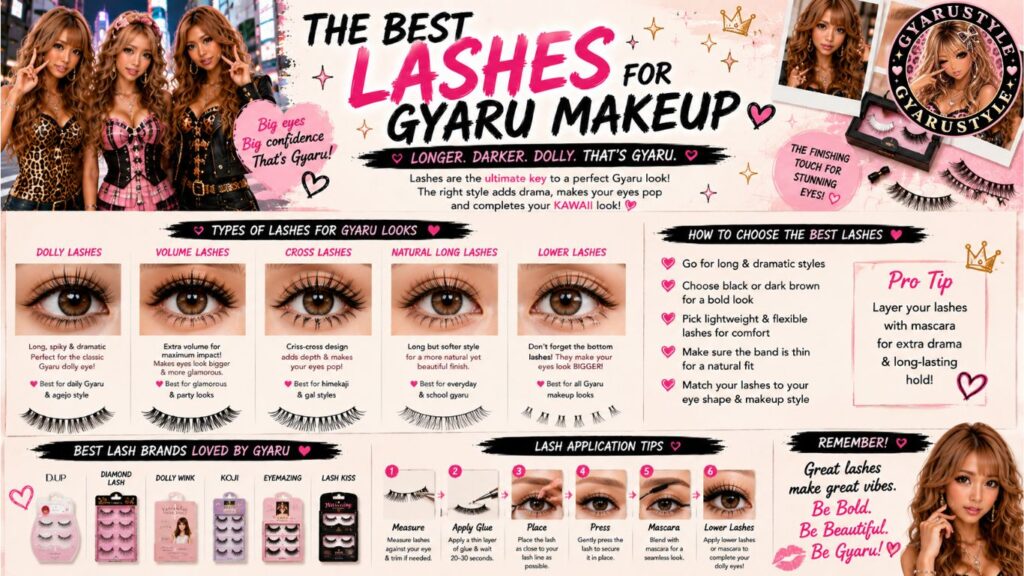
Historically, many enthusiasts used both upper and lower lashes simultaneously. This approach created dramatic eye framing and enhanced the enlargement effect. While modern interpretations sometimes favor subtler applications, lashes remain a defining feature across most substyles.
The ideal lash style depends largely on the desired aesthetic. Agejo enthusiasts often prefer glamorous, voluminous designs. Himekaji styles may use softer lashes that complement romantic fashion. Ganguro looks typically emphasize maximum visual impact through dramatic length and density.
Lash Recommendations by Style
| Gyaru Style | Lash Type |
|---|---|
| Himekaji | Wispy and feminine |
| Onee | Elegant volume |
| Agejo | Dramatic glamour |
| Ganguro | Dense and bold |
| Tsuyome | Strong definition |
| Modern Gyaru | Balanced and wearable |
Many beginners make the mistake of choosing excessively dramatic lashes immediately. Starting with moderate styles often produces more flattering results while making application easier to learn.
Drugstore Products for Gyaru Makeup
Contrary to popular belief, achieving a convincing Gyaru look does not require luxury cosmetics. Many experienced enthusiasts successfully create impressive looks using affordable products available at drugstores and mass-market retailers.
When shopping on a budget, prioritize products that directly influence the overall appearance. Eyeliner, lashes, mascara, and concealer typically have a greater impact on the final result than expensive specialty items. Investing in technique often provides better outcomes than spending heavily on products.
Affordable makeup also encourages experimentation. Because Gyaru involves creativity and personal expression, beginners benefit from trying different styles without worrying about wasting expensive products. This freedom often accelerates learning and helps individuals discover their preferred aesthetic more quickly.
Anime Makeup vs Gyaru Makeup
The growing popularity of anime-inspired beauty content has created considerable overlap between anime makeup and Gyaru makeup. While the two styles share certain visual characteristics, they are not identical.
Both aesthetics emphasize large eyes, dramatic lashes, and youthful facial proportions. However, anime makeup often focuses on recreating fictional character designs, while Gyaru remains rooted in fashion culture and real-world beauty trends. The goals may appear similar, but the underlying influences differ significantly.
Anime-inspired looks frequently prioritize fantasy and character accuracy. Gyaru makeup, by contrast, is designed to function within everyday fashion contexts while still maintaining a distinctive visual identity. This difference affects everything from color choices to contour placement and lash selection.
That said, modern beauty communities increasingly blend the two approaches. Social media creators regularly incorporate anime-inspired techniques into contemporary Gyaru looks, creating hybrid styles that appeal to fashion enthusiasts and anime fans alike.
Gyaru Hairstyles Guide
Hair has always been a defining component of Gyaru fashion. Throughout the movement’s history, hairstyles have served as powerful visual statements that complement makeup and clothing while reinforcing individual identity.
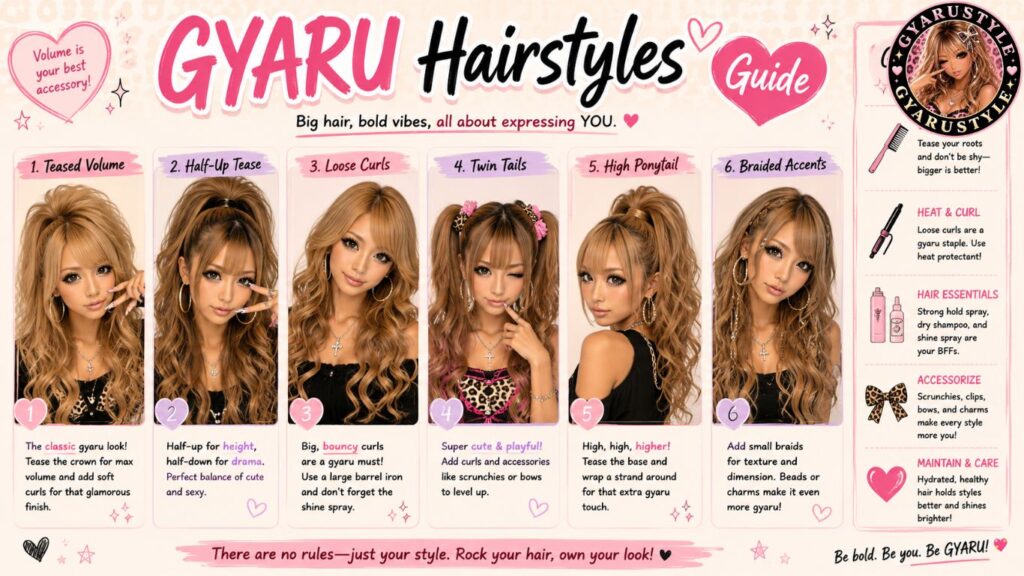
During the height of Gyaru culture, dramatic hairstyles often symbolized commitment to the subculture. Bleached hair, elaborate teasing, oversized curls, and voluminous styling became common sights in fashion districts and magazines. These looks challenged conventional beauty expectations while helping create the bold aesthetic associated with the movement.
Modern Gyaru hairstyles remain expressive but are often more versatile. Advances in styling techniques, hair care products, and social media trends have expanded the range of possibilities available to enthusiasts. Today’s styles can be dramatic or subtle while still maintaining a recognizable connection to the subculture.
Importantly, Gyaru hair is not defined by a single color or cut. Instead, it emphasizes styling, volume, and intentional presentation. Whether someone chooses blonde curls, layered brunette waves, or contemporary fashion colors, the goal remains creating a polished and expressive appearance.
Classic Gyaru Hairstyles
Classic Gyaru hairstyles frequently featured significant volume and texture. Teased crowns, curled ends, layered cuts, and bleached hair colors dominated many iconic looks from the early 2000s.
Volume played a particularly important role because it balanced dramatic makeup and fashion choices. Large hairstyles helped create visual harmony while contributing to the bold overall aesthetic. Many enthusiasts spent considerable time perfecting their styling routines each day.
These hairstyles became so closely associated with Gyaru culture that they remain instantly recognizable even decades later. Vintage fashion photographs and magazine spreads continue to inspire contemporary enthusiasts interested in recreating historical looks.
Modern Gyaru Hair Trends
Contemporary Gyaru hairstyles tend to be more adaptable while still embracing the subculture’s emphasis on style and presentation. Soft waves, layered cuts, curtain bangs, and polished curls have become increasingly popular among modern enthusiasts.
Social media has encouraged experimentation, leading to a wider range of acceptable styles than existed during certain historical periods. Many individuals now blend classic Gyaru influences with current fashion trends, creating looks that feel both nostalgic and contemporary.
This evolution reflects the broader trajectory of Gyaru culture itself. Rather than remaining frozen in time, the movement continues adapting to new generations while preserving the confidence, creativity, and individuality that made it influential in the first place.
Gyaru Culture in Japan
To truly understand Gyaru, it is necessary to look beyond fashion, makeup, and hairstyles. Although the visual elements of the subculture receive most of the attention, Gyaru has always been rooted in something much deeper: a desire for individuality, confidence, and self-determination. For many participants, fashion was simply the most visible way of expressing values that challenged social expectations.
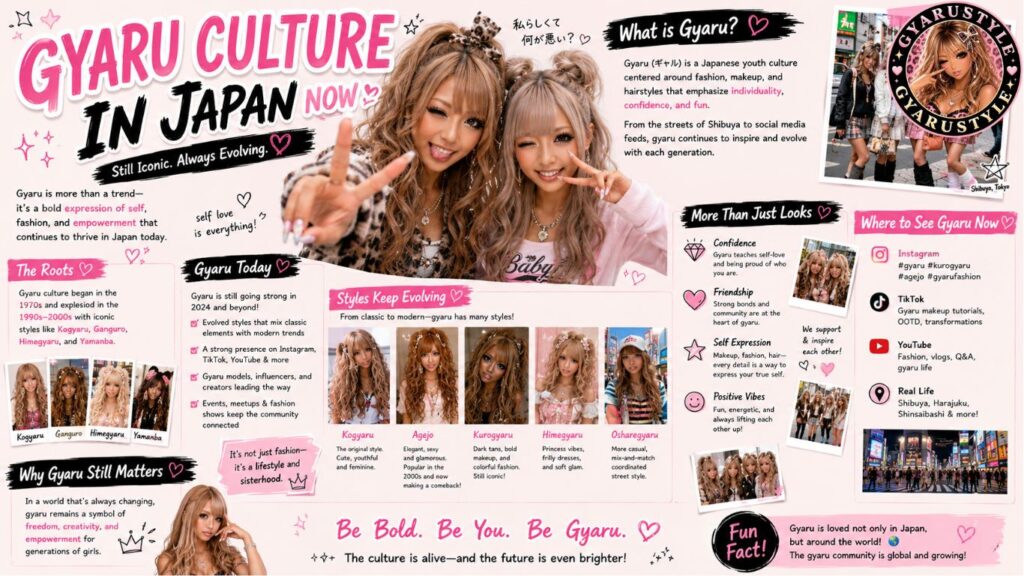
When Gyaru emerged, Japanese society generally promoted modesty, conformity, and adherence to established norms. Young women were often expected to present themselves in a restrained manner, both in appearance and behavior. Gyaru offered an alternative path. Rather than blending into the crowd, participants embraced visibility. They experimented with fashion, beauty, language, and lifestyle choices that distinguished them from mainstream culture.
This spirit of independence explains why Gyaru became more than a trend. It developed into a genuine youth movement with its own magazines, social spaces, role models, and cultural references. Fashion districts became gathering places where enthusiasts exchanged ideas, observed emerging trends, and built communities around shared interests. For many participants, belonging to the Gyaru world provided a sense of identity that extended beyond clothing.
The subculture also reflected broader social changes occurring in Japan during the 1990s and 2000s. Increased consumer spending, expanding media influence, and growing exposure to international fashion all contributed to the movement’s rise. Gyaru became both a product of these changes and a force that helped shape them, influencing beauty standards and fashion trends across the country.
More Than a Fashion Trend
One reason Gyaru continues to attract academic interest is that it represents a fascinating example of youth culture influencing mainstream society. Unlike short-lived fashion crazes that disappear after a few seasons, Gyaru left a lasting mark on Japanese popular culture.
Participants often developed their own vocabulary, social customs, and lifestyle habits. Magazines such as Egg and Popteen did more than showcase clothing; they provided advice, highlighted influential personalities, and fostered a sense of community among readers. These publications helped transform individual fashion choices into a shared cultural experience.
The movement also encouraged creativity. Rather than following rigid rules, many enthusiasts experimented with different aesthetics, adapting trends to suit their own preferences. This flexibility allowed the subculture to evolve continuously and contributed to its longevity.
Today, historians and fashion researchers frequently cite Gyaru as one of the most influential youth movements in modern Japan. Its impact can still be seen in contemporary beauty trends, social media aesthetics, and alternative fashion communities around the world.
Misconceptions About Gyaru
Despite its cultural significance, Gyaru has often been misunderstood. Media coverage during the subculture’s peak frequently focused on extreme examples, leading outsiders to view the movement as superficial or rebellious without understanding its broader context.
In reality, most participants were simply using fashion as a form of self-expression. While some styles appeared dramatic, the motivations behind them were often similar to those found in other creative communities: the desire to explore identity, build confidence, and connect with like-minded individuals.
Another misconception is that Gyaru disappeared entirely after the 2000s. Although mainstream visibility declined, dedicated communities remained active. Social media has since introduced the style to new audiences, resulting in a modern revival that blends historical influences with contemporary trends.
Understanding these nuances is essential because it reveals Gyaru as a complex cultural phenomenon rather than a collection of fashion stereotypes.
Why Gyaru Challenged Traditional Beauty Standards
Throughout its history, Gyaru has been closely associated with beauty standards—and more specifically, with challenging them. The movement emerged during a period when many conventional ideals emphasized pale skin, natural hair colors, understated makeup, and reserved presentation. Gyaru intentionally disrupted those expectations.
For many young women, this disruption was empowering. Fashion and beauty became tools for reclaiming personal agency. Rather than accepting predetermined definitions of attractiveness, participants created alternative standards that reflected their own tastes and values.
The popularity of tanned skin during the Ganguro era provides a particularly interesting example. In Japan, fair skin had long been associated with traditional beauty ideals. Ganguro enthusiasts deliberately embraced darker complexions, creating a visual statement that challenged established norms. While the style generated controversy, it also sparked important conversations about beauty, individuality, and social expectations.
Hair color offered another form of rebellion. Bleached blonde, light brown, and brightly colored hairstyles stood in sharp contrast to the dark natural hair traditionally favored in Japanese culture. These choices signaled independence and reinforced the movement’s emphasis on personal expression.
Perhaps most importantly, Gyaru encouraged participants to define beauty on their own terms. This philosophy remains relevant today, particularly in an era when social media allows individuals to explore and celebrate diverse aesthetics from around the world.
Modern Gyaru Trends
Fashion trends inevitably evolve, and Gyaru is no exception. While the dramatic styles of the early 2000s remain iconic, contemporary interpretations often reflect changing tastes, new technologies, and global influences.
Modern Gyaru tends to emphasize versatility. Many enthusiasts incorporate elements of the subculture into everyday wardrobes rather than adopting highly dramatic looks full-time. Softer makeup, wearable outfits, and contemporary hairstyles have become increasingly common, making the style more accessible to newcomers.
Social media has played a crucial role in this transformation. Platforms such as Instagram, TikTok, and YouTube allow creators to share tutorials, styling ideas, and historical content with audiences worldwide. This exposure has helped preserve traditional techniques while encouraging innovation.
Another notable trend is the blending of aesthetics. Contemporary enthusiasts frequently combine Gyaru influences with streetwear, luxury fashion, Korean beauty trends, and anime-inspired styling. These hybrid approaches demonstrate the flexibility of the subculture and its ability to remain relevant in changing fashion landscapes.
Rather than representing a nostalgic recreation of the past, modern Gyaru functions as a living fashion movement that continues to adapt and evolve.
Is Gyaru Still Popular?
The answer depends on how popularity is measured. Compared to its peak during the early 2000s, Gyaru is no longer a dominant force in mainstream Japanese fashion. However, measuring the movement solely by mainstream visibility overlooks its continued cultural relevance.
Today, dedicated communities exist throughout Japan, North America, Europe, Southeast Asia, and other regions. Online groups, fashion events, and social media creators continue introducing new audiences to the style. Many younger enthusiasts discover Gyaru through vintage magazine scans, influencer content, or anime-inspired fashion communities.
The revival of Y2K fashion has also contributed to renewed interest. As consumers revisit early-2000s aesthetics, many naturally encounter Gyaru due to its influence on that era’s fashion trends. Elements such as platform shoes, dramatic lashes, and statement accessories have reappeared in contemporary fashion cycles.
While the movement may no longer dominate shopping districts as it once did, it remains culturally significant. In many ways, Gyaru has transitioned from a mainstream trend into a respected subculture with a dedicated global following.
Gyaru Fashion Around the World
One of the most remarkable aspects of Gyaru’s legacy is its international reach. What began as a Japanese youth movement eventually inspired communities across multiple continents, demonstrating the universal appeal of creative self-expression.
In the United States, interest in Gyaru often overlaps with anime fandom, Japanese street fashion communities, and alternative beauty cultures. Many enthusiasts first encounter the style through online content before exploring its history and cultural significance more deeply.
European communities have also embraced Gyaru, particularly through fashion conventions, social media groups, and cultural events. Enthusiasts frequently organize meetups where participants showcase outfits, exchange styling advice, and celebrate Japanese fashion.
The internet has played a transformative role in this globalization process. During the early years of Gyaru, accessing Japanese magazines and products outside Japan was often difficult. Today, tutorials, fashion archives, and online shopping platforms make participation significantly more accessible.
This global expansion has introduced new perspectives while helping preserve historical knowledge. International communities frequently engage in extensive research, documenting trends and educating newcomers about the subculture’s origins.
Gyaru Anime Characters
Anime has introduced countless viewers to Gyaru-inspired characters, many of whom have become fan favorites due to their confidence, energy, and distinctive fashion sense. While not every fashionable anime character qualifies as Gyaru, the archetype has become increasingly common across multiple genres.
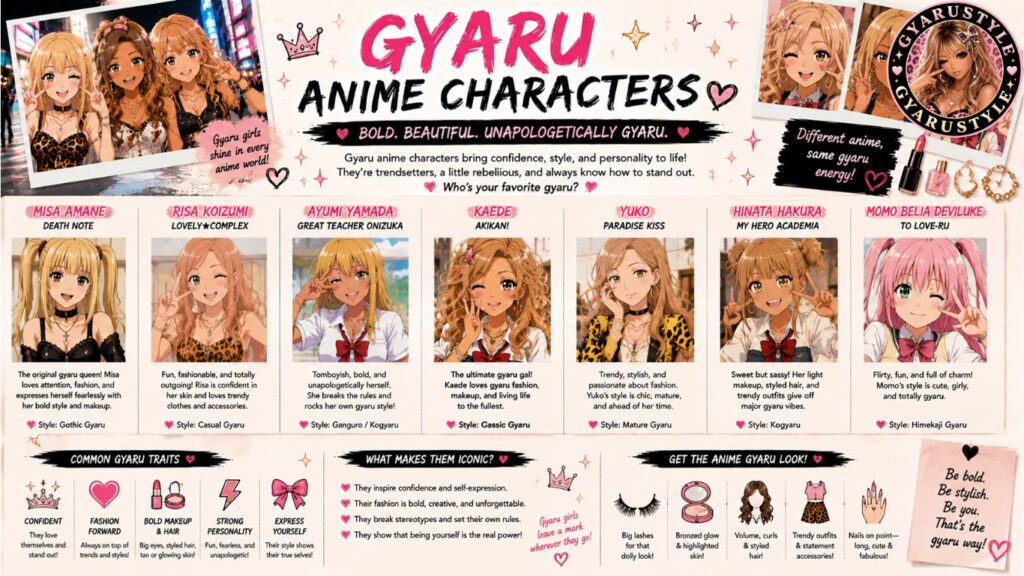
Gyaru characters often challenge stereotypes. At first glance, they may appear superficial or intimidating, but many stories reveal deeper personalities beneath their fashionable exteriors. This contrast creates compelling character development and helps explain the archetype’s enduring popularity.
Fashion also plays an important role in visual storytelling. Designers frequently use Gyaru-inspired aesthetics to communicate confidence, social influence, or individuality. Hairstyles, makeup, accessories, and clothing choices help establish character identities before a single line of dialogue is spoken.
Because Gyaru culture values self-expression, it translates naturally into animated storytelling. Characters inspired by the subculture often stand out visually while embodying themes of personal freedom and authenticity.
Why Anime Fans Love Gyaru Characters
The popularity of Gyaru characters stems from more than aesthetics alone. Many fans appreciate the confidence these characters display. In stories where conformity and social pressure are recurring themes, Gyaru-inspired personalities often provide refreshing alternatives.
Another reason is complexity. Modern anime frequently subverts expectations by presenting Gyaru characters as intelligent, kind, hardworking, or emotionally nuanced. This challenges assumptions and creates memorable character arcs.
Visually, Gyaru-inspired designs are also highly distinctive. Dramatic hairstyles, fashionable outfits, and expressive makeup make these characters instantly recognizable. Their appearance often reflects the same creativity and individuality celebrated within real-world Gyaru culture.
For many anime enthusiasts, Gyaru characters serve as an introduction to Japanese fashion history. Curiosity about these designs often leads viewers to explore the real-world subculture that inspired them.
Best Anime Featuring Gyaru Characters
Several anime series have contributed to the growing popularity of Gyaru-inspired characters among international audiences. While each approaches the archetype differently, they collectively showcase the diversity of personalities that can exist within the aesthetic.
| Anime | Gyaru Representation |
|---|---|
| My Dress-Up Darling | Fashion-forward and expressive |
| Hokkaido Gals Are Super Adorable! | Modern Gyaru influences |
| Gal & Dino | Comedic Gyaru lifestyle |
| Hajimete no Gal | Classic gyaru archetypes |
| Citrus | Fashion-conscious characters |
These series highlight different aspects of the subculture while introducing new audiences to Gyaru-inspired aesthetics.
Expert Insights and Case Studies
Fashion historians frequently cite Gyaru as one of the most influential youth movements in post-war Japan. Its impact extended beyond clothing into media, beauty standards, consumer behavior, and cultural identity. Unlike many trends that fade quickly, Gyaru continued evolving through multiple generations.
One particularly interesting case study is the evolution of Egg Magazine. During the subculture’s peak, the publication served as a central hub for fashion inspiration, beauty tutorials, and community engagement. Even after periods of decline, the magazine experienced revivals that reflected renewed interest in Gyaru culture.
Another valuable example is the modern TikTok revival. Creators worldwide have introduced historical Gyaru styles to younger audiences through tutorials, transformation videos, and educational content. This digital preservation effort has helped ensure that knowledge of the subculture remains accessible.
Experts often point to Gyaru’s adaptability as the key to its longevity. Rather than resisting change, the movement consistently absorbed new influences while maintaining its commitment to individuality and self-expression. This balance between tradition and innovation continues to inspire fashion communities around the world.
Key Takeaways
The story of Gyaru is ultimately a story about confidence, creativity, and personal freedom. What began as a youth fashion movement evolved into a cultural phenomenon that challenged beauty standards, influenced mainstream fashion, and inspired generations of enthusiasts.
From the streets of Tokyo to online communities around the globe, Gyaru has demonstrated the power of fashion as a form of self-expression. Its many substyles—from Ganguro and Agejo to Himekaji and Onee—showcase the diversity possible within a single subculture, while its enduring popularity highlights the universal appeal of individuality.
Although trends continue to change, the core philosophy of Gyaru remains surprisingly timeless. The movement encourages people to embrace their uniqueness, experiment creatively, and define beauty on their own terms. In a world increasingly shaped by personal branding and digital self-expression, those values remain as relevant today as they were during Gyaru’s golden age.
Whether you’re interested in fashion, makeup, Japanese culture, anime, or youth movements, Gyaru offers a fascinating lens through which to explore the relationship between identity and style. Its legacy continues to inspire new generations, ensuring that one of Japan’s most influential fashion subcultures remains alive and evolving.
Ready to start your own Gyaru journey? Begin by exploring a substyle that resonates with you, experiment with simple makeup and fashion techniques, and remember that the heart of Gyaru has never been about copying others—it’s about expressing your own individuality with confidence.
Frequently Asked Questions About Gyaru Fashion
What does Gyaru mean?
The word “Gyaru” comes from the English word “gal,” but its meaning in Japan evolved far beyond a simple translation. Within Japanese fashion culture, Gyaru refers to a youth subculture known for its bold fashion choices, dramatic makeup, trend-conscious styling, and emphasis on individuality. The movement gained popularity during the 1990s and early 2000s and became one of the most influential fashion phenomena in modern Japanese history.
What is the difference between Gyaru and Ganguro?
A common misconception is that Ganguro and Gyaru are the same thing. In reality, Ganguro is a substyle within the broader Gyaru fashion movement. All Ganguro participants are part of Gyaru culture, but not all Gyaru enthusiasts follow Ganguro fashion.
Is Gyaru still popular today?
Although Gyaru is no longer as dominant in mainstream Japanese fashion as it was during its peak in the early 2000s, it remains an active and influential subculture. In fact, many experts believe the movement is experiencing a revival thanks to social media platforms such as TikTok, Instagram, YouTube, and online fashion communities.
How can beginners start dressing like a Gyaru?
The best approach for beginners is to start gradually. Many newcomers assume they need an entirely new wardrobe immediately, but experienced community members typically recommend focusing on one substyle and building from there.
What makeup products are essential for Gyaru makeup?
Although specific product choices vary by substyle, several items appear in nearly every Gyaru makeup kit. False lashes are often considered the most important tool because they help create the enlarged-eye effect associated with the aesthetic. Eyeliner is another essential product, used to reshape and define the eyes.
What are the most popular Gyaru substyles?
Several substyles have become particularly influential throughout Gyaru history. Ganguro remains one of the most recognizable because of its dramatic tanning and makeup techniques. Himekaji gained popularity for its feminine, princess-inspired aesthetic, while Agejo became known for glamorous nightlife-inspired fashion.
Can men participate in Gyaru fashion?
Yes. Male participants in the subculture are commonly known as Gyaruo. Although female fashion receives more international attention, Gyaruo has been part of the movement for decades and shares many of the same values, including confidence, trend awareness, and self-expression.
Why did Gyaru become so influential?
Gyaru became influential because it represented more than a fashion trend. The movement emerged during a period of social and cultural change, offering young people a way to express individuality in a society that often emphasized conformity. Through fashion, makeup, and lifestyle choices, participants challenged traditional expectations and created alternative definitions of beauty.
Conclusion:
Gyaru is far more than a fashion trend from Japan’s past. It is a cultural movement that transformed beauty standards, influenced fashion industries, inspired global communities, and empowered individuals to express themselves without apology. From its origins in the youth culture of the 1980s and 1990s to its modern revival through social media, Gyaru has continually evolved while remaining true to its core values of confidence, creativity, and individuality.
One of the most remarkable aspects of Gyaru is its diversity. Whether someone is drawn to the dramatic impact of Ganguro, the elegance of Onee Gyaru, the glamour of Agejo, or the romantic charm of Himekaji, the movement offers countless opportunities for personal interpretation. This flexibility has allowed it to remain relevant across multiple generations and fashion cycles.
The influence of Gyaru can still be seen throughout contemporary beauty culture, anime character design, social media aesthetics, and alternative fashion communities around the world. Techniques once considered unconventional—dramatic lashes, contouring, statement styling, and bold self-expression—have become mainstream in many parts of the beauty industry.
For anyone interested in Japanese fashion, youth culture, or creative self-expression, Gyaru offers an endlessly fascinating subject to explore. Its history provides insight into social change, while its modern revival demonstrates the enduring power of individuality in fashion.
Ready to Explore Gyaru Fashion?
Start by choosing a substyle that resonates with your personality, experiment with beginner-friendly makeup and outfits, and learn from both historical and modern sources. The most authentic Gyaru looks are not created by copying others—they emerge from confidence, creativity, and a willingness to express your unique identity.
Fashion trends come and go, but the spirit of Gyaru remains timeless: be bold, be expressive, and never be afraid to stand out.Frequently Asked Questions About Gyaru Fashion