


Smart Casual for Men is one of those dress codes that almost everyone has encountered, yet few people interpret it the same way. One office encourages dark jeans and trainers, while another expects tailored trousers and loafers. A restaurant might describe its dress code as smart casual, but the people arriving at the door could be wearing anything from polo shirts to sports coats.
That uncertainty is exactly why many men struggle with it. The good news is that smart casual isn’t about memorising strict rules. It’s about understanding balance. A successful outfit looks intentional without appearing overly formal, polished without feeling uncomfortable, and relaxed without seeming careless. Once you understand that principle, getting dressed becomes much easier.
The men who consistently dress well rarely own the biggest wardrobes. Instead, they know how to combine versatile pieces, pay attention to fit, and dress appropriately for the occasion. Those habits matter far more than chasing every new fashion trend.
What Smart Casual Really Means
Smart Casual for Men sits comfortably between everyday casual clothing and traditional business wear. It gives you room to express personal style while still looking put together. Unlike formal dress codes, smart casual adapts to the setting, which is why the same outfit may work perfectly for dinner with friends but feel too relaxed for an important client meeting.
One of the biggest misconceptions is that expensive clothing automatically creates a smart casual look. It doesn’t. Fit, fabric quality, colour coordination, and confidence make a far greater difference than the price tag. A well-fitted Oxford shirt, dark chinos and clean white leather sneakers often look more refined than an expensive blazer worn over faded jeans and worn-out trainers.
Think about every item as part of a conversation rather than a standalone piece. A casual jacket can work beautifully when paired with tailored trousers. Likewise, polished loafers can elevate dark denim. Smart casual succeeds because each piece balances the others instead of competing for attention.
Smart Casual for Men Another overlooked aspect is context. Dressing smart casual for a creative agency differs from dressing for a law firm’s office social. Reading the room remains one of the most valuable style skills a man can develop. When you’re unsure, leaning slightly smarter is usually the safer choice. It’s much easier to remove a blazer than to wish you’d brought one.
Smart Casual vs Business Casual

Many people use these terms interchangeably, but they aren’t identical. Business casual generally follows workplace expectations, while smart casual allows more personality and flexibility.
| Smart Casual | Business Casual |
| Dark jeans or chinos may be appropriate | Tailored trousers are usually preferred |
| Clean leather sneakers can work | Dress shoes or loafers are the safer option |
| Knitwear, polos and overshirts fit naturally | Button-down shirts are more common |
| Personal style plays a bigger role | Professional consistency comes first |
Smart Casual for Men A useful way to think about the difference is purpose. Business casual aims to create a professional impression during the working day. Smart casual aims to create a polished impression in a wider variety of situations, from weekend lunches and networking events to dinner dates and casual offices.
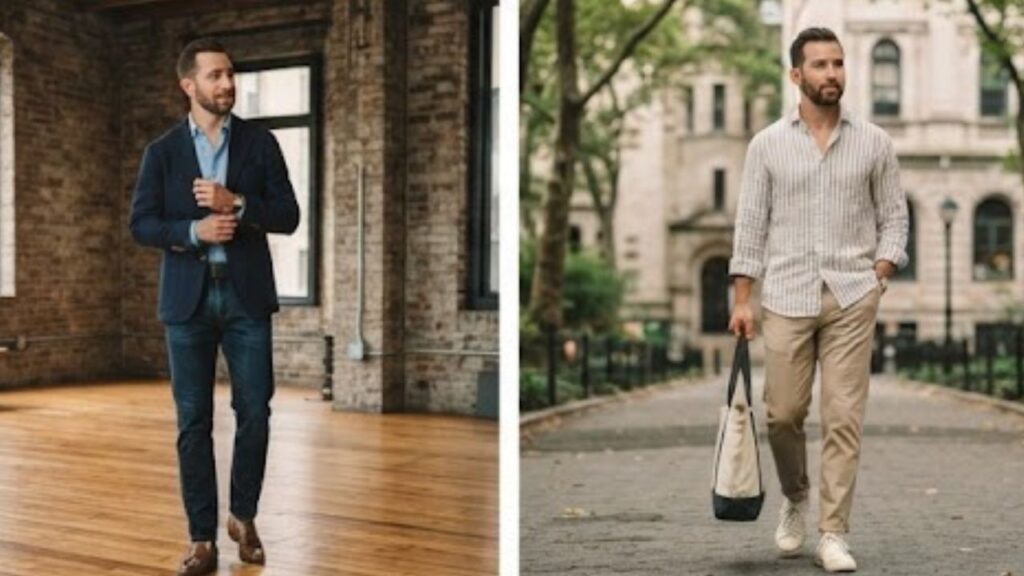
This distinction also explains why certain items move between categories depending on how they’re styled. Dark jeans with a navy blazer and suede loafers can feel sophisticated in a smart casual setting, while the same jeans may not be suitable in a conservative corporate environment.
Rather than asking, “Is this item smart casual?” ask yourself, “Does this entire outfit look intentional?” That simple shift in thinking usually leads to better choices.
Building a Smart Casual Wardrobe
Smart Casual for Men A wardrobe doesn’t need dozens of options to be effective. In fact, too many impulse purchases often make getting dressed more difficult because fewer pieces work together.
Start with versatile basics in neutral colours such as navy, grey, white, olive, beige and black. These shades mix effortlessly and allow you to create numerous outfits from a relatively small collection. Once those foundations are established, introducing seasonal colours becomes much easier.
Your wardrobe should include reliable staples such as Oxford shirts, quality polo shirts, chinos, dark jeans, lightweight knitwear and an unstructured blazer. These pieces rarely go out of style because they solve real wardrobe problems. They layer well, suit different occasions and combine with almost everything else you own.
Footwear deserves equal attention. Shoes often determine whether an outfit appears polished or unfinished. Clean white leather sneakers offer versatility for relaxed occasions, while loafers, Chelsea boots and Derby shoes provide smarter alternatives. Whatever style you choose, keeping footwear clean and well maintained has a surprisingly large impact on your overall appearance.
Smart Casual for Men Many men also underestimate the value of accessories. A simple leather belt that matches your shoes, a classic watch and understated sunglasses quietly elevate an outfit without attracting unnecessary attention. Accessories should complement your clothing rather than dominate it.
One habit separates stylish dressers from everyone else: they buy fewer pieces but wear each one more often. Before purchasing anything, imagine at least three complete outfits you could build around it. If you struggle to think of three, the item probably isn’t as versatile as it first appeared.
Smart Casual Outfit Ideas for Different Occasions
One reason smart casual remains so popular is its adaptability. The same wardrobe can create outfits suitable for work, weekends and social events with only minor adjustments.
For a typical office with a relaxed dress code, a light blue Oxford shirt paired with navy chinos and brown loafers creates a professional appearance without feeling stiff. Adding an unstructured blazer instantly prepares the outfit for client meetings or presentations.
Weekend outfits allow a little more freedom. A fitted polo shirt, dark jeans and minimalist white sneakers strike an ideal balance between comfort and style. If the weather cools, swapping the polo for a fine-gauge crew-neck sweater maintains the same polished feel while adding warmth.
Dinner dates call for subtle sophistication rather than obvious formality. A charcoal knit polo worn with tailored trousers and suede Chelsea boots feels confident without appearing overdressed. Small details, such as rolling sleeves neatly or choosing a textured belt, often make a stronger impression than bold statement pieces.
Smart Casual for Men Travel is another situation where smart casual proves its value. Comfortable stretch chinos, a breathable polo shirt and a lightweight overshirt create an outfit that handles airports, restaurants and unexpected meetings equally well. Instead of packing separate wardrobes for different occasions, smart casual encourages versatility.
The strongest outfits usually follow a simple formula: combine one relaxed element with one structured element. Pair casual trainers with tailored trousers, or wear a blazer over a fine-knit T-shirt. That contrast creates visual balance while keeping the overall appearance approachable.
Fashion trends will continue to change, but this principle remains remarkably consistent. When every item feels considered, the entire outfit works together naturally rather than looking like a collection of individual purchases.
Dressing Smart Casual Through the Seasons
One of the biggest advantages of a smart casual wardrobe is that it adapts easily throughout the year. You don’t need a completely different collection of clothes every season. Instead, the focus should be on changing fabrics, layering, and footwear while keeping the overall style consistent.
During summer, lightweight materials make all the difference. Linen shirts, breathable cotton polos, and lightweight chinos help you stay comfortable without sacrificing style. Lighter shades such as stone, beige, light blue, and olive also reflect heat better than darker colours while giving outfits a fresh appearance. Instead of wearing multiple layers, let quality fabrics do the work. A crisp linen shirt with tailored chinos and clean white leather sneakers is often all you need for warm-weather smart casual.
Autumn is where layering becomes a genuine advantage rather than a necessity. An overshirt worn over a plain crew-neck T-shirt or lightweight knit adds texture without making an outfit feel bulky. Earth tones such as rust, forest green, navy, and charcoal naturally complement the season and mix well with neutral wardrobe staples.
Smart Casual for Men Winter doesn’t mean abandoning smart casual for bulky clothing. Fine merino wool knitwear, tailored wool trousers, Chelsea boots, and a well-cut overcoat create warmth while maintaining clean lines. Heavy clothing can easily overwhelm an outfit, so choosing pieces with structure helps preserve a polished silhouette. Even small upgrades, such as replacing worn trainers with leather boots, can dramatically improve a winter outfit.
Spring offers flexibility as temperatures fluctuate. A lightweight bomber jacket, Oxford shirt, and chinos provide enough versatility to handle cool mornings and warmer afternoons without constant wardrobe changes.
Common Smart Casual Mistakes Men Make
Most smart casual mistakes don’t come from wearing the wrong clothing. They happen because otherwise good pieces are combined without enough attention to proportion, fit, or occasion.
One of the most common problems is wearing clothes that don’t fit properly. Oversized shirts create a sloppy appearance, while trousers that are too tight can make even premium clothing look uncomfortable. A modestly priced shirt altered by a tailor often looks better than an expensive designer shirt worn straight off the rack.
Smart Casual for Men Another frequent mistake is trying to include too many statement pieces in one outfit. Bright colours, bold patterns, oversized logos, and flashy accessories all compete for attention. Smart casual works best when one element stands out and the remaining pieces quietly support it.
Footwear is another area where men often overlook detail. Even an excellent outfit loses impact if shoes are dirty or poorly maintained. Clean leather sneakers, polished loafers, or brushed suede boots communicate care and attention in ways people notice immediately, even if they can’t explain why.
Many men also underestimate grooming. Wrinkled shirts, neglected haircuts, or an unkempt beard can distract from an otherwise stylish outfit. Clothing and personal presentation always work together, which is why the most polished dressers pay attention to both.
Smart Casual for Men Finally, avoid dressing for social media rather than real life. Trend-driven outfits may look impressive in carefully staged photographs but often feel impractical or uncomfortable during a full day. Timeless style usually outlasts short-lived fashion trends.
Expert Styling Advice That Makes a Real Difference
Stylists often talk about clothing, but experienced dressers think about consistency. Instead of asking, “What should I wear today?” they build wardrobes where nearly everything works together. That approach reduces decision fatigue and encourages smarter buying habits.
Smart Casual for Men One strategy worth adopting is the “one upgrade” rule. Start with a simple casual outfit and improve just one element. Swap a hoodie for a fine-knit sweater, replace athletic trainers with leather sneakers, or exchange faded jeans for well-fitted chinos. These small adjustments create noticeable improvements without making you feel overdressed.
Colour coordination also deserves more attention than it usually receives. Limiting an outfit to three or four complementary colours almost always creates a cleaner appearance than trying to incorporate every trend at once. Navy, grey, olive, white, beige, and brown remain popular because they work together naturally across seasons.
Building a capsule wardrobe is another practical long-term strategy. Rather than constantly purchasing new items, invest in versatile pieces that earn their place through repeated wear. A navy blazer, quality Oxford shirts, dark denim, chinos, leather loafers, and white sneakers can produce dozens of combinations suitable for work, dinners, travel, and weekends.
Smart Casual for Men Confidence also plays a surprisingly large role. Clothes should support your personality, not replace it. When an outfit fits well and suits the occasion, you spend less time adjusting your clothing and more time focusing on conversations, work, or enjoying the event itself.
Final Thoughts

Smart Casual for Men isn’t about following a rigid formula or copying someone else’s wardrobe. It’s about understanding why certain combinations work and building a collection of clothing that reflects your lifestyle. Fit, versatility, fabric quality, and thoughtful coordination consistently matter more than chasing the latest trend.
A wardrobe built around timeless essentials gives you far more flexibility than one filled with impulse purchases. As your personal style develops, you’ll find yourself relying less on strict rules and more on good judgement. That’s usually the point where dressing well starts to feel effortless rather than complicated.
Frequently Asked Questions
Can jeans be part of a smart casual outfit?
Smart Casual for Men Yes. Dark, well-fitted jeans without heavy distressing work well in many smart casual settings, especially when paired with an Oxford shirt, knitwear, or an unstructured blazer.
Are white sneakers considered smart casual?
Clean leather white sneakers have become a modern smart casual staple. They pair well with chinos, tailored trousers, and dark denim, provided they’re kept in excellent condition.
What’s the difference between smart casual and business casual?
Smart Casual for Men Business casual generally follows workplace expectations and leans more formal, while smart casual allows greater flexibility and personal style for social occasions, creative workplaces, and relaxed professional settings.
How many pieces do I need for a smart casual wardrobe?
A well-planned wardrobe of around 20 to 30 versatile pieces is enough for most men. Choosing clothing that mixes and matches easily is far more valuable than Smart Casual for Men simply owning more items.
What’s the easiest way to improve a smart casual outfit?
Focus on fit first. Well-tailored clothing, clean shoes, and a coordinated colour palette create a polished appearance Smart Casual for Men more effectively than expensive designer labels or trend-driven pieces.