
Goth Fashion & Gothic Clothing Mention goth fashion and many people immediately picture black clothing, heavy eyeliner and towering platform boots. Those elements certainly exist, but reducing gothic clothing to a dress code misses the point entirely. Goth fashion grew from a music-driven subculture and evolved into a remarkably diverse style movement that values individuality, creativity and self-expression.
One reason newcomers often struggle is that online advice tends to present goth style as a strict set of rules. Long-time members of the subculture usually see it differently. Authentic goth fashion isn’t about buying the most expensive corset or copying social media outfits. It’s about developing a personal aesthetic while appreciating the culture and influences behind the style.
Some people embrace dramatic Victorian-inspired looks every day. Others prefer subtle, office-friendly outfits with dark palettes and layered accessories. Both approaches can feel equally genuine. The beauty of gothic fashion lies in its flexibility. Once you understand the foundations, you can adapt the aesthetic to your lifestyle, budget and personality.
Understanding the Different Goth Fashion Styles
Goth Fashion & Gothic Clothing One of the biggest misconceptions about goth fashion is that there’s only one way to dress. In reality, gothic clothing encompasses numerous substyles, each with its own influences and visual identity.
Traditional goth remains closely tied to the early post-punk scene of the late 1970s and 1980s. Think dark layered clothing, fishnet details, dramatic makeup and plenty of DIY customization. Vintage pieces often play a significant role in this aesthetic.
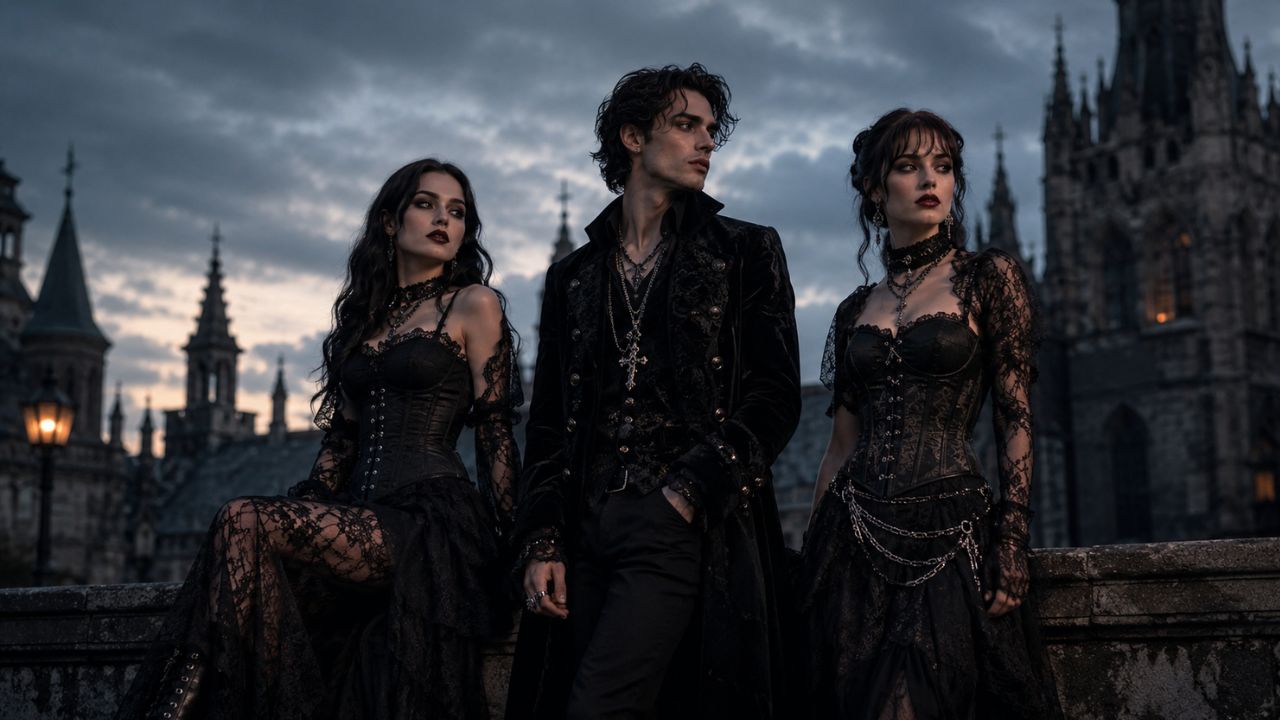
Goth Fashion & Gothic Clothing Romantic and Victorian goth draw inspiration from historical fashion. Velvet dresses, lace garments, brocade fabrics and corsets create an elegant, almost literary appearance. These styles appeal to people who appreciate dark romanticism and historical influences.
Modern interpretations have expanded considerably. Pastel goth blends soft colours with darker themes. Nu goth incorporates contemporary streetwear elements, while corporate goth adapts the aesthetic for professional environments.
The table below highlights some of the most popular styles.
| Style | Key Features | Typical Pieces |
| Traditional Goth | Post-punk influence, dramatic makeup | Fishnets, leather jackets, black layers |
| Romantic Goth | Elegant, dark romantic aesthetic | Lace dresses, velvet, corsets |
| Victorian Goth | Historical inspiration | Brocade coats, high collars, long skirts |
| Cyber Goth | Futuristic influences | Neon accents, platform boots, synthetic materials |
| Casual Goth | Everyday wearability | Black jeans, band shirts, boots |
| Corporate Goth | Workplace adaptation | Tailored black clothing, minimalist accessories |
Many experienced goths borrow from multiple substyles rather than limiting themselves to one category. Someone might wear Victorian-inspired jewellery with contemporary streetwear or combine traditional goth makeup with casual everyday pieces. Personal experimentation often produces the most interesting results.
Essential Gothic Clothing Pieces for Building a Wardrobe

Goth Fashion & Gothic Clothing Newcomers frequently assume they need an entirely new wardrobe to dress goth. That’s rarely necessary. A strong gothic wardrobe is usually built gradually, starting with versatile basics.
Instead of purchasing highly specific statement pieces immediately, focus first on clothing that can be styled in multiple ways. Black skinny jeans, tailored trousers, long skirts, simple tops and quality outerwear form the backbone of countless outfits.
Experienced stylists often recommend investing in fabrics rather than trends. Rich textures instantly create a gothic aesthetic, even when silhouettes remain simple. Velvet, lace, leather, satin, mesh and brocade all add visual depth.
A practical starter wardrobe might include:
- Black jeans or tailored trousers
- One versatile jacket or long coat
- Several fitted black tops
- A pair of quality boots
- Layering pieces such as cardigans, mesh tops or lace garments
- Statement jewellery and accessories
Goth Fashion & Gothic Clothing Footwear deserves special attention. Many people rush to buy extreme platform boots, only to discover they’re uncomfortable for daily wear. Combat boots or classic leather boots are often more practical starting points. Comfortable shoes get worn regularly; uncomfortable shoes usually stay in the closet.
Colour can also play a larger role than many beginners expect. Although black remains central, deep burgundy, forest green, plum, charcoal grey, navy and ivory frequently appear throughout gothic fashion. Restricting yourself exclusively to black can actually limit outfit versatility.
Accessories, Makeup and the Details That Shape a Look
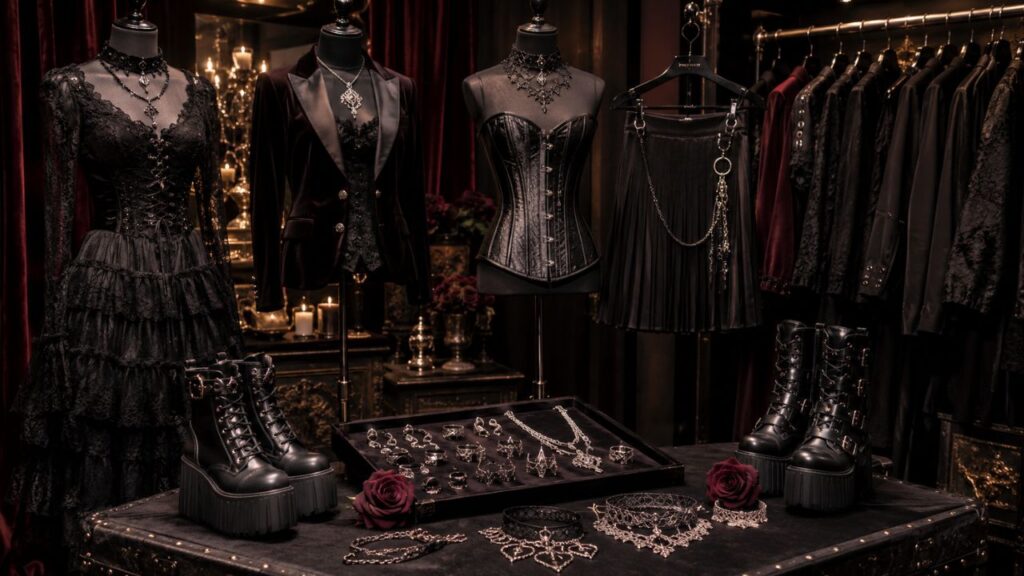
Goth Fashion & Gothic Clothing creates the foundation, but accessories often determine whether an outfit feels distinctly gothic.
Jewellery is particularly influential. Silver-toned pieces traditionally dominate because they complement darker clothing palettes, though personal preference always matters. Chokers, layered necklaces, ornate rings and symbolic pendants remain enduring favourites.
One styling mistake frequently seen online is over-accessorising. Wearing every dramatic piece at once can overwhelm an outfit. Seasoned goth dressers often balance statement accessories with simpler clothing, allowing individual elements to stand out.
Makeup occupies a similarly nuanced space. Dramatic dark makeup certainly has a place within goth fashion, yet it isn’t mandatory. Many people prefer subtle looks featuring defined eyeliner, muted lipstick and pale complexions, while others embrace bold artistic expression.
Hairstyles also vary significantly across substyles. Traditional goth often favours teased, voluminous hair. Romantic styles may incorporate soft waves or elaborate updos, while modern goth aesthetics frequently embrace sleek cuts and unconventional colours.
Goth Fashion & Gothic Clothing Perhaps the most overlooked styling principle is layering. Layering transforms basic clothing into visually complex outfits. A simple black dress paired with mesh sleeves, layered necklaces, textured tights and a structured coat instantly gains depth and character.
Texture contrast matters as well. Combining leather with lace, velvet with mesh, or satin with distressed fabrics creates visual interest without requiring elaborate garments.
How to Build an Authentic Goth Wardrobe Without Overspending
One persistent myth suggests that goth fashion is prohibitively expensive. While premium alternative brands certainly exist, developing a compelling wardrobe doesn’t require spending thousands of dollars.
In fact, many long-standing members of the community consider thrift shopping an essential skill. Vintage stores, second-hand shops and clothing alterations have always played significant roles within alternative fashion.
Building a wardrobe slowly generally produces better results than making large purchases all at once. Impulse buying often leads to closets filled with pieces that don’t coordinate.
A sensible approach involves three stages.
First, establish foundational pieces. Focus on versatile clothing you’ll genuinely wear every week.
Second, identify which goth substyles resonate most strongly with you. Your purchasing decisions become easier once your aesthetic preferences are clearer.
Third, gradually introduce statement items. Dramatic coats, platform footwear, corsets and elaborate accessories can then complement an existing wardrobe rather than defining it entirely.
Goth Fashion & Gothic Clothing Many newcomers also feel pressure to purchase exclusively from gothic clothing brands. That’s unnecessary. Mainstream retailers frequently offer black basics, tailored pieces and layering garments that integrate seamlessly into gothic outfits.
The real challenge isn’t finding dark clothing. It’s developing a cohesive personal style.
Goth Fashion for Everyday Life
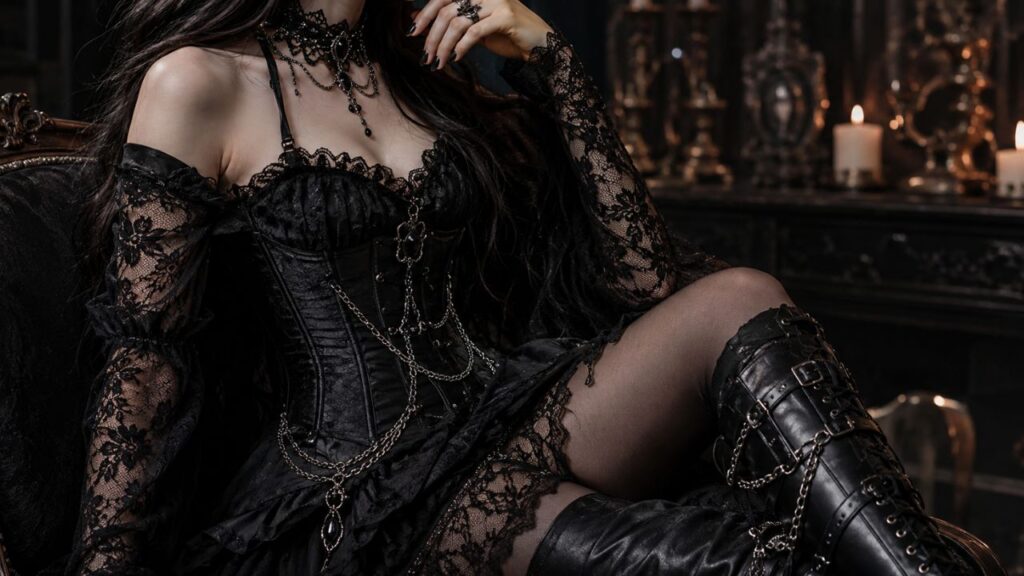
Goth Fashion & Gothic Clothing Social media often showcases highly theatrical outfits, creating the impression that goth fashion only works in specific environments. Reality tends to be much more practical.
Casual goth outfits often consist of black denim, fitted tops, boots and carefully selected accessories. The overall appearance remains recognisably gothic while staying appropriate for everyday activities.
Professional environments present another interesting challenge. Corporate goth has emerged as a popular approach for individuals who want to maintain their aesthetic at work. Tailored blazers, monochromatic outfits, structured silhouettes and understated jewellery allow personal style to coexist with workplace expectations.
Goth Fashion & Gothic Clothing Seasonal dressing requires adaptation as well. Summer can be particularly difficult for those accustomed to heavy layers. Lightweight fabrics such as cotton, mesh and linen help maintain comfort without abandoning the aesthetic. Conversely, autumn and winter naturally complement gothic fashion through layering, textured outerwear and dramatic coats.
The strongest outfits rarely result from blindly following trends. They emerge when people thoughtfully combine influences, practical considerations and personal preferences.
Authenticity within goth fashion ultimately stems from consistency and self-expression rather than strict adherence to rules. The most memorable styles are usually those that feel lived-in and personal rather than perfectly curated for photographs.
Frequently Asked Questions
What is goth fashion?
Goth Fashion & Gothic Clothing is an alternative style movement influenced by the goth music subculture. It typically features dark aesthetics, layered clothing, distinctive accessories and a strong emphasis on personal expression.
How do I start dressing goth?
Begin with versatile basics such as black jeans, boots and simple tops. Gradually add accessories, experiment with different substyles and refine your aesthetic over time.
Is gothic fashion expensive?
Not necessarily. Thrift shopping, second-hand stores and mainstream basics can help build a stylish gothic wardrobe on a reasonable budget.
What’s the difference between goth and emo fashion?
While both styles feature dark aesthetics, goth fashion originated from post-punk culture, whereas emo fashion developed from the emo music scene and generally incorporates different styling elements and influences.
Can goth fashion work in professional settings?
Yes. Corporate goth styling adapts gothic aesthetics for workplaces through tailored clothing, monochromatic palettes and subtle accessories.