Fashion trends come and go, but some become something much bigger than clothing. Gyaru is one of those rare examples. What started as a rebellious youth movement in Japan grew into a cultural phenomenon that challenged beauty standards, influenced entire generations of young women, and created some of the most recognizable looks in street fashion history.
For people discovering Gyaru today through social media, it’s easy to assume the style is all about dramatic makeup, bleached hair, and flashy outfits. Those visual elements certainly matter, but they only tell part of the story. The history of Gyaru is really a story about self-expression. It emerged during a period when many young Japanese women felt constrained by expectations surrounding appearance, behavior, and femininity. Instead of quietly accepting those norms, they created their own identity.
Understanding where Gyaru came from helps explain why the fashion remains influential decades later. Its legacy can still be seen in modern beauty trends, online fashion communities, and the ongoing conversation about individuality in fashion.
What Is Gyaru Fashion?
The word “Gyaru” comes from the English word “gal.” In Japan, however, the term evolved into something much more specific. Rather than simply referring to young women, it became associated with a distinctive fashion subculture that emphasized confidence, glamour, and personal freedom.
One common misconception is that Gyaru was a single fashion style. In reality, it functioned more like an umbrella movement. Different groups developed their own interpretations while sharing a similar attitude toward self-expression. Some preferred glamorous princess-inspired outfits, while others embraced extreme tanning, platform shoes, and colorful hairstyles.
What united these styles wasn’t a particular skirt length or makeup technique. It was the desire to stand apart from traditional expectations. During a time when pale skin, natural hair, and modest presentation were often considered ideal, Gyaru moved in the opposite direction.
That rebellion made the movement controversial, but it also made it culturally significant.
The History of Gyaru
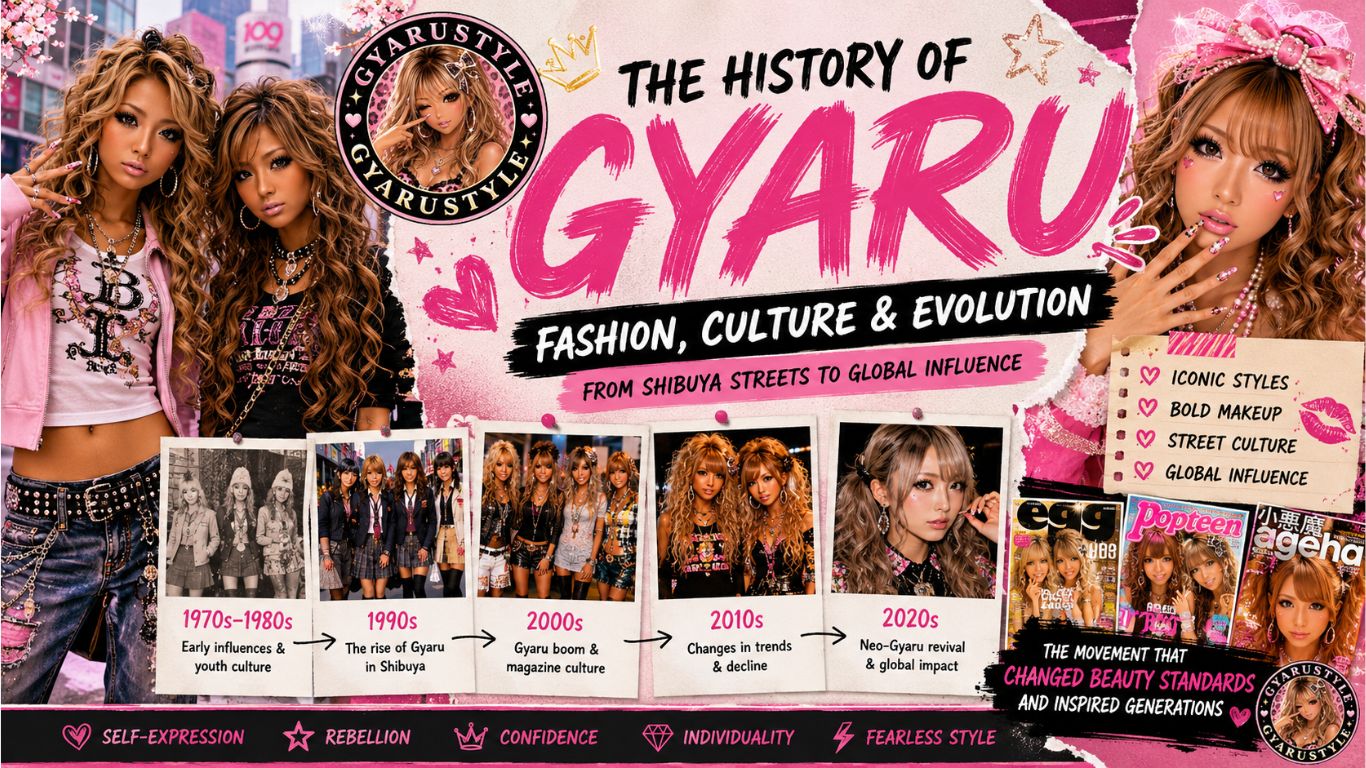
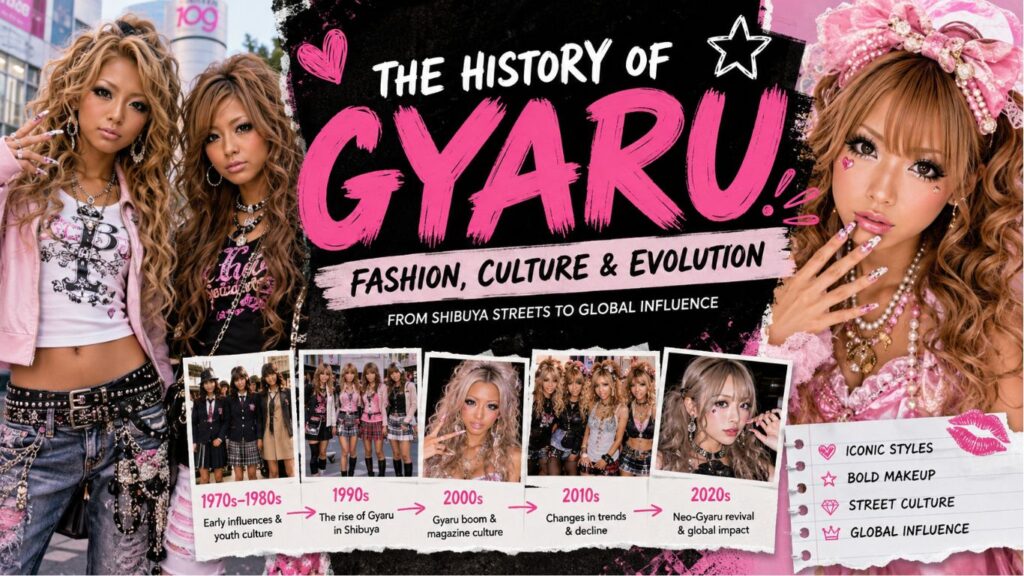
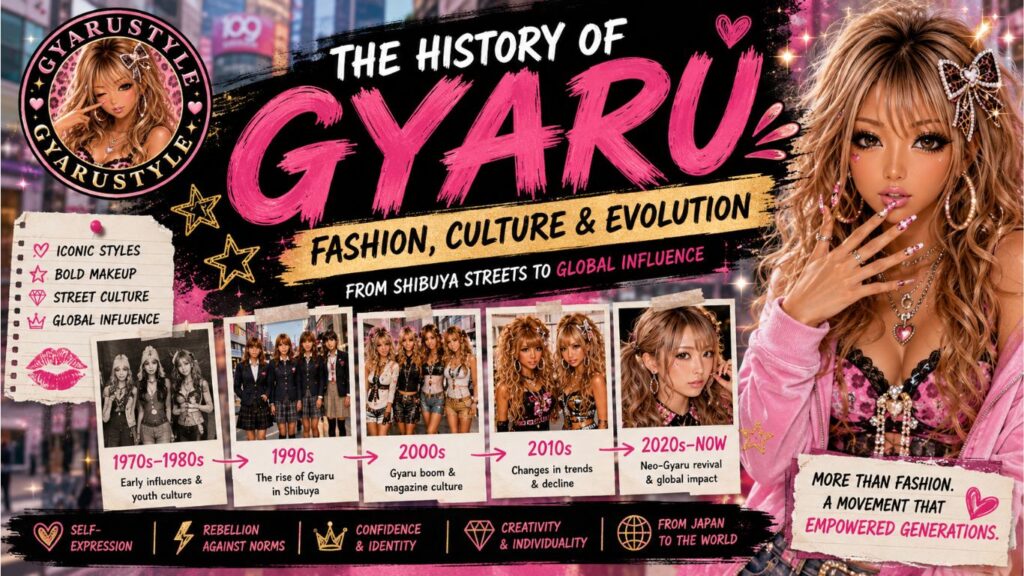
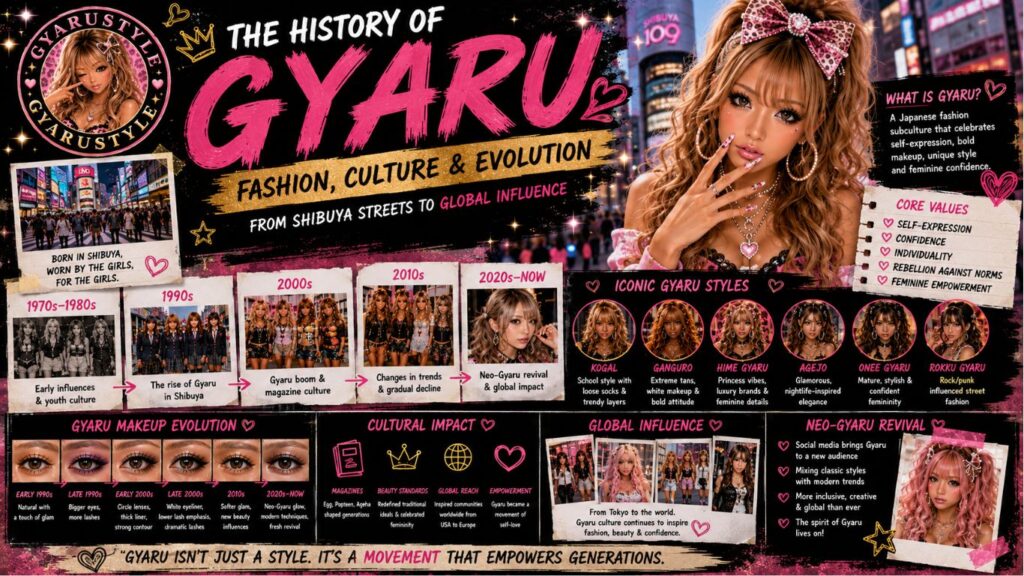
The roots of Gyaru can be traced back to the late 1970s and 1980s. Japan’s economic boom created new opportunities for young people to spend money on fashion, beauty products, and entertainment. Western influences became increasingly visible through magazines, television, music, and advertising.
One figure frequently mentioned in discussions about early Gyaru culture is Japanese pop star Namie Amuro. Her tanned skin, dyed hair, and fashionable image inspired countless young women during the 1990s. The phenomenon became so widespread that it earned the nickname “Amuraa,” referring to girls who copied her style.
Yet reducing the rise of Gyaru to a single celebrity would be inaccurate. The movement grew because it reflected broader social changes. Young women were gaining greater spending power and increasingly using fashion as a way to shape their identities.
Shibuya, one of Tokyo’s busiest districts, became the center of this transformation. Areas surrounding Shibuya 109, a famous fashion shopping complex, served as gathering places where trends spread rapidly. What happened on those streets often influenced youth fashion throughout the country.
Unlike many fashion movements that begin in luxury houses or designer studios, Gyaru emerged from the street level. Young people created the culture themselves, which gave it a level of authenticity that still resonates today.
The Golden Age of Gyaru
The late 1990s and early 2000s are often considered the golden era of Gyaru fashion. During this period, the style reached mainstream popularity and became one of Japan’s most recognizable youth movements.
Fashion magazines played a major role in its growth. Publications such as Egg, Popteen, and Koakuma Ageha didn’t simply report trends; they actively shaped them. Readers looked to models for makeup techniques, hairstyle inspiration, and outfit ideas. Before Instagram and TikTok existed, these magazines functioned as the primary source of fashion discovery.
An interesting detail that many modern articles overlook is how community-driven History of Gyaru culture was. Young women gathered in shopping districts, exchanged beauty tips, attended events, and formed social groups around shared interests. The fashion wasn’t just something people wore. It became a lifestyle connected to friendships, music, nightlife, and youth culture.
As the movement expanded, several distinct substyles emerged.
| Gyaru Style | Key Characteristics |
|---|---|
| Kogal | School-inspired fashion, loose socks, trendy accessories |
| Ganguro | Deep tans, bleached hair, dramatic white makeup accents |
| Hime Gyaru | Princess-inspired dresses, curls, bows, luxury aesthetics |
| Onee Gyaru | More mature and sophisticated appearance |
| Agejo | Glamorous nightlife-inspired fashion and beauty |
| Rokku Gyaru | Rock and punk influences combined with Gyaru styling |
These substyles allowed individuals to express different personalities while remaining connected to the broader Gyaru community.
Why Gyaru Was So Controversial
Looking back, it’s easy to focus on the fashion and overlook why Gyaru generated strong reactions.
Traditional Japanese beauty standards often emphasized natural appearance, modest behavior, and conformity. Gyaru challenged all three. Tanned skin, bright hair colors, dramatic makeup, long nails, and attention-grabbing clothing directly contradicted conventional expectations.
Critics sometimes dismissed the movement as superficial or rebellious for the sake of rebellion. Yet many sociologists and fashion historians argue that History of Gyaru represented something deeper. For many participants, it was a way to reclaim control over their appearance and reject social pressure.
One reason the movement remains fascinating is that it highlighted a universal tension found in many cultures: the conflict between fitting in and standing out.
Fashion has always been a language. Gyaru spoke loudly.
The Ganguro variation provides a particularly strong example. While outsiders often focused on the extreme makeup and tanning, participants frequently described it as an expression of freedom. The look intentionally moved away from beauty ideals centered around pale skin and understated presentation.
That context matters because without it, the history of Gyaru becomes reduced to aesthetics rather than understanding the cultural message behind the style.
The Evolution of Gyaru Makeup and Fashion
Makeup has always been one of the defining features of Gyaru culture. Large eyes, false eyelashes, circle lenses, contouring, and carefully designed eye makeup became recognizable elements of the aesthetic.
What’s interesting is how these techniques influenced mainstream beauty trends. Many makeup practices that once seemed extreme eventually became normalized through social media and global beauty culture.
The same pattern occurred with fashion. Platform shoes, oversized accessories, statement hairstyles, and highly curated outfits all became more common outside traditional Gyaru communities over time.
Fashion historians often point out that subcultures act as laboratories for future trends. Gyaru is a perfect example. Ideas that seemed unconventional during the early 2000s later appeared in mainstream fashion campaigns, beauty tutorials, and influencer culture.
This influence extended beyond Japan. International communities emerged across the United States, Europe, Southeast Asia, and Latin America. Online forums and social media platforms allowed enthusiasts to share inspiration, tutorials, and outfit photos regardless of geographic location.
As a result, Gyaru evolved from a Japanese youth movement into a global fashion subculture.
The Decline and Modern Revival of Gyaru
By the early 2010s, many observers believed Gyaru was disappearing. Fashion magazines closed, beauty trends shifted, and new youth movements gained attention. The highly stylized looks associated with peak-era Gyaru became less visible in mainstream Japanese fashion.
However, fashion movements rarely disappear completely.
Social media has introduced Gyaru to an entirely new generation. TikTok creators, Instagram influencers, and fashion enthusiasts have rediscovered the style, often blending traditional elements with contemporary aesthetics. This revival is commonly referred to as Neo-Gyaru.
Modern interpretations tend to be more flexible than earlier versions. Rather than following strict style rules, today’s enthusiasts often mix Gyaru influences with other fashion aesthetics. The result is a movement that feels both nostalgic and modern.
What makes this revival particularly interesting is that many young people embracing Gyaru today weren’t alive during its peak years. They’re attracted not only to the visual style but also to the philosophy behind it: confidence, creativity, and self-expression.
In that sense, the core spirit of Gyaru has survived even as the fashion continues to evolve.
FAQ
What does Gyaru mean?
Gyaru is derived from the English word “gal.” In Japan, it became associated with a fashion and lifestyle subculture known for bold self-expression and distinctive beauty trends.
When did Gyaru fashion become popular?
Gyaru gained significant popularity during the 1990s and reached its peak throughout the late 1990s and early 2000s, particularly in Tokyo’s Shibuya district.
What is the difference between Gyaru and Ganguro?
Gyaru refers to the broader fashion movement, while Ganguro is one specific substyle characterized by deep tanning, bleached hair, and dramatic makeup.
Is Gyaru still popular today?
Yes. While it is no longer as dominant as it was during the early 2000s, History of Gyaru has experienced a revival through social media platforms and international fashion communities.
Why is Gyaru culturally important?
Beyond fashion, Gyaru represented a challenge to traditional beauty standards and social expectations. It became a powerful form of identity and self-expression for many young women.
Final Thoughts
The history of Gyaru is about much more than clothing, hairstyles, or makeup trends. It reflects how fashion can become a form of cultural resistance and personal identity. What began on the streets of Shibuya evolved into a movement that influenced beauty standards, inspired global communities, and left a lasting mark on fashion history.
Even today, decades after its peak, Gyaru continues to attract people who value individuality over conformity. Trends change, platforms change, and styles evolve, but the desire to express yourself on your own terms remains timeless. That’s ultimately why Gyaru still matters.