What Is Ganguro? Fashion trends often reflect the values of their time. Some celebrate elegance, others practicality. Ganguro did something different. It challenged the very idea of what beauty was supposed to look like in Japan.
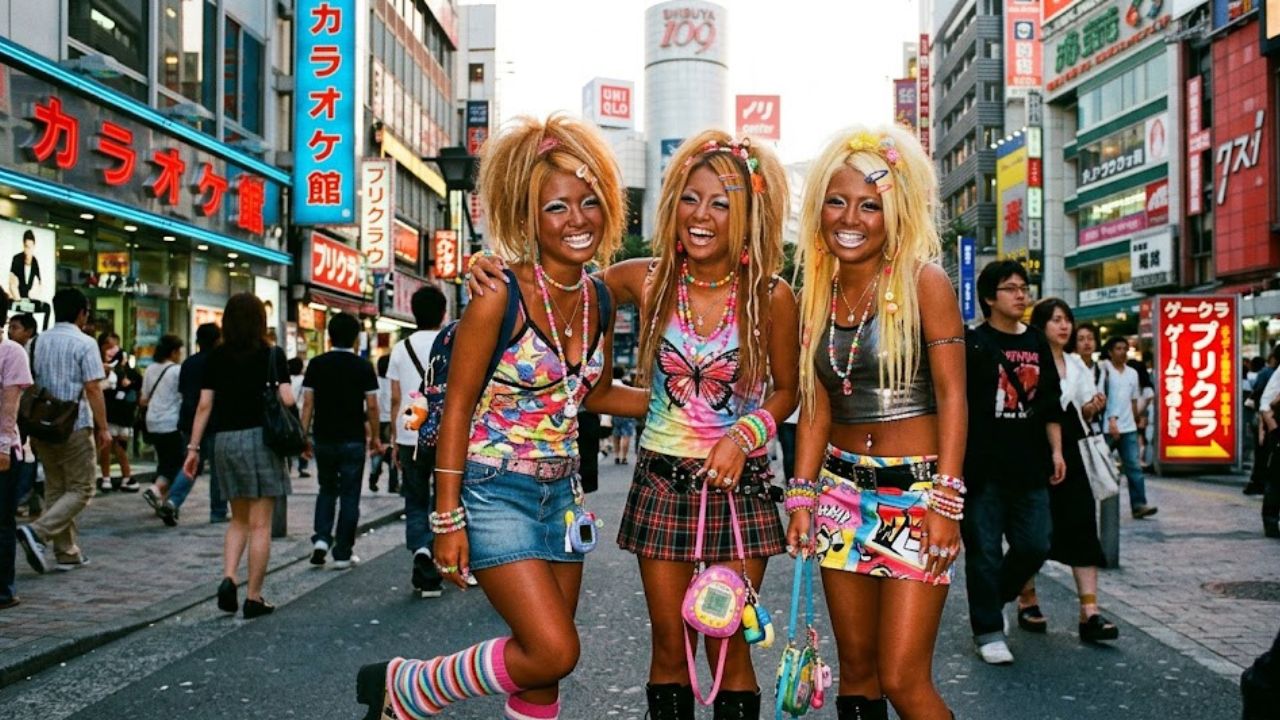
If you’ve ever seen photos of young women with deeply tanned skin, bleached hair, dramatic white makeup around the eyes and lips, and brightly coloured outfits, you’ve probably encountered Ganguro fashion. To outsiders, the style can seem shocking at first glance. Yet reducing it to an unusual beauty trend misses the bigger picture.
What Is Ganguro? emerged during the 1990s as part of Japan’s broader Gyaru culture, but it quickly developed its own identity. It became a form of rebellion, self-expression, and cultural commentary wrapped in platform shoes, bold makeup, and fearless confidence. More than two decades later, people still debate its meaning and influence.
Understanding Ganguro requires looking beyond the makeup. The real story is about young people pushing back against expectations and creating a style that refused to blend in.
What Is Ganguro?
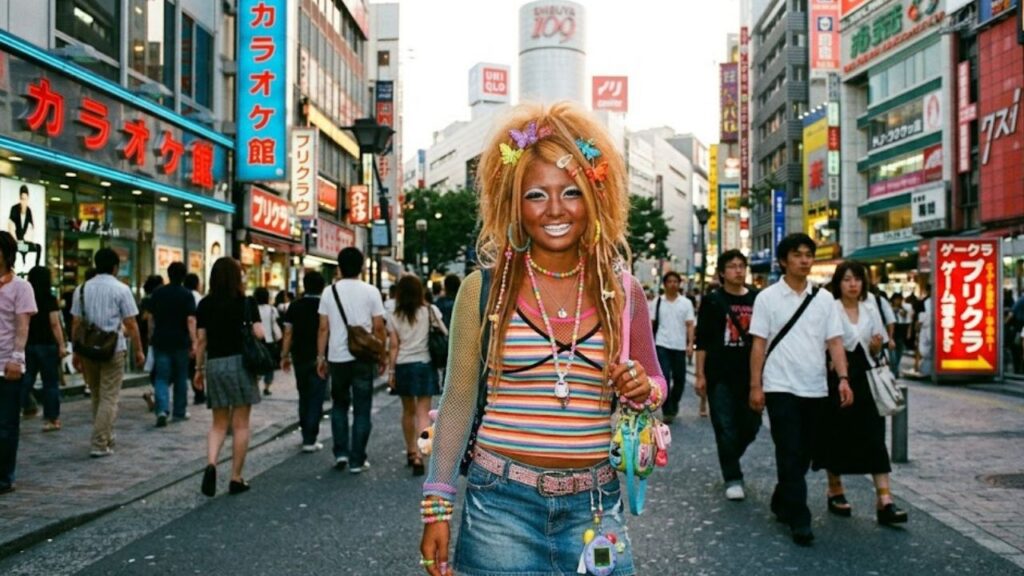
Ganguro is a Japanese fashion subculture that became popular during the late 1990s and early 2000s. The style is most recognised for its dark tan, heavily bleached or dyed hair, dramatic eye makeup, and colourful clothing.
The movement developed within the larger world of Gyaru fashion, but Ganguro pushed many of Gyaru’s ideas to their extreme. Traditional Japanese beauty standards often favoured pale skin, dark hair, and understated makeup. Ganguro turned those expectations upside down.
What Is Ganguro? What makes Ganguro particularly interesting is that it wasn’t simply about looking different. Many participants viewed their appearance as a statement. They rejected the pressure to conform and instead embraced a look that celebrated individuality.
One common misunderstanding is that Ganguro was entirely about tanning. The tan certainly became its most recognisable feature, but the style was actually a combination of fashion, beauty, attitude, and community. A Ganguro look involved carefully coordinated makeup, accessories, hairstyles, and clothing choices that worked together to create a distinct aesthetic.
The result was impossible to ignore. That visibility was part of the point.
How Ganguro Emerged in 1990s Japan
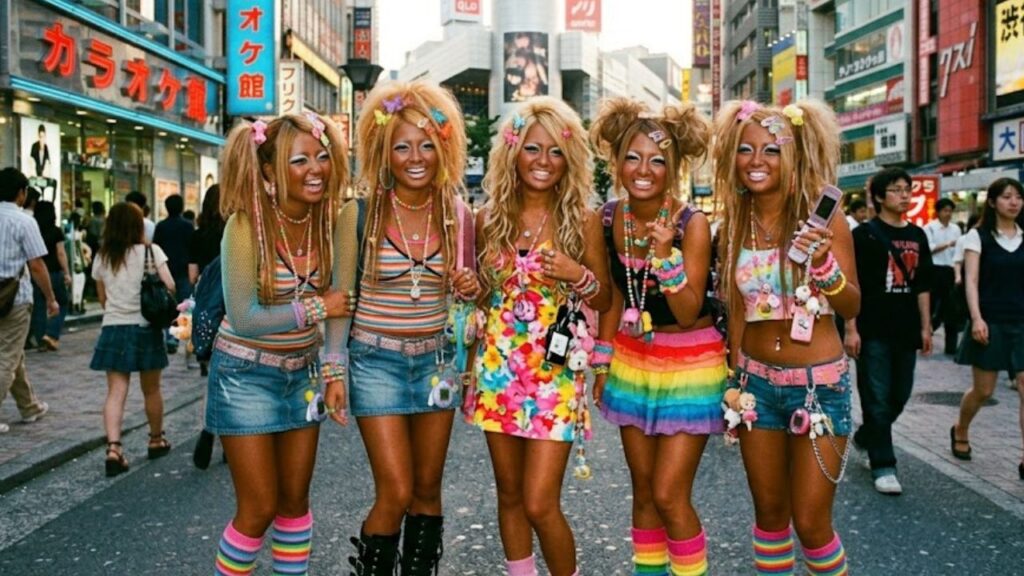
To understand why Ganguro appeared, it’s helpful to consider the social environment of Japan during the 1990s.
The decade saw major economic and cultural shifts. Young people were increasingly exposed to global media, Western fashion influences, and new forms of self-expression. At the same time, traditional expectations surrounding appearance remained strong.
Many teenage girls and young women felt constrained by those expectations. Fashion became one way to explore personal identity.
What Is Ganguro? The streets of Shibuya in Tokyo became a particularly important centre for youth culture. Rather than following trends handed down by designers or magazines, young people began creating their own styles. Ganguro emerged from this creative environment.
Some fashion historians describe Ganguro as a visual protest against conventional beauty ideals. While that interpretation has merit, the reality was often more personal. Many participants simply enjoyed the freedom of experimenting with their appearance and belonging to a community that valued creativity over conformity.
That distinction matters. Ganguro wasn’t a coordinated social movement. It was a youth-driven fashion culture that happened to challenge established norms.
The Defining Features of Ganguro Style
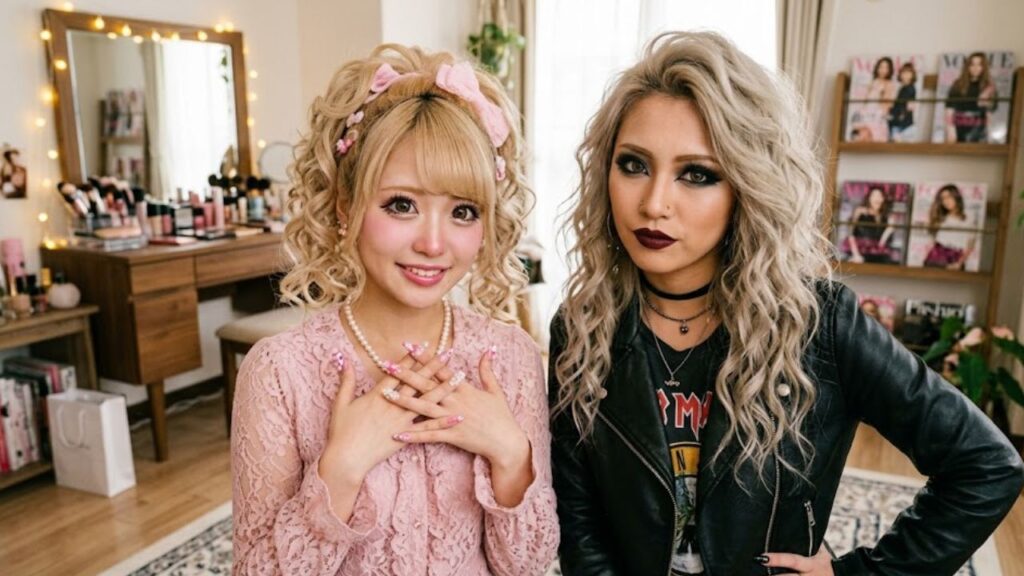
Ganguro developed a highly recognisable visual language. Several elements became closely associated with the look.
The most famous characteristic was deeply tanned skin. At a time when pale skin was widely considered desirable, this choice immediately set Ganguro apart.
Hair was another key element. Many followers bleached their hair blonde, light brown, silver, or bright shades that contrasted dramatically with their skin tone. Long hairstyles were particularly popular, often enhanced with extensions and decorative accessories.
Makeup played an equally important role. White eyeliner and white highlights around the eyes created a striking contrast against tanned skin. White lipstick accents were also common. Bright eyeshadow colours added further drama.
Clothing reflected a playful and energetic attitude. Popular choices included:
- Mini skirts, platform shoes, crop tops, and brightly coloured outfits
- Tropical prints, oversized accessories, glitter, bracelets, and statement jewellery
What often gets overlooked is the amount of effort required to achieve the look. Authentic Ganguro makeup wasn’t random or careless. It required skill, coordination, and attention to detail. Many participants spent considerable time perfecting their appearance.
The style appeared spontaneous, but creating it was anything but effortless.
Ganguro and Gyaru: Understanding the Difference
What Is Ganguro? One of the most common questions people ask is whether Ganguro and Gyaru are the same thing.
The short answer is no.
What Is Ganguro? Gyaru is the broader fashion culture. Ganguro is one specific style that developed within that culture.
A useful comparison is to think of Gyaru as an umbrella category. Over time, numerous substyles emerged, each with its own visual identity. Ganguro became one of the most famous because of its dramatic appearance.
| Feature | Gyaru | Ganguro |
| Scope | Broad fashion culture | Specific substyle |
| Makeup | Varies by substyle | Highly dramatic |
| Skin Tone | Various looks | Deeply tanned |
| Hair | Many options | Often heavily bleached |
| Visual Impact | Moderate to bold | Extremely bold |
This distinction is important because modern discussions often use the terms interchangeably. Doing so overlooks the diversity that existed within Gyaru culture.
Many Gyaru styles focused on glamour, elegance, or casual fashion. Ganguro took a more rebellious approach and became famous for its refusal to follow mainstream beauty standards.
The Evolution of Ganguro: Yamanba, Manba, and Beyond
What Is Ganguro? As the trend evolved, even more extreme variations appeared.
Two of the best-known examples were Yamanba and Manba. These styles pushed Ganguro aesthetics further, introducing brighter colours, heavier makeup, and increasingly elaborate accessories.
Observers unfamiliar with Japanese street fashion often assumed these styles were simply attempts to attract attention. In reality, they represented a natural evolution within youth culture. Once a look becomes familiar, fashion communities frequently experiment and innovate to create something new.
Yamanba and Manba reflected that process.
Participants used neon colours, floral decorations, oversized platform shoes, and highly stylised makeup. The resulting appearance was theatrical, creative, and intentionally exaggerated.
Interestingly, these substyles also demonstrate how fashion communities continuously reinvent themselves. Ganguro was never static. It changed as new generations adapted the aesthetic to their own interests and cultural influences.
What Is Ganguro? That constant reinvention helps explain why the style remains fascinating to fashion researchers today.
Why Ganguro Was So Controversial
Ganguro attracted significant criticism during its peak years.
Some critics argued that the style was too extreme. Others viewed it as evidence of changing social values among Japanese youth. Media coverage often focused on its most dramatic aspects, which sometimes reinforced stereotypes and misunderstandings.
Yet controversy often follows fashion movements that challenge established norms.
What Is Ganguro? Consider other influential youth cultures throughout history. Punk, grunge, and various alternative fashion scenes all faced criticism before gaining broader cultural recognition. Ganguro followed a similar pattern.
One reason the style generated strong reactions was its direct contrast with conventional beauty ideals. Fashion trends often modify existing standards. Ganguro rejected them outright.
For many participants, that rejection felt empowering.
Fashion researchers frequently point out that youth subcultures are rarely just about clothing. They create communities, shared identities, and alternative ways of expressing individuality. Ganguro was no exception.
What Is Ganguro? Looking back, much of the controversy reveals as much about society’s expectations as it does about the fashion itself.
Is Ganguro Still Popular Today?
The original Ganguro movement declined during the mid-2000s as new fashion trends emerged. Beauty standards shifted, and many young consumers moved toward different styles within the broader Gyaru scene.
What Is Ganguro? That doesn’t mean Ganguro disappeared entirely.
Fashion trends rarely vanish completely. Instead, they leave behind influences that continue to shape future styles. Elements of Ganguro can still be found in alternative fashion communities, cosplay culture, social media aesthetics, and niche beauty trends.
There has also been renewed interest among younger audiences who view Ganguro as an important chapter in Japanese fashion history. Online platforms have made it easier to discover archived photographs, magazine features, and personal stories from the era.
Modern interpretations tend to be less extreme than their predecessors. Rather than recreating the original look exactly, many enthusiasts borrow selected elements while adapting them for contemporary fashion.
In that sense, Ganguro has transitioned from a current trend to a cultural reference point.
Its legacy now extends beyond clothing and makeup. It represents a moment when a generation chose visibility over conformity and creativity over approval.
The Lasting Influence of Ganguro Fashion
What Is Ganguro? occupies a unique place in fashion history because it challenged assumptions about beauty so directly.
Many fashion movements introduce new colours, silhouettes, or accessories. Ganguro questioned the standards themselves. It encouraged people to think differently about appearance, identity, and self-expression.
That influence can still be seen in contemporary discussions about beauty diversity and alternative aesthetics. While modern trends may look different on the surface, the underlying idea remains familiar: people want the freedom to define beauty on their own terms.
The movement also demonstrated how youth culture can shape broader fashion conversations. What began on the streets of Shibuya eventually became recognised around the world as one of Japan’s most distinctive style movements.
Ganguro may no longer dominate fashion headlines, but its impact continues to resonate. Few trends have left such a memorable visual impression while also raising meaningful questions about individuality and cultural expectations.
Frequently Asked Questions
What does Ganguro mean?
Ganguro generally refers to a Japanese fashion style characterised by dark tans, bleached hair, dramatic makeup, and colourful clothing that became popular in the late 1990s.
Is Ganguro part of Gyaru culture?
Yes. Ganguro is considered a substyle within the broader Gyaru fashion movement.
Why did Ganguro use white makeup?
White eyeliner and highlights created dramatic contrast against tanned skin and became one of the style’s signature visual features.
Is Ganguro still popular in Japan?
The original movement is no longer mainstream, but dedicated communities, fashion enthusiasts, and cultural historians continue to celebrate and reinterpret the style.
What is the difference between Ganguro and Yamanba?
Yamanba evolved from Ganguro and featured even more exaggerated makeup, brighter colours, larger accessories, and a more theatrical appearance.