Traditional Gyaru Makeup Fashion trends come and go, but some leave a lasting visual legacy. Traditional Gyaru makeup is one of them. Long before social media made dramatic beauty transformations mainstream, young women in Japan were experimenting with makeup techniques that reshaped facial proportions, exaggerated eye size, and challenged conventional beauty standards.
People often assume Gyaru makeup is simply about heavy eyeliner and oversized false lashes. That interpretation misses the bigger picture. Traditional Gyaru was never just a makeup style. It was a form of self-expression tied to a larger fashion movement that emerged from Tokyo’s youth culture. Makeup became the tool that allowed followers to create a bold identity that stood apart from expectations.
Traditional Gyaru Makeup What makes traditional Gyaru makeup fascinating is how deliberate every element is. The lashes, contouring, lenses, and eye shapes all work together to create a specific illusion. Once you understand the reasoning behind those choices, the look becomes far easier to recreate authentically.
The Origins of Traditional Gyaru Makeup
Traditional Gyaru Makeup The roots of Gyaru culture can be traced back to Japan’s fashion scene during the 1990s. While many youth trends focused on fitting into existing standards, Gyaru pushed in the opposite direction. It embraced individuality, glamour, and a more rebellious approach to beauty.
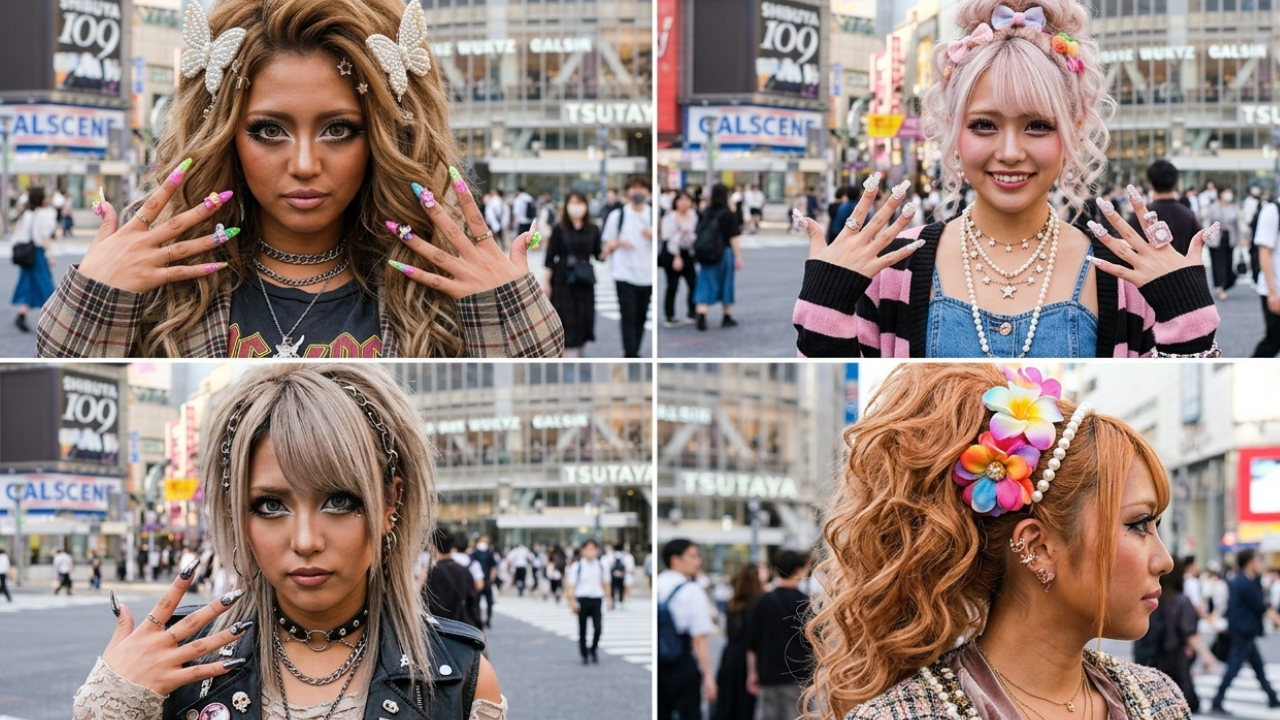
Fashion districts such as Shibuya became the heart of the movement. Magazines like Egg and Popteen showcased models whose appearance looked dramatically different from mainstream beauty trends. Their makeup emphasised larger eyes, brighter features, dramatic lashes, and carefully sculpted facial proportions.
One detail often overlooked by modern tutorials is that traditional Gyaru makeup evolved alongside photography. Many of the techniques were designed to create a striking appearance in magazine editorials and street photography. Features that might seem exaggerated in person often appeared balanced and attractive on camera.
This explains why some early Gyaru looks seem more dramatic than modern adaptations. The goal wasn’t subtle enhancement. The goal was transformation.
What Defines Authentic Traditional Gyaru Makeup?
Many beauty trends rely on enhancing existing features. Traditional Gyaru makeup focuses on creating entirely different visual proportions.
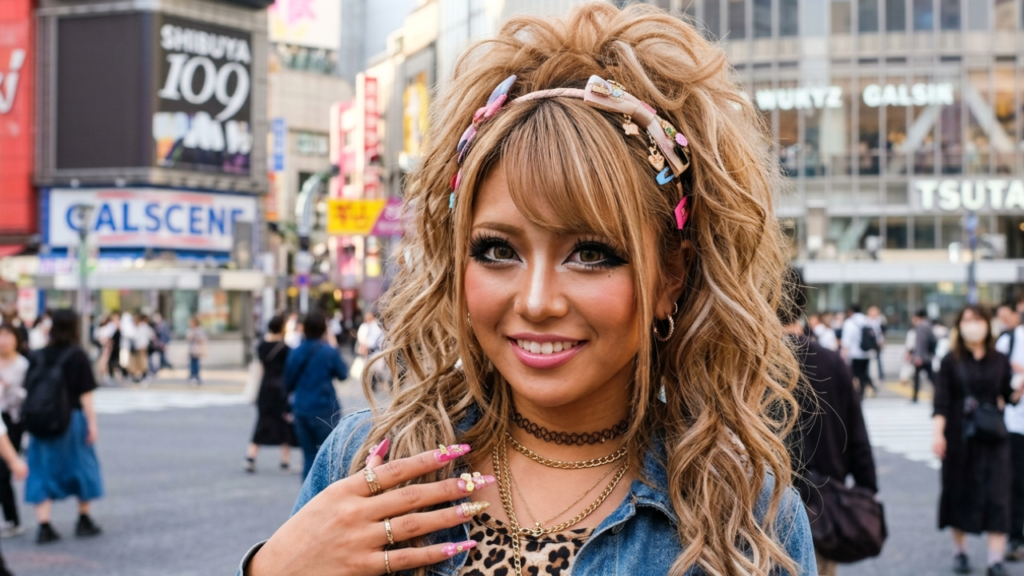
Traditional Gyaru Makeup The eyes are the most obvious example. Rather than simply applying eyeliner, Gyaru makeup uses multiple techniques to create the illusion of larger, rounder eyes. Upper lashes add height, while lower lashes extend the perceived eye area downward. White or nude eyeliner brightens the waterline and increases the effect further.
Contouring also plays a larger role than many beginners realise. Nose contouring helps create sharper dimensions, while strategic highlighting draws attention to specific facial areas. Together, these techniques contribute to the signature doll-like appearance associated with classic Gyaru.
Another defining feature is balance. Authentic Gyaru makeup isn’t about making one feature dramatic while ignoring the rest. Every component works together. Heavy lashes without proper contouring can look unfinished. Circle lenses without eye enlargement techniques often fail to achieve the intended effect.
That’s why experienced Gyaru enthusiasts usually focus on the entire face rather than individual makeup products.
The Signature Eye Techniques That Create the Gyaru Look
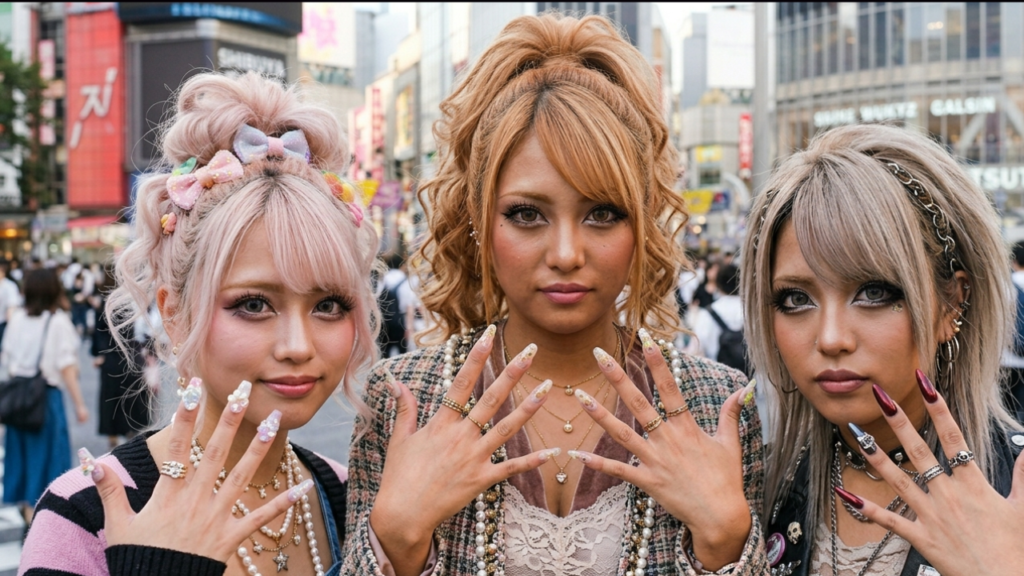
If there is one area worth mastering first, it’s eye makeup.
Traditional Gyaru Makeup relies heavily on visual illusion. The objective is not simply larger eyes but eyes that appear wider, rounder, and more expressive.
Several techniques contribute to this effect:
- Extended eyeliner shapes that subtly alter the perceived eye shape.
- False lashes that add vertical and horizontal dimension.
- Lower lash placement that increases the apparent height of the eyes.
- Circle lenses that enlarge the visible iris.
- Highlight placement that brightens surrounding areas.
One mistake many beginners make is copying modern social media tutorials without understanding the structure underneath. Authentic traditional Gyaru makeup often places significant attention on the lower eye area. The lower lash line can be just as important as the upper lid.
Traditional Gyaru Makeup Another frequently misunderstood technique is tareme styling. This approach creates a slightly drooping eye effect that softens the overall appearance while making the eyes appear larger. It may seem counterintuitive, but carefully controlled downward shaping often creates a more convincing enlargement effect than aggressively extending eyeliner upward.
When executed properly, these techniques work together seamlessly rather than appearing individually noticeable.
Traditional Gyaru Makeup Step by Step
Traditional Gyaru Makeup Creating a traditional Gyaru look becomes much easier when approached in stages rather than trying to replicate an entire transformation at once.
Begin with a smooth base. Traditional Gyaru makeup generally favours even, perfected skin rather than extremely natural finishes. Foundation should create a clean canvas while maintaining enough dimension to support contouring later.
Next comes facial sculpting. Focus on the nose, cheekbones, and jawline. The objective isn’t dramatic contouring by modern standards. Instead, it should subtly support the eye area and overall facial balance.
Eye makeup follows. Apply shadow to establish shape before introducing eyeliner. Many beginners rush directly to eyeliner and lashes, which often creates uneven results. Building structure first usually produces a more authentic outcome.
False lashes are one of the most recognisable elements of the style. Upper lashes create height, while lower lashes help expand the perceived eye area. Lash placement often matters more than lash volume.
Traditional Gyaru Makeup Circle lenses can enhance the final effect, although they are not strictly necessary. Skilled makeup application can still produce a convincing Gyaru look without them.
Finally, complete the look with softly defined lips and coordinated brows. Traditional Gyaru rarely treats these features as afterthoughts. They help maintain visual harmony across the face.
Traditional Gyaru vs Modern Gyaru Makeup
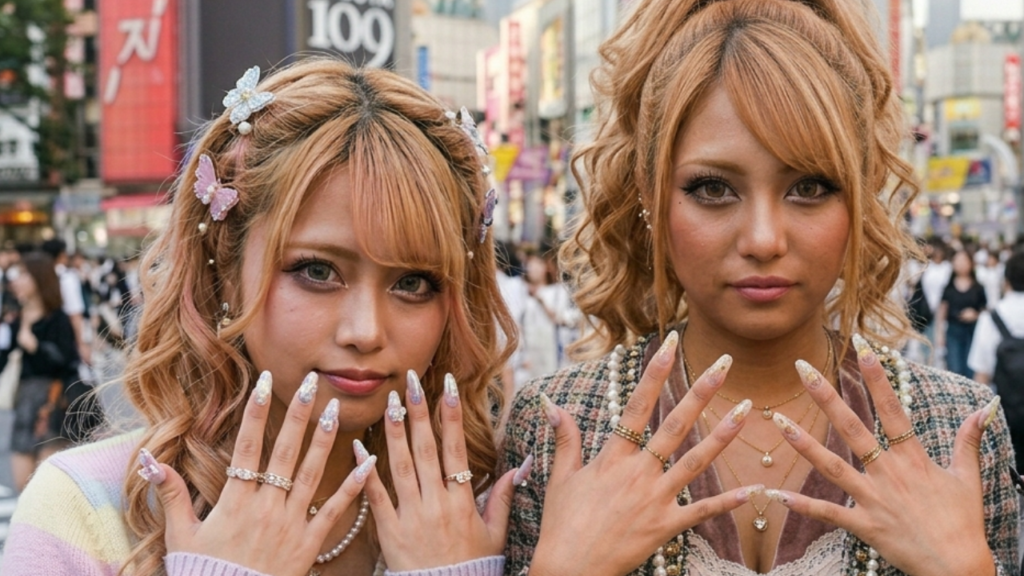
Traditional Gyaru Makeup Many newcomers encounter confusion when researching Gyaru because modern interpretations vary considerably from historical examples.
Traditional Gyaru emerged during a period when dramatic transformations were central to the culture. Makeup often appeared bold, highly stylised, and immediately recognisable.
Traditional Gyaru Makeup Modern Gyaru frequently adopts a softer approach. Contemporary adaptations often reduce lash volume, minimise contouring, and use lighter eye makeup. This creates a more wearable appearance suitable for daily life while still preserving key Gyaru influences.
The differences become clearer when viewed side by side.
| Feature | Traditional Gyaru | Modern Gyaru |
| Lashes | Dramatic and layered | More natural |
| Eye Enlargement | Extreme focus | Moderate focus |
| Contouring | Stronger definition | Softer shaping |
| Circle Lenses | Common | Optional |
| Overall Effect | Transformational | Wearable |
Neither approach is inherently better. They simply reflect different priorities. Traditional Gyaru emphasises visual impact, while modern interpretations often prioritise versatility.
Common Mistakes That Prevent an Authentic Result
Many people assume authentic Gyaru makeup requires expensive products or rare Japanese cosmetics. In reality, technique has a far greater impact than product selection.
One common mistake is focusing exclusively on lashes. While lashes are important, they cannot compensate for poorly structured eye makeup underneath.
Another issue is excessive contouring. Modern beauty trends often encourage heavy sculpting, but traditional Gyaru contouring generally serves a specific purpose rather than acting as the main feature.
Improper lash placement creates problems as well. Some beginners apply lashes that are too long or too dense for their eye shape, which can actually make the eyes appear smaller.
Perhaps the most overlooked mistake is ignoring historical references. Many contemporary tutorials blend elements from Hime Gyaru, Ganguro, Onee Gyaru, and modern beauty trends into a single look. While creative experimentation is perfectly valid, it can make it difficult to understand what traditional Gyaru makeup originally looked like.
Studying vintage magazine photography often reveals details that modern tutorials miss entirely.
Why Traditional Gyaru Makeup Still Influences Beauty Trends
The influence of Gyaru extends far beyond its original community.
Many techniques that are now common across beauty platforms have roots in practices popularised by Gyaru enthusiasts years earlier. Eye enlargement methods, lower lash emphasis, contour placement, and transformation-focused makeup all appeared in Gyaru culture long before they became mainstream discussion topics.
The style also demonstrated something that remains relevant today: makeup can be used creatively rather than merely cosmetically. Traditional Gyaru wasn’t concerned with appearing effortless. It celebrated visible artistry and intentional transformation.
That mindset continues to resonate with beauty enthusiasts around the world. Even people who would never identify as Gyaru often incorporate techniques that originated within the subculture.
The result is a lasting influence that extends well beyond Japan’s fashion districts and magazine pages.
FAQ
What is traditional Gyaru makeup?
Traditional Gyaru makeup is a Japanese fashion subculture makeup style focused on eye enlargement, dramatic lashes, contouring, and facial transformation. It became popular during the 1990s and early 2000s.
Do you need circle lenses for traditional Gyaru makeup?
No. Circle lenses enhance the effect, but strong makeup techniques can still create an authentic Gyaru appearance without them.
What makes traditional Gyaru different from modern Gyaru?
Traditional Gyaru typically uses more dramatic lashes, stronger contouring, and more aggressive eye enlargement techniques. Modern Gyaru often adopts a softer and more wearable interpretation.
Is traditional Gyaru makeup difficult for beginners?
The learning curve is moderate because multiple techniques work together. Most beginners achieve better results by mastering eye makeup first before attempting full transformations.
What is the most important part of Gyaru makeup?
The eye area is generally considered the foundation of the look. Eye shape manipulation, lash placement, and lower eye detailing have the greatest impact on achieving an authentic result.