


Business Casual Basics Walking into a new office without knowing the dress code can feel surprisingly stressful. You don’t want to appear overdressed in a room full of employees wearing chinos and polo shirts, yet showing up too casually can leave the wrong first impression. That’s why business casual continues to confuse professionals across industries.
Part of the problem is that business casual isn’t a strict uniform. A software startup in Austin may define it very differently from a financial firm in New York. Company culture, industry standards, and even geography influence what’s considered acceptable. Still, some principles remain consistent: your clothing should look polished, intentional, and professional without feeling overly formal.
Business Casual Basics Understanding those principles makes getting dressed for work much easier. Instead of memorising endless rules, you can build a wardrobe that works across offices, meetings, networking events, and hybrid workplaces while still reflecting your personal style.
What Does Business Casual Mean?
Business casual is a workplace dress code that sits between traditional business attire and everyday casual clothing. Think of it as professional clothing with some of the formality removed. Suits and ties become optional, while jeans, athletic wear, and overly relaxed clothing generally remain off-limits.
The original purpose of business casual was simple: allow employees to dress more comfortably without sacrificing professionalism. Over time, workplace culture evolved, and so did expectations. Many modern offices now encourage employees to express personality through colour, accessories, and styling choices, provided the overall appearance remains polished.
Business Casual Basics One mistake people often make is assuming business casual means “casual clothes worn at work.” That’s rarely true. A useful rule is to ask yourself whether your outfit would still look appropriate if you unexpectedly met a client or senior executive. If the answer is yes, you’re probably on the right track.
Hybrid work has also changed the conversation. Employees who divide their time between home and the office often favour versatile pieces such as tailored trousers, knit blazers, and smart loafers that transition easily between virtual meetings and in-person collaboration.
Understanding the Business Casual Dress Code

Most workplaces don’t provide a detailed handbook explaining exactly what to wear every day. Instead, they rely on employees to interpret broad expectations. That’s where many people struggle.
Rather than focusing on specific garments, experienced professionals tend to follow a few core principles:
- Prioritise fit over trends.
- Choose clean, well-maintained clothing.
- Dress for your workplace culture.
- Avoid anything excessively casual or distracting.
- Aim for a polished, intentional appearance.
Business Casual Basics Fit deserves special attention because it influences how expensive and professional clothing appears. A moderately priced blazer that fits properly almost always looks better than a designer jacket that’s too large or poorly tailored.
Another overlooked aspect is fabric quality. Wrinkled shirts, faded trousers, or worn-out shoes can undermine an otherwise strong outfit. Business casual clothing doesn’t need to be expensive, but it should appear cared for.
Observing colleagues during your first few weeks at a new company can provide valuable insight. If senior leadership consistently wears blazers and dress shoes, the office standard is probably more formal. If executives regularly wear dark denim and knitwear, expectations may be more relaxed.
Business Casual Clothing Essentials
Business Casual Basics Building a business casual wardrobe becomes much easier when you focus on versatile basics rather than chasing trends.
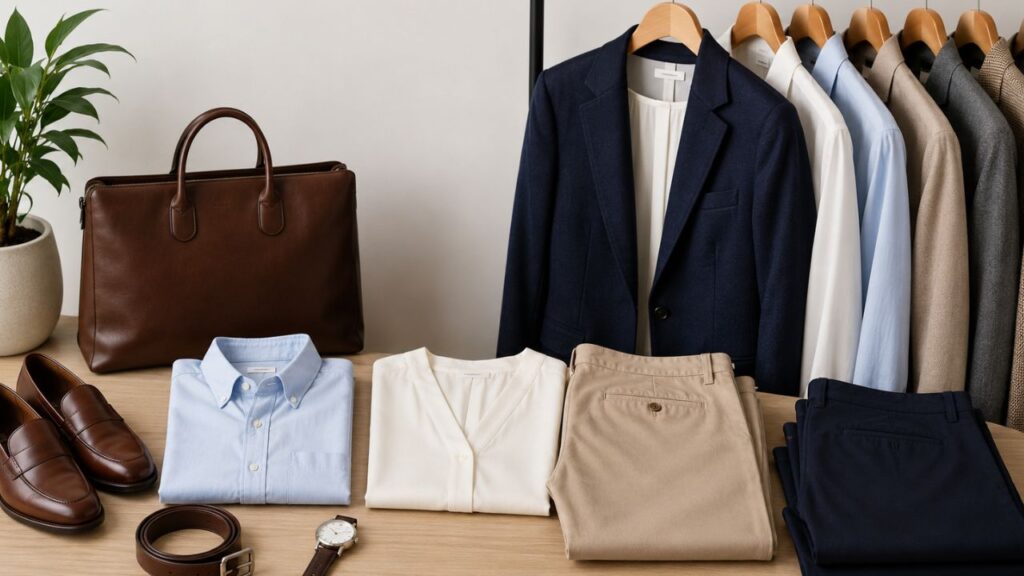
For tops, button-down shirts remain one of the most reliable choices for men and women alike. Oxford shirts, blouses, fine-gauge sweaters, polo shirts, and structured knit tops also work well in many offices. Layering with cardigans or blazers adds professionalism while giving outfits greater flexibility.
When selecting bottoms, tailored pieces usually perform best. Chinos, dress pants, ankle trousers, pencil skirts, midi skirts, and structured dresses form the foundation of many business casual wardrobes. Neutral colours such as navy, charcoal, black, beige, and grey make mixing and matching easier.
Footwear often determines whether an outfit feels professional. Loafers, oxfords, dress boots, ballet flats, and modest heels generally align with business casual expectations. Athletic trainers, flip-flops, and heavily distressed footwear rarely do.
A practical business casual wardrobe often includes:
- Two or three pairs of tailored trousers or chinos.
- Several button-down shirts or blouses.
- One or two blazers or structured jackets.
- Professional footwear in neutral colours.
- Quality accessories such as belts, watches, and work bags.
Business Casual Basics Capsule wardrobes have become increasingly popular because they simplify dressing while reducing unnecessary purchases. Many professionals discover that twenty carefully selected pieces can produce dozens of office-ready combinations.
What Not to Wear in a Business Casual Workplace
Business casual allows flexibility, but there are still boundaries.
Clothing associated primarily with leisure, exercise, or nightlife usually doesn’t belong in professional settings. Graphic T-shirts, hoodies, sweatpants, ripped jeans, gym trainers, and beachwear are common examples.
Appearance also extends beyond clothing. Excessively wrinkled garments, visible stains, or poorly maintained shoes can create an impression of carelessness, regardless of how fashionable the outfit may be.
Business Casual Basics One of the most common workplace style mistakes is dressing according to social media trends rather than office norms. An outfit that performs well on Instagram may not suit a corporate environment. Workplace clothing should support your professional goals, not distract from them.
Another frequent mistake is overdressing. Showing up in a full suit when everyone else wears smart separates can feel just as uncomfortable as arriving underdressed. Context matters.
The following table offers a useful comparison:
| Appropriate Business Casual | Usually Too Casual |
| Chinos | Sweatpants |
| Blazer | Hoodie |
| Loafers | Flip-flops |
| Oxford shirt | Graphic T-shirt |
| Tailored dress | Beach dress |
| Dress trousers | Distressed jeans |
Business Casual Outfit Examples
Business Casual Basics Examples often make dress codes easier to understand than definitions.
For men, a classic combination consists of navy chinos, a light blue button-down shirt, brown loafers, and a grey blazer. Another reliable option pairs charcoal dress pants with a polo shirt and leather dress shoes. In more relaxed offices, dark, non-distressed jeans combined with an Oxford shirt and structured jacket may also qualify as business casual.
Business Casual Basics Women have equally broad options. Tailored ankle trousers paired with a blouse and flats create a polished everyday outfit. A midi dress layered with a cardigan works well in many workplaces, while a blazer worn over tailored separates offers a professional appearance suitable for meetings and presentations.
Industry matters significantly. Consider these examples:
A financial analyst at a large investment firm will likely dress more formally, favouring blazers, dress trousers, and classic leather shoes. A marketing professional in a creative agency may comfortably incorporate fashion-forward silhouettes, knitwear, and contemporary accessories. Employees at technology companies often enjoy the greatest flexibility, though polished clothing is still expected for client interactions.
This variation explains why observing office culture remains one of the smartest style strategies available.
Business Casual vs Other Workplace Dress Codes
Confusion often arises because several dress codes overlap.
Business professional represents the most formal everyday office standard. Suits, ties, structured dresses, and conservative styling dominate these environments, particularly in law, finance, and executive settings.
Smart casual introduces greater freedom. Fashion-forward pieces, premium denim, stylish trainers, and trend-driven items may appear acceptable, depending on the occasion.
Business Casual Basics occupies the middle ground. It balances professionalism with comfort and remains the default dress code in many American workplaces.
A simple way to think about these categories is:
Business Professional → Most Formal
Business Casual → Moderately Formal
Smart Casual → Least Formal while still polished
When uncertain, err on the side of slightly overdressing. It’s easier to relax your wardrobe after observing colleagues than to recover from making a poor first impression.
Building a Business Casual Wardrobe That Lasts
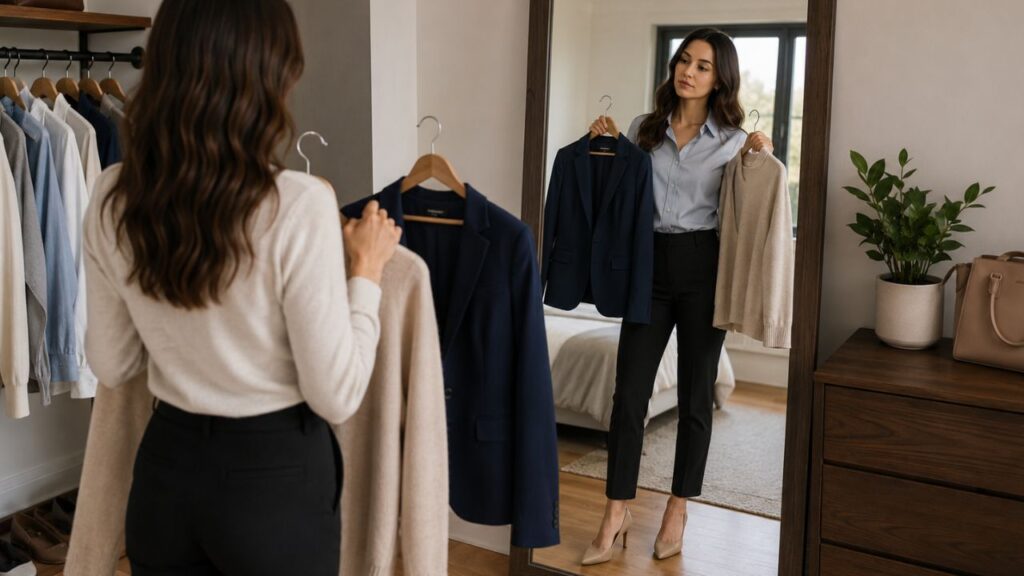
Business Casual Basics Many professionals waste money by purchasing random clothing pieces that don’t coordinate. A better approach is to build around interchangeable essentials.
Start with neutral foundation pieces. Navy trousers, grey chinos, white shirts, black loafers, and a well-fitted blazer provide tremendous versatility. Once those basics are established, introduce colour and seasonal variation gradually.
Quality often matters more than quantity. Five excellent shirts worn regularly usually outperform fifteen inexpensive shirts that lose shape after several washes.
Pay attention to tailoring as well. Minor alterations can dramatically improve appearance. Hemming trousers, adjusting sleeve lengths, or refining jacket fit frequently makes clothing look custom-made.
Finally, remember that business casual should support confidence rather than create anxiety. Clothing works best when you no longer think about it. The right outfit allows you to focus on meetings, presentations, and career growth instead of wondering whether you’re dressed appropriately.
Frequently Asked Questions
Can you wear jeans in a business casual office?
Sometimes. Dark, non-distressed jeans may be acceptable in relaxed workplaces, particularly in technology or creative industries. Always check company culture first.
Are sneakers considered business casual?
Traditional athletic sneakers usually aren’t. Minimal, premium leather sneakers may be acceptable in modern offices with relaxed dress codes.
Is a polo shirt business casual?
Business Casual Basics Yes. A well-fitted polo shirt paired with chinos or tailored trousers is widely accepted as business casual in many workplaces.
Are leggings business casual?
Standard leggings generally aren’t considered business casual unless worn under a professional dress or long tunic in workplaces where such styling is accepted.
What colours work best for business casual?
Neutral colours such as navy, black, grey, white, beige, and charcoal create the strongest foundation because they mix easily and maintain a professional appearance.