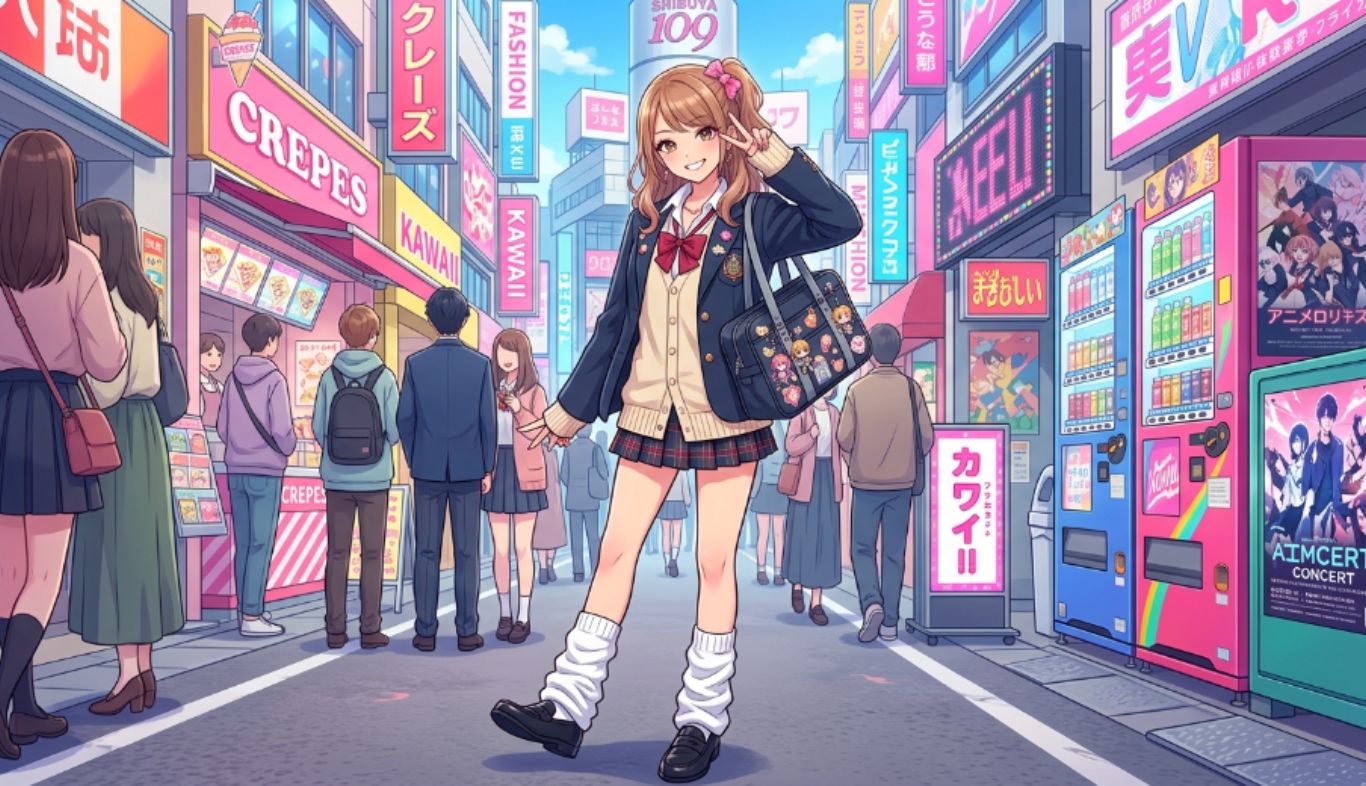
The phrase kogyaru shorter skirts immediately brings to mind one of the most recognizable silhouettes associated with Japanese gyaru fashion. A shorter, pleated skirt can create a lively and youthful visual line, especially when paired with loose socks, platform shoes, a fitted cardigan, or a carefully coordinated school-inspired top. However, there’s more to the style than simply making a skirt shorter. Kogyaru, sometimes written as kogal, emerged from Japanese youth fashion culture and became especially visible during the 1990s. The aesthetic drew on school-uniform elements while transforming them through accessories, hairstyles, makeup, footwear, and attitude. The resulting look wasn’t merely a uniform worn as intended. It was a personalized fashion statement. That’s an important distinction.
The appeal of kogyaru shorter skirts comes partly from contrast. A traditional pleated skirt has a structured and conservative design, while altering its proportions can make the overall outfit appear more energetic and fashion-forward. Layering then adds another dimension. Oversized socks, loose sweaters, statement bags, and platform footwear can change the proportions yet again. At the same time, it’s useful to discuss the style without reducing it to skirt length. Kogyaru fashion is a broader visual language. Hair color, tanning trends, makeup, accessories, footwear, and customization all contribute to the recognizable aesthetic. Modern interpretations can also be quite different from the original 1990s look. Contemporary fashion enthusiasts may borrow individual elements rather than recreate an entire historical outfit. A pleated skirt might be combined with a cropped jacket, sneakers, a modern shoulder bag, or minimalist accessories.
In other words, the style has room to evolve. This article examines the fashion history, styling logic, cultural background, and modern relevance of kogyaru skirts. The goal isn’t simply to describe what the clothes look like, but to explain why the combination became influential and how its visual ideas continue to appear in fashion today.
The Origins of Kogyaru Fashion
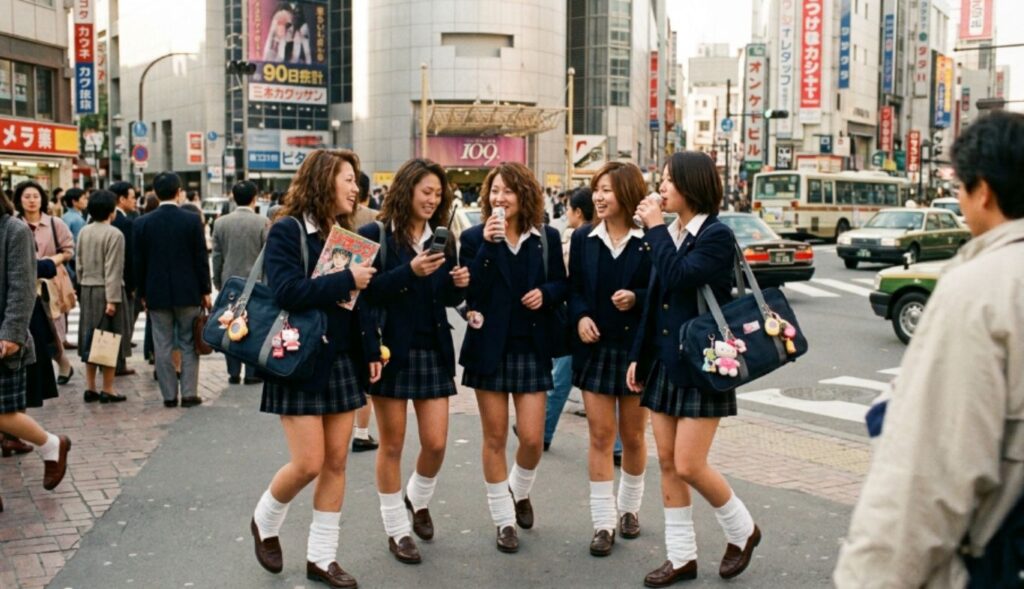
To understand kogyaru shorter skirts, it’s helpful to understand the environment in which kogyaru fashion developed. The style became prominent in Japan during the 1990s, particularly among young women associated with urban youth culture. Shibuya became strongly associated with gyaru fashion, magazines, shopping districts, and rapidly changing youth trends. Kogyaru style borrowed heavily from school-uniform aesthetics. Pleated skirts, button-up shirts, sweaters, blazers, and loafers were familiar elements. But the styling often altered those conventional pieces.
The transformation could include:
- Shorter skirt proportions
- Oversized socks
- Platform shoes
- Loose sweaters
- Decorative accessories
- Dyed or highlighted hair
- More dramatic makeup
- Customized bags and other details
The result was intentionally different from the restrained appearance expected from a standard school uniform. This customization is central to understanding the movement. Fashion became a means of communicating identity. The kogyaru look also existed within a wider gyaru ecosystem. Gyaru fashion itself has never been completely static. Different periods produced different variations, from more natural interpretations to highly glamorous and dramatic styles. Consequently, today’s understanding of kogyaru shouldn’t be treated as a single fixed uniform. Historical fashion is rarely that simple.
Why Shorter Skirts Became a Key Visual Element
The popularity of shorter skirts can be understood through basic principles of fashion design. Changing hem length changes the proportions of an outfit. A shorter hem can visually emphasize footwear and socks, while a longer hem gives more visual weight to the upper body and lower leg. In kogyaru-inspired styling, this created opportunities for strong contrasts.
For example, a pleated skirt combined with oversized socks creates a noticeable relationship between the skirt and footwear. Add platform shoes, and the lower portion of the outfit becomes even more visually prominent. The skirt itself doesn’t need elaborate decoration. The silhouette does much of the work. Pleats are particularly useful because they add movement and texture. As the wearer walks, the folds create subtle changes in the shape of the garment. This makes a relatively simple skirt visually interesting.
Yet there’s a practical lesson here: shorter doesn’t automatically mean better. A successful outfit depends on proportion, comfort, setting, and personal preference. Someone recreating the aesthetic today can achieve a kogyaru-inspired appearance without copying every historical detail. A slightly shorter pleated skirt, for instance, can suggest the same visual language while feeling more contemporary and practical.
School-Inspired Styling and Uniform Customization
School-inspired clothing is one of the strongest foundations of kogyaru fashion. The interesting part is the tension between structure and customization. A school uniform traditionally creates visual consistency. Everyone wears similar garments, colors, and silhouettes. Kogyaru styling challenged that uniformity by changing accessories, proportions, hair, makeup, and layering. The result was a form of personalization.
A basic outfit might include:
- A pleated skirt.
- A button-up shirt.
- A cardigan or sweater.
- Knee-high or slouch socks.
- Loafers or platform shoes.
- A shoulder bag.
- Simple or statement jewelry.
The pieces themselves aren’t necessarily unusual. It’s their combination that creates the recognizable aesthetic. This idea remains relevant today because modern fashion often works in exactly the same way. People take familiar garments and alter their proportions, colors, textures, or accessories to create something personal. That’s why kogyaru continues to interest fashion historians and enthusiasts. It provides an early example of how youth culture can transform ordinary clothing into a powerful visual identity.
How the Kogyaru Silhouette Evolved
Fashion changes quickly, and kogyaru style is no exception. During the height of its popularity, the look was often associated with conspicuous styling choices. Over time, however, the silhouette became more varied. Some contemporary interpretations favor a cleaner appearance. Others deliberately embrace the nostalgic 1990s aesthetic. The difference can be seen in several areas.
| Element | Classic-Inspired Approach | Modern Interpretation |
|---|---|---|
| Skirt | Pleated and relatively short | Pleated, tennis, or tailored |
| Socks | Loose or oversized | Crew, knee-high, or fitted |
| Shoes | Loafers/platforms | Sneakers, loafers, boots |
| Top | Shirt, cardigan, sweater | Cropped knitwear or oversized layers |
| Bag | School-inspired | Mini shoulder or structured bag |
| Jewelry | Bold accessories | Minimal or layered jewelry |
| Hair | Highly styled | Natural, highlighted, or retro-inspired |
The key point is flexibility. Modern fashion doesn’t require an exact recreation. Instead, designers and enthusiasts can borrow the visual vocabulary and reinterpret it.
The Role of Color and Fabric
Color can completely change the impression of kogyaru-inspired clothing. Traditional school-inspired palettes often use combinations such as navy, gray, black, white, beige, and muted red. These colors create a familiar academic appearance.
However, gyaru fashion is also known for embracing stronger visual choices. Pink, caramel, cream, burgundy, and metallic accents can create a more glamorous interpretation. Fabric matters too. A wool-blend pleated skirt feels different from a lightweight polyester version. A structured fabric maintains crisp pleats, while a softer fabric can produce a more relaxed silhouette.
For everyday styling, fabric selection should consider:
- Breathability
- Durability
- Ease of movement
- Wrinkle resistance
- Seasonal comfort
- Care requirements
The best outfit isn’t necessarily the most dramatic one. It’s the one that looks intentional while remaining wearable.
Styling Kogyaru Shorter Skirts in a Balanced Way
Styling kogyaru shorter skirts effectively is largely about proportion. If the skirt is visually prominent, the rest of the outfit can either reinforce that focus or balance it. A loose cardigan, for example, creates contrast with a more fitted skirt. A structured blazer creates a sharper silhouette. A simple shirt keeps the focus on the skirt and accessories.
There are several reliable combinations:
Pleated Skirt + Oversized Cardigan
This creates a soft contrast between the structured pleats and relaxed upper layer.
Pleated Skirt + Fitted Shirt
This produces a more traditional school-inspired silhouette.
Pleated Skirt + Platform Loafers
The heavier shoe visually balances a shorter hemline and creates a distinctly retro feel.
Pleated Skirt + Sneakers
This is an easy way to modernize the aesthetic and make it feel more casual. The trick is not to make every element compete for attention. As the old styling rule goes, sometimes less is more.
Socks, Shoes, and Accessories
Accessories are essential to the kogyaru visual identity. Socks, in particular, can alter the proportions of the entire outfit. Loose socks create volume around the lower leg, while fitted knee socks create a cleaner vertical line. Shoes then reinforce that choice.
Platform loafers offer a retro appearance. Sneakers make the outfit more contemporary. Ankle boots can add a slightly edgier direction. Bags are another useful styling tool. A structured school-inspired bag reinforces the nostalgic aesthetic, while a compact shoulder bag can make the outfit look more modern.
Accessories may include:
- Hair clips
- Hoop earrings
- Layered necklaces
- Bracelets
- Decorative phone charms
- Headbands
- Belts
- Statement rings
There’s no need to use everything at once. Choosing two or three complementary details is often enough.
Hair and Makeup That Complement the Look
Kogyaru fashion has always extended beyond clothing. Hair and makeup help establish the overall aesthetic. Historically, gyaru beauty trends were often more noticeable than mainstream everyday makeup, with attention placed on the eyes, hair volume, complexion, and overall glamour. For a contemporary interpretation, the approach can be simplified.
A modern outfit might use:
- Soft waves
- Warm brown or highlighted hair
- Defined brows
- Subtle eyeliner
- Natural-looking blush
- Glossy lips
Alternatively, someone interested in a nostalgic appearance might intentionally use stronger styling. The important thing is coordination. If the clothing is already highly detailed, understated beauty styling can create balance. If the clothing is relatively simple, hair and makeup can provide additional visual interest.
Modern Kogyaru and the Return of 1990s Fashion
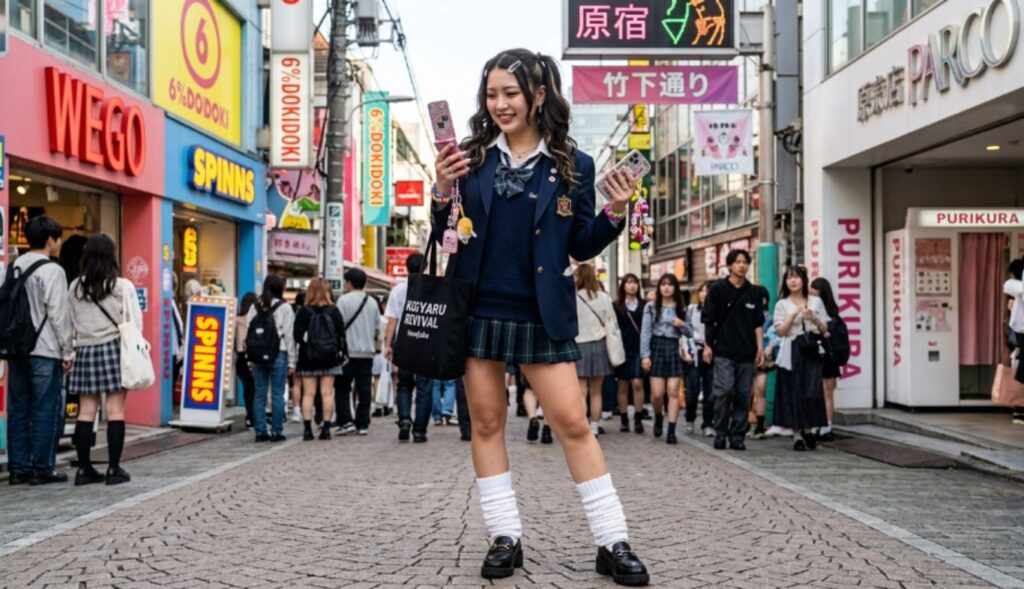
One reason kogyaru remains interesting is the broader revival of 1990s and early-2000s fashion. Fashion cycles often revisit earlier decades. Designers and consumers rediscover silhouettes that once seemed dated and reinterpret them for a new audience. The modern revival doesn’t necessarily reproduce the original context.
Instead, it may feature:
- Vintage-inspired pleated skirts
- Platform footwear
- Oversized knitwear
- Retro hair accessories
- Mini shoulder bags
- Chunky jewelry
- Sporty layering
Social media has also made fashion references more global. A look that once belonged strongly to a particular Japanese youth scene can now inspire people around the world. This creates both opportunities and challenges. The opportunity is creative exchange. The challenge is understanding where a style came from rather than treating it as a generic costume.
Cultural Context Matters
Kogyaru fashion should be understood within the broader history of Japanese youth culture. Youth fashion often develops as a response to expectations. Clothing becomes a way to negotiate identity, independence, belonging, and social visibility.
The kogyaru movement attracted significant media attention, and that attention sometimes produced stereotypes. Fashion itself, however, shouldn’t be treated as proof of someone’s personality, behavior, or values. A short skirt is a garment. It doesn’t tell you who the person wearing it is. This distinction is especially important when discussing historical youth fashion. A responsible fashion discussion should separate visual aesthetics from assumptions about the people associated with them.
Avoiding Stereotypes About Kogyaru
Because kogyaru received extensive media attention, many stereotypes became attached to the image. Those stereotypes can distract from the actual fashion.
A more useful approach is to focus on observable characteristics:
- Garment silhouettes
- Color combinations
- Styling choices
- Beauty trends
- Accessories
- Historical period
- Youth-culture influences
This makes the discussion more accurate and respectful. It’s also important to remember that fashion categories overlap. Someone may incorporate gyaru elements without identifying entirely with kogyaru. Another person may enjoy the aesthetic simply because they like vintage Japanese street fashion. Clothing categories are often more fluid than labels suggest.
Practical Outfit Ideas
If you want to explore kogyaru-inspired fashion today, there are several directions you can take.
Casual Weekend Look
Choose a pleated skirt with a simple knit sweater, white socks, and clean sneakers. Add a small shoulder bag.
Retro Look
Try a darker pleated skirt, button-up shirt, oversized cardigan, loose socks, and platform loafers.
Minimal Look
Use a neutral skirt with a fitted top, simple loafers, and understated accessories.
Streetwear Version
Combine a pleated skirt with an oversized graphic sweatshirt and sneakers. A baseball cap can add another contemporary element.
Cold-Weather Version
Layer tights underneath the skirt, add a wool coat, and use ankle boots. The overall silhouette can still reference kogyaru styling without being limited to warm weather. These examples demonstrate an important principle: inspiration doesn’t require exact replication.
Shopping Tips for Kogyaru-Inspired Skirts
When shopping for a pleated skirt, focus on construction rather than simply searching for the shortest option.
Check the following:
Pleat quality: The folds should be reasonably consistent and hold their shape.
Waist construction: A comfortable waistband makes a major difference for everyday wear.
Fabric: Choose a material appropriate for the climate and season.
Lining: A lined skirt can improve comfort and drape.
Length: Select a length that fits your preferences and intended setting.
Care: Pleated garments can require careful washing and storage. Online descriptions can be misleading, so product measurements are more useful than generic labels such as “mini” or “short.” If you’re buying secondhand, inspect seams, zippers, waistband wear, and fabric condition.
How to Make the Style Feel Contemporary
The easiest way to modernize kogyaru fashion is to change one or two elements. For example, keep the pleated skirt and replace traditional loafers with minimalist sneakers. Or keep the platform shoes but choose a longer skirt. Another approach is to simplify the color palette. Black, cream, and gray can create a sophisticated interpretation of the aesthetic. You can also modernize the silhouette through layering.
A cropped jacket, oversized bomber, or clean trench coat can make a school-inspired skirt feel less like a historical recreation and more like contemporary street fashion. The objective is cohesion. If each item appears to belong to a different aesthetic, the outfit may feel accidental. If the pieces share colors, proportions, or textures, the result will look deliberate.
Kogyaru Shorter Skirts and Fashion History
The significance of kogyaru shorter skirts isn’t simply that shorter hems became fashionable. The larger story is about customization. Young people took clothing associated with institutions and transformed it into something personal. That basic process can be seen across fashion history.
Punk altered traditional garments through distressing and hardware. Hip-hop culture transformed sportswear and workwear. Japanese street-fashion movements frequently experimented with proportions and combinations. Kogyaru belongs within that larger history of people using clothing to create identity.
Its influence is especially interesting because the basic garments were familiar. The innovation came from how they were worn. That’s a valuable lesson for anyone interested in fashion design. Sometimes the most influential style isn’t a completely new garment. It’s a new way of combining existing ones.
Frequently Asked Questions
What are kogyaru shorter skirts?
Kogyaru shorter skirts generally refer to the short or modified pleated skirts associated with kogyaru, or kogal, fashion in Japan. The skirt is only one part of the aesthetic, which also includes styling, footwear, socks, accessories, hair, and makeup.
Why were shorter skirts associated with kogyaru fashion?
Shorter skirts changed the proportions of traditional school-inspired clothing and helped create a distinctive youth-fashion silhouette. They also allowed socks and footwear to become more prominent elements of the outfit.
Is kogyaru the same as gyaru?
Not exactly. Kogyaru is generally considered a specific youth-oriented variation associated with school-inspired fashion, while gyaru is a much broader fashion and beauty category with numerous substyles.
Can kogyaru-inspired fashion be worn today?
Absolutely. Modern fashion enthusiasts can borrow elements such as pleated skirts, platform footwear, oversized knitwear, and retro accessories without recreating the historical look exactly.
What shoes work best with kogyaru-inspired skirts?
Platform loafers are a classic-inspired option, while sneakers, ankle boots, and other contemporary shoes can create modern variations.
Do you have to wear an extremely short skirt to create the look?
No. Skirt length is only one component of the aesthetic. Proportion, pleats, styling, accessories, footwear, and color coordination can communicate the influence without using an extremely short hemline.
What colors work well with kogyaru fashion?
Traditional school-inspired combinations often include navy, gray, black, white, beige, and burgundy. More glamorous interpretations can introduce pink, cream, caramel, metallic accents, or other expressive colors.
Is kogyaru fashion only for young people?
Historical kogyaru culture was strongly associated with youth, but fashion inspiration can be enjoyed by people of different ages. The key is adapting the aesthetic to personal style, comfort, and context.
How can I make a kogyaru-inspired outfit look less like a costume?
Use one or two recognizable elements rather than reproducing every historical detail. A pleated skirt with modern sneakers and a contemporary jacket, for example, can reference the style without becoming a full period recreation.
Why is cultural context important when discussing kogyaru?
Kogyaru developed within a particular Japanese youth-culture environment. Understanding that history helps distinguish the fashion itself from stereotypes or assumptions that were sometimes attached to it.
Conclusion
Kogyaru shorter skirts remain an interesting subject because they represent more than a particular hemline. They demonstrate how fashion can transform familiar clothing through proportion, customization, accessories, and attitude. The pleated skirt became memorable partly because it existed within a much larger visual system involving socks, shoes, knitwear, bags, hair, and makeup. Today, the most useful way to approach kogyaru fashion is as inspiration rather than a rigid formula.
You can preserve the recognizable elements while making the outfit practical, comfortable, and contemporary. A pleated skirt can work with sneakers instead of loafers. A traditional school-inspired palette can be replaced with modern neutrals. A dramatic historical beauty look can be simplified. In short, the style’s enduring lesson is creativity. Fashion doesn’t always need an entirely new garment to become distinctive. Sometimes, all it takes is a fresh combination of familiar pieces. That spirit of experimentation is one reason kogyaru continues to attract attention decades after its original rise.