

Business Casual Shoes The easiest way to ruin an otherwise polished work outfit is to wear the wrong shoes.
Many professionals spend time choosing tailored trousers, blazers, or elegant blouses, only to finish the outfit with footwear that doesn’t fit the office environment. Business casual dress codes have become more flexible over the past decade, which sounds helpful in theory. In reality, it often creates confusion. Are sneakers acceptable? Can you wear boots year-round? Do loafers work in conservative offices?
The answer depends on more than the shoe itself. Industry norms, company culture, and overall presentation all matter. A pair of clean leather sneakers might look perfectly professional at a technology company while appearing out of place in a law office.
Business casual shoes sit in the middle ground between formal dress shoes and weekend footwear. They should look intentional, polished, and appropriate without feeling overly formal. Once you understand a few core principles, choosing office-ready footwear becomes much simpler.
What Are Business Casual Shoes?
Business casual shoes are professional-looking shoes that complement workplace attire without requiring full formal dress standards. Think polished loafers, sleek ankle boots, classic derbies, or refined flats rather than athletic trainers or evening shoes.
One mistake people frequently make is assuming that “casual” means relaxed standards. Most employers still expect footwear to communicate professionalism. Shoes should appear clean, well-maintained, and suitable for interaction with colleagues, clients, or senior leadership.
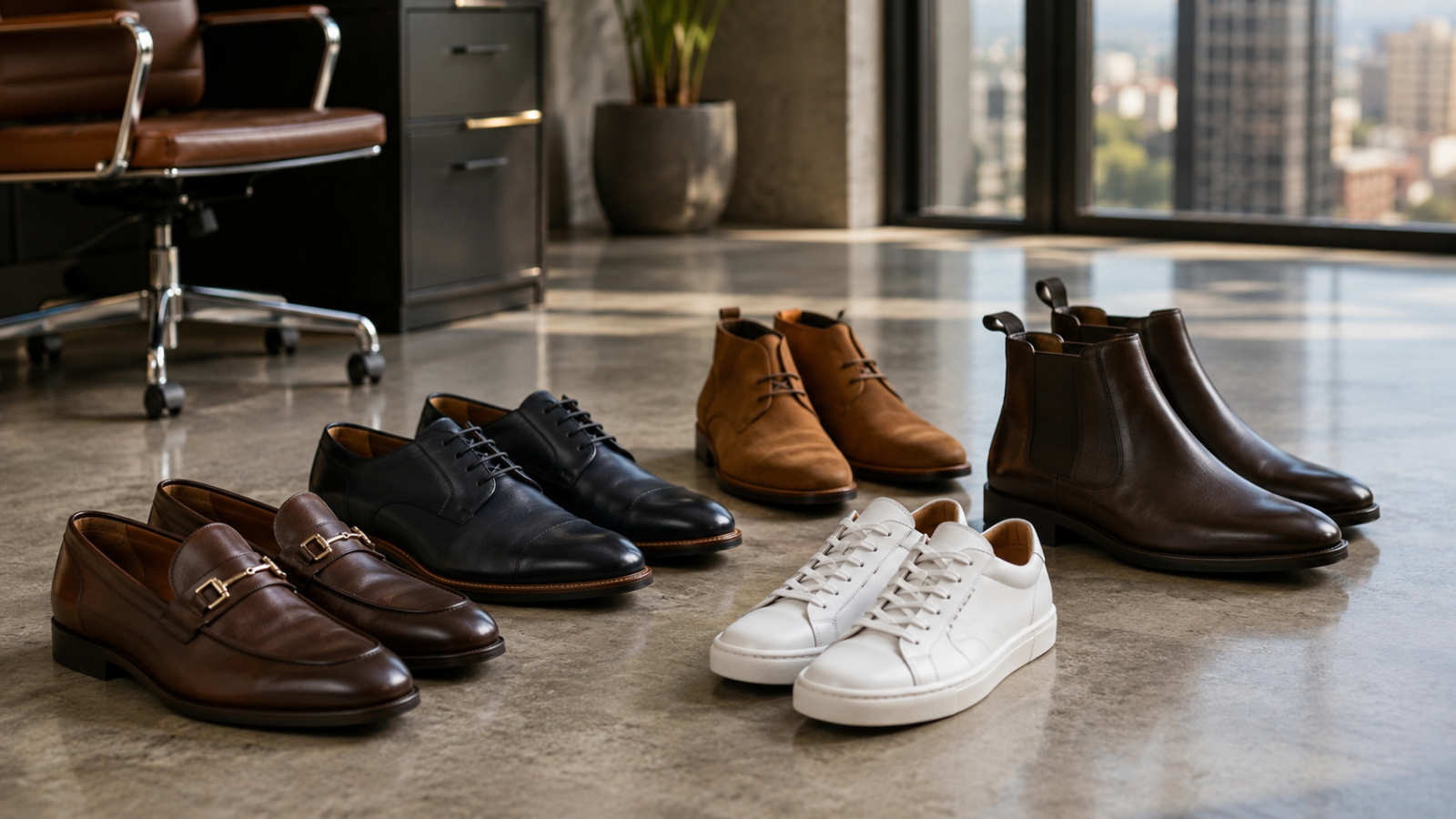
Business Casual Shoes The distinction between business professional and business casual has narrowed in many workplaces. Traditional Oxfords and pumps remain appropriate, but modern offices increasingly embrace versatile options such as Chelsea boots, minimalist leather sneakers, and sophisticated loafers.
When deciding whether a shoe qualifies as business casual, ask yourself three questions:
- Does the shoe look polished and intentional?
- Would I feel comfortable wearing it in front of senior executives or clients?
- Does it complement the rest of my professional wardrobe?
If the answer to all three is yes, you’re probably making a safe choice.
Key Characteristics of Business Casual Footwear
Business Casual Shoes Experienced stylists rarely focus on specific shoe categories first. Instead, they look at certain characteristics that consistently signal professionalism.
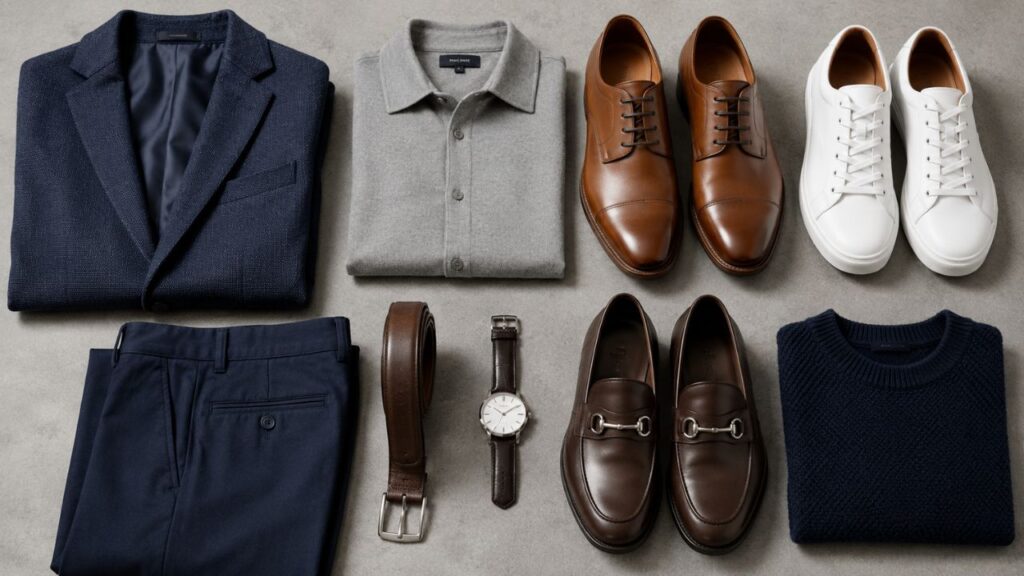
Material matters enormously. Full-grain leather, suede, nubuck, and high-quality synthetic materials generally work well because they maintain structure and polish. Scuffed canvas, worn mesh, or heavily distressed materials rarely convey the same level of professionalism.
Colour is equally important. Neutral shades remain the safest option for office wear. Black, dark brown, tan, burgundy, navy, and beige integrate easily into a professional wardrobe while maintaining versatility.
Comfort deserves more attention than many style articles give it. Professionals often spend eight to ten hours on their feet or commuting. Attractive shoes that cause discomfort usually end up unused in the closet. Features such as cushioned insoles, supportive footbeds, and flexible soles make a significant difference during long workdays.
Business Casual Shoes Versatility should also influence purchasing decisions. A quality pair of brown loafers that works with chinos, tailored trousers, and business casual denim offers far greater value than trend-driven footwear that matches only one outfit.
Business Casual Shoes for Men
Men generally have a straightforward selection of business casual footwear options, although workplace culture still influences what’s appropriate.
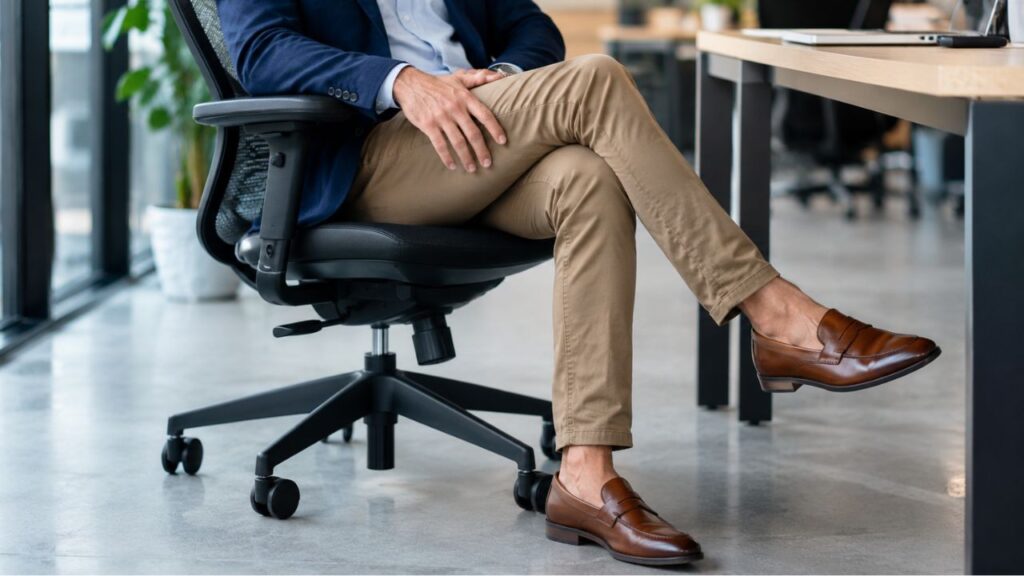
Loafers remain one of the strongest choices. Penny loafers, tassel loafers, and horsebit styles pair effortlessly with chinos, wool trousers, and even dark denim in relaxed offices. Brown leather loafers, in particular, offer exceptional versatility.
Business Casual Shoes Derby shoes occupy a useful middle ground between formal and casual. Their open-lacing system creates a slightly less formal appearance than Oxfords while maintaining a refined aesthetic. Brogues serve a similar role, adding decorative detailing without sacrificing professionalism.
Chelsea boots have become increasingly common in modern offices. A sleek leather Chelsea boot works especially well during autumn and winter and transitions seamlessly from office meetings to after-work events.
Minimalist leather sneakers deserve special mention. Ten years ago, recommending sneakers for business casual attire would have been controversial. Today, many hybrid workplaces accept clean, understated leather sneakers in neutral colours. The key word is understated. Bulky running shoes, brightly coloured trainers, or athletic performance footwear still belong outside most offices.
Men should generally avoid:
- Running shoes, gym trainers, and hiking footwear
- Flip-flops, slides, and open-toe sandals
- Worn, creased, or poorly maintained shoes
- Extremely casual canvas sneakers
A useful rule: if the shoe is designed primarily for sport, outdoor activity, or beachwear, it probably isn’t suitable for business casual settings.
Business Casual Shoes for Women
Business Casual Shoes Women’s business casual footwear offers greater variety, which can be both helpful and overwhelming.
Ballet flats remain a workplace staple because they combine comfort with professional styling. However, quality matters. Structured leather flats usually appear more polished than flimsy versions lacking support or shape.
Loafers have gained tremendous popularity among professionals in recent years. They provide a modern, sophisticated appearance while eliminating many of the comfort issues associated with heels. Fashion editors and workplace stylists increasingly recommend loafers as an essential office wardrobe investment.
Business Casual Shoes Low-heel pumps and block heels continue to work well in conservative industries. Contrary to outdated expectations, high heels are not necessary to appear professional. In fact, excessively high stilettos can sometimes undermine a business casual look by appearing too formal or impractical.
Ankle boots are another excellent choice, particularly during colder months. Sleek leather styles with modest heels pair beautifully with tailored trousers, midi skirts, and dresses.
Professional women in creative or hybrid workplaces may also incorporate refined leather sneakers or dressy mules into their rotation. Again, overall presentation matters. Clean lines and premium materials make the difference.
One commonly overlooked issue involves shoe condition. Scuffed heels, worn soles, and damaged leather are far more noticeable than many people realise. Regular maintenance instantly elevates professional appearance.
Appropriate Footwear for Different Workplace Environments

Business casual doesn’t mean the same thing everywhere.
A financial institution, legal practice, and technology startup may all claim to have business casual dress codes while maintaining entirely different expectations.
| Workplace | Appropriate Footwear |
| Corporate finance and legal offices | Loafers, Oxfords, pumps, Derby shoes, conservative ankle boots |
| Technology companies | Loafers, Chelsea boots, minimalist leather sneakers, flats |
| Creative agencies | Fashion-forward loafers, stylish boots, premium sneakers |
| Education and administration | Comfortable flats, loafers, block heels, supportive dress shoes |
| Hybrid and remote workplaces | Versatile footwear balancing professionalism and comfort |
New employees should observe colleagues during their first few weeks before expanding their footwear choices. Company handbooks rarely provide detailed examples, so workplace observation becomes invaluable.
Another practical strategy involves dressing slightly more formally than the office norm until expectations become clear. It’s easier to become slightly more casual over time than to recover from an unprofessional first impression.
Choosing Comfortable Business Casual Shoes That Last
Style attracts attention, but comfort determines whether shoes become wardrobe essentials.
Podiatrists consistently recommend prioritising proper fit over brand reputation. Even premium brands such as Allen Edmonds, Cole Haan, Clarks, Ecco, or Naturalizer won’t perform well if the sizing is incorrect.
Look for shoes featuring:
- Cushioned insoles and arch support
- Breathable linings
- Durable outsoles
- Flexible construction
- Quality leather or suede uppers
Many professionals benefit from building a small capsule collection rather than owning numerous inexpensive pairs.
For men, three pairs often cover most situations: brown loafers, dark Derby shoes, and leather Chelsea boots.
For women, a practical collection might include loafers, supportive flats, and ankle boots or low block heels.
Quality footwear also requires proper care. Rotate shoes rather than wearing the same pair daily. Allowing leather shoes to rest between wears extends their lifespan significantly. Regular polishing, conditioning, and sole maintenance preserve appearance while protecting your investment.
Replacing worn shoes promptly is equally important. Excessive creasing, uneven soles, or visible damage can make an otherwise polished outfit appear neglected.
Final Thoughts
Business casual shoes don’t have to be complicated. The best choices balance professionalism, comfort, and versatility while reflecting your workplace culture. When uncertainty exists, polished leather footwear in classic styles rarely disappoints.
Workplaces continue to evolve, and dress codes are becoming more flexible. Yet one principle remains consistent: shoes should communicate that you take your role seriously. Clean, well-maintained footwear sends that message immediately, regardless of industry.
Invest thoughtfully, prioritise comfort, and pay attention to your office environment. A small collection of high-quality business casual shoes will serve you far better than a closet full of trendy options.
Frequently Asked Questions
What shoes are considered business casual?
Loafers, Derby shoes, brogues, Chelsea boots, ballet flats, pumps, ankle boots, and minimalist leather sneakers are commonly considered business casual.
Are sneakers acceptable for business casual?
Some modern workplaces allow clean, minimalist leather sneakers. Athletic trainers or brightly coloured sports shoes are generally inappropriate.
Are loafers business casual?
Yes. Loafers are among the most versatile and widely accepted business casual shoes for both men and women.
Can women wear flats in a business casual office?
Absolutely. Structured leather ballet flats and sophisticated loafers are excellent office choices.
What colour shoes work best for business casual?
Neutral colours such as black, brown, tan, navy, burgundy, beige, and dark grey offer the greatest versatility and professional appeal.