

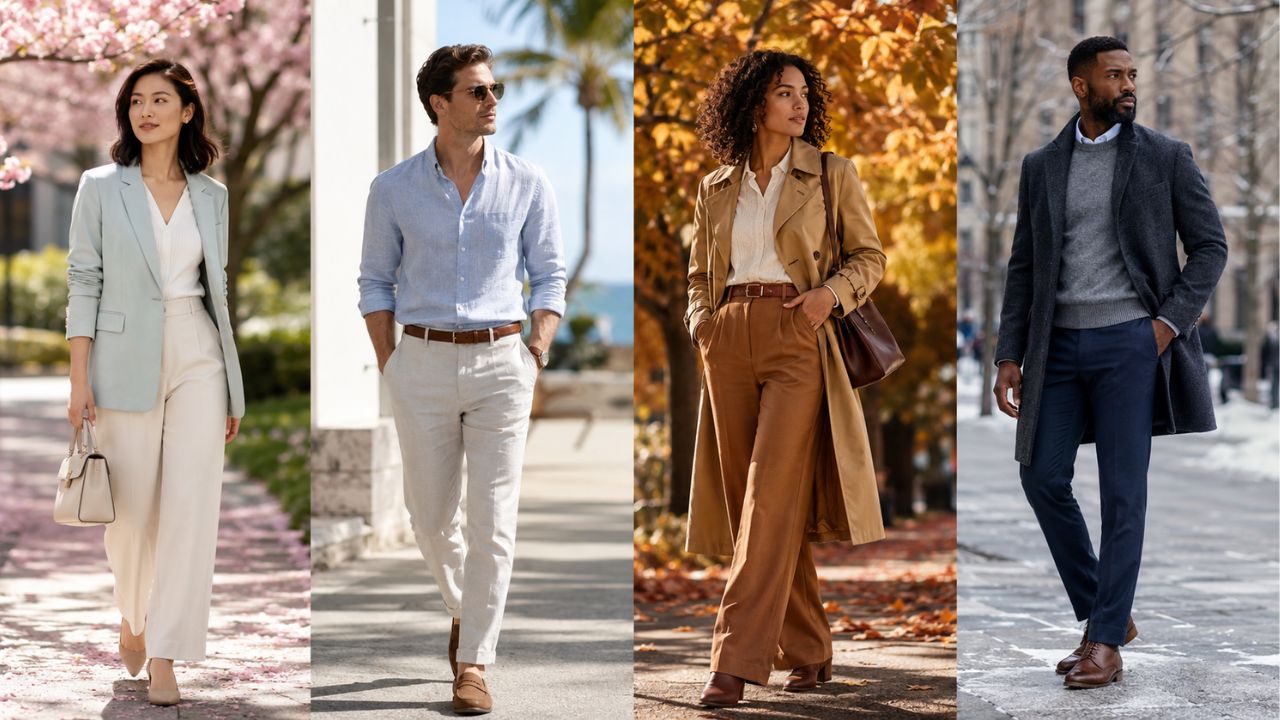
Business Casual by Season Dressing business casual sounds straightforward until the weather changes. The lightweight outfit that feels polished in July can look out of place in January, while a perfectly layered winter ensemble may leave you overheated during spring’s unpredictable temperatures.
Most professionals eventually discover that business casual isn’t a fixed dress code. It’s a flexible framework shaped by your office culture, climate, industry, and even where you sit in the organisation. Someone working in a New York law firm will approach seasonal dressing differently from a marketing manager in Austin or a remote employee splitting time between home and headquarters.
Business Casual by Season The good news is that you don’t need four separate wardrobes. A thoughtful collection of versatile pieces, combined with smart seasonal adjustments, can carry you through the entire year. The secret lies in understanding fabrics, layering, and knowing when to adapt rather than completely reinvent your professional style.
What Business Casual Means in Modern Workplaces
Business casual has evolved considerably over the past decade. Many workplaces have relaxed their dress codes, especially with the rise of hybrid work. Yet “casual” doesn’t mean dressing as though you’re heading to brunch or running errands.
Business Casual by Season A useful rule is to aim for polished rather than formal. Tailored trousers, blouses, button-down shirts, knitwear, blazers, loafers, and clean footwear remain staples across most industries. The specific combination changes with the season.
Context matters. Financial services, legal firms, and client-facing roles often expect a more traditional interpretation of business casual. Technology companies and creative agencies may allow dark jeans, premium trainers, and more relaxed styling.
One mistake professionals frequently make is focusing only on clothing pieces while ignoring fabric. Fabric choice often determines whether an outfit looks seasonally appropriate. A wool blazer in August appears just as misplaced as linen trousers during a snowstorm.
Year-Round Wardrobe Essentials Worth Investing In

Business Casual by Season Before building seasonal outfits, establish a foundation of reliable pieces that work throughout the year. Quality basics simplify dressing and reduce unnecessary spending.
Consider building your wardrobe around these essentials:
- Tailored trousers in navy, charcoal, black, and beige
- Neutral blazers, button-down shirts, knit tops, loafers, and structured outerwear
These core items can be mixed and adapted as temperatures change.
A navy blazer deserves special mention. It may be the hardest-working garment in a professional wardrobe. Pair it with lightweight cotton in spring, layer it over fine-gauge knitwear in autumn, or wear it beneath a wool coat during winter.
Business Casual by Season Footwear also deserves attention. Many offices now accept sophisticated leather sneakers, but traditional loafers, ankle boots, oxfords, and flats remain safer choices across industries. Seasonal footwear should always prioritise comfort alongside appearance. If shoes become uncomfortable during a commute, they tend to stay unworn regardless of how stylish they appear.
The most successful professional wardrobes typically rely on a restrained colour palette. Neutrals such as navy, grey, camel, white, and black make seasonal transitions considerably easier.
Spring Business Casual: Managing Unpredictable Weather
Spring presents a unique challenge because temperatures rarely remain consistent throughout the day. A chilly morning commute can quickly become a warm afternoon.
Layering becomes essential.
Business Casual by Season Lightweight trench coats, cotton blazers, cardigans, and breathable knitwear perform particularly well during spring. Cotton, chambray, and lightweight wool fabrics provide warmth without causing overheating.
Spring also allows for more colour experimentation. Soft blues, sage greens, muted pinks, and earth tones introduce freshness while maintaining professionalism.
For women, tailored ankle trousers paired with a blouse and lightweight blazer create an easy office uniform. Midi dresses layered beneath a structured jacket also work well, especially in business casual environments.
Men can combine chinos with an Oxford shirt and unstructured blazer for a polished yet comfortable look. Swapping heavier winter fabrics for cotton blends instantly makes an outfit feel seasonally appropriate.
One practical observation: keep an extra cardigan or blazer at the office during spring. Office air conditioning often creates a very different climate from the weather outside.
Summer Business Casual: Staying Professional in the Heat
Business Casual by Season Summer is where many professionals struggle most. High temperatures tempt people to dress too casually, yet overdressing can become genuinely uncomfortable.
Breathable fabrics make all the difference. Cotton, linen blends, moisture-wicking performance fabrics, and lightweight tropical wool help regulate temperature while maintaining structure.
Pure linen remains controversial in some workplaces because wrinkles develop quickly. Linen blends often provide a better compromise, preserving breathability while maintaining a sharper appearance.
The following table highlights practical summer fabric choices:
| Fabric | Breathability | Professional Appearance |
| Cotton | Excellent | Excellent |
| Linen Blend | Excellent | Very Good |
| Tropical Wool | Very Good | Excellent |
| Polyester Blends | Moderate | Varies |
For women, sleeveless shells worn beneath blazers offer flexibility throughout the day. Men may opt for lightweight dress shirts with rolled sleeves if office culture permits.
Business Casual by Season Professionals working in humid regions often benefit from maintaining two wardrobes: one for commuting and another for office wear. Changing upon arrival may sound excessive, but many experienced commuters in southern states rely on this strategy.
Avoid common summer mistakes such as flip-flops, shorts, distressed denim, excessively sheer fabrics, or overly casual sandals. Even relaxed offices typically maintain some professional boundaries.
Fall and Winter Business Casual: Layering Without Bulk
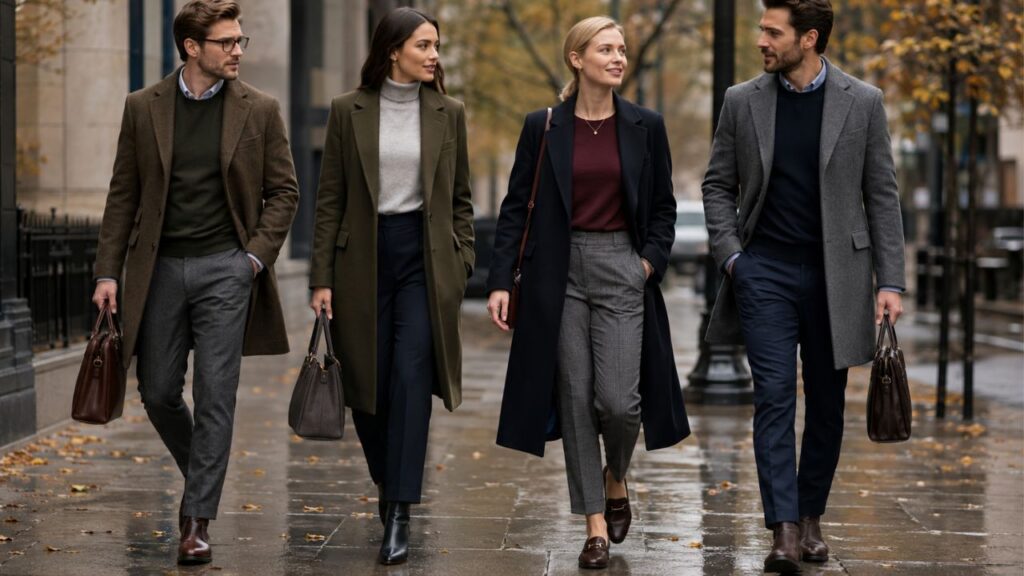
Business Casual by Season Autumn arguably offers the greatest styling opportunities. Cooler temperatures allow for richer textures, sophisticated layering, and seasonal colour palettes.
Fine-gauge sweaters, blazers, wool trousers, and structured outerwear become increasingly important. Burgundy, olive, camel, charcoal, and deep navy naturally complement autumn wardrobes.
Effective layering follows a simple formula: lightweight base layer, insulating middle layer, and polished outer layer.
Business Casual by Season For example, a button-down shirt beneath a merino sweater topped with a blazer creates warmth without unnecessary bulk. The same principle applies to women’s wardrobes through combinations of blouses, knitwear, and tailored jackets.
Winter presents a different challenge. Warmth becomes non-negotiable, particularly in northern climates. However, piling on thick layers often creates an oversized silhouette.
Instead, prioritise high-quality insulating fabrics such as wool, cashmere, and flannel. Thin but warm materials outperform bulky alternatives.
Outerwear deserves careful consideration because it’s frequently the first thing colleagues and clients notice. A well-tailored wool coat instantly elevates winter business casual attire.
Business Casual by Season Accessories also become more significant during colder months. Leather gloves, scarves, and weather-appropriate footwear contribute both function and style. Keep a pair of office shoes at work if winter conditions regularly involve snow, slush, or heavy rain.
Adapting Business Casual to Climate and Industry
Seasonal advice often assumes everyone experiences four distinct seasons, which simply isn’t true across the United States.
Professionals in Florida, Texas, Arizona, and California frequently dress according to climate rather than calendar dates. Lightweight fabrics may remain appropriate nearly year-round.
Business Casual by Season Meanwhile, workers in Chicago, Boston, or Minneapolis require substantial winter wardrobes and transitional pieces for changing seasons.
Industry expectations further influence seasonal choices.
Finance, consulting, and legal sectors generally favour conservative interpretations of business casual regardless of weather. Technology companies often allow greater flexibility, while creative industries may encourage personal expression.
Remote and hybrid employees occupy an interesting middle ground. Many professionals now maintain “video-call business casual” wardrobes focused on polished tops, knitwear, and jackets visible on screen. However, occasional office visits still require a complete wardrobe strategy.
Business Casual by Season The safest approach when joining a new workplace is observation. Spend the first few weeks noting how senior employees dress throughout different seasons. Their choices usually reveal far more than written dress code policies.
Building a Seasonal Capsule Wardrobe

A seasonal capsule wardrobe reduces decision fatigue and ensures consistent professional presentation.
Rather than purchasing trendy pieces each season, focus on versatile garments that coordinate easily.
A practical year-round capsule might include:
- Three blazers, six tops, four trousers, two dresses or skirts, two pairs of shoes, and seasonal outerwear additions
Business Casual by Season updates can remain modest. Spring may require a trench coat and lighter fabrics. Summer introduces breathable materials. Autumn adds knitwear, while winter focuses on coats and insulating layers.
Budget-conscious professionals should prioritise tailoring over quantity. An inexpensive blazer altered for proper fit almost always looks more polished than an expensive garment that fits poorly.
Professional appearance ultimately depends less on owning numerous clothes and more on wearing appropriate, well-fitted pieces consistently.
Frequently Asked Questions
What is business casual attire for each season?
Business casual changes according to weather while maintaining a polished appearance. Lightweight fabrics dominate spring and summer, while layering and warmer materials become essential during autumn and winter.
Are jeans acceptable in business casual?
Business Casual by Season In many modern workplaces, dark, well-fitted jeans without distressing are acceptable. Conservative industries may still discourage denim.
What fabrics work best for summer office wear?
Cotton, linen blends, lightweight wool, and moisture-wicking fabrics provide comfort while maintaining a professional appearance.
How many pieces should a business casual wardrobe include?
Most professionals can build an effective wardrobe with 25 to 35 versatile pieces, excluding accessories and outerwear.
Can sneakers be worn with business casual outfits?
Clean, minimalist leather sneakers are increasingly accepted in many workplaces, particularly within technology and creative industries. Traditional offices may still prefer loafers or dress shoes.