

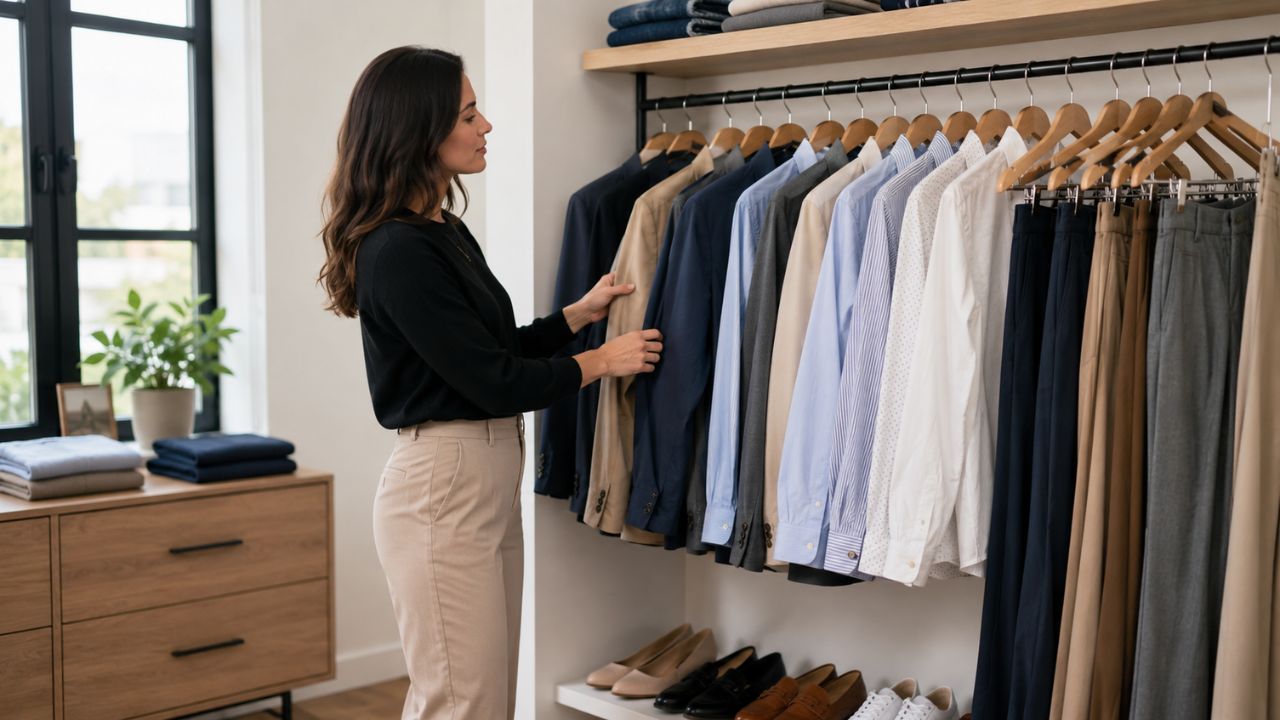
Few workplace topics create as much confusion as business casual attire. Ask ten professionals what business casual means, and you’ll probably hear ten different answers. One office allows dark jeans and clean trainers, while another expects tailored trousers and leather loafers every day. The rise of hybrid work has blurred the lines even further.
The good news is that building a business casual wardrobe doesn’t have to be complicated or expensive. Most professionals don’t need dozens of outfits. They need a collection of versatile, well-fitting pieces that work together effortlessly.
Business Casual Attire A common mistake is focusing on trends rather than function. Experienced stylists often recommend starting with wardrobe staples first—items you can wear repeatedly in different combinations. A navy blazer, tailored chinos, quality knitwear, and polished shoes will usually serve you far better than a wardrobe full of fashionable but impractical purchases.
Once you understand the principles behind business casual clothing, getting dressed for work becomes much easier.
What Is Business Casual Attire?

Business Casual Attire sits comfortably between formal corporate clothing and everyday casual wear. It’s professional without being overly rigid. In practical terms, that usually means tailored clothing, clean lines, polished footwear, and thoughtful styling.
The challenge is that business casual varies significantly across industries. A financial services firm in New York may expect blazers and dress shirts, whereas a technology startup in California might consider dark denim and minimalist sneakers entirely acceptable.
The safest approach when joining a new workplace is to observe what senior employees wear. Workplace culture often tells you more than the employee handbook.
The following table illustrates the general differences between common office dress codes:
| Dress Code | Typical Clothing | Formality Level |
| Business Professional | Suits, ties, formal dresses | High |
| Business Casual | Blazers, chinos, dress shirts, knitwear | Medium |
| Smart Casual | Dark jeans, polos, casual blazers | Medium-Low |
Business casual has evolved largely because employers recognise that comfort can support productivity. Employees no longer need to wear full suits daily to appear competent and professional.
Core Principles for Building a Business Casual Wardrobe
Professionals often assume they need an entirely new wardrobe. In reality, many already own several suitable pieces. The key lies in building around versatility.
Business Casual Attire Start with neutral colours. Navy, charcoal, grey, black, beige, white, and olive provide a solid foundation because they pair easily with one another. A navy blazer, for example, can be worn with grey trousers, chinos, dark denim, or even tailored skirts.
Fit matters more than brand names. An inexpensive blazer tailored correctly will almost always look better than an expensive garment that fits poorly. Shoulder seams should sit naturally, sleeves should end near the wrist bone, and trousers should break cleanly above the shoe.
Fabric quality deserves attention as well. Natural materials such as cotton, merino wool, linen blends, and wool tend to drape better and last longer than low-quality synthetics. They also remain comfortable during long workdays.
Experienced wardrobe consultants frequently advise following the “three outfit rule”: never purchase an item unless you can immediately create at least three complete outfits using clothing you already own. This simple habit prevents impulse buying and helps create a cohesive work wardrobe.
Business Casual Wardrobe Essentials Every Professional Should Own
Business Casual Attire Although workplace expectations differ, certain clothing essentials appear consistently in successful professional wardrobes.
For tops, consider investing in:
- Button-down shirts in white, light blue, and subtle patterns
- Fine-gauge sweaters and cardigans
- Polo shirts for relaxed office environments
- Structured blouses for women
- Neutral blazers for layering
Bottoms should remain tailored and versatile. Chino pants, wool trousers, ankle trousers, pencil skirts, and midi skirts all work exceptionally well. Dark, non-distressed jeans may also be appropriate in some offices.
Footwear often determines whether an outfit appears polished or careless. Quality loafers, Oxford shoes, Derby shoes, Chelsea boots, and refined flats remain reliable choices. Minimalist leather sneakers can work in creative industries, but they should always be clean and understated.
Business Casual Attire Accessories deserve equal consideration. A professional leather bag, simple belt, classic watch, and minimal jewellery communicate attention to detail without appearing distracting.
One item many professionals underestimate is knitwear. A fine merino wool sweater layered over an Oxford shirt instantly creates a sophisticated business casual look while providing flexibility during changing seasons.
How to Build a Business Casual Capsule Wardrobe

Capsule wardrobes have gained popularity because they eliminate decision fatigue. Instead of owning numerous disconnected pieces, you create a smaller collection designed to work together.
Begin by assessing your existing wardrobe. Remove anything that no longer fits, appears worn out, or hasn’t been worn in over a year. You’ll quickly identify gaps.
Business Casual Attire A practical business casual capsule wardrobe may include:
- Two blazers
- Five shirts or blouses
- Three pairs of trousers
- Two knitwear pieces
- One professional dress or skirt option
- Two pairs of office shoes
- One versatile coat
This relatively small collection can produce dozens of outfit combinations.
For example, a navy blazer paired with grey trousers and loafers creates a polished corporate look. Replace the trousers with chinos and add a lightweight knit sweater, and the same blazer suddenly feels more relaxed.
Many professionals overspend because they purchase complete outfits rather than interchangeable pieces. Capsule wardrobes encourage intentional buying and typically reduce clothing costs over time.
Business Casual for Men and Women: Practical Styling Advice
Business Casual Attire For men, business casual generally revolves around combining structured pieces with relaxed elements. Chinos paired with an Oxford shirt and loafers remain one of the most dependable outfit formulas. Adding a blazer elevates the look for meetings or presentations.
Men should avoid excessively slim fits, loud prints, athletic footwear, and wrinkled clothing. Proper grooming is equally important. Even the most carefully assembled outfit loses impact if shoes are scuffed or shirts appear creased.
Women’s business casual wardrobes often provide greater flexibility. Tailored trousers, midi dresses, blouses, blazers, and knitwear can be mixed extensively. Structured dresses paired with blazers offer an efficient one-step outfit solution for busy mornings.
A useful rule for women involves balancing proportions. Wide-leg trousers typically pair best with more fitted tops, while fuller skirts often complement streamlined blouses or knitwear.
Colour coordination also matters. Many stylists recommend limiting professional outfits to three primary colours. This creates a refined appearance without looking overly styled.
Business Casual Attire As workplaces become more inclusive, gender-neutral business casual options have expanded considerably. Tailored separates, knitwear, chinos, overshirts, and minimalist footwear provide versatile choices regardless of personal style preferences.
Seasonal Business Casual Dressing and Common Mistakes
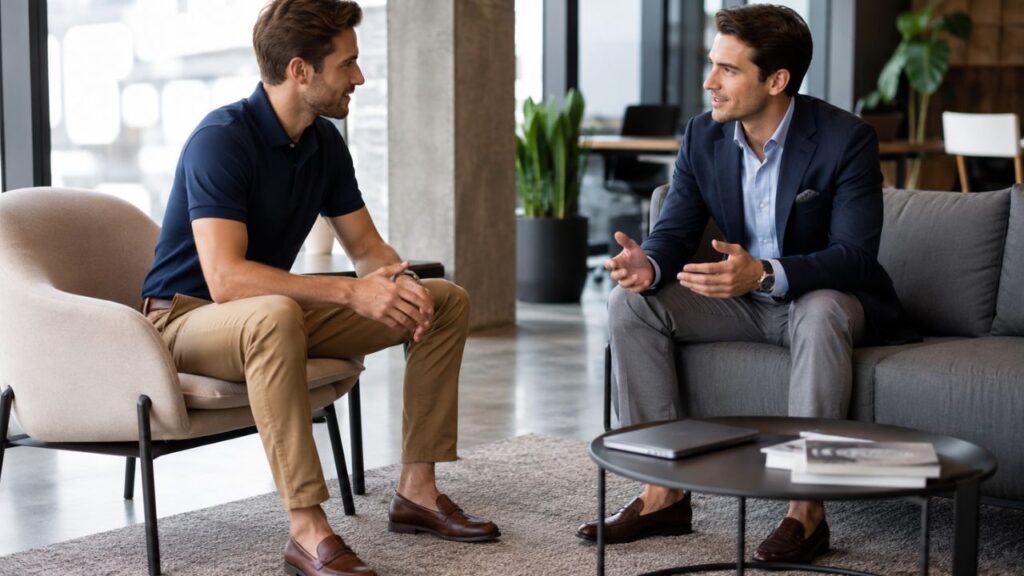
Seasonal changes often expose weaknesses in a professional wardrobe. Lightweight linen blends and breathable cotton work well during summer, while wool trousers, layered knitwear, and structured outerwear become essential during colder months.
Business Casual Attire Layering is especially valuable in office environments where indoor temperatures fluctuate. A lightweight cardigan or blazer can easily be removed during warmer afternoons while maintaining a professional appearance.
Several mistakes appear repeatedly among professionals attempting business casual dressing.
First, many confuse casual with business casual. Hoodies, athletic trainers, distressed denim, and graphic T-shirts rarely belong in professional settings.
Second, professionals frequently overlook shoes. Colleagues notice footwear more than many realise. Worn or poorly maintained shoes can undermine an otherwise polished appearance.
Business Casual Attire Finally, people often ignore workplace culture. An outfit appropriate in a creative agency may seem out of place in a law firm. Context always matters.
A practical strategy when uncertain is to dress slightly more formally during your first weeks in a new role. You can always adjust once you understand the office culture.
Final Thoughts
A successful business casual wardrobe isn’t built around trends. It’s built around versatility, quality, fit, and practicality. When every piece works with several others, getting dressed becomes effortless.
Start with wardrobe essentials rather than chasing seasonal fashion. Invest in well-fitting blazers, tailored trousers, quality footwear, and timeless knitwear. Over time, you’ll develop a professional wardrobe that reflects both workplace expectations and personal style.
Most importantly, remember that confidence often comes from consistency. When you know your clothing is appropriate, comfortable, and polished, you can focus entirely on your work.
Frequently Asked Questions
Can jeans be considered business casual?
Business Casual Attire Yes, in many workplaces dark-wash, non-distressed jeans are acceptable. Corporate environments may still prefer tailored trousers or chinos.
Are sneakers appropriate for business casual?
Minimalist leather sneakers may be acceptable in creative or relaxed offices. Traditional corporate settings generally favour loafers, Oxfords, or other dress shoes.
How many pieces should a business casual wardrobe include?
A functional capsule wardrobe containing approximately 15 to 20 versatile pieces is sufficient for most professionals.
Is a polo shirt considered business casual?
Yes. Polo shirts are widely accepted in business casual environments, particularly when paired with tailored trousers or chinos.
What’s the biggest business casual mistake professionals make?
Wearing clothing that is too casual for the workplace remains the most common mistake. Always consider your industry’s expectations before choosing outfits.