

Business Casual for Women Walking into a new office can feel surprisingly stressful when no one has explained the dress code beyond two vague words: business casual.
For many women, that phrase creates more confusion than clarity. One workplace considers dark jeans and clean sneakers perfectly acceptable, while another expects tailored trousers, blazers, and polished loafers. Add hybrid work schedules, shifting corporate cultures, and social media trends, and it’s easy to second-guess every outfit.
The good news is that business casual isn’t about following rigid fashion rules. It’s about presenting yourself professionally while still feeling comfortable and authentic. A well-planned work wardrobe should make mornings easier, boost confidence, and allow you to focus on your job instead of worrying about your clothes.
Business Casual for Women Once you understand the principles behind women’s business casual attire, building office outfits becomes far less complicated. You don’t need an overflowing closet. You need versatile pieces that work together, suit your industry, and reflect your personal style.
What Is Business Casual for Women?
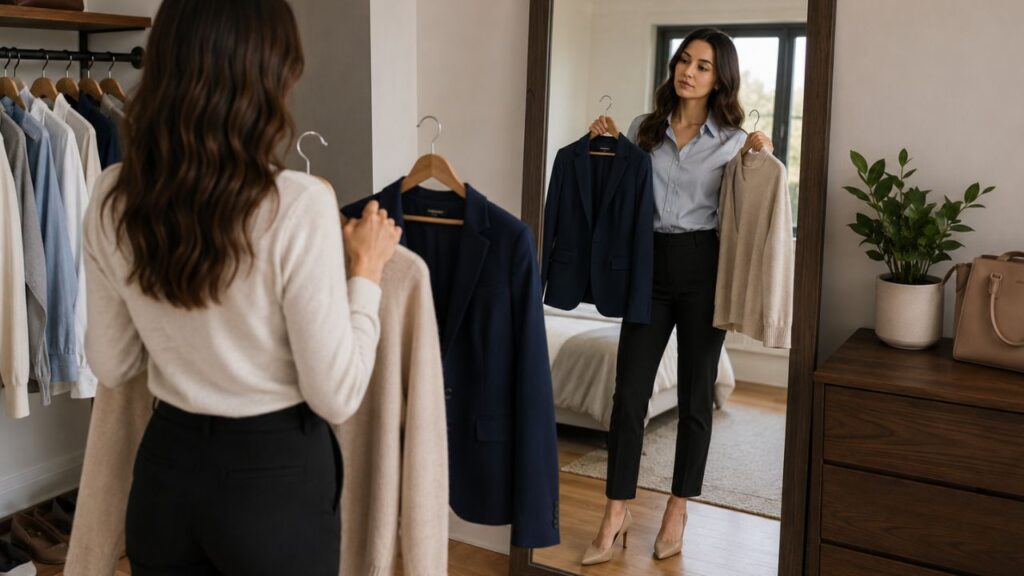
Business casual for women sits between formal corporate attire and relaxed everyday clothing. Think polished rather than stiff.
In most American workplaces, business casual includes pieces such as tailored trousers, blouses, midi dresses, skirts, cardigans, blazers, and professional footwear. Clothing should appear intentional, neat, and workplace-appropriate without feeling overly formal.
The challenge is that dress codes vary significantly across industries. A financial services firm may expect structured blazers and conservative colours, while a technology startup might welcome dark denim paired with a smart knit top.
Business Casual for Women A practical approach is to observe what respected senior employees wear during your first few weeks. Clothing often communicates workplace culture more accurately than employee handbooks.
One styling principle many fashion professionals recommend is dressing slightly more polished than the office average. Doing so projects professionalism without appearing disconnected from company culture.
Business Casual vs Business Professional vs Smart Casual
Many people confuse these dress codes because they overlap. Understanding the differences prevents costly wardrobe mistakes.
| Dress Code | Typical Clothing | Common Workplaces |
| Business Professional | Structured suits, formal dresses, pumps | Law, finance, executive roles |
| Business Casual | Blazers, tailored trousers, skirts, knitwear | Corporate offices, education, healthcare administration |
| Smart Casual | Elevated casual wear, dark denim, stylish separates | Creative agencies, startups |
Business professional remains the most formal. Matching suits, conservative colours, and classic silhouettes dominate these environments.
Business casual introduces more flexibility. You can mix separates, experiment with textures, and incorporate personality through accessories.
Smart casual offers even greater freedom, although clothing should still look intentional and polished.
If you’re uncertain, start with business professional pieces and gradually adapt after observing colleagues. It’s much easier to dress down later than to recover from appearing too casual during your first week.
Essential Wardrobe Staples for Women’s Business Casual Style

Business Casual for Women The strongest office wardrobes aren’t necessarily the largest. They are simply built around versatile essentials.
A structured blazer remains one of the hardest-working pieces in any professional wardrobe. It instantly elevates simple outfits and creates authority during meetings or presentations. Neutral shades such as navy, black, camel, and charcoal provide maximum versatility.
Tailored trousers are equally important. Straight-leg, ankle-length, and wide-leg styles all work well, provided they fit properly. Poor tailoring is often what separates an expensive-looking outfit from one that feels unfinished. Even affordable trousers can look premium after minor alterations.
For tops, focus on quality basics:
- Silk or satin blouses
- Crisp button-down shirts
- Fine-knit sweaters
- Elegant shell tops
- Cardigans for layering
Business Casual for Women Dresses can simplify busy mornings considerably. Sheath dresses, wrap dresses, and modest midi dresses transition easily from meetings to after-work events. Look for fabrics that resist wrinkles and maintain structure throughout the day.
Shoes deserve careful consideration because discomfort inevitably affects confidence. Loafers, block heels, ballet flats, and refined ankle boots remain reliable choices. While professional sneakers are becoming more accepted, they should be clean, minimal, and aligned with office culture.
Building a Business Casual Capsule Wardrobe
Many women buy work clothes impulsively, only to discover that nothing coordinates. A capsule wardrobe solves this problem.
The idea is straightforward: invest in a small collection of interchangeable pieces that create numerous outfits.
A practical business casual capsule might include:
- 5 to 7 professional tops
- 3 pairs of tailored trousers
- 2 skirts or dresses
- 2 blazers
- 1 cardigan
- 3 pairs of office-appropriate shoes
This combination can easily produce several weeks of unique office outfits.
Colour strategy matters more than many people realise. Keeping most items within a consistent palette—navy, cream, black, grey, white, and beige, for example—makes mixing and matching almost effortless.
Fashion stylists frequently recommend following the “70/30 rule”: dedicate approximately seventy percent of your wardrobe to timeless basics and thirty percent to trend-driven pieces. Trends change quickly, but classic workwear staples rarely become obsolete.
Budget-conscious professionals should prioritise spending on blazers, coats, handbags, and shoes. These pieces endure frequent wear and significantly influence the overall impression of an outfit.
Business Casual Outfit Ideas for Different Workplaces

Business Casual for Women Context matters. A polished outfit in one office may appear overdressed or underdressed elsewhere.
Corporate environments usually favour structured looks. A navy blazer paired with tailored trousers, a silk blouse, and loafers communicates competence without appearing overly formal.
Employees in legal and financial industries often lean closer to business professional attire. Conservative colours, minimal jewellery, and classic silhouettes remain standard.
Creative industries offer greater flexibility. Wide-leg trousers, statement accessories, patterned blouses, and contemporary cuts often fit comfortably within workplace expectations. Even so, balance remains essential. If one element is bold, keep the rest understated.
Technology companies frequently embrace relaxed business casual. Dark denim, refined knitwear, and smart sneakers may be acceptable, although client-facing roles typically require more traditional office attire.
Business Casual for Women Hybrid workers face unique challenges because they move between home offices and in-person meetings. Layering becomes especially useful. A comfortable knit top worn during remote work can be instantly elevated with a blazer before a video call or office visit.
Age and body type should influence styling choices as well. Plus-size professionals often benefit from structured fabrics that skim rather than cling, while petite women may prefer cropped trousers and tailored proportions to maintain visual balance.
The goal isn’t to imitate someone else’s wardrobe. It’s to identify silhouettes that support both comfort and professional credibility.
Seasonal Business Casual Dressing
Seasonal changes create some of the biggest wardrobe challenges.
Summer business casual often causes confusion because staying cool and maintaining professionalism can seem contradictory. Lightweight fabrics such as cotton blends, linen blends, and breathable knits help manage heat without sacrificing polish. Sleeveless tops are generally acceptable when paired with structured layers, although very thin straps or overly casual fabrics may not suit conservative offices.
Winter presents different concerns. Bulky layers can quickly make outfits appear sloppy. Instead of piling on oversized sweaters, consider strategic layering: a lightweight knit beneath a blazer, topped with a tailored wool coat.
Autumn and spring provide the greatest styling flexibility. Trench coats, midi skirts, ankle boots, and fine-gauge sweaters transition easily across changing temperatures.
Accessories also shift seasonally. Closed-toe shoes dominate colder months, while loafers and elegant flats often become everyday staples during warmer seasons.
One overlooked tip from professional stylists is keeping an emergency office layer—such as a neutral cardigan or blazer—at your desk. Office temperatures rarely match outdoor conditions.
Common Business Casual Mistakes to Avoid
Business Casual for Women Most workplace style mistakes stem from misunderstanding context rather than poor taste.
Clothing that appears too casual remains the most common issue. Graphic T-shirts, distressed denim, flip-flops, athletic leggings, and beachwear generally belong outside the office.
Fit matters just as much as garment choice. Clothing that is excessively tight, oversized, wrinkled, or poorly maintained can undermine an otherwise professional appearance.
Business Casual for Women Accessories deserve moderation. Statement jewellery can enhance an outfit, but excessive layering may become distracting in professional settings.
Another frequent mistake is copying social media office fashion without considering workplace norms. Influencer outfits often prioritise aesthetics over practicality. Before investing in a trend, ask yourself whether it aligns with your industry, responsibilities, and company culture.
Professional style should support your career, not compete with it.
Conclusion
Business casual for women isn’t a fixed formula. It evolves according to industry expectations, workplace culture, and personal style. The most successful office wardrobes combine versatility, comfort, and professionalism.
Rather than chasing every trend, focus on quality basics, thoughtful styling, and understanding your workplace environment. A tailored blazer, well-fitting trousers, polished footwear, and a few reliable layering pieces can carry you through most professional situations. When your wardrobe works for you, getting dressed becomes one less decision demanding your attention each morning.
Frequently Asked Questions
What is considered business casual for women?
Business casual typically includes blouses, tailored trousers, skirts, dresses, blazers, cardigans, and professional shoes such as loafers or flats. Clothing should look polished and workplace-appropriate.
Are jeans acceptable in a business casual office?
It depends on company culture. Many modern workplaces allow dark, non-distressed denim, while traditional corporate offices may prohibit jeans altogether.
Can women wear sneakers in a business casual workplace?
Minimal, clean sneakers are increasingly accepted in creative and hybrid workplaces. Conservative industries generally prefer loafers, flats, or pumps.
Is a blazer necessary for business casual?
No, but a blazer is one of the most versatile professional pieces you can own. It instantly elevates simple office outfits and adds polish.
What colours work best for professional outfits?
Neutral shades such as navy, black, grey, white, beige, and camel provide maximum versatility and create cohesive business casual wardrobes.