

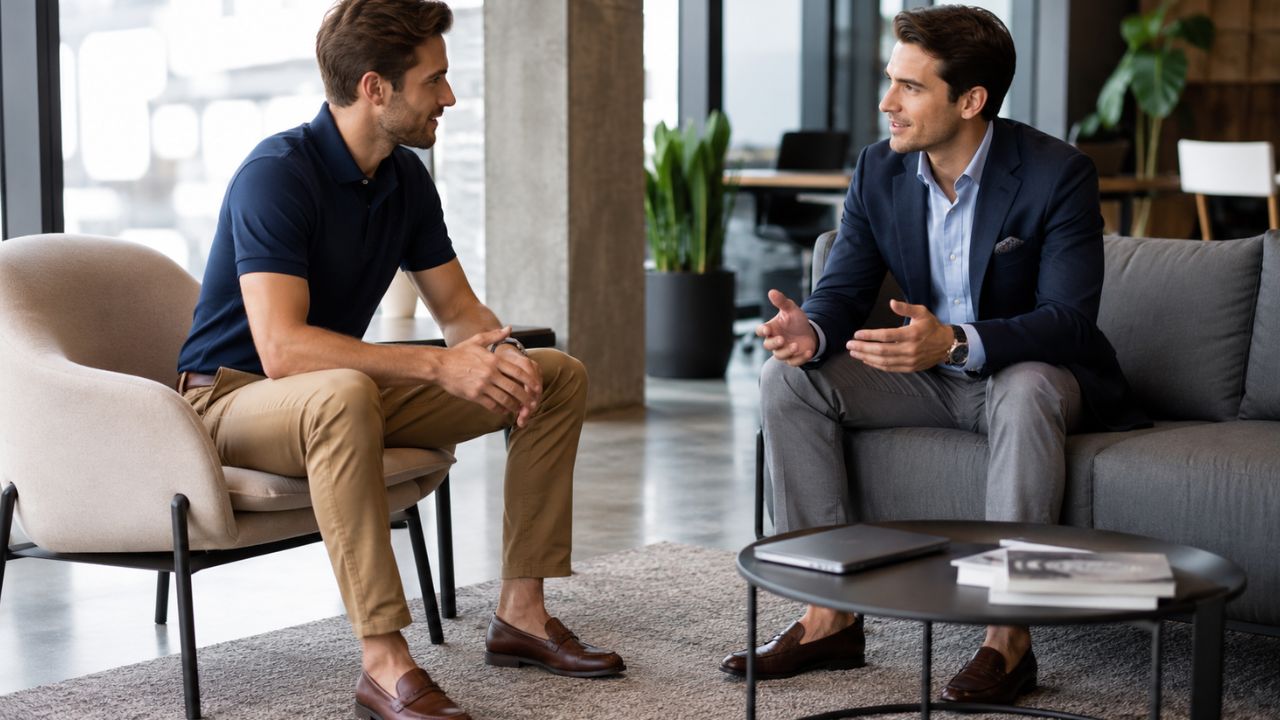
Business Casual for Men Walk into ten different offices across the United States and you’ll probably see ten different interpretations of business casual. One employee is wearing chinos and loafers. Another has on dark jeans and a blazer. Someone else shows up in knitwear and minimalist trainers. That’s exactly why so many men struggle with the dress code.
Business Casual for Men sits in an awkward middle ground. It’s more polished than everyday clothing but less rigid than traditional business attire. The challenge isn’t buying expensive clothes; it’s understanding context. A law firm in Chicago doesn’t interpret business casual the same way a tech startup in Austin does.
Most men don’t need a massive wardrobe to dress well at work. They need a handful of versatile pieces, clothes that fit properly, and a clear understanding of what their workplace expects. Once those elements are in place, getting dressed for the office becomes far easier.
What Business Casual Actually Means
Business casual is best described as professional clothing without the formality of a full suit and tie. The goal is to look polished, competent, and workplace-appropriate while maintaining some personal style.
Many people make the mistake of focusing solely on individual garments. In reality, business casual is about the overall impression. A polo shirt can look perfectly professional when paired with tailored trousers and leather loafers. The same polo worn with wrinkled khakis and running shoes looks unfinished.
Business Casual for Men A useful rule is this: if your outfit would look appropriate in a meeting with a client or senior executive, you’re probably on the right track.
Business casual generally includes:
- Collared shirts, Oxford shirts, knit polos, and fine-gauge sweaters
- Chinos, dress trousers, wool trousers, sport coats, loafers, and leather shoes
- Blazers, cardigans, and refined accessories
Items that typically fall outside the dress code include athletic wear, distressed denim, hoodies, graphic T-shirts, flip-flops, and heavily worn sneakers.
Workplace culture matters, though. Some modern offices accept dark, clean denim and minimalist leather sneakers. Others expect a blazer whenever clients are present.
Before investing in an entirely new wardrobe, spend a week observing what respected leaders in your company wear. Their clothing choices usually establish the real dress code.
The Essential Business Casual Wardrobe

Business Casual for Men One of the biggest misconceptions in men’s office wear is the belief that variety equals style. Experienced dressers know the opposite is true. A smaller collection of quality basics often creates more outfits than a closet full of random purchases.
Start with these essentials:
| Item | Recommended Quantity |
| Oxford button-down shirts | 4-5 |
| Chinos | 3 |
| Dress trousers | 2 |
| Blazers | 2 |
| Sweaters or knitwear | 3 |
| Dress shoes or loafers | 2-3 pairs |
Oxford shirts remain the backbone of business casual attire for men. White, light blue, and subtle stripes work in nearly every office environment. Unlike traditional dress shirts, Oxford cloth offers a slightly relaxed appearance that fits naturally within modern workplaces.
Business Casual for Men Chinos deserve equal attention. Navy, khaki, charcoal, and olive provide exceptional versatility. Proper fit matters more than colour. Trousers should skim the body rather than cling tightly or pool around the ankles.
A navy blazer is arguably the hardest-working item in a man’s wardrobe. It can instantly elevate chinos, dress up dark denim, or add structure to knitwear.
Shoes often determine whether an outfit succeeds or fails. Loafers, Derby shoes, brogues, and clean leather sneakers cover most business casual situations. Many professionals underestimate how much worn or poorly maintained footwear affects overall appearance. People notice shoes more than they realise.
Building Smart Business Casual Outfits
Business Casual for Men Creating stylish business casual outfits doesn’t require endless experimentation. Most successful office looks rely on proven combinations.
A classic formula consists of an Oxford shirt, chinos, and loafers. This outfit works in nearly every industry and rarely feels overdressed.
Another reliable combination pairs a knit polo with tailored wool trousers. The knit texture adds sophistication while remaining comfortable throughout long workdays.
For offices with a slightly more formal atmosphere, try layering a sport coat over a lightweight crewneck sweater and dress trousers. The layering creates visual interest without appearing overly corporate.
Some outfit combinations consistently perform well:
- Navy blazer + white Oxford shirt + grey trousers + brown loafers
- Light blue shirt + khaki chinos + brown Derby shoes
- Charcoal knit polo + navy trousers + leather loafers
- Fine-gauge sweater + white shirt + wool trousers
Business Casual for Men Dark jeans can work in certain environments, but conditions apply. Denim should be dark indigo or black, free from fading, rips, or distressing. Pairing jeans with a blazer and leather footwear usually keeps the outfit office-appropriate.
One detail competitors often overlook is fabric quality. Even affordable clothing appears significantly more expensive when fabrics drape well and maintain their shape. A perfectly fitted, modestly priced blazer almost always looks better than an expensive jacket with poor tailoring.
Business Casual Across Different Industries
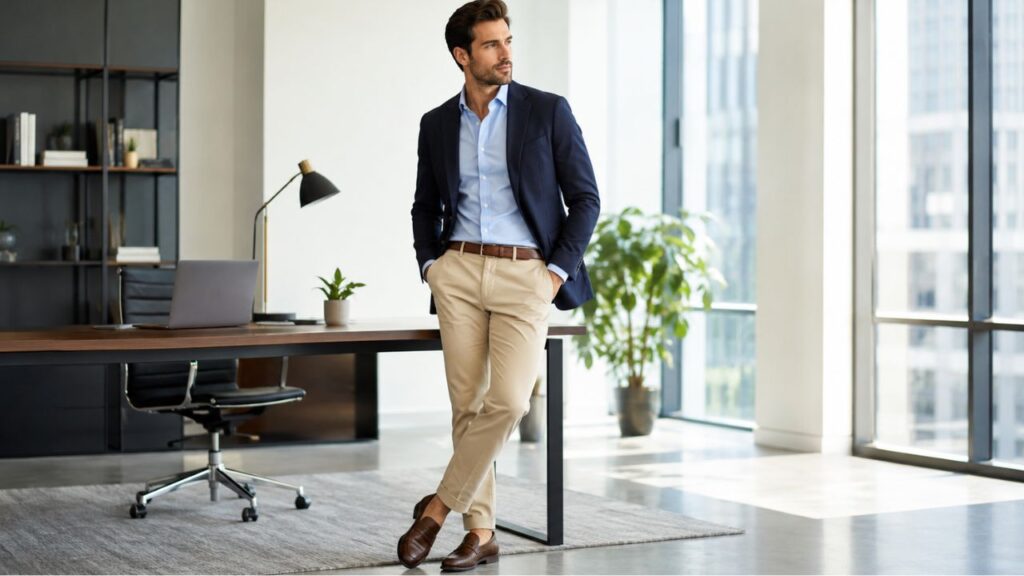
The phrase “business casual” means very different things depending on where you work.
Business Casual for Men Corporate finance, consulting, and legal professions generally lean toward traditional interpretations. Dress trousers, blazers, leather shoes, and button-down shirts remain standard. In these environments, dressing slightly more formally is rarely a mistake.
Technology companies tend to offer more flexibility. Employees may wear dark denim, premium sneakers, and knitwear without issue. Still, professionals in leadership positions often dress one level above the office norm.
Creative industries usually encourage personal expression. Texture, colour, and contemporary silhouettes are more acceptable. A tailored overshirt or turtleneck may feel entirely appropriate.
Remote and hybrid workers face unique challenges. Many professionals now dress formally only from the waist up during video calls. While convenient, this habit can affect mindset and productivity. Numerous image consultants argue that dressing intentionally, even at home, improves professional focus.
Business Casual for Men When joining a new company, aim for the more polished end of business casual during your first few weeks. It’s easier to relax your wardrobe later than to recover from a poor first impression.
Seasonal Business Casual Style
Seasonal dressing separates men who simply follow rules from those who genuinely understand style.
Business Casual for Men Summer presents the greatest challenge. Staying comfortable while looking professional requires careful fabric selection rather than simply removing layers.
Linen blends, lightweight cotton, tropical wool, and breathable knit polos perform particularly well during warmer months. Full linen garments can wrinkle heavily, so many professionals prefer cotton-linen blends for office settings.
In summer, consider:
- Unstructured blazers
- Lightweight chinos
- Loafers without visible socks
- Breathable Oxford shirts
- Fine-knit polos
Winter creates opportunities for layering. A merino wool sweater worn over a button-down shirt instantly elevates office attire. Textured fabrics such as flannel trousers, tweed sport coats, and wool overshirts add depth while maintaining professionalism.
Autumn and spring are arguably the easiest seasons for business casual dressing. Temperatures allow for flexible layering, making blazers, cardigans, and lightweight jackets particularly useful.
Colour choices should shift seasonally as well. Lighter shades work naturally during spring and summer, while deeper tones such as charcoal, burgundy, forest green, and navy complement cooler months.
Common Business Casual Mistakes Men Make
Most office style mistakes stem from misunderstanding fit rather than misunderstanding fashion.
Ill-fitting clothing remains the biggest problem. Baggy trousers, oversized shirts, and jackets with shoulders extending beyond the natural shoulder line instantly undermine an otherwise good outfit.
Business Casual for Men The second mistake is dressing too casually. Athletic trainers, performance fleece jackets, and gym-inspired clothing rarely belong in professional environments, regardless of how relaxed the office appears.
Poor grooming can also diminish a carefully assembled outfit. Wrinkled shirts, scuffed shoes, and neglected hair communicate carelessness.
Another common issue involves excessive trend-chasing. Social media often promotes fashion trends that look impressive online but translate poorly to professional settings. Ultra-wide trousers, oversized silhouettes, or aggressively trendy pieces may quickly appear dated.
Men frequently overlook tailoring as well. Even minor alterations can dramatically improve appearance. Hemming trousers, adjusting sleeve lengths, or taking in a jacket waist often transforms average clothing into something that looks custom-made.
Finally, many professionals underestimate the power of consistency. Looking polished every day matters more than producing one exceptional outfit each month.
Developing Your Personal Business Casual Style

The most stylish professionals rarely wear the flashiest clothing. Instead, they establish a reliable uniform that reflects both their personality and workplace culture.
Business Casual for Men For some men, that uniform may involve navy blazers and Oxford shirts. Others may prefer knit polos and tailored trousers. Neither approach is inherently better.
Aim for versatility, comfort, and polish. Prioritise fit above brand labels. Invest gradually rather than replacing your entire wardrobe at once. Over time, you’ll develop a business casual style that feels authentic rather than forced.
Professional dressing isn’t about impressing everyone around you. It’s about removing uncertainty from your mornings and ensuring your appearance supports, rather than distracts from, your work.
Frequently Asked Questions
Can men wear jeans for business casual?
Business Casual for Men Yes, if the workplace allows it. Choose dark, well-fitted jeans without rips, fading, or distressing, and pair them with refined pieces such as blazers or leather shoes.
Are polo shirts considered business casual?
Absolutely. Knit polos and structured cotton polos are widely accepted in modern offices, particularly when worn with chinos or dress trousers.
Are sneakers appropriate for business casual?
Minimalist leather sneakers may be acceptable in creative or technology workplaces. Athletic trainers and running shoes are generally unsuitable.
Is a blazer necessary for business casual?
No. Many business casual outfits work perfectly without a blazer. Sweaters, knit polos, and button-down shirts often provide sufficient polish.
What colours work best for business casual wardrobes?
Navy, grey, white, light blue, charcoal, beige, and olive create a versatile foundation. These colours mix easily and remain professional across seasons.