Gyaru culture is one of the most recognizable and influential fashion movements to emerge from Japan. To outsiders, it may appear to be a style defined by dramatic makeup, dyed hair, platform shoes, and glamorous outfits. Yet anyone who takes a closer look quickly realizes that Gyaru is much more than a fashion trend. It is a youth-driven subculture built around self-expression, confidence, individuality, and resistance to social expectations.
For decades, Gyaru culture has fascinated fashion enthusiasts, researchers, photographers, and pop culture fans around the world. Its influence can be seen not only in Japanese street fashion but also in beauty trends, social media aesthetics, anime characters, and contemporary fashion communities outside Japan. Even though the movement has experienced periods of decline and transformation, its impact remains visible throughout modern fashion culture.
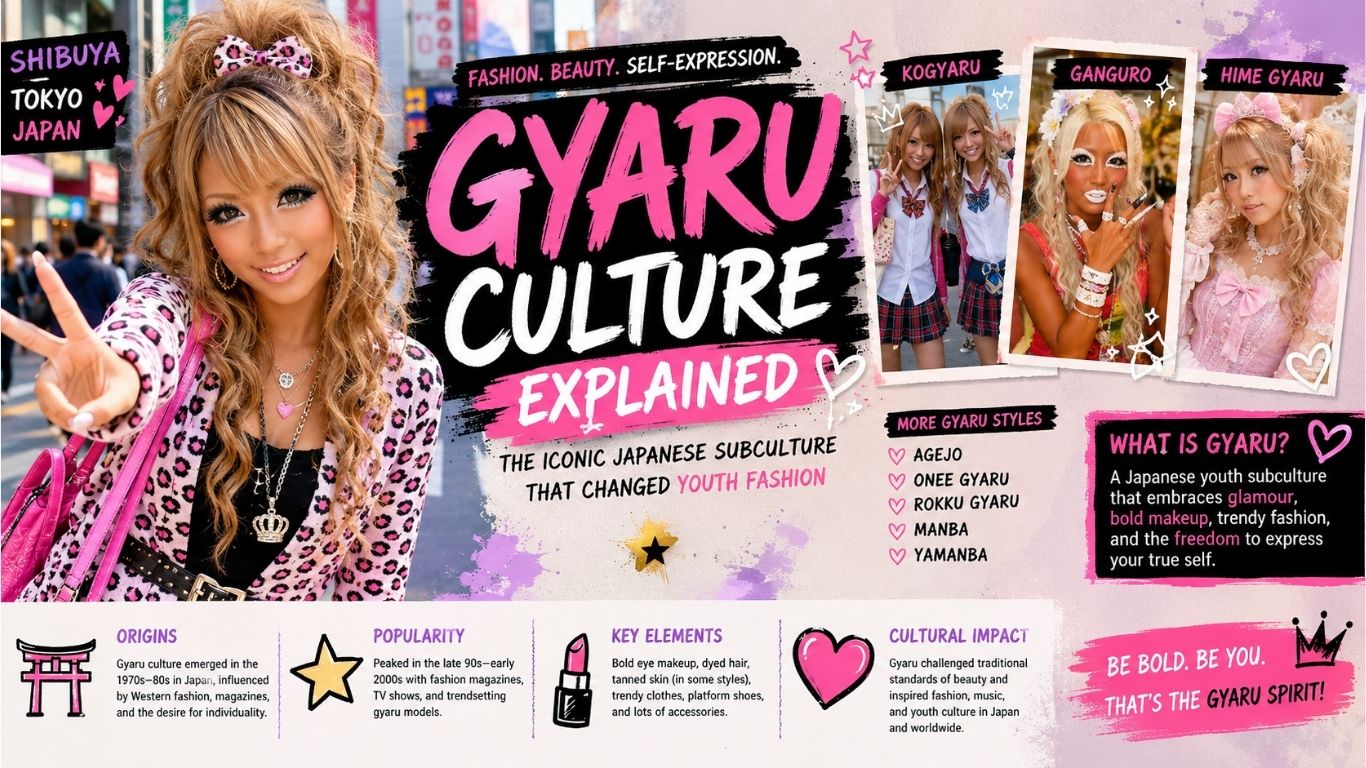
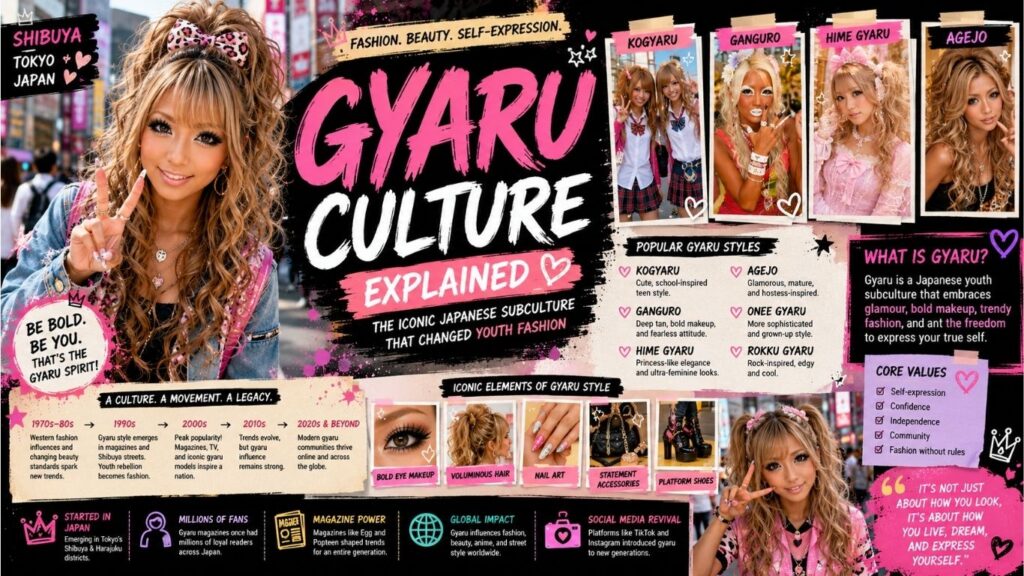
Gyaru style is a Japanese fashion and beauty aesthetic known for expressive makeup, styled hair, fashionable clothing, statement nails, accessories, and confident self-expression. Rather than being one fixed look, Gyaru includes many substyles, ranging from glamorous Hime Gyaru and sophisticated Onee Gyaru to bold Ganguro and edgy Rokku Gyaru.
The word Gyaru (ギャル) comes from the English word “gal,” but its meaning developed into something much broader in Japan. Today, Gyaru refers not only to fashion and beauty but also to a youth subculture centered around individuality, creativity, confidence, and personal expression.
In simple terms, Gyaru style is about creating a noticeable, polished, and expressive appearance rather than following conventional beauty rules.
Understanding Gyaru requires looking beyond hairstyles and makeup techniques. The movement developed within a unique social environment where young people were searching for ways to challenge traditional beauty standards and strict cultural expectations. Through fashion, beauty, and community, Gyaru created a powerful form of self-expression that continues to inspire new generations.
What Is Gyaru Culture?
The word “Gyaru” comes from the English word “girl,” adapted into Japanese pronunciation. While the term initially referred to fashionable young women, it eventually became associated with a distinctive youth subculture that developed during the late twentieth century. Over time, Gyaru evolved into an umbrella term covering various fashion styles, beauty trends, and lifestyle attitudes.
At its core, Gyaru culture revolves around standing out rather than fitting in. Traditional Japanese beauty standards historically favored natural dark hair, pale skin, modest fashion choices, and reserved behavior. Gyaru challenged many of these expectations through bleached hair, dramatic makeup, tanned skin, bold accessories, and attention-grabbing outfits. The goal was not merely to look different but to create an identity that reflected personal freedom and confidence.
Unlike many fashion trends that disappear after a few seasons, Gyaru developed into a complete cultural movement. Participants built communities through magazines, shopping districts, social gatherings, and eventually online platforms. Fashion became a visible symbol of broader values such as independence, creativity, and self-determination. For many young women, Gyaru offered a way to define themselves outside traditional social roles.
Another reason the subculture remains relevant today is its adaptability. While some early styles are instantly recognizable, modern Gyaru enthusiasts often reinterpret classic elements to suit contemporary tastes. This flexibility has allowed the movement to survive even as fashion trends and social attitudes continue to evolve.
The Origins of Gyaru Culture in Japan
To understand the rise of Gyaru culture, it helps to examine Japan during the economic boom of the 1980s. The country was experiencing rapid growth, increased consumer spending, and expanding youth markets. Fashion magazines, beauty brands, and retailers began targeting young consumers more aggressively than ever before. This environment created fertile ground for new trends and subcultures to emerge.
During this period, many young women started experimenting with styles influenced by Western fashion. Blonde hair, tanned skin, and glamorous clothing offered a sharp contrast to traditional Japanese beauty ideals. Rather than embracing the image of the quiet and reserved young woman, these fashion-forward individuals projected confidence and independence. Their appearance often challenged older generations’ expectations regarding femininity and behavior.
Tokyo played a central role in the development of Gyaru culture. Areas such as Shibuya became gathering places for trendsetters, shoppers, and aspiring models. Department stores, boutiques, and fashion magazines created a powerful ecosystem where new looks could spread quickly. Young people visiting these districts were exposed to emerging styles and inspired to create their own interpretations.
Fashion publications also helped shape the movement. Magazines focused on youth fashion showcased new trends, makeup techniques, and street-style photography. Readers could see real people experimenting with bold looks rather than traditional fashion models alone. This sense of accessibility encouraged participation and helped transform Gyaru from a niche trend into a nationwide phenomenon.
Why Did Gyaru Become Popular?
The popularity of Gyaru cannot be explained solely by clothing or makeup. The movement resonated because it addressed deeper social and cultural desires among young people. Many participants saw Gyaru as a way to challenge restrictive expectations surrounding appearance, behavior, and success. Through fashion, they could express individuality in a society often associated with conformity.
One major factor behind the movement’s growth was its celebration of personal freedom. Young women could choose hairstyles, makeup techniques, and clothing combinations that reflected their personalities rather than social norms. This sense of ownership over one’s appearance was empowering, especially during a period when traditional gender roles still influenced many aspects of daily life. Gyaru provided a visible alternative that felt modern, exciting, and independent.
Western cultural influences also played a role. Global fashion trends, music, and celebrity culture introduced new beauty standards and aesthetic inspirations. Rather than simply copying Western styles, Gyaru enthusiasts blended international influences with uniquely Japanese creativity. The result was a distinctive look that felt both rebellious and original.
Media exposure accelerated the trend’s popularity. Fashion magazines, television programs, and celebrity endorsements brought Gyaru into the mainstream. As more people became aware of the movement, participation increased. Some individuals joined because they admired the fashion, while others were attracted to the sense of community and belonging that surrounded the culture.
The combination of self-expression, visibility, and social connection helped transform Gyaru from a street fashion trend into one of Japan’s most influential youth movements.
The Core Values Behind the Gyaru Subculture
Although fashion is the most visible aspect of Gyaru culture, its lasting appeal comes from the values that underpin it. At the heart of the movement lies a commitment to individuality. Participants are encouraged to develop a personal style rather than simply following established rules. This emphasis on self-expression explains why so many different Gyaru substyles emerged over the years.
Confidence is another defining characteristic. Many Gyaru fashion choices are intentionally bold and eye-catching. Dramatic makeup, statement accessories, and glamorous outfits communicate a willingness to be seen and noticed. Rather than seeking approval from everyone, Gyaru culture often celebrates authenticity and self-assurance.
Community also plays an important role. Throughout its history, Gyaru has thrived because enthusiasts connect with others who share similar interests. In the past, these communities formed around shopping districts, fashion magazines, and social gatherings. Today, social media platforms allow Gyaru fans from different countries to exchange ideas, tutorials, and inspiration. This sense of belonging helps keep the culture alive even as trends change.
Perhaps most importantly, Gyaru encourages creativity. Participants constantly reinterpret styles, combine influences, and experiment with new looks. This openness to innovation has allowed the movement to evolve for decades without losing its identity. While specific fashion trends may come and go, the underlying spirit of self-expression remains remarkably consistent.
The Evolution of Gyaru Fashion
One of the most fascinating aspects of Gyaru culture is how dramatically it has evolved while maintaining its core identity. Unlike many fashion trends that remain visually consistent throughout their lifespan, Gyaru has continuously reinvented itself in response to changing tastes, social influences, and cultural shifts. This ability to adapt is one reason the subculture remains relevant decades after its emergence.
The earliest forms of Gyaru fashion appeared during the late 1980s and early 1990s. At that time, the style emphasized dyed hair, trendy clothing, and a more glamorous appearance than traditional Japanese fashion. Young women began rejecting conservative beauty standards by embracing lighter hair colors, fashionable accessories, and makeup inspired by Western celebrities and models. Although these early looks might seem relatively understated compared to later Gyaru styles, they represented a significant cultural departure.
By the late 1990s and early 2000s, Gyaru reached what many consider its golden age. Fashion became bolder, makeup became more dramatic, and specialized substyles emerged throughout Japan. Shopping districts such as Shibuya became cultural hubs where trendsetters showcased new looks that were quickly adopted by fans across the country. During this period, magazines dedicated entire issues to Gyaru fashion, beauty tutorials, and lifestyle content, helping establish the movement as a dominant force in Japanese youth culture.
Modern Gyaru fashion differs considerably from its earlier forms. While some enthusiasts continue to embrace highly stylized looks, many contemporary followers prefer a softer interpretation. Today’s Gyaru often combines classic elements such as glamorous makeup and feminine fashion with modern beauty trends. Social media has also accelerated experimentation, allowing enthusiasts to mix traditional Gyaru aesthetics with contemporary influences from around the world. Rather than disappearing, the movement has evolved into a more diverse and adaptable form of self-expression.
Traditional vs Modern Gyaru Fashion
| Feature | Traditional Gyaru | Modern Gyaru |
|---|---|---|
| Makeup | Dramatic and bold | Softer and refined |
| Hair | Heavy bleaching and volume | More natural styling |
| Fashion | Highly decorative outfits | Mixed contemporary styles |
| Community | Magazines and local groups | Social media and online communities |
| Influence | Japanese youth culture | Global fashion culture |
Popular Types of Gyaru Styles
As Gyaru culture expanded, it diversified into numerous substyles, each with its own aesthetic, makeup techniques, and fashion philosophy. These variations allowed individuals to express themselves while remaining connected to the broader Gyaru community. Understanding these styles provides valuable insight into the creativity and flexibility that define the movement.
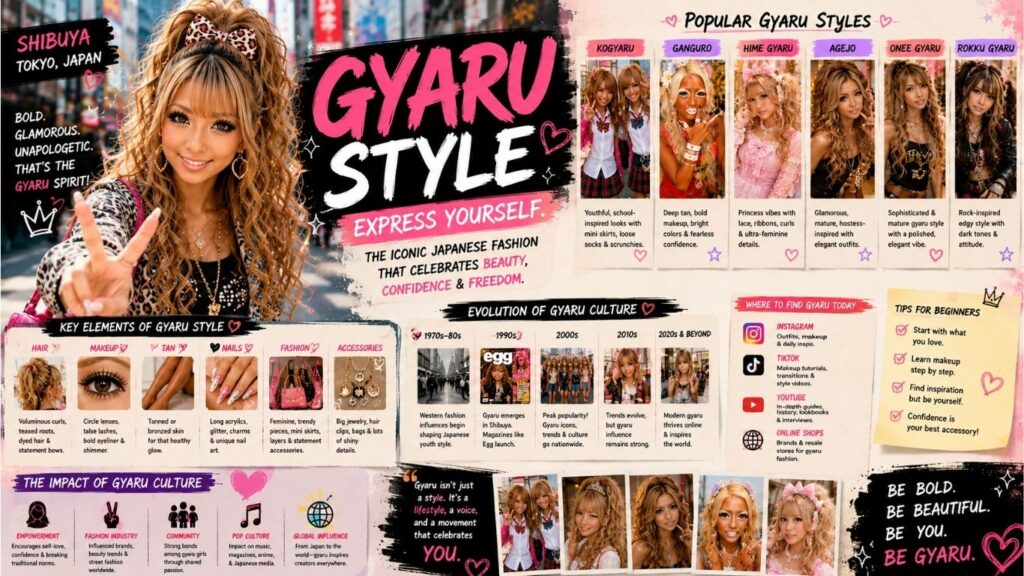
Kogyaru
Kogyaru emerged as one of the earliest and most influential forms of Gyaru fashion. Associated primarily with high school students, this style often featured modified school uniforms, loose socks, fashionable accessories, and dyed hair. While the look might seem simple compared to later substyles, Kogyaru played a crucial role in establishing the rebellious spirit that would define the broader movement.
The popularity of Kogyaru reflected changing attitudes among young women who wanted more control over how they presented themselves. Small modifications to school uniforms became symbols of individuality and resistance to strict social expectations. As media attention increased, Kogyaru became one of the most recognizable youth trends in Japan.
Ganguro
Few styles are as visually striking as Ganguro. Characterized by deeply tanned skin, bleached hair, dramatic white makeup accents, and bold fashion choices, Ganguro represented one of the most radical departures from traditional Japanese beauty standards. At a time when pale skin was often considered ideal, Ganguro enthusiasts deliberately embraced the opposite aesthetic.
The style generated significant public attention and controversy. Critics viewed it as excessive, while supporters saw it as a powerful statement of individuality. Regardless of opinion, Ganguro became one of the most iconic and internationally recognized expressions of Gyaru culture.
Hime Gyaru
Hime Gyaru, which translates roughly to “Princess Gyaru,” offers a completely different interpretation of the movement. Inspired by fairy tales, luxury fashion, and romantic aesthetics, Hime Gyaru emphasizes elegance, femininity, and glamour. The style often incorporates lace, ribbons, pearls, curls, and pastel colors.
Unlike Ganguro’s rebellious edge, Hime Gyaru focuses on creating a sophisticated and luxurious appearance. Brands such as Liz Lisa became closely associated with this aesthetic, helping popularize the style among fashion-conscious consumers who preferred a more refined look.
Agejo Gyaru
Agejo Gyaru developed through Japan’s hostess club culture and became known for its glamorous, nightlife-inspired aesthetic. This style emphasizes dramatic hairstyles, fitted dresses, sparkling accessories, and sophisticated makeup. The overall look projects confidence, luxury, and elegance.
Agejo remains influential because many of its beauty techniques have been adopted beyond the Gyaru community. Voluminous hairstyles, contouring techniques, and glamorous fashion elements continue to appear in mainstream beauty trends today.
Onee Gyaru
Onee Gyaru serves as a more mature version of traditional Gyaru fashion. While retaining glamorous elements, it typically features elegant silhouettes, sophisticated styling, and less exaggerated makeup. Many individuals transitioned into Onee Gyaru as they grew older while maintaining their connection to the culture.
The popularity of this style demonstrates how adaptable Gyaru can be. Rather than abandoning the movement entirely, participants often evolve their aesthetic to reflect different life stages and personal preferences.
Rokku Gyaru
Rokku Gyaru combines Gyaru fashion with rock-inspired influences. Dark colors, leather jackets, studded accessories, dramatic eye makeup, and edgy hairstyles are common features. This style appeals to individuals who enjoy blending glamour with alternative fashion.
Rokku Gyaru highlights the creative flexibility of the movement. By incorporating influences from music and alternative culture, enthusiasts create looks that feel both rebellious and uniquely personal.
Gyaru Makeup, Hair, and Beauty Culture
Beauty has always played a central role in Gyaru culture. While clothing attracts attention, makeup and hairstyling are often what truly define the aesthetic. Over the years, Gyaru enthusiasts developed distinctive beauty techniques that influenced both Japanese and international fashion communities.
One of the most recognizable elements of Gyaru makeup is the emphasis on larger, doll-like eyes. Through strategic eyeliner placement, false eyelashes, circle lenses, and highlighting techniques, enthusiasts create an appearance that appears both glamorous and expressive. The goal is not simply to enhance natural features but to transform them in a creative and artistic way.
Hair has always been equally important. During the peak years of Gyaru culture, heavily bleached hair, dramatic volume, curls, and elaborate styling became common. Hairstyles often required significant time and effort, reflecting the dedication many participants had toward perfecting their appearance. Although modern Gyaru styles may favor more natural looks, hair remains a defining aspect of the aesthetic.
Nail art, accessories, and beauty products further contribute to the overall image. Long decorated nails, statement jewelry, handbags, and fashionable footwear help complete the look. Rather than focusing on a single feature, Gyaru beauty culture emphasizes creating a cohesive appearance where every detail contributes to the final result.
Beyond aesthetics, these beauty practices also serve as forms of self-expression. Participants use makeup and fashion to communicate personality, creativity, and confidence. This artistic approach helps explain why Gyaru continues to attract followers despite changing fashion trends.
The Role of Magazines, Models, and Media
No discussion of Gyaru culture would be complete without examining the influence of media. Long before social media platforms transformed fashion communication, magazines served as the primary source of inspiration and trend distribution. Publications dedicated to youth fashion played an essential role in shaping the movement’s growth and popularity.
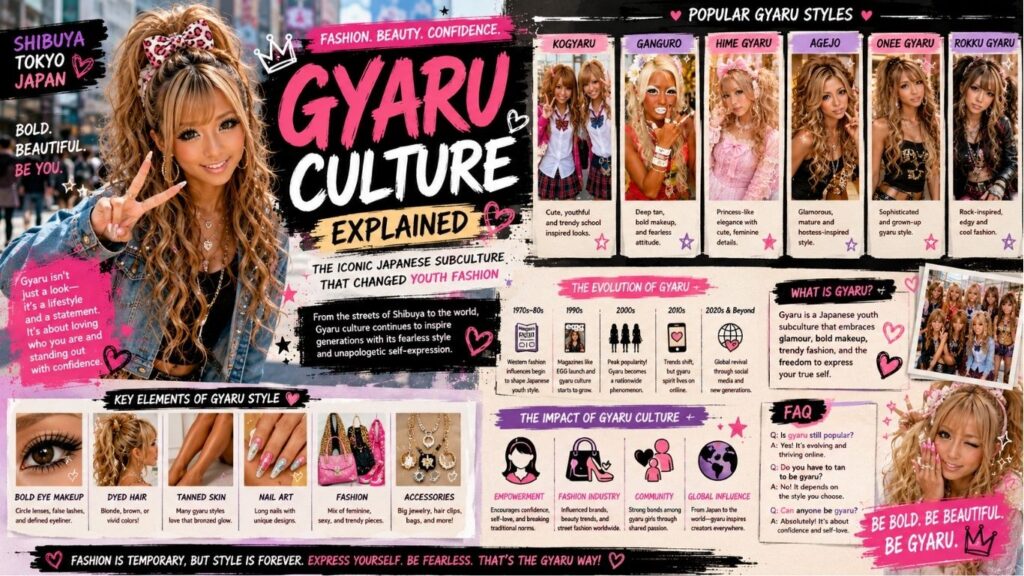
Fashion magazines provided more than outfit ideas. They introduced readers to emerging trends, beauty techniques, lifestyle content, and influential personalities. Aspiring Gyaru enthusiasts could learn how to recreate popular looks, discover new brands, and connect with a larger community. This constant flow of information helped create a shared cultural identity among participants across Japan.
Models became celebrities within the Gyaru world. Unlike traditional fashion models who often appeared distant or unattainable, many Gyaru icons felt relatable to readers. Their hairstyles, makeup tutorials, shopping recommendations, and personal stories inspired countless followers. As a result, certain individuals became influential trendsetters capable of shaping the direction of the entire movement.
Television and later digital platforms expanded Gyaru’s reach even further. What began as a youth subculture eventually became part of mainstream cultural discussions. Today, social media performs many of the functions once handled by magazines. Tutorials, outfit inspiration, product reviews, and community discussions are now shared globally through platforms such as Instagram, TikTok, and YouTube.
The transition from print media to digital platforms has fundamentally changed how Gyaru culture spreads, but the underlying principle remains the same. Community members continue to inspire one another through shared creativity, visual storytelling, and fashion innovation.
How Gyaru Culture Influenced Japanese Society
Gyaru’s impact extends far beyond fashion. Throughout its history, the movement challenged social expectations and sparked conversations about beauty, identity, and youth culture. By embracing alternative aesthetics, participants encouraged broader discussions about individuality and self-expression within Japanese society.
One of the movement’s most significant contributions was its challenge to conventional beauty standards. For generations, many traditional ideals emphasized modesty, natural appearance, and conformity. Gyaru offered a visible alternative that celebrated glamour, experimentation, and personal choice. Whether through hair color, makeup, or clothing, participants demonstrated that beauty could take many different forms.
The subculture also influenced discussions surrounding women’s independence and identity. Many followers viewed fashion as a way to assert control over how they presented themselves to the world. Rather than passively accepting expectations, they actively shaped their own image. This emphasis on self-determination resonated with many young women navigating changing social roles.
At the same time, Gyaru attracted criticism from some segments of society. Opponents argued that certain styles were excessive or inappropriate. Yet these controversies often reinforced the movement’s importance as a symbol of individuality and cultural change. The debates surrounding Gyaru reflected broader tensions between tradition and modernity, making the subculture an important chapter in Japan’s social history.
Is Gyaru Still Popular Today?
One of the most common questions surrounding the movement is whether Gyaru culture still exists in modern Japan. The answer is more nuanced than a simple yes or no. While Gyaru no longer dominates youth fashion the way it did during the late 1990s and early 2000s, the culture remains active, influential, and surprisingly resilient.
During the 2010s, several factors contributed to a decline in visibility. Fashion trends shifted toward more minimalist aesthetics, social media changed how trends spread, and many traditional Gyaru magazines either reduced circulation or ceased publication. To casual observers, it appeared as though the movement had disappeared entirely. However, what actually happened was a transformation rather than an extinction.
Today’s Gyaru community is smaller but highly dedicated. Enthusiasts continue to gather online, attend fashion events, create content, and preserve the styles that made the movement famous. Social platforms have allowed a new generation to discover Gyaru without relying on magazines or local fashion scenes. As a result, modern followers can connect with like-minded individuals regardless of geographic location.
Many contemporary interpretations of Gyaru are also less extreme than earlier versions. Modern enthusiasts often incorporate signature elements such as glamorous makeup, curled lashes, fashionable hairstyles, and feminine styling into everyday outfits. This softer approach makes the aesthetic more accessible while preserving its core spirit of individuality and confidence.
Interestingly, the nostalgia cycle has also contributed to renewed interest. Younger fashion fans frequently revisit iconic trends from previous decades, and Gyaru has benefited from this phenomenon. Vintage magazines, archival photos, and classic fashion brands continue to inspire both longtime followers and newcomers discovering the culture for the first time.
Modern Gyaru Culture Outside Japan
Although Gyaru originated in Japan, its influence now extends far beyond the country’s borders. The internet has transformed what was once a localized fashion movement into a global community. Today, enthusiasts can be found throughout North America, Europe, Southeast Asia, and other regions where Japanese fashion and pop culture have gained popularity.
In the United States, Gyaru has developed a dedicated following among fashion enthusiasts, anime fans, beauty creators, and alternative style communities. Many individuals discover the culture through social media platforms where tutorials, outfit showcases, and historical content make the aesthetic more accessible than ever before. Online communities provide spaces for newcomers to learn about different substyles and connect with experienced members.
Anime and manga have also played a significant role in introducing global audiences to Gyaru-inspired aesthetics. Certain characters incorporate hairstyles, makeup, and fashion elements associated with the subculture, sparking curiosity among viewers. While fictional representations are not always perfectly accurate, they often serve as an entry point for deeper exploration.
Fashion conventions, cosplay events, and Japanese cultural festivals further support the international Gyaru community. Enthusiasts frequently gather to share styling techniques, exchange fashion recommendations, and celebrate a culture that remains deeply meaningful despite geographical distance. This international enthusiasm demonstrates that Gyaru’s appeal extends beyond its original cultural context and continues to resonate with people seeking creative forms of self-expression.
How to Get Started With Gyaru Fashion
For beginners, entering the world of Gyaru can feel overwhelming because of the many substyles, beauty techniques, and fashion influences involved. The good news is that modern Gyaru culture encourages personal interpretation rather than strict adherence to rules. Newcomers do not need an expensive wardrobe or advanced makeup skills to begin exploring the aesthetic.
The most effective starting point is understanding the different branches of Gyaru fashion. Some people are drawn to the glamorous elegance of Hime Gyaru, while others prefer the mature sophistication of Onee Gyaru or the bold attitude of Ganguro. Studying these styles helps newcomers identify which elements align with their personal tastes and lifestyle.
Rather than attempting a complete transformation overnight, many successful beginners gradually incorporate Gyaru-inspired features into their appearance. This might include experimenting with eyelashes, learning signature eye makeup techniques, styling hair with more volume, or selecting outfits that emphasize confidence and femininity. Small changes often provide a stronger foundation than trying to replicate complex looks immediately.
A practical approach includes focusing on a few essential areas:
| Beginner Focus Area | Why It Matters |
|---|---|
| Eye Makeup | Signature feature of most Gyaru styles |
| Hairstyles | Helps create the overall silhouette |
| Fashion Inspiration | Develops understanding of substyles |
| Accessories | Adds personality and authenticity |
| Community Engagement | Provides learning opportunities |
Connecting with the community is equally important. Social media groups, fashion forums, and content creators often share tutorials, product recommendations, and styling advice. Learning from experienced enthusiasts not only improves technical skills but also provides valuable cultural context that deepens appreciation for the movement.
The Future of Gyaru Culture
Fashion trends rarely remain unchanged, and Gyaru is no exception. However, the future of the movement appears more promising than many people assume. Rather than disappearing, Gyaru continues to adapt to changing cultural and technological environments. Its ability to evolve has been one of its greatest strengths throughout history.
Social media is likely to remain a driving force behind future growth. Platforms that emphasize visual content naturally complement fashion-focused communities. Through tutorials, styling videos, and educational content, creators introduce Gyaru to audiences who may never have encountered it through traditional fashion channels. This increased visibility helps sustain interest and attract new participants.
Another factor supporting the future of Gyaru is the broader rise of alternative fashion communities. Consumers increasingly seek individuality in a world where trends can feel repetitive and mass-produced. Gyaru’s emphasis on creativity, confidence, and personal expression aligns well with this shift toward unique identities and niche fashion movements.
Sustainability may also influence the next chapter of Gyaru culture. Vintage clothing, secondhand fashion, and archival pieces are becoming increasingly popular among younger consumers. Because many classic Gyaru items are no longer produced, collectors and enthusiasts often turn to resale markets, unintentionally supporting more sustainable consumption habits.
While the future may not resemble the movement’s peak years, Gyaru appears positioned to remain an influential subculture. Its enduring values of self-expression and individuality continue to resonate with new generations searching for meaningful ways to define themselves through fashion.
Gyaru vs Other Japanese Fashion Subcultures
Japanese fashion is known for its diversity, and Gyaru exists alongside several other influential subcultures. Understanding these differences helps clarify what makes Gyaru unique within the broader landscape of Japanese street fashion.
| Fashion Style | Core Identity | Visual Characteristics |
|---|---|---|
| Gyaru | Glamour and self-expression | Dramatic makeup, styled hair, fashionable outfits |
| Harajuku Fashion | Creativity and experimentation | Eclectic combinations and colorful styling |
| Lolita Fashion | Historical elegance | Victorian-inspired dresses and accessories |
| Visual Kei | Music-inspired expression | Dramatic costumes, theatrical makeup |
| Decora | Maximalism and fun | Colorful accessories and layered styling |
Gyaru differs from Harajuku fashion because it generally focuses more on beauty, glamour, and femininity rather than experimental combinations of unrelated styles. While Harajuku encourages nearly limitless creativity, Gyaru often revolves around achieving a polished and fashionable appearance.
Compared with Lolita fashion, Gyaru is typically more contemporary and trend-driven. Lolita draws inspiration from historical clothing and elaborate silhouettes, whereas Gyaru reflects modern beauty ideals and lifestyle influences. Visual Kei, meanwhile, is closely tied to music culture and performance aesthetics, making it distinct from Gyaru’s fashion-centered identity.
Despite these differences, all of these movements share a commitment to individuality. Together, they illustrate the remarkable diversity of Japanese street fashion and demonstrate how clothing can become a powerful form of cultural expression.
Frequently Asked Questions About Gyaru Culture
What does Gyaru mean?
The term “Gyaru” originates from the English word “girl,” adapted into Japanese pronunciation. Over time, the meaning evolved beyond a simple translation and became associated with a specific fashion and lifestyle movement. Today, Gyaru refers to a broad subculture centered on self-expression, beauty, confidence, and individuality. While many people initially associate the term with dramatic makeup or blonde hair, the culture encompasses far more than appearance. It includes community values, fashion innovation, and a willingness to challenge conventional expectations.
Why did Gyaru become popular?
Gyaru became popular because it offered young people an alternative to traditional social expectations. Many participants were attracted to its emphasis on individuality, personal freedom, and confidence. During periods when conformity remained highly valued, Gyaru allowed people to experiment with fashion, makeup, and identity in ways that felt empowering. Media exposure, fashion magazines, celebrity influences, and the growth of youth consumer culture all contributed to the movement’s rapid expansion.
Is Gyaru still popular in Japan?
Gyaru remains active in Japan, although it is not as dominant as it was during its peak years. The culture has evolved into a smaller but dedicated community that continues to celebrate its traditions while adapting to modern trends. Social media has played a major role in maintaining visibility, allowing enthusiasts to share content, organize events, and introduce newcomers to the movement. Many contemporary followers embrace softer interpretations of classic Gyaru aesthetics.
What is the difference between Gyaru and Ganguro?
Ganguro is actually a substyle within the broader Gyaru movement. While Gyaru encompasses many different looks, Ganguro is specifically known for deeply tanned skin, bleached hair, dramatic makeup, and highly contrasting beauty techniques. Not all Gyaru enthusiasts follow Ganguro fashion, but Ganguro remains one of the most iconic and recognizable expressions of the culture.
Can anyone participate in Gyaru fashion?
Yes. Modern Gyaru communities generally welcome people from diverse backgrounds who appreciate the culture and approach it respectfully. The movement emphasizes creativity and self-expression rather than strict rules. Beginners often start by learning about different substyles, experimenting with makeup techniques, and gradually incorporating Gyaru-inspired elements into their wardrobes.
Conclusion
Gyaru culture is far more than a collection of fashion trends. It represents a decades-long movement built around individuality, confidence, creativity, and self-expression. From its origins in Japan’s rapidly changing youth culture to its influence on global fashion communities, Gyaru has continually challenged expectations and encouraged people to define beauty on their own terms.
The movement’s history reveals why it became such an important part of Japanese street fashion. Whether through Kogyaru’s youthful rebellion, Ganguro’s bold rejection of beauty norms, Hime Gyaru’s glamorous elegance, or modern interpretations shaped by social media, each phase of Gyaru reflects a desire for personal freedom and authenticity. That spirit remains at the heart of the culture today.
Although its mainstream visibility has changed over time, Gyaru continues to inspire new generations. Online communities, fashion creators, and cultural enthusiasts keep the movement alive by sharing knowledge, celebrating its history, and adapting its aesthetics for contemporary audiences. Its influence can still be seen across beauty trends, fashion styling, digital culture, and even popular entertainment.
For anyone interested in Japanese fashion, Gyaru offers a fascinating example of how style can become a form of identity and cultural expression. The movement’s lasting legacy proves that true fashion influence is not measured only by popularity but by the ideas and communities it leaves behind.
Ready to explore more? Continue learning about Gyaru makeup, hairstyles, fashion brands, Ganguro, Kogyaru, and other Japanese fashion subcultures to gain a deeper understanding of one of Japan’s most influential style movements.