Business Casual Pants & Bottoms Walk into almost any modern office in the U.S. and you’ll notice something subtle but important: people don’t dress “formally” the way they used to. Suits are no longer the default. Instead, you’ll see a mix of chinos, tailored trousers, midi skirts, and clean, minimal outfits that sit somewhere between relaxed and professional. That’s where business casual pants and bottoms quietly became the backbone of workplace dressing.
The tricky part is that the term “business casual” doesn’t mean the same thing everywhere. One company might allow dark denim, while another expects pressed trousers every day. Most people only figure this out after a few awkward outfit mistakes. The real challenge isn’t finding clothes—it’s understanding what actually looks appropriate without feeling stiff or overdressed.
Business Casual Pants & Bottoms This guide focuses on the practical side of it: what trousers, chinos, and skirts actually work in real office environments, how people style them without overthinking, and what choices consistently hold up across different workplaces.
Understanding What Business Casual Really Looks Like Now
If you asked ten people what business casual means, you’d probably get ten slightly different answers. That’s because the dress code has shifted a lot in the past decade, especially in the U.S. offices where hybrid work and startup culture changed expectations. In most workplaces now, business casual sits somewhere between traditional office wear and everyday smart clothing.
Business Casual Pants & Bottoms The real rule isn’t a strict uniform—it’s balance. Clothes should look intentional, not relaxed to the point of looking like weekend wear. That’s why bottoms matter so much. Pants and skirts set the tone for the entire outfit. A pair of structured trousers instantly elevates even a simple shirt, while poorly fitted chinos can make a good outfit look careless.
One thing people often overlook is fabric texture. Offices rarely require anything fancy, but materials like cotton twill, wool blends, or structured stretch fabrics subtly communicate professionalism. It’s less about labels and more about how the clothing holds its shape throughout the day.
Business Casual Trousers: The Foundation Most People Rely On
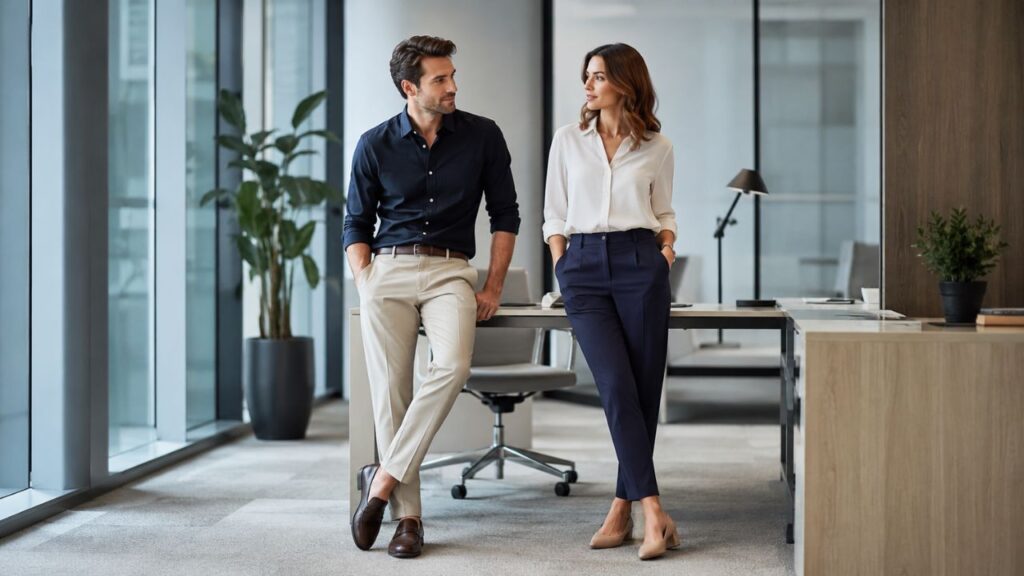
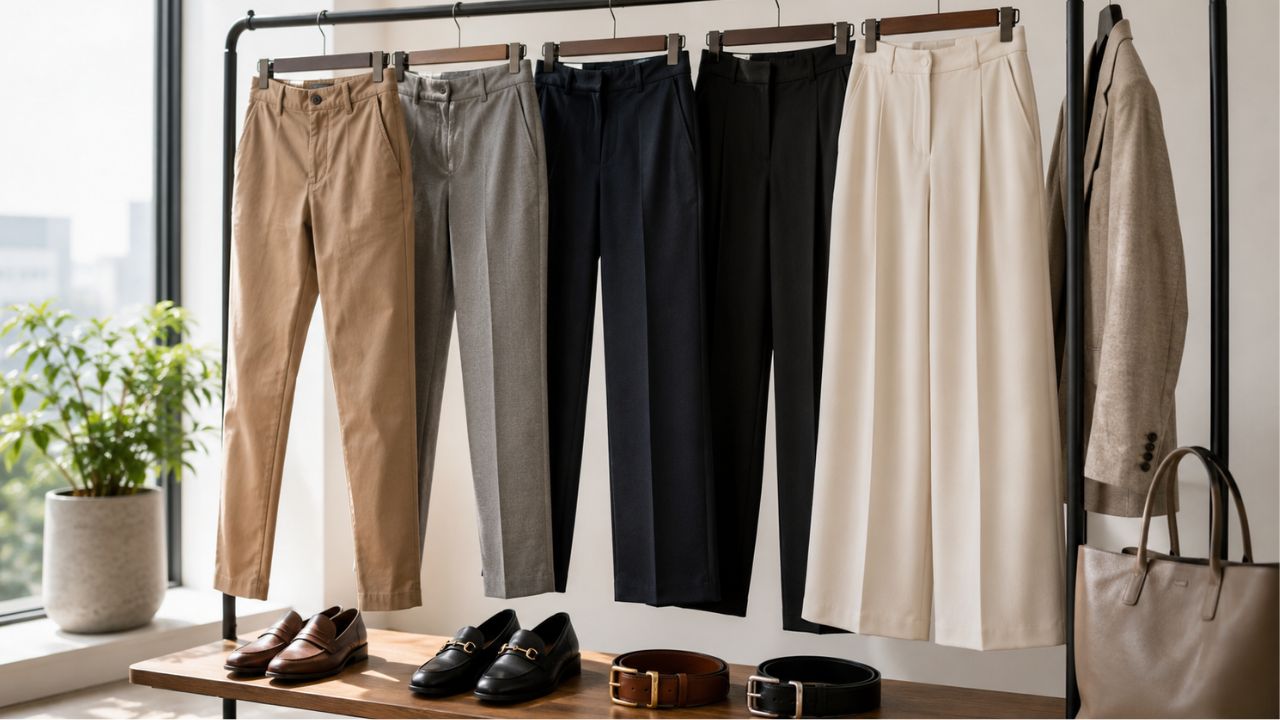
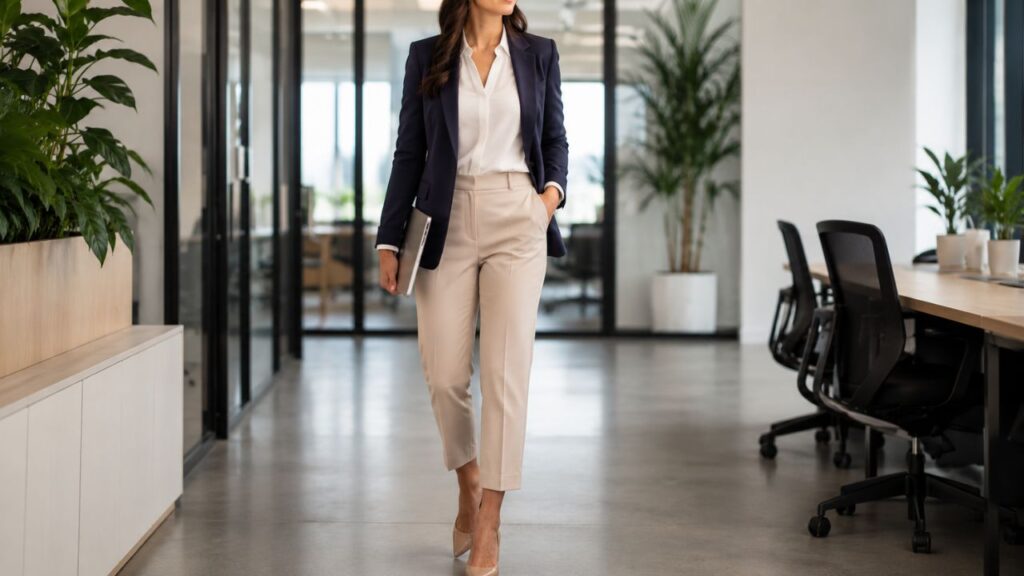
Trousers are usually the safest starting point for anyone building a work wardrobe. They carry structure naturally, which is why they work in almost every office environment, from corporate settings to more relaxed business spaces. The key detail most people miss is fit. A well-tailored pair of trousers doesn’t need to be expensive—it just needs to sit cleanly on the waist and fall naturally without bunching at the ankles.
In real office settings, neutral colors dominate for a reason. Black, navy, charcoal, and beige trousers are easy to repeat without looking like you’re wearing the same outfit every day. That repetition actually works in your favor because it simplifies decision-making in the morning.
Business Casual Pants & Bottoms A simple but effective outfit formula many professionals rely on is straight or slim-fit trousers paired with a crisp shirt and minimal shoes like loafers or low heels. It sounds basic, but consistency is what makes it look sharp. One detail worth paying attention to is hem length. Slightly cropped trousers have become more common in modern offices, especially in warmer climates, because they pair well with lighter footwear and avoid that heavy, traditional look.
Chinos: The Quiet Workhorse of Modern Offices
Chinos sit in that middle ground that makes them incredibly useful. They’re less formal than trousers but still structured enough to pass in most business casual environments. If trousers are the “safe formal option,” chinos are the flexible everyday choice that people often underestimate.
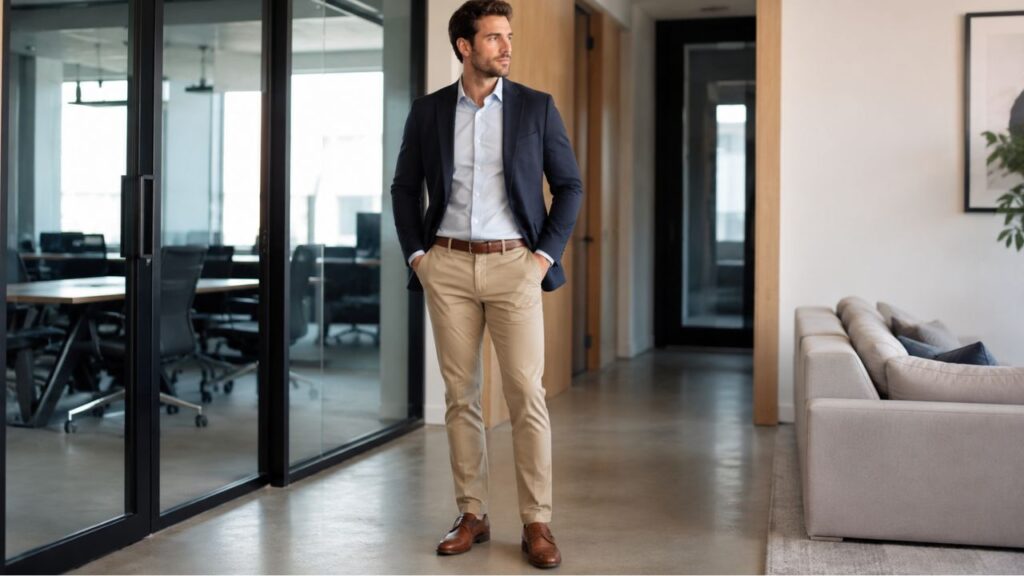
Business Casual Pants & Bottoms In practice, chinos work best when they’re kept simple. Slim or straight cuts in neutral tones like navy, olive, or beige tend to look the most professional. Bright colors or overly washed styles usually push them too far into casual territory, which is where people sometimes go wrong.
What makes chinos interesting is how they adapt to different settings. In a tech office, they can be paired with polos or lightweight knits and still look appropriate. In a corporate environment, they can be styled with button-down shirts and a blazer to match the formality of trousers. That flexibility is why they’ve become a staple in modern office wardrobes across the U.S.
A realistic example: someone working in a hybrid setup might wear navy chinos with a tucked-in shirt on meeting days and switch to a more relaxed knit on remote days. The pants stay the same, but the styling adjusts. That’s the real value of chinos—they reduce the need for a large wardrobe while still covering different levels of formality.
Business Casual Skirts: Structure Meets Subtle Style
Business Casual Pants & Bottoms Skirts in business casual dressing often get misunderstood. People assume they’re either too formal or too casual depending on the cut, but in reality, it comes down to proportion and length. In most office environments, knee-length or midi skirts tend to be the most reliable.
Pencil skirts are the most structured option and usually fit well in traditional office settings. They create a clean silhouette that pairs naturally with tucked-in shirts or light blouses. A-line skirts, on the other hand, feel slightly more relaxed but still professional when styled correctly. They’re often preferred in creative or less rigid environments where movement and comfort matter more.
Business Casual Pants & Bottoms One detail that separates a well-styled skirt outfit from an average one is balance. If the bottom is fitted, the top usually needs a bit of softness or structure depending on the look you want. For example, a pencil skirt works best with a slightly looser blouse, while a flared skirt pairs better with more fitted tops.
Footwear also changes the entire tone. Flats and low heels keep things grounded and practical, while pointed shoes add formality without feeling outdated. The key is consistency—everything should feel like it belongs in the same outfit, not competing styles layered together.
Fit, Fabric, and Why They Matter More Than Trends
Most people focus on style first and forget that fabric and fit decide whether business casual bottoms actually look good throughout the day. A pair of trousers might look perfect in the morning but lose structure by afternoon if the fabric is too soft or low quality. That’s where blends like cotton with a bit of stretch or wool blends become important.
Business Casual Pants & Bottoms Fit is even more critical. Slim fit, straight fit, and relaxed fit all have their place, but the goal isn’t to follow trends—it’s to match your body and your workplace environment. Slim fits tend to look sharper in corporate settings, while straight fits are more forgiving and versatile. Relaxed fits have become more common recently, especially in hybrid work environments where comfort matters more.
One practical observation from real office environments: people often overestimate how tight or loose their pants should be. The most reliable look is usually the middle ground—structured enough to look intentional, but not so tight that it restricts movement or looks uncomfortable.
Building Real Outfit Combinations That Don’t Feel Forced
Business Casual Pants & Bottoms Outfit formulas matter more than individual pieces. Most professionals don’t have time to reinvent their wardrobe every morning, so they rely on repeatable combinations that always work.
Business Casual Pants & Bottoms For example, chinos with a simple button-down shirt and loafers is a combination you’ll see everywhere because it consistently hits the right balance. Trousers with a tucked-in blouse and minimal accessories create a more formal version of the same idea. Skirts follow similar logic—structured bottoms paired with softer or neutral tops tend to work best.
A common mistake is overcomplicating outfits with too many elements. Business casual doesn’t reward creativity in layering the way fashion-forward styling does. It rewards clarity. Clean lines, neutral tones, and predictable combinations usually perform better in real office environments than experimental looks.
Conclusion
Business casual bottoms aren’t about memorizing rules—they’re about understanding balance. Trousers give structure, chinos offer flexibility, and skirts bring variation without breaking professionalism. Once you understand how fabric, fit, and simple outfit formulas work together, dressing for the office becomes less of a daily decision and more of a system.
Business Casual Pants & Bottoms Most people don’t need more clothes; they need better combinations. A small set of well-fitted trousers, chinos, or skirts can easily cover an entire work week if styled thoughtfully. The goal isn’t to stand out—it’s to look consistent, intentional, and appropriate without overthinking it.
FAQ
1. Are chinos considered business casual?
Yes, chinos are one of the most common business casual bottoms because they balance structure and comfort, making them suitable for most office environments.
2. What pants are best for business casual settings?
Trousers in neutral colors like black, navy, and grey are the safest option, while chinos offer a more relaxed but still professional alternative.
3. Can skirts be worn in business casual offices?
Yes, as long as they are knee-length or midi and styled with appropriate tops like blouses or structured shirts.
4. What’s the difference between chinos and trousers?
Business Casual Pants & Bottoms Trousers are more structured and formal, often made from wool or tailored fabrics, while chinos are lighter cotton-based pants with a more relaxed feel.
5. How many business casual bottoms should I own?
Most professionals can build a functional wardrobe with 3–5 pairs, mixing trousers, chinos, and one or two skirts depending on preference.