What Is Gyaru Style?
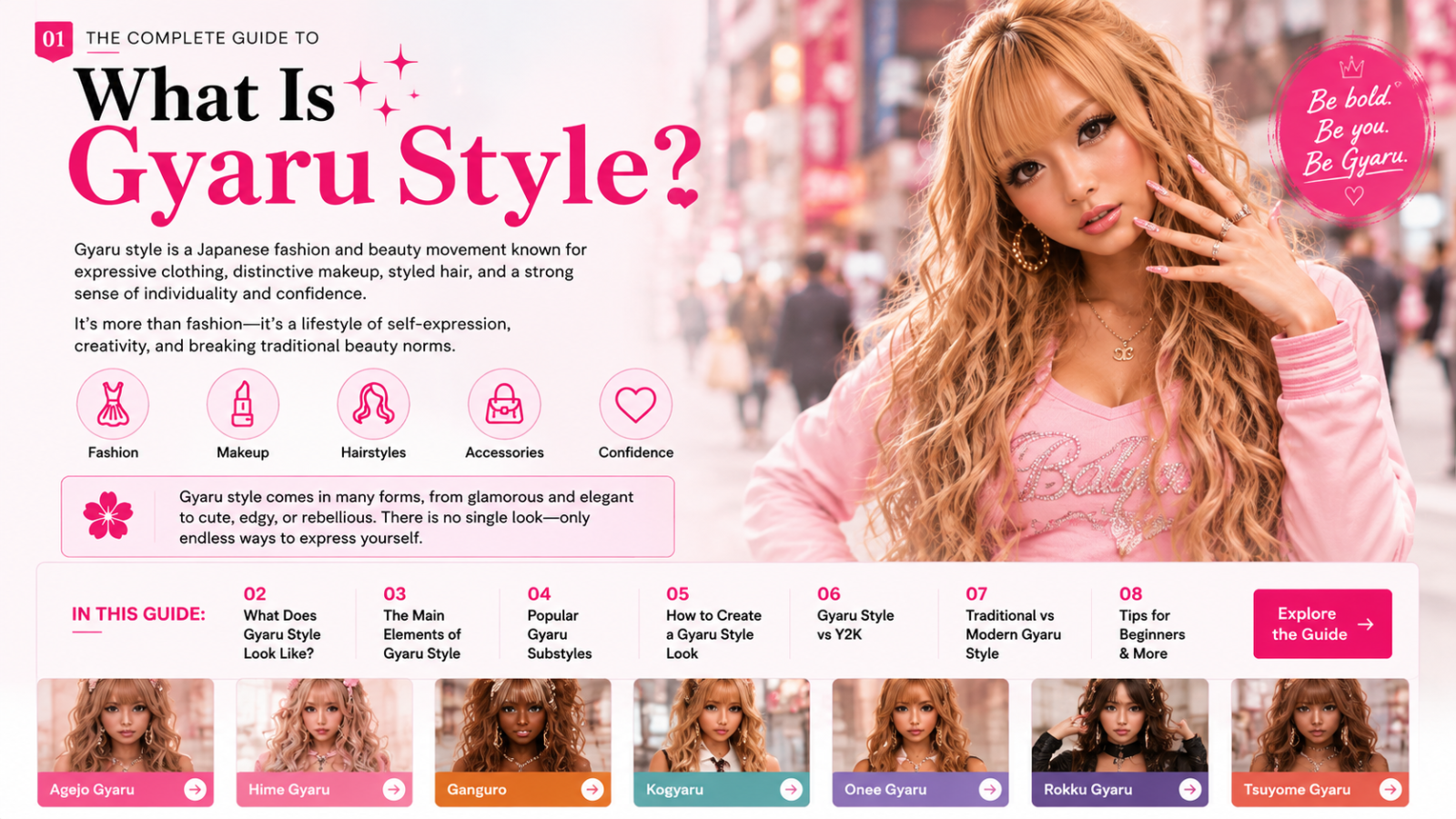
Gyaru style is a Japanese fashion and beauty aesthetic known for expressive clothing, distinctive makeup, styled hair, statement accessories, and a strong emphasis on individuality.
Unlike a fashion trend that can usually be recognized by a specific group of clothing, gyaru style is much broader. It combines fashion, beauty, hairstyles, accessories, and personal expression into a complete look.
There is also no single outfit that represents every type of gyaru. Different substyles can look dramatically different from one another. Some emphasize glamour and sophistication, while others are cute, rebellious, youthful, romantic, or bold.
This diversity is one of the most important characteristics of the gyaru movement. The broader movement developed through Japanese youth culture and became particularly influential during the 1990s and 2000s. Over time, different communities and fashion trends helped create new interpretations of the style.
Today, gyaru continues to evolve through modern fashion, beauty communities, social media, and international interest.
What Does Gyaru Style Look Like?
A typical gyaru-inspired look may include carefully styled hair, noticeable eye makeup, fashionable clothing, accessories, and footwear that work together as one coordinated appearance.
Depending on the chosen substyle, the final result can be glamorous, cute, elegant, dramatic, edgy, mature, or casual.
Some commonly associated elements include:
- Dramatic eye makeup
- False eyelashes
- Defined eyeliner
- Styled or voluminous hair
- Dyed hair
- Skirts and dresses
- Fitted clothing
- Platform shoes
- Boots
- Statement accessories
- Decorative details
- Feminine silhouettes
- Bold styling
However, none of these elements is an absolute requirement. The most important part is how the elements are combined.
For example, an elegant Onee Gyaru outfit can look very different from a dramatic Ganguro-inspired look. Both can still belong to the larger gyaru world because they share the broader ideas of intentional styling, expressive beauty, and individuality.
The Main Elements of Gyaru Style
Gyaru style works because several different parts of appearance come together.
Gyaru Fashion
Fashion is one of the most visible parts of gyaru style. Different substyles use different clothing combinations, but gyaru outfits are generally coordinated rather than random. Clothing is selected together with hair, makeup, footwear, and accessories to create a particular visual identity.
A glamorous gyaru look may use dresses, heels, fitted silhouettes, and decorative accessories, while a darker style may rely on boots, darker colors, leather-inspired details, and statement pieces.
Gyaru Makeup
Makeup is another defining element. Gyaru makeup has historically placed considerable attention on the eyes. Eyeliner, false lashes, eyeshadow, contouring, and techniques designed to make the eyes appear larger or more defined can all be used.
The exact technique depends on the era and substyle. Traditional looks can be extremely dramatic, while modern interpretations may use softer techniques.
Your existing article already contains detailed sections covering traditional Gyaru makeup, modern makeup, eye makeup, enlarged-eye techniques, lashes, and products.
Gyaru Hairstyles
Hair plays an important role in completing the look. Classic gyaru hairstyles often emphasized volume, curls, extensions, dyed hair, and elaborate styling.
Modern interpretations are more flexible. Long waves, curls, ponytails, extensions, shorter styles, and accessories can all be adapted to different interpretations of the aesthetic.
The hairstyle should complement the clothing and makeup instead of appearing disconnected from them.
Gyaru Accessories
Accessories can make a major difference to the final appearance. Depending on the chosen style, gyaru outfits may include:
- Statement earrings
- Necklaces
- Bracelets
- Hair accessories
- Handbags
- Belts
- Sunglasses
- Decorative footwear
- Fashionable nails
Accessories don’t have to be excessive. A simple outfit can become much more distinctive when the right accessories are used to reinforce the chosen gyaru substyle.
Gyaru Style and Japanese Youth Fashion
Gyaru developed as part of a wider environment of Japanese youth fashion and cultural change. The movement became increasingly visible as young people experimented with clothing, hairstyles, makeup, tanning, magazines, music, shopping districts, and different ideas about beauty.
One reason gyaru became influential was its willingness to move away from conventional expectations. Instead of emphasizing a restrained or understated appearance, gyaru encouraged people to experiment with their appearance and create a stronger visual identity.
Your existing guide describes this aspect of Gyaru as a movement associated with individuality, confidence, social freedom, and independence rather than simply clothing.
Popular Gyaru Substyles
One of the best ways to understand gyaru style is to explore its different substyles. Rather than thinking of gyaru as one fixed look, imagine it as a large category containing several related aesthetics.
Agejo Gyaru
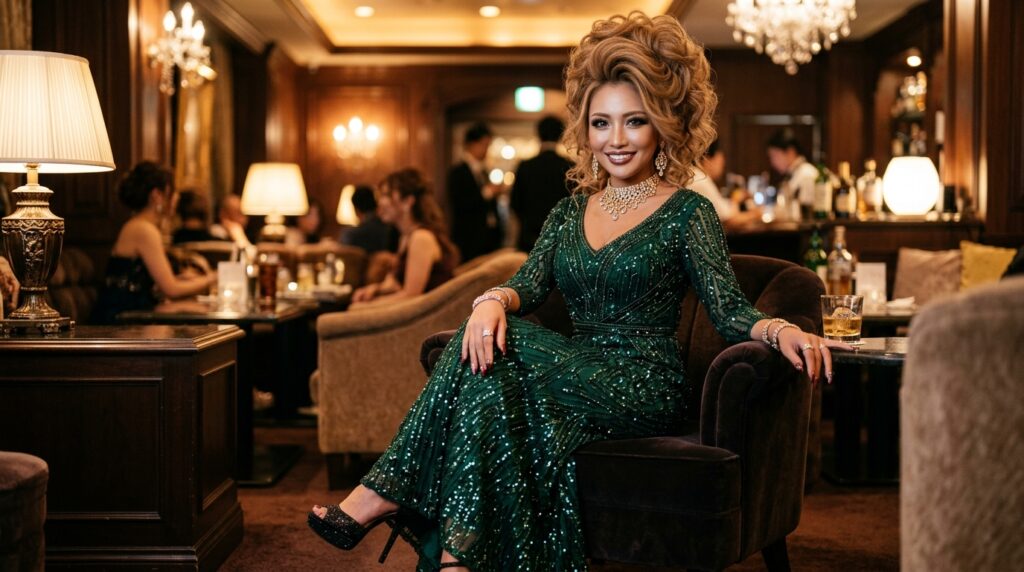
Agejo is one of the more glamorous and sophisticated gyaru styles. It became particularly associated with the 2000s and emphasizes polished fashion, dramatic beauty, elaborate hairstyles, and a luxurious appearance.
Common characteristics can include:
- Fitted dresses
- High heels
- Glamorous accessories
- Elaborate hairstyles
- Dramatic eye makeup
- Feminine silhouettes
- Luxury-inspired details
The style often creates a mature and sophisticated appearance compared with some of the more youthful interpretations of gyaru.
Hime Gyaru
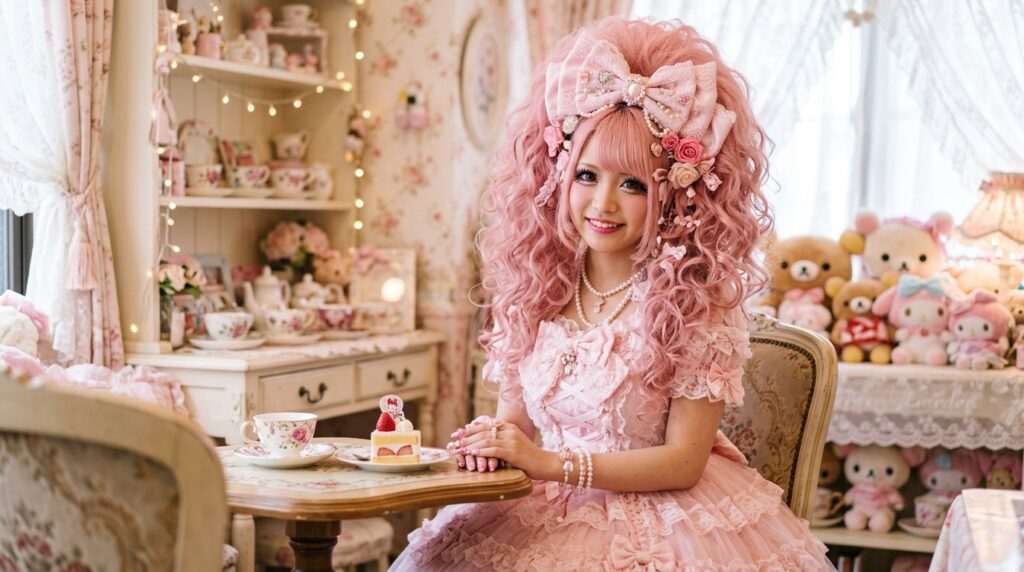
Hime Gyaru is inspired by princess-like fashion and emphasizes femininity, romantic styling, elaborate hair, decorative accessories, and elegant clothing.
The style often uses:
- Bows
- Lace
- Feminine dresses
- Decorative accessories
- Voluminous hairstyles
- Romantic colors
- Princess-inspired details
Hime Gyaru is particularly recognizable because of its elaborate and highly feminine presentation.
Ganguro
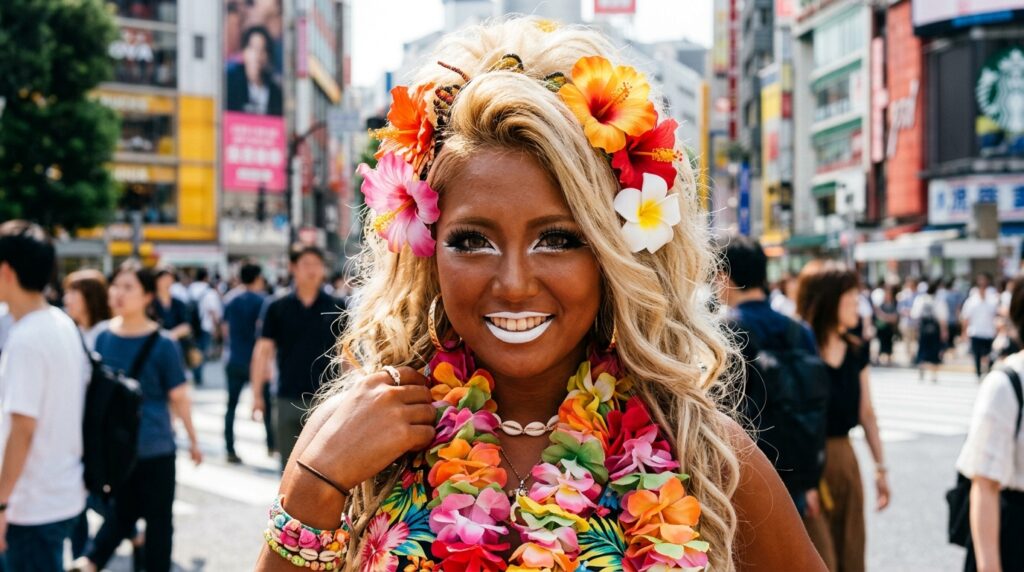
Ganguro is one of the most recognizable historical gyaru substyles. It became known for a highly dramatic appearance involving deeply tanned skin, lighter hair, contrasting makeup, and bold fashion.
The style pushed the expressive qualities of gyaru to an extreme and became one of the visual symbols most commonly associated with the movement’s earlier history.
It is important, however, to understand that Ganguro is one type of gyaru rather than a synonym for all gyaru.
Kogyaru
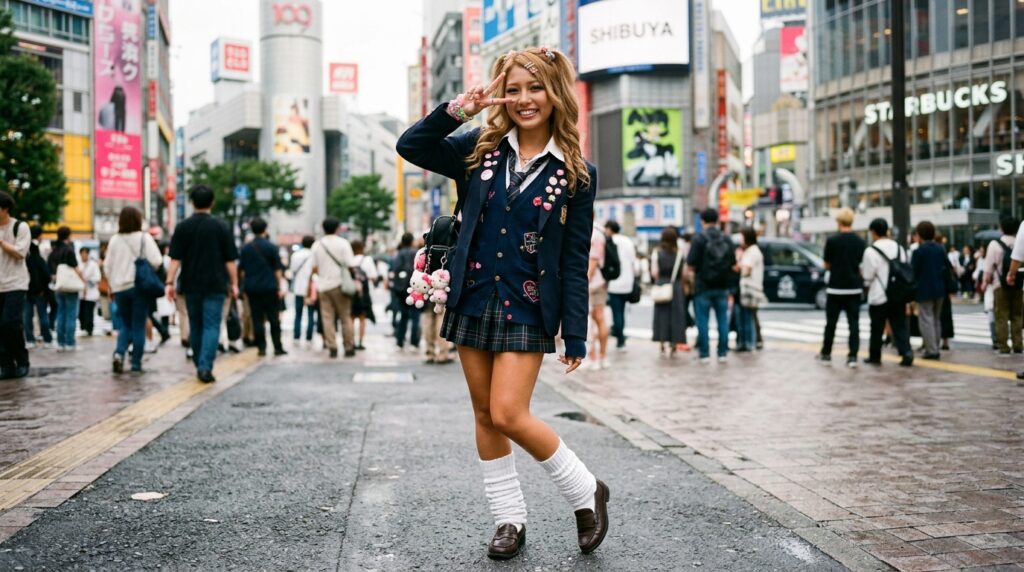
Kogyaru became strongly associated with Japanese youth fashion and modified school-uniform styling. The style developed during the 1990s and became an important part of the history of gyaru.
Its appearance often included:
- Modified school uniforms
- Shorter skirts
- Socks
- Youthful accessories
- Fashionable hairstyles
- Defined makeup
Kogyaru is particularly useful for understanding how gyaru became connected with Japanese teenage fashion and youth culture.
Onee Gyaru
Onee Gyaru represents a more mature interpretation of gyaru. The word “Onee” is associated with an older-sister image, and the style generally uses more refined clothing and a sophisticated appearance.
Compared with some earlier gyaru styles, Onee Gyaru may use:
- More subtle makeup
- Elegant clothing
- Neutral colors
- Refined silhouettes
- Sophisticated accessories
This makes it an appealing direction for people who want gyaru inspiration without an extremely dramatic appearance.
Rokku Gyaru
Rokku Gyaru combines gyaru with rock and punk influences.
Its appearance can include:
- Dark colors
- Leather-inspired pieces
- Graphic prints
- Studs
- Chunky footwear
- Dramatic makeup
- Statement accessories
Unlike softer or more romantic substyles, Rokku emphasizes an edgy and rebellious appearance while retaining recognizable gyaru elements.
Tsuyome Gyaru
Tsuyome is associated with a strong and confident visual presentation.
The style can include:
- Defined eye makeup
- Strong contouring
- Fitted clothing
- Animal prints
- Statement accessories
- Bold styling
It occupies an interesting position between highly dramatic historical gyaru looks and more sophisticated interpretations.
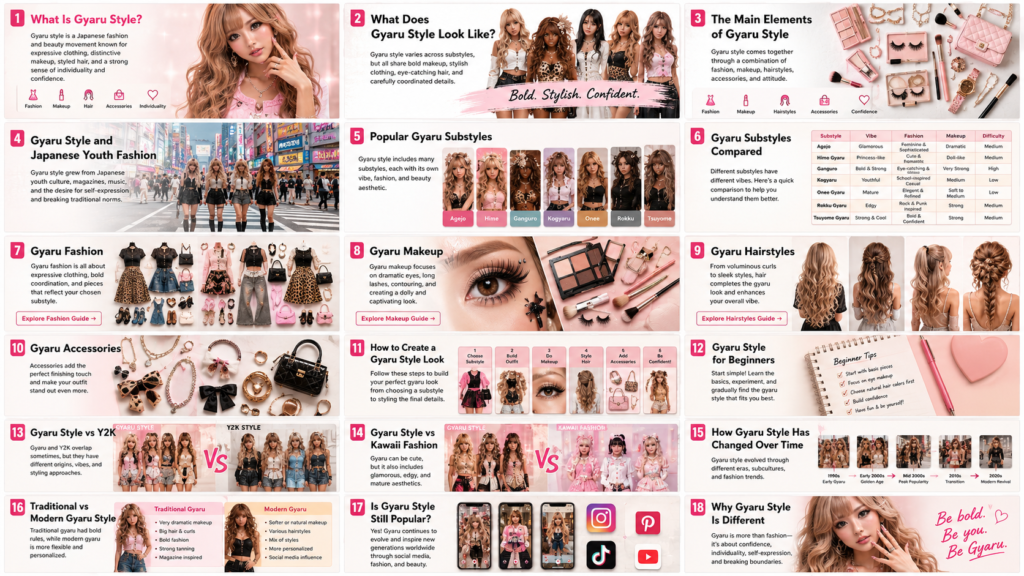
Gyaru Substyles Compared
If you’re trying to understand which gyaru style is right for you, comparing them side by side makes the differences easier to see.
| Gyaru Substyle | Main Impression | Fashion Direction | Makeup Intensity |
|---|---|---|---|
| Agejo | Glamorous | Feminine & sophisticated | High |
| Hime Gyaru | Romantic | Princess-inspired | Medium–High |
| Ganguro | Dramatic | Bold & unconventional | Very High |
| Kogyaru | Youthful | School-inspired | Medium |
| Onee Gyaru | Mature | Elegant & refined | Medium |
| Rokku Gyaru | Edgy | Rock & punk | High |
| Tsuyome | Strong | Bold & fitted | High |
Design recommendation: Make this table responsive on mobile and keep the substyle names as normal text unless you want them to link to the individual guides.
Gyaru Fashion
Gyaru fashion is one of the biggest components of the overall style, but it should not be confused with the entire concept of gyaru. Fashion is one part of a complete gyaru appearance.
Depending on the substyle, clothing can include dresses, skirts, fitted tops, denim, boots, platform shoes, cardigans, statement pieces, and decorative accessories. The most important principle is coordination.
A gyaru outfit isn’t simply a collection of fashionable items. The clothing should work with the makeup, hair, accessories, and chosen substyle. For beginners, it can be easier to select one substyle first and then build a wardrobe around it.
Gyaru Makeup
Gyaru makeup has changed throughout the history of the movement. Traditional approaches often emphasized dramatic eye makeup, while modern interpretations can be softer and more adaptable.
Some common techniques include:
- Eyeliner
- False lashes
- Eyeshadow
- Lower-eye definition
- Contouring
- Highlighting
- Defined eyebrows
- Lip color or gloss
False lashes and eyeliner are particularly recurring elements across many Gyaru makeup approaches. The exact makeup style should depend on the overall look.
For example, a dramatic Ganguro-inspired appearance will not necessarily use the same techniques as Onee Gyaru.
Gyaru Hairstyles
Hair can dramatically change the appearance of a gyaru outfit.
Historical styles often emphasized:
- Volume
- Curls
- Hair extensions
- Dyed colors
- Elaborate arrangements
- Decorative accessories
Modern gyaru hairstyles can be more relaxed. The most important thing is that the hairstyle supports the overall aesthetic.
For example, glamorous Agejo styling may benefit from elaborate curls, while Rokku styling can work with darker and edgier hair arrangements.
How to Create a Gyaru Style Look
You don’t need to transform your entire wardrobe overnight. A better approach is to build the look gradually.
Step 1: Learn the Different Gyaru Styles
Start by looking at the major substyles. Compare Agejo, Hime, Ganguro, Kogyaru, Onee, Rokku, and Tsuyome.
Think about which one naturally matches your personality and existing wardrobe.
Step 2: Choose Your Main Direction
Pick one substyle as your starting point. You can experiment with others later.
Having one clear direction makes shopping and styling much easier because you’ll know which clothing, makeup, hair, and accessories make sense together.
Step 3: Build a Basic Wardrobe
Start with versatile clothing. Depending on your chosen substyle, this could include:
- Skirts
- Dresses
- Fitted tops
- Cardigans
- Denim
- Boots
- Platform shoes
- Fashionable outerwear
Don’t worry about having every possible item. Focus on creating several outfits that work together.
Step 4: Learn the Makeup
Start with the makeup techniques associated with your chosen substyle. If you’re completely new, begin with the eyes.
Learn how eyeliner, lashes, eyeshadow, and lower-eye definition work together. Then gradually experiment with contouring, highlighting, brows, and lips.
Step 5: Style Your Hair
Your hair should complement the outfit.
Experiment with:
- Curls
- Waves
- Volume
- Extensions
- Hair accessories
- Different partings
- Bangs
You don’t have to copy a historical hairstyle perfectly.
Step 6: Add Accessories
Accessories can help define your chosen substyle. Try adding one or two strong pieces rather than wearing everything at once.
Jewelry, handbags, belts, sunglasses, hair accessories, and statement shoes can all change the overall impression.
Step 7: Make the Look Your Own
This is perhaps the most important step. Gyaru style has always been associated with individuality and self-expression.
You don’t need to reproduce someone else’s outfit exactly. Use the style as a foundation and adapt it to your personality, lifestyle, budget, and comfort.
Gyaru Style for Beginners
If you’re completely new to gyaru, the amount of information can initially feel overwhelming. There are many substyles, makeup techniques, hairstyles, clothing choices, and historical eras to explore.
Start simple. Choose one substyle that appeals to you and learn its basic characteristics. Then create one complete outfit rather than trying to recreate an entire wardrobe.
Once you’re comfortable with the clothing, experiment with makeup and hair. This gradual approach allows you to understand the style rather than simply buying items that happen to be associated with it.
Gyaru Style vs Y2K
Gyaru and Y2K are often confused because they can share visual influences from the late 1990s and early 2000s.
However, they are not the same thing. Y2K generally describes an era-inspired aesthetic based on fashion and visual culture associated with the late 1990s and early 2000s.
Gyaru is a Japanese fashion and cultural movement with its own history, substyles, beauty practices, and communities. The two can overlap.
For example, someone might create an outfit inspired by early-2000s fashion while also incorporating recognizable gyaru makeup and hair. But wearing a Y2K outfit alone doesn’t automatically make it gyaru.
| Gyaru | Y2K | |
|---|---|---|
| Origin | Japan | Broad international influence |
| Category | Fashion & cultural movement | Era-inspired aesthetic |
| Substyles | Multiple established substyles | Broad visual trends |
| Makeup | Often distinctive | Highly variable |
| Historical roots | Japanese youth culture | Late-90s/early-2000s culture |
| Can overlap? | Yes | Yes |
Gyaru Style vs Kawaii Fashion
Gyaru can include cute elements, but it shouldn’t be treated as simply another word for kawaii fashion. Kawaii fashion generally emphasizes cuteness, sweetness, softness, and youthful visual elements.
Gyaru can certainly include those qualities, particularly in styles such as Hime Gyaru, but it also includes glamorous, mature, dramatic, rebellious, and bold interpretations.
This is why a cute outfit isn’t automatically a gyaru outfit. The complete styling—including makeup, hair, clothing, accessories, and overall presentation—matters.
How Gyaru Style Has Changed Over Time
Gyaru has never been completely static. The movement changed as Japanese youth culture, fashion magazines, beauty trends, music, shopping districts, and technology changed.
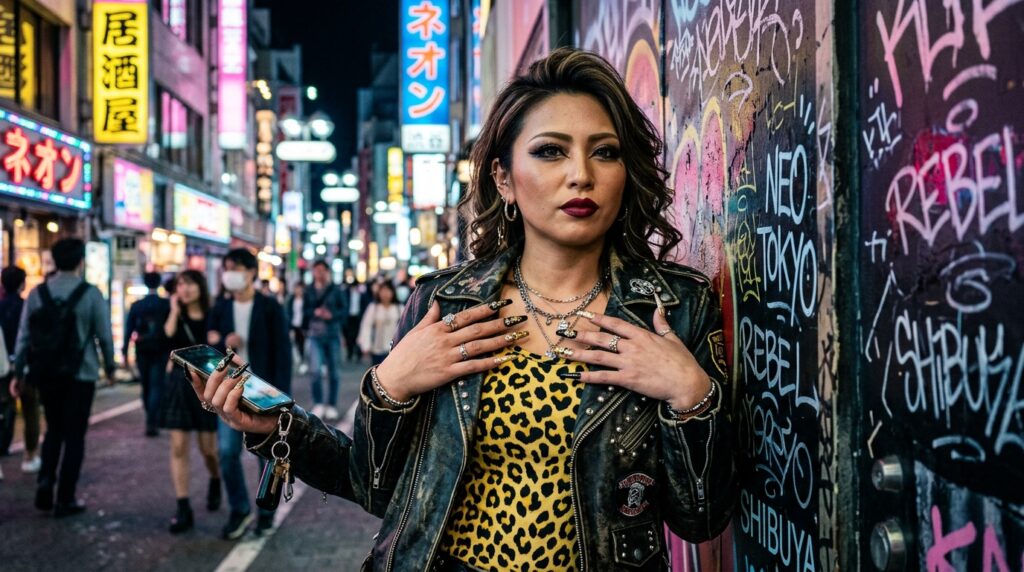
Your existing guide divides the broader history into important periods including the Kogal/Kogyaru era, the Golden Age, and the later decline and modern revival.
During different periods, particular substyles became more influential. This is why historical photographs of gyaru can look very different from modern interpretations.
A dramatic Ganguro appearance, a glamorous 2000s Agejo outfit, and a contemporary social-media interpretation can all belong to the wider gyaru movement.
Traditional vs Modern Gyaru Style
Modern gyaru doesn’t necessarily mean recreating a historical outfit exactly. Many contemporary enthusiasts take classic elements and combine them with current fashion.
For example, someone might use recognizable gyaru eye makeup with a modern outfit. Another person might combine contemporary Japanese streetwear with traditional gyaru hair. This flexibility allows the aesthetic to continue evolving.
| Element | Traditional Gyaru | Modern Gyaru |
|---|---|---|
| Makeup | Often highly dramatic | Can be softer |
| Hair | Large, curled, elaborate | More varied |
| Clothing | Strong period-specific trends | Contemporary combinations |
| Styling | More defined substyle rules | More personal interpretation |
| Overall look | Highly expressive | Expressive but adaptable |
Your existing article similarly describes the modern revival as combining classic and contemporary influences.
Is Gyaru Style Still Popular?
Gyaru has changed considerably since its peak, but it has not simply disappeared. Modern communities continue to explore historical gyaru styles and reinterpret them for current fashion. Social media has also made it easier for people outside Japan to discover the movement.
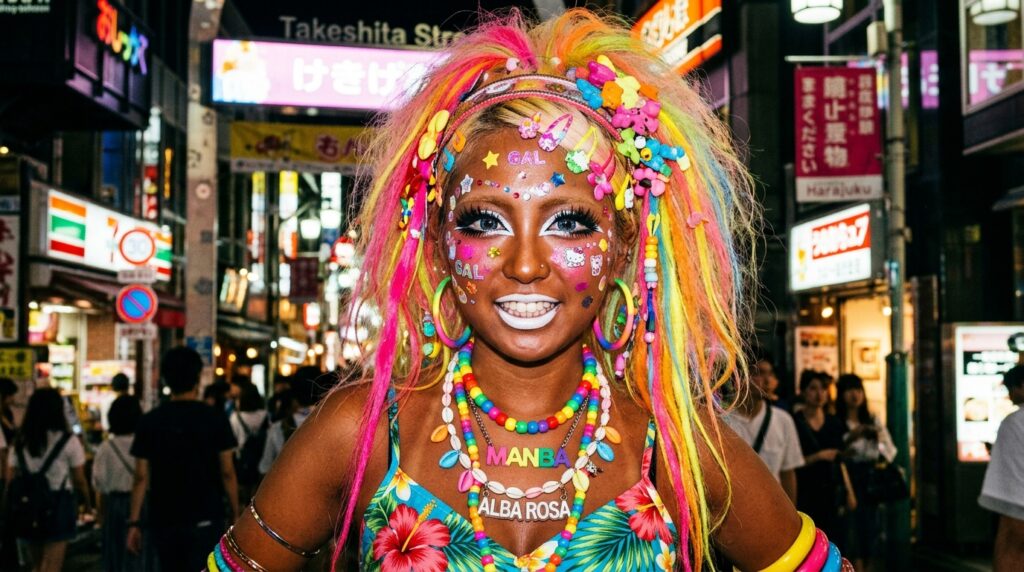
Instead of one centralized fashion scene, modern gyaru exists across online communities, fashion enthusiasts, beauty creators, and people interested in Japanese street fashion.
This has helped introduce the aesthetic to people who may never have encountered traditional Japanese gyaru magazines or street-fashion culture. The continued diversity of the movement is one of its strengths.
Why Gyaru Style Is Different
Gyaru is interesting because it isn’t simply about following a clothing trend. The movement has historically been connected with experimentation, individuality, confidence, and alternative ideas about beauty.
That makes the aesthetic different from simply purchasing a particular outfit. The clothes are important, but they are only one part of the complete picture.
Makeup, hair, styling, attitude, and personal expression all contribute. The diversity of Gyaru—from Ganguro to Agejo, Onee, Himekaji, and other interpretations—is also part of what has allowed the movement to remain interesting across different generations.
Common Misconceptions About Gyaru Style
Gyaru Is Only About Tanned Skin
This is one of the biggest misconceptions. Some historical substyles became famous for tanning, particularly Ganguro, but not every gyaru style uses a tanned appearance.
Modern and historical gyaru include many different approaches to skin tone and makeup.
Gyaru Is Only Blonde Hair and Heavy Makeup
Blonde hair and dramatic makeup are recognizable elements of some gyaru looks, but they aren’t universal requirements. Different substyles use different hairstyles, colors, and makeup intensity.
Gyaru and Ganguro Are the Same
Ganguro is a type of gyaru rather than a synonym for the entire movement. Gyaru includes many different interpretations.
Gyaru Is Just Y2K Fashion
The aesthetics can overlap, but gyaru has its own Japanese cultural and fashion history. Y2K is much broader.
You Must Follow One Exact Look
The diversity of gyaru is one of its defining characteristics. You can study established substyles while still adapting your clothing, makeup, and hair to your own preferences.
Frequently Asked Questions About Gyaru Style
What does gyaru style mean?
Gyaru style is a Japanese fashion and beauty movement centered around expressive fashion, distinctive makeup, styled hair, accessories, confidence, and individuality.
Is gyaru a Japanese fashion style?
Yes. Gyaru developed in Japan as part of youth fashion and culture before gaining international attention.
What are the main types of gyaru?
Some of the best-known interpretations include Agejo, Hime Gyaru, Ganguro, Kogyaru, Onee Gyaru, Rokku Gyaru, and Tsuyome.
Is gyaru only for women?
The existing guide also discusses Gyaruo, a male interpretation of the broader Gyaru movement. Gyaru fashion has traditionally received more attention for women’s styles, but male participation has also been part of the movement.
Can beginners wear gyaru style?
Yes. Beginners can start with basic clothing, learn the makeup techniques, explore different substyles, and gradually develop their own interpretation.
Is gyaru the same as Y2K?
No. They can overlap, but Gyaru is a specific Japanese fashion and cultural movement, while Y2K is a broader era-inspired aesthetic.
What makeup is used for gyaru?
Common elements can include eyeliner, false lashes, eyeshadow, eye-definition techniques, contouring, highlighting, and lip products. The exact approach varies by substyle and era.
Is gyaru still popular?
Gyaru has evolved over time and continues to have communities and modern interpretations, particularly through online fashion and beauty communities.
What is the easiest gyaru style for beginners?
There isn’t one universally easiest style. A beginner should choose a substyle that fits their preferred clothing, makeup intensity, and lifestyle, then build the look gradually.
Final Thoughts
Gyaru style is much more than a particular outfit or makeup technique. It is a broad Japanese fashion and beauty movement that has developed through different eras and produced many distinctive substyles.
From glamorous Agejo and romantic Hime Gyaru to dramatic Ganguro, youthful Kogyaru, sophisticated Onee Gyaru, and edgy Rokku Gyaru, there are many different ways to explore the aesthetic. That diversity is exactly what makes gyaru style so interesting.
If you’re new to the movement, start by learning its history and exploring the major substyles. Then choose the direction that best matches your personality and begin experimenting with clothing, makeup, hair, and accessories. You don’t need to copy one exact look.
The best gyaru style is one that combines recognizable elements of the aesthetic with your own personality and creativity.