

Dark Academia Colors & Design Elements has become one of the most recognisable aesthetics in fashion and interior design, yet many people misunderstand what actually creates the look. It’s easy to assume that dark academia simply means wearing black or filling a room with antique books. The reality is more nuanced. The aesthetic relies on carefully chosen colours, textures, materials, and artistic influences that work together to create a mood rooted in scholarship, nostalgia, and old-world charm.
The appeal lies in atmosphere. Think of historic libraries lined with dark wood shelves, worn leather armchairs, handwritten notes tucked inside classic novels, and autumn afternoons spent reading beneath soft lamplight. Colour plays a central role in evoking that feeling. Rich browns, deep greens, muted burgundies, and warm neutrals create a sense of intellectual romance that feels timeless rather than trendy.
Understanding the dark academia color palette makes it much easier to build authentic outfits, decorate a room, or create artwork that genuinely captures the aesthetic instead of merely imitating it.
What Are Dark Academia Colors?
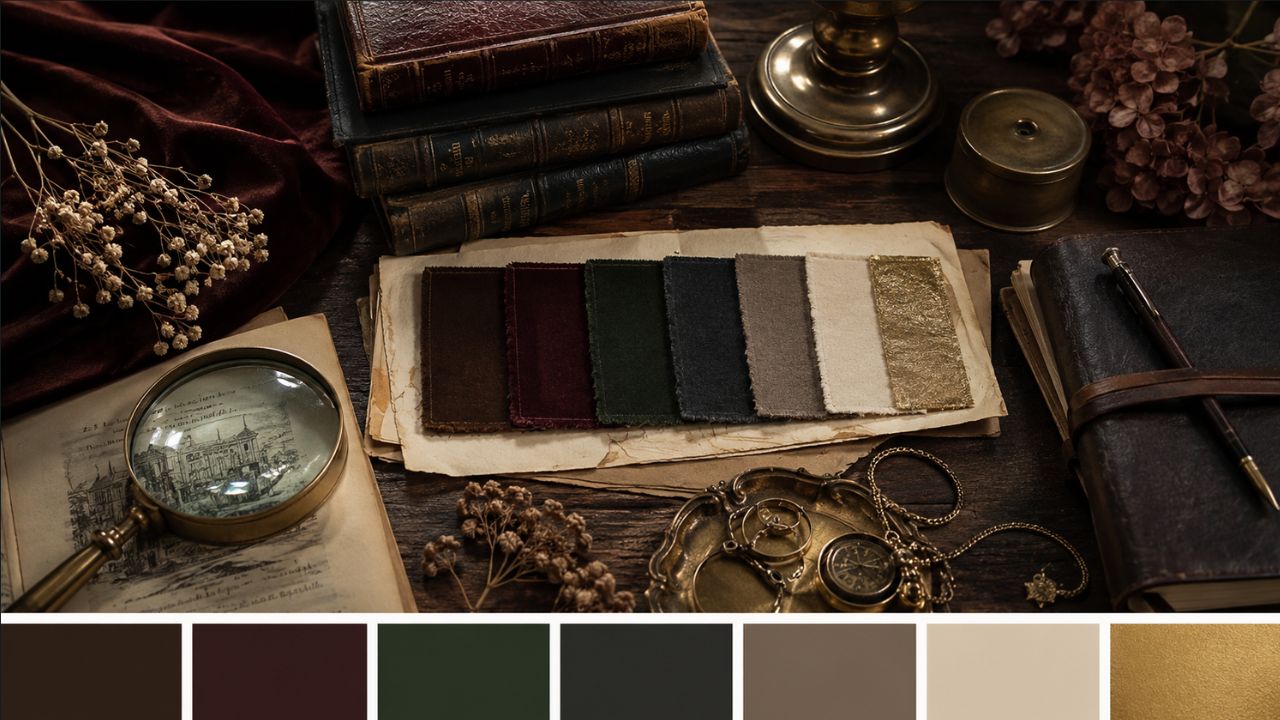
Dark academia colors are typically muted, earthy, and slightly desaturated. Unlike many modern aesthetics that favour bright, highly saturated shades, dark academia embraces colours that appear aged, weathered, or inspired by historical environments.
Dark Academia Colors & Design Elements Many people immediately associate the aesthetic with black, but black alone rarely creates a convincing dark academia theme. Traditional academic settings—Oxford colleges, historic libraries, and Victorian studies—often feature warm wood tones, aged paper, brass details, and deep jewel colours. Those influences shape the palette far more than pure black ever could.
The most recognisable dark academia colors include:
- Espresso brown
- Chocolate brown
- Forest green
- Burgundy
- Charcoal grey
- Deep navy
- Camel
- Cream
- Antique gold
- Warm taupe
Dark Academia Colors & Design Elements What separates dark academia from gothic aesthetics is warmth. Gothic interiors frequently rely on stark black contrasts, while dark academia usually introduces softer browns, warm creams, and earthy undertones that make spaces and outfits feel lived-in and inviting.
The Complete Dark Academia Color Palette
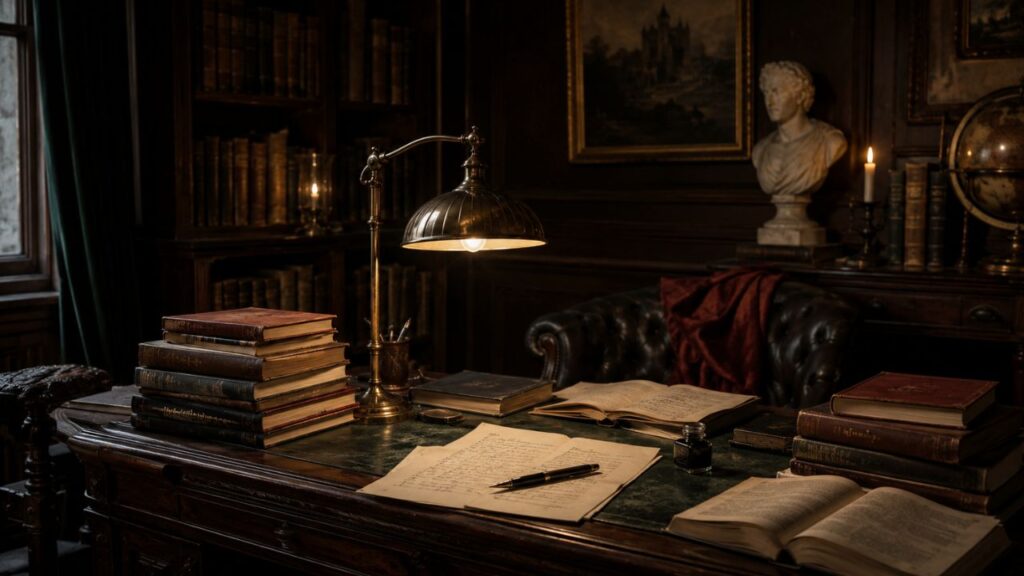
Brown is arguably the foundation of dark academia. Deep espresso, chestnut, and chocolate shades mimic old wooden desks, leather-bound books, and antique furniture. In fashion, brown blazers, wool trousers, and leather shoes instantly communicate the aesthetic without appearing costume-like.
Dark Academia Colors & Design Elements Forest green occupies a similarly important place. Historically, green has long been associated with scholarship, libraries, and study spaces. Many university reading rooms feature green lampshades because softer green tones reduce eye strain during extended reading sessions. Incorporating forest green through knitwear, accessories, or accent walls adds depth while maintaining a scholarly atmosphere.
Burgundy introduces richness and sophistication. Used sparingly, it provides contrast against darker neutrals and prevents outfits or interiors from feeling flat. A burgundy scarf paired with a camel coat or velvet cushion placed on a leather chair can dramatically elevate the overall look.
The following table highlights the core palette:
| Color | Typical Use | Mood Created |
| Espresso Brown | Furniture, coats, accessories | Warmth and tradition |
| Forest Green | Knitwear, walls, décor accents | Scholarship and calm |
| Burgundy | Accessories, textiles, accents | Refinement and depth |
| Charcoal Grey | Tailoring, walls, layering pieces | Sophistication |
| Camel | Outerwear, sweaters | Vintage elegance |
| Cream | Shirts, interiors, contrast elements | Balance and softness |
| Deep Navy | Blazers, upholstery | Formality and structure |
Cream and warm ivory deserve special mention because they prevent dark academia spaces from becoming visually heavy. Competitors often focus exclusively on dark shades, but experienced designers understand that lighter tones create essential contrast. Without cream, parchment, or soft beige, the palette can quickly feel oppressive rather than atmospheric.
Dark Academia Design Elements Beyond Color
Dark Academia Colors & Design Elements Colour alone cannot create an authentic dark academia aesthetic. Texture often matters even more.
One of the biggest mistakes people make is relying on inexpensive modern materials with glossy finishes. Dark academia thrives on surfaces that appear aged, tactile, and rich with character. Natural materials generally outperform synthetic alternatives because they develop patina over time.
Textiles commonly associated with the aesthetic include wool, tweed, velvet, linen, and leather. Layering these textures creates visual complexity without requiring excessive decoration.
Dark Academia Colors & Design Elements Interior spaces benefit particularly from combining several materials, such as:
- Dark-stained wood furniture
- Brass hardware and candleholders
- Leather seating
- Heavy curtains
- Marble accessories
- Vintage-inspired textiles
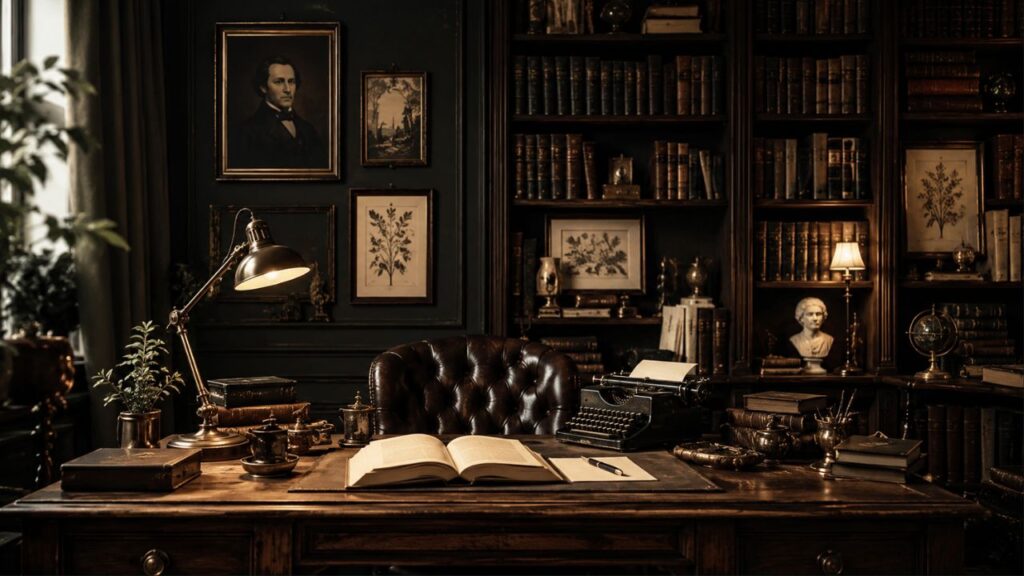
Architectural influences also shape dark academia design. Gothic architecture, Victorian interiors, and classical libraries all contribute distinctive elements. Arched windows, built-in bookshelves, decorative mouldings, and traditional desk lamps frequently appear because they reinforce the intellectual atmosphere.
Artwork is another overlooked component. Dark academia art tends to draw inspiration from Renaissance, Romantic, and Baroque traditions. Oil paintings featuring dramatic lighting, botanical illustrations, still-life studies, and architectural sketches fit naturally within the aesthetic. Reproductions of classical artwork often feel more authentic than generic “dark academia” prints purchased online.
Using Dark Academia Colors in Fashion
Dark Academia Colors & Design Elements works best when it feels effortless. The goal isn’t to resemble a period drama character. Instead, it involves borrowing historical influences and adapting them for contemporary wardrobes.
Dark Academia Colors & Design Elements A practical starting point is building a capsule wardrobe around versatile neutral pieces. A brown wool blazer, charcoal trousers, cream button-down shirt, and dark loafers can generate numerous combinations while remaining wearable in everyday settings.
Experienced stylists frequently use tonal dressing to strengthen the aesthetic. Rather than pairing sharply contrasting colours, they combine several related shades within the same family. For example, layering camel, chocolate brown, and espresso creates depth while maintaining visual harmony.
Texture mixing is equally important. Consider pairing a tweed blazer with a fine-knit turtleneck and wool trousers. Even if all three garments share similar colours, varying textures prevents the outfit from appearing one-dimensional.
Dark Academia Colors & Design Elements Some particularly effective colour combinations include:
- Forest green and cream
- Burgundy and camel
- Chocolate brown and charcoal grey
- Deep navy and warm beige
- Espresso brown and olive green
Accessories often determine whether an outfit truly captures dark academia. Leather satchels, vintage watches, oxford shoes, tortoiseshell glasses, and understated gold jewellery add refinement without overwhelming the overall look.
One observation frequently overlooked by fashion blogs is that fit matters more than aesthetics alone. Oversized, poorly fitted vintage clothing can make outfits appear theatrical rather than sophisticated. Tailored silhouettes almost always produce a stronger dark academia impression.
Creating Dark Academia Interiors
Dark academia interiors are designed for lingering. Unlike minimalist spaces intended primarily for visual simplicity, these rooms invite reading, studying, writing, and reflection.
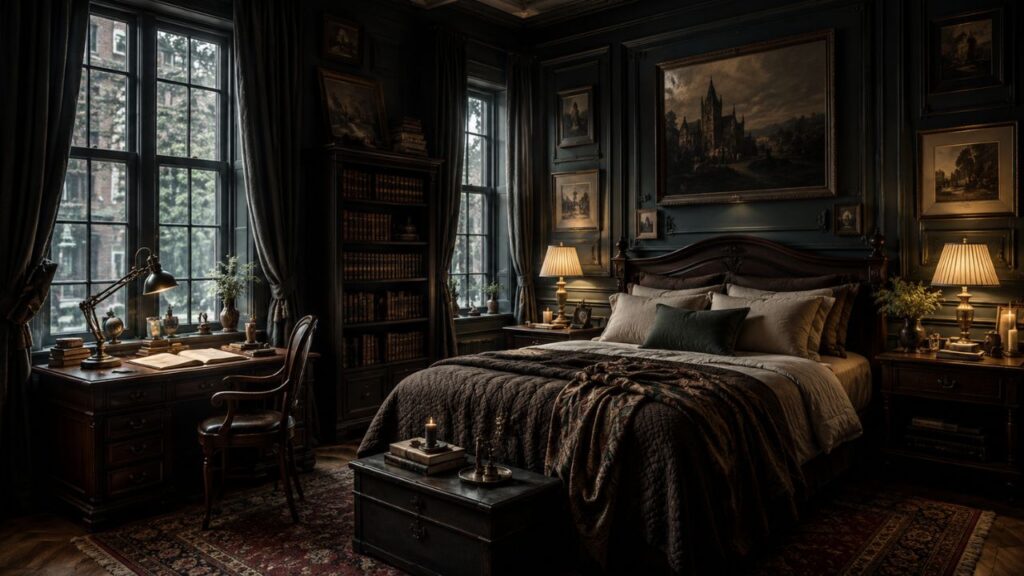
The easiest way to transform a room is through colour selection. Walls painted in warm taupe, muted olive, deep green, or soft charcoal immediately establish atmosphere. However, painting every surface dark isn’t always advisable, particularly in smaller spaces.
Dark Academia Colors & Design Elements Professional interior designers often recommend balancing darker walls with lighter ceilings, cream textiles, and strategic lighting. Layered lighting is essential because overhead fixtures alone rarely produce the cosy ambience associated with dark academia.
Table lamps, wall sconces, and candles create the soft illumination that defines the aesthetic. Brass and antique-style fixtures generally work especially well.
Dark Academia Colors & Design Elements For small apartments or bedrooms, introducing dark academia gradually usually produces better results than attempting a complete redesign. Start with:
- A vintage desk or bookshelf
- Warm-toned lighting
- Framed classical artwork
- Leather or velvet accents
- Stacks of favourite books
Rooms become far more convincing when they reflect genuine intellectual interests. Shelves filled exclusively with decorative antique books often feel staged. Displaying books you actually read, handwritten journals, or personal collections creates authenticity that no amount of styling can replicate.
Dark Academia Art and Creative Inspiration
Dark academia art centres on themes of knowledge, beauty, mystery, and nostalgia. Many artists within the aesthetic draw inspiration from classical traditions while incorporating contemporary perspectives.
Caravaggio’s dramatic use of chiaroscuro, Rembrandt’s intimate portraits, and John William Waterhouse’s romantic compositions continue to influence dark academia visual culture. Their works share qualities that align naturally with the aesthetic: subdued palettes, emotional depth, and masterful lighting.
Dark Academia Colors & Design Elements Contemporary creators often reinterpret these traditions through photography, digital illustration, and mixed media. Botanical sketches, handwritten poetry overlays, architectural studies, and moody still-life photography have become particularly popular.
For those creating original artwork, colour restraint is usually more effective than complexity. Limiting a composition to earthy neutrals, muted greens, and rich burgundies often produces stronger results than incorporating numerous competing colours.
Mood boards can also be valuable creative tools. Combining images of historic libraries, antique objects, classical sculptures, autumn landscapes, and vintage textiles helps establish visual consistency across artistic projects.
Frequently Asked Questions
What are the main dark academia colors?
Dark Academia Colors & Design Elements The core dark academia color palette includes espresso brown, forest green, burgundy, charcoal grey, camel, cream, deep navy, and antique gold.
Is black essential for dark academia?
No. Black can be used sparingly, but warm browns and muted earth tones are generally more important to achieving an authentic dark academia aesthetic.
How is dark academia different from light academia?
Dark academia relies on rich, moody colours such as burgundy and dark brown, while light academia uses softer shades including cream, beige, dusty rose, and light sage green.
What is the best wall color for a dark academia room?
Muted olive green, warm taupe, charcoal grey, and deep brown are excellent choices. The best option depends largely on room size and available natural light.
Can dark academia work in a modern home?
Dark Academia Colors & Design Elements Absolutely. Mixing contemporary furniture with vintage-inspired colours, textures, and artwork often creates a sophisticated interpretation that feels current rather than historical.
Dark academia endures because it offers more than a visual style. It evokes curiosity, reflection, and appreciation for history, literature, and craftsmanship. The most successful interpretations rarely follow rigid rules. Instead, they combine thoughtful colour choices, tactile materials, meaningful objects, and personal interests to create spaces and wardrobes that feel genuinely lived in. When approached that way, the aesthetic becomes less about imitation and more about atmosphere.