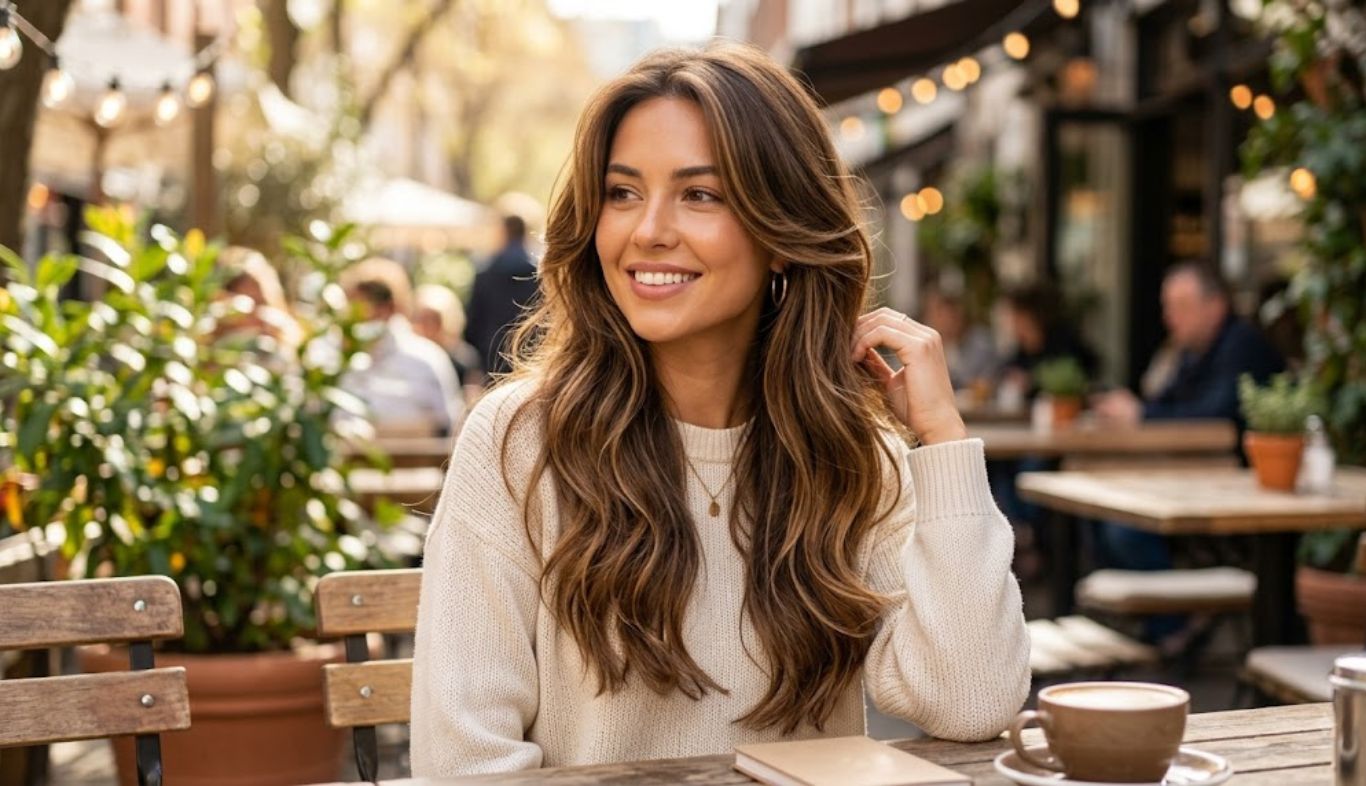
There’s something timeless about long hair with face-framing layers. You get the drama and versatility of long hair without the heavy, one-length appearance that can sometimes make the style feel flat. The layers create a gentle transition around the face while allowing the majority of your length to remain intact. Better yet, this haircut can be tailored rather than copied. A stylist can make the first layer subtle and barely noticeable, or create a stronger shape that begins around the cheekbones or jaw. The result can be romantic, edgy, sleek, casual, or glamorous depending on how the layers are cut and styled.
That versatility is the real magic. Face-framing layers can also work with straight, wavy, curly, fine, thick, and textured hair. The trick isn’t simply asking for “layers.” It’s asking for the right placement, weight, and transition for your individual hair. If you’re considering long hair with face-framing layers, think about three things first: your natural texture, the amount of styling you’re willing to do, and which facial features you’d like the haircut to highlight.
Why Face-Framing Layers Work So Well
1 The Main Benefits of Long Hair with Face-Framing Layers
The biggest advantage of long hair with face-framing layers is that it adds shape without sacrificing much length. A one-length haircut can look sleek, but it may also feel visually heavy. Strategic layers break up that weight. They create movement around the face and can make the overall hairstyle appear lighter.
Here are some of the most appealing benefits:
- Adds movement without removing excessive length
- Creates a softer transition around the face
- Can make thick hair feel less bulky
- Gives fine hair a more dimensional appearance when cut carefully
- Works with ponytails, braids, buns, and loose hairstyles
- Can highlight cheekbones, eyes, lips, or the jawline
- Looks polished when straight and relaxed when waved
- Can be customized for almost any face shape
In other words, you don’t have to choose between keeping your long hair and getting a more interesting haircut.
2 Choosing Layers for Your Face Shape
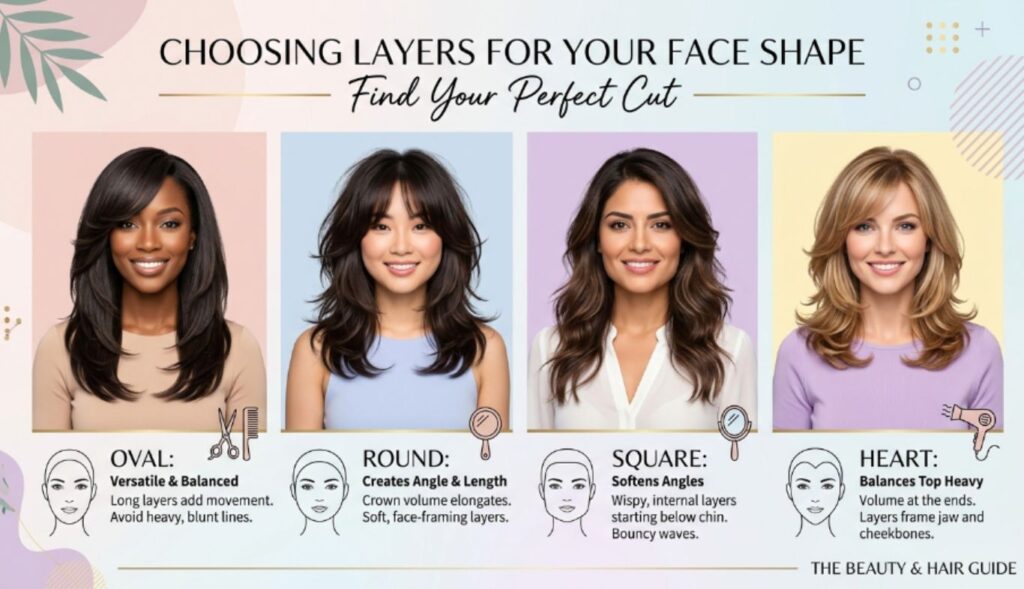
Your face shape can help determine where the shortest framing pieces should begin. For a round face, longer layers that start below the cheekbones can create a more elongated visual effect. Very short layers directly at the widest point of the cheeks may add unwanted emphasis.
For a long or oval face, framing that begins around the cheekbones or jaw can introduce width and balance. Soft curtain-style layers can be especially flattering. For a square face, rounded, blended layers can soften the appearance of strong angles. The goal isn’t to hide your natural structure but to create a harmonious transition.
For a heart-shaped face, layers around the jaw can help balance a narrower chin with a broader upper face. Of course, face shapes aren’t rigid categories. Most people fall somewhere between two shapes, so your stylist should consider your actual proportions rather than relying on a checklist.
3 Matching the Cut to Your Hair Type
Hair texture matters just as much as face shape. With fine hair, overly aggressive layering can make the ends appear thin. A stylist may therefore keep the perimeter fuller while adding carefully placed framing pieces. With thick hair, more internal layering can remove excess weight while maintaining a long silhouette.
With wavy hair, the natural bend can make face-framing layers look beautifully effortless. However, the stylist should account for shrinkage and the way the waves behave after drying. Curly hair requires even more consideration. A curl can spring upward after cutting, so a stylist experienced with curly textures can help determine where each layer will actually sit.
4 Deciding Where the First Layer Should Begin
The starting point is one of the most important decisions in long hair with face-framing layers. A layer beginning near the cheekbone creates a noticeable frame and draws attention toward the center of the face. Starting around the jaw creates a softer, more conservative shape. Layers that begin below the chin provide subtle movement while preserving a particularly long appearance. There’s no universally “best” starting point.
Instead, consider what you want the haircut to do:
| Desired Effect | Possible Layer Placement |
|---|---|
| Strong facial definition | Cheekbone area |
| Soft framing | Jawline |
| Elongated appearance | Below chin |
| More volume | Cheekbone to shoulder area |
| Minimal change | Below chin or collarbone |
5 How Your Part Changes the Result
Your part can completely change how long hair with face-framing layers looks. A center part creates symmetry and gives curtain layers their classic shape. A side part creates an asymmetrical sweep that can feel more glamorous. An off-center part offers a casual middle ground.
If you change your part frequently, tell your stylist. A haircut designed only for one fixed part may behave differently when you move it.
Stunning Long Hair with Face-Framing Layers Ideas
1 Soft, Invisible Layers
For an understated style, ask for very blended face-framing pieces that gradually disappear into the rest of the length. This is an excellent option if you love long hair with face-framing layers but don’t want a dramatic haircut. The layers can be styled straight for a clean appearance or curled away from the face for a soft, flowing finish.
2 Long Curtain Layers
Curtain layers are one of the easiest ways to give long hair a modern update. They generally open around the face and blend into longer pieces. When styled with a round brush, they can create a soft, lifted effect. The beauty of curtain framing is that it can look polished without appearing overly formal. It’s a bit retro, a bit modern, and very wearable.
3 Butterfly-Inspired Layers
Butterfly-style layering focuses on volume and movement around the upper sections while retaining significant length below. This version of long hair with face-framing layers is particularly eye-catching when blow-dried with rounded ends. For maximum impact, use a large round brush or rollers to encourage lift. For a more relaxed finish, allow the layers to dry naturally with a light styling product.
4 Long Shag with Face Framing
Want something with more personality? A long shag introduces texture throughout the haircut rather than concentrating all the movement around the face. It can be paired with wispy fringe or curtain bangs for an intentionally undone look. This is a good fit for people who enjoy texture and don’t mind a slightly tousled finish.
5 Sleek Layers for Straight Hair
Straight hair shows the architecture of a haircut clearly. If your hair is naturally straight, long face-framing pieces can create a clean visual line from the cheekbones toward the ends. For a sleek finish, apply a lightweight smoothing product and use a flat iron sparingly. The goal is shine and movement—not hair that looks stiff.
6 Wavy Long Hair with Face-Framing Layers
Waves and face-framing layers are a natural match. The bends in the hair make the layers appear softer and less geometric. A middle part can create a balanced curtain effect, while a side part can make the style look more relaxed.
For a low-effort routine, apply a lightweight curl or wave-enhancing product to damp hair, scrunch gently, and allow it to air-dry when practical.
7 Curly Long Hair with Face-Framing Layers
Curly hair can absolutely wear long hair with face-framing layers, but the cut should respect curl pattern and shrinkage. Long curls can become heavy toward the bottom. Strategic layers can help redistribute that weight and give curls more room to move.
If you wear your curls naturally, consider working with a stylist who regularly cuts curly textures. A good consultation should cover how your curls behave wet and dry.
8 Balayage with Face-Framing Layers
Color can make layered hair look even more dimensional. Balayage, subtle highlights, and carefully placed lighter pieces can emphasize the movement created by the haircut. A slightly brighter area around the face can make the framing pieces stand out.
Color placement should still complement your natural base and maintenance preferences. The American Academy of Dermatology recommends taking care with chemical coloring because some coloring processes can leave hair dry or brittle.
9 Face-Framing Layers with Curtain Bangs
If you’re ready for a bigger change, combine long layers with curtain bangs. The bangs provide the shortest framing, while the longer layers create a seamless transition toward the shoulders and beyond. This style looks particularly striking with a center part and a soft blowout.
10 Long Layers with a Side Part
Don’t underestimate the side part. Sweeping the shorter framing pieces across the forehead creates movement and can give long hair with face-framing layers a more sophisticated appearance. A side part is also useful when you want a hairstyle that feels different without cutting more length.
11 Minimal Layers for Fine Hair
Fine hair benefits from restraint. Instead of creating many layers throughout the entire head, ask your stylist about keeping the ends relatively full while adding a few strategic pieces around the face. This gives you the framing effect without unnecessarily reducing density at the perimeter.
12 Thick Hair with Long Face-Framing Pieces
Thick hair often has plenty of natural volume, but it can become heavy. Longer face-framing pieces can break up that visual weight. Internal layers may also help, although the amount should be determined by your density and texture. A stylist should avoid removing so much weight that the ends become uneven or difficult to control.
13 Long Hair with Face-Framing Layers and Beach Waves
Beach waves bring out every curve in layered hair. The trick is to keep the waves irregular rather than making every section identical. Alternate the direction of the curls and leave the last inch or two slightly straighter. Finish with a light texturizing product for a relaxed look.
14 Glossy Blowout Layers
For special occasions, style long hair with face-framing layers with a voluminous blowout. Use a round brush to direct the shorter layers away from the face. Once the hair cools, gently loosen the shape with your fingers. The result is bouncy, smooth, and glamorous without requiring a major change to your haircut.
15 Romantic Loose Curls
Loose curls give long layered hair a soft, elegant appearance. Curl the mid-lengths and ends while leaving the framing pieces slightly looser. Then brush through the curls once they’ve cooled. This technique creates movement rather than tight ringlets.
16 Long Hair with Face-Framing Layers and a High Ponytail
One underrated advantage of this haircut is versatility. Pull the longer hair into a high ponytail and allow the face-framing pieces to fall naturally around the temples and cheeks.
You can straighten them for a sleek finish or curl them for a softer look. Just avoid wearing tightly pulled styles continuously. The American Academy of Dermatology notes that repeated tension from hairstyles can contribute to breakage and hair loss.
17 Braided Styles with Soft Framing
Braids can make the haircut look completely different. Try a loose side braid, fishtail braid, or low braided ponytail while leaving a few framing pieces around the face. This works especially well when the shorter layers have enough length to blend rather than sticking out sharply.
How to Maintain Long Hair with Face-Framing Layers
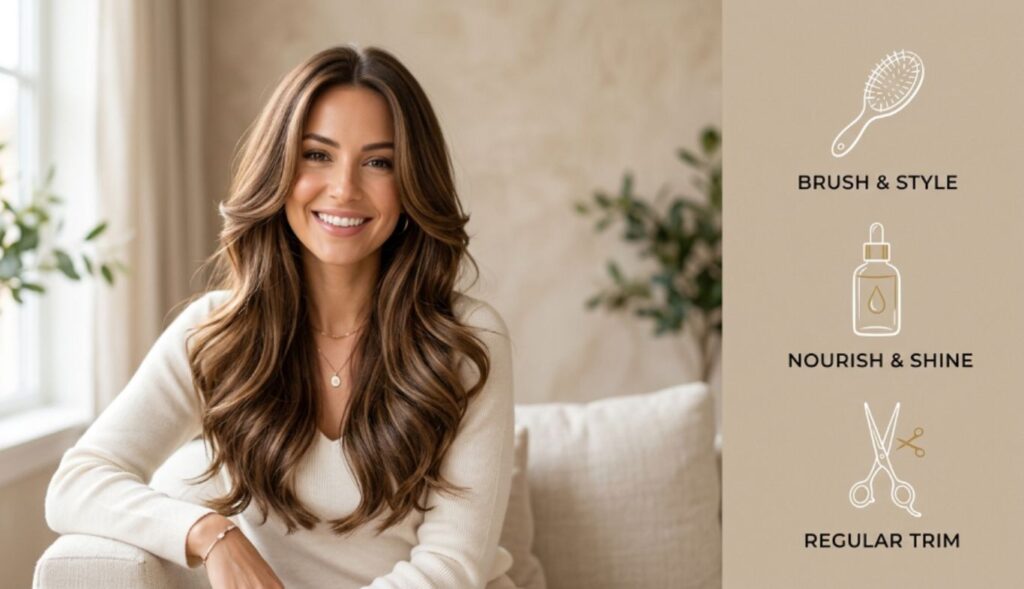
1 Build a Simple Styling Routine
You don’t need a bathroom full of products to maintain long hair with face-framing layers.
A simple routine can include:
- Shampoo suited to your scalp and hair type.
- Conditioner on the areas that need it.
- Gentle detangling.
- A heat-protective product when using hot tools.
- A lightweight finishing product when needed.
The American Academy of Dermatology recommends choosing products according to your hair type and applying shampoo primarily to the scalp rather than coating the entire length.
2 Protect the Layers from Heat
Heat can make beautifully cut layers look rough if the hair becomes dry or damaged. Whenever possible, allow hair to partially air-dry before using a blow dryer. If you use a flat iron or curling iron, choose a lower or medium temperature and avoid repeatedly passing over the same section. The AAD specifically recommends limiting excessive heat and using lower settings to reduce hair damage.
3 Detangle Gently
Wet hair can be more vulnerable to breakage. Use a wide-tooth comb when appropriate and start at the ends before working upward. Don’t yank through knots. A little patience goes a long way. For curly or textured hair, detangling techniques may differ, so follow a routine that works with your specific texture.
4 Refresh the Cut Regularly
How often should you trim long hair with face-framing layers? There’s no universal schedule. Your ideal timing depends on how quickly your hair grows, how much heat or chemical processing you use, and how precise you want the shape to remain.
A light refresh can restore the framing pieces without taking away significant length. If you’re growing your hair longer, tell your stylist. They can preserve the perimeter while making smaller adjustments around the face.
5 Avoid Over-Layering
More layers don’t automatically mean more volume. If too much hair is removed, fine hair can look sparse and thick hair may become harder to manage.
A good haircut should have a clear purpose for every layer. If you can’t explain why a section is being shortened, it’s worth asking your stylist.
6 Don’t Ignore Hair Health
Beautiful long hair with face-framing layers starts with healthy-looking strands. If your hair suddenly becomes brittle, breaks excessively, or you notice unexplained thinning, don’t simply add more styling products. A dermatologist can help identify underlying causes.
The AAD recommends professional evaluation for persistent hair-loss concerns rather than relying on quick fixes or unverified supplements.
7 Common Mistakes to Avoid
Here are some common mistakes that can make layered hair harder to manage:
- Cutting very short layers without considering your texture
- Ignoring shrinkage in curly hair
- Using excessive heat every day
- Brushing aggressively
- Removing too much weight from fine hair
- Choosing a haircut without considering your normal styling routine
- Asking for a reference photo without discussing how your hair differs from the model’s
- Neglecting the ends while focusing only on the face-framing pieces
Remember, a reference photo is useful inspiration—not a guarantee of an identical result.
Frequently Asked Questions
1. Are long hair with face-framing layers good for all face shapes?
Yes, they can be adapted to most face shapes. The important factor is where the shortest layers begin and how they transition into the rest of the haircut. Longer framing may suit some proportions better, while cheekbone or jaw-level pieces may work beautifully for others.
2. Do face-framing layers make long hair look thinner?
They can, depending on how they’re cut. If too much hair is removed from the front or perimeter, fine hair may appear less dense. However, carefully placed layers can actually make hair look more dimensional and lively.
3. What are the best layers for thick long hair?
Long, blended layers are often a strong option because they can reduce visual heaviness while keeping the overall length. Your stylist may also use internal layering to distribute bulk, depending on your texture.
4. Can I have face-framing layers with curly hair?
Absolutely. Curly hair can look fantastic with this technique. However, curls can shrink and spring upward, so the haircut should be planned around your natural curl pattern rather than treating curly hair like straight hair.
5. Are face-framing layers high maintenance?
Not necessarily. Subtle long hair with face-framing layers can be surprisingly low maintenance. The more dramatic the layers, bangs, or volume styling, the more effort you’ll typically need to recreate the salon finish.
6. Where should face-framing layers start?
Common starting points include the cheekbone, jawline, chin, or below the chin. The best choice depends on your face shape, hair density, texture, and the feature you want to emphasize.
7. Can I keep my length while getting face-framing layers?
Yes. That’s one of the main reasons people choose this haircut. You can keep most of the length while changing the shape around your face.
8. Do face-framing layers work with a middle part?
Yes. A middle part is especially popular with curtain-style framing because it creates a balanced opening around the face. However, the haircut can also be adapted for a side or off-center part.
9. How do I style long hair with face-framing layers without heat?
Try air-drying with a suitable styling product, loose braids, overnight twists, heatless rollers, or a gentle scrunching technique for waves. The best method depends on your natural texture.
10. What should I tell my hairstylist?
Bring one or two reference photos and explain how you normally wear your hair. Tell your stylist whether you want subtle or dramatic framing, how much length you’re willing to lose, your usual part, and how often you’re prepared to style it.
Conclusion
Long hair with face-framing layers offers one of the most flexible ways to refresh a long hairstyle without giving up the length you love. The best version isn’t necessarily the trendiest version. It’s the one that works with your face shape, natural texture, density, lifestyle, and styling habits. If you want a subtle transformation, start with long, blended pieces around the jaw or below the chin. If you’re craving more movement, consider curtain layers, butterfly-inspired volume, or a textured long shag. And if you’re ready for a bigger change, combine the haircut with curtain bangs, waves, or dimensional color.
Most importantly, don’t treat a haircut photo as a one-size-fits-all prescription. Your hair has its own behavior, and a skilled stylist can adapt the shape accordingly. With thoughtful cutting and gentle care, long hair with face-framing layers can give you movement, softness, and plenty of styling options while keeping that gorgeous long-hair silhouette.