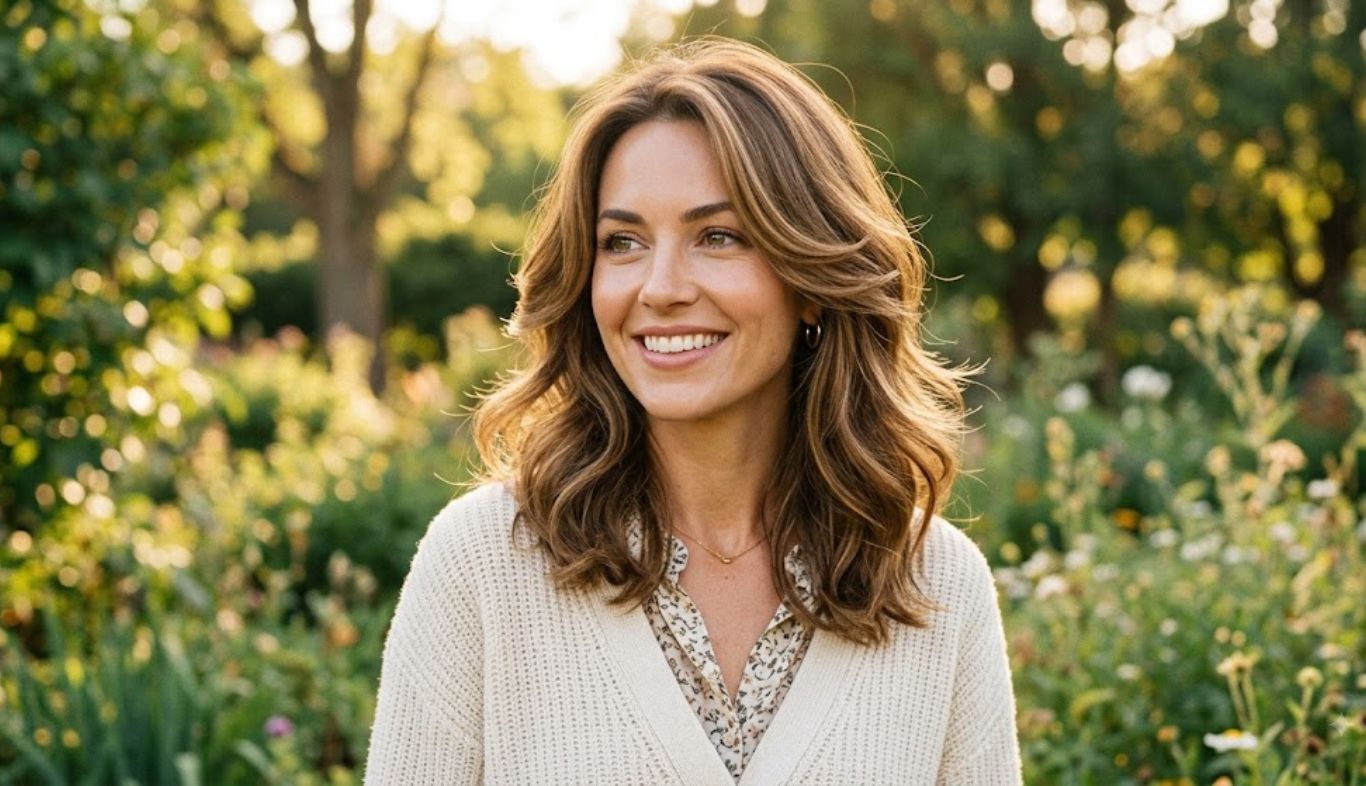
Soft layered medium-length hair strikes a sweet spot between short and long hairstyles. It offers enough length for ponytails, buns, waves, and other versatile looks while still giving the hair shape, bounce, and movement. Unlike heavily chopped layers, soft layers blend gradually into the rest of the haircut. The result is polished without looking overly styled. This haircut can also be surprisingly adaptable. Fine hair can appear fuller when layers are placed strategically, while thick hair can feel lighter and more manageable. Wavy hair gets extra definition, and straight hair gains movement that might otherwise be missing.
Perhaps the biggest appeal is that the style doesn’t demand perfection. A little texture, a loose wave, or even an intentionally undone finish can make the layers look better. In other words, you don’t have to spend an hour in front of the mirror to make the haircut work. The key, however, is choosing layers that suit your natural texture, density, and lifestyle. A good layered cut should work with your hair rather than constantly fighting it.
Understanding Soft Layered Medium-Length Hair
What Makes This Haircut Different?
Soft layered medium-length hair generally falls somewhere around the shoulders to the upper chest, although the ideal length depends on your proportions, texture, and personal preference. The defining feature isn’t simply the length. It’s the transition between sections of hair. Instead of creating dramatic steps, a stylist creates blended layers that gradually become longer toward the ends.
This produces several visual effects:
- More natural movement
- Better shape around the face
- Reduced heaviness
- Additional volume in selected areas
- A softer outline around the ends
- More styling flexibility
The haircut can be customized extensively. For example, face-framing layers can begin around the cheekbones or jawline, while longer internal layers can add movement without making the perimeter look thin.
Why Soft Layers Create Natural Movement
Hair with one blunt length can sometimes look heavy, especially when it reaches the shoulders or below. Soft layers break up that visual weight. When the hair moves, different sections fall at slightly different lengths. This creates dimension and prevents the style from appearing flat. When styled with a round brush, the layers can curve away from the face. When air-dried, they can form a relaxed, casual shape.
This is particularly useful for people who want volume without an exaggerated “big hair” effect. The goal is subtle movement rather than obvious separation between layers. That’s what makes a soft layered haircut feel modern and wearable.
The Best Medium Length for Layered Hair
There’s no single perfect medium length. A shoulder-grazing cut creates a lighter, fresher appearance, while a collarbone-length style provides more styling versatility.
Consider these general options:
| Length | Overall Effect | Best For |
|---|---|---|
| Shoulder length | Fresh and lightweight | Fine to medium hair |
| Collarbone length | Elegant and versatile | Most hair types |
| Upper-chest length | Soft and feminine | Thick or long-looking styles |
| Just below shoulders | Balanced and easy to style | Wavy and straight hair |
The collarbone area is especially popular because it can frame the neck without sacrificing the ability to create ponytails or loose updos.
Who Can Wear Soft Layered Medium-Length Hair?
One of the biggest strengths of this hairstyle is its adaptability. It can work across many ages, textures, and personal aesthetics.
A professional may choose sleek, subtle layers with a side part. Someone with a relaxed style might prefer tousled waves and curtain bangs. Another person could combine the haircut with highlights for extra dimension.
Face shape can also influence the placement of layers. Longer face-framing pieces can soften sharper angles, while layers beginning around the cheekbones can add width where desired.
Still, face shape shouldn’t be treated as a strict rulebook. Hair texture, density, and personal style usually matter more than following a rigid “one haircut per face shape” formula.
17 Soft Layered Styles Worth Considering
If you’re searching for inspiration, these variations are particularly versatile:
- Collarbone soft layers
- Face-framing layers
- Long curtain-bang layers
- Soft butterfly-inspired layers
- Feathered medium layers
- Tousled beach-wave layers
- Sleek straight layers
- Rounded layers for thick hair
- Invisible layers for fine hair
- Shag-inspired soft layers
- Side-parted layered hair
- Center-parted face-framing layers
- Soft layers with bottleneck bangs
- Wavy collarbone layers
- Layered hair with subtle highlights
- Voluminous round-brush layers
- Low-maintenance air-dried layers
These aren’t completely separate haircut categories. They’re variations that can be combined depending on what you want from your final look.
Choosing Your Perfect Soft Layered Style
Soft Layers for Fine or Thin Hair
Fine hair benefits from careful layering. Too many short layers can remove weight from the ends and make the hair look less dense.
For fine hair, ask your stylist for subtle, strategically placed layers rather than aggressive thinning. Face-framing pieces can provide movement while the perimeter remains relatively strong.
An invisible or blended layer technique may be particularly useful because it adds movement without making the haircut appear heavily layered.
Styling also matters. Lightweight volumizing mousse or root-lifting products can create body without weighing down the strands.
A useful trick is to dry the roots in the opposite direction from how they naturally fall. Once released, they can have more lift.
Soft Layers for Thick Hair
Thick hair can be an excellent candidate for layered cuts because layers help distribute weight.
However, thick hair doesn’t necessarily need extensive thinning. Over-thinning can sometimes create unwanted frizz or make the ends look uneven.
Instead, a stylist may use longer internal layers to remove some bulk while preserving a healthy-looking perimeter.
For naturally thick, wavy hair, this approach can be especially attractive. The layers allow the wave pattern to move instead of sitting as one heavy mass.
If your hair is very dense, tell your stylist how you normally wear it. A haircut that looks wonderful after a professional blowout may behave differently when you air-dry it.
Soft Layers for Straight Hair
Straight hair showcases the architecture of a layered haircut clearly.
If your hair is naturally straight, soft layers can prevent a medium-length cut from looking flat or overly blunt. Face-framing pieces can also give the hairstyle movement around the cheekbones and jaw.
For a polished finish, use a round brush while blow-drying. Direct the ends slightly inward for a classic appearance or outward for a more modern, airy finish.
You can also use a large curling iron or styling wand to create loose waves. The trick is to avoid making every section identical. Alternating the direction of the waves creates a more natural result.
Soft Layers for Wavy Hair
Wavy hair and soft layers can be a match made in heaven.
The layers encourage the natural wave pattern to form at different lengths, creating dimension and bounce. However, the cut should account for shrinkage and the way your waves behave when dry.
If your hair has strong waves, show your stylist how you normally wear it. Cutting techniques that work beautifully on straight hair may not translate directly to textured hair.
For everyday styling, apply a lightweight curl cream or mousse to damp hair. Scrunch gently, then allow the hair to air-dry or use a diffuser on a moderate setting.
Don’t overbrush once the waves have formed. Doing so can turn defined texture into unnecessary frizz.
Soft Layers for Curly or Textured Hair
Curly and textured hair can absolutely wear medium-length layers, but customization becomes even more important.
Curly hair can appear shorter when dry, so the stylist should consider the natural curl pattern rather than relying only on wet length.
Longer layers can create a rounded silhouette, while face-framing curls can highlight the eyes and cheekbones.
The goal should be balance. You want enough layering to encourage movement without creating an overly uneven shape.
For textured hair, gentle detangling and moisture are also important. The American Academy of Dermatology recommends adapting hair-care practices to your specific hair type and being gentle with wet or fragile hair.
Matching Layers to Your Face Shape
Face shape can provide useful guidance, but it shouldn’t dictate every decision.
For a rounder face, longer face-framing layers can create a more elongated visual line. For a longer face, layers beginning around the cheekbones may add desirable width.
Heart-shaped faces can benefit from softness around the jaw, while square faces may look beautiful with curved, feathered pieces that soften the outline.
An oval face is generally adaptable to many variations.
Still, there’s no need to obsess over categories. Your stylist can assess your facial proportions, hairline, density, and natural movement together.
Choosing the Right Part
Your part can completely change the appearance of layered hair.
A center part emphasizes symmetry and gives the style a contemporary appearance. A side part creates more volume on one side and can make the haircut feel glamorous.
A slightly off-center part is another easy option. It’s casual, flattering, and less rigid than a perfectly centered part.
If you’re unsure, ask your stylist to show you how the haircut looks with several parting options before finishing the cut.
Styling and Maintaining Soft Layered Medium-Length Hair
How to Style Soft Layers at Home
You don’t need professional equipment to make layered hair look polished.
Start with clean, conditioned hair and gently remove excess moisture. Avoid aggressively rubbing the hair with a towel.
Next, apply a product suited to your texture. Fine hair may benefit from lightweight mousse, while thicker or curlier hair may respond better to a leave-in conditioner or styling cream.
For a smooth blowout:
- Divide the hair into manageable sections.
- Start drying at the roots.
- Use a round brush to guide each section.
- Curve the ends slightly inward or outward.
- Finish with a small amount of smoothing product.
For a casual look, allow the hair to partially air-dry before adding gentle waves or texture.
The less you fight your natural texture, the easier this haircut becomes to maintain.
Heat Styling Without Unnecessary Damage
Layered hair can look fantastic with heat styling, but frequent high heat can weaken the hair shaft.
The American Academy of Dermatology recommends limiting excessive heat, using lower or medium settings, and taking steps to reduce unnecessary manipulation.
A practical routine is simple:
- Use heat protectant before hot tools.
- Avoid repeatedly passing over the same section.
- Use moderate temperatures when possible.
- Let hair partially air-dry before blow-drying.
- Don’t use hot tools on soaking-wet hair.
- Give your hair heat-free styling days.
Remember, a little imperfection can actually make layered hair look more natural.
Products That Enhance Layered Movement
The best product depends on your hair type and desired finish.
| Hair Need | Useful Product Type | Desired Result |
|---|---|---|
| Fine hair | Volumizing mousse | Lift and body |
| Dry hair | Leave-in conditioner | Softness and moisture |
| Wavy hair | Curl cream | Definition |
| Thick hair | Smoothing cream | Frizz control |
| Straight hair | Lightweight styling spray | Movement |
| All hair types | Heat protectant | Reduced heat stress |
You don’t need every product on the shelf. In fact, using too many can make medium-length layers heavy and limp.
Start with one or two products. Add more only if there’s a clear reason.
How Often Should You Refresh the Cut?
The ideal schedule depends on how quickly your hair grows and how precise you want the shape to remain.
A soft layered haircut is forgiving because slight growth often blends naturally. However, face-framing pieces and bangs may require more frequent maintenance.
Instead of scheduling every appointment by a rigid calendar, pay attention to the shape.
It’s time for a refresh when:
- The layers no longer frame the face well.
- The ends look rough or split.
- The haircut feels too heavy.
- Styling takes noticeably longer.
- Your natural movement has disappeared.
Regular trimming can help keep the ends looking healthier, but it doesn’t make hair grow faster. Hair growth occurs at the follicle beneath the skin, so cutting the ends doesn’t accelerate the biological growth rate.
How to Keep Layers Looking Fresh
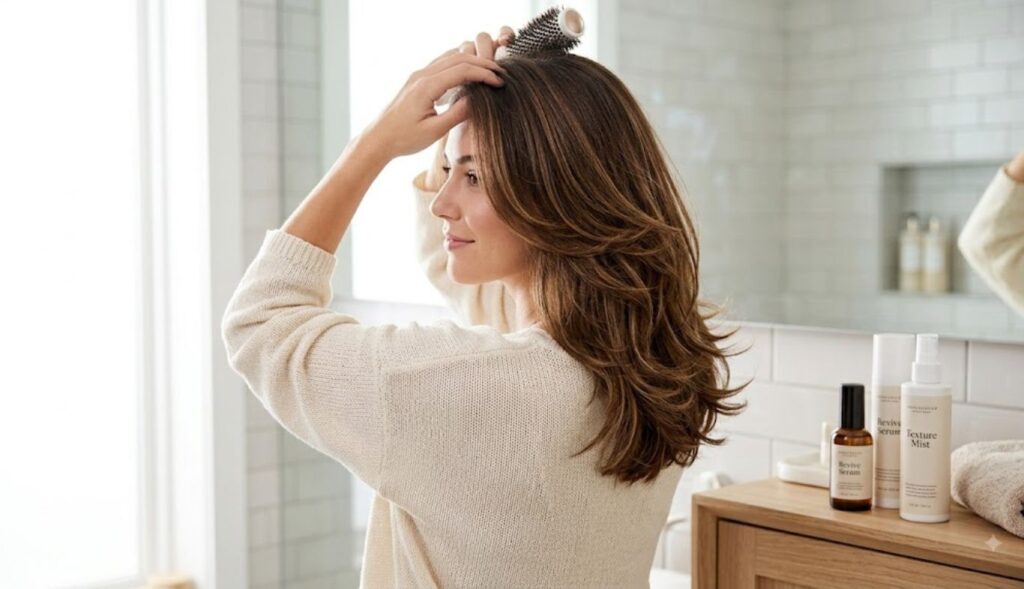
Daily habits make a difference.
Use a shampoo routine appropriate for your scalp and hair type rather than automatically washing on a fixed schedule. Dermatologists recommend focusing shampoo primarily on the scalp rather than aggressively scrubbing the full length of the hair. Conditioner can then help moisturize and detangle the lengths.
Be gentle when detangling. Wet hair can be particularly vulnerable to breakage, although textured and tightly curled hair may benefit from careful damp detangling with appropriate tools.
If your hair begins to feel brittle, take a break from frequent heat styling and chemical processing.
Color Ideas for Layered Medium Hair
Layers can make dimensional color especially eye-catching because different sections catch the light differently.
Consider:
- Soft caramel highlights
- Honey-toned balayage
- Face-framing highlights
- Subtle chocolate and chestnut tones
- Warm copper accents
- Cool beige highlights
- Natural-looking lowlights
You don’t need dramatic color to emphasize layers. Even a few strategically placed lighter pieces can make movement more visible.
If you’re coloring your hair, remember that chemical processing can contribute to dryness and brittleness. The AAD recommends taking precautions with coloring and perming and protecting processed hair from additional damage.
Low-Maintenance Ways to Wear the Style
One reason soft layered medium-length hair remains so appealing is that it doesn’t have to look freshly blown out every day.
Try:
- Air-dried natural texture
- Loose overnight waves
- A low ponytail with face-framing pieces
- A relaxed half-up style
- A loose claw-clip twist
- A messy bun
- A simple side part
- A sleek tucked-behind-the-ear finish
For busy mornings, a small amount of texture spray and a quick reshaping of the front layers may be enough.
Common Mistakes to Avoid
Even a great haircut can become difficult if the styling routine works against it.
Avoid excessively thinning already-fine hair, using heavy products at the roots, or constantly applying high heat.
Also avoid pulling the hair tightly every day. The AAD notes that repeated tension from tight hairstyles can contribute to breakage and, in some cases, traction-related hair loss.
Finally, don’t chase a style that requires a completely different natural texture every morning. The best haircut is one that fits your actual routine.
Frequently Asked Questions
Is soft layered medium-length hair good for fine hair?
Yes. Fine hair can look fuller with strategically placed, blended layers. The important point is moderation. Too many short layers or excessive thinning can reduce the appearance of density. A stronger perimeter combined with subtle internal movement is often a good starting point.
Are soft layers suitable for thick hair?
Absolutely. Layers can help distribute visual weight and make thick hair feel lighter. Longer internal layers are often useful because they create movement while maintaining a substantial shape. Your stylist should consider whether you normally wear your hair straight, wavy, or curly before deciding how much weight to remove.
Do layers make hair look thinner?
They can, depending on how they’re cut. Heavy layering or aggressive thinning can make the ends look less dense, especially on fine hair. Soft, blended layers are generally designed to avoid a harsh reduction in visual fullness. If density is your priority, tell your stylist clearly that you want movement while maintaining fullness at the perimeter.
What face shape looks best with medium layered hair?
Medium layered hair can be adapted to virtually any face shape. The key is adjusting where the face-framing layers begin. Cheekbone, jawline, and collarbone layers create different visual effects. Instead of following a strict face-shape chart, consider which features you want to emphasize or soften.
Can I have bangs with soft layered medium-length hair?
Yes. Curtain bangs, bottleneck bangs, wispy bangs, and longer side-swept bangs can all complement layered medium hair. Longer curtain-style pieces are especially convenient because they blend naturally into face-framing layers as they grow.
How do I make layered hair look fuller?
Start with a haircut that preserves enough density. Then use lightweight volumizing products and focus styling at the roots. Blow-drying with a round brush can also create lift. However, avoid piling on heavy oils, creams, or waxes if your hair is fine because excess product can flatten the layers.
How often should I wash layered hair?
There’s no universal schedule. Your scalp’s oil production, hair texture, activity level, and product use all matter. Dermatologists recommend washing according to how oily or dirty the hair becomes and choosing products appropriate for your hair type.
Can I air-dry soft layered hair?
Yes, and air-drying can be an excellent option for reducing heat exposure. Apply a suitable styling product to damp hair, arrange the layers with your fingers, and let them dry naturally. Wavy and curly hair may benefit particularly well from this approach.
Are soft layers high-maintenance?
Usually, no. That’s one of their biggest advantages. The haircut can be styled sleek, wavy, curly, or naturally textured. Because the layers are blended rather than sharply defined, moderate growth doesn’t necessarily ruin the shape.
Can layered medium hair be tied up?
Definitely. Collarbone and longer medium-length hair can usually be worn in ponytails, buns, half-up styles, and claw-clip looks. Leaving a couple of face-framing strands loose can also emphasize the layered shape.
Conclusion
Soft layered medium-length hair is versatile because it combines structure with movement. It can look polished enough for professional settings, relaxed enough for weekends, and glamorous enough for special occasions. The best version isn’t necessarily the one with the most layers. It’s the one that suits your natural texture, density, face proportions, styling habits, and lifestyle. For fine hair, focus on preserving fullness. For thick hair, use layers to distribute weight. For waves and curls, work with the natural pattern rather than forcing every strand into place. And whatever your texture, gentle care and sensible heat use can help keep the haircut looking healthy. Most importantly, don’t be afraid of a little imperfection. Soft layers are supposed to move.
A few loose pieces, natural waves, and relaxed texture are often what make the style look effortlessly modern. If you’re ready for a change but don’t want to commit to a dramatic chop, this medium-length layered approach may be just the ticket. Bring a few reference photos to your stylist, explain how much time you realistically want to spend styling your hair, and ask for layers designed around the way your hair naturally behaves. That combination of personalization and practicality is what turns a trendy haircut into a style you’ll actually love wearing.