
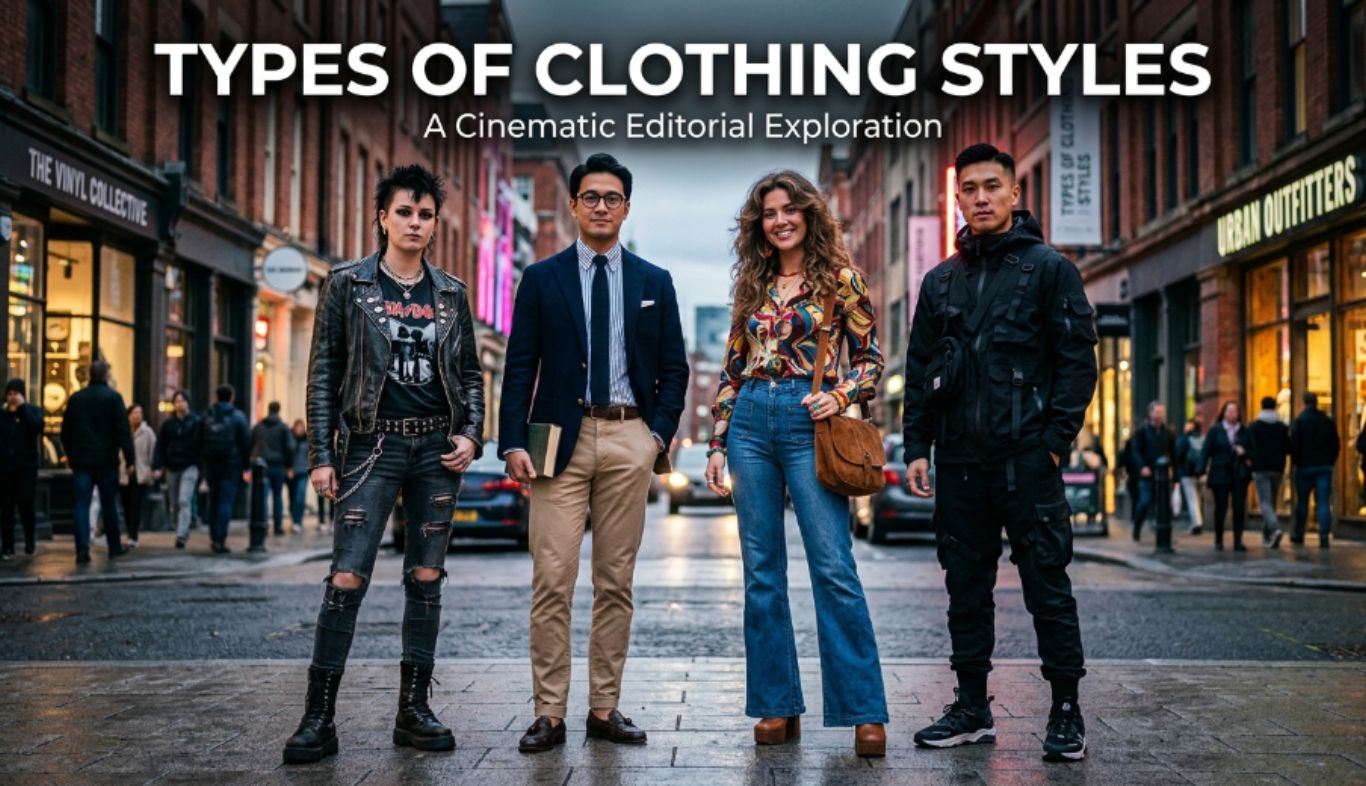
There are countless ways to dress, and that’s part of what makes fashion so interesting. Two people can wear the same basic jeans and create completely different looks simply by changing their shoes, accessories, colors, or outerwear. The types of clothing styles available today range from understated minimalism to expressive streetwear. Some styles are strongly connected to particular decades, cultures, or communities, while others have developed naturally through changing lifestyles. Your clothing style can also evolve. What works for you at 18 may not feel right at 30, and that’s perfectly normal.
Fashion is personal, flexible, and constantly changing. Instead of trying to fit yourself into one category, think of fashion styles as a collection of tools. You can borrow elements from several aesthetics and create something that’s uniquely yours.
What Are Clothing Styles?
A clothing style is a recognizable way of combining garments, colors, fabrics, silhouettes, patterns, and accessories. It can communicate a person’s mood, personality, profession, cultural influences, or lifestyle.
For example:
- Someone who prefers clean lines and neutral colors may enjoy minimalist fashion.
- Someone who loves vintage stores may lean toward retro clothing.
- Someone who prioritizes comfort may prefer casual or athleisure outfits.
- Someone who enjoys dramatic silhouettes may choose goth or avant-garde fashion.
- Someone working in a corporate environment may favor formal or business-casual clothing.
There isn’t one universally correct style. The best style is one that makes sense for your life and helps you feel comfortable and confident.
Why Clothing Style Matters
Clothing can influence how you feel before you even leave the house. A well-fitting outfit can make you feel prepared, while comfortable casual clothing can help you relax. Personal style also makes shopping easier. Once you know what silhouettes and colors work for you, you’re less likely to buy items that sit unused in your closet.
A strong personal style can help you:
- Save time when choosing outfits.
- Avoid unnecessary purchases.
- Build a more coordinated wardrobe.
- Express your personality.
- Dress appropriately for different situations.
- Feel more confident in your appearance.
The trick is to develop your own fashion language rather than copying someone else’s wardrobe from head to toe.
25 Types of Clothing Styles You Should Know

1. Classic Clothing Style
Classic fashion focuses on timeless pieces that don’t depend heavily on short-lived trends. Common items include tailored trousers, button-down shirts, trench coats, blazers, simple dresses, loafers, and structured handbags. Classic wardrobes often use colors such as black, white, navy, beige, gray, and brown. However, classic doesn’t have to mean boring. A colorful scarf, statement shoe, or interesting texture can add personality.
The biggest advantage of classic clothing is versatility. A quality blazer can work with jeans on a casual day and tailored trousers for a more formal occasion.
2. Casual Clothing Style
Casual fashion is designed for everyday life. It’s comfortable, practical, and easy to wear.
Typical casual pieces include:
- T-shirts
- Jeans
- Sneakers
- Hoodies
- Casual shirts
- Knitwear
- Relaxed trousers
- Denim jackets
Casual style can be extremely simple, but fit still matters. A basic T-shirt paired with well-fitting jeans can look more polished than an expensive outfit that doesn’t fit properly.
3. Minimalist Clothing Style
Minimalist fashion emphasizes simplicity and intentional choices. Instead of filling a wardrobe with dozens of competing pieces, minimalist dressers often choose a smaller collection of versatile garments. Neutral colors, clean silhouettes, subtle accessories, and quality fabrics are common.
A minimalist outfit might include a white shirt, straight-leg trousers, leather shoes, and a simple watch. This style works particularly well for people who want a wardrobe that’s easy to coordinate.
4. Business Casual Style
Business casual sits between traditional professional clothing and relaxed everyday fashion.
Examples include:
- Blazers
- Chinos
- Tailored trousers
- Knit polo shirts
- Button-down shirts
- Simple dresses
- Loafers
- Smart flats
The exact definition varies by workplace, so it’s wise to understand your organization’s dress expectations. When in doubt, start slightly more polished and adjust from there.
5. Formal Clothing Style
Formal fashion is associated with events where a sophisticated appearance is expected. Depending on the occasion, formal clothing may include evening dresses, suits, tuxedos, tailored gowns, dress shirts, formal shoes, and elegant accessories.
Fabric quality and fit become particularly important here. Even a relatively simple formal outfit can look excellent when it’s properly tailored. Formal style is less about adding everything at once and more about achieving balance.
6. Streetwear Style
Streetwear has become one of the most influential modern fashion aesthetics. It draws inspiration from youth culture, music, skateboarding, sportswear, and urban communities. Oversized silhouettes, graphic T-shirts, sneakers, hoodies, cargo trousers, caps, and statement outerwear are common.
Streetwear also demonstrates how fashion can move from subcultures into mainstream clothing. The style is flexible, so you can create a subtle version with a simple sneaker and oversized jacket rather than wearing a head-to-toe streetwear look.
7. Athleisure Style
Athleisure combines athletic clothing with everyday fashion. Think leggings with oversized sweaters, sneakers with tailored trousers, track jackets with casual dresses, or joggers paired with structured outerwear.
It’s particularly useful for busy lifestyles because comfort is built into the aesthetic. However, athleisure looks more intentional when you balance sporty pieces with polished elements.
8. Bohemian Style
Bohemian, or boho, fashion is associated with relaxed silhouettes, artistic influences, natural fabrics, flowing garments, and expressive accessories.
Typical pieces include:
- Maxi skirts
- Flowing dresses
- Embroidered tops
- Wide-leg trousers
- Layered jewelry
- Ankle boots
- Patterned scarves
Earth tones are common, although modern boho fashion can include brighter colors and contemporary cuts.
9. Vintage Clothing Style
Vintage fashion takes inspiration from previous decades. The appeal can come from original garments, vintage-inspired pieces, or modern clothing that recreates historical silhouettes. Popular references include the 1920s, 1950s, 1960s, 1970s, 1980s, and 1990s. Vintage doesn’t require wearing an entire period outfit. Pairing one retro piece with modern basics can create a balanced look.
10. Preppy Style
Preppy fashion originated from traditional collegiate and upper-class American clothing influences.
Common elements include:
- Polo shirts
- Oxford shirts
- Pleated skirts
- Cardigans
- Blazers
- Loafers
- Chinos
- Sweaters
Classic patterns such as stripes, checks, and argyle can also appear. Modern preppy style often mixes these traditional elements with oversized or contemporary pieces.
11. Romantic Clothing Style
Romantic fashion focuses on softness, elegance, and delicate details. Lace, ruffles, floral prints, flowing fabrics, ribbons, soft colors, and feminine silhouettes are common. A romantic outfit doesn’t need to look overly decorative. A simple floral blouse paired with straight trousers can capture the aesthetic without becoming costume-like.
12. Cottagecore Style
Cottagecore celebrates an idealized connection with rural life and nature. Typical clothing includes floral dresses, puff sleeves, linen garments, knitted cardigans, long skirts, aprons, and vintage-inspired accessories.
Natural-looking fabrics and soft patterns are central to the aesthetic. Cottagecore can be adapted for everyday life by incorporating only one or two elements, such as a floral blouse or woven bag.
13. Grunge Style
Grunge developed from alternative music and youth culture, particularly during the late 1980s and 1990s. Flannel shirts, ripped denim, band T-shirts, combat boots, oversized sweaters, and layered clothing are strongly associated with the look.
Modern grunge can be cleaner and more refined while still maintaining its rebellious character. The key is attitude and layering rather than simply wearing distressed clothing.
14. Goth Style
Goth fashion is recognized for dark colors, dramatic silhouettes, and alternative influences. Black is common, but goth wardrobes can also incorporate deep red, purple, gray, and other dark shades.
Leather, lace, boots, silver jewelry, long coats, and dramatic makeup may appear depending on the specific goth substyle. There are many interpretations, including romantic goth, traditional goth, and minimalist goth.
15. Y2K Style
Y2K fashion draws inspiration from the late 1990s and early 2000s. Low-rise silhouettes, cropped tops, shiny fabrics, tiny handbags, colorful accessories, denim, and sporty pieces are frequently associated with the aesthetic. Modern interpretations don’t have to recreate an entire early-2000s outfit. Instead, you can use one Y2K-inspired piece with contemporary basics.
16. Academia Style
Academia fashion takes inspiration from libraries, universities, literature, and traditional academic clothing. There are several versions, including dark academia and light academia.
Common garments include:
- Turtlenecks
- Blazers
- Pleated trousers
- Oxford shirts
- Loafers
- Long coats
- Sweaters
- Midi skirts
Neutral and earthy colors are especially popular.
17. Workwear Style
Workwear fashion emphasizes durable, practical garments originally associated with physical labor and utility. Cargo trousers, chore jackets, utility vests, denim, boots, and heavy cotton garments are common. Modern workwear has become fashionable because it combines functionality with strong silhouettes. If you prefer clothing that serves a practical purpose, this aesthetic is worth exploring.
18. Coastal Style
Coastal fashion is inspired by relaxed seaside living. White, navy, beige, light blue, stripes, linen, cotton, sandals, relaxed shirts, and lightweight trousers are common choices. The style tends to feel effortless rather than highly structured. You can recreate the look without living near the ocean. A striped shirt, linen trousers, and simple sandals may be enough.
19. Eclectic Style
Eclectic fashion is all about combining different influences. Someone with an eclectic wardrobe might wear vintage jewelry with minimalist clothing, combine streetwear sneakers with tailored trousers, or pair a romantic blouse with grunge-inspired boots.
There are few strict rules, but balance is important. When mixing aesthetics, choose one dominant element and let the other pieces support it.
20. Avant-Garde Style
Avant-garde fashion pushes beyond conventional clothing shapes and proportions. Architectural silhouettes, unusual materials, asymmetry, oversized forms, experimental layering, and unexpected construction can define this aesthetic.
It’s particularly popular among people interested in fashion as art and design. You don’t need an entire avant-garde wardrobe. A sculptural jacket or unusual accessory can make a conventional outfit feel more experimental.
21. Sporty Style
Sporty fashion focuses on athletic influences without necessarily being intended for exercise. Track pants, varsity jackets, sneakers, sweatshirts, baseball caps, and athletic-inspired tops are common. Sporty style can overlap heavily with streetwear and athleisure, but its visual identity tends to emphasize recognizable sports details.
22. Chic Style
Chic fashion is polished but doesn’t necessarily look complicated. Neutral colors, quality basics, tailored pieces, clean footwear, and restrained accessories often create a chic appearance.
The foundation is simplicity with attention to detail. A monochromatic outfit can be particularly effective because it creates visual consistency without requiring many garments.
23. Retro Style
Retro fashion references recognizable visual elements from earlier periods without necessarily using authentic vintage garments. For example, a modern jacket may use a 1970s-inspired silhouette, while a contemporary dress may feature a 1960s-style print. Retro style gives you freedom to enjoy historical influences while maintaining modern comfort and practicality.
24. Gender-Neutral Style
Gender-neutral fashion focuses on clothing that isn’t restricted by traditional gender categories. Oversized shirts, straight-leg trousers, relaxed blazers, sneakers, knitwear, coats, and simple accessories can work across many wardrobes. The emphasis is often on fit, comfort, color, and personal preference rather than conventional gender expectations.
25. Sustainable Clothing Style
Sustainable fashion isn’t a single visual aesthetic. Instead, it’s an approach to choosing and using clothing more responsibly.
It may involve:
- Buying fewer garments.
- Choosing durable fabrics.
- Shopping secondhand.
- Repairing damaged clothing.
- Rewearing outfits.
- Supporting transparent brands.
- Avoiding unnecessary trend-driven purchases.
For broader fashion-industry information, resources such as Vogue Business can help readers follow developments in fashion and sustainability.
How to Choose the Right Clothing Style for You
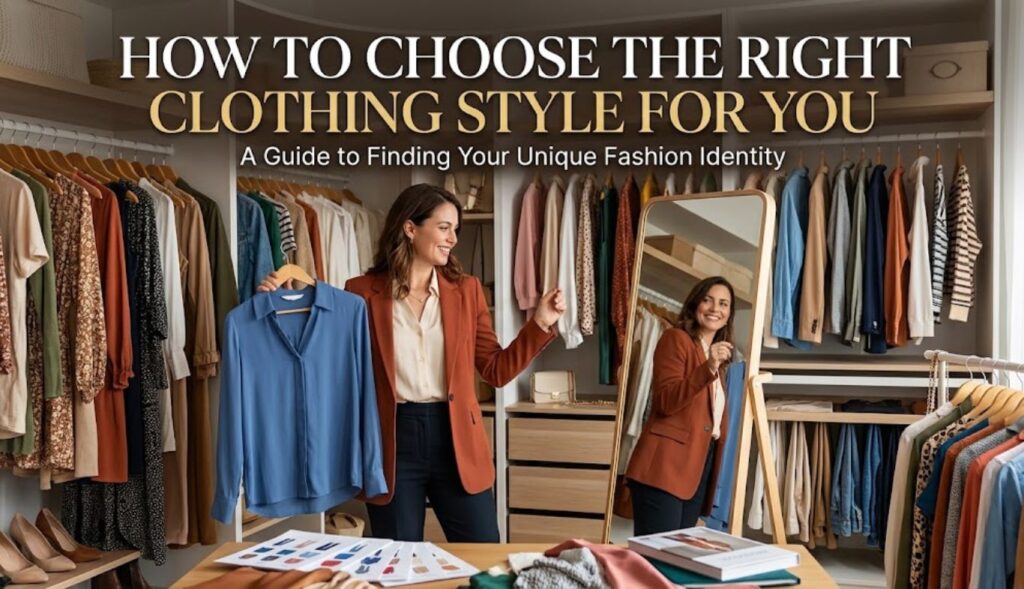
Choosing a personal style doesn’t have to happen overnight. Start by examining your current wardrobe. Which items do you wear most often? Which outfits make you feel comfortable? Which pieces receive compliments?
Next, consider your lifestyle. Someone who works from home may need a very different wardrobe from someone who attends formal meetings every day. Your climate, commute, hobbies, budget, and social activities should all influence your clothing choices.
Try the Three-Word Method
Choose three words that describe how you want your outfits to feel.
For example:
- Comfortable
- Minimal
- Elegant
Or:
- Bold
- Creative
- Relaxed
Use these words as a filter when shopping. If an item doesn’t fit any of your three style words, ask yourself whether you really need it.
How to Build a Wardrobe Around Your Personal Style
Once you’ve identified your preferred aesthetic, build your wardrobe gradually.
Start with versatile foundation pieces such as:
| Clothing Category | Useful Examples |
|---|---|
| Tops | T-shirts, shirts, blouses |
| Bottoms | Jeans, trousers, skirts |
| Outerwear | Blazer, jacket, coat |
| Shoes | Sneakers, loafers, boots |
| Accessories | Belts, bags, scarves |
| Knitwear | Cardigans, sweaters |
| Occasionwear | Dress, suit, formal outfit |
You don’t need every category immediately. Instead, focus on pieces that work with several existing garments. A versatile black trouser, for instance, may work with a T-shirt, blouse, sweater, or blazer. This approach reduces wardrobe clutter and makes getting dressed much easier.
Common Clothing Style Mistakes to Avoid
Even people who understand fashion can make wardrobe mistakes.
Buying Every Trend
Trends can be fun, but not every trend suits every person. Buy trends selectively.
Ignoring Fit
A perfectly styled outfit can look awkward if the clothes don’t fit correctly. Tailoring can sometimes transform an inexpensive garment.
Choosing Appearance Over Comfort
If an outfit looks fantastic but you can’t comfortably walk, sit, or move in it, you probably won’t wear it often.
Wearing Too Many Statements at Once
A dramatic jacket, bold shoes, large accessories, and loud patterns can compete for attention. Sometimes less really is more.
Copying Someone Else Completely
Fashion inspiration is useful, but your wardrobe should work for your body, lifestyle, budget, and personality.
Frequently Asked Questions
1. How many types of clothing styles are there?
There isn’t a fixed number. Fashion constantly evolves, and many aesthetics overlap. The 25 styles discussed in this guide represent major categories, but numerous substyles exist within each one.
2. What is the most popular clothing style?
Casual clothing remains highly practical because it suits everyday activities. However, streetwear, minimalist fashion, athleisure, vintage, and other aesthetics are also widely influential.
3. Can I combine different clothing styles?
Absolutely. Mixing aesthetics is one of the easiest ways to create a distinctive personal style. For example, you can combine minimalist basics with streetwear sneakers or vintage accessories.
4. How do I find my personal clothing style?
Start by identifying clothes you already enjoy wearing. Look for repeated colors, silhouettes, fabrics, and patterns. Then explore related aesthetics and experiment gradually.
5. Is minimalist fashion expensive?
It doesn’t have to be. Minimalism is primarily about intentional choices rather than expensive brands. You can build a minimalist wardrobe with affordable basics and secondhand pieces.
6. What clothing style is best for everyday wear?
Casual, minimalist, sporty, and athleisure styles are particularly practical for everyday activities. The best option depends on your lifestyle and environment.
7. Can clothing style change over time?
Yes. Personal style naturally changes as your lifestyle, interests, body, environment, and preferences evolve. There’s no need to remain committed to one aesthetic forever.
8. How can I make my outfits look more stylish?
Focus on fit, proportions, color coordination, layering, and accessories. You don’t need expensive clothing to create a polished appearance.
9. What is the difference between fashion and personal style?
Fashion often refers to broader trends and industry movements, while personal style describes how an individual chooses to dress. Fashion changes quickly; personal style can remain consistent while adapting to new trends.
Conclusion
Understanding the different types of clothing styles can make fashion much less confusing. From classic and minimalist clothing to streetwear, vintage, goth, cottagecore, Y2K, and sustainable fashion, there’s no shortage of aesthetics to explore. The most important thing is that you don’t have to choose just one.
Your wardrobe can combine elements from several styles while still feeling cohesive. Start with clothes that fit well, suit your lifestyle, and make you feel comfortable. Then add personality through color, texture, accessories, patterns, and statement pieces. Ultimately, the strongest personal style isn’t the one that follows every trend. It’s the one that feels natural when you look in the mirror.