

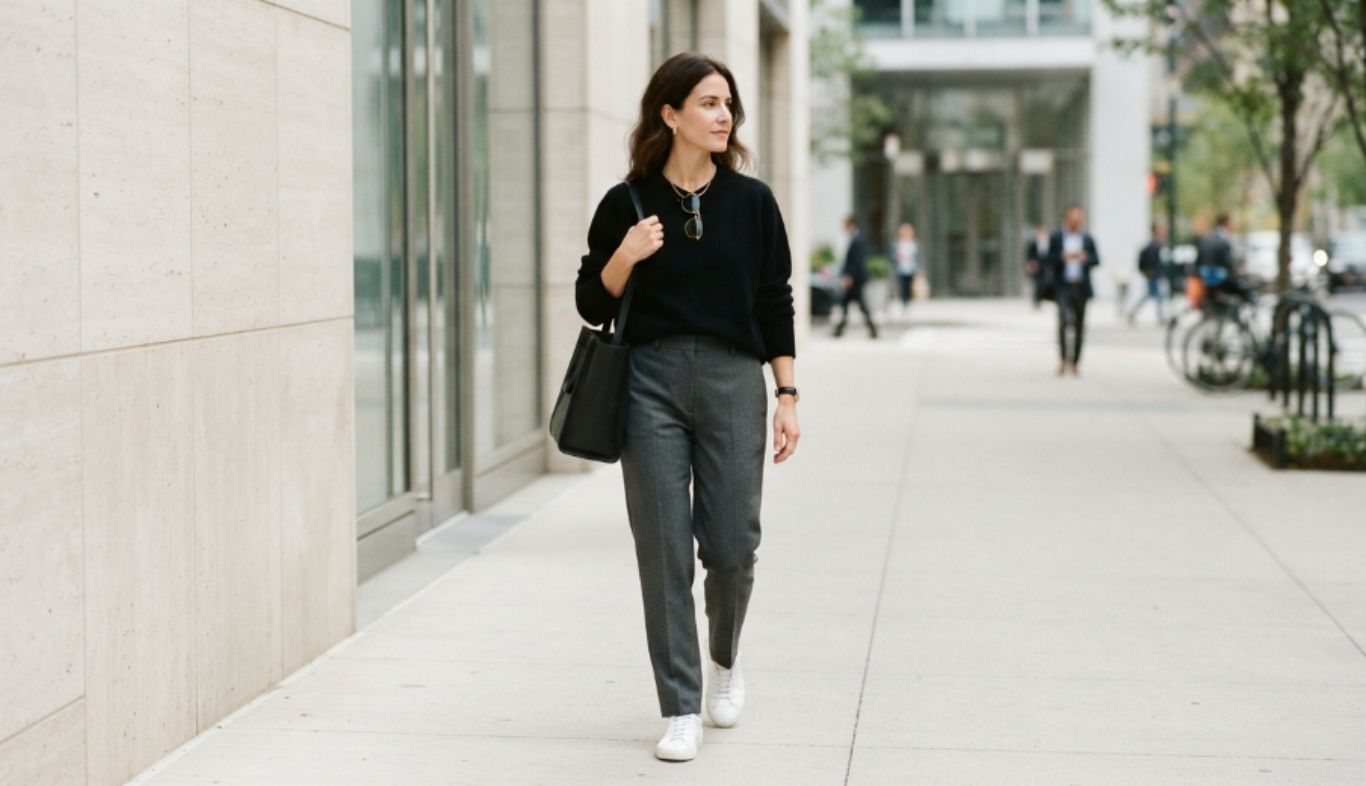
Minimalist fashion style is one of those rare approaches to dressing that can look effortless while requiring thoughtful choices behind the scenes. Instead of relying on loud prints, oversized logos, or constantly changing trends, it focuses on clean silhouettes, useful pieces, balanced colors, quality fabrics, and careful styling. The beauty of this approach is its flexibility. You don’t need a designer wardrobe, a huge budget, or a particular body type to make minimalist fashion work. A well-cut shirt, straight trousers, clean sneakers, and a structured bag can go a long way.
The modern version of minimalist fashion also isn’t limited to black, white, and beige. You can add denim, soft gray, olive, chocolate brown, burgundy, navy, or even a bright accent color while keeping the overall outfit streamlined. Fashion publications continue to connect contemporary minimalism with the clean lines and restrained palettes associated with influential designers of the 1990s, while current styling often mixes those principles with more relaxed proportions and personal details.
This guide explains how to build the look from the ground up, including the essential pieces, color combinations, styling formulas, common mistakes, and answers to frequently asked questions.
What Is Minimalist Fashion Style?
Minimalist fashion style is a way of dressing built around simplicity, function, balance, and intentionality. The idea isn’t simply to wear plain clothes. Rather, each item should have a clear purpose within the wardrobe. A minimalist outfit usually has fewer visual distractions. Instead of several competing patterns and accessories, the eye notices the shape of the clothing, the quality of the fabric, the proportions, and perhaps one carefully selected detail.
This is why fit matters so much. A basic white T-shirt can look ordinary when it’s stretched, poorly shaped, or too thin. The same basic T-shirt can look sophisticated when it fits well, has a flattering neckline, and is made from substantial fabric.
The Core Principles
A useful minimalist wardrobe generally follows five principles:
- Simplicity — Choose clean designs over unnecessary decoration.
- Versatility — Favor pieces that work with several outfits.
- Quality — Pay attention to fabric, construction, and durability.
- Proportion — Balance fitted, relaxed, long, and short shapes.
- Personal style — Keep enough individuality that your wardrobe doesn’t feel like a uniform.
Minimalist fashion style therefore isn’t a strict dress code. It’s more like a framework. You can break the rules when you understand why you’re doing it.
Why Minimalism Became So Influential
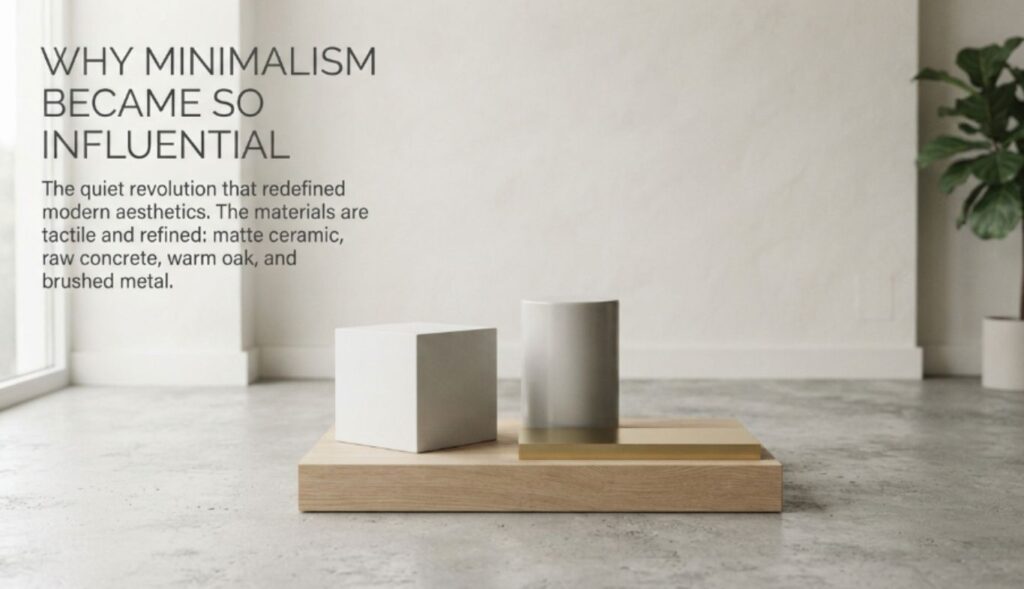
Minimalism has appeared in different forms throughout modern fashion. The 1990s are especially associated with pared-back dressing, with designers such as Calvin Klein, Jil Sander, Helmut Lang, and others emphasizing clean lines and restrained styling. Vogue’s fashion history describes the decade as a reaction against the excess and exaggeration associated with much of 1980s fashion.
That influence hasn’t disappeared. In fact, minimalist fashion style continues to be reinterpreted through modern tailoring, relaxed denim, simple dresses, understated accessories, and monochromatic outfits. Recent fashion coverage also shows renewed interest in 1990s-inspired minimalism. The lesson is simple: timeless doesn’t have to mean boring.
15 Essential Pieces for a Minimalist Wardrobe
Building minimalist fashion style becomes much easier when you have a reliable foundation. You don’t need every item immediately. Start with the pieces you’ll actually wear.
1. The Crisp White Shirt
A white button-down shirt is one of the hardest-working items in a minimalist wardrobe. Wear it with tailored trousers for the office, relaxed denim for weekends, or layered beneath a sweater during cooler weather.
Look for a shape that suits your lifestyle. A slightly oversized shirt creates a relaxed appearance, while a fitted version feels sharper.
2. The Plain T-Shirt
Start with white, black, gray, or navy. A good T-shirt should have a comfortable neckline, strong seams, and enough weight to hold its shape. If you can afford it, buy fewer shirts of better quality rather than accumulating dozens that lose their form after several washes.
3. Straight-Leg Jeans
Straight jeans offer a useful middle ground between skinny and extremely wide silhouettes. Choose a classic wash such as medium blue, dark indigo, or black. Avoid excessive distressing if your goal is maximum versatility.
4. Tailored Trousers
A pair of well-fitting trousers immediately gives minimalist fashion style a polished foundation. Black, charcoal, navy, taupe, and chocolate brown are particularly versatile.
5. The Minimalist Blazer
A blazer doesn’t have to look corporate. Choose a clean design without excessive buttons, decorative stitching, or dramatic shoulder padding. Wear it over a T-shirt, knitwear, or a simple dress.
6. A Neutral Sweater
Cream, oatmeal, gray, navy, and camel work particularly well. Fine-gauge knits are useful for layering, while heavier sweaters can become the centerpiece of a colder-weather outfit.
7. The Simple Dress
A minimalist dress should have a strong silhouette without excessive embellishment. A black midi dress is a classic choice, but don’t overlook navy, brown, cream, or muted green.
8. A Structured Coat
A good coat can transform even a basic outfit. Choose a shape that works with most of your wardrobe. A straight wool coat, trench coat, or clean car coat is often more useful than a highly seasonal design.
9. Clean Sneakers
White, cream, gray, or black sneakers work particularly well. Keep them reasonably clean. Minimalist fashion style depends heavily on visual clarity, and worn-out footwear can quickly undermine an otherwise polished outfit.
10. Loafers
Loafers add structure without looking overly formal. They pair especially well with straight trousers, jeans, midi skirts, and tailored shorts.
11. Simple Ankle Boots
Black or dark brown leather boots can carry an outfit from autumn through spring. A streamlined toe and moderate heel usually offer the greatest versatility.
12. A Leather or Structured Bag
You don’t need a closet full of handbags. One everyday bag in black, brown, tan, or another neutral shade can serve multiple purposes.
13. A Simple Belt
A belt is small, but it can make an outfit feel finished. Choose one that complements your shoes or bag when possible.
14. Understated Jewelry
You don’t have to abandon jewelry to dress minimally. A watch, small hoops, thin chain, or simple ring can add personality without overwhelming the outfit.
15. A Signature Outer Layer
Finally, choose one item that feels distinctly yours. It could be a leather jacket, long cardigan, trench coat, denim jacket, or sculptural coat. This is where minimalist fashion style becomes personal rather than generic.
How to Choose the Right Color Palette
Color is one of the easiest ways to make a minimalist wardrobe feel cohesive. Neutral colors are popular because they combine easily. Black, white, cream, gray, beige, navy, and brown can form a strong base. However, minimalism doesn’t require a colorless wardrobe.
Vogue’s recent guidance similarly notes that monochromatic dressing is a useful starting point while emphasizing that minimalist outfits can still incorporate colors such as red or yellow when the silhouettes remain simple.
The 60-30-10 Approach
Try dividing your outfit visually:
- 60% dominant color: trousers, coat, or dress
- 30% secondary color: shirt, sweater, or shoes
- 10% accent: bag, jewelry, scarf, or another small detail
For example: Cream trousers + white shirt + burgundy bag The result feels interesting without becoming chaotic.
Try Tonal Dressing
Tonal dressing means wearing different shades of the same color.
Examples include:
- Cream + ivory + beige
- Charcoal + gray + black
- Camel + tan + brown
- Navy + powder blue + denim
- Chocolate + caramel + cream
This technique is especially effective when you’re learning minimalist fashion style because it creates visual harmony without requiring complicated styling.
Fabric and Texture Matter More Than You Think
When clothing has fewer visual details, fabric becomes more important. A plain cotton shirt can look very different from a thin, shiny synthetic shirt. A simple wool coat can appear more luxurious than a heavily decorated jacket.
Pay attention to:
- Cotton
- Linen
- Wool
- Cashmere
- Denim
- Leather
- Suede
- Fine knits
- Structured blends
Texture prevents minimalist outfits from looking flat. For example, pair smooth cotton with ribbed knitwear, denim with suede, or wool with polished leather. The contrast creates interest without relying on bold patterns.
Easy Minimalist Outfit Formulas
The fastest way to improve minimalist fashion style is to create repeatable outfit formulas.
Formula One: T-Shirt + Trousers + Sneakers
This is the everyday workhorse. Choose a fitted or relaxed T-shirt, straight or wide-leg trousers, and clean sneakers. Add a structured bag and simple jewelry.
Formula Two: Shirt + Jeans + Loafers
This combination is casual but polished. Try a white shirt, medium-wash jeans, black loafers, and a leather belt. Roll the sleeves slightly for a relaxed finish.
Formula Three: Sweater + Trousers + Boots
Perfect for cooler weather. Keep the colors tonal and let the silhouette do the work. For example, pair a gray sweater with charcoal trousers and black boots.
Formula Four: Simple Dress + Flats
A clean midi dress with flats creates effortless minimalist fashion style. Add a small bag and understated jewelry. If the dress is sleeveless, layer a blazer or lightweight cardigan over it.
Formula Five: Blazer + T-Shirt + Jeans
This is one of the easiest ways to look put together without appearing overdressed. A navy or black blazer works particularly well with a white T-shirt and straight-leg denim.
The Importance of Proportion
Minimalist outfits succeed or fail based heavily on proportion. You don’t need every garment to fit tightly. In fact, mixing proportions often creates a more modern result.
Try:
- Oversized shirt + straight trousers
- Fitted top + wide-leg trousers
- Long coat + cropped trousers
- Slim dress + oversized blazer
- Relaxed sweater + straight jeans
The goal is balance. If everything is oversized, the outfit can lose definition. If everything is extremely fitted, it may feel overly controlled.
Use the Third-Piece Rule
A simple outfit can become more interesting by adding a third layer.
Instead of: T-shirt + jeans
Try: T-shirt + jeans + blazer
Or: Tank top + trousers + cardigan That third piece doesn’t have to be dramatic. It simply gives the outfit another layer of structure.
Minimalist Accessories That Actually Work
Accessories should support the outfit rather than compete with it.
A minimalist approach might include:
- A watch
- Small earrings
- One necklace
- A leather belt
- A structured bag
- Simple sunglasses
However, “minimal” doesn’t mean “tiny.” A large geometric bag or sculptural earring can still fit minimalist fashion style if the rest of the outfit is restrained. The trick is to give one element room to stand out.
Dressing Minimally for Different Seasons
Minimalist fashion style works year-round because the principles stay the same even when fabrics change.
Spring
Choose:
- Lightweight trench coats
- Cotton shirts
- Straight jeans
- Loafers
- Ballet flats
- Soft neutrals
Spring is ideal for layering without excessive bulk.
Summer
Prioritize breathable fabrics such as cotton and linen.
Try:
- Linen trousers
- Tank tops
- Simple midi dresses
- Flat sandals
- Oversized shirts
Keep the palette light if you like, but black, navy, and chocolate can also work beautifully in warm weather.
Autumn
This is arguably one of the best seasons for minimalist dressing.
Combine:
- Fine knitwear
- Tailored trousers
- Denim
- Leather shoes
- Wool coats
- Lightweight scarves
Use earthy colors such as olive, camel, rust, brown, and charcoal.
Winter
Layering becomes essential. Start with a simple base, add knitwear, then finish with a structured coat.
For example: White T-shirt + gray sweater + black trousers + wool coat + ankle boots Simple? Absolutely. Boring? Not if the proportions and textures work.
Common Minimalist Fashion Mistakes
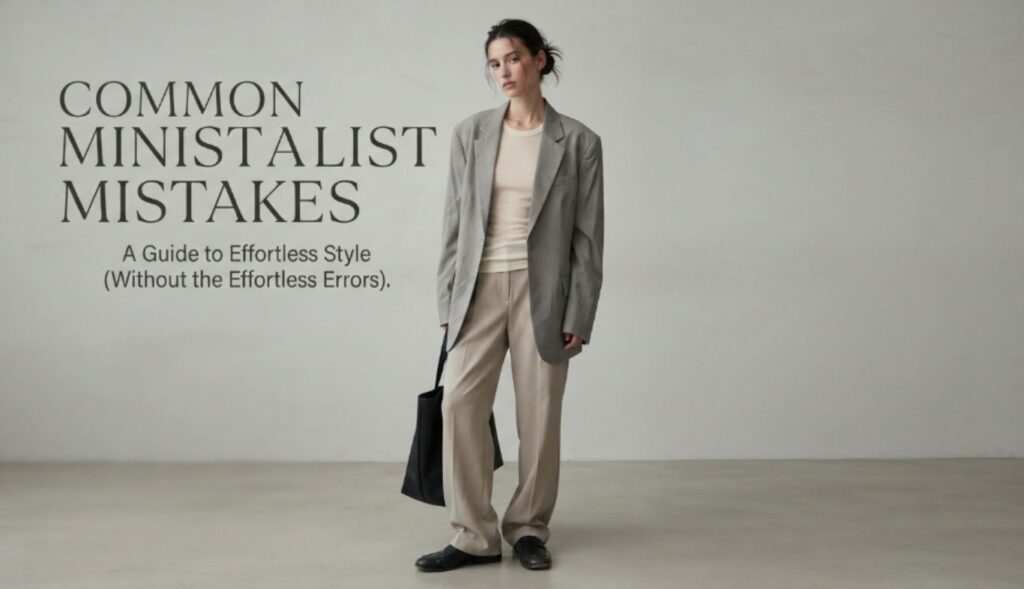
Minimalist fashion style sounds easy, but there are a few traps.
Mistake 1: Assuming Minimalism Means Plain
A minimalist wardrobe can still contain texture, color, unusual proportions, and distinctive accessories. The difference is that these elements are controlled.
Mistake 2: Ignoring Fit
A $300 shirt that doesn’t fit properly won’t automatically look better than an inexpensive shirt that fits beautifully. Tailoring and proportion matter enormously.
Mistake 3: Buying Too Many “Basics”
It’s easy to hear “build a capsule wardrobe” and then buy ten white shirts. Don’t. Buy according to your actual lifestyle. If you work from home most days, you probably need fewer formal trousers and more comfortable but polished pieces.
Mistake 4: Making Everything Beige
Beige is useful, but an entire wardrobe in one neutral can feel lifeless. Add contrast through black, navy, denim, gray, brown, or carefully chosen accent colors.
Mistake 5: Forgetting Maintenance
Minimalist clothing has nowhere to hide. A loose button, wrinkled shirt, stained sneaker, or pilled sweater can be surprisingly noticeable. Steam clothes, clean shoes, remove lint, and repair small problems promptly.
Building a Minimalist Wardrobe on a Budget
You don’t have to spend a fortune to dress well. Start by auditing what you already own.
Separate your clothing into three categories:
- Wear frequently
- Wear occasionally
- Never wear
Then identify why certain items work. Perhaps you repeatedly choose straight trousers because they’re comfortable. Maybe you avoid a particular jacket because the shoulders feel restrictive. Use those observations when shopping.
Buy for Cost Per Wear
Instead of asking, “Is this cheap?”
Ask: “How many times will I realistically wear this?” A $100 coat worn 100 times costs $1 per wear. A $30 novelty item worn once costs $30 per wear.
This mindset encourages thoughtful purchasing. Vogue’s minimalist wardrobe guidance similarly emphasizes investment in durable, versatile pieces rather than constantly replacing fast-fashion items.
Shop Your Own Closet First
Before buying something new, try creating three outfits with an item you already own. You’ll often discover combinations you hadn’t considered. This is one of the simplest ways to make minimalist fashion style more sustainable.
Minimalist Fashion and Sustainability
Minimalism and sustainability can overlap, but they aren’t automatically the same thing. Owning fewer clothes can reduce unnecessary consumption, but the quality, lifespan, manufacturing, and care of those clothes also matter.
A genuinely thoughtful wardrobe might involve:
- Buying fewer items
- Choosing durable construction
- Repairing clothing
- Wearing garments repeatedly
- Shopping secondhand
- Avoiding impulse purchases
- Donating responsibly
- Caring for fabrics properly
The goal isn’t perfection. It’s awareness. A minimalist wardrobe should make your relationship with clothing more intentional rather than turning fashion into another source of pressure.
How to Add Personality Without Losing Minimalism
This may be the most important lesson of all. If your minimalist wardrobe looks exactly like everyone else’s, you’ve followed the aesthetic but missed the point. Choose one or two signature elements.
Maybe you love:
- Silver jewelry
- Red shoes
- Vintage denim
- Oversized coats
- Sculptural bags
- Bold eyewear
- Bright scarves
- Interesting textures
Let those details become part of your visual identity. Minimalist fashion style works best when the simplicity creates space for personality.
Current fashion commentary also suggests that modern style is moving toward more individuality and personal expression rather than strict adherence to one uniform aesthetic.
A Simple Minimalist Wardrobe Checklist
Before buying another piece, ask yourself:
- Does it fit properly?
- Can I style it with at least three existing items?
- Is the fabric appropriate for how I’ll use it?
- Will I still want it next year?
- Does it suit my lifestyle?
- Is the color compatible with my wardrobe?
- Am I buying it because I love it or because it’s trending?
- Can I maintain it easily?
- Does it add something genuinely useful?
- Would I choose it if it weren’t on sale?
If you can’t answer most of these questions positively, put it back on the rack.
Frequently Asked Questions
1. What is minimalist fashion style?
Minimalist fashion style is an approach to dressing that emphasizes simplicity, clean silhouettes, versatile clothing, restrained styling, quality materials, and intentional choices. It doesn’t require wearing only neutral colors or owning a tiny wardrobe.
2. What colors are best for minimalist fashion?
Black, white, cream, beige, gray, navy, brown, and denim are excellent foundations. However, minimalist fashion can include stronger colors. The key is usually to keep the silhouette and overall styling clean.
3. Can minimalist fashion be colorful?
Absolutely. A bright red bag, yellow sweater, green trousers, or blue coat can work beautifully. Try pairing one strong color with otherwise simple pieces.
4. Is minimalist fashion the same as quiet luxury?
Not exactly. The two aesthetics overlap, particularly in their preference for understated silhouettes and quality-looking materials. However, minimalist fashion is broader and doesn’t require expensive clothing or a luxury-oriented image.
5. How many clothes should a minimalist own?
There’s no universal number. The right wardrobe size depends on your work, climate, lifestyle, laundry routine, hobbies, and personal preferences. A useful wardrobe is more important than an artificially small wardrobe.
6. Can I create minimalist outfits with inexpensive clothes?
Yes. Focus on fit, color coordination, fabric appearance, clean footwear, and simple styling. Expensive labels aren’t required.
7. Is minimalist fashion boring?
It can be if every outfit uses identical colors, shapes, and textures. The solution is to experiment with proportion, fabric, accessories, and one distinctive detail while keeping the overall look controlled.
8. What shoes work best with minimalist outfits?
Loafers, clean sneakers, simple ankle boots, ballet flats, sandals, and understated heels are all useful. Choose footwear according to your lifestyle rather than trying to follow a rigid formula.
9. How can beginners start dressing minimally?
Start with five reliable pieces: a quality T-shirt, button-down shirt, straight jeans, tailored trousers, and a versatile jacket or blazer. Build outward from there.
10. Where can I find more minimalist fashion inspiration?
Fashion archives and established publications are useful for studying silhouettes and styling rather than simply copying current trends. Vogue’s minimalist fashion coverage provides examples of wardrobe foundations, outfit formulas, and the historical influence of 1990s minimalism.
Conclusion
Minimalist fashion style isn’t about following a strict list of rules. It’s about understanding what makes clothing useful, flattering, versatile, and visually balanced. Start with reliable essentials. Choose colors that work together. Pay attention to fabric and proportion. Keep accessories intentional. Most importantly, make room for your personality. You don’t need a wardrobe packed with new arrivals to look polished. Sometimes the strongest outfit is the one built from pieces you’ve owned for years but finally learned how to style properly. The real power of minimalist fashion style is that it removes unnecessary noise. Once you know what works for you, getting dressed becomes easier, shopping becomes more thoughtful, and your personal style becomes clearer. And that’s the sweet spot: less clutter, more confidence, and clothes that genuinely feel like you.