

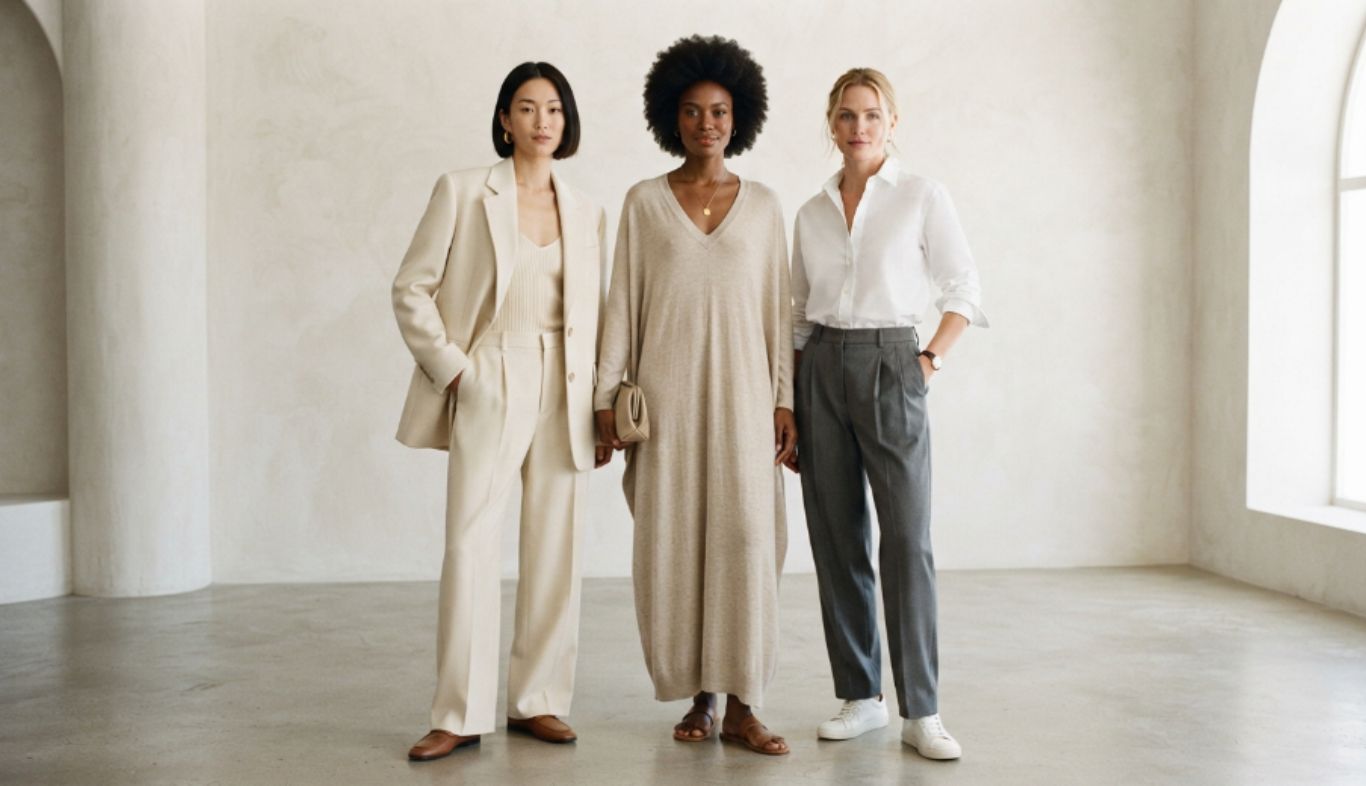
Minimalist Outfits aren’t about owning the fewest clothes possible or dressing in head-to-toe black every day. Instead, minimalist fashion focuses on intentional choices, versatile pieces, clean silhouettes, and a wardrobe that genuinely works for your lifestyle. The appeal is easy to understand. When your closet contains pieces that coordinate naturally, getting dressed becomes faster. You spend less time wondering what matches, fewer clothes sit unworn, and your favorite pieces get more use.
Minimalism can also make personal style more recognizable. A simple white shirt, tailored trousers, clean sneakers, and a structured bag may look understated, but the right fit and proportions can make the outfit feel polished rather than plain. The best part is that minimalist dressing doesn’t require expensive designer clothing. You can create a sophisticated wardrobe at many different price points by focusing on fit, fabric, color, condition, and versatility.
This guide explores how to create minimalist outfits that feel modern, practical, and personal. You’ll learn which wardrobe essentials matter most, how to build a neutral color palette, how to style outfits for different occasions, and which mistakes can make minimalist dressing feel boring.
1. What Are Minimalist Outfits?
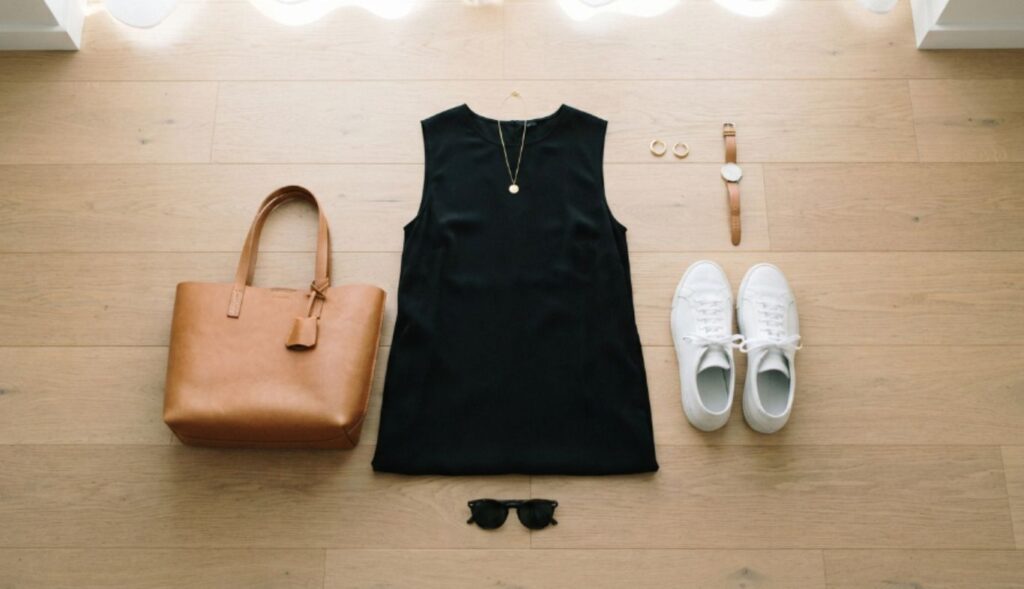
Minimalist outfits are clothing combinations built around simplicity, functionality, balance, and intentional styling. Instead of relying on excessive patterns, logos, accessories, or complicated layering, minimalist fashion allows the cut, fabric, proportions, and overall silhouette to do most of the talking. However, simple doesn’t mean careless. That’s an important distinction.
A minimalist outfit can be extremely polished because every element has a purpose. A well-fitted blazer, straight-leg trousers, plain knit top, leather loafers, and a simple handbag may contain fewer visual details than a trend-heavy outfit, but the combination can look considerably more refined.
Core Principles of Minimalist Fashion
There are several principles that define successful minimalist dressing.
Simplicity: Choose clean designs without unnecessary details. This doesn’t mean every item must be plain, but decorative elements should feel intentional.
Versatility: A strong wardrobe allows individual pieces to work across multiple outfits. A neutral blazer, for example, can be worn with jeans on the weekend or tailored trousers for work.
Quality: Quality doesn’t always mean expensive. Look for fabrics, stitching, construction, and finishes that can handle regular wear.
Fit: Even inexpensive clothing can look sophisticated when it fits properly. Conversely, expensive clothing can look awkward when the proportions are wrong.
Functionality: Your wardrobe should reflect your actual lifestyle. There’s little value in owning five formal jackets if you spend most of your time in casual environments.
Minimalism vs. Basic Dressing
Minimalist fashion and basic dressing aren’t exactly the same. Basic dressing often means wearing simple staple items because they’re convenient. Minimalist dressing goes one step further by considering how each piece contributes to the complete wardrobe.
For example, a basic wardrobe might contain five black T-shirts simply because black is easy to wear. A minimalist wardrobe might contain two excellent T-shirts in black and white, one striped shirt, and a versatile knit because each piece serves a different styling purpose. The difference is intentionality.
Benefits of a Minimalist Wardrobe
A thoughtfully designed wardrobe can make everyday life easier. First, you’ll probably spend less time getting dressed. When your clothing shares a compatible color palette and similar level of formality, combinations become almost automatic. Second, you can reduce unnecessary purchases. Instead of buying something because it’s trendy for a few weeks, you can ask whether it works with at least three or four existing pieces.
Third, minimalist clothing often supports more sustainable habits because versatile pieces tend to be worn repeatedly. Buying less and using what you already own can be more meaningful than constantly replacing clothing. Finally, minimalism gives you room to develop a recognizable signature style.
2. Essential Pieces for Minimalist Outfits
A minimalist wardrobe doesn’t need dozens of items. It needs the right combination of dependable basics and a few personality-driven pieces. The exact number will depend on your climate, occupation, lifestyle, and personal preferences. Someone living in a warm climate won’t need the same outerwear collection as someone experiencing cold winters. Still, several categories form a reliable foundation.
Tops
Start with versatile tops that can be dressed up or down.
Useful choices include:
- Plain white T-shirts
- Black or charcoal T-shirts
- Oxford or cotton button-down shirts
- Lightweight knit sweaters
- Fine-gauge turtlenecks
- Simple long-sleeve tops
- Neutral blouses
- Relaxed overshirts
When shopping for tops, pay close attention to the neckline, shoulder seams, fabric weight, and length. These small details have a surprisingly large effect on the finished outfit.
A high-quality white T-shirt with structured trousers can look intentional and modern. The same T-shirt with overly stretched fabric and poor proportions can look unfinished.
Bottoms
Bottoms establish much of an outfit’s silhouette.
Consider having:
- Straight-leg jeans
- Tailored trousers
- Neutral chinos
- Wide-leg trousers
- A simple midi skirt
- Comfortable casual pants
You don’t need every silhouette. Choose the shapes that complement your body and lifestyle. For example, straight-leg trousers offer a timeless appearance, while wide-leg pants can create a more fashion-forward minimalist look.
Outerwear
Outerwear can transform even the simplest outfit.
A minimalist wardrobe might include:
- A tailored blazer
- A neutral trench coat
- A wool or wool-blend coat
- A simple denim jacket
- A clean bomber or utility jacket
Neutral outerwear is particularly useful because it can connect different outfits together. A beige trench, for instance, can work with denim, black trousers, dresses, skirts, or knitwear.
Shoes
Shoes should support your wardrobe rather than compete with it.
Good minimalist options include:
- White or neutral sneakers
- Loafers
- Ballet flats
- Ankle boots
- Simple sandals
- Clean leather or canvas shoes
Think about versatility. If one pair works with six outfits while another works with only one, the versatile pair usually provides greater value.
Accessories
Accessories are where minimalist outfits can gain personality. A structured handbag, slim belt, understated watch, small earrings, sunglasses, or simple necklace can elevate a basic combination without overwhelming it. The goal isn’t to eliminate accessories. It’s to select them deliberately.
3. Choosing the Best Colors for Minimalist Outfits
Color is one of the easiest ways to make a wardrobe feel cohesive. A minimalist palette often starts with neutrals because they’re easy to combine. Common foundation colors include black, white, cream, gray, navy, beige, taupe, and brown. However, you don’t have to limit yourself to neutrals.
Black, White, and Gray
Black and white provide one of the simplest outfit formulas.
Try: White shirt + black trousers + black loafers
Or: Black knit top + gray trousers + white sneakers Gray works as a bridge between stronger colors. Light gray can soften black, while charcoal can create depth without introducing a bright shade.
Beige and Brown
Warm neutrals create a softer minimalist aesthetic.
Consider combinations such as:
- Cream sweater + beige trousers
- White shirt + brown trousers
- Camel coat + black outfit
- Chocolate-brown bag + neutral clothing
These combinations can feel sophisticated without appearing overly formal.
Adding Accent Colors
Minimalism doesn’t require a completely neutral wardrobe. If you love color, choose one or two shades that complement your existing palette.
For example, a wardrobe based on cream, black, and gray could introduce burgundy through a handbag or knit sweater. Navy can work beautifully with white and beige. Olive can add an earthy touch to neutral outfits. The key is restraint. One strong accent often creates more visual impact than five competing colors.
4. 11 Minimalist Outfit Ideas for Everyday Style
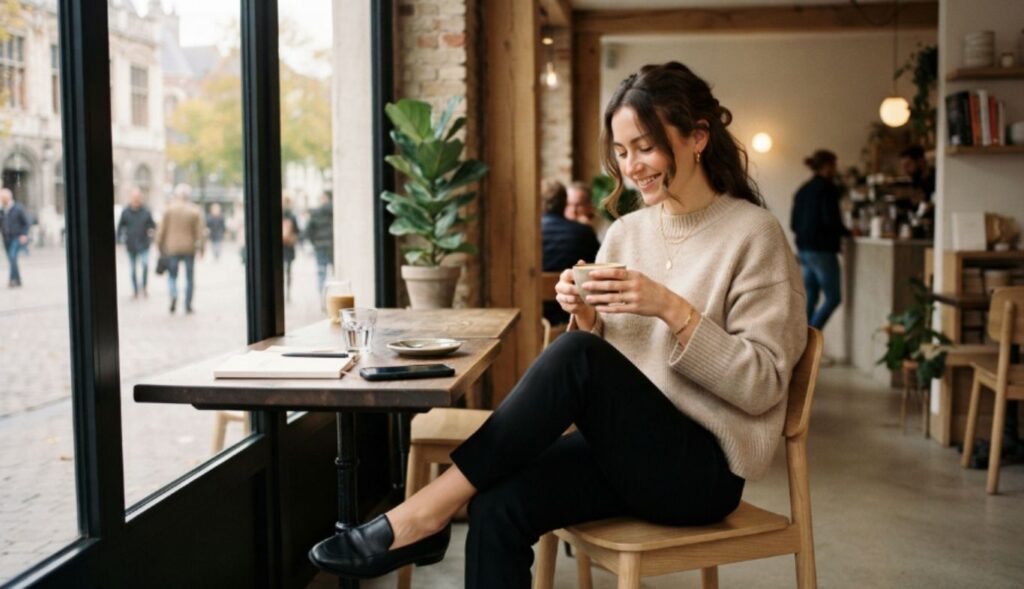
Once you’ve established a strong wardrobe foundation, creating outfits becomes much easier. Here are 11 practical outfit formulas.
1. White T-Shirt and Tailored Trousers
A white T-shirt paired with tailored trousers creates a clean balance between casual and polished. Add loafers and a structured bag for a refined appearance.
2. Monochrome Black Outfit
Combine a black top, black trousers, and black shoes. To prevent the outfit from looking flat, mix textures. For example, pair a cotton top with wool trousers and leather footwear.
3. Neutral Knit and Straight-Leg Jeans
A cream or gray knit sweater with straight-leg denim is a reliable everyday combination. Complete it with simple sneakers or ankle boots.
4. Button-Down Shirt and Wide-Leg Pants
A crisp shirt tucked into wide-leg trousers creates an elegant silhouette. Add a slim belt and understated jewelry for definition.
5. Blazer and Jeans
This is one of the most useful minimalist formulas. Wear a neutral blazer over a plain T-shirt with straight-leg jeans. Finish with loafers, ballet flats, or clean sneakers.
6. All-White or Cream Outfit
An ivory sweater with cream trousers creates a sophisticated tonal look. Use slightly different textures and shades so that every piece remains visually distinct.
7. Simple Dress and Minimal Accessories
A clean-cut midi dress can serve as an entire outfit. Add simple sandals or loafers and one structured bag. That’s it. No need to overthink it.
8. Turtleneck and Tailored Trousers
A fitted or relaxed turtleneck paired with trousers is ideal for cooler weather. Layer a blazer or coat over the top for additional structure.
9. Overshirt and Straight-Leg Pants
For a casual outfit, layer a neutral overshirt over a plain top and pair it with trousers or denim. Sneakers keep the look relaxed.
10. Midi Skirt and Simple Knit
A streamlined midi skirt paired with a lightweight knit creates an elegant yet comfortable combination. Keep footwear simple and let the skirt’s silhouette become the focal point.
11. Neutral Coat Over a Simple Base
Sometimes the easiest outfit is the best one. Start with jeans and a plain sweater. Add a camel, gray, navy, or black coat. The outer layer immediately makes the look feel more complete.
5. How to Build a Minimalist Wardrobe Step by Step
Creating a minimalist wardrobe shouldn’t mean throwing everything away overnight. Instead, approach it strategically.
Step 1: Review What You Already Own
Take everything out and evaluate each item.
Ask:
- Do I wear this regularly?
- Does it fit properly?
- Is it comfortable?
- Does it work with my current wardrobe?
- Would I buy it again today?
- Is it appropriate for my lifestyle?
If an item repeatedly receives a “no,” it may not deserve valuable closet space.
Step 2: Identify Your Most-Worn Pieces
Look at what you naturally reach for. Maybe you constantly wear straight-leg jeans, button-down shirts, knit sweaters, and loafers. That tells you something about your personal style. Build around those preferences rather than forcing yourself into someone else’s definition of minimalism.
Step 3: Choose a Core Color Palette
Select approximately three to five foundation colors.
For example: Black + white + gray + beige + navy
Or: Cream + brown + olive + denim + black This doesn’t mean every item must use those colors. Instead, the palette should make most combinations easy.
Step 4: Prioritize Fit
Fit can make a bigger difference than brand name. Check shoulder seams, sleeve length, trouser break, waist placement, and overall proportions. If an item is nearly perfect but needs a minor adjustment, tailoring may be worthwhile.
Step 5: Shop With a Purpose
Before purchasing something new, think about its role. A useful rule is to identify at least three existing outfits that the new item could complete. If you can’t do that, pause before buying. This simple habit can prevent a closet full of “almost useful” clothes.
6. Common Minimalist Fashion Mistakes
Minimalist fashion looks easy, but there are a few common traps.
Mistake 1: Thinking Minimalism Means Boring
A minimalist outfit can still have personality. Experiment with texture, proportions, jewelry, footwear, bags, or a carefully selected accent color.
Mistake 2: Buying Only Cheap Basics
Minimalism isn’t about purchasing the cheapest possible version of every staple. If a T-shirt loses its shape after three washes, replacing it repeatedly may cost more over time. Consider durability alongside price.
Mistake 3: Ignoring Fit
Even a beautiful color palette won’t save an outfit with poor proportions. Fit should remain one of your highest priorities.
Mistake 4: Following Minimalism Too Literally
You don’t have to own 20 items or copy a capsule wardrobe from social media. Your wardrobe should serve you. If you love prints, keep some prints. If you enjoy statement jewelry, wear it. Minimalism should simplify your choices, not erase your personality.
Mistake 5: Buying Too Many “Perfect Basics”
It’s easy to become obsessed with finding the perfect white shirt, perfect black trousers, or perfect beige sweater. At some point, you already have enough. Use what works and stop shopping simply because another version exists.
FAQs
What are minimalist outfits?
Minimalist outfits are clothing combinations that emphasize simplicity, versatility, clean silhouettes, and intentional styling. They commonly use neutral colors and wardrobe staples, but personal style and color are still welcome.
How many clothes do I need for a minimalist wardrobe?
There’s no universal number. The right amount depends on your lifestyle, climate, work requirements, laundry schedule, and personal preferences. A smaller wardrobe is only useful when it contains enough practical pieces for your real life.
Do minimalist outfits have to be neutral?
No. Neutral colors are popular because they’re easy to combine, but minimalist fashion can include bright colors, prints, and patterns. The important factor is how intentionally they’re used.
Can minimalist outfits look fashionable?
Absolutely. Minimalist fashion often relies heavily on silhouette, proportions, fabric, layering, and accessories. These details can create a highly polished appearance without excessive decoration.
Are minimalist outfits expensive?
They don’t have to be. Minimalism is more about thoughtful purchasing than expensive labels. You can create effective outfits using affordable clothing as long as you prioritize fit, versatility, quality, and coordination.
How can I make minimalist outfits more interesting?
Use texture, layering, proportions, accessories, and subtle color contrasts. A simple outfit can become much more interesting when you combine different materials, such as denim, knitwear, leather, cotton, or wool.
What colors work best for minimalist fashion?
Black, white, gray, beige, cream, navy, brown, and taupe are common choices. However, the best colors are the ones that work well with your existing wardrobe and personal coloring.
Is minimalist fashion sustainable?
It can support more sustainable habits when it encourages people to buy fewer unnecessary items and wear existing clothing more frequently. However, simply buying minimalist-looking clothing doesn’t automatically make a wardrobe sustainable.
Conclusion
Minimalist outfits are ultimately about making fashion simpler without making it lifeless. A successful minimalist wardrobe combines practical essentials, flattering silhouettes, complementary colors, and a few personal touches. You don’t need hundreds of pieces, and you certainly don’t need to follow every minimalist trend you see online. Start with what you already own. Identify the clothes you genuinely enjoy wearing, remove pieces that don’t serve your lifestyle, and gradually build a collection around versatile staples.
Most importantly, remember that minimalism is a tool rather than a strict rulebook. Whether your ideal look includes black tailoring, soft neutrals, denim, bold accessories, or occasional statement pieces, the goal is the same: create a wardrobe that makes getting dressed easier, more enjoyable, and more intentional. When every piece has a purpose and works naturally with the rest of your closet, simple outfits can make a surprisingly powerful style statement.