

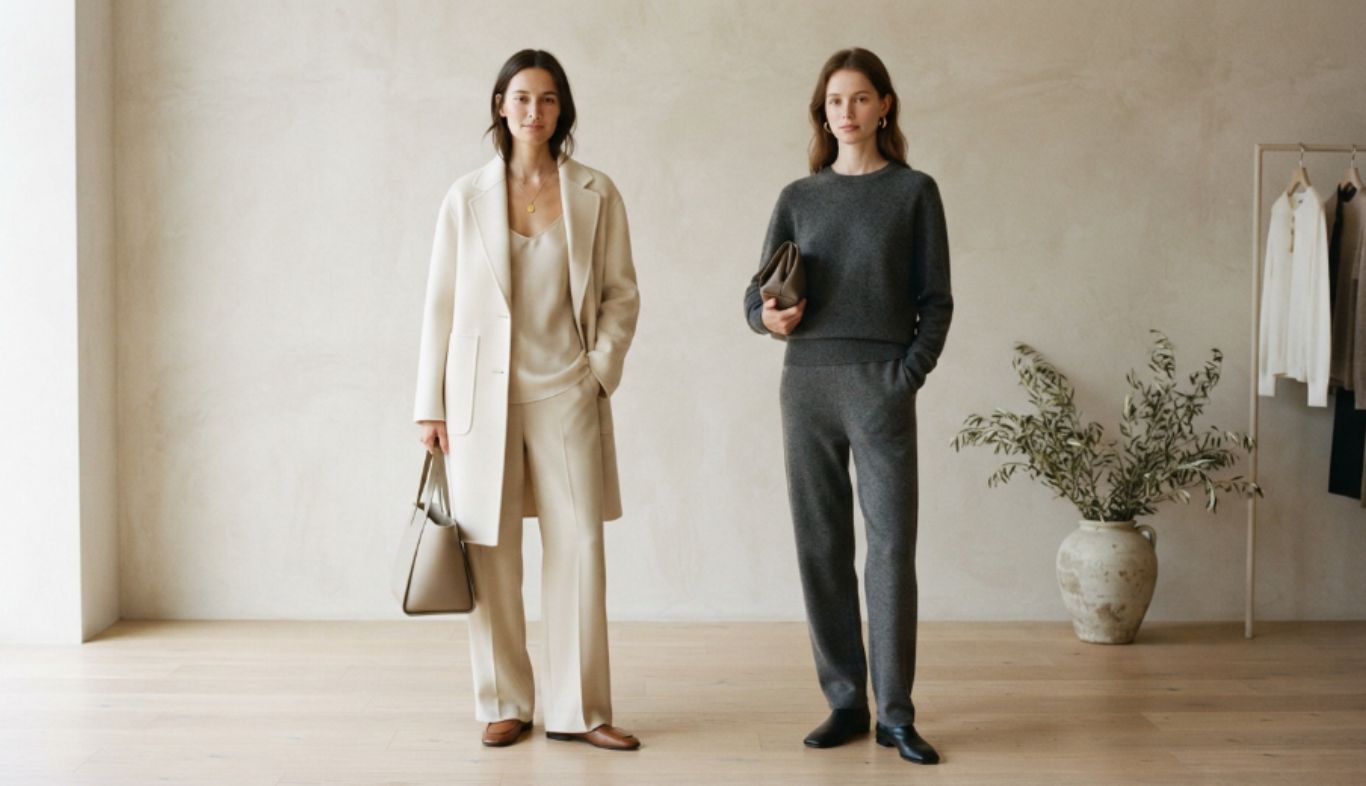
Minimalist Clothing Brands have become increasingly popular because they offer a practical alternative to fast-changing fashion trends. Instead of filling your closet with pieces that work for only one season or occasion, minimalist fashion focuses on clothing that can be worn repeatedly and styled in several ways. The idea is simple: own fewer items, but make those items count. A minimalist wardrobe usually includes neutral colors, clean silhouettes, versatile layers, and fabrics that feel comfortable and hold up over time. Black, white, gray, navy, beige, brown, cream, and muted earth tones are common because they work well together. However, minimalism doesn’t mean your clothes have to be boring.
A well-designed minimalist outfit can look sophisticated, modern, relaxed, or even bold depending on its proportions, textures, accessories, and styling. The goal isn’t to eliminate personality. It’s to remove unnecessary visual clutter. This approach also makes getting dressed easier. When most pieces coordinate naturally, you spend less time wondering what to wear. A simple shirt can work with tailored trousers for the office, denim for a casual afternoon, or layered under a jacket for an evening look.
Another major advantage is versatility. Instead of buying a separate wardrobe for every situation, you can create a small collection of adaptable essentials. Minimalist fashion can also encourage more thoughtful shopping. Rather than purchasing something simply because it’s trending, you can ask whether the item fits your lifestyle, works with your existing clothes, and offers enough value to justify its price. That doesn’t mean every minimalist item must be expensive. There are affordable brands that produce simple, wearable pieces, while premium labels offer higher-end fabrics and construction. Ultimately, the best minimalist wardrobe is one that works for you.
1. What Are Minimalist Clothing Brands?
Minimalist clothing brands are fashion companies that emphasize simplicity, functionality, timeless design, and versatility. Their collections typically avoid excessive logos, complicated patterns, unnecessary embellishments, and highly seasonal designs. Instead, they concentrate on strong fundamentals.
A minimalist clothing line might feature a crisp cotton shirt, straight-leg trousers, a wool coat, a simple knit sweater, a clean T-shirt, and an understated jacket. These pieces aren’t designed to dominate an outfit. They’re designed to work together.
1.1 Key Features of Minimalist Clothing
Several characteristics commonly appear across minimalist collections:
- Clean and uncomplicated silhouettes
- Neutral or muted color palettes
- Limited decorative details
- Functional designs
- High-quality or durable materials
- Versatile pieces
- Timeless styling
- Comfortable proportions
- Simple branding
The result is clothing that can often remain relevant for years rather than months. For example, a plain white T-shirt might not look particularly exciting on a hanger. Yet it can become one of the most useful pieces in your wardrobe because it works with jeans, trousers, shorts, skirts, jackets, cardigans, and coats.
1.2 Minimalism vs. Basic Clothing
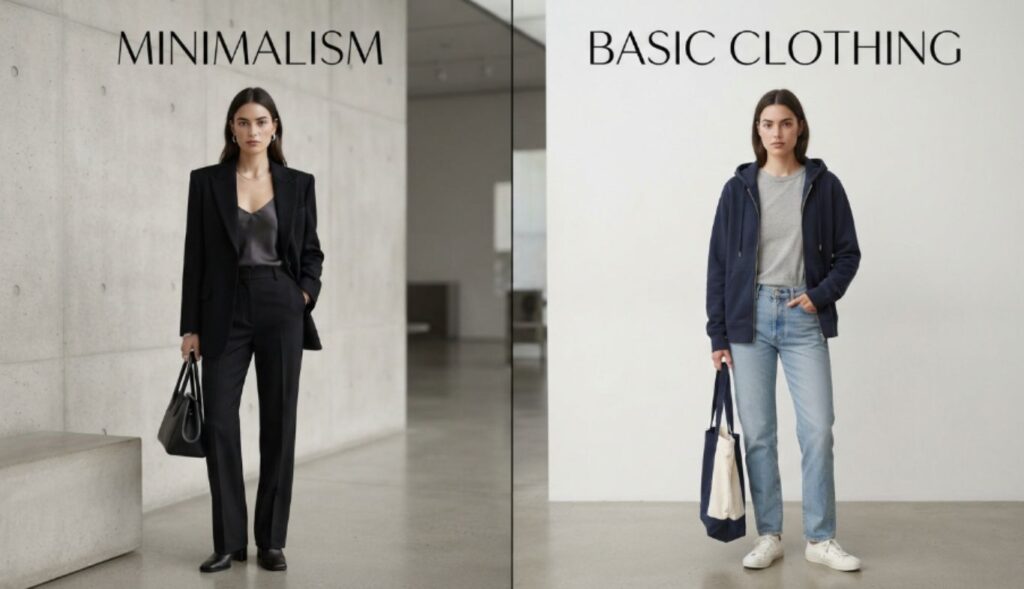
Minimalist fashion and basic clothing aren’t exactly the same. A basic garment is usually simple and practical. A minimalist garment takes that simplicity further by considering proportion, construction, fabric, color, and overall wardrobe compatibility.
Think of a plain black T-shirt. It’s a basic. Now imagine a black T-shirt made from a carefully selected fabric, featuring a structured neckline, balanced sleeve length, and a slightly refined silhouette designed to pair with multiple outfits.
That’s minimalist design. In other words, minimalism is less about how plain something looks and more about how intentionally it is designed and used.
1.3 Why Minimalist Fashion Is Popular
Modern lifestyles have helped minimalist fashion grow. People often want clothing that can transition between work, travel, social occasions, and everyday activities. They also increasingly care about value and longevity.
A smaller wardrobe can provide several practical benefits:
- Easier outfit planning
- Less closet clutter
- More outfit combinations
- Fewer impulse purchases
- Better understanding of personal style
- Potentially lower long-term spending
Minimalism also pairs naturally with capsule wardrobes. A capsule wardrobe contains a carefully selected number of pieces that complement one another. The concept has become especially useful for people who want a polished appearance without constantly following fashion trends.
2. 11 Minimalist Clothing Brands Worth Knowing
There isn’t one perfect minimalist clothing brand for everyone. The best choice depends on your budget, preferred fit, lifestyle, location, and priorities. Still, several brands are well known for clean, understated aesthetics and versatile wardrobe pieces.
2.1 Premium Minimalist Brands
Premium labels can be appealing when fabric, construction, and refined design are priorities.
COS is widely associated with contemporary, architectural silhouettes and understated styling. Its collections often feature interesting proportions while maintaining a clean overall appearance.
ARKET focuses on modern wardrobe staples and practical everyday clothing. Its aesthetic is restrained and easy to incorporate into a capsule wardrobe.
Lemaire represents a more luxurious interpretation of minimalism. Relaxed tailoring, muted colors, fluid shapes, and sophisticated layering are central to its visual identity.
Totême is another notable name for refined, Scandinavian-inspired clothing. Its collections often emphasize polished basics, neutral shades, and elegant silhouettes.
2.2 Affordable Minimalist Brands
Minimalist fashion doesn’t require a luxury budget.
Uniqlo is particularly useful for wardrobe foundations. Its simple T-shirts, shirts, knitwear, trousers, outerwear, and layering pieces can form the foundation of many capsule wardrobes.
Muji also has a strong reputation for understated clothing, natural-looking colors, functional details, and relaxed everyday designs. When shopping at a lower price point, pay attention to fabric composition, stitching, fit, and durability rather than judging a garment solely by its appearance.
2.3 Sustainable Minimalist Brands
Sustainability and minimalism often overlap because both can encourage more intentional consumption. Brands such as Everlane have built their identity around modern essentials and straightforward design. Patagonia, while more strongly associated with outdoor clothing, also demonstrates how durable garments can support a less disposable approach to fashion.
When evaluating sustainability claims, look beyond marketing language. Consider:
- Fiber composition
- Product durability
- Repair options
- Production information
- Packaging
- Certifications
- Brand transparency
For broader information about sustainable fashion and responsible consumption, you can also explore resources from UNEP.
2.4 A Quick Brand Comparison
| Brand | General Style | Best For |
|---|---|---|
| COS | Modern and architectural | Contemporary wardrobes |
| ARKET | Scandinavian-inspired | Everyday essentials |
| Lemaire | Refined and relaxed | Luxury minimalism |
| Totême | Elegant and polished | Elevated basics |
| Uniqlo | Practical and versatile | Affordable essentials |
| Muji | Simple and functional | Casual minimalism |
| Everlane | Modern essentials | Everyday basics |
| Patagonia | Functional and durable | Outdoor lifestyles |
| Studio Nicholson | Relaxed and structured | Contemporary silhouettes |
| A.P.C. | French and understated | Casual classics |
| Jil Sander | High-end and refined | Luxury minimalist style |
Brand availability and product ranges can vary by country and season, so it’s worth checking current collections before purchasing.
3. How to Choose the Right Minimalist Clothing Brand
Choosing between minimalist clothing brands isn’t simply about finding the brand with the cleanest website or most attractive Instagram feed. The better approach is to evaluate the actual clothing.
3.1 Check Fabric Quality
Fabric has a major effect on comfort, appearance, and longevity. Cotton is versatile and breathable. Linen works well in warm weather. Wool provides warmth and natural structure. Cashmere can feel exceptionally soft, although it generally requires more careful handling.
For everyday clothing, examine the fabric weight and construction. A very thin T-shirt may look excellent initially but lose its shape after repeated washing. A slightly heavier cotton shirt might cost more but remain wearable for much longer. Also check washing instructions. A garment that requires expensive professional care after every few wears may not be practical for your lifestyle.
3.2 Evaluate Fit
Fit can make a simple outfit look exceptional. Minimalist clothing depends heavily on silhouette because there are fewer decorative elements to distract from proportion.
Look at:
- Shoulder placement
- Sleeve length
- Trouser rise
- Leg width
- Jacket length
- Overall balance
Don’t automatically assume oversized clothing is more minimalist. A clean, well-fitted garment can be just as minimalist as a relaxed one. The right fit is the one that complements your body, lifestyle, and personal taste.
3.3 Consider Cost Per Wear
Price alone doesn’t tell you whether a garment is valuable. Suppose you purchase a $30 shirt and wear it twice. Its approximate cost per wear is $15. Now imagine a $90 shirt that you wear 45 times. Its cost per wear is only $2. This is why minimalist shopping often works best when you consider longevity.
Before buying, ask: Will I realistically wear this item at least 20 times? If the answer is no, you may be looking at an impulse purchase rather than a wardrobe investment.
3.4 Think About Your Existing Wardrobe
A beautiful garment isn’t useful if it doesn’t work with anything you already own. Before purchasing, imagine at least three outfits using the piece.
For example:
- Cream sweater + black trousers
- Cream sweater + blue denim
- Cream sweater + beige trousers
If you can immediately create several combinations, the garment has strong wardrobe potential.
4. Best Minimalist Wardrobe Essentials
A minimalist wardrobe doesn’t need dozens of items. A carefully selected collection can provide plenty of variety.
4.1 Neutral Tops
Start with dependable tops.
Useful options include:
- White T-shirt
- Black T-shirt
- Neutral long-sleeve shirt
- Oxford shirt
- Lightweight knit
- Simple polo
- Neutral blouse
Choose colors that work naturally with your trousers and outerwear. You don’t need every neutral color. Pick two or three dominant shades and build around them.
4.2 Trousers and Denim
Bottoms establish the foundation of an outfit.
A practical minimalist wardrobe might include:
- Dark denim
- Straight-leg or relaxed trousers
- Black trousers
- Lightweight summer trousers
- Optional tailored trousers
The exact selection depends on your lifestyle. If you work in a formal office, tailoring may be more important. If you work remotely, comfortable trousers and denim might provide more value.
4.3 Outerwear
Outerwear often has a major visual impact, making it worth choosing carefully.
A minimalist outerwear collection could include:
- Wool coat
- Lightweight jacket
- Simple blazer
- Trench coat
- Overshirt
- Weather-resistant jacket
Choose silhouettes that complement the rest of your wardrobe. A neutral coat can transform a basic outfit without adding unnecessary complexity.
4.4 Footwear
Shoes should also support the minimalist approach.
Common choices include:
- Clean white sneakers
- Black sneakers
- Loafers
- Simple boots
- Minimal sandals
You don’t need every type. Select shoes based on your daily activities.
5. How to Build a Minimalist Wardrobe
Building a minimalist wardrobe is easier when you don’t try to replace everything at once. Start slowly.
5.1 Start With a Color Palette
Pick a small group of colors.
A classic palette might use:
- Black
- White
- Gray
- Navy
- Beige
You can then add one or two accent colors. The purpose isn’t to eliminate color. It’s to make your wardrobe easier to coordinate. For example, olive green can work beautifully with beige, cream, black, navy, and denim.
5.2 Buy Fewer, Better Pieces
Before buying something new, ask yourself five questions:
- Does it fit properly?
- Is the fabric suitable?
- Can I style it several ways?
- Does it suit my lifestyle?
- Would I buy it if it weren’t on sale?
That last question is surprisingly useful. Sales can create the illusion of value. A $100 garment marked down to $50 isn’t a bargain if you never wear it.
5.3 Avoid Common Mistakes
One common mistake is confusing minimalism with owning as little as possible. You don’t need to own only ten pieces. If you genuinely need several shirts, jackets, or pairs of trousers, that’s perfectly fine. Minimalism should make your life easier rather than creating unnecessary restrictions.
Another mistake is buying only neutral colors. A minimalist wardrobe can absolutely include burgundy, forest green, pale blue, rust, or other shades. The important thing is that the colors work together.
Finally, don’t sacrifice comfort for appearance. Clothing that looks great but feels uncomfortable will probably spend most of its life sitting in your closet.
6. Minimalist Fashion for Different Lifestyles
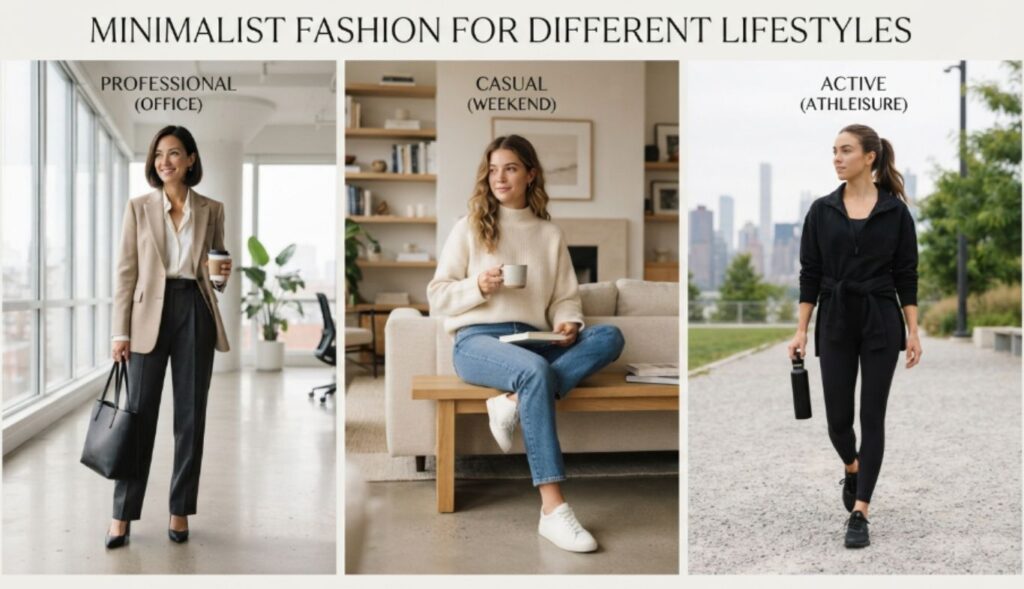
Minimalist clothing works particularly well because it can adapt to different routines.
For Office Wear
Choose structured trousers, button-down shirts, fine knitwear, loafers, and simple jackets. A neutral blazer can instantly make a casual outfit more professional.
For Casual Wear
Combine T-shirts, denim, relaxed trousers, sneakers, and overshirts. The trick is to focus on fit and fabric rather than adding excessive accessories.
For Travel
Travel wardrobes benefit enormously from minimalism. Choose lightweight, wrinkle-resistant, versatile pieces that can be layered.
A simple travel capsule might include:
- Three tops
- Two trousers
- One lightweight jacket
- One sweater
- Two pairs of shoes
- Minimal accessories
This can provide numerous combinations without filling your suitcase.
7. How to Style Minimalist Clothing
Minimalist outfits become more interesting when you pay attention to layering, texture, and proportion.
7.1 Use Layering
Layering adds depth without requiring bold patterns.
Try: T-shirt + overshirt + trousers
or: Shirt + knit sweater + tailored coat Each layer should serve a purpose.
7.2 Mix Textures
If your outfit uses similar colors, texture can prevent it from looking flat.
Combine:
- Cotton
- Wool
- Linen
- Denim
- Suede
- Leather
- Knitwear
For example, a cream knit sweater with dark denim and leather shoes can look sophisticated without requiring bright colors.
7.3 Pay Attention to Proportion
Proportion is one of the most important elements in minimalist styling. If you wear a loose top, a more streamlined trouser can create balance. Alternatively, wide trousers can work well with a shorter or more structured jacket. There are no universal rules. The goal is to create visual balance.
7.4 Keep Accessories Intentional
Accessories don’t need to disappear.
A minimalist outfit can include:
- A simple watch
- Leather belt
- Structured bag
- Small jewelry
- Sunglasses
- Scarf
Choose accessories that add function or character rather than visual clutter.
8. Minimalist Clothing Brands: Shopping Tips for Better Value
Smart shopping is about more than finding a famous label.
Check the Return Policy
Even excellent minimalist brands can have inconsistent sizing. A clear return policy gives you room to test fit.
Read the Care Label
A garment that requires delicate maintenance may not be suitable for everyday use.
Examine Stitching
Look closely at seams, hems, buttons, zippers, and collars.
Avoid Trend Traps
Minimalist fashion can still become trendy. Don’t purchase an item simply because it’s currently popular. Ask whether you’d still want it next year.
Build Slowly
You don’t need to create a perfect capsule wardrobe in one weekend. Buy one excellent piece, wear it, evaluate it, and identify what is actually missing. That’s a much more practical approach.
Frequently Asked Questions
What are the best minimalist clothing brands?
The best brand depends on your budget and style. COS, ARKET, Uniqlo, Muji, Everlane, Totême, Lemaire, and other understated labels can be useful starting points.
Are minimalist clothing brands expensive?
Not necessarily. Minimalist fashion exists at almost every price level. Affordable brands can provide excellent basics, while premium labels may offer more specialized fabrics and construction.
What colors are best for a minimalist wardrobe?
Black, white, gray, navy, beige, cream, brown, and muted earth tones are popular because they combine easily. However, you can add accent colors that suit your personality.
How many clothes should a minimalist own?
There is no universal number. The right wardrobe size depends on your work, climate, lifestyle, laundry routine, and personal preferences.
Is minimalist fashion sustainable?
Minimalism can encourage more intentional consumption, but simply buying minimalist-looking clothing doesn’t automatically make a wardrobe sustainable. Materials, production practices, durability, repairability, and garment lifespan all matter.
Can minimalist fashion be colorful?
Absolutely. Minimalism is primarily about simplicity and intentional design, not eliminating color. A carefully selected accent color can add personality without overwhelming an outfit.
Is minimalist clothing good for work?
Yes. Clean shirts, tailored trousers, simple knitwear, structured jackets, and understated shoes can create polished professional outfits.
How can I start a minimalist wardrobe on a budget?
Begin with versatile essentials rather than replacing your entire closet. Buy pieces that work with several existing outfits and prioritize fit, durability, and frequent wear.
Are minimalist clothes suitable for travel?
Yes. Their neutral colors and versatile designs make them especially useful for packing light. Select lightweight pieces that can be layered and combined easily.
Conclusion
The best Minimalist Clothing Brands aren’t simply the ones with the fewest details. They’re the brands that help you create a wardrobe filled with clothing you genuinely enjoy wearing. Minimalist fashion works because it focuses on versatility, quality, simplicity, and intentional choices. You don’t need to copy someone else’s capsule wardrobe or limit yourself to a specific number of pieces. Instead, identify what you actually wear and build from there. Start with dependable essentials. Choose colors that coordinate naturally. Pay attention to fabric and fit. Think about cost per wear. Most importantly, avoid buying clothing simply because it’s trendy or discounted.
A successful minimalist wardrobe should make getting dressed easier, not more restrictive. Whether you prefer affordable everyday basics or luxury designer pieces, the same principle applies: buy thoughtfully, wear often, and choose clothing that fits your real life. When your wardrobe works together, style becomes much simpler—and that’s where minimalist fashion truly shines.