
Old Money Style Fashion trends move fast. One month it’s oversized streetwear, the next it’s hyper-feminine dressing or minimalist luxury. Yet some styles never really disappear. Old Money style belongs firmly in that category.
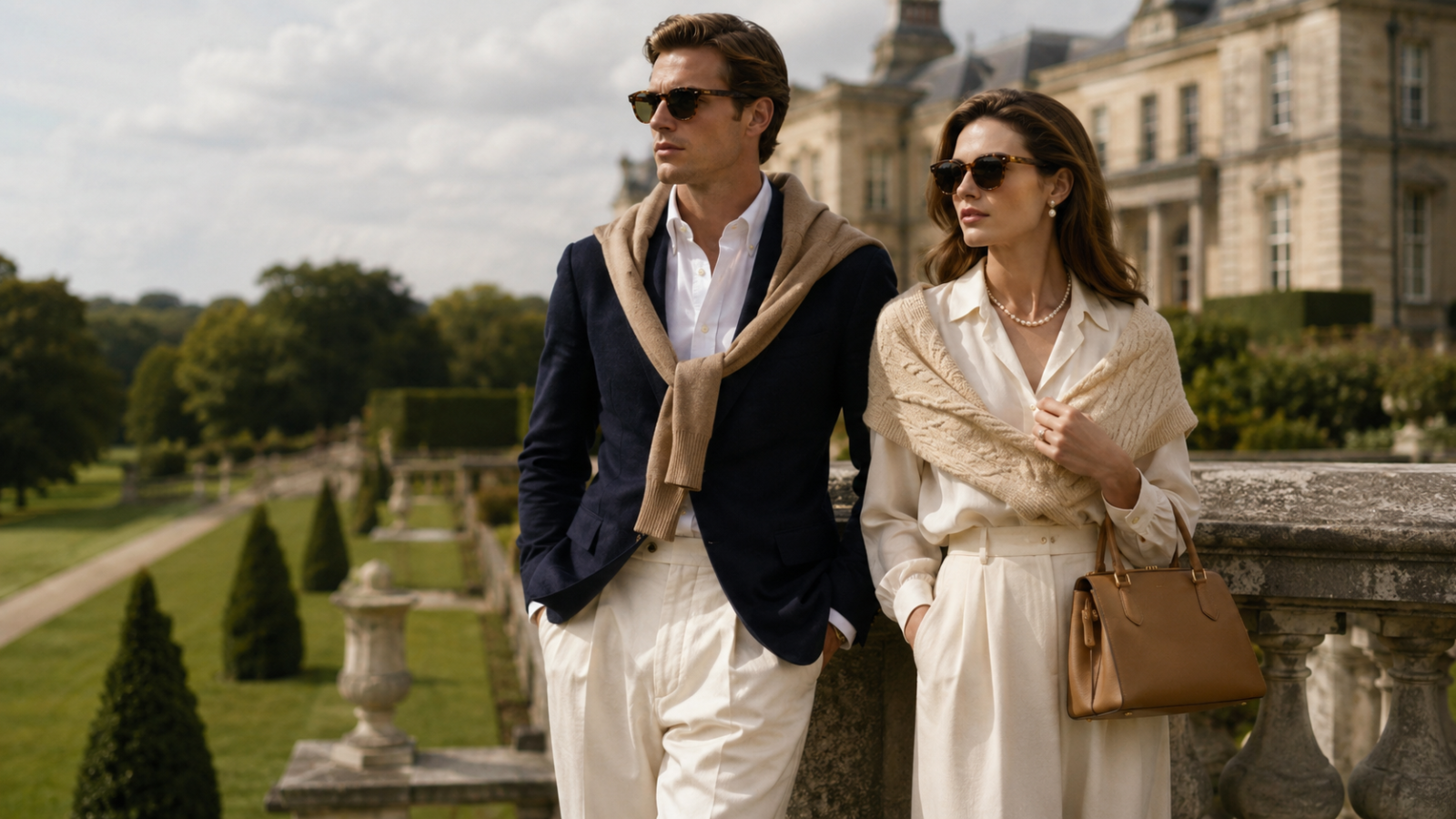
What makes this aesthetic so appealing isn’t wealth itself. It’s the sense of ease. People are drawn to clothing that looks refined without appearing overly calculated. A navy blazer worn for years, a well-tailored pair of wool trousers, a cashmere sweater that softens with age—these pieces communicate confidence quietly.
Social media has certainly helped popularise the Old Money aesthetic, but the style existed long before TikTok mood boards. Its roots lie in generations of families who valued tradition, quality, and discretion. Logos weren’t necessary because craftsmanship spoke for itself.
The good news is that dressing in an Old Money style doesn’t require a trust fund or designer labels. It requires understanding proportion, fabric, fit, and restraint. Once you understand those principles, creating a timeless wardrobe becomes surprisingly achievable.
What Is Old Money Style?
Old Money style refers to a classic, understated approach to dressing associated with established wealth, Ivy League culture, and heritage fashion traditions. The emphasis is always on timelessness rather than trends.
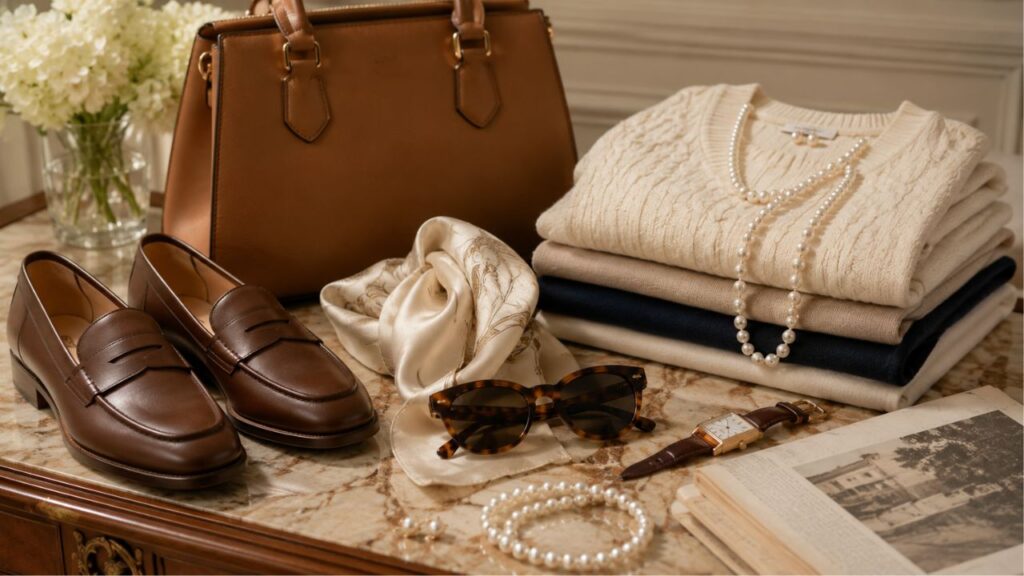
Unlike fashion aesthetics built around constant novelty, Old Money fashion relies on enduring staples. Think Oxford shirts, tailored blazers, loafers, trench coats, pearl jewellery, and structured handbags. Colours remain subtle—navy, cream, camel, white, grey, forest green, and black dominate the palette.
One misconception appears repeatedly online: people assume Old Money style means dressing formally at all times. In reality, genuinely affluent families often dress quite casually. The difference lies in quality and fit. A simple linen shirt and chinos can look more authentically “Old Money” than an outfit covered in luxury logos.
Historically, the aesthetic draws heavily from British aristocratic dressing, East Coast American prep schools, country clubs, sailing culture, and Ivy League universities. Elements of equestrian wear, tennis attire, and classic menswear all influence the look.
Perhaps the defining characteristic is subtlety. The goal isn’t to announce wealth. It’s to appear polished, composed, and entirely comfortable in your clothing.
The Core Principles Behind the Old Money Aesthetic
Many people focus exclusively on buying specific pieces. That’s a mistake. The philosophy matters more than the garments themselves.
First comes quality over quantity. A wardrobe containing twenty exceptional pieces usually looks far more sophisticated than one containing a hundred trend-driven items. Natural fabrics such as wool, linen, cotton, silk, cashmere, and tweed age beautifully and generally last longer.
The second principle is impeccable fit. Expensive clothing that fits poorly rarely looks elegant. Conversely, an affordable blazer altered by a skilled tailor can appear remarkably luxurious. Tailoring is arguably the least discussed yet most transformative element of Old Money fashion.
Another overlooked principle is consistency. The aesthetic works because each item complements the others. Instead of chasing seasonal trends, build around versatile pieces that mix effortlessly.
Consider these wardrobe foundations:
- Tailored blazer
- Oxford shirt
- Cashmere or merino knitwear
- Neutral trousers or chinos
- Dark-wash straight-leg denim
- Trench coat or wool overcoat
- Leather loafers
- Minimal accessories
Finally, avoid obvious status symbols. Excessive branding, flashy embellishments, and trend-heavy silhouettes often undermine the understated elegance central to this aesthetic.
Essential Pieces for an Old Money Wardrobe
A timeless wardrobe doesn’t emerge overnight. It develops gradually through careful choices.
For tops, Oxford shirts remain indispensable. White, pale blue, and striped versions provide endless versatility. Polo shirts also deserve space in the wardrobe, especially during warmer months. Fine-gauge knitwear in cashmere or merino wool adds sophistication without effort.
Outerwear deserves particular attention because it shapes first impressions. A navy blazer is arguably the single most important purchase. It transitions seamlessly between casual and formal settings. A beige trench coat, meanwhile, offers practicality while reinforcing classic style credentials.
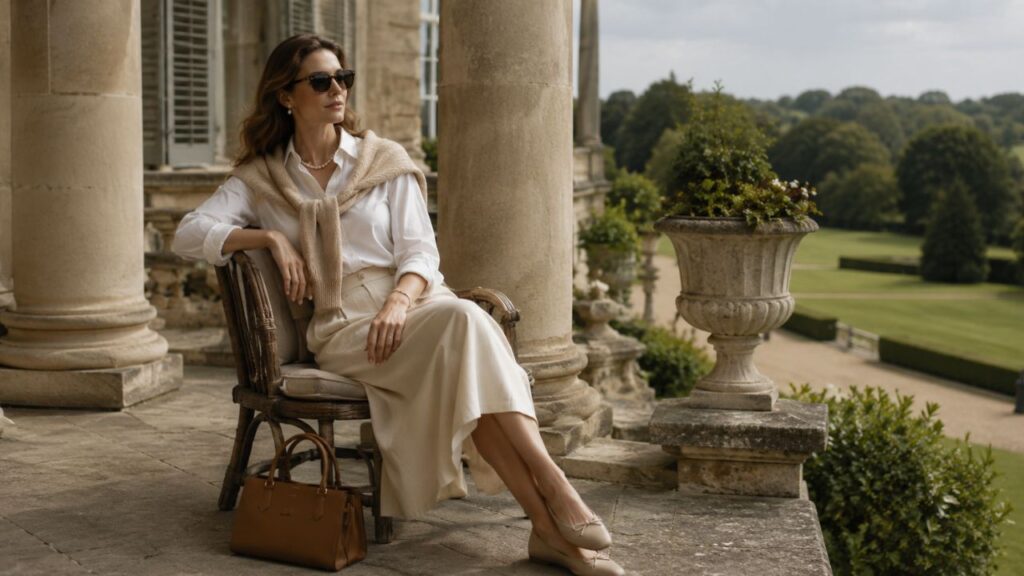
When choosing trousers, prioritise clean lines. Pleated trousers, tailored wool trousers, and well-cut chinos all align naturally with the aesthetic. For women, midi skirts and structured dresses work exceptionally well because they emphasise refinement without appearing overly fashion-forward.
Footwear often separates convincing Old Money outfits from imitations. Cheap synthetic shoes rarely age gracefully. Investing in quality leather loafers, riding boots, ballet flats, or simple leather trainers usually pays dividends over time.
Accessories should remain restrained. Consider:
| Accessory | Best Choice |
|---|---|
| Jewellery | Pearls, gold hoops, signet rings |
| Watches | Classic leather-strap or minimalist designs |
| Bags | Structured leather handbags or totes |
| Sunglasses | Timeless frames rather than trend-led styles |
One practical observation: people pursuing this aesthetic frequently overlook maintenance. Wrinkled linen, worn shoe soles, and pilling knitwear instantly diminish an otherwise elegant outfit. Proper garment care matters.
How to Dress Old Money Style for Men and Women
Although the aesthetic shares common principles across genders, execution differs slightly.
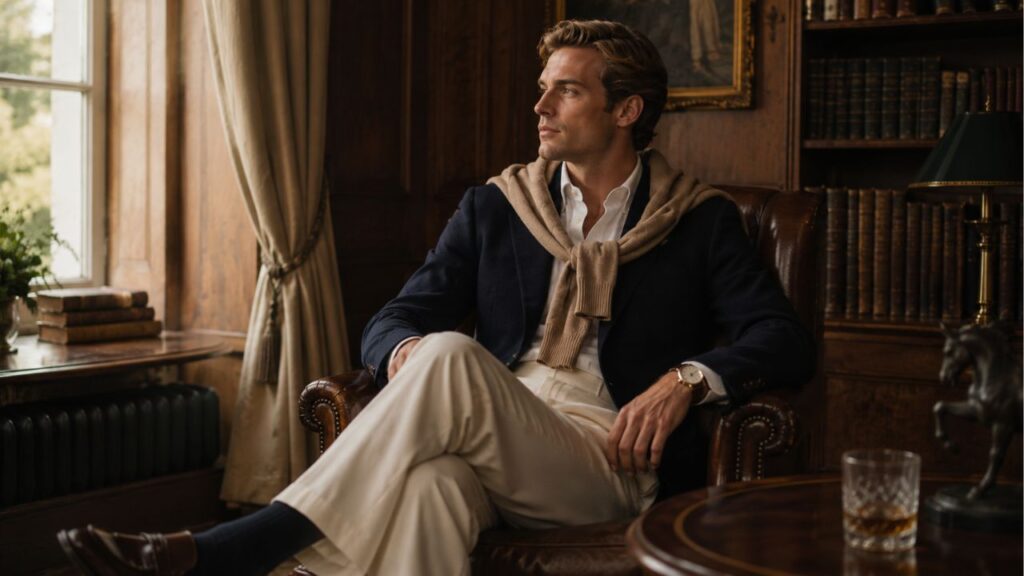
For men, Old Money style typically revolves around tailoring and layering. A classic combination might include a light blue Oxford shirt, beige chinos, a navy blazer, and brown loafers. During colder months, layering a cable-knit sweater beneath a wool coat creates depth without sacrificing sophistication.
Men should avoid overly slim or excessively oversized fits. Traditional proportions tend to age better and appear more authentic. Grooming also plays a significant role. Well-maintained hair, polished shoes, and attention to detail contribute as much as clothing itself.
Women’s Old Money fashion often balances femininity with restraint. Structured silhouettes generally outperform heavily embellished garments. A cashmere sweater paired with tailored trousers and ballet flats frequently looks more refined than an overtly glamorous ensemble.
Colour coordination matters particularly for women embracing this style. Neutral combinations—cream with camel, navy with white, charcoal with beige—create an effortless elegance associated with heritage dressing.
Realistically, very few people maintain exclusively neutral wardrobes. Introducing subtle colour through silk scarves, knitwear, or accessories keeps outfits interesting while preserving sophistication.
Another expert styling tip rarely mentioned by competitors: posture changes everything. Old Money style relies heavily on presence. Standing confidently and moving comfortably in your clothing often communicates refinement more effectively than any designer purchase.
Building an Old Money Capsule Wardrobe on a Budget
The internet often presents the Old Money aesthetic as unattainably expensive. That’s misleading.
Building an elegant wardrobe on a reasonable budget is entirely possible if you approach purchases strategically.
Start with foundational pieces rather than statement items. A perfectly fitted navy blazer will serve you far more frequently than an expensive designer handbag. Prioritise versatility.
Second-hand shopping deserves serious consideration. Vintage stores, consignment boutiques, and online resale platforms frequently offer exceptional wool coats, blazers, and leather accessories at substantial discounts. Older garments often feature superior construction compared with many contemporary fast-fashion alternatives.
A practical approach is to divide purchases into three categories:
- Invest: coats, blazers, leather shoes, handbags.
- Save: cotton shirts, knit basics, seasonal accessories.
- Thrift: vintage tailoring, silk scarves, classic outerwear.
Tailoring remains one of the smartest investments available. Shortening sleeves, adjusting hems, or refining waistlines can completely transform moderately priced garments.
Another common mistake is attempting to buy everything immediately. Authentic personal style develops gradually. Purchasing one or two high-quality items each season usually produces better long-term results than large impulsive shopping hauls.
Remember, Old Money style celebrates longevity. A wardrobe assembled thoughtfully over several years often feels more genuine than one purchased in a single weekend.
Old Money Style vs Quiet Luxury: What’s the Difference?
These terms are frequently used interchangeably, but they’re not identical.
Quiet luxury primarily describes understated luxury consumption. The emphasis remains on premium craftsmanship, often involving high-end brands that avoid conspicuous logos.
Old Money style, by contrast, extends beyond clothing. It reflects heritage, tradition, lifestyle influences, and longstanding sartorial conventions.
Someone wearing a minimalist cashmere set from an expensive contemporary label may embody quiet luxury. Someone wearing a decades-old tweed blazer inherited from family arguably embodies Old Money style.
Preppy fashion also overlaps considerably with the aesthetic. However, traditional preppy style often incorporates brighter colours, collegiate motifs, and playful details. Old Money dressing tends to appear more restrained and mature.
Understanding these distinctions helps prevent a common styling error: confusing understated elegance with bland minimalism. The best Old Money outfits possess personality, history, and character while remaining timeless.
Common Mistakes That Undermine the Old Money Look
Many attempts at recreating the aesthetic fail for predictable reasons.
The first is over-branding. Large logos, monograms, and visible designer labels rarely align with traditional Old Money sensibilities.
The second mistake involves prioritising appearance over authenticity. Wearing formal blazers in inappropriate settings or dressing too rigidly can make outfits appear costume-like.
Poor fabric choices present another issue. Synthetic materials often lack the texture and drape associated with heritage clothing. Natural fibres generally perform better.
Finally, avoid chasing every microtrend circulating on social media. The enduring appeal of Old Money style comes precisely from its resistance to trends.
Timeless dressing isn’t about looking wealthy. It’s about dressing intentionally, investing wisely, and cultivating a wardrobe that continues serving you year after year.
Frequently Asked Questions
What colours are associated with Old Money style?
Neutral shades dominate the aesthetic, including navy, cream, beige, white, camel, grey, black, and muted earth tones.
Can you achieve Old Money style without luxury brands?
Absolutely. Prioritising fit, fabric quality, and timeless silhouettes matters far more than purchasing designer labels.
What shoes work best for the Old Money aesthetic?
Leather loafers, riding boots, ballet flats, minimal leather trainers, and classic pumps are all excellent choices.
Is Old Money style still fashionable?
Yes. Its popularity continues because timeless clothing rarely goes out of style, regardless of changing fashion trends.
How do I start building an Old Money wardrobe?
Begin with versatile essentials such as a navy blazer, Oxford shirts, tailored trousers, quality knitwear, and classic leather shoes.