

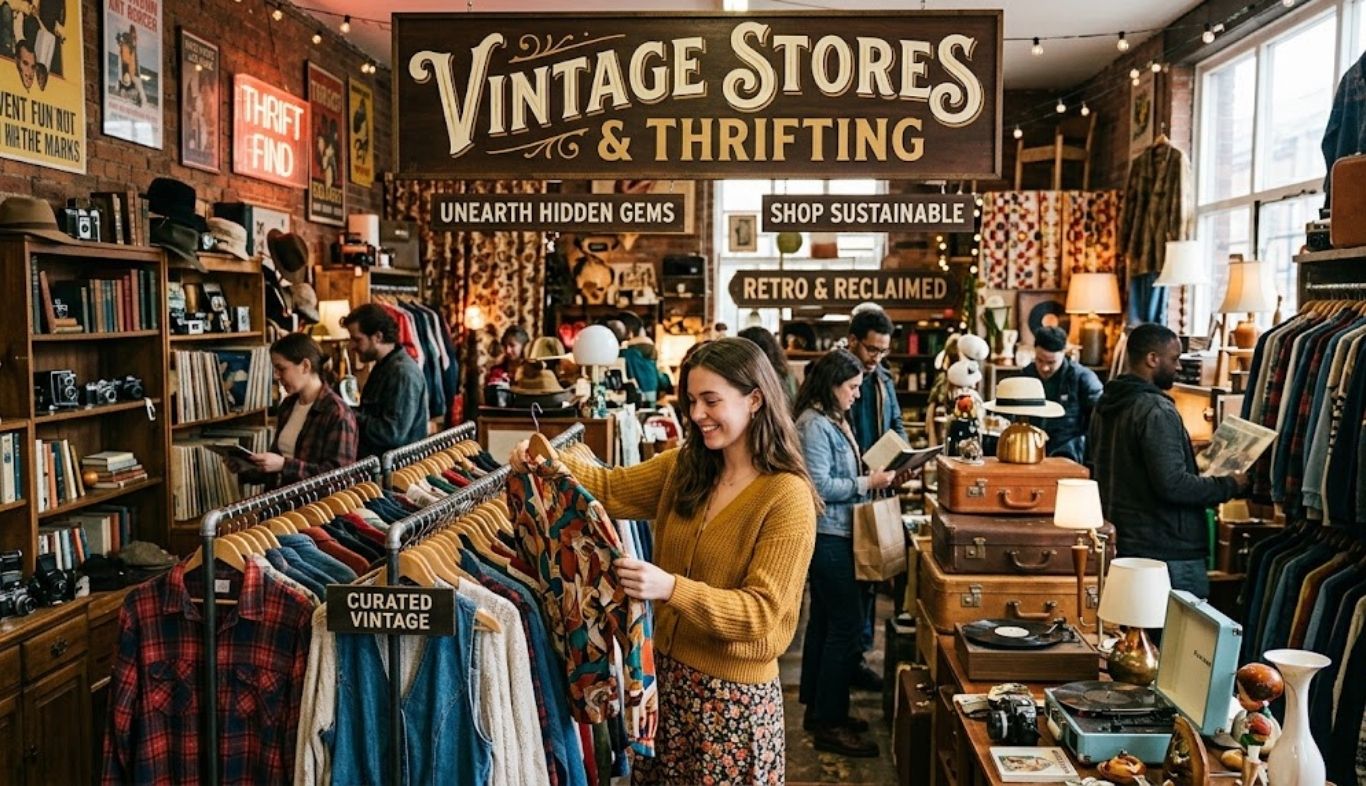
Vintage Stores & Thrifting have become much more than ways to find inexpensive clothing. Today, they offer shoppers an opportunity to discover distinctive pieces, experiment with personal style, save money, and give pre-owned items a second life. Walk into a good vintage shop and you never quite know what you’ll find. One rack might hold a classic leather jacket, while another has a patterned shirt from a completely different fashion era. A thrift store can be just as unpredictable. That’s part of the fun.
Unlike conventional retail shopping, thrifting rewards patience. You may need to browse several racks before finding something special. However, that extra effort can lead to pieces that feel far more personal than mass-produced clothing. There is also a practical reason to consider secondhand fashion. The U.S. Environmental Protection Agency explains that reuse is an important part of sustainable materials management and encourages consumers to consider used items when shopping.
Still, successful thrifting isn’t simply about buying the cheapest item available. The best approach is to understand quality, condition, fit, fabric, styling, and value. With a little knowledge, you can turn an ordinary thrift-store visit into a productive treasure hunt.
1. Understanding Vintage Stores & Thrifting
Before developing a great thrift-shopping strategy, it helps to understand what you’re actually shopping for. Although the words vintage, secondhand, thrift, and pre-owned are sometimes used interchangeably, they don’t always mean exactly the same thing.
What Makes Clothing Vintage?
The word vintage generally refers to an item associated with a previous era. In fashion, vintage clothing is often valued because of its age, construction, design, cultural relevance, or distinctive appearance. Not every old garment is automatically valuable. A piece may be old but poorly made or heavily damaged. On the other hand, an older garment with excellent construction and an attractive design may be highly desirable.
Vintage shoppers often look for:
- Distinctive silhouettes
- Older labels
- Natural fabrics
- Interesting prints
- High-quality stitching
- Original buttons and hardware
- Unique tailoring
- Era-specific designs
- Rare or unusual details
The appeal comes from character. A vintage garment may have small details that are difficult to find in today’s mainstream fashion.
Vintage Stores vs. Thrift Stores
Although both can contain secondhand clothing, their shopping experiences can be quite different.
| Feature | Vintage Store | Thrift Store |
|---|---|---|
| Main focus | Curated older pieces | Broad secondhand goods |
| Selection | Usually more selective | Often much larger |
| Pricing | Can be higher | Usually budget-friendly |
| Organization | Often carefully curated | Varies considerably |
| Historical pieces | More common | May appear randomly |
| Shopping style | Targeted discovery | Treasure hunting |
Vintage stores typically curate their inventory. The owner may select garments based on era, quality, rarity, or current demand. Thrift stores, meanwhile, often receive donations and sell a wide variety of pre-owned goods. This means you can encounter everything from ordinary basics to surprisingly rare fashion pieces.
Neither option is automatically better. If you want a specific vintage aesthetic, a curated store may save time. If you’re looking for bargains and enjoy searching, a thrift store can be more rewarding.
Why Thrifting Has Become Popular
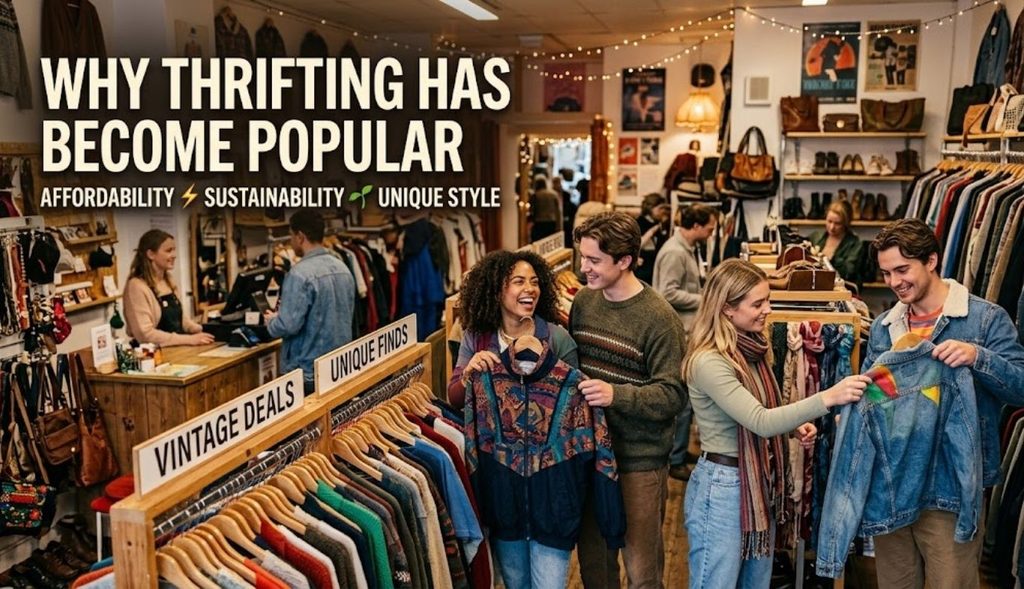
Thrifting has grown because it satisfies several modern shopping priorities at once. First, it can be affordable. Second, it allows people to create more individual outfits. Third, it provides an alternative to buying everything brand new.
Social media has also helped popularize secondhand fashion. Vintage jackets, retro denim, old-school accessories, and distinctive dresses can create visually interesting outfits that stand apart from current mass-market trends.
Another factor is the growing interest in reuse. EPA guidance places source reduction and reuse above recycling in its waste-management hierarchy, highlighting reuse as a preferred strategy for managing materials. That doesn’t mean every secondhand purchase is automatically sustainable. Responsible shopping still matters. Buying ten items you don’t need isn’t necessarily better than buying one high-quality garment you’ll wear for years.
Benefits of Buying Pre-Owned Fashion
There are several reasons shoppers continue returning to vintage and thrift stores.
Affordability: Many secondhand garments cost less than comparable new pieces.
Uniqueness: You can discover styles that aren’t widely available in current collections.
Creativity: Thrifting encourages experimentation because the selection isn’t limited to one season.
Quality discovery: Older garments can sometimes feature sturdy fabrics and construction.
Wardrobe variety: Secondhand shopping can introduce colors, patterns, and silhouettes you might not normally consider.
The key is to shop intentionally. Don’t buy something merely because it’s inexpensive. Ask yourself whether you’d actually wear it.
2. How to Shop Vintage Stores & Thrifting Like a Pro
Good thrifting is partly skill and partly patience. You don’t need to become a fashion historian overnight, but learning a few simple techniques can dramatically improve your results.
Research Before You Visit
Before visiting a vintage or thrift store, check its general reputation and inventory style. Some stores specialize in designer clothing, while others focus on everyday basics, retro fashion, furniture, or mixed merchandise. Research can also help you understand pricing.
If you’re searching for a specific vintage jacket, for example, look at several listings and compare:
- Brand
- Age
- Fabric
- Condition
- Rarity
- Original details
- Current demand
This prevents you from assuming that every old garment is a bargain.
Learn to Inspect Clothing
Never judge a secondhand garment only by its appearance on the hanger. Take a few seconds to inspect it carefully.
Look at the:
- Collar
- Cuffs
- Underarms
- Seams
- Zippers
- Buttons
- Pockets
- Hemline
- Lining
Check for stains, holes, missing buttons, stretched fabric, odors, and broken fasteners. A tiny loose thread isn’t necessarily a problem. A large moth hole in an expensive wool coat is a different story. It’s also useful to hold the garment under good lighting. Some marks are difficult to notice in a dim store.
Understand Vintage Labels
Labels can provide clues about a garment’s age, origin, and manufacturer.
Look for:
- Brand names
- Country-of-origin information
- Care labels
- Fabric composition
- Union or manufacturing labels
- Size formats
- Older typography
However, don’t assume that an unusual label automatically makes an item valuable. Labels are clues rather than guarantees. Construction and condition matter just as much.
Build a Thrift Shopping Checklist
A simple checklist keeps you focused. Before shopping, decide what you’re actually looking for.
For example:
- One neutral jacket
- One pair of relaxed jeans
- A patterned shirt
- A versatile bag
- One statement accessory
This approach helps prevent impulse purchases. You should also know your measurements. Vintage sizing can differ significantly from modern sizing, so don’t rely entirely on the number printed on the label. When possible, compare the garment’s actual measurements with clothing that already fits you well.
Find Hidden Gems
One of the biggest secrets of successful thrifting is looking beyond the obvious sections.
Don’t automatically skip:
- Men’s sections
- Oversized clothing
- Unfashionable colors
- Plain jackets
- Old sweaters
- Accessories
- Belts
- Scarves
- Unusual sizes
An oversized men’s shirt, for example, might become an excellent relaxed outfit when styled correctly. Likewise, a dated blazer may look surprisingly modern when paired with contemporary trousers and simple shoes. The trick is to see the potential rather than the garment exactly as it appears on the rack.
Know When to Walk Away
Sometimes the smartest purchase is no purchase. If an item is damaged beyond reasonable repair, doesn’t fit, or doesn’t work with your existing wardrobe, leave it behind. A low price doesn’t make an unsuitable item valuable.
Ask three questions:
Would I wear this?
Can I style this with at least three outfits?
Is the quality good enough for the price?
If the answer is no to all three, keep searching.
3. Creating a Modern Wardrobe With Vintage Finds
Finding a great vintage piece is only half the process. The real magic happens when you integrate it into your existing wardrobe.
Mixing Vintage With Modern Clothing
You don’t need to dress head-to-toe vintage. In fact, mixing eras can create a more natural and contemporary appearance.
Try combining:
- Vintage blazer + modern jeans
- Retro shirt + minimalist trousers
- Old leather jacket + simple sneakers
- Vintage dress + contemporary handbag
- Classic sweater + modern denim
- Retro accessories + basic neutral clothing
This creates contrast without making the outfit feel like a costume. For example, a bold vintage shirt can become the focal point of an otherwise simple outfit. The modern pieces provide balance.
Choosing Vintage Accessories
Accessories are an easy entry point for beginners.
You can experiment with:
- Leather belts
- Silk scarves
- Sunglasses
- Watches
- Jewelry
- Handbags
- Hats
- Brooches
Accessories are also easier to integrate into a modern wardrobe than highly distinctive garments. A vintage leather bag can add personality to a simple outfit without dominating the entire look.
Caring for Vintage Clothing
Older clothing often requires more thoughtful care. Always check the care label when available. Some vintage fabrics may be delicate or require specialized cleaning. Avoid automatically throwing every vintage item into a washing machine.
For delicate garments, consider:
- Gentle hand washing when appropriate
- Air drying
- Low-friction storage
- Padded hangers
- Breathable garment storage
- Careful stain treatment
Never experiment aggressively with an expensive or fragile piece. If you’re uncertain about a valuable garment, professional cleaning may be the safer option.
Common Thrifting Mistakes
Even experienced shoppers make mistakes. One common problem is buying something simply because it’s cheap. Another is ignoring fit because the garment looks interesting.
Other mistakes include:
- Buying damaged clothing without considering repair costs
- Ignoring fabric quality
- Overlooking odors
- Purchasing too many similar items
- Assuming old automatically means valuable
- Forgetting to check measurements
- Following trends instead of personal style
- Buying items that don’t match your wardrobe
The best thrift shoppers aren’t necessarily the people who buy the most. They’re the people who consistently find items they’ll actually use.
Making Thrifting More Sustainable
Secondhand shopping can support reuse, but responsible habits make the practice more meaningful. Start by buying fewer, better items. Choose pieces that you’ll wear repeatedly rather than collecting clothing for the sake of novelty. Repairing clothing can also extend its useful life. The EPA recommends considering repair and reuse before disposal and notes that buying used items can help reduce waste.
When you’re finished with clothing, don’t automatically throw it away. If it’s still wearable, consider donating, selling, gifting, or otherwise reusing it. For damaged textiles, check whether local organizations or retailers accept them for recycling, since acceptance policies vary. For more information about textiles, reuse, and waste management, the U.S. Environmental Protection Agency’s textile resources provide useful background information. The bigger goal is simple: keep useful clothing in use for as long as possible.
4. Smart Strategies for Better Vintage Shopping
Once you’ve mastered the basics, you can make your shopping trips even more efficient.
Shop With a Personal Style in Mind
Before searching for vintage pieces, identify the style you actually enjoy.
You might prefer:
- Minimalist vintage
- Classic Americana
- Retro sportswear
- 1970s-inspired fashion
- 1980s silhouettes
- 1990s casualwear
- Romantic vintage
- Workwear
- Preppy classics
Having a style direction makes it easier to recognize useful pieces. Otherwise, every unusual garment may look tempting.
Focus on Fabric
Fabric is one of the best clues to quality.
Look for materials such as:
- Wool
- Cotton
- Linen
- Silk
- Leather
- Denim
- Cashmere
But remember that fabric alone doesn’t determine quality. Construction, condition, and fit are equally important. Check whether the material feels appropriate for the garment and whether it has been damaged by age or poor storage.
Check Construction Quality
Turn the garment inside out when possible. Look at the seams and finishing.
Good construction may include:
- Even stitching
- Secure seams
- Reinforced stress points
- Quality buttons
- Strong zippers
- Proper lining
These details can help you distinguish a genuinely well-made garment from something that simply looks interesting.
Think About Cost Per Wear
A $40 jacket worn once isn’t necessarily cheaper than a $70 jacket worn for years. Cost per wear provides a more useful way to judge value. If you buy a durable vintage coat and wear it 50 times, the purchase may provide excellent value. This mindset also encourages intentional shopping.
Keep a Simple Thrifting Budget
Set a spending limit before entering the store. A budget can be especially helpful when the prices appear low. Small purchases can quickly add up.
Consider dividing your budget into categories:
| Category | Example Budget |
|---|---|
| Clothing | 50% |
| Accessories | 20% |
| Statement pieces | 20% |
| Repairs or alterations | 10% |
You can adjust these percentages based on your needs.
Don’t Ignore Alterations
A good tailor can transform a nearly perfect secondhand garment.
Simple alterations might include:
- Shortening sleeves
- Adjusting hems
- Taking in the waist
- Changing buttons
- Repairing seams
- Adjusting trouser length
However, calculate the alteration cost before buying. A $15 garment that requires $50 of repairs may no longer be a bargain.
5. The Future of Vintage Stores & Thrifting
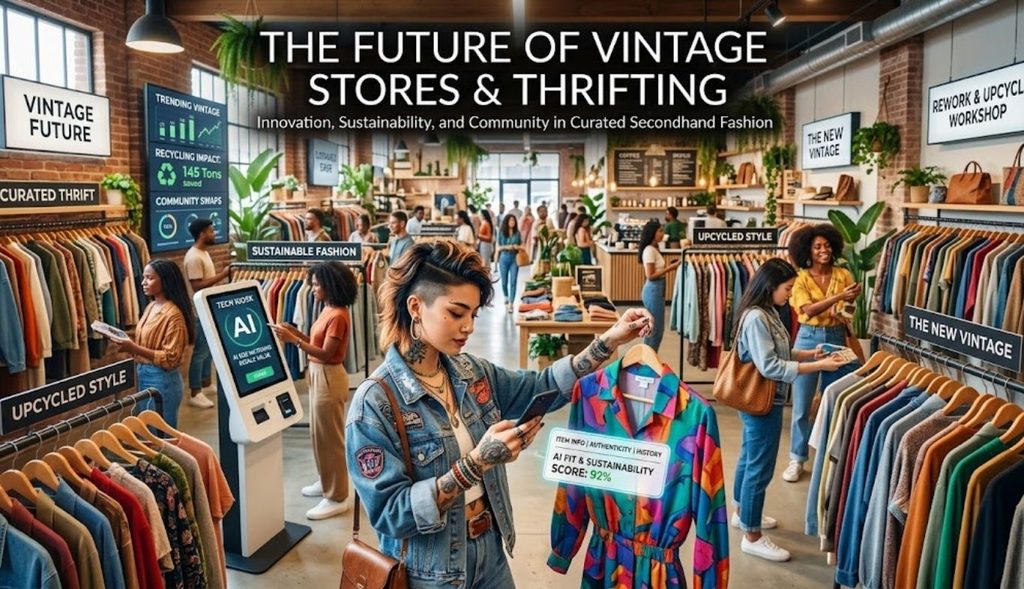
The appeal of secondhand fashion is likely to remain strong because it combines creativity, value, and reuse. Modern shoppers are increasingly interested in how products are made, used, repaired, and eventually discarded. The EPA’s sustainable-materials guidance emphasizes considering a product across its entire life cycle, including use, reuse, maintenance, and end-of-life management.
That broader perspective changes the way we think about clothing. Instead of viewing a garment as something that has one owner and one short lifespan, we can see it as an item that may move through several stages of use.
A vintage jacket might have been purchased decades ago, worn by multiple people, repaired, resold, and eventually become a signature piece in another person’s wardrobe. That’s part of what makes secondhand fashion fascinating.
Online and Offline Thrifting
Physical stores remain popular because of the discovery experience. You can touch fabrics, inspect construction, and try things on. Online resale platforms offer convenience and access to a much larger selection. Each method has advantages.
| Shopping Method | Main Advantage | Main Challenge |
|---|---|---|
| Physical thrift store | Discovery | Time required |
| Vintage boutique | Curated selection | Higher prices |
| Online resale | Huge selection | Can’t always inspect physically |
| Flea market | Bargaining and variety | Quality varies |
| Consignment store | More curated goods | Often more expensive |
A smart shopper can use several methods rather than relying on only one.
Building a Long-Lasting Wardrobe
Ultimately, the goal isn’t to own the most vintage clothing. It’s to build a wardrobe that reflects your personality and works for your lifestyle.
Choose garments that:
- Fit comfortably
- Match your existing pieces
- Have useful colors
- Can be worn repeatedly
- Offer good construction
- Make you feel confident
When you shop this way, vintage fashion becomes more than a trend. It becomes a practical approach to personal style.
Frequently Asked Questions
1. What is the difference between vintage stores and thrift stores?
Vintage stores usually specialize in older, curated garments and accessories, while thrift stores typically sell a broader range of donated or pre-owned goods. Vintage stores may have higher prices because the inventory is selected for age, style, quality, or rarity.
2. Is thrifting cheaper than buying new clothes?
Often, yes, although it depends on the store and item. Basic thrift-store clothing can be inexpensive, while rare vintage or designer pieces may cost more than new fast-fashion products.
3. How can I tell if clothing is genuinely vintage?
Check the label, construction, fabric, sizing system, design details, and manufacturing information. However, no single feature proves an item is vintage. When authenticity matters, research the brand and garment more carefully.
4. What should beginners look for when thrifting?
Start with versatile pieces such as jackets, denim, shirts, sweaters, bags, and accessories. Prioritize fit, condition, fabric, and whether the item works with your existing wardrobe.
5. Can vintage clothing be sustainable?
Buying used clothing can support reuse and extend the useful life of garments. However, sustainability depends on shopping habits. Buying unnecessary items simply because they’re secondhand can still lead to overconsumption.
6. Should I buy damaged vintage clothing?
Minor damage can sometimes be repaired, especially when the garment is unique or high quality. Before purchasing, estimate the repair cost and decide whether the finished item will be worth the total investment.
7. How often should I go thrifting?
There’s no ideal schedule. Going once or twice a month can be enough for casual shoppers. If you’re searching for a specific item, visiting more often may increase your chances of finding it.
8. What are the best vintage items to buy?
Classic jackets, denim, leather goods, quality sweaters, distinctive shirts, scarves, and accessories can be excellent choices. The best item depends on your personal style, budget, and wardrobe needs.
9. How do I avoid buying things I don’t need?
Create a shopping list, establish a budget, and ask whether you can create at least three outfits with the item. If you wouldn’t buy it at full consideration simply because it’s cheap, leave it behind.
10. Is vintage clothing worth the higher price?
It can be, especially when the garment offers excellent construction, rarity, historical interest, or a design you genuinely love. Compare condition, quality, authenticity, and expected use before deciding.
Conclusion
Vintage Stores & Thrifting offer a refreshing alternative to ordinary fashion shopping. Instead of choosing from identical seasonal collections, you can search for clothing with character, history, and individuality. The most successful approach is to shop with intention. Learn how to inspect garments, understand labels, recognize quality fabrics, evaluate condition, and consider fit. Most importantly, don’t let a low price convince you to buy something you’ll never wear.
Start small. Look for one excellent jacket, a versatile shirt, a classic pair of jeans, or an interesting accessory. Mix your finds with modern pieces and experiment with different combinations. Thrifting isn’t about finding the most items. It’s about finding the right ones. With patience and practice, every visit can become a creative treasure hunt—and your wardrobe can become more distinctive, practical, and personal along the way.