Japanese street fashion has produced some of the most recognizable youth subcultures in the world. Among them, manba gyaru stands out for its dramatic makeup, bright colors, bold accessories, and unapologetic attitude.
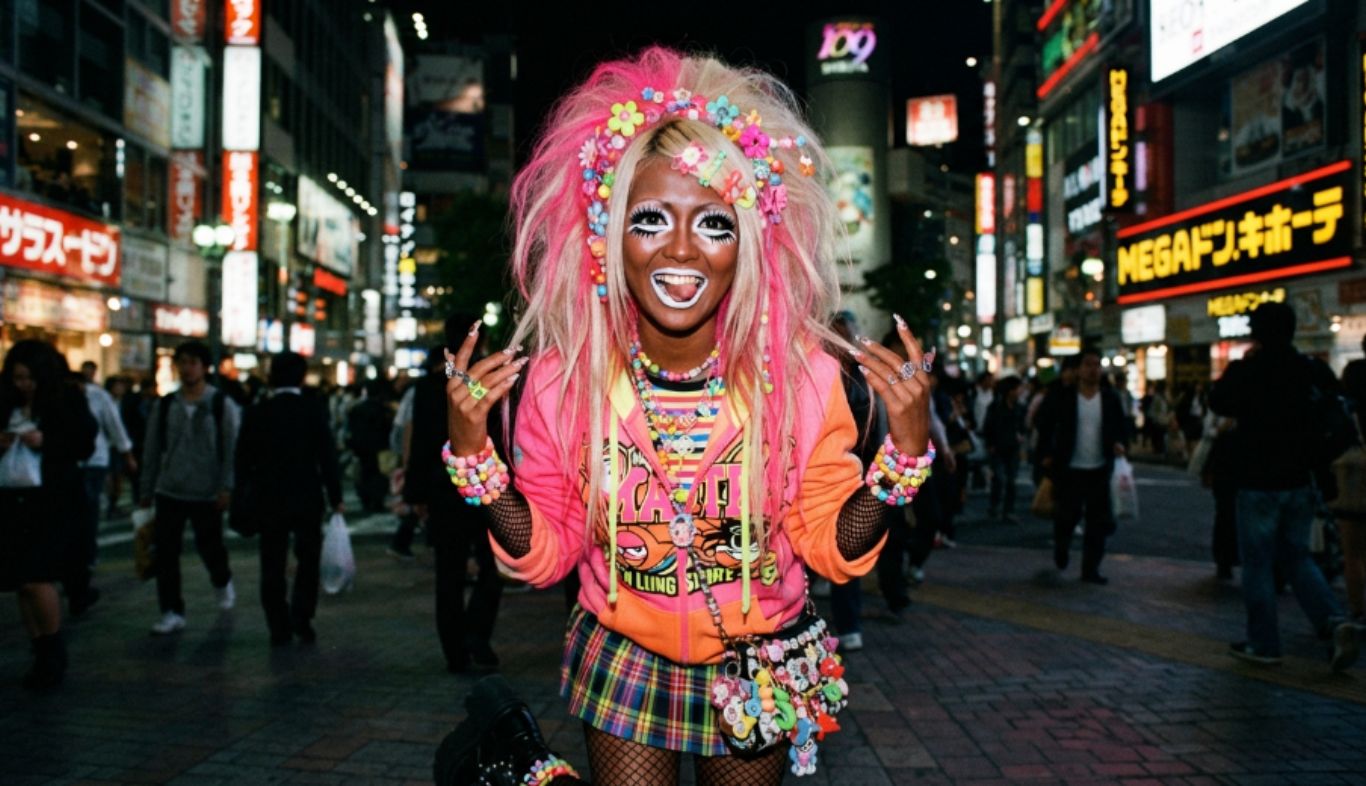
At first glance, the style can look almost theatrical. Brightly colored hair, striking eye makeup, deeply tanned skin, oversized platform shoes, and colorful clothing can create a look that grabs attention immediately. However, there’s much more behind the appearance than simply dressing loudly.
Manba developed from the broader gyaru movement in Japan. Gyaru fashion has traditionally challenged conventional ideas about feminine beauty, particularly through makeup, hair, tanning, clothing, and highly styled appearances. Different branches emerged over time, each with its own visual identity.
Manba became especially recognizable for taking those ideas to an extreme.
The style isn’t simply about copying a particular outfit. Instead, it represents experimentation, confidence, creativity, and belonging to a fashion community. For many enthusiasts, the fun comes from putting together an exaggerated appearance that feels completely different from ordinary everyday fashion.
Today, interest in manba remains strong among people exploring Japanese street style, alternative fashion, cosplay-inspired looks, and historical gyaru culture. Social media has also introduced these older subcultures to new audiences around the world.
This guide explores the origins, beauty techniques, clothing, accessories, cultural background, and modern interpretation of manba gyaru.
What Is Manba Gyaru?
Manba gyaru is an especially bold branch of Japanese gyaru fashion that became associated with dramatic tanning, high-contrast makeup, colorful clothing, elaborate hair, and playful accessories.
The term is often connected with the Japanese word yamanba, referring to a mountain witch or mountain spirit from Japanese folklore. However, fashion historians and enthusiasts generally distinguish the modern street-fashion identity from the traditional folklore figure.
Manba emerged during the late 1990s and early 2000s as an evolution of increasingly extreme gyaru aesthetics.
One of its defining features was contrast.
The skin was often made noticeably darker through tanning, while the area around the eyes and mouth could be emphasized with very light makeup. This created an immediately recognizable visual effect.
Key Features of Manba Gyaru
A typical historical manba-inspired appearance may include:
- Deeply tanned skin
- Very light or white-highlighted makeup
- Dramatic eyeliner
- Large, emphasized eyes
- Bright eyeshadow
- Colorful or bleached hair
- Hair extensions or wigs
- Bright clothing
- Platform shoes
- Decorative accessories
- Colorful nails
- Playful character-inspired items
The overall goal isn’t subtlety.
Instead, manba embraces exaggeration. Every part of the appearance can become an opportunity for creativity.
Manba and the Gyaru Philosophy
To understand manba, it helps to understand gyaru itself.
Gyaru fashion developed as a youth-oriented alternative to more conservative Japanese beauty expectations. Tanned skin, decorated nails, glamorous makeup, dyed hair, and fashionable clothing became tools for expressing individuality.
Manba pushed these elements further.
Rather than aiming for a polished, understated appearance, the style celebrated visual excess. The hair could be enormous, the accessories could be colorful, and the makeup could look intentionally dramatic.
That’s why calling manba simply a “makeup trend” misses the bigger picture.
It was a complete fashion identity.
Why Did the Style Become Popular?
Part of the appeal came from its rebellious nature.
Young fashion enthusiasts could create a visual identity that stood apart from mainstream expectations. The style also worked well in social environments where friends could coordinate outfits, hairstyles, and accessories.
Gyaru communities helped fashion enthusiasts exchange ideas about makeup, clothing, hairstyles, and trends.
The result was a culture where appearance became a creative project.
The History and Evolution of Manba Gyaru
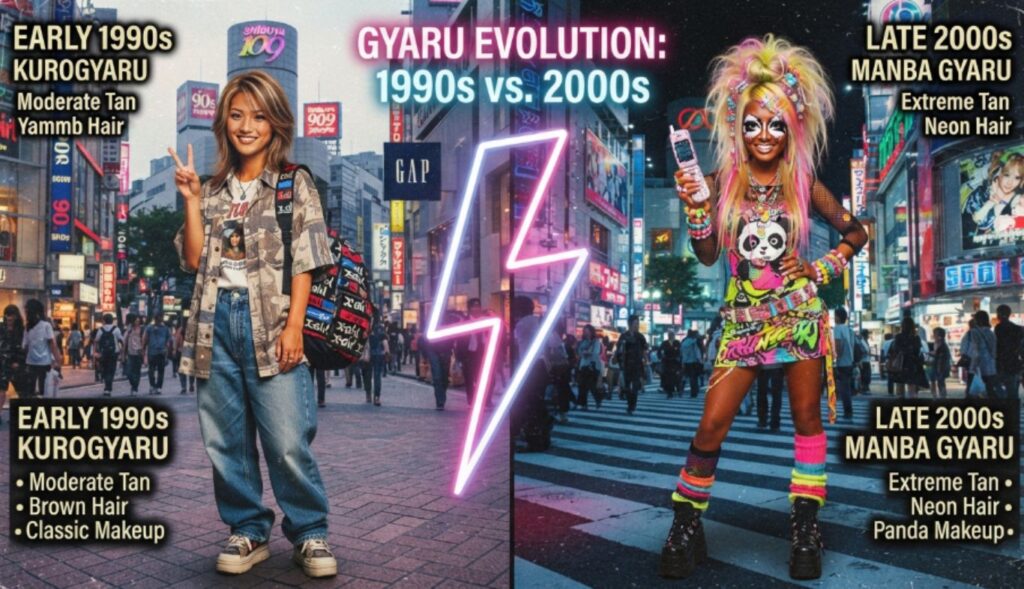
The history of manba is closely connected with the development of Japanese gyaru culture.
During the 1990s, gyaru fashion became increasingly visible in Japanese youth culture. Fashion magazines, shopping districts, clubs, and street photography helped spread different gyaru aesthetics.
Shibuya became particularly important to gyaru culture.
As fashion enthusiasts experimented with tanning, makeup, hair, and clothing, new substyles appeared. Some were relatively sophisticated and glamorous, while others became increasingly extreme.
Manba belonged to the more dramatic end of this spectrum.
From Gyaru to Ganguro
Another important term is ganguro.
Ganguro became associated with dark tans, light or colorful hair, strong makeup, and fashionable clothing. It represented one of the most visible transformations within late-1990s gyaru culture.
Manba developed alongside and beyond these aesthetics.
While terminology can vary depending on the period and community, manba is generally recognized as a particularly colorful and exaggerated style.
The Rise of Extreme Gyaru
During the early 2000s, some gyaru looks became increasingly theatrical.
Hair became more elaborate.
Makeup became more dramatic.
Clothing became more colorful.
Accessories became larger and more playful.
This created an aesthetic that could look almost cartoon-like when compared with mainstream fashion.
That’s precisely what made it memorable.
The Role of Japanese Fashion Media
Fashion magazines played an important role in spreading gyaru trends.
Magazines didn’t merely show clothing. They helped establish complete beauty formulas. Readers could learn how to style their hair, apply makeup, coordinate accessories, and recreate popular looks.
This made it easier for people outside specific social circles to participate.
The visual nature of the style also made it perfect for photography.
A dramatic manba outfit could immediately communicate personality without requiring an explanation.
From Street Style to Global Internet Culture
As Japanese fashion became increasingly visible online, international audiences discovered gyaru substyles.
Blogs, forums, social media accounts, fashion communities, and video platforms helped preserve images of older styles.
This is particularly important for manba because many of its most recognizable trends were strongly associated with a specific period.
Modern enthusiasts can now study archived photographs and recreate historical aesthetics while adding their own interpretation.
Manba as Fashion History
It’s tempting to view manba purely as an unusual fashion trend.
However, it also provides insight into how young people used fashion to negotiate identity, beauty, community, and rebellion.
The style demonstrates that fashion isn’t always about fitting into accepted standards.
Sometimes, the whole point is to stand out.
Manba Gyaru vs. Other Gyaru Styles
One of the easiest ways to understand manba is to compare it with other branches of gyaru.
Although these styles share certain foundations, their visual goals can be very different.
| Gyaru Style | Main Characteristics | Overall Impression |
|---|---|---|
| Kogyaru | School-inspired fashion, loose socks, youthful styling | Playful and youthful |
| Ganguro | Dark tan, light makeup, dyed hair | Bold and rebellious |
| Manba | Extreme makeup, colorful hair, bright clothing | Dramatic and eccentric |
| Yamanba | Highly exaggerated manba aesthetics | Extreme and theatrical |
| Hime Gyaru | Princess-inspired clothing and feminine details | Elegant and romantic |
| Onee Gyaru | Mature silhouettes and sophisticated styling | Glamorous and polished |
| Agejo | Sexy, glamorous, highly feminine appearance | Luxurious and dramatic |
| Roma Gyaru | Romantic and feminine styling | Soft and classic |
The boundaries aren’t always perfectly fixed.
Fashion subcultures evolve, and enthusiasts may combine elements from several styles. Terms can also change over time.
Still, manba is usually easy to recognize because of its extreme visual contrast.
Manba vs. Ganguro
Ganguro is often considered one of the important influences on later extreme gyaru aesthetics.
Both can feature tanning and dramatic makeup, but manba tends to push color and exaggeration much further.
Manba vs. Yamanba
These names are sometimes used interchangeably in casual discussions, but fashion communities may distinguish them.
Yamanba is often associated with an even more exaggerated version of the aesthetic.
In practice, the terminology can depend on historical period, source, and individual community.
Manba vs. Hime Gyaru
Hime gyaru is almost the opposite in visual mood.
Hime styles emphasize:
- Lace
- Bows
- Pastel colors
- Pearls
- Romantic dresses
- Princess-inspired details
- Feminine silhouettes
Manba, by comparison, is much louder and more playful.
Why These Differences Matter
Understanding the differences prevents gyaru from being treated as one single aesthetic.
Gyaru is better understood as a broad fashion culture containing many variations.
Each branch developed its own relationship with beauty, clothing, femininity, and self-expression.
The Signature Manba Gyaru Makeup
Makeup is arguably the most recognizable part of manba gyaru.
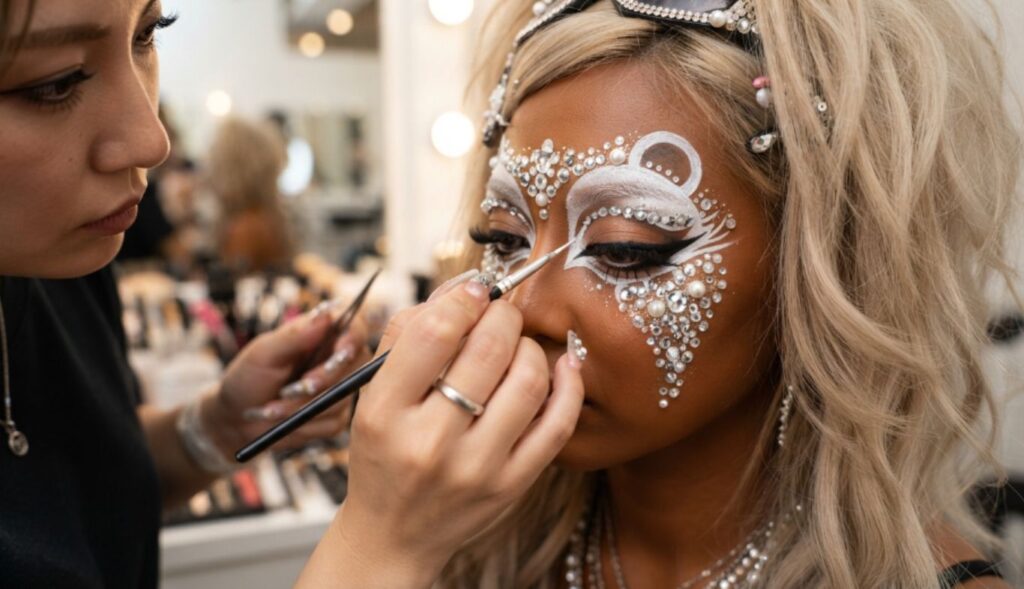
Historical manba makeup often relied on strong contrast. The eyes were made larger and more dramatic, while light-colored makeup was used strategically around the eyes and mouth.
The result could look almost surreal.
Darker Skin and Strong Contrast
Traditional manba styling frequently featured a deep tan.
Historically, tanning was an important part of several gyaru styles. It helped create the dramatic contrast between the skin and the lighter makeup.
Today, however, people recreating historical manba looks don’t need to tan their skin.
A makeup-based interpretation can achieve the visual effect without prolonged UV exposure.
Eye Makeup
Large eyes are central to many gyaru styles.
A manba-inspired eye look may include:
- Bold eyeliner
- Extended outer corners
- Strong lower-lash definition
- Large false eyelashes
- Bright eyeshadow
- White or very light highlights
- Decorative details
The purpose is to exaggerate the natural eye shape.
Instead of aiming for invisible makeup, the style makes makeup obviously visible.
White Makeup Accents
One of the most famous characteristics of manba makeup is the use of light or white makeup around the eyes and sometimes the mouth.
This creates the high-contrast appearance associated with the style.
The placement can vary. Some historical looks feature large graphic shapes, while modern interpretations may use smaller highlights.
Lips
Lips may be intentionally muted to keep attention on the eyes.
Light concealer, pale lipstick, or a soft gloss can be used depending on the desired appearance.
Again, exaggeration is part of the aesthetic.
False Lashes
False eyelashes can dramatically change the shape of the eyes.
Manba-inspired looks often use large, dense lashes to create a doll-like effect.
For beginners, it’s usually easier to start with moderately dramatic lashes rather than immediately choosing the largest available style.
Modern Makeup Adaptation
If you want to recreate manba aesthetics today, you can make the look more wearable.
For example:
- Use bronzer instead of tanning.
- Use bright eyeshadow instead of extreme full-face makeup.
- Use graphic white eyeliner for contrast.
- Choose colorful lashes.
- Add small rhinestones.
- Keep the rest of the face relatively simple.
This approach captures the spirit without requiring a completely historical recreation.
Hair, Wigs, and Colorful Styling
Manba hair is rarely boring.
Bright colors, extensions, curls, volume, and decorative pieces can all become part of the look.
Popular historical interpretations often featured blonde or brightly colored hair. However, there was plenty of experimentation.
Volume Is Important
Large hair creates visual balance with dramatic makeup.
Long extensions can make the hairstyle appear bigger and more theatrical.
Wigs are also useful for people who don’t want to permanently bleach or color their natural hair.
Hair Extensions
Extensions can add:
- Length
- Volume
- Color
- Texture
- Movement
Colorful clip-in extensions are particularly useful for temporary looks.
Popular Color Directions
A manba-inspired hairstyle might use:
- Platinum blonde
- Pink
- Purple
- Blue
- Orange
- Green
- Rainbow combinations
There isn’t one mandatory color.
The key is visual impact.
Decorative Hair Accessories
Hair clips, bows, flowers, stars, beads, and character-inspired accessories can add personality.
The best combinations don’t necessarily follow conventional fashion rules.
In fact, breaking those rules can make the look feel more authentic to the spirit of the style.
6. Manba Gyaru Clothing and Accessories
Clothing completes the transformation.
A manba-inspired outfit often combines bright colors, youthful silhouettes, bold patterns, and playful accessories.
Common Clothing Elements
Possible pieces include:
- Graphic T-shirts
- Bright mini skirts
- Denim
- Colorful shorts
- Crop tops
- Hoodies
- Patterned dresses
- Leg warmers
- Platform shoes
- Decorative jackets
The outfit doesn’t have to be historically exact unless you’re intentionally recreating a specific era.
Platform Shoes
Platform shoes are strongly associated with several gyaru aesthetics.
They add height and create a distinctive silhouette.
Chunky sneakers, platform sandals, boots, and wedges can all work depending on the outfit.
Accessories
Accessories are where the look can become especially playful.
Consider:
- Oversized sunglasses
- Colorful bracelets
- Charm necklaces
- Hair clips
- Decorative bags
- Rings
- Character accessories
- Colorful socks
The trick is coordination without making everything identical.
Nails
Nail art is another important component of gyaru culture.
Manba-inspired nails can include:
- Glitter
- Rhinestones
- Bright colors
- Cartoon motifs
- 3D decorations
- Metallic accents
Long nails can emphasize the dramatic nature of the overall aesthetic.
How to Create a Modern Manba Gyaru Look
You don’t need a complete wardrobe transformation to experiment with manba.
Start small and build the look gradually.
Step 1: Choose Your Color Palette
Select two or three dominant colors.
For example:
- Pink + white + black
- Blue + silver + white
- Purple + pink + yellow
This prevents the outfit from becoming visually chaotic.
Step 2: Build the Makeup
Start with your base makeup.
Then focus on the eyes.
Apply dramatic eyeliner, lashes, bright eyeshadow, and a light accent around the eyes.
If you’re new to graphic makeup, practice before wearing the look outside.
Step 3: Style the Hair
Use extensions or a wig if you want dramatic volume without committing to permanent changes.
Add colorful clips or other decorations.
Step 4: Choose a Statement Outfit
Pick one major clothing piece.
It could be a bright skirt, graphic top, colorful jacket, or unusual pair of shoes.
Then build the rest of the outfit around it.
Step 5: Add Accessories
This is where you can personalize the look.
Choose accessories that communicate your interests and personality.
Step 6: Finish With Nails
You can keep your nails simple or make them another statement feature.
Even a colorful manicure can help connect the makeup and outfit.
Cultural Meaning and Self-Expression
Manba should not be reduced to an exotic costume.
Its historical context matters.
Gyaru culture developed partly through young people’s experimentation with appearance and conventional beauty standards. The deliberately exaggerated appearance of manba can therefore be understood as a form of visual self-expression.
The style challenged ideas about what a fashionable young woman was expected to look like.
Instead of minimizing makeup, it emphasized it.
Instead of hiding accessories, it celebrated them.
Instead of blending in, it stood out.
That attitude remains one of the most interesting aspects of the style.
At the same time, people outside Japan should approach the aesthetic thoughtfully. Understanding the history and terminology helps prevent the fashion from being treated as a joke or caricature.
Learning about Japanese street fashion history is part of appreciating the creativity behind it.
Common Manba Gyaru Mistakes
Creating a dramatic look is fun, but there are several mistakes beginners often make.
Mistake 1: Treating Every Gyaru Style as Manba
Gyaru has many substyles.
Manba is only one part of that broader culture.
Mistake 2: Copying the Makeup Without Understanding It
Simply adding white makeup and dark foundation doesn’t automatically create a complete manba look.
Hair, clothing, accessories, and attitude all contribute.
Mistake 3: Making Everything the Same Color
Manba is colorful, but color coordination still matters.
Use contrast deliberately.
Mistake 4: Ignoring Comfort
Extremely tall platforms or heavy accessories can become uncomfortable quickly.
Choose footwear and clothing that you can actually move in.
Mistake 5: Treating Historical Images as a Strict Rulebook
Fashion evolves.
A modern interpretation doesn’t have to reproduce every detail from the early 2000s.
Instead, understand the original style and then develop your own version.
10. The Modern Influence of Manba Gyaru
Although manba isn’t the dominant mainstream fashion trend it once was, its visual influence continues.
Elements associated with gyaru can be seen in:
- Alternative makeup
- Japanese streetwear
- Decora-inspired styling
- Y2K fashion
- Colorful hair
- Dramatic eyelashes
- Platform footwear
- Maximalist accessories
- Online fashion communities
Social media has also helped revive interest in older Japanese subcultures.
Modern creators can mix historical manba with contemporary beauty products and clothing.
That creates an interesting combination: retro Japanese street fashion with modern styling techniques.
How to Adapt Manba Gyaru for Everyday Fashion
You don’t have to wear an extreme full-face look every day.
A subtle interpretation can still capture the aesthetic.
Try combining:
- Platform sneakers
- Colorful hair clips
- Graphic tops
- Statement sunglasses
- Dramatic eyeliner
- Bright nails
- Layered accessories
For makeup, choose one or two dramatic elements instead of everything at once.
For example, bold lashes and colorful eyeshadow can create a gyaru-inspired appearance without becoming a complete historical recreation.
The beauty of modern fashion is that you can decide how far you want to take the concept.
Seven Bold Secrets Behind Manba Gyaru Style
The easiest way to remember the aesthetic is through seven core ideas.
1. Contrast Creates Impact
Dark and light makeup combinations make the face immediately recognizable.
2. Bigger Can Be Better
Large lashes, voluminous hair, and platform shoes reinforce the exaggerated silhouette.
3. Color Is Essential
Bright colors give the style its playful energy.
4. Accessories Matter
Small details can transform an ordinary outfit into a complete gyaru-inspired look.
5. Hair Is Part of the Outfit
Hair isn’t an afterthought. It helps establish the entire silhouette.
6. Confidence Completes the Look
Manba is an expressive style. Wearing it with hesitation can undermine its playful character.
7. Personalization Keeps It Fresh
The best modern interpretations don’t simply copy someone else. They use the original aesthetic as a starting point for creativity.
Frequently Asked Questions
What does manba gyaru mean?
Manba gyaru refers to an especially bold branch of Japanese gyaru fashion. It is recognized for dramatic makeup, colorful hair, strong visual contrast, youthful clothing, and oversized accessories.
Is manba the same as ganguro?
No. The styles are related, but they aren’t identical. Ganguro is associated with deeply tanned skin, light or colorful hair, and strong makeup, while manba generally represents a more exaggerated and colorful direction within the broader gyaru family.
Is manba gyaru still popular?
The style isn’t as mainstream as it was during its peak, but it continues to influence alternative fashion and has gained renewed interest through social media, Japanese fashion communities, and interest in Y2K-era aesthetics.
Do you need to tan to dress manba?
No. Tanning isn’t necessary. You can recreate the visual style using makeup, bronzer, lighting, colorful clothing, and dramatic eye makeup without intentionally exposing your skin to UV radiation.
What makeup is associated with manba?
Traditional manba makeup can include strong eyeliner, dramatic false lashes, colorful eyeshadow, and light or white accents around the eyes and mouth. Modern interpretations can make these elements more subtle.
What should I wear with manba makeup?
Bright tops, mini skirts, shorts, graphic clothing, platform footwear, colorful accessories, and playful bags can work well. The exact outfit can vary depending on whether you’re recreating historical manba or creating a modern interpretation.
Is manba the same as yamanba?
The terms are closely related and are sometimes used interchangeably, particularly in casual discussions. However, fashion communities and historical sources may use them to describe slightly different degrees or periods of the extreme gyaru aesthetic.
Can anyone wear manba-inspired fashion?
Anyone interested in the fashion can experiment with its styling elements. However, it’s useful to learn about the history of Japanese gyaru culture and avoid treating the style as a caricature of Japanese people.
How can beginners try manba fashion?
Start with one or two elements, such as dramatic eye makeup, colorful hair extensions, platform shoes, or bright accessories. Once you’re comfortable, you can gradually build a more complete look.
Where can I learn more about Japanese street fashion?
For broader background on Japanese fashion and culture, readers can explore reliable cultural and fashion-history resources, including the and its collections and research on fashion.
Conclusion
Manba gyaru is much more than dramatic makeup and colorful clothing.
It represents a fascinating chapter in Japanese street-fashion history. Emerging from the wider gyaru movement, manba pushed tanning, makeup, hair, accessories, and clothing toward a deliberately exaggerated visual language.
Its appeal comes from its refusal to be ordinary.
The style encourages experimentation. It turns makeup into graphic art, hair into a fashion statement, and accessories into expressions of personality.
Even though the original trend belongs strongly to a particular era, its influence hasn’t disappeared. Modern fashion lovers continue to revisit manba through Y2K trends, alternative makeup, colorful streetwear, and social media communities.
If you’re interested in trying the aesthetic today, you don’t have to reproduce every historical detail. Learn the foundations, understand the culture, choose the elements you love, and create a version that feels authentic to you.