Ganguro Japan refers to a distinctive Japanese youth fashion style that became highly visible during the 1990s, particularly in Tokyo. It developed within the broader gyaru fashion subculture and became famous for its dramatic combination of deeply tanned skin, bleached or brightly colored hair, strong eye makeup, pale or white accents around the eyes, platform footwear, and colorful clothing. The word ganguro is commonly associated with the idea of an extremely dark or tanned face. The precise linguistic explanation varies among sources, so it’s better not to treat one literal translation as the entire meaning of the term.
At its height, ganguro represented far more than cosmetics. It was a form of self-presentation. Young women could deliberately choose a look that stood apart from conventional expectations of feminine beauty in Japan. Instead of emphasizing pale skin, naturally dark hair, and understated makeup, ganguro turned contrast into the central design principle.
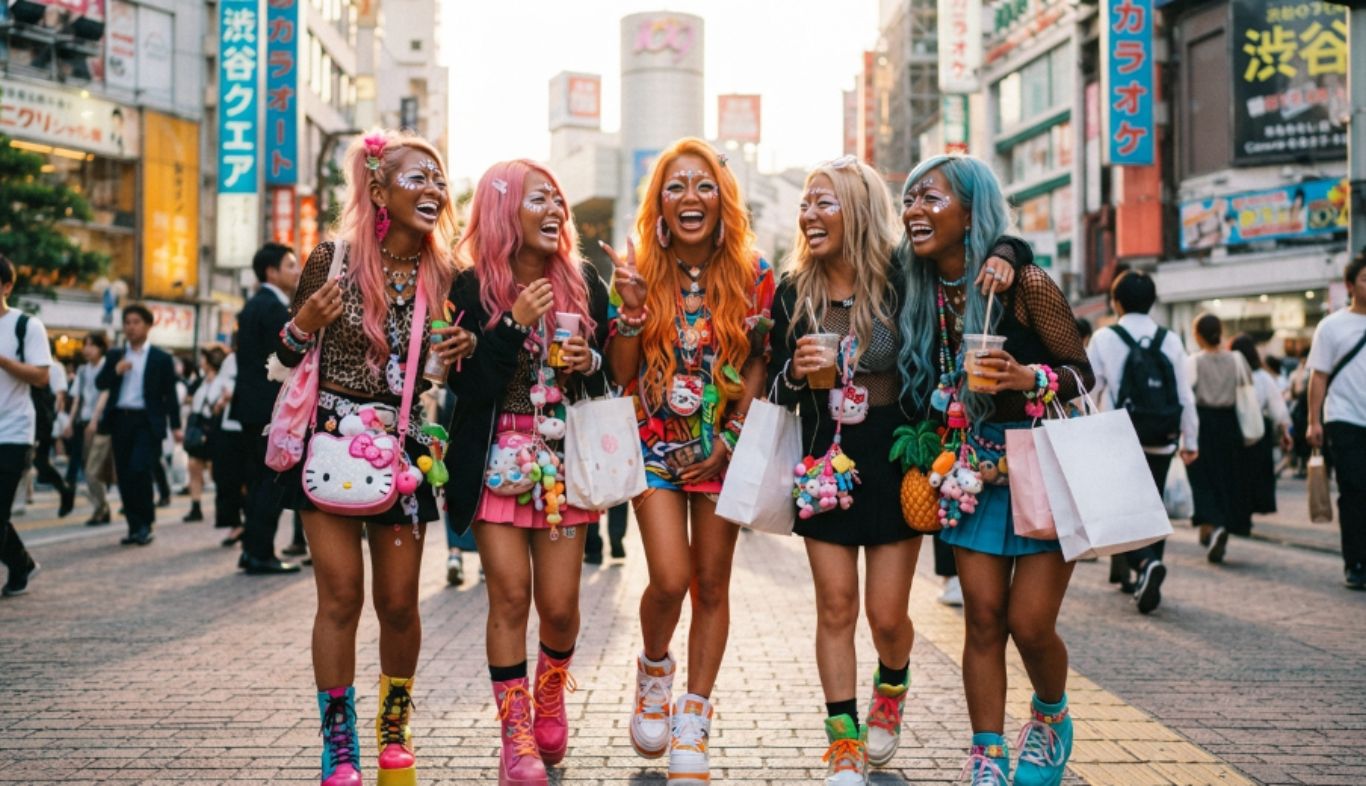
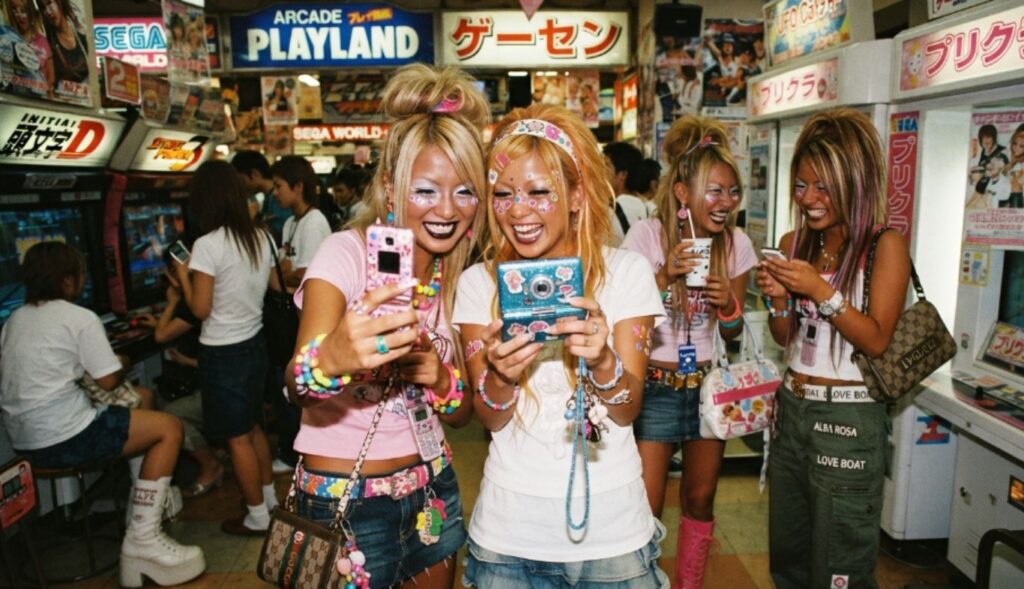
The result was impossible to miss. A typical ganguro-inspired appearance might combine a strong tan with almost-white eye makeup, thick eyeliner, dramatic false eyelashes, bleached hair, a short skirt, a bright top, chunky platform shoes, and numerous accessories. Every element worked together to create visual impact.
Ganguro emerged from the energetic youth culture surrounding Tokyo’s Shibuya district. Shibuya was already a major meeting point for young people, fashion shoppers, music fans, and trendsetters. The area became particularly important to the development of gyaru culture, making it a natural environment for ganguro to flourish. In other words, ganguro wasn’t created in isolation. It grew from a particular moment in Japanese popular culture when young people were experimenting with identity, fashion, media, and social expectations.
When Did Ganguro Become Popular?
The ganguro trend developed during the mid-to-late 1990s and reached its greatest visibility around the end of that decade and the beginning of the 2000s. Sources generally place its strongest period around the late 1990s, although the exact starting point is difficult to define because fashion movements evolve gradually rather than appearing on one specific day.
The style developed from earlier gyaru and kogyaru trends. Young women were already modifying school uniforms, experimenting with hairstyles, using makeup more dramatically, and gathering in popular youth districts. Ganguro pushed those experiments further.
By the late 1990s, the look had become recognizable enough to receive substantial attention from fashion magazines and popular media. The Japanese magazine egg became particularly associated with gyaru culture and helped document the changing styles of young women in the streets of Tokyo. A historical account from Fa-So-La notes that the magazine prominently featured dark tans, golden hair, extravagant makeup, chunky boots, and related trends during 1998 and 1999. That media attention helped turn street fashion into something that could spread rapidly beyond the neighborhoods where it began.
Ganguro and the Gyaru Connection
To understand ganguro japan, you need to understand gyaru first. Gyaru is a Japanese fashion and youth subculture whose name derives from the English word “gal.” It encompasses a wide range of styles rather than one fixed appearance. Over time, numerous substyles developed, including kogyaru, ganguro, yamanba, hime gyaru, and others.
Ganguro was therefore a substyle within the broader gyaru world. Gyaru fashion generally emphasized noticeable hair, expressive makeup, fashionable clothing, and an outgoing attitude. Different eras and substyles changed the details, but the broader idea was that appearance could be actively constructed rather than simply inherited from conventional expectations.
This distinction matters because calling every gyaru “ganguro” would be inaccurate. A person could be gyaru without having the extremely dark tan associated with ganguro.
Think of it this way:
- Gyaru is the larger fashion family.
- Kogyaru became strongly associated with modified schoolgirl fashion.
- Ganguro emphasized dark tanning and dramatic contrast.
- Yamanba/manba pushed the aesthetic into even more exaggerated territory.
The boundaries weren’t always perfectly fixed, either. Fashion communities constantly borrow, adapt, and reinvent ideas. That’s part of what makes youth subcultures so fascinating.
Why Was Shibuya Important?
If you want to understand the physical setting behind ganguro, look toward Shibuya, Tokyo. Shibuya has long been associated with youth culture, shopping, entertainment, nightlife, and street fashion. Japan’s National Tourism Organization describes the district as a center of cutting-edge culture and identifies it as a major hub for youth-oriented trends.
During the 1990s, young women gathered around areas such as Shibuya’s Center Gai and the shopping environment surrounding Shibuya 109. They weren’t simply consumers. They were also trend creators. Street fashion could move incredibly quickly.
A hairstyle seen on one group might appear in a magazine. A magazine could inspire another group in a different city. A popular shop could commercialize the aesthetic. Then the new version could return to the streets in an altered form. This feedback loop helped make Shibuya an important cultural laboratory.
Photography from the period reinforces this picture. The project Shibuya1999, for example, documents how gal culture flourished in Shibuya at the end of the twentieth century, with young women gathering around Center Gai and looking to Shibuya’s fashion stores, staff, models, and musicians for inspiration. Today, visitors won’t necessarily see 1990s ganguro on every corner. The original trend has largely passed. Still, understanding Shibuya’s history helps explain how the movement became so influential.
The Signature Ganguro Fashion Look
Ganguro fashion was deliberately high-impact.
The style often combined several contrasting elements:
| Feature | Typical Ganguro Approach |
|---|---|
| Skin | Deep tan |
| Hair | Blonde, orange, silver, or heavily lightened |
| Makeup | Strong, contrasting, highly visible |
| Eyes | Dark liner with pale or white accents |
| Lips | Often light or pale |
| Clothing | Short skirts, bright colors, beach-inspired pieces |
| Shoes | Platform boots or other chunky footwear |
| Accessories | Multiple bracelets, rings, necklaces, and decorative items |
| Overall effect | Colorful, exaggerated, rebellious |
The visual philosophy was simple: more contrast, more personality, more impact. Platform shoes were especially useful because they changed the silhouette. Accessories added additional layers of visual noise, while bleached hair created a sharp contrast with tanned skin.
Some versions incorporated animal prints, floral motifs, beachwear influences, bright colors, and other elements associated with a youthful summer aesthetic. Of course, there was no single uniform ganguro outfit. Real people mixed pieces according to personal taste, budget, location, and current trends.
That’s an important point when looking at historical fashion: photographs often capture the most extreme examples because those are the people most likely to attract attention.
Ganguro Makeup Explained
Makeup may be the most recognizable part of the ganguro aesthetic. The basic idea was to create dramatic contrast between the skin, eyes, lips, and hair. Instead of trying to make makeup appear invisible, ganguro styling often made makeup highly visible.
Common elements included:
- Strong foundation or complexion products.
- Dark eyeliner.
- Heavy eye definition.
- Pale or white makeup around the eyes.
- False eyelashes.
- Light-colored lips.
- Decorative facial stickers or gems in some variations.
- Bright or unconventional color choices.
The contrast between darkened skin and pale eye makeup created an immediately recognizable visual effect. This was part of a larger gyaru approach to beauty in which the eyes were often emphasized dramatically. The goal wasn’t necessarily natural-looking enhancement. It was transformation.
Modern viewers sometimes interpret these photographs purely as unusual makeup experiments. However, the cultural context is more interesting. Makeup became a tool through which young women could signal membership in a peer community and express a particular attitude toward mainstream fashion.
That doesn’t mean every person wearing ganguro necessarily had the same political or social motivations. Subcultures are rarely that simple. Some participants may have been attracted to the fun and visual excitement, while others may have valued rebellion or group identity.
Hair Was a Major Part of the Style
Hair completed the ganguro transformation. Traditional Japanese beauty ideals often emphasized naturally dark hair, while ganguro commonly moved in the opposite direction. Hair could be heavily bleached, colored blonde, orange, silver, or other striking shades.
The contrast was intentional. Dark skin plus very light hair immediately changed the overall appearance of the face. Combined with strong makeup, the result looked theatrical and almost cartoon-like.
Hair also allowed participants to personalize the style. Someone could choose a particular shade, length, texture, or arrangement without abandoning the broader ganguro identity. The emphasis on hair reflects a wider truth about gyaru fashion: the hairstyle wasn’t an accessory added at the end. It was part of the architecture of the entire look.
Ganguro Challenged Conventional Beauty Standards
One of the most important aspects of ganguro japan is its relationship with beauty standards. Traditional Japanese beauty ideals have often placed value on characteristics such as pale skin and dark, natural-looking hair. Ganguro deliberately moved away from that formula. The contrast was striking.
Instead of: Pale skin + dark hair + understated makeup
ganguro offered: Tanned skin + bleached hair + dramatic makeup
This reversal helped make the style feel rebellious. Several accounts describe gyaru culture as challenging conservative Japanese fashion expectations and creating new ways for young women to present themselves. Yet it’s worth avoiding an overly romantic interpretation.
Ganguro wasn’t necessarily a single organized feminist movement. It was a youth fashion subculture with many participants and many motivations. Some people simply liked the look. Others enjoyed the social scene. Some wanted to challenge expectations. Many probably experienced all of those things at once.
Fashion can be political without being formally political. Sometimes simply saying, “I don’t want to look the way I’m expected to look,” can be a powerful social statement.
The Role of Magazines and Media
Youth magazines were critical to the spread and documentation of ganguro culture. Before social media, magazines provided a powerful way for street trends to reach audiences across Japan. Publications connected local fashion scenes with readers who might never have visited Shibuya.
The magazine egg is particularly significant. Historical accounts describe its role in documenting and promoting the evolving gyaru scene, including ganguro and later yamanba styles. Street photography was also important.
Photographers could capture young people outside stores, on sidewalks, and in entertainment districts. Those images transformed everyday street style into a visual record of a cultural moment.
This created a fascinating cycle: Street fashion → photography → magazine exposure → wider imitation → new street variation.
Today, TikTok, Instagram, YouTube, and other platforms can accelerate the same process in hours. In the 1990s, magazines and physical neighborhoods played a much larger role.
From Ganguro to Yamanba and Manba
Ganguro didn’t remain unchanged. One of its most recognizable developments was yamanba, a more extreme style that became visible around the end of the 1990s. Historical accounts connect the development of yamanba with ganguro and note that egg gave considerable attention to the emerging look.
Yamanba generally pushed the core ganguro ideas further:
- Deeper-looking tans.
- Even more dramatic white makeup.
- Highly emphasized eyes.
- Bright colors.
- Decorative face elements.
- Strongly beach-inspired or fantasy-like styling.
Later terminology such as manba is also associated with this highly exaggerated branch of gyaru culture. The evolution shows how youth fashion rarely stays still. Once a style becomes recognizable, participants often experiment with it, exaggerate it, or deliberately move in a new direction. That’s how subcultures stay alive.
Was Ganguro Controversial?
Yes. Ganguro attracted criticism and misunderstanding both in Japan and internationally. Its appearance was intentionally shocking to many observers. Some critics interpreted the darkened skin and exaggerated makeup through the lens of Western blackface imagery. Others focused on its rejection of conventional Japanese femininity.
This is an area where cultural context matters. Ganguro developed within Japanese youth fashion and has its own history, motivations, and terminology. At the same time, viewers from other cultural backgrounds may reasonably notice similarities between certain visual elements and racialized imagery familiar from other societies.
It would be misleading to reduce the entire movement to either “harmless fashion” or “simply blackface.” The historical reality is more complicated. Academic discussions of gyaru also emphasize the importance of understanding the social environment surrounding these youth cultures rather than relying on sensational media stereotypes.
The safest approach is to study the movement in its Japanese context while recognizing that cultural symbols can be interpreted differently across societies.
Why Did Ganguro Decline?
Fashion trends have life cycles. By the early 2000s, the original ganguro look was becoming less dominant. Other gyaru styles developed, beauty preferences changed, and trends moved toward different forms of femininity.
Some sources connect the decline of extreme ganguro with a renewed popularity of lighter skin and different celebrity-inspired beauty aesthetics. That doesn’t mean gyaru disappeared. Instead, the larger gyaru universe continued evolving.
New substyles emerged, and many of the techniques associated with gyaru—dramatic eye makeup, styled hair, decorated nails, fashionable accessories, and carefully constructed outfits—continued to influence Japanese youth fashion. So, ganguro didn’t exactly vanish. It became history.
What Happened to Ganguro in Modern Japan?
The original ganguro style is no longer a mainstream street trend in the way it was around the late 1990s and early 2000s. However, interest in historical gyaru culture has not disappeared.
Contemporary enthusiasts continue to revisit older styles through fashion, photography, online communities, vintage magazines, and social media. Recent writing on gyaru also points to renewed international interest and a broader revival of the subculture’s ideas in the Reiwa era. This revival doesn’t necessarily mean everyone is trying to reproduce a 1999 ganguro outfit exactly. Instead, younger fans may reinterpret the aesthetic.
They might borrow:
- Dramatic eyeliner.
- Oversized lashes.
- Platform shoes.
- Vintage gyaru clothing.
- Bleached or colored hair.
- Decorative nails.
- Bold accessories.
- The broader “gyaru mindset” of self-expression.
That’s a familiar pattern in fashion. Yesterday’s extreme trend becomes tomorrow’s vintage reference.
Where Can You Explore Ganguro History in Japan?
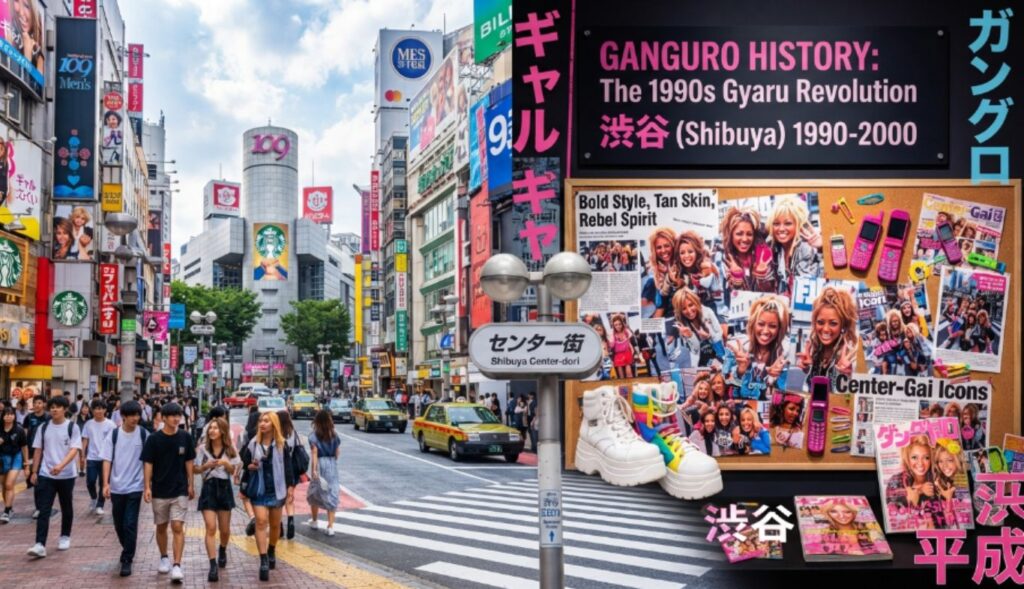
For travelers interested in ganguro japan, Shibuya is the obvious starting point because of its historical relationship with gyaru and youth culture.
The modern district is very different from the Shibuya of the late 1990s, but its importance as a youth-fashion center remains significant. Japan’s official tourism organization recommends Shibuya for trendy youth culture, nightlife, shopping, and people-watching. When exploring, it’s useful to think of the neighborhood as a living cultural landscape rather than a museum.
You can look for:
- Historic photographs of Shibuya street fashion.
- Books documenting 1990s Tokyo.
- Vintage fashion stores.
- Japanese youth-fashion publications.
- Exhibitions related to contemporary fashion and design.
- Shops and cultural spaces connected with modern gyaru communities.
Most importantly, don’t expect the streets to look exactly like old photographs. That’s part of the story. Cities and subcultures change.
How to Appreciate Ganguro Respectfully
If you’re fascinated by ganguro, cultural curiosity is a great starting point, but context matters.
Here are a few useful guidelines:
Learn the History First
Don’t judge the style solely from photographs. Learn about gyaru, kogyaru, Shibuya, Japanese youth fashion, and the media environment of the 1990s.
Avoid Treating People as Costumes
Ganguro was a real youth subculture involving real people. It’s better understood as cultural history than as a costume novelty.
Be Careful With Imitation
If you’re recreating the look for fashion or photography, understand what you’re referencing. Avoid racial caricature or treating cultural imagery as a joke.
Respect Local Spaces
If photographing people in Japan, ask permission. Street fashion is interesting, but people aren’t tourist attractions.
Explore the Broader Gyaru World
Ganguro becomes much easier to understand when you learn about the wider gyaru family and its many variations.
15 Fascinating Facts About Ganguro Japan
Here are fifteen quick facts to remember:
- Ganguro developed within gyaru culture.
- Shibuya was one of its most important centers.
- The style became highly visible in the late 1990s.
- Deep tanning was one of its defining characteristics.
- Bleached hair created dramatic contrast with tanned skin.
- White or pale eye makeup was a recognizable feature.
- Platform footwear helped create the exaggerated silhouette.
- Accessories were often deliberately abundant.
- Ganguro challenged conventional beauty expectations.
- Youth magazines helped spread the look.
- egg became strongly associated with the gyaru scene.
- Yamanba developed from the broader ganguro aesthetic.
- The original extreme style declined during the early 2000s.
- Gyaru culture continued evolving after ganguro’s peak.
- Ganguro remains influential as a symbol of Japanese street-fashion history.
Ganguro vs. Other Gyaru Styles
| Style | Key Characteristics | Relationship to Ganguro |
|---|---|---|
| Kogyaru | Modified school uniforms, loose socks, youthful styling | Important predecessor |
| Ganguro | Deep tan, bleached hair, dramatic makeup | Core style |
| Yamanba | More exaggerated makeup and colors | Developed from ganguro |
| Manba | Extreme facial makeup and colorful styling | Closely related later style |
| Hime Gyaru | Princess-like, feminine, ornate fashion | Different direction within gyaru |
| Modern Gyaru | Broad range of contemporary looks | Continuing cultural family |
These categories should be treated as broad descriptions rather than rigid boxes. Fashion communities change rapidly, and individual outfits don’t always fit neatly into one label.
Why Does Ganguro Still Matter?
Ganguro matters because it demonstrates how fashion can become a language. A hairstyle can communicate confidence. Makeup can communicate rebellion. Clothing can communicate belonging. A particular neighborhood can become a stage where young people experiment with identity.
Ganguro also reminds us that Japanese fashion isn’t simply about minimalism, traditional clothing, or polished designer labels. Japan has produced some of the world’s most experimental street-fashion movements. Ganguro belongs in that history alongside other youth subcultures that transformed the relationship between clothing and identity.
Its visual extremes are part of the reason people still remember it. But its deeper significance lies underneath the surface. A group of young people looked at established expectations and decided they could create something different. That’s a story that never really goes out of fashion.
Frequently Asked Questions
What does ganguro mean?
Ganguro is the name of a Japanese fashion style associated especially with deeply tanned skin, bleached hair, dramatic makeup, and bold clothing. The term is commonly associated with an extremely dark or tanned face, although translations and explanations of its exact wordplay vary.
Is ganguro the same as gyaru?
No. Gyaru is the broader Japanese fashion subculture, while ganguro is one of its more distinctive substyles. Other gyaru styles have different aesthetics and histories.
When was ganguro most popular?
Ganguro was particularly prominent in the late 1990s and around the beginning of the 2000s. Its roots developed earlier in the decade through related gyaru and kogyaru trends.
Where did ganguro originate?
Ganguro is strongly associated with Tokyo, especially the youth-fashion scene around Shibuya. Shibuya became a major gathering place for gyaru and related street-fashion communities.
Why did ganguro girls tan their skin?
The deep tan was an important part of the visual identity. It also created a deliberate contrast with pale makeup, light hair, and conventional Japanese beauty ideals. The reasons varied by individual, so it’s better not to assume every participant had exactly the same motivation.
What makeup did ganguro use?
Typical ganguro makeup could include strong eyeliner, dramatic lashes, pale or white accents around the eyes, light-colored lips, and other exaggerated details. The objective was generally a bold, highly visible appearance rather than a natural look.
What is yamanba?
Yamanba is a more extreme style that developed from the broader ganguro and gyaru scene. It generally featured even stronger contrasts, dramatic makeup, bright colors, and highly expressive styling. Historical accounts place its emergence around the late 1990s.
Is ganguro still popular in Japan?
The original ganguro look isn’t mainstream today as it was during its peak. However, gyaru culture and interest in historical gyaru fashion continue, and elements of older styles can reappear through vintage fashion and modern reinterpretations.
Can tourists see ganguro in Tokyo today?
You shouldn’t expect to see large groups of classic ganguro everywhere in modern Tokyo. The style is primarily a historical youth-fashion phenomenon now. However, Shibuya remains an excellent place to explore the broader history of Japanese street fashion and youth culture.
Is ganguro considered controversial?
It can be. The style has attracted different interpretations, particularly because its use of darkened skin can look similar to racialized imagery familiar in other cultural contexts. Understanding the Japanese history of ganguro while acknowledging these cross-cultural interpretations gives a more balanced view.
Did ganguro influence modern fashion?
Yes. Its influence can be seen in the broader history of Japanese street fashion, especially through gyaru’s continuing emphasis on expressive makeup, styled hair, accessories, and deliberate self-presentation.
Why is ganguro important in Japanese fashion history?
Ganguro is important because it demonstrates how young people used fashion to challenge established ideas about beauty, femininity, and conformity. It also shows how streets, magazines, retail spaces, photography, and popular culture can work together to create a major youth trend.
Conclusion
Ganguro Japan represents one of the boldest chapters in modern Japanese street-fashion history. Emerging from the broader gyaru movement, ganguro transformed tanning, hair color, makeup, clothing, and accessories into a highly recognizable visual statement. Its strongest period came in the late 1990s, when Shibuya’s streets, fashion stores, magazines, and youth communities helped turn experimental personal style into a widely discussed cultural phenomenon. The trend eventually declined, but its influence didn’t simply disappear. Gyaru continued to evolve.
New styles emerged. Old looks became historical references. And modern fans continue to revisit the creativity and confidence associated with Japanese youth fashion. Perhaps that’s the most valuable lesson from ganguro. Fashion isn’t always about looking conventional or universally attractive. Sometimes it’s about being seen, finding your people, experimenting with identity, and having the courage to stand out. Ganguro may belong to the 1990s, but that spirit of self-expression is timeless.