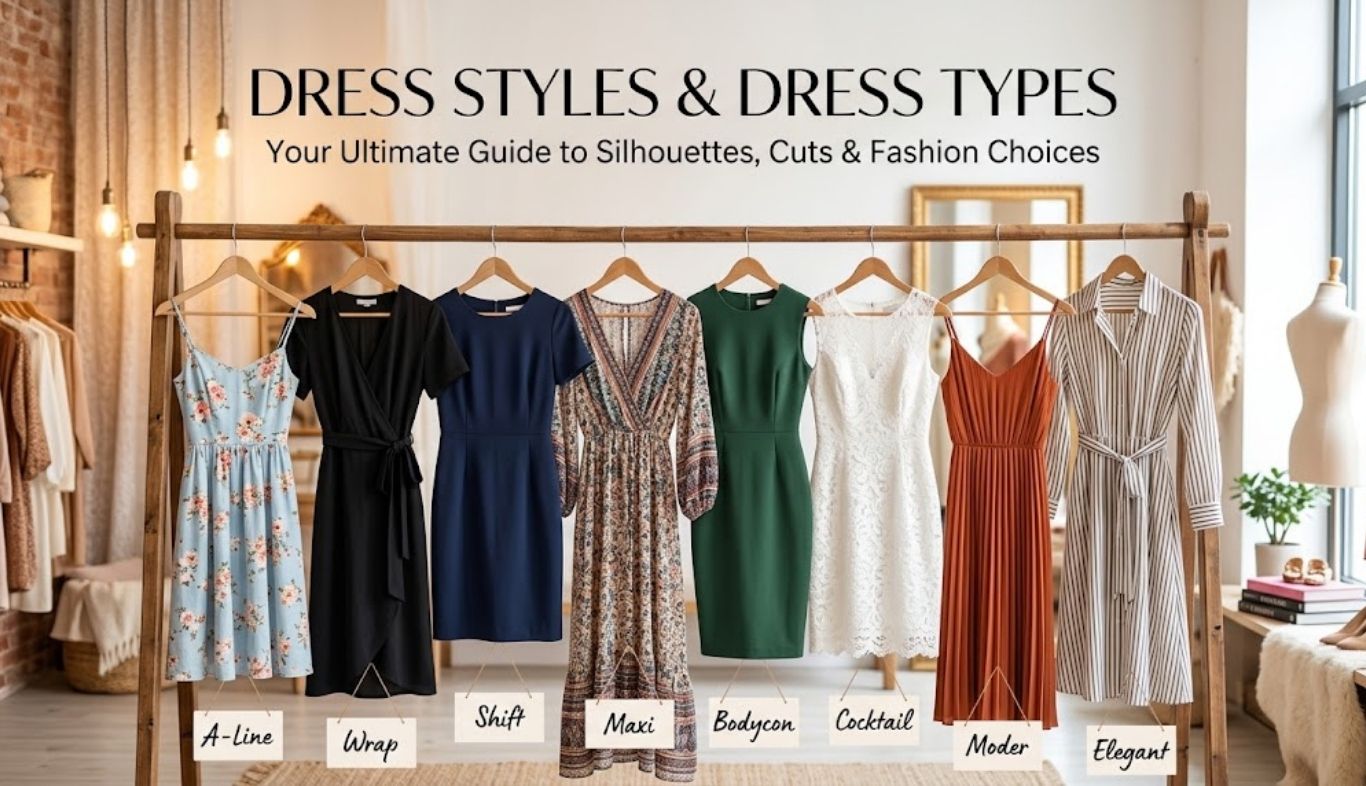
Dresses are among the most versatile pieces in fashion. One design can look casual with sneakers and a tote bag, yet feel polished with heels, jewelry, and a structured handbag. That’s why knowing the difference between Dress Styles & Dress Types is useful for building a practical wardrobe. A dress can be described in several ways. Its silhouette explains the overall shape, its length describes where the hem falls, its neckline identifies the shape around the neck, and its fabric influences how the garment moves and feels. For example, an A-line dress describes a silhouette that gradually widens toward the hem. A midi describes length rather than shape. A halter dress describes its neckline.
These terms can overlap, so one dress can be an A-line midi dress with a halter neckline. That little distinction is worth remembering when shopping online. Current fashion coverage also shows just how broad the category has become. Recent runway and editorial trends include minis, florals, draped designs, maxi dresses, sheer styles, crochet, bold colors, and minimalist silhouettes.
Why Dress Silhouettes Matter
The silhouette affects the visual balance of an outfit. A fitted sheath dress creates a very different impression from a loose shift or flowing maxi.
Here are some common silhouette characteristics:
- Fitted: follows the body’s shape closely.
- Relaxed: provides more room through the torso and skirt.
- Flared: becomes wider below the waist.
- Straight: maintains a relatively consistent width.
- Draped: uses fabric folds to create movement.
- Voluminous: emphasizes fullness and shape.
There’s no universally “best” silhouette. The right choice depends on comfort, personal taste, occasion, climate, and how you want the outfit to look.
Popular Dress Silhouettes
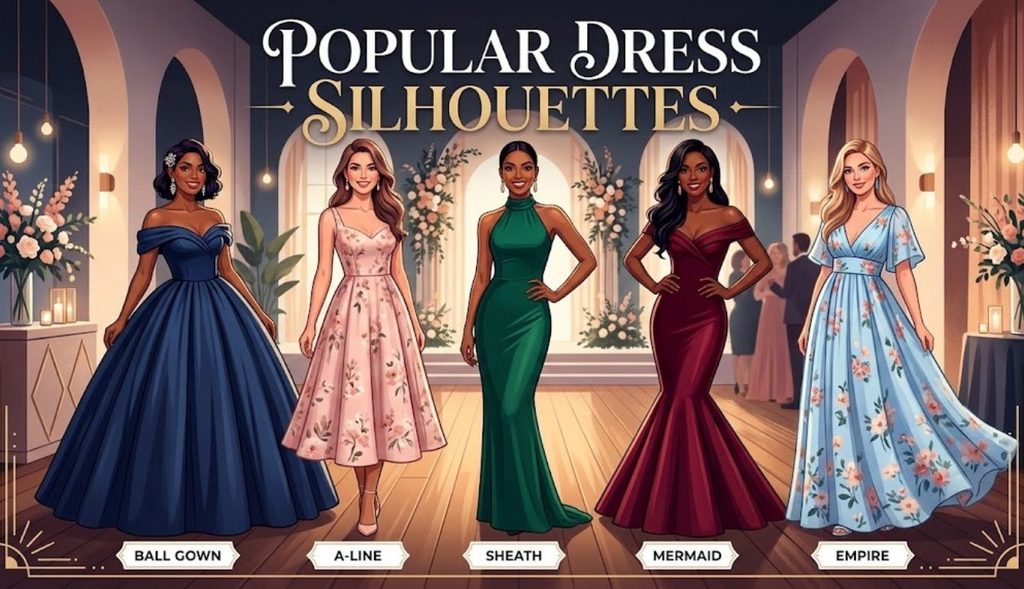
A-Line Dress
The A-line dress is one of the most recognizable dress silhouettes. It is generally more fitted around the upper body and gradually widens toward the hem, creating an “A” shape.
This design works well for many occasions because it combines structure with movement. A short A-line can feel youthful and casual, while a longer version can look elegant enough for a formal event.
For daytime styling, pair an A-line dress with flats or sneakers. For evening occasions, heels and understated jewelry can quickly make it more sophisticated.
Sheath Dress
A sheath dress usually follows the body’s natural line with a relatively straight, streamlined shape. Vogue similarly describes a sheath or column dress as fitted and straight, skimming the body toward the hem.
Sheath dresses are especially popular for:
- Office outfits
- Business events
- Dinner occasions
- Weddings
- Minimalist wardrobes
A simple sheath dress in a neutral shade can become a wardrobe workhorse. Add a blazer for work and switch to statement earrings for dinner.
Fit-and-Flare Dress
A fit-and-flare dress is fitted through the upper body and becomes wider around the skirt. It’s a cheerful, feminine silhouette that offers plenty of movement.
Flared skirts can be subtle or dramatic. A cotton fit-and-flare works nicely for daytime, while a satin or embellished version can suit parties and celebrations.
Shift Dress
A shift dress has a relatively straight, relaxed shape that hangs away from the body. It became especially associated with modern mid-century fashion and remains useful for people who prefer uncomplicated clothing. Because the design isn’t heavily structured at the waist, it’s comfortable and easy to layer.
Bodycon Dress
“Bodycon” is short for body-conscious. These dresses are designed to closely follow the body’s shape. They are often made with stretch fabrics such as jersey or ribbed knit. Bodycon dresses can be styled casually with sneakers and a denim jacket or dressed up with heels and refined accessories.
Wrap Dress
The wrap dress uses overlapping fabric that typically crosses the front and ties around the waist. It creates an adjustable fit and adds definition to the middle of the outfit.
The style has remained popular for decades because it can transition between different settings. Vogue has highlighted the wrap dress’s versatility, including its ability to move from office dressing to evening wear with simple styling changes.
Dress Types by Length
Length is another important part of understanding Dress Styles & Dress Types. Two dresses can have completely different silhouettes while sharing the same length.
Mini Dresses
Mini dresses generally finish above the knee. They’re commonly associated with casual outfits, parties, summer fashion, and youthful styling.
A mini doesn’t have to look overly casual. A structured mini with long sleeves and polished accessories can create a sophisticated evening look. For everyday wear, balance a shorter hem with a relaxed jacket, flats, boots, or sneakers.
Midi Dresses
Midi dresses typically fall somewhere between the knee and ankle, although the exact length varies.
They’re incredibly versatile because they can work for:
- Office outfits
- Brunch
- Weddings
- Date nights
- Vacation dressing
- Smart-casual events
A fitted midi can look sleek, while a pleated or flowing midi can create a softer appearance.
Maxi Dresses
Maxi dresses usually extend toward the ankle or floor. They can be relaxed, glamorous, minimalist, romantic, or bohemian depending on their fabric and construction.
Maxi dresses remain especially relevant in warm-weather wardrobes. Recent 2026 fashion coverage has highlighted flowing, crochet, sheer, minimalist, and colorful maxi styles.
A lightweight maxi can be an easy summer outfit. For evening wear, choose a more structured fabric, refined accessories, and elegant footwear.
High-Low Dresses
A high-low dress has a shorter hem in the front and a longer hem toward the back. This design creates movement while showing more of the footwear.
It’s a particularly useful option when you want something more dramatic than a traditional midi without wearing a full-length gown.
Casual Dress Styles
Casual dresses are designed around comfort and everyday practicality. They don’t necessarily need to look basic, though. The right accessories can transform a simple casual dress into a polished outfit.
T-Shirt Dress
The T-shirt dress borrows the relaxed shape of a classic T-shirt and extends it into a dress.
It’s ideal for errands, casual lunches, travel, and relaxed weekends. Pair it with:
- White sneakers
- Canvas shoes
- Crossbody bags
- Denim jackets
- Baseball caps
- Minimal jewelry
For a slightly sharper look, add a belt and structured handbag.
Shirt Dress
The shirt dress takes inspiration from the traditional button-down shirt. It may feature a collar, button front, cuffs, and a defined waist.
It’s one of the easiest styles to dress up or down. Vogue has described shirtdresses as versatile enough for the office, vacation, and everyday activities. Wear one with loafers for a polished daytime outfit or sandals for a relaxed summer look.
Sundress
Sundresses are lightweight warm-weather dresses often featuring short sleeves, thin straps, open necklines, or breathable fabrics.
Cotton and linen are popular choices because they can feel comfortable in hot weather. A simple sundress paired with sandals and sunglasses is practically a summer uniform.
Smock and Tiered Dresses
Smock dresses generally feature a relaxed body and gathered or elasticated construction. Tiered dresses use multiple horizontal sections of fabric to create volume.
Both styles are comfortable and easygoing. They’re particularly useful for casual summer outfits and vacation wardrobes.
Formal and Occasion Dress Types
Not every dress needs to be practical. Sometimes you want the outfit to make an entrance.
Cocktail Dress
Cocktail dresses are typically shorter than full-length evening gowns and are designed for semi-formal or dressy social events.
They can feature:
- Satin
- Velvet
- Lace
- Sequins
- Embroidery
- Structured tailoring
The key is balance. If the dress has dramatic detailing, keep accessories relatively simple.
Evening Gown
An evening gown is a formal, usually floor-length dress designed for elegant occasions. Gowns may feature flowing skirts, fitted bodices, dramatic trains, embellishment, or luxurious fabrics. For black-tie occasions, always check the event’s specific dress code before choosing an outfit. Dress codes can vary, and formalwear terminology isn’t always used consistently.
Slip Dress
The slip dress is inspired by lingerie-like silhouettes and usually has thin straps and a simple, fluid shape. Its minimalist design makes it surprisingly flexible. Wear it alone with heels for evening events or layer it over a T-shirt, sweater, or fitted top for a more casual interpretation.
Little Black Dress
The little black dress, often called the LBD, is one of the most enduring wardrobe concepts. Its appeal is simple: black provides a neutral foundation, while the cut determines the personality of the outfit.
A minimalist LBD can be styled with:
- Pearl earrings for classic elegance
- Sneakers for modern casualwear
- Heels for evening
- A blazer for work
- Statement jewelry for parties
The trick is choosing a cut that you’ll actually enjoy wearing.
Dress Styles by Neckline and Sleeve
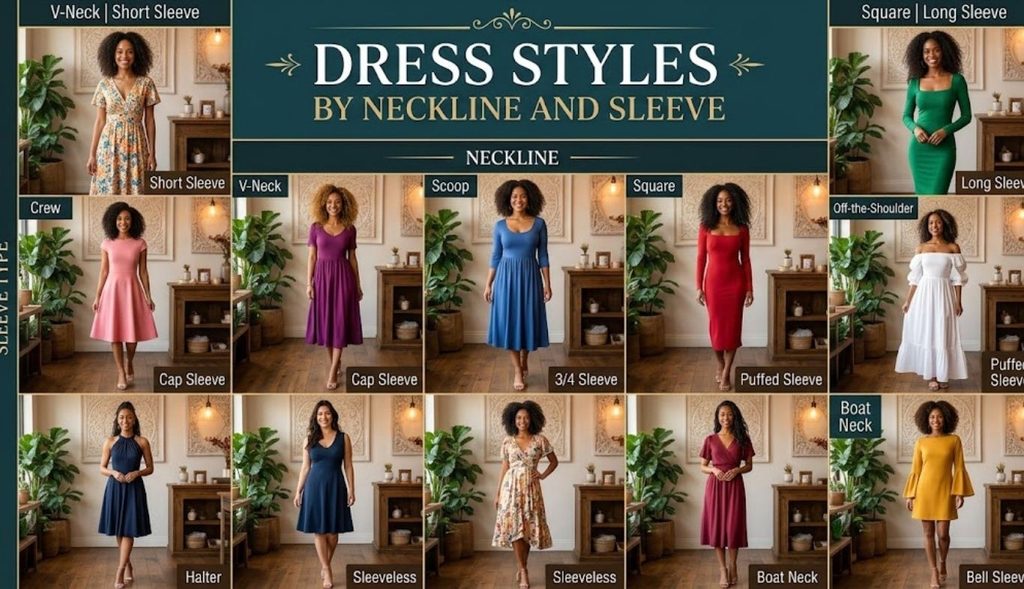
Silhouette isn’t the only factor that changes a dress. Necklines and sleeves can dramatically affect its overall appearance.
Halter Neck
A halter neckline leaves the shoulders more exposed and typically connects around the neck. It’s a popular choice for summer dresses, resort wear, evening dresses, and formal gowns.
Off-Shoulder
Off-shoulder dresses expose both shoulders while keeping fabric around the upper arms. This creates a romantic appearance and works particularly well with dresses designed for weddings, dinners, and summer events.
One-Shoulder
Asymmetry gives a one-shoulder dress its defining character. The neckline draws attention toward one side of the upper body. Because the neckline already creates visual interest, accessories can usually remain simple.
Strapless
Strapless dresses leave the shoulders and upper chest uncovered. They’re common in formalwear, cocktail dresses, bridalwear, and party fashion. A structured bodice can provide a polished appearance, while softer fabrics create a more relaxed feel.
How to Choose the Right Dress
Finding the right dress isn’t only about following trends. A great choice should fit the occasion, your comfort level, your personal style, and the environment.
Start by asking four questions:
- Where am I wearing it?
- How formal is the event?
- What weather will I be dealing with?
- Can I comfortably move in it?
The fourth question is easy to overlook. A beautiful dress that you constantly need to adjust won’t become a favorite.
Consider the Fabric
Fabric affects comfort, structure, and appearance.
| Fabric | Typical Feel | Good For |
|---|---|---|
| Cotton | Breathable and casual | Everyday wear |
| Linen | Lightweight and airy | Summer |
| Silk | Smooth and luxurious | Evening |
| Satin | Glossy and elegant | Parties |
| Jersey | Stretchy and comfortable | Casual dresses |
| Velvet | Rich and warm | Cold-weather events |
| Chiffon | Light and flowing | Formalwear |
| Denim | Structured and casual | Everyday outfits |
For hot climates, breathable materials can make a significant difference. For formal occasions, fabric weight and drape can help determine whether the dress looks polished.
Think About Proportion
Proportion is simply the relationship between different parts of an outfit. A voluminous maxi may work beautifully with streamlined accessories. A fitted mini can be balanced with a relaxed jacket. A dramatic neckline may need less jewelry.
You don’t have to follow strict fashion rules, though. Style is personal. These are starting points, not commandments.
How to Style Different Dress Types
Styling can completely change the personality of the same dress.
Casual Styling
For everyday looks, try:
- Sneakers
- Flat sandals
- Denim jackets
- Crossbody bags
- Simple watches
- Minimal jewelry
The goal is effortless rather than overworked.
Office Styling
For professional environments, consider structured dresses such as sheath, shirt, wrap, or modest midi styles.
Add:
- Blazers
- Loafers
- Low heels
- Structured handbags
- Simple jewelry
Always consider your workplace dress code.
Evening Styling
Evening outfits can handle more drama. Consider heels, metallic accessories, elegant clutches, statement earrings, or refined outerwear. If the dress already has sequins, strong prints, or dramatic volume, there’s no need to pile on accessories.
Vacation Styling
Vacation wardrobes benefit from lightweight dresses that can perform multiple jobs. A loose maxi, sundress, shirt dress, or wrap dress can work for sightseeing, lunch, and casual dinners with simple changes to footwear and accessories.
Common Dress Shopping Mistakes
Even experienced shoppers can make mistakes. Here are some of the most common ones.
Buying Only for the Trend
Trends come and go. A dress should still make sense in your wardrobe after the trend disappears.
Ignoring Comfort
If the fabric scratches, the straps slip, or the fit restricts movement, you probably won’t wear it often.
Choosing the Wrong Size
Don’t assume every brand uses identical measurements. Check the size chart whenever possible.
Forgetting the Occasion
A gorgeous party dress may not be appropriate for an office meeting. Likewise, a casual sundress may be too relaxed for a formal evening.
Over-Accessorizing
Sometimes less really is more. Let one element of the outfit become the focal point.
Ignoring Care Instructions
A dress that requires specialized cleaning may not be practical for frequent wear. Always check care requirements before buying.
Frequently Asked Questions
1. What are the most popular dress styles?
Some widely recognized styles include A-line, sheath, wrap, shift, fit-and-flare, bodycon, shirt, slip, maxi, midi, cocktail, and little black dresses.
2. What is the difference between a dress style and a dress type?
The terms are often used interchangeably. However, “style” may refer to the overall design, while “type” can describe a specific silhouette, length, occasion, or construction.
3. Which dress style is the most versatile?
A shirt dress, wrap dress, A-line midi, or simple sheath can be highly versatile. The best choice depends on your wardrobe and lifestyle.
4. What dress length is best for everyday wear?
Midi dresses are particularly versatile because they offer more coverage than minis while remaining easier to move around in than many full-length dresses.
5. Are maxi dresses still fashionable?
Yes. Maxi dresses continue to appear prominently in current fashion coverage, with 2026 trends including flowing, crochet, sheer, minimalist, and bold-color versions.
6. What dress should I wear to a formal event?
Start with the event’s dress code. For black-tie occasions, a sophisticated long gown is often appropriate, while cocktail or semi-formal events may call for a polished cocktail or midi dress.
7. What is the easiest dress to style?
A simple shirt dress, wrap dress, or neutral midi can be particularly easy to style because it works with different shoes, bags, jackets, and jewelry.
8. How can I make a casual dress look more elegant?
Change the accessories. Add refined shoes, a structured bag, elegant jewelry, and a tailored blazer or sophisticated outer layer.
9. Where can I learn more about current dress trends?
For additional fashion coverage and seasonal inspiration, explore Vogue’s dress guide, which covers a broad range of dress styles and trends.
Conclusion
Understanding Dress Styles & Dress Types makes fashion choices much easier. Instead of looking at a dress and wondering whether it will work, you can evaluate its silhouette, length, neckline, fabric, occasion, and styling potential. From timeless A-line and sheath designs to relaxed shirt dresses, versatile wraps, elegant slip dresses, and dramatic maxi styles, there’s a dress for practically every wardrobe and occasion.
The best approach isn’t to chase every trend. Build a collection around styles that fit comfortably, suit your lifestyle, and can be styled in several ways. Then add a few trend-focused pieces when you want something fresh. Fashion should be useful, expressive, and fun. Once you understand the basics of dress silhouettes and types, finding your personal style becomes a whole lot easier.