

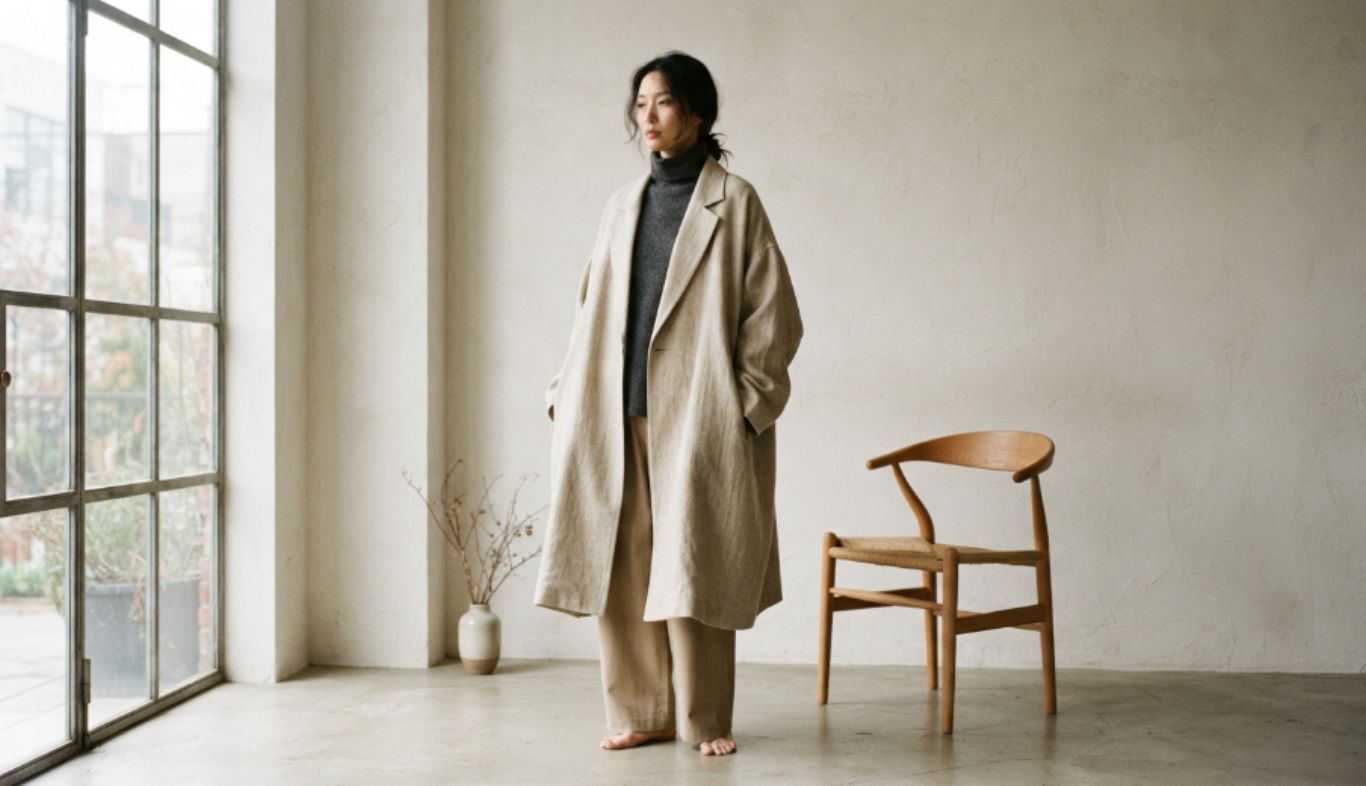
Japanese, Korean & Scandinavian Minimalist Fashion has become a powerful source of inspiration for people who want clothing that feels polished without looking overdone. Although Japan, South Korea, and Scandinavia have different histories and fashion traditions, their contemporary minimalist styles often share a love of clean design, useful clothing, thoughtful proportions, and restrained color palettes. Minimalist fashion isn’t simply about owning fewer clothes. It’s about making better choices. Instead of filling your wardrobe with pieces that only work for one outfit, minimalist dressing encourages versatile clothing that can be combined in several ways. A simple oversized shirt, straight-leg trousers, clean sneakers, and structured coat can create numerous looks when styled differently. That’s where this aesthetic becomes especially useful.
Japanese fashion often emphasizes craftsmanship, relaxed silhouettes, texture, and quiet sophistication. Korean minimalist fashion frequently combines streamlined shapes with contemporary proportions and subtle streetwear influences. Scandinavian style tends to emphasize practicality, comfort, quality, and timeless pieces. These approaches aren’t identical, but they complement one another surprisingly well.
The appeal is easy to understand. You don’t need a closet overflowing with trends to look stylish. You need a strong foundation. This guide explores how these three fashion cultures approach minimalism and, more importantly, how you can translate their ideas into a wearable everyday wardrobe.
1. Understanding Three Minimalist Fashion Cultures
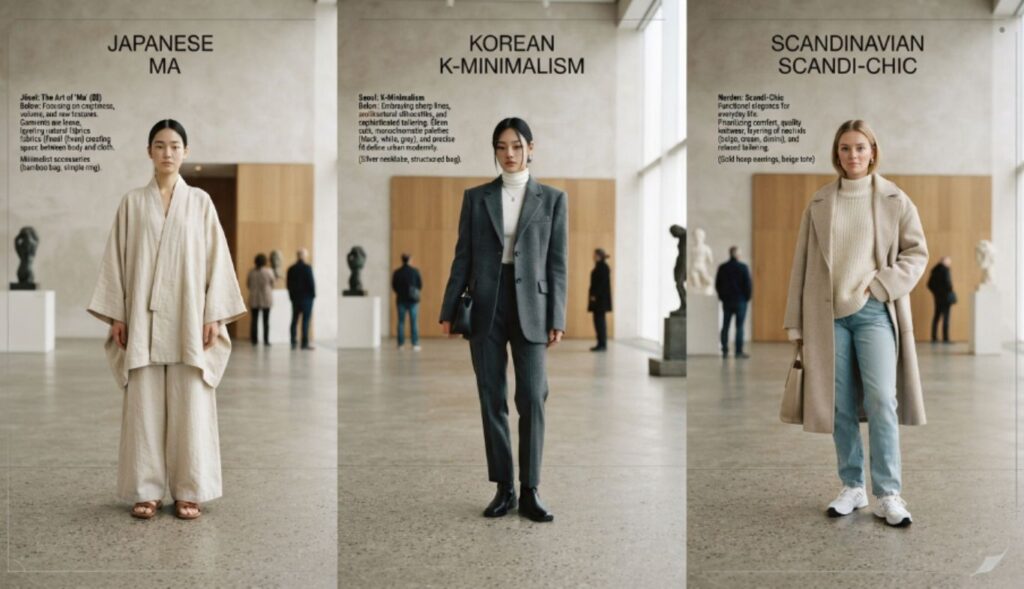
Minimalism looks different depending on the culture, designer, and individual wearing it. That’s important because there’s no single formula for minimalist fashion. Japanese, Korean, and Scandinavian aesthetics each bring something different to the table.
1.1 Japanese Minimalist Fashion
Japanese minimalist fashion often places emphasis on construction, proportion, fabric, and subtle detail. Rather than relying on loud graphics or excessive decoration, a Japanese-inspired outfit may create visual interest through an unusual cut, layered proportions, textured fabric, or an unexpected shape.
Relaxed trousers, long coats, oversized shirts, monochromatic outfits, and natural fabrics are common sources of inspiration. The philosophy is often less about looking “plain” and more about allowing the clothing itself to speak.
Japanese minimalist designers have demonstrated how simple clothing can still possess considerable character. Vogue’s coverage of Japanese label Arts & Science, for example, highlighted streamlined garments, linen, utility, and understated craftsmanship as central parts of its aesthetic.
Key Japanese influences
- Relaxed and oversized silhouettes
- Natural-looking fabrics
- Neutral and earthy colors
- Layering
- Functional details
- Interesting proportions
- Understated accessories
- Appreciation for craftsmanship
The result is often calm, artistic, and quietly sophisticated.
1.2 Korean Minimalist Fashion
Korean minimalist fashion takes a more contemporary approach. Seoul’s fashion scene frequently combines clean tailoring with oversized streetwear, modern basics, subtle layering, and carefully considered proportions. The look can feel youthful while remaining sophisticated. Think wide-leg trousers with a fitted top, an oversized blazer over a simple T-shirt, or a monochrome outfit finished with a structured bag.
Korean fashion also demonstrates that minimalism doesn’t have to mean conservative clothing. A dramatic silhouette can still be minimalist if the color palette and styling remain controlled. Contemporary Korean labels have increasingly attracted global attention for combining Korean design perspectives with international influences. Vogue has described brands such as Andersson Bell as blending Korean eclecticism with Scandinavian clean design principles.
1.3 Scandinavian Minimalist Fashion
Scandinavian minimalist fashion is strongly associated with functionality, comfort, simplicity, and versatility.
The classic Scandinavian wardrobe often includes:
- Straight-leg jeans
- Oversized knitwear
- Tailored trousers
- Long coats
- Simple shirts
- Practical boots
- Clean sneakers
- Structured bags
However, Scandinavian style isn’t limited to black, white, and beige. Modern Scandi fashion has expanded considerably. Vogue’s recent coverage notes that contemporary Scandinavian style is much harder to define than the old stereotype of purely clean, neutral dressing. It can include tailoring, color, prints, playful details, and statement pieces while retaining practicality.
That flexibility is useful. You can adopt Scandinavian minimalism without making every outfit monochromatic.
1.4 What the Three Styles Have in Common
Despite their differences, all three aesthetics can teach valuable minimalist principles.
| Principle | Japanese | Korean | Scandinavian |
|---|---|---|---|
| Clean design | High | High | High |
| Neutral colors | Common | Common | Common |
| Layering | Strong | Strong | Strong |
| Oversized silhouettes | Common | Very common | Common |
| Tailoring | Moderate | Strong | Strong |
| Functionality | Strong | Moderate/strong | Very strong |
| Statement accessories | Limited | Selective | Selective |
| Quality focus | Strong | Strong | Strong |
The biggest lesson is that minimalism isn’t about copying another culture’s wardrobe piece by piece. Instead, take the principles and make them your own.
2. Building a Minimalist Wardrobe
A minimalist wardrobe starts with a foundation rather than a shopping spree. The goal isn’t to purchase 30 new “minimalist” pieces. That’s actually the opposite of minimalism. Start by examining what you already own.
Which clothes do you wear repeatedly? Which colors naturally work together? Which silhouettes feel comfortable? Which garments have remained in your wardrobe for years? Those answers reveal your personal style better than a trend report ever could.
2.1 Choose a Neutral Color Palette
Color is one of the easiest ways to create minimalist outfits.
A practical base palette might include:
- Black
- White
- Cream
- Beige
- Gray
- Navy
- Brown
- Olive
You don’t need every color. Choose three to five primary shades that work together. For example, black, cream, gray, and navy can create dozens of combinations.
Earth tones can add warmth to an otherwise cool wardrobe. Japanese-inspired dressing often works beautifully with brown, charcoal, olive, and natural beige.
Korean-inspired outfits can lean toward black, gray, white, and muted denim. Scandinavian styling can use neutral colors as a foundation while introducing occasional brighter accents. The trick is balance. If your entire wardrobe is neutral, one colorful scarf, bag, shoe, or knit can become much more impactful.
2.2 Select the Right Silhouettes
Minimalist fashion depends heavily on shape. A plain shirt can look dramatically different depending on whether it’s fitted, cropped, oversized, or elongated. Japanese-inspired styling often embraces volume. Korean styling frequently plays with oversized proportions and contrast. Scandinavian fashion often balances relaxed pieces with structured tailoring.
Try these formulas:
Oversized top + straight trousers
Fitted top + wide-leg trousers
Long coat + cropped trousers
Relaxed shirt + tailored pants
Boxy jacket + slim inner layer
The goal is visual balance. If everything is oversized, your outfit can lose definition. If everything is fitted, it may lose the relaxed quality associated with contemporary minimalism.
2.3 Pay Attention to Fabric and Texture
When an outfit contains few elements, fabric becomes more important. A plain beige sweater isn’t visually boring if it has a beautiful knit texture. A black outfit can look sophisticated when it combines wool, cotton, leather, and denim.
Useful minimalist fabrics include:
- Cotton
- Linen
- Wool
- Cashmere
- Denim
- Leather
- Twill
- Knit fabrics
Texture creates depth without requiring patterns. This is one reason minimalist outfits can look expensive even when they’re relatively simple. The visual interest comes from materials, construction, and proportions rather than decoration.
2.4 Create Outfits With Fewer Pieces
Try building outfits using three main components:
Base: T-shirt, shirt, blouse, or knit.
Bottom: Jeans, trousers, skirt, or tailored pants.
Outer layer: Blazer, jacket, cardigan, or coat. Then add only the accessories you actually need. This approach makes getting dressed faster.
For example:
Look 1: White shirt + black trousers + loafers
Look 2: Gray knit + wide-leg jeans + sneakers
Look 3: Black T-shirt + beige trousers + long coat
Look 4: Cream sweater + dark denim + structured bag The clothes are simple, but the combinations can feel completely different.
3. 11 Powerful Ways to Master the Look
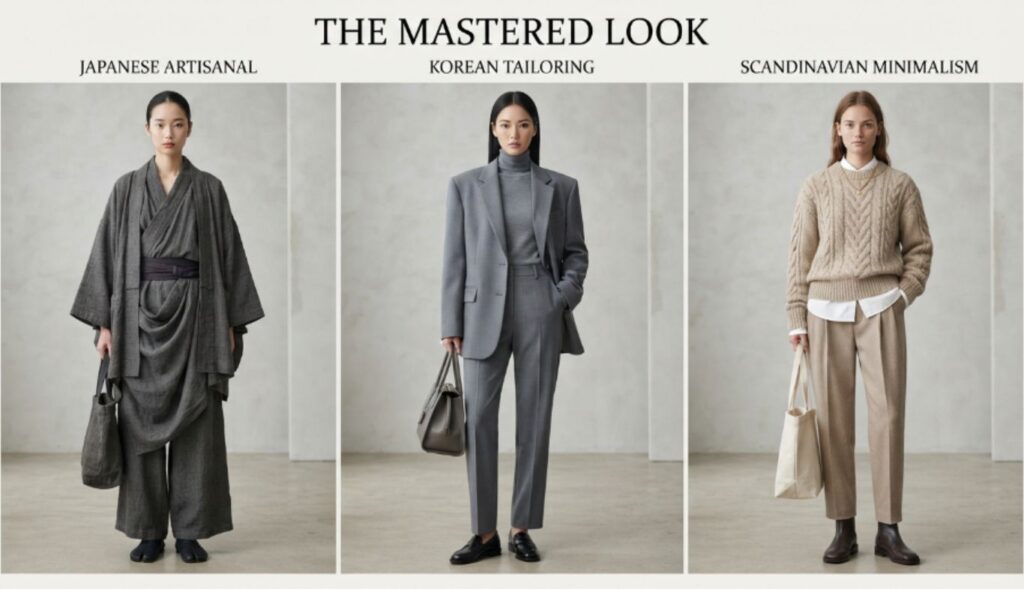
Now comes the practical part. You don’t need to choose between Japanese, Korean, and Scandinavian minimalist fashion. The strongest wardrobe can borrow intelligently from all three.
3.1 Prioritize Quality Over Quantity
One well-made coat can be more useful than five trendy jackets.
Before purchasing something, ask:
- Can I wear it with at least three outfits?
- Does it fit my lifestyle?
- Is the fabric appropriate for my climate?
- Will I still like it next year?
- Does it work with my existing colors?
If the answer is mostly yes, the piece deserves consideration.
3.2 Use Layering Strategically
Layering creates depth without adding visual chaos.
Try a simple formula:T-shirt + overshirt + trousers
Or: Shirt + knit vest + wide-leg pants
Or: Thin sweater + tailored coat + scarf Japanese fashion is particularly useful for learning how different lengths and proportions can work together.
Korean styling can teach you how to combine oversized layers without making the outfit look accidental. Scandinavian fashion demonstrates how layering can remain practical and comfortable.
3.3 Balance Oversized and Fitted Pieces
Proportion is everything. If you’re wearing a large blazer, try a cleaner inner layer. If your trousers are extremely wide, consider a more defined top. That doesn’t mean everything needs to fit tightly. It simply means your outfit should have some visual structure.
3.4 Keep Accessories Intentional
Minimalist accessories should support the outfit rather than dominate it.
Good choices include:
- Simple watches
- Small earrings
- Leather belts
- Structured handbags
- Minimal sneakers
- Loafers
- Clean boots
- Simple scarves
A single strong accessory can often accomplish more than several competing pieces.
3.5 Mix Cultural Influences Carefully
You can combine the three aesthetics without turning the outfit into a costume.
For example:
Japanese: Relaxed wide-leg trousers
Korean: Oversized cropped jacket
Scandinavian: Minimal leather sneakers Together, these elements create a contemporary outfit without copying any single fashion tradition. The key is understanding the principles behind the clothes.
3.6 Make Function Part of the Style
A beautiful garment isn’t very useful if you can’t comfortably move in it. Scandinavian fashion provides a strong reminder that practicality can be stylish. Vogue’s research into modern Scandi fashion highlights functionality, active lifestyles, comfort, and versatile wardrobe staples as important influences.
Choose shoes you can actually walk in. Choose coats that work with your weather. Choose bags that carry what you need. Minimalism should make life easier, not harder.
3.7 Use Texture Instead of Excessive Prints
If you want visual interest without losing the minimalist feel, experiment with texture.
Try:
- Ribbed knitwear
- Brushed wool
- Washed denim
- Linen
- Smooth leather
- Suede
- Heavy cotton
A monochromatic outfit with different textures can be much more interesting than a heavily patterned outfit.
3.8 Build Around Timeless Staples
Every minimalist wardrobe benefits from reliable essentials.
A strong starting collection could include:
| Category | Useful Pieces |
|---|---|
| Tops | White T-shirt, black T-shirt, button-down shirt |
| Knitwear | Neutral sweater, cardigan |
| Bottoms | Straight jeans, wide-leg trousers |
| Outerwear | Blazer, long coat, simple jacket |
| Shoes | Sneakers, loafers, boots |
| Accessories | Belt, structured bag, simple watch |
You can adjust the list according to your lifestyle.
3.9 Don’t Fear One Statement Piece
Minimalism doesn’t mean banning bold clothing. A statement coat can work beautifully with a simple outfit. So can an unusual bag, sculptural shoe, colorful knit, or distinctive piece of jewelry. The minimalist approach is simply to let one item take the lead.
3.10 Dress for Your Environment
Aesthetic inspiration should never ignore real life. If you live somewhere hot, heavy Scandinavian wool isn’t necessarily practical. Instead, borrow the silhouette and use breathable cotton or linen. If your climate is rainy, prioritize water-resistant outerwear.
If you walk frequently, choose comfortable footwear. The best minimalist wardrobe is adapted to the person wearing it.
3.11 Develop a Personal Uniform
A personal uniform is a small collection of outfit formulas that reliably work for you.
For example:
Formula A: Oversized shirt + straight trousers + loafers
Formula B: T-shirt + wide-leg pants + sneakers
Formula C: Knit sweater + dark jeans + long coat
Formula D: Tailored blazer + simple top + relaxed trousers Once you discover your formulas, dressing becomes almost automatic. That’s one of minimalism’s greatest benefits.
4. Seasonal Minimalist Styling
Minimalism should work throughout the year.
4.1 Spring and Summer
Warm weather calls for lighter fabrics and fewer layers.
Try:
- Linen shirts
- Cotton T-shirts
- Relaxed trousers
- Simple midi skirts
- Lightweight dresses
- Canvas sneakers
- Leather sandals
Japanese-inspired summer dressing can look particularly elegant with loose linen pieces and earthy colors. For Korean-inspired styling, experiment with oversized shirts, clean sneakers, and structured bags. For Scandinavian influence, combine simple basics with practical silhouettes and subtle color.
4.2 Fall and Winter
Cold weather gives minimalist fashion another advantage: layering.
A simple winter outfit could include:
Turtleneck + wide trousers + wool coat + boots
Or: Knit sweater + straight jeans + oversized coat + sneakers
Or: Button-down shirt + cardigan + tailored trousers + loafers
The secret is avoiding too many competing layers. Choose quality outerwear because it often becomes the most visible piece of your winter wardrobe.
5. Common Minimalist Fashion Mistakes
Minimalist fashion sounds simple, but there are several easy mistakes.
Mistake 1: Thinking Minimalism Means Only Black and White
Neutral colors are useful, but minimalist wardrobes can include brown, olive, navy, cream, gray, and muted colors.
Mistake 2: Buying Too Many Basics
You don’t need ten nearly identical white T-shirts. Buy according to your actual lifestyle.
Mistake 3: Ignoring Fit
A basic garment with excellent proportions can look far better than an expensive garment with poor fit.
Mistake 4: Copying Trends Too Literally
Minimalism works best when it reflects your personality. Don’t buy something simply because it’s trending on social media.
Mistake 5: Confusing Expensive With Minimalist
Minimalism is a design philosophy, not a price tag. A simple, well-fitting affordable garment can be more effective than an expensive piece that doesn’t suit you.
Mistake 6: Removing All Personality
Your wardrobe shouldn’t look like a showroom. A favorite color, vintage accessory, unusual shoe, or sentimental piece can make minimalist dressing personal.
Frequently Asked Questions
1. What is Japanese, Korean & Scandinavian minimalist fashion?
Japanese, Korean & Scandinavian minimalist fashion combines three related but distinct approaches to simple dressing. Japanese style often emphasizes craftsmanship, relaxed proportions, and texture. Korean style frequently focuses on contemporary silhouettes and polished layering. Scandinavian style emphasizes practicality, comfort, quality, and timeless design.
2. What colors are best for minimalist fashion?
Black, white, gray, beige, cream, navy, brown, and olive are excellent starting points. You don’t need to use all of them. Choose a small palette that works well together.
3. Is minimalist fashion boring?
Not at all. Minimalist outfits can create visual interest through silhouette, fabric, texture, proportion, and accessories. A simple outfit can actually make unusual details more noticeable.
4. How can I start a minimalist wardrobe?
Begin with clothes you already wear regularly. Remove items that don’t fit your lifestyle, then identify missing essentials. Build around versatile tops, bottoms, outerwear, shoes, and accessories that work together.
5. Can I combine Japanese and Korean minimalist fashion?
Absolutely. Japanese relaxed silhouettes can work very well with Korean contemporary tailoring and layering. The important thing is to balance proportions and avoid adding too many competing elements.
6. Is Scandinavian fashion always neutral?
No. Modern Scandinavian fashion has become much broader. Contemporary Scandi style can include bright colors, prints, playful details, tailoring, and statement pieces while retaining practical and versatile elements.
7. What fabrics work best for minimalist clothing?
Cotton, linen, wool, denim, leather, and quality knit fabrics are strong options. Choose fabrics based on your climate and lifestyle rather than following a fixed list.
8. How can minimalist fashion look more expensive?
Focus on fit, fabric, proportions, clean shoes, neat grooming, and restrained accessories. You don’t need expensive designer clothing to create a polished minimalist appearance.
9. Can minimalist fashion be colorful?
Yes. The easiest approach is to keep most of the outfit simple and introduce one strong color. A colorful sweater, bag, scarf, or shoe can become the focal point.
10. What is the biggest rule of minimalist fashion?
Wear what is useful, comfortable, well-fitting, and genuinely suited to you. Minimalism isn’t about following strict rules. It’s about removing unnecessary choices while keeping what adds value.
Conclusion
Japanese, Korean & Scandinavian minimalist fashion offers three valuable perspectives on modern dressing. Japanese fashion teaches the beauty of craftsmanship, texture, proportion, and restraint. Korean fashion demonstrates how minimalism can feel youthful, contemporary, and experimental. Scandinavian fashion shows that comfort, functionality, and timeless design can coexist with strong personal style. The best approach isn’t to copy one aesthetic perfectly. Instead, combine the ideas that genuinely work for you. Start with a controlled color palette. Choose versatile silhouettes. Invest in useful fabrics.
Experiment with layering. Keep accessories intentional. Most importantly, make your wardrobe fit your actual life. Minimalism isn’t about having the smallest wardrobe possible. It’s about having a wardrobe where almost everything has a purpose. When every piece works together, getting dressed becomes easier, shopping becomes more intentional, and personal style becomes clearer. That’s the real power of minimalist fashion. For additional fashion inspiration and reporting, explore Vogue’s coverage of Japanese, Korean, and Scandinavian fashion. Vogue’s reporting also shows how these aesthetics continue to evolve rather than remaining fixed stereotypes.