


Light Academia Books & Literature is an aesthetic and lifestyle centered on learning, literature, art, history, creativity, and intellectual curiosity, but with a warmer and brighter atmosphere than its darker counterpart. Imagine an old university courtyard in the afternoon, sunlight falling across wooden desks, a stack of well-loved novels beside a cup of tea, and handwritten notes tucked between the pages. At its heart, light academia isn’t simply about looking scholarly. It’s about appreciating the process of learning.
The aesthetic often includes neutral colors, cream-colored paper, classical architecture, vintage clothing, paintings, fountain pens, libraries, museums, poetry, and classical music. Yet books are arguably its most important element because literature gives the aesthetic its intellectual foundation. A person doesn’t need to attend an elite university or own hundreds of antique books to enjoy light academia. You can embrace it through ordinary habits: reading before bed, visiting a museum, learning a language, keeping a journal, studying art history, or spending an afternoon with a classic novel.
Why Literature Fits the Aesthetic So Well
Books naturally create the atmosphere associated with light academia. They’re tactile, reflective, and connected to centuries of human thought.
Classic literature also encourages readers to slow down. Unlike rapidly changing social media feeds, a novel can ask you to remain with the same characters and ideas for several hundred pages. That’s part of the charm.
A light academia reading list might include:
- Classic novels
- Romantic literature
- Poetry
- Philosophy
- Essays
- Art history
- Ancient literature
- Mythology
- Historical fiction
- Academic nonfiction
- Literary criticism
- Memoirs by artists and writers
The best choices don’t have to be difficult. A book can be intellectually valuable while remaining enjoyable and approachable.
The Difference Between Dark and Light Academia
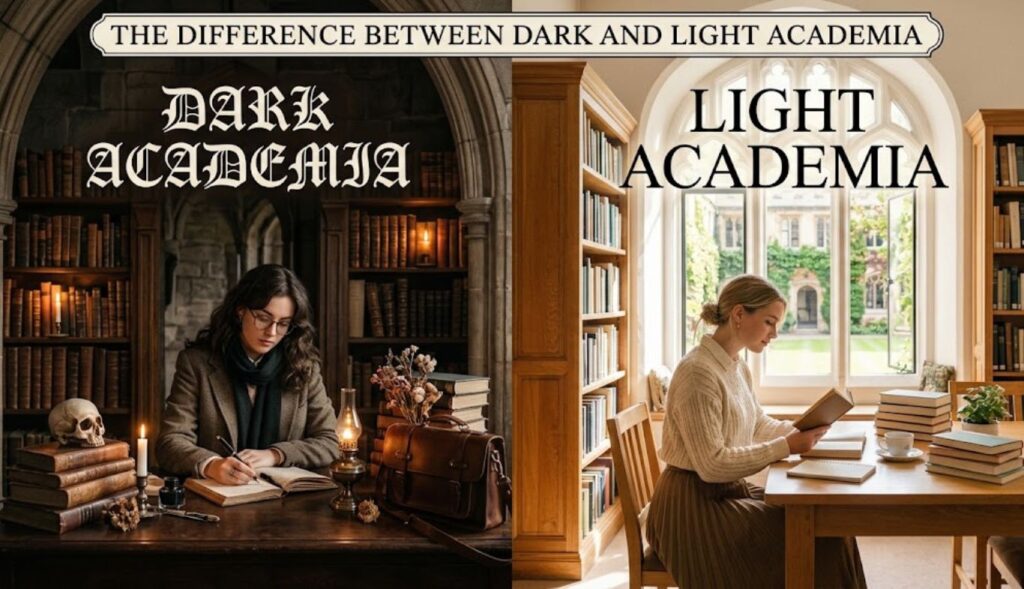
Dark academia often emphasizes mystery, tragedy, Gothic architecture, intense scholarship, and dramatic themes. Light academia tends to highlight optimism, beauty, friendship, creativity, personal growth, and the pleasure of learning.
The two aesthetics overlap considerably. A reader might enjoy The Secret History one month and Anne of Green Gables the next. In other words, there’s no official reading rulebook. Light academia is best understood as an invitation to become more curious.
25 Light Academia Books & Literature Picks
The following selection combines famous classics with poetry, philosophy, and culturally significant works. Some are easy introductions, while others reward slower reading and reflection.
1. Pride and Prejudice by Jane Austen
Jane Austen’s Pride and Prejudice is almost tailor-made for a literary reading list. Its elegant prose, social observations, witty dialogue, and memorable characters make it both entertaining and intellectually rewarding. Elizabeth Bennet is especially appealing to modern readers because she’s intelligent, independent-minded, and willing to question assumptions.
2. Jane Eyre by Charlotte Brontë
Charlotte Brontë’s Jane Eyre combines romance, personal development, morality, and Gothic atmosphere. Jane’s journey is ultimately about self-respect and independence. The novel also raises thoughtful questions about social class, gender, education, and personal freedom.
3. Little Women by Louisa May Alcott
Little Women celebrates reading, writing, creativity, family, ambition, and personal growth. Jo March is particularly relevant to anyone drawn to literary culture. Her determination to become a writer gives the story an enduring connection to the creative life.
4. Anne of Green Gables by L. M. Montgomery
For a gentler introduction to light academia, Anne of Green Gables is hard to beat. Anne loves poetry, imagination, nature, and learning. Her enthusiasm demonstrates that education doesn’t have to feel stiff or formal. Curiosity can be joyful.
5. Middlemarch by George Eliot
George Eliot’s Middlemarch is a deeper choice for readers who want sophisticated literary fiction. The novel explores marriage, ambition, politics, education, morality, and community. It’s lengthy, but don’t let that scare you off. A slow reading pace suits the book beautifully.
6. The Picture of Dorian Gray by Oscar Wilde
Oscar Wilde’s only novel offers elegant language, philosophical questions, art, beauty, morality, and decadence. Although some themes are darker than the typical light academia mood, its emphasis on art and intellectual conversation makes it a natural choice for an expansive literary bookshelf.
7. A Room of One’s Own by Virginia Woolf
Virginia Woolf’s extended essay examines women, writing, education, creativity, and economic independence. It’s especially useful for readers interested in the relationship between literature and society.
8. To the Lighthouse by Virginia Woolf
Woolf’s To the Lighthouse is a more experimental literary experience. Rather than relying solely on a traditional plot, the novel explores consciousness, memory, family relationships, time, and perception. It’s an excellent choice for readers who want to move beyond straightforward storytelling.
9. The Odyssey by Homer
Few works connect literature, mythology, history, and philosophy as strongly as The Odyssey. Odysseus’s journey has inspired countless writers and artists. Reading an accessible modern translation can also open the door to Greek mythology and classical literature.
10. Meditations by Marcus Aurelius
For readers interested in philosophy, Meditations provides a fascinating glimpse into Stoic thought. Marcus Aurelius reflects on discipline, mortality, responsibility, kindness, and the limits of personal control. It can be read slowly, with only a few pages at a time.
Romantic Literature for a Light Academia Bookshelf
Romance has an important place in light academia because many classic romantic novels also examine education, class, morality, identity, and social expectations.
11. Sense and Sensibility by Jane Austen
This novel explores two contrasting approaches to emotion and reason. Elinor Dashwood values restraint and practicality, while Marianne expresses her feelings more openly. Their differences create a thoughtful exploration of love, maturity, and social expectations.
12. Persuasion by Jane Austen
Persuasion is quieter and more reflective than some of Austen’s other novels. Its themes of regret, second chances, maturity, and enduring affection make it particularly suited to an introspective reading session.
13. North and South by Elizabeth Gaskell
Elizabeth Gaskell combines romance with social commentary in North and South. The novel examines industrialization, class conflict, work, family, and changing social attitudes while developing the relationship between Margaret Hale and John Thornton.
14. The Age of Innocence by Edith Wharton
Edith Wharton’s novel presents a sophisticated portrait of New York society and the restrictions imposed by social convention. Its elegant setting and detailed examination of manners make it a strong addition to a classic literature collection.
Poetry That Captures Light Academia
Poetry is perhaps the most natural literary form for the aesthetic. A poem can turn an ordinary afternoon into a moment of reflection.
15. The Complete Poems by Emily Dickinson
Emily Dickinson’s poems frequently explore nature, death, identity, solitude, love, and the mysteries of existence. Her compressed style makes her work ideal for slow reading. You can read one poem, sit with it for a few minutes, and return to it later.
16. Selected Poems by John Keats
Keats is a particularly strong choice for readers interested in beauty, nature, imagination, and classical references. His poetry rewards reading aloud, especially when you’re trying to appreciate rhythm and sound.
17. Leaves of Grass by Walt Whitman
Whitman’s poetry celebrates nature, humanity, individuality, and the physical world. It’s broader and more energetic than some other selections on this list, but that contrast can make a reading collection more interesting.
18. The Complete Poems by Christina Rossetti
Rossetti’s poetry often explores faith, love, nature, mortality, and emotional conflict. Her work also connects beautifully with Victorian literature and visual art, making it useful for readers interested in nineteenth-century culture.
Philosophy and Intellectual Curiosity
Light academia isn’t just about novels. Philosophy can encourage the kind of thoughtful questioning that sits at the center of the aesthetic.
19. The Republic by Plato
Plato’s Republic is one of the foundational texts of Western philosophy. It addresses justice, education, political organization, knowledge, and the nature of reality. Some sections can be challenging, so a good introductory edition or companion guide may help.
20. Letters from a Stoic by Seneca
Seneca’s letters discuss friendship, wealth, time, grief, ambition, and personal character. Many of the questions he raises still feel surprisingly modern. That’s the beauty of classical philosophy: old questions often remain relevant.
21. The Consolation of Philosophy by Boethius
Boethius blends philosophy and literary storytelling to consider fortune, happiness, suffering, and wisdom. It’s an excellent choice for readers who want to explore medieval intellectual history without beginning with an enormous academic textbook.
Art, History, and Cultural Reading
Books about visual culture can expand a light academia collection beyond fiction.
22. The Story of Art by E. H. Gombrich
Gombrich’s famous introduction to art history is a useful starting point for readers who want to understand painting, sculpture, architecture, and artistic movements. Pairing art history with novels from the same historical period can make both subjects more vivid.
23. The Letters of Vincent van Gogh
Van Gogh’s letters reveal his thoughts about art, nature, literature, work, and personal struggles. They’re especially valuable because they show how artists think about their craft rather than presenting art as something that simply appears in a gallery.
Modern and Accessible Literary Choices
A light academia bookshelf doesn’t need to contain only books written centuries ago.
24. The Book Thief by Markus Zusak
The Book Thief combines history, literature, storytelling, and human resilience. Its setting is much darker than the typical light academia mood, but its focus on the power of books makes it an emotionally meaningful choice.
25. The Shadow of the Wind by Carlos Ruiz Zafón
This novel is a wonderful choice for readers who enjoy mysterious libraries, forgotten writers, old books, literary discovery, and atmospheric settings. It feels like a love letter to books themselves.
How to Build Your Own Light Academia Reading List
You don’t need to read all 25 books at once. In fact, trying to do so would probably turn something enjoyable into a chore. Instead, create a balanced reading list.
| Category | Suggested Number | Example |
| Classic novel | 3 | Pride and Prejudice |
| Victorian literature | 2 | Jane Eyre |
| Poetry | 3 | Keats |
| Philosophy | 2 | Marcus Aurelius |
| Art history | 1 | Gombrich |
| Modern literary fiction | 2 | The Book Thief |
| Essays | 1 | Woolf |
| Ancient literature | 1 | The Odyssey |
Start With Books You Actually Want to Read
A common mistake is choosing books because they look impressive on a bookshelf. Don’t do that. If you’re new to classic literature, begin with something inviting. Pride and Prejudice, Little Women, and Anne of Green Gables are accessible entry points. Once you’re comfortable, you can gradually move toward longer or more challenging works.
Mix Easy and Difficult Books
A practical reading rotation might look like this:
- One classic novel
- One poetry collection
- One modern novel
- One philosophy book
- One nonfiction or art book
This prevents reading fatigue. It also gives your mind different kinds of material to process.
Creating a Light Academia Reading Space
The atmosphere around reading can make the habit more enjoyable, although you don’t need expensive furniture or vintage decorations.
A simple reading corner might include:
- A comfortable chair
- Warm natural lighting
- A small bookshelf
- Neutral-colored blankets
- A notebook
- A fountain or gel pen
- A cup of tea or coffee
- A small plant
- Prints of paintings
- A reading lamp
- A clock
- Your current book
Natural light is especially fitting for the aesthetic. If possible, read beside a window during the morning or late afternoon.
The Importance of Annotation
Annotation turns reading into an active experience. You might underline an interesting sentence, write a question in the margin, or record a connection between two ideas. If you don’t want to write in books, keep a separate reading journal.
Try recording:
| Journal Prompt | Example Question |
| Favorite passage | Which line stayed with me? |
| Character | Who changed the most? |
| Theme | What is this book really exploring? |
| Question | What don’t I understand yet? |
| Connection | Does this idea relate to modern life? |
| Reflection | What did I learn? |
Making Reading a Daily Habit
You don’t need three hours a day to develop a literary lifestyle. Start with 15 to 20 minutes. Read while having breakfast, before sleeping, during a quiet afternoon, or while commuting when practical.
The key is consistency. If you miss a day, don’t make a big production out of it. Just pick up the book again tomorrow.
A Simple Weekly Reading Routine
Monday: Read a classic novel for 20 minutes.
Tuesday: Read several poems.
Wednesday: Study one chapter of philosophy.
Thursday: Read nonfiction about art or history.
Friday: Return to your main novel.
Saturday: Visit a library, bookstore, museum, or cultural site.
Sunday: Journal about what you’ve read.
This approach makes literature part of everyday life rather than a task you have to complete.
Where to Find Classic Literature Online
Many older literary works are available legally through public-domain collections. Project Gutenberg offers thousands of free ebooks, including many classics that can be read online or downloaded in different formats. It’s a useful resource if you’re building a reading habit without spending a fortune on books. Of course, modern editions can still be worthwhile because they may include introductions, annotations, historical context, and helpful explanatory notes.
Light Academia Books for Students
Students can adapt the aesthetic without allowing it to interfere with practical study. Consider reading beyond your required coursework when time allows. A novel can improve vocabulary, while history and philosophy can sharpen your ability to understand arguments and context.
Useful categories include:
- Literature from your curriculum
- Introductory philosophy
- Art history
- Biography
- Historical nonfiction
- Poetry
- Essays
- Classical mythology
- Cultural history
The goal isn’t to make studying look beautiful for social media. The real goal is to make learning feel meaningful.
Reading Beyond the Syllabus
One of the strongest academic habits is learning because you’re genuinely curious. If you read Jane Eyre, for example, you might investigate Victorian education, women’s employment, Gothic fiction, or nineteenth-century social class. One book can become a doorway into several subjects. That’s where the magic happens.
Why Light Academia Literature Still Matters

In an age of short videos, instant notifications, and constant digital stimulation, long-form reading offers something different: sustained attention. A novel asks you to remember characters. Philosophy asks you to follow an argument. Poetry asks you to notice language. History asks you to connect events.
These activities develop patience and curiosity. More importantly, literature can help us understand experiences outside our own. A nineteenth-century novel may reveal the social assumptions of another era. A poem can express an emotion that you’ve struggled to name. A philosophical text can challenge an idea you’ve accepted without questioning. That’s why the best light academia books aren’t simply decorative objects. They’re invitations to think.
Frequently Asked Questions
What books are considered light academia?
There isn’t an official list of light academia books. However, classic literature, poetry, philosophy, art history, mythology, essays, and scholarly nonfiction are commonly associated with the aesthetic. Popular choices include Pride and Prejudice, Jane Eyre, Little Women, The Odyssey, and works by poets such as Keats and Dickinson.
Is light academia only about classic books?
No. Although classics are strongly associated with light academia, modern literary fiction, memoirs, essays, biographies, and contemporary poetry can fit just as well. The subject and reading experience matter more than publication date.
What is the best light academia book for beginners?
Pride and Prejudice is an excellent starting point for many readers because it combines humor, romance, social commentary, memorable characters, and relatively accessible storytelling. If you want something especially gentle, Anne of Green Gables is another wonderful option.
What should I read if I like dark academia?
Try moving between the two styles rather than choosing only one. If you enjoy darker intellectual stories, you might appreciate The Picture of Dorian Gray or The Secret History. For a brighter contrast, try Little Women, Anne of Green Gables, or Pride and Prejudice.
Do I need to read difficult philosophy to embrace light academia?
Absolutely not. You can begin with accessible philosophical writing such as Marcus Aurelius or Seneca. Even a short philosophical essay can provide plenty to think about. The point is curiosity, not showing off.
How can I make reading feel more like a light academia activity?
Create a calm reading routine. Use a comfortable chair, natural light, a notebook, and a physical book if you enjoy paper editions. You could also visit libraries, museums, galleries, historical buildings, or bookstores. Most importantly, put your phone aside for a while and give the book your full attention.
How many light academia books should I read in a year?
There’s no correct number. Reading 12 books a year is perfectly worthwhile, as is reading 50. One carefully read book can teach you more than ten books you rushed through. Choose a realistic goal that fits your life.
Can light academia include nonfiction?
Yes. Nonfiction is an excellent match. Art history, philosophy, biographies, cultural history, architecture, linguistics, mythology, and science writing can all complement a literary collection.
Are audiobooks suitable for light academia reading?
Definitely. Audiobooks are especially useful for poetry, essays, and novels with strong prose. Listening while walking can also turn reading into a relaxing daily ritual. However, reading a physical or digital text can be useful when you want to annotate or study closely.
How do I avoid feeling pressured by the aesthetic?
Remember that light academia is a source of inspiration, not a performance. You don’t need an expensive library, perfect handwriting, vintage clothing, or an impressive degree. Read what interests you. Learn at your own pace. Ask questions. Enjoy beautiful ideas. That’s enough.
Conclusion
Light Academia Books & Literature celebrates the beauty of learning through timeless classics, poetry, philosophy, and inspiring stories. These books encourage curiosity, creativity, and thoughtful reflection while creating a warm connection with knowledge and culture. Whether you’re a longtime reader or just beginning your literary journey, exploring these works can make reading more meaningful and enjoyable. Ultimately, light academia reminds us that learning isn’t simply a task—it’s a lifelong adventure filled with imagination, discovery, and inspiration.