

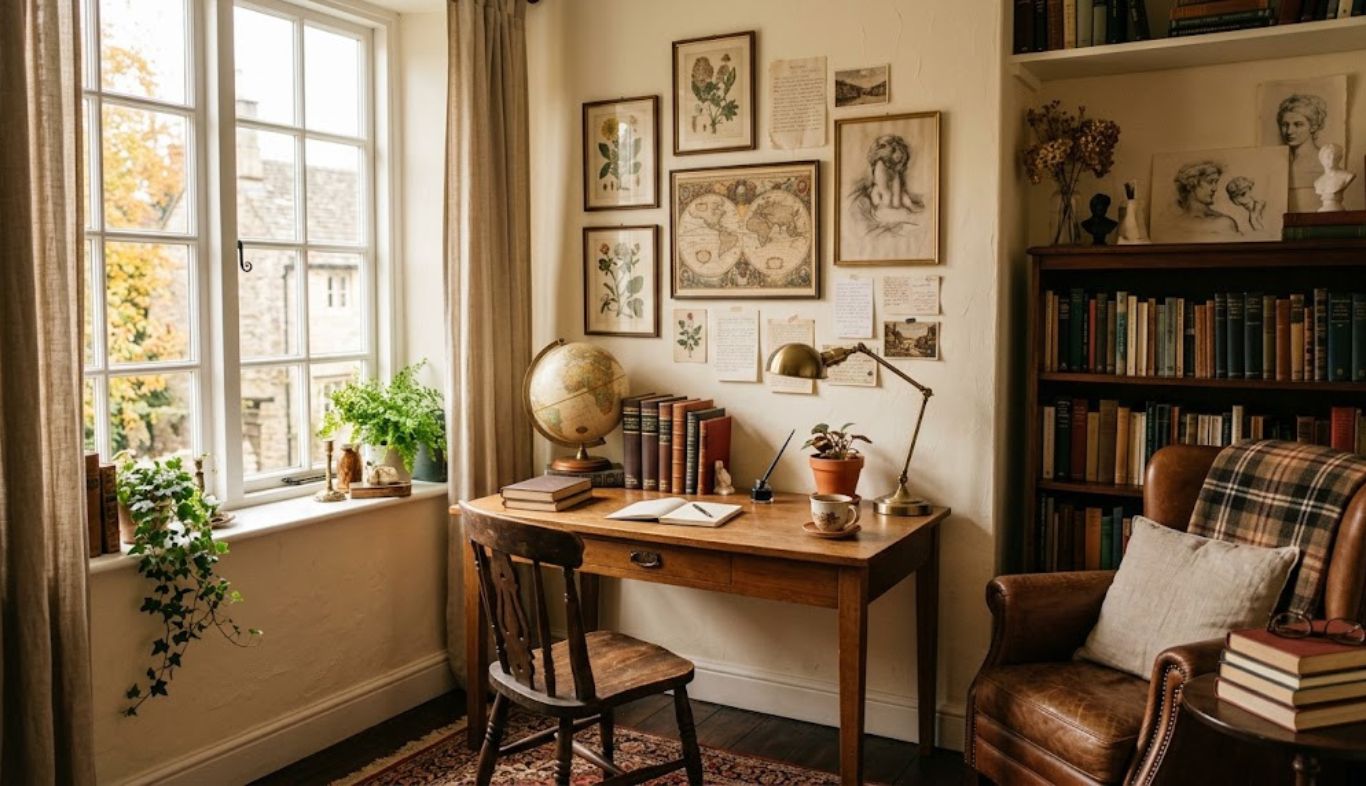
Light Academia Room Decor is all about creating a home that feels intelligent, romantic, calm, and lived-in. Inspired by classical architecture, old libraries, European universities, literature, art, and slow living, the style combines traditional details with a brighter, softer color palette. Unlike darker academic interiors, light academia favors cream, ivory, beige, warm white, dusty rose, muted green, pale brown, and soft gold. The result is sophisticated without feeling gloomy. Think of an old university reading room on a sunny morning rather than a dark library at midnight.
The good news is that you don’t need a historic home or an enormous decorating budget to achieve the look. With the right furniture, lighting, textiles, artwork, books, and accessories, even a modern bedroom or apartment can take on a distinctly academic character. The key is balance. A room shouldn’t look like a movie set or a vintage shop. Instead, it should feel as though someone who loves reading, writing, music, history, and art naturally lives there. This guide explores 17 practical ideas for creating that atmosphere while keeping your space comfortable and functional.
Start With a Soft, Sophisticated Color Palette
Color is the foundation of successful Light Academia Room Decor. Fortunately, the palette is relatively forgiving because it relies heavily on neutral shades. Begin with warm white, ivory, cream, oatmeal, beige, or light taupe. These colors make a room feel bright while providing the traditional backdrop associated with old academic buildings.
The Best Light Academia Colors
Consider combining:
- Warm white
- Ivory
- Cream
- Beige
- Camel
- Tan
- Soft brown
- Muted sage
- Dusty blue
- Faded olive
- Terracotta
- Dusty rose
- Antique gold
Avoid making everything pure white. Stark white can feel cold and contemporary, while warmer neutrals have more character. A simple formula is to use approximately 60 percent light neutrals, 30 percent warm wood or secondary colors, and 10 percent darker accents. Dark brown, charcoal, forest green, or burgundy can provide contrast without overwhelming the room.
Why Warm Neutrals Work
Traditional academic interiors often contain natural materials such as wood, leather, linen, wool, and aged paper. Warm neutrals visually connect these materials. For example, a cream wall can look beautiful with a walnut desk, beige linen curtains, an antique-style brass lamp, and a faded green cushion. That’s the sweet spot: refined but relaxed.
Make Natural Light the Star
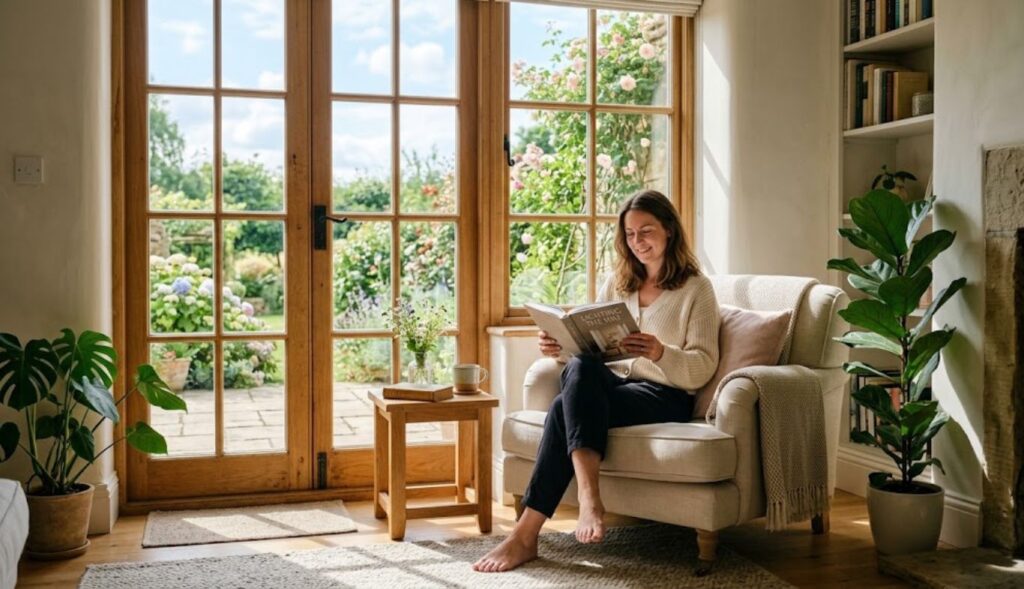
Natural light is one of the easiest ways to capture the airy side of academia. If your room receives plenty of sunlight, don’t hide it behind heavy curtains all day. Use lightweight linen or cotton curtains in ivory, cream, or natural beige. They soften direct sunlight while maintaining brightness.
Mirrors can also help distribute daylight. A large vintage-inspired mirror placed opposite or beside a window can make a small room feel considerably more open.
Choose Window Treatments Carefully
For authentic Light Academia Room Decor, avoid overly glossy blinds or highly modern geometric treatments when possible. Simple Roman shades, linen curtains, or understated wooden blinds tend to work better.
If privacy is a concern, layer sheer curtains with thicker side panels. This gives you flexibility throughout the day. The goal isn’t simply to make the room bright. It’s to make the light feel gentle.
Choose Vintage-Inspired Furniture With Character
Furniture should look timeless rather than trendy. You don’t necessarily need genuine antiques, either. Reproduction furniture and secondhand finds can work beautifully.
Look for:
- Wooden writing desks
- Traditional bookcases
- Upholstered armchairs
- Bentwood chairs
- Small side tables
- Four-poster or wooden beds
- Cane furniture
- Tufted ottomans
- Classic bedside tables
Wood is especially important. Oak, walnut, mahogany, and other warm finishes introduce visual depth. Don’t worry if your furniture isn’t part of a matching set. In fact, mismatched pieces often look more authentic. A traditional wooden desk can sit beside a simple modern chair if the colors and proportions work together.
Shop Your Home First
Before buying anything new, look around your home. Could an existing side table become a reading table? Could an old chair be reupholstered? Could a plain bookshelf be painted a warm cream? A little imagination can go a long way.
Build a Beautiful Bookshelf
Books are practically the heart of Light Academia Room Decor. However, your shelves shouldn’t look like a perfectly staged bookstore. Mix books with decorative objects and leave some breathing room.
Try arranging books:
- Vertically in traditional rows
- Horizontally in small stacks
- By color for a coordinated effect
- By subject for a more personal arrangement
Add a few framed photographs, ceramic objects, small plants, candleholders, or antique-style clocks. Don’t fill every inch. Empty space makes the collection look intentional.
Display Books You Actually Enjoy
You don’t need to purchase dozens of books just because their covers look academic. A genuine collection of novels, poetry, history, philosophy, art, or literature will feel far more personal. Your bookshelf should tell a story about curiosity.
Create a Dedicated Reading Nook
If you have an unused corner, turn it into a reading nook. Start with a comfortable armchair. Add a small wooden table, a floor lamp, a soft throw, and a basket for books. A reading nook doesn’t have to be huge.
Even a corner beside a window can work. For particularly cozy Light Academia Room Decor, choose upholstery in cream, tan, olive, muted blue, or warm gray. Add a cushion with a subtle stripe, floral pattern, or traditional textile. The reading nook should feel like somewhere you’d genuinely want to spend an hour with a book and a cup of tea.
Use Art to Give the Room an Intellectual Personality
Bare walls can make an academic-inspired room feel unfinished. Artwork adds history, personality, and visual interest. Classical portraits, botanical illustrations, architectural drawings, old maps, landscape paintings, still lifes, and literary prints are excellent options.
You can also create a gallery wall using:
- Vintage-style frames
- Botanical prints
- Black-and-white photography
- Museum-inspired reproductions
- Classical sketches
- Handwritten poetry
- Architectural studies
Keep the Gallery Wall Cohesive
The frames don’t need to match exactly. However, they should share a visual relationship. Gold, wood, black, cream, and antique-brass frames can work together when the artwork itself uses complementary colors. For historical art references, museums and public collections can be useful sources. The Metropolitan Museum of Art Collection offers a large online collection that can inspire artwork choices.
Layer Natural Textiles for Warmth
One of the easiest ways to make Light Academia Room Decor feel comfortable is through texture. Use linen, cotton, wool, velvet, tweed, and woven materials where practical.
A room with plain walls and furniture can suddenly feel much richer with:
- A wool area rug
- Linen curtains
- A knitted throw
- Velvet cushions
- Cotton bedding
- Woven baskets
- A textured upholstered chair
Patterns can also add personality. Plaid, subtle stripes, small florals, herringbone, and traditional checks are particularly suitable. The trick is moderation. If every surface has a pattern, the room can become visually noisy.
Use Warm, Layered Lighting
Good lighting can completely change the mood of an academic room after sunset. Rather than relying on one bright ceiling fixture, use multiple light sources.
A strong lighting plan might include:
- A warm ceiling fixture
- A desk lamp
- A bedside lamp
- A floor lamp
- Small accent lights
Choose warm bulbs rather than extremely cool white lighting. Warm illumination makes wood, cream textiles, and brass accents look richer. Traditional lampshades in cream, linen, pleated fabric, or parchment-inspired finishes can enhance the atmosphere.
Design a Desk That Encourages Focus
A writing desk is a natural centerpiece for Light Academia Room Decor. Choose a desk with clean traditional lines. A wooden writing desk is ideal, but even a modern desk can work if you style it thoughtfully. Keep the surface relatively uncluttered.
Useful additions include:
- A brass or wood desk lamp
- A ceramic pen cup
- A notebook
- A small stack of books
- A traditional clock
- A framed photograph
- A simple vase
- A wooden organizer
The space should encourage reading and concentration rather than resemble an office cubicle.
Make It Functional
Aesthetic details shouldn’t interfere with productivity. Keep frequently used items within reach and hide cables whenever possible. An attractive desk is nice. An attractive desk you can actually work at is even better.
Bring Nature Into the Room
Plants soften the traditional lines found in academic interiors. Choose plants according to your available natural light. A small potted plant can sit on a desk, while larger greenery can occupy an empty floor corner. Good choices include plants with graceful, classic shapes rather than extremely futuristic-looking containers.
Ceramic, terracotta, stone, and aged-metal planters fit the aesthetic particularly well. Fresh flowers can also work beautifully. Simple arrangements of white, cream, pale pink, or muted greenery are enough.
Add Meaningful Academic Accessories
Accessories are where Light Academia Room Decor becomes personal. Instead of buying random decorations, choose objects that suggest curiosity and creativity.
Consider:
- Old-style clocks
- Globes
- Magnifying glasses
- Brass candlesticks
- Ceramic vases
- Vintage cameras
- Framed letters
- Musical instruments
- Small sculptures
- Antique-style boxes
- Maps
- Fountain pens
However, don’t turn the room into a collection of props. A few meaningful pieces are much more effective than dozens of decorative objects.
Follow the “Useful or Meaningful” Rule
Before adding an item, ask whether it is useful, beautiful, meaningful, or ideally more than one of these. That simple test helps prevent clutter.
Create a Light Academia Bedroom
A bedroom should feel softer than a study or living room. For Light Academia Room Decor in a bedroom, start with warm bedding in cream, ivory, beige, or muted colors. Layer different textures rather than relying on bold patterns.
A wooden bed frame works particularly well. If you have a metal frame, soften it with layered bedding and traditional textiles. Add two bedside lamps, a small stack of books, and perhaps a framed artwork above the bed.
Bedding Formula
Try this combination:
- Cream fitted sheet
- Ivory duvet
- Beige or taupe blanket
- Two neutral sleeping pillows
- One or two decorative cushions
- Textured throw at the foot of the bed
This creates visual depth without making the room feel busy.
Adapt the Style to a Small Room
You don’t need a mansion to enjoy Light Academia Room Decor. Small spaces benefit from multifunctional furniture and careful editing.
Use a narrow bookshelf instead of a wide one. Choose a compact writing desk. Mount shelves vertically to take advantage of wall space. Mirrors can make the room appear larger, while light walls maintain an airy feeling.
Small-Room Priorities
If space is limited, prioritize:
- A warm neutral color scheme
- One attractive wooden piece
- Books
- A comfortable reading or study area
- Soft lighting
- One or two artworks
- Textiles with texture
You don’t need every academic accessory.
Decorate on a Budget
Creating sophisticated Light Academia Room Decor doesn’t require expensive purchases. Secondhand stores, flea markets, estate sales, online marketplaces, and thrift shops can be excellent places to find wooden furniture and vintage accessories.
Look for pieces with good bones rather than perfect finishes. An inexpensive wooden table can become attractive after cleaning, polishing, or refinishing. An ordinary frame can look more sophisticated after being painted antique gold or warm black.
Budget-Friendly Ideas
- Print public-domain artwork
- Use thrifted books
- Refinish an old wooden desk
- Sew simple linen-style curtains
- Buy one quality lamp instead of several cheap ones
- Rearrange existing furniture
- Use branches or inexpensive flowers as natural decoration
- Frame handwritten notes or personal photographs
The point isn’t to spend more. It’s to choose more thoughtfully.
Avoid These Common Decorating Mistakes
Even beautiful ideas can go wrong when they’re overused.
Mistake 1: Making Everything Beige
A neutral palette needs contrast. Add wood, muted green, brown, dusty blue, or brass to keep the room visually interesting.
Mistake 2: Buying Too Many “Vintage” Props
If everything looks artificially old, the room can feel staged. Mix vintage pieces with contemporary necessities.
Mistake 3: Ignoring Comfort
A beautiful chair that nobody wants to sit in isn’t a successful decorating choice. Comfort matters.
Mistake 4: Overcrowding the Bookshelves
Books are important, but shelves still need negative space.
Mistake 5: Using Harsh Lighting
Cold, bright lighting can undermine the entire atmosphere.
Mistake 6: Copying a Trend Too Literally
Your room should reflect your personality. Light Academia Room Decor works best when it feels collected over time rather than assembled in one afternoon.
How to Make the Style Feel Authentic

The strongest Light Academia Room Decor doesn’t simply copy an image from social media. It creates an environment that supports the way you want to live. Ask yourself what attracts you to the style. Do you love reading? Display books you care about. Do you enjoy art? Give your favorite artwork a prominent position.
Do you like writing? Make your desk the centerpiece. Do you enjoy music? Display an instrument or meaningful music-related object. Do you love nature? Add plants, botanical artwork, and natural materials. In other words, let the room’s academic character come from genuine interests rather than decoration alone.
Think in Layers
A successful room can be built in layers:
Layer 1: Architecture and walls Warm paint, trim, mirrors, and artwork.
Layer 2: Furniture Wood, upholstery, and classic silhouettes.
Layer 3: Textiles Rugs, curtains, bedding, cushions, and throws.
Layer 4: Lighting Lamps and warm illumination.
Layer 5: Personality Books, art, plants, photographs, and meaningful objects. This approach prevents the room from feeling overwhelming.
Frequently Asked Questions
1. What is Light Academia Room Decor?
Light Academia Room Decor is an interior style inspired by literature, classical education, art, history, European architecture, and traditional study spaces. It uses a lighter palette of cream, ivory, beige, brown, muted green, and similar colors while emphasizing books, vintage-inspired furniture, natural materials, artwork, and warm lighting.
2. What colors are best for light academia?
Warm white, ivory, cream, beige, tan, camel, soft brown, sage green, dusty blue, muted olive, dusty rose, and antique gold are excellent choices. Darker colors can be introduced as small accents.
3. Can light academia work in a modern apartment?
Absolutely. The style doesn’t require historic architecture. Add wooden furniture, warm lighting, traditional artwork, books, linen textiles, and vintage-inspired accessories to introduce academic character while keeping modern conveniences.
4. How can I create light academia decor cheaply?
Start with what you already own. Thrifted books, secondhand furniture, inexpensive frames, plants, warm lamps, and DIY artwork can create a convincing look without a large budget. Focus on materials and atmosphere rather than brand names.
5. What furniture fits light academia?
Wooden desks, classic bookshelves, upholstered armchairs, traditional side tables, cane chairs, wooden beds, writing desks, and vintage-inspired cabinets are excellent choices. Furniture with visible craftsmanship tends to work particularly well.
6. Does light academia have to look old-fashioned?
No. The best spaces combine traditional and modern elements. A classic wooden desk can sit beside a modern laptop, while contemporary storage can coexist with vintage artwork and books.
7. How do I make my bedroom look more academic?
Start with neutral bedding, a wooden or traditional-style bed, bedside lamps, books, framed artwork, a small writing desk, and warm textiles. Avoid excessive decoration so the bedroom remains restful.
8. What plants work with light academia?
Choose plants that suit your home’s actual lighting conditions. Classic leafy houseplants, trailing plants, herbs, and simple greenery can all work. The container is often just as important as the plant, so consider ceramic, terracotta, or natural-material pots.
9. Is light academia the same as dark academia?
They’re related but visually different. Both draw inspiration from scholarship, literature, art, history, and traditional academic environments. Dark academia generally uses deeper shades such as brown, black, burgundy, and forest green, while light academia emphasizes brighter neutrals and softer colors.
10. How do I keep light academia from looking cluttered?
Use negative space. Avoid decorating every surface, organize books intentionally, limit decorative objects, and choose a consistent color palette. When in doubt, remove one item rather than adding another.
Conclusion
The beauty of Light Academia Room Decor is that it isn’t really about perfection. It’s about creating a home that encourages curiosity, creativity, reflection, and comfort. Start with a warm neutral palette. Bring in natural light. Add one or two pieces of wooden furniture, then introduce books, artwork, plants, and textured fabrics. From there, layer in personal objects that actually mean something to you. You don’t need a huge budget, a historic building, or a collection of priceless antiques. A secondhand desk, a well-loved book, a warm lamp, and a comfortable chair can be enough to begin.
Most importantly, don’t be afraid to mix old and new. That’s often what makes the style feel authentic. Whether you’re decorating a bedroom, study, apartment, or entire home, the guiding principle is simple: make your surroundings feel like a place where you want to read, think, create, and stay awhile. That’s the real magic of Light Academia Room Decor.