

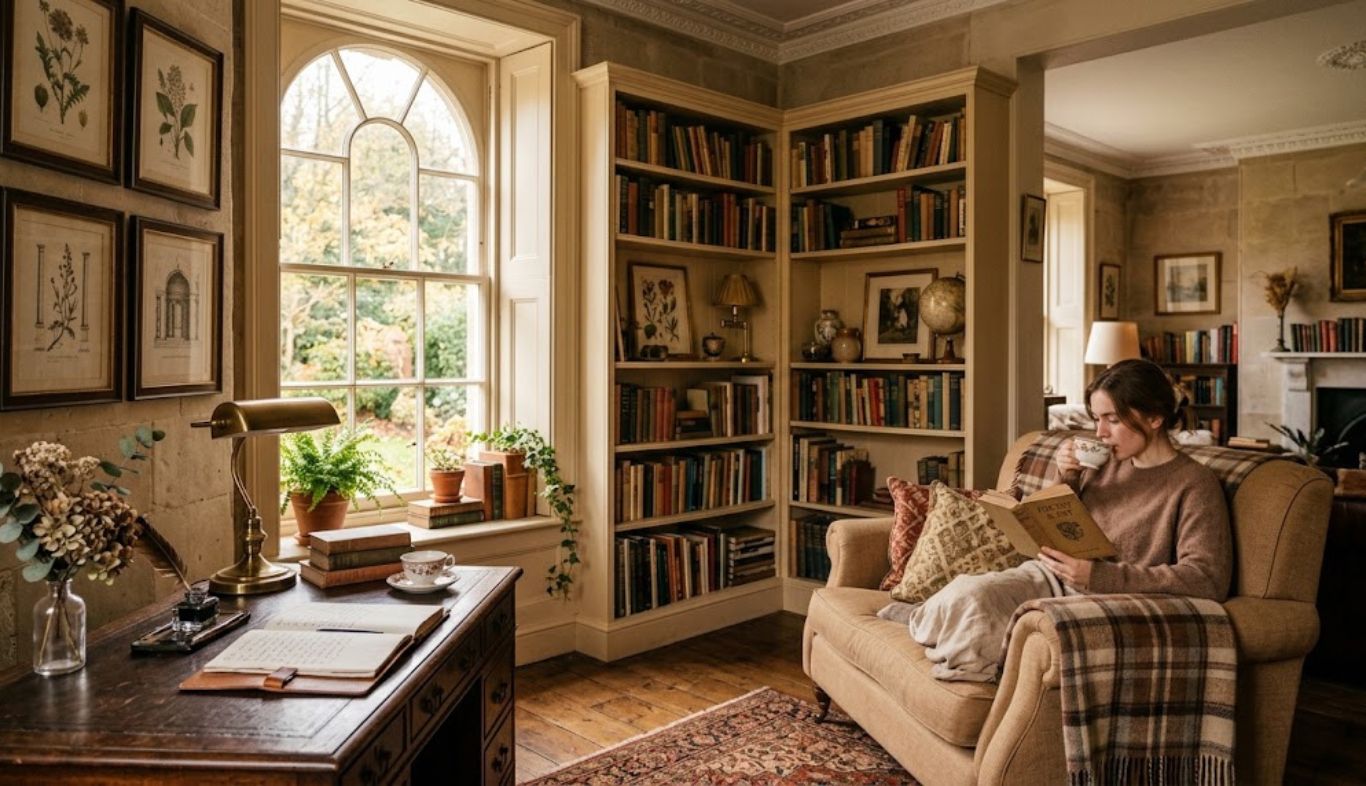
Light Academia Home & Interior Design is an interior style inspired by classical education, literature, art, architecture, history, and a slower approach to everyday life. It shares some DNA with traditional and vintage interiors, but it feels brighter, softer, and more relaxed. Imagine a sun-filled reading room with cream walls, wooden furniture, stacks of books, framed artwork, linen curtains, and a comfortable armchair beside a window. That’s the basic mood. The aesthetic isn’t about making your house look like a museum. Instead, it’s about creating an environment that feels cultured, peaceful, warm, and personal.
The Origins of the Light Academia Home & Interior Design Aesthetic
Light Academia grew alongside online aesthetic communities that romanticized studying, reading, classical art, architecture, poetry, and intellectual life. While the aesthetic has modern digital roots, many of its visual influences come from much older traditions. European libraries, university halls, classical paintings, vintage study rooms, old bookstores, and historic homes all contribute to the look.
Its darker cousin, Dark Academia, often relies on deep browns, black, burgundy, forest green, and dramatic shadows. Light Academia takes those scholarly influences and introduces more daylight, cream, beige, pale wood, soft brown, dusty blue, and warm white.
Core Characteristics
A successful Light Academia interior usually includes several of these elements:
- Warm neutral colors
- Natural daylight
- Classic or vintage-inspired furniture
- Books and literary objects
- Wood and other natural materials
- Linen and cotton textiles
- Traditional artwork
- Brass or aged-metal accents
- Plants and fresh flowers
- Mirrors and decorative frames
- Quiet reading or study areas
- Personal collections and meaningful objects
However, you don’t need every element. In fact, restraint is important. A room overloaded with fake antiques and decorative books can quickly feel staged. A better approach is to choose pieces that you’ll actually use and enjoy.
Light Academia vs. Traditional Interior Design
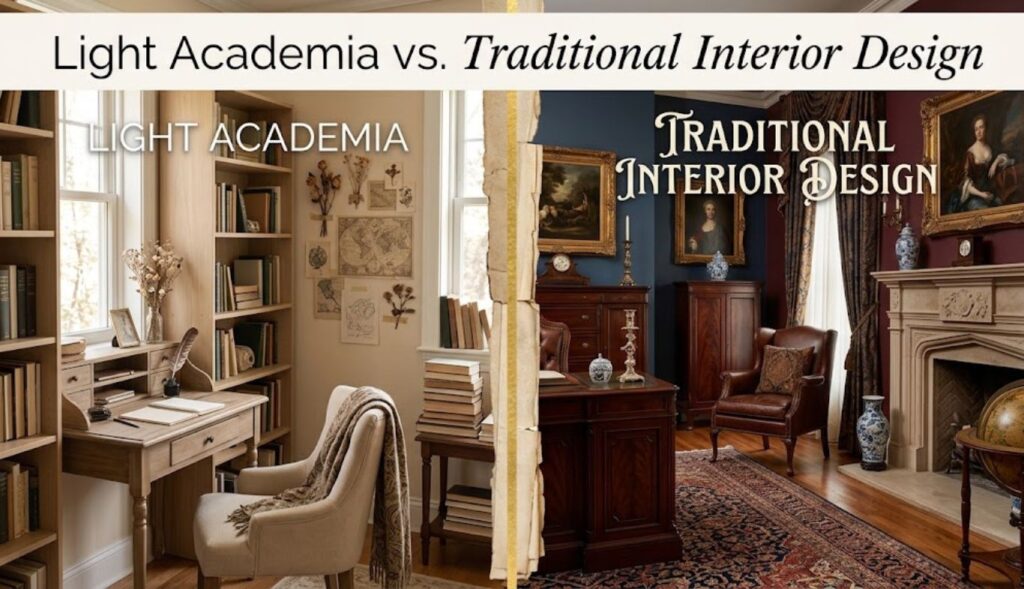
These styles overlap, but they’re not identical. Traditional design can be formal, symmetrical, and highly polished. Light Academia is usually more relaxed. It celebrates imperfections, visible books, slightly worn wood, handwritten notes, vintage objects, and evidence of everyday intellectual life. That’s why an old wooden desk can work beautifully even if it has scratches. A secondhand bookcase can be more convincing than a brand-new reproduction.
Light Academia as a Lifestyle
Perhaps the most interesting aspect of this style is that it’s more than decoration.
A Light Academia room encourages activities such as:
- Reading
- Writing
- Painting
- Journaling
- Studying
- Listening to classical music
- Drinking tea or coffee
- Gardening
- Collecting books and art
The room should support these activities rather than simply photograph well.
Build a Soft and Sophisticated Color Palette
Color is one of the easiest ways to establish a Light Academia atmosphere. Instead of strong, saturated shades, focus on colors that look naturally softened by sunlight.
Essential Light Academia Colors
A useful palette might include:
| Color | Suggested Use |
|---|---|
| Warm white | Walls, ceilings, curtains |
| Ivory | Upholstery and bedding |
| Cream | Rugs and accessories |
| Beige | Large furniture and textiles |
| Taupe | Accent walls and upholstery |
| Light brown | Wood and leather |
| Caramel | Chairs and decorative accents |
| Dusty blue | Artwork and cushions |
| Sage green | Plants and small accents |
| Muted gold | Frames and hardware |
Warm white is particularly useful because it keeps the room bright without creating the harsh feeling that some cool whites can produce.
Start With a Neutral Foundation
For walls, consider cream, ivory, warm white, pale beige, or very soft taupe. If you’re renting, don’t worry. You can achieve much of the same effect through furniture, curtains, rugs, artwork, and lighting. The goal is visual calm.
Add Color Through Accessories
Rather than painting every wall a dramatic color, introduce muted shades through:
- Cushions
- Books
- Artwork
- Ceramics
- Throws
- Flowers
- Rugs
- Desk accessories
This also makes future decorating changes easier.
Use Wood as a Natural Color
Wood is essential because it adds warmth without requiring a strong paint color. Light oak creates an airy appearance, while walnut and medium brown wood introduce more traditional character.
A mix can work, too. Don’t become overly concerned about matching every wooden item. Real homes naturally contain different wood tones.
Don’t Make Everything Beige
This is a common mistake. Light Academia isn’t simply “beige interior design.” If every surface is cream or tan, the room can become flat. Instead, create contrast through texture and small amounts of darker color.
For example: Cream wall + walnut desk + ivory curtains + dusty-blue chair + brass lamp + green plant The result feels layered without becoming visually heavy.
Choose Furniture With Character
Furniture plays a major role in creating an academic interior. The easiest strategy is to combine classic silhouettes with modern comfort.
Look for Timeless Shapes
Good choices include:
- Wooden writing desks
- Upholstered armchairs
- Ladder-back chairs
- Round dining tables
- Bookcases
- Wooden side tables
- Tufted benches
- Classic sofas
- Storage cabinets
- Vintage-inspired desks
You don’t need to buy genuine antiques. Reproduction furniture and secondhand pieces can work beautifully.
Create a Reading Corner
A reading corner is practically a signature feature of the aesthetic. Place a comfortable chair near a window if possible. Add a small table for a book and cup, plus a floor lamp for evening reading.
A simple setup might include:
- Upholstered armchair
- Small wooden side table
- Warm floor lamp
- Soft throw
- Basket for books
- Small plant
The area doesn’t have to be large. Even a corner of a bedroom can become a dedicated reading space.
Prioritize Comfort
An interior shouldn’t sacrifice comfort for appearance. Before buying a chair because it looks “academic,” sit in it. Check the seat depth and back support. The same rule applies to sofas and dining chairs. After all, what good is a beautiful reading chair if you’ll avoid sitting in it?
Make Natural Light a Design Feature
Natural light is arguably the secret ingredient of Light Academia. The aesthetic looks best when daylight can move freely through the room.
Use Lightweight Curtains
Linen or cotton curtains are excellent choices because they soften sunlight while maintaining brightness.
Choose:
- Ivory
- Cream
- Natural linen
- Pale beige
- Soft white
Avoid extremely heavy curtains unless you need them for privacy or temperature control.
Keep Windows Visually Clear
Don’t overcrowd windowsills with objects. A single vase, small plant, or stack of books can add personality. Too many accessories, however, block light and create visual clutter.
Use Mirrors Strategically
A large mirror opposite or near a window can help distribute light visually throughout a room. Traditional frames, particularly wood, brass, or aged finishes, work well with the aesthetic.
Give Walls Architectural Character
Walls are a major opportunity to create an old-world atmosphere.
Consider Wall Molding
Simple picture-frame molding, paneling, or narrow trim can add architectural interest. If permanent modifications aren’t possible, removable molding and wallpaper can provide similar visual impact.
Choose Thoughtful Artwork
Instead of covering every wall, create a curated collection.
Consider:
- Classical paintings
- Botanical illustrations
- Architectural sketches
- Vintage maps
- Portraits
- Black-and-white photography
- Still-life artwork
- Literary prints
The key is to make the collection feel intentional.
Create a Gallery Wall
A gallery wall can combine different frame styles while maintaining a unified color palette.
For example, use:
- Dark wood
- Warm brass
- Cream
- Black
The artwork itself doesn’t have to match perfectly. The frames can provide cohesion.
Make Books Part of the Interior
Books are central to the academic atmosphere because they’re functional, personal, and visually interesting. Don’t simply buy books because their covers match your sofa. Instead, display books you genuinely enjoy or plan to read.
Styling a Bookshelf
Mix books with:
- Small ceramics
- Framed photographs
- Decorative boxes
- Plants
- Sculptural objects
- Candles
- Small artwork
Leave some open space. A completely packed shelf can look chaotic.
Use Books Naturally
Stacks of books can sit on:
- Coffee tables
- Bedside tables
- Desks
- Console tables
- Window benches
This makes the room feel lived-in rather than staged.
Layer Natural Textures
Texture prevents a neutral interior from becoming boring. Light Academia works especially well with natural fabrics and materials.
Useful Materials
Consider:
- Linen
- Cotton
- Wool
- Leather
- Wood
- Rattan
- Ceramic
- Brass
- Stone
- Paper
These materials age gracefully and add tactile interest.
Layer Bedding
For a bedroom, combine:
- Cotton sheets
- Linen duvet
- Knitted throw
- Decorative cushions
Don’t make every textile identical. Slight differences in texture create depth.
Use Warm and Layered Lighting
A Light Academia home should look beautiful after sunset, too. Instead of depending on a single ceiling fixture, create several lighting layers.
Three Useful Lighting Levels
Ambient lighting provides overall illumination.
Task lighting helps with reading, writing, cooking, or studying.
Accent lighting highlights artwork, bookshelves, plants, and architectural features. Desk lamps, table lamps, floor lamps, and wall sconces can all contribute. Choose warm-toned bulbs rather than very cool white lighting for evening use.
Decorate With Art and Meaningful Objects
Decorative objects should tell a story. A ceramic vase inherited from family can be more valuable aesthetically than an expensive decorative object with no connection to your life.
Try a Collected-Look Approach
Choose objects gradually rather than buying everything at once.
Good options include:
- Vintage frames
- Ceramic vases
- Brass candleholders
- Wooden boxes
- Small sculptures
- Botanical prints
- Antique-style clocks
- Handwritten letters
- Travel souvenirs
The goal is collected, not cluttered.
Design a Light Academia Living Room
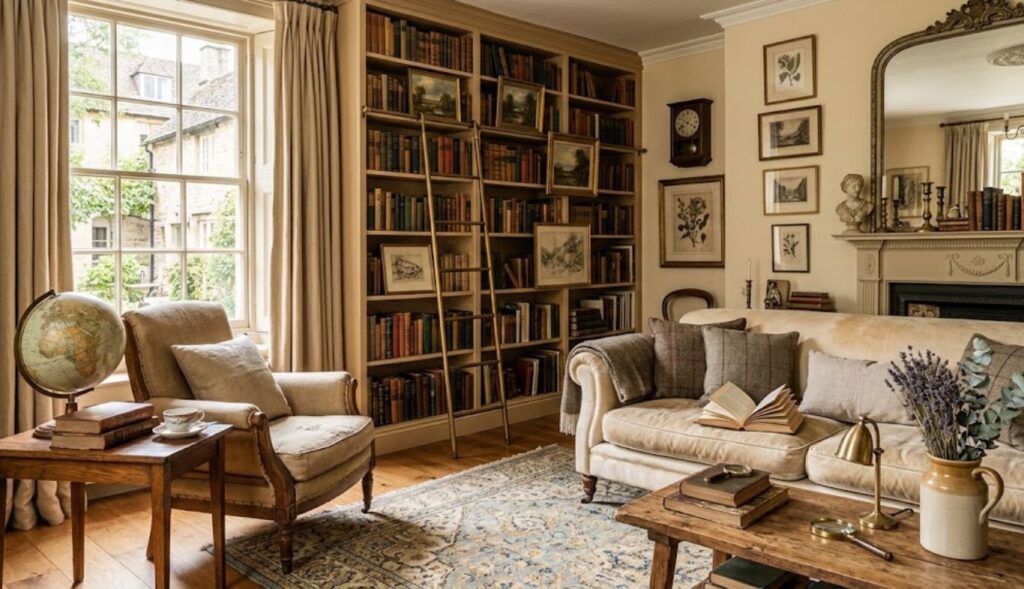
The living room is an ideal place to express the aesthetic because it can combine books, art, furniture, textiles, and lighting. Start with a neutral sofa in cream, beige, taupe, or muted brown. Add a wooden coffee table, textured rug, classic side tables, and several warm lamps.
A Simple Living Room Formula
Try this combination: Neutral sofa + wooden coffee table + vintage-style rug + books + framed art + floor lamp + plants Then personalize it. Perhaps you prefer modern artwork. That’s fine. Light Academia doesn’t require historical accuracy.
Keep the Room Usable
Avoid filling every surface with accessories.
You should still have room for:
- Coffee
- Conversation
- Reading
- Games
- Relaxation
- Everyday life
A beautiful living room that can’t be comfortably used misses the point.
Create a Peaceful Light Academia Bedroom
The bedroom should feel softer than the rest of the home. Choose warm neutrals for the walls and bedding. Natural fabrics are particularly effective because they make the space feel relaxed.
Recommended Bedroom Elements
- Linen bedding
- Wooden bed frame
- Upholstered headboard
- Small bedside table
- Warm table lamp
- Books
- Framed artwork
- Soft rug
- Simple curtains
- Small vase of flowers
Avoid excessive decorative objects around the bed. The bedroom should promote rest rather than visual stimulation.
Build an Inspiring Home Office or Study
A study is where the aesthetic can become especially practical. Choose a desk with enough surface area for your actual work. If you enjoy writing by hand, leave space for notebooks. If you work on a computer, make sure the desk accommodates your equipment comfortably.
Create a Functional Scholarly Atmosphere
A study might include:
- Wooden desk
- Comfortable chair
- Bookshelves
- Desk lamp
- Pinboard
- Artwork
- Notebook
- Pen holder
- Small plant
- Reading chair
Don’t underestimate cable management, either. A beautiful study can quickly lose its charm when cords are scattered everywhere.
Bring the Style Into the Kitchen and Dining Area
Light Academia isn’t restricted to bedrooms and studies. A kitchen can adopt the aesthetic through natural materials and classic details. Consider wooden cutting boards, ceramic dishes, linen towels, open shelving, glass jars, and warm lighting.
Dining Room Ideas
A round or rectangular wooden table creates an inviting focal point. Pair it with traditional chairs and a simple pendant light. Add a vase of seasonal flowers or greenery as the centerpiece. The goal is to make dining feel like an occasion without making the room overly formal.
Create the Look on a Budget
You don’t need to spend a fortune. In fact, secondhand shopping can be particularly useful because Light Academia naturally embraces vintage character.
Affordable Strategies
Shop secondhand. Look for wooden furniture, frames, lamps, mirrors, and books.
Rearrange existing furniture. Sometimes moving a desk closer to a window makes a bigger difference than buying something new.
Change textiles. Curtains, cushions, bedding, and rugs can dramatically alter a room.
Frame inexpensive artwork. A good frame can make a simple print feel considerably more sophisticated.
Use plants. Greenery adds color, texture, and life.
Declutter strategically. Removing unnecessary objects can make the meaningful pieces stand out.
Common Light Academia Decorating Mistakes
Even a beautiful aesthetic can go wrong when it’s taken too literally.
Mistake 1: Making Everything Vintage
A room filled entirely with antique-looking furniture can feel like a theatrical set. Mix old and new.
Mistake 2: Using Too Many Decorative Books
Books should feel authentic. Display books you actually own and enjoy.
Mistake 3: Ignoring Function
A room needs to work for the people who live there. Comfort, storage, lighting, and movement matter.
Mistake 4: Making the Room Too Beige
Introduce muted blue, green, brown, or terracotta to create contrast.
Mistake 5: Overdecorating
Negative space is useful. Give your favorite objects room to breathe.
Frequently Asked Questions
1. What is Light Academia interior design?
Light Academia interior design is an aesthetic inspired by literature, education, classical art, vintage architecture, natural materials, and intellectual hobbies. It uses a lighter palette than Dark Academia, with cream, beige, warm white, pale brown, dusty blue, and soft green.
2. What colors are best for a Light Academia home?
Warm white, cream, ivory, beige, taupe, light brown, caramel, muted blue, sage, and soft gold are excellent choices. The palette should feel warm, understated, and naturally aged rather than bright or highly saturated.
3. Does Light Academia have to look old-fashioned?
No. Modern furniture can work very well. The key is to combine contemporary comfort with classic shapes, natural materials, books, artwork, warm lighting, and thoughtful decoration.
4. How can I create Light Academia decor on a budget?
Start with what you already own. Rearrange furniture, add secondhand wooden pieces, use inexpensive frames, display books, introduce plants, and change textiles. Thrift stores and local secondhand markets can be excellent sources of character-filled furniture.
5. What furniture works best with Light Academia?
Wooden desks, classic bookcases, upholstered armchairs, neutral sofas, vintage-style side tables, dining tables, and traditional chairs are particularly suitable. Comfort should always come first.
6. Is Light Academia suitable for a small apartment?
Absolutely. A small space can actually make the aesthetic easier to control. Focus on one reading corner, a compact bookcase, warm lighting, neutral colors, and a few meaningful decorative pieces.
7. Can I combine Light Academia with modern design?
Yes. A modern sofa can sit beside an antique-style wooden table. Contemporary lighting can work with vintage artwork. The trick is to repeat colors and materials so the different pieces feel connected.
8. What materials are associated with Light Academia?
Wood, linen, cotton, wool, leather, ceramic, brass, stone, paper, and natural fibers are commonly associated with the style. These materials add warmth and texture without requiring bold colors.
9. How do I make my home feel more academic?
Create dedicated spaces for reading, writing, studying, or creative work. Add bookshelves, a comfortable desk, artwork, warm lighting, and objects connected to your interests. The atmosphere should encourage learning rather than merely imitate a library.
10. Is Light Academia the same as Dark Academia?
They’re related but visually different. Dark Academia tends to use deeper colors, dramatic lighting, Gothic influences, and heavier materials. Light Academia uses more daylight, warm neutrals, lighter woods, softer textiles, and an optimistic atmosphere.
Conclusion
Light Academia Home & Interior Design is ultimately less about following a strict decorating formula and more about creating an atmosphere that encourages curiosity, comfort, creativity, and appreciation for beautiful things. Start small. Choose a warm wall color. Add a wooden table. Put your favorite books somewhere visible. Hang meaningful artwork. Introduce linen curtains. Set up a comfortable reading chair. Replace harsh lighting with warmer lamps. Then stop and live in the room.
Over time, your home will naturally develop character. Some pieces will be new, others secondhand. Some will be carefully chosen, while others may have sentimental value. That’s perfectly fine. The most convincing Light Academia interiors aren’t flawless showrooms. They’re homes that feel lived in, thoughtful, peaceful, and intellectually curious. And that’s the real charm of the style: you aren’t simply decorating a house. You’re creating a place where there’s always time for one more chapter.