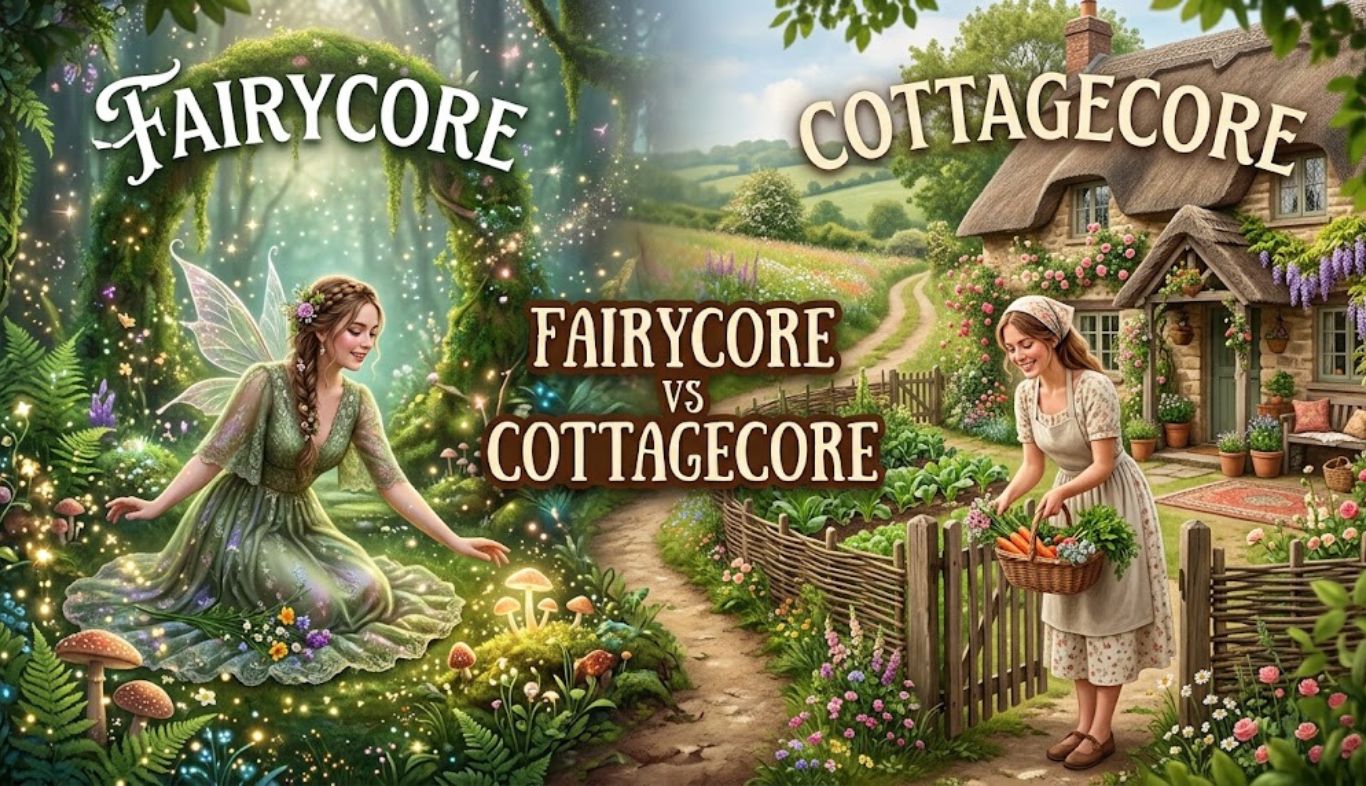
At first glance, Fairycore vs Cottagecore can seem like a battle between two nearly identical aesthetics. Both feature flowers, flowing fabrics, handmade objects, natural textures, vintage details, and an appreciation for the outdoors. Both can also create a peaceful escape from the fast pace of modern life. The main difference is fantasy versus pastoral simplicity. Fairycore takes inspiration from enchanted forests, magical creatures, wildflowers, moonlight, woodland paths, mushrooms, wings, crystals, and folklore. It feels as though you’ve stepped through a hidden doorway and entered an enchanted realm.
Cottagecore, on the other hand, romanticizes rural life. It focuses on cottages, gardens, baking, gardening, embroidery, pottery, books, homemade meals, farm animals, and simple domestic pleasures. Instead of imagining that you’re a fairy in the woods, Cottagecore invites you to imagine that you’re living peacefully in a tiny countryside cottage. Neither aesthetic requires you to live in the countryside or believe in magic. They’re visual and lifestyle-inspired movements that can be adapted to everyday life. That flexibility is part of their appeal. You can bring Fairycore into a city apartment with plants and soft lighting, or add Cottagecore details to a modern bedroom with linen bedding and vintage furniture.
Fairycore Explained: An Enchanted Approach to Nature
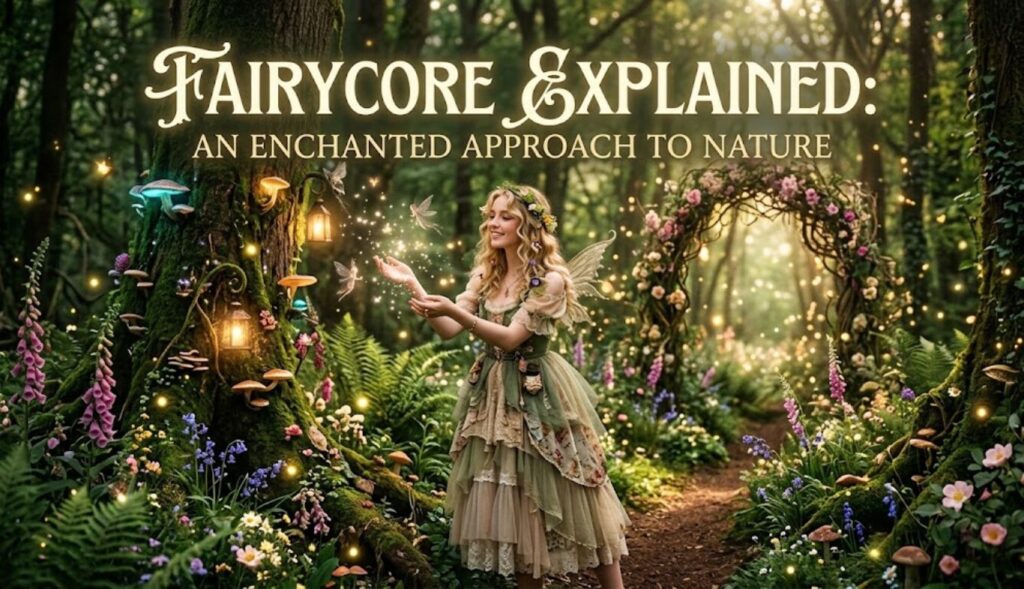
Fairycore is built around the idea of nature as something mysterious, magical, and slightly otherworldly. Think of a forest just after rainfall. Moss covers an old stone. Tiny flowers grow between tree roots. Sunlight filters through branches. There’s a winding path that seems to lead somewhere secret. That’s Fairycore in a nutshell.
The aesthetic often draws visual inspiration from European fairy tales, woodland folklore, fantasy illustrations, enchanted gardens, and magical storytelling. Folklore itself has a long history of connecting landscapes with supernatural stories. For example, Smithsonian Magazine has explored the enduring role of fairies and supernatural beings in Irish storytelling and the cultural importance of fairy trees. Fairycore doesn’t have to reproduce historical folklore accurately. Instead, it uses those ideas as creative inspiration.
The Fairycore Mood
The typical Fairycore mood is:
- Magical
- Whimsical
- Dreamy
- Mysterious
- Delicate
- Romantic
- Woodland-inspired
- Ethereal
Compared with Cottagecore, Fairycore is generally less practical and more imaginative. A Cottagecore kitchen might contain a basket of freshly baked bread. A Fairycore kitchen might have dried herbs hanging beside jars of flowers, glowing candles, and tiny decorative mushrooms. The difference is subtle but important: Cottagecore makes ordinary life feel beautiful, while Fairycore makes ordinary nature feel magical.
Fairycore Color Palette
Fairycore usually favors colors that look as though they’ve been found in a forest or garden.
Common shades include:
- Moss green
- Sage green
- Fern
- Soft brown
- Cream
- Lavender
- Dusty pink
- Pale blue
- Mushroom beige
- Muted gold
- Forest green
Some versions of Fairycore use brighter jewel tones, especially emerald, violet, and deep blue. The palette doesn’t need to be perfectly coordinated. In fact, a slightly imperfect combination can make the aesthetic feel more organic.
Fairycore Fashion
Fairycore clothing tends to be soft, flowing, layered, and romantic.
Popular pieces include:
- Long skirts
- Sheer blouses
- Lace tops
- Corset-inspired bodices
- Floral dresses
- Cardigans
- Embroidered clothing
- Ribbon details
- Bell sleeves
- Ballet-inspired flats
- Vintage-style boots
Accessories can be particularly important. Think delicate necklaces, flower clips, ribbons, botanical earrings, small bags, and nature-inspired jewelry. The goal isn’t necessarily to look like a literal fairy. Instead, Fairycore fashion creates the suggestion of fantasy.
Fairycore Home Décor
A Fairycore room might include:
Cottagecore Explained: Romanticizing Simple Country Life
- Dried flowers
- Hanging plants
- Fairy lights
- Mushroom decorations
- Botanical prints
- Vintage mirrors
- Woven baskets
- Crystal-like accents
- Antique-looking frames
- Soft curtains
- Natural wood
- Candles or candle-inspired lighting
Texture matters enormously. Instead of filling a room with shiny, perfectly manufactured objects, Fairycore works best when different natural-looking textures are layered together. A wooden bedside table, linen curtains, dried flowers, a woven basket, and a soft quilt can create more atmosphere than dozens of novelty decorations.
Fairycore Beauty
Fairycore makeup is usually soft and luminous.
A typical look might include:
- Dewy skin
- Soft blush
- Subtle shimmer
- Brown or muted eyeliner
- Rosy lips
- Natural brows
- Flower-inspired accents
Hair can be loose, braided, wavy, or decorated with ribbons and small floral accessories. The overall effect should feel effortless rather than heavily constructed. Cottagecore is centered on an idealized vision of rural life. Imagine a small cottage surrounded by wildflowers. There’s a vegetable garden outside. Inside, a loaf of bread is cooling on a wooden table. A handmade quilt sits beside an old armchair, and the afternoon is spent reading, sewing, cooking, or tending plants. That’s classic Cottagecore.
The aesthetic became especially visible online during the late 2010s and early 2020s, although many of its visual influences are much older. Cottagecore combines elements of rural nostalgia, traditional crafts, domestic life, gardening, vintage clothing, and pastoral imagery. Even the Smithsonian Photo Contest has featured photography tagged as “cottagecore,” illustrating how the term has become a recognizable contemporary visual style.
The Cottagecore Mood
Cottagecore tends to feel:
- Cozy
- Peaceful
- Nostalgic
- Practical
- Domestic
- Rustic
- Gentle
- Wholesome
- Earthy
While Fairycore asks you to imagine a magical world hidden within nature, Cottagecore asks you to appreciate the beauty of everyday life. It’s less about escaping reality and more about making reality feel slower and more meaningful.
Cottagecore Color Palette
Typical Cottagecore colors include:
- Cream
- Beige
- Warm white
- Sage
- Olive
- Terracotta
- Dusty rose
- Muted yellow
- Brown
- Soft blue
Patterns are also important. Florals, gingham, checks, stripes, and small botanical prints are common. Unlike Fairycore, which can lean toward fantasy colors, Cottagecore usually stays close to colors associated with natural materials and old-fashioned interiors.
Cottagecore Fashion
Cottagecore clothing often looks practical enough to wear while still feeling romantic.
Popular choices include:
- Linen dresses
- Cotton skirts
- Aprons
- Cardigans
- Knit sweaters
- Button-up blouses
- Prairie-style dresses
- Floral prints
- Embroidered pieces
- Comfortable flats
- Simple boots
Accessories tend to be understated. A straw bag, scarf, ribbon, woven basket, or vintage-inspired necklace can complete the outfit. Cottagecore fashion is also strongly connected with handmade and vintage aesthetics. Clothing doesn’t necessarily need to be expensive or designer-made. Thrifted pieces, repaired garments, and simple DIY alterations can fit beautifully.
Cottagecore Home Décor
Cottagecore interiors focus heavily on comfort and function.
Think:
- Wooden furniture
- Open shelves
- Ceramic dishes
- Floral curtains
- Quilts
- Woven baskets
- Vintage books
- Handmade pottery
- Dried herbs
- Houseplants
- Linen textiles
- Floral tablecloths
The kitchen is particularly important. Bread making, jam making, gardening, tea, baking, preserving food, and cooking are often represented as part of the Cottagecore lifestyle.
Of course, you don’t have to bake bread every morning to enjoy Cottagecore. The deeper idea is to slow down and find satisfaction in ordinary activities.
Cottagecore Hobbies
Cottagecore naturally connects with hands-on hobbies.
Popular activities include:
- Gardening
- Baking
- Sewing
- Embroidery
- Knitting
- Reading
- Painting
- Pottery
- Flower arranging
- Cooking from scratch
This makes Cottagecore particularly appealing to people who enjoy creating things rather than simply collecting decorative objects.
Fairycore vs Cottagecore: 12 Key Differences
The easiest way to understand the difference is to compare the two aesthetics directly.
| Feature | Fairycore | Cottagecore |
|---|---|---|
| Main inspiration | Fairies, forests, fantasy | Rural life and cottages |
| Core mood | Magical | Cozy |
| Nature | Enchanted and mysterious | Pastoral and practical |
| Colors | Moss, lavender, dusty pink, forest tones | Cream, sage, brown, floral tones |
| Fashion | Ethereal and whimsical | Romantic and rustic |
| Fabrics | Lace, chiffon, soft layers | Linen, cotton, wool |
| Décor | Mushrooms, flowers, magical details | Pottery, quilts, baskets |
| Hobbies | Nature walks, crafts, collecting | Gardening, baking, sewing |
| Symbolism | Magic and mystery | Simplicity and self-sufficiency |
| Lighting | Dreamy, glowing, atmospheric | Warm, natural, homey |
| Setting | Forest, meadow, enchanted garden | Cottage, farm, village |
| Overall feeling | “I found a magical world.” | “I’m home.” |
Difference 1: Fantasy vs Reality
This is the biggest distinction. Fairycore introduces fantasy into the natural world. Cottagecore romanticizes real-world rural activities.
Difference 2: Woodland vs Countryside
Fairycore usually belongs in a forest, meadow, enchanted garden, or mossy woodland. Cottagecore is more likely to feature a cottage, farmhouse, kitchen garden, field, orchard, or village.
Difference 3: Magic vs Domesticity
Fairycore emphasizes imagination. Cottagecore emphasizes domestic comfort. That doesn’t mean Cottagecore is boring or Fairycore is impractical. They’re simply built around different emotional ideas.
Difference 4: Ethereal vs Rustic
Fairycore clothing often appears lightweight and dreamlike. Cottagecore clothing usually appears sturdier and more practical.
Difference 5: Mystical vs Nostalgic
Fairycore looks toward fantasy. Cottagecore often looks backward toward an imagined simpler past. Neither is necessarily a historically accurate representation of the past. Both are modern aesthetic interpretations.
Difference 6: Decorative Objects
Fairycore might use mushrooms, wings, stars, moon motifs, crystals, and botanical illustrations. Cottagecore might use ceramic bowls, baskets, quilts, vintage clocks, wooden utensils, and gardening tools.
Difference 7: Lighting
Fairycore thrives on tiny points of light: fairy lights, candles, lanterns, and glowing accents. Cottagecore often emphasizes sunlight, warm lamps, fireplaces, and natural illumination.
Difference 8: Clothing Silhouettes
Fairycore tends to favor movement and fantasy. Cottagecore tends to favor comfortable, practical silhouettes.
Difference 9: Food
Cottagecore has a particularly strong relationship with food preparation. Bread, pies, soups, preserves, herbal teas, and garden vegetables are central visual symbols. Fairycore can include food, but it may present it more romantically—berries, herbal drinks, flower-decorated cakes, and woodland picnic scenes, for example.
Difference 10: Nature’s Role
For Fairycore, nature can feel like a doorway to another world. For Cottagecore, nature is often a place to work, relax, grow food, and live simply.
Difference 11: Emotional Escape
Fairycore provides an escape through fantasy. Cottagecore provides an escape through simplicity.
Difference 12: Overall Identity
If Fairycore says, “What if the forest is enchanted?”, Cottagecore says, “What if life could be slower?” That’s the heart of the comparison.
Fairycore vs Cottagecore Fashion
Fashion is one of the easiest ways to tell the aesthetics apart. A Fairycore outfit may combine a flowing skirt, lace blouse, embroidered cardigan, delicate jewelry, and floral hair accessories. The goal is to create a soft, otherworldly silhouette. A Cottagecore outfit might use a linen dress, cardigan, apron-style layer, woven bag, and practical shoes.
Fairycore Outfit Formula
Try: Flowing dress + lace + botanical accessory + soft cardigan + delicate jewelry For a stronger fantasy effect, add ribbons, unusual textures, or woodland-inspired colors.
Cottagecore Outfit Formula
Try: Cotton or linen dress + cardigan + practical shoes + woven bag For extra Cottagecore character, add a floral print, gingham pattern, apron, or handmade accessory.
Can One Outfit Be Both?
Absolutely. A cream linen dress with embroidered flowers can work for both aesthetics. Add fairy-inspired jewelry and woodland accessories, and it becomes Fairycore. Add a straw bag and gardening apron, and it leans Cottagecore. That’s the beauty of aesthetic fashion: you don’t have to pick just one box.
Fairycore vs Cottagecore Home Décor
Home décor reveals another major distinction. A Fairycore bedroom might feel like a secret woodland hideaway. Use plants, sheer curtains, warm lights, botanical artwork, soft bedding, and unusual natural objects. A Cottagecore bedroom might feel like a peaceful guest room in an old countryside cottage. Think quilts, wooden furniture, floral bedding, vintage books, and handmade textiles.
Fairycore Bedroom Ideas
- Hang delicate lights around a mirror.
- Use botanical wall art.
- Add trailing plants.
- Choose mossy or muted green accents.
- Display dried flowers.
- Use natural wood.
- Add whimsical decorative objects.
Cottagecore Bedroom Ideas
- Layer quilts and blankets.
- Use floral or gingham bedding.
- Add a wooden bedside table.
- Display old books.
- Use ceramic vases.
- Choose warm cream and beige tones.
- Add handmade textiles.
The Golden Rule
Don’t overdecorate. Both aesthetics work best when a room feels collected rather than manufactured. One carefully chosen antique mirror can be more effective than ten fake-vintage decorations.
Nature: Enchanted Forest vs Cottage Garden
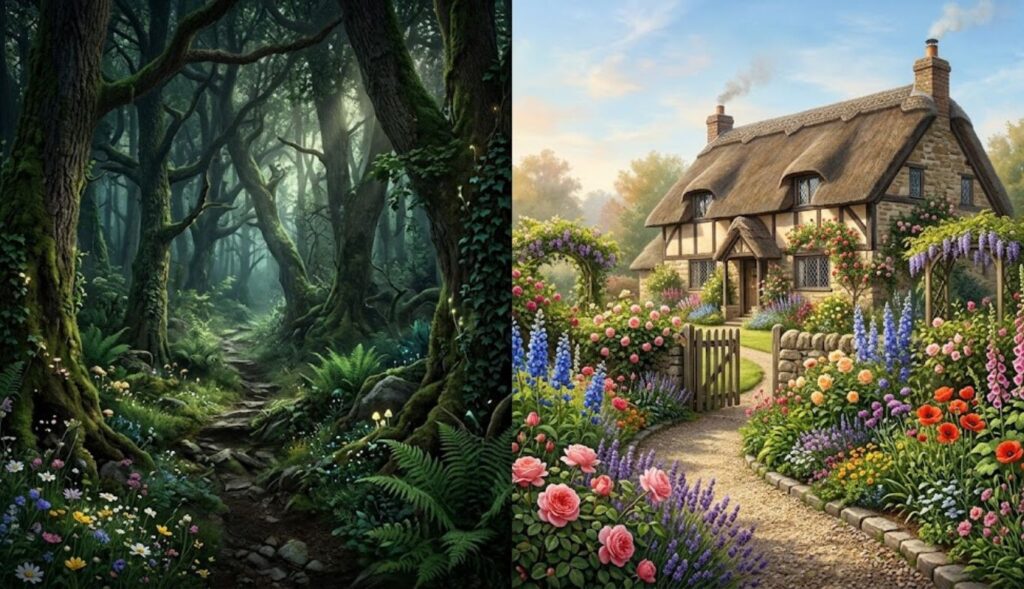
Nature is the bridge between Fairycore and Cottagecore. Fairycore usually emphasizes wild nature. Cottagecore often emphasizes cultivated nature.
A Fairycore garden might look intentionally untamed. Wildflowers, moss, ferns, stones, and woodland plants create an organic atmosphere. A Cottagecore garden may contain vegetables, herbs, roses, fruit trees, and carefully tended flower beds.
This distinction reflects their different philosophies. Fairycore says nature should remain mysterious. Cottagecore says nature can become part of everyday life. You can even combine them. Imagine a cottage garden with a slightly wild corner filled with ferns, mushrooms, stones, and flowering plants. That’s practically a Fairycore-Cottagecore crossover.
Lifestyle and Hobbies
Aesthetic lifestyles don’t need to dictate your entire life. Instead, think of them as collections of activities that help you create a particular atmosphere.
Fairycore Activities
Fairycore-inspired activities might include:
- Forest walks
- Nature photography
- Pressing flowers
- Sketching plants
- Stargazing
- Collecting interesting stones
- Reading fantasy
- Making botanical crafts
- Creating miniature gardens
- Writing stories
Cottagecore Activities
Cottagecore-inspired activities might include:
- Gardening
- Baking
- Sewing
- Knitting
- Cooking
- Preserving food
- Reading
- Painting
- Making pottery
- Arranging flowers
There’s plenty of overlap. Flower pressing, reading, painting, and gardening can belong to both. The difference comes from the way you frame the activity. A Fairycore person might press flowers because they feel like magical treasures.
A Cottagecore person might press flowers because they want to preserve a beautiful part of their garden. Same activity, different emotional lens.
Which Aesthetic Should You Choose?
Choosing between Fairycore and Cottagecore comes down to the atmosphere you want to create.
Choose Fairycore if you love:
- Fantasy
- Forests
- Folklore
- Mystical imagery
- Soft, unusual accessories
- Dreamy fashion
- Magical gardens
- Whimsical décor
Choose Cottagecore if you love:
- Gardening
- Cooking
- Baking
- Vintage interiors
- Handmade crafts
- Floral prints
- Cozy rooms
- Rural imagery
- Slow living
If you’re still unsure, ask yourself one question: Would I rather discover a fairy ring in the forest or bake a pie in a cottage kitchen?
If your answer is the forest, Fairycore may be your match. If your answer is the kitchen, Cottagecore probably has your heart. And if you’re thinking, “Why not both?”—well, you’re onto something.
How to Combine Fairycore and Cottagecore
You don’t have to choose. A hybrid aesthetic can combine the practical warmth of Cottagecore with the magical atmosphere of Fairycore. This style can be called Fairy Cottagecore or simply a Cottagecore look with Fairycore influences.
Start with a Cottagecore foundation:
- Linen
- Wood
- Floral patterns
- Ceramics
- Quilts
- Gardening
- Handmade objects
Then add Fairycore elements:
- Mossy colors
- Tiny lights
- Botanical illustrations
- Mushrooms
- Wildflowers
- Whimsical jewelry
- Forest-inspired details
The result feels grounded but imaginative. For example, a bedroom could have a traditional quilt and wooden furniture, while a string of warm lights and hanging plants add a magical woodland feeling. That balance is often more practical than trying to make every object overtly fantasy-themed.
Seasonal Fairycore vs Cottagecore
Both aesthetics change beautifully with the seasons.
Spring
Fairycore: wildflowers, fresh green leaves, butterflies, soft pinks, and delicate fabrics. Cottagecore: gardening, seedlings, floral dresses, picnics, and freshly opened windows.
Summer
Fairycore: enchanted gardens, wild meadows, flowing dresses, and moonlit evenings.
Cottagecore: fruit picking, outdoor meals, gardening, linen clothing, and homemade lemonade.
Autumn
Fairycore: mushrooms, amber leaves, misty forests, dark green, and warm brown.
Cottagecore: baking, knitted sweaters, pumpkins, preserves, apples, and cozy kitchens.
Winter
Fairycore: candlelight, frosted forests, silver details, velvet, and deep jewel tones.
Cottagecore: quilts, fireplaces, hot drinks, knitted clothing, baking, and quiet reading. The seasonal flexibility of both aesthetics makes them useful beyond social media. You can adapt your wardrobe, room, hobbies, and décor throughout the year.
Frequently Asked Questions
1. Is Fairycore the same as Cottagecore?
No. They overlap, but Fairycore is more focused on fantasy, magic, woodland imagery, and otherworldly beauty. Cottagecore focuses more on rural living, domestic activities, gardening, crafts, and nostalgic countryside imagery.
2. Can I be both Fairycore and Cottagecore?
Yes. In fact, the two aesthetics work extremely well together. Cottagecore can provide the practical foundation, while Fairycore adds magical and whimsical details.
3. Is Fairycore only about fairies?
Not at all. Fairycore can include forests, flowers, mushrooms, folklore, moonlight, butterflies, botanical imagery, magical gardens, and dreamy fashion. The fairy theme is inspiration rather than a strict requirement.
4. Is Cottagecore about actually living in a cottage?
No. You can enjoy Cottagecore in an apartment, dorm room, suburban home, or city bedroom. The aesthetic is about creating a feeling of simplicity, comfort, nature, and nostalgia.
5. Which aesthetic is more feminine?
Both can be feminine, but neither is inherently feminine. Fairycore often uses romantic and delicate elements, while Cottagecore frequently uses dresses, florals, and soft colors. However, anyone can adapt either aesthetic to their personal style.
6. What colors work for both aesthetics?
Sage green, cream, soft brown, dusty pink, muted yellow, lavender, and natural beige work especially well. These shades can create a bridge between magical Fairycore and cozy Cottagecore.
7. Is Fairycore more expensive than Cottagecore?
It doesn’t have to be. Thrift stores, secondhand shops, DIY crafts, plants, dried flowers, and handmade decorations can work beautifully for both aesthetics. The key is atmosphere, not price.
8. Can I use Fairycore décor in a Cottagecore room?
Definitely. Try adding subtle elements such as mushroom art, botanical prints, warm fairy lights, dried flowers, or woodland-inspired ceramics. Small additions can change the mood without overwhelming the room.
9. What is the biggest difference between Fairycore and Cottagecore?
The simplest answer is fantasy versus pastoral simplicity. Fairycore imagines nature as enchanted, while Cottagecore romanticizes a slower, simpler relationship with everyday life.
10. Which aesthetic is better?
Neither is objectively better. Fairycore is better suited to people who love fantasy and mystery, while Cottagecore may appeal more to people who enjoy cozy domesticity, gardening, cooking, and crafts. Your personal taste is what matters.
Conclusion
The Fairycore vs Cottagecore debate isn’t really about choosing a winner. Both aesthetics respond to a similar desire: to slow down, reconnect with nature, and create beauty in everyday surroundings. Fairycore turns nature into a fantasy. It invites you to imagine hidden paths, magical gardens, glowing forests, and stories beneath the surface of ordinary life. Cottagecore turns ordinary life into something worth romanticizing. It celebrates gardening, baking, handmade crafts, comfortable clothing, vintage interiors, and the simple pleasure of being at home.
If you love both, combine them. Start with Cottagecore’s natural materials, cozy textures, and practical details, then layer in Fairycore’s woodland colors, whimsical accessories, botanical motifs, and atmospheric lighting. After all, there’s no rule saying your cottage can’t have a little magic in the garden.