

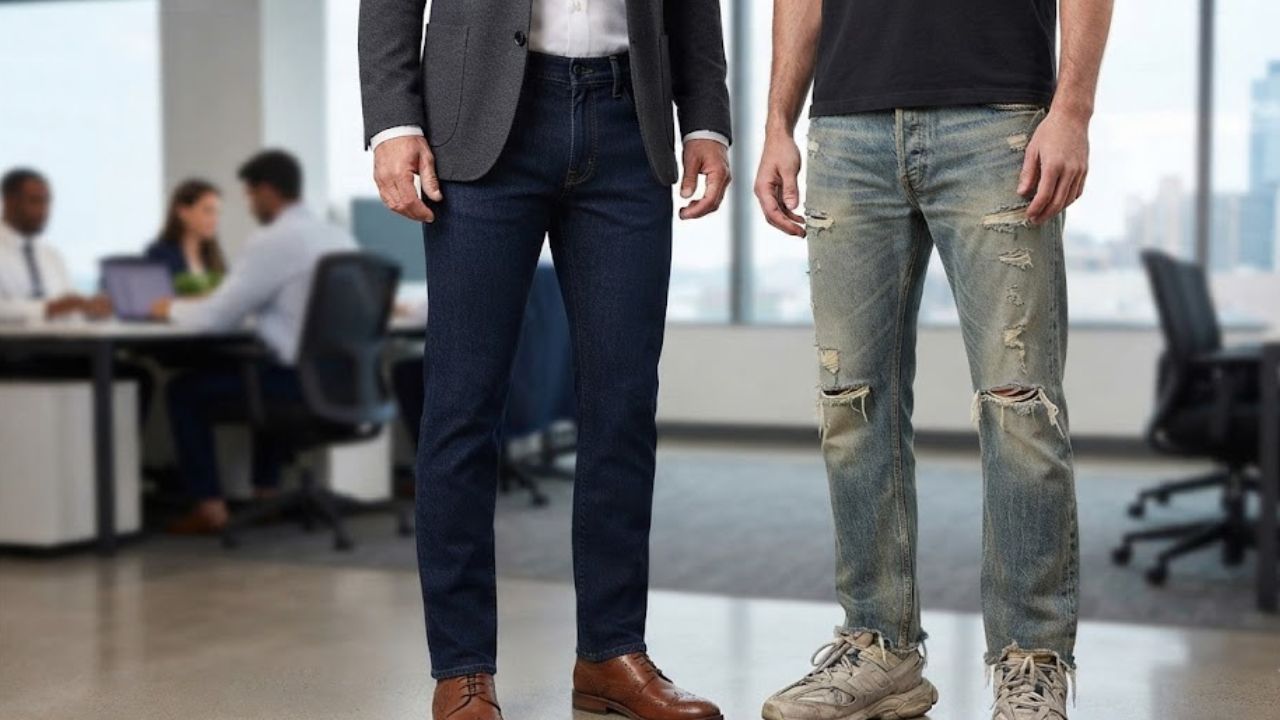
Business Casual Jeans Rules For years, jeans were treated as the one item that didn’t belong in an office. That assumption no longer holds true for many workplaces across the United States. As companies have adopted more flexible dress codes, denim has quietly become part of everyday office wardrobes. The catch is that not every pair of jeans earns a place in a business casual outfit. The colour, fit, condition and the way they’re styled all influence whether they look polished or out of place.
Many people ask the same questions before heading to work: Can jeans be business casual? Are jeans considered business casual? Can you wear jeans for business casual every day? The answer depends less on the jeans themselves and more on how they fit into your workplace’s expectations. A well-chosen pair of dark denim paired with tailored pieces can look every bit as professional as chinos. Business Casual Jeans Rules A faded, ripped pair worn with trainers and a hoodie tells a very different story.
Understanding Business Casual and Why Jeans Sometimes Fit the Dress Code
Business Casual Jeans Rules has never been a single, universal standard. A financial firm, a marketing agency and a technology startup may all use the phrase, yet employees dress quite differently in each environment. That’s why copying an outfit from social media without considering your workplace often leads to disappointment.
The biggest mistake people make is assuming that business casual simply means “less formal.” A stronger way to think about it is balancing professionalism with comfort. Clothing should still look intentional, clean and appropriate for client meetings, presentations or unexpected conversations with senior leadership.
Jeans entered the business casual conversation because office culture changed. Hybrid work, relaxed corporate environments and the popularity of smart casual fashion all influenced expectations. Employers increasingly care more about whether someone looks neat and confident than whether they’re wearing traditional dress trousers every day.
That doesn’t mean every office welcomes denim. Conservative industries such as law, banking and some government organisations often expect dress trousers or chinos except on designated Casual Fridays. Creative agencies, software companies and design studios usually allow much more flexibility.
Before investing in a new wardrobe, pay attention to what respected managers and experienced colleagues actually wear. Company culture almost always tells you more than the employee handbook.
Can Jeans Be Business Casual?

The short answer is yes—but only under the right conditions.
Business Casual Jeans Rules When someone asks, “Can jeans be business casual?” they’re really asking whether denim can communicate professionalism. It absolutely can, provided it avoids drawing attention for the wrong reasons.
A simple rule works remarkably well: the cleaner and more tailored the jeans appear, the more appropriate they become for business casual settings. Dark indigo, black and deep navy denim naturally resemble dress trousers from a distance, making them much easier to style professionally.
By contrast, heavily distressed jeans, oversized silhouettes and faded washes immediately shift an outfit towards casual weekend wear. Even expensive designer denim can look inappropriate if it appears intentionally worn.
One detail competitors rarely mention is fabric weight. Higher-quality denim tends to drape better, wrinkle less and maintain its shape throughout a working day. Cheap, thin denim often develops knee bags and creases after only a few hours, making an otherwise polished outfit appear untidy.
Business Casual Jeans Rules If your office occasionally hosts clients, executives or external partners, it’s worth asking yourself one practical question before leaving home: Would I feel comfortable wearing these jeans during an unexpected meeting? If the answer is yes, you’ve probably chosen well.
What Makes Jeans Office Appropriate?
Several characteristics separate professional denim from casual denim.
| Feature | Business Casual Choice |
| Colour | Dark indigo, black or deep navy |
| Fit | Slim, straight or tailored fit |
| Wash | Clean, uniform wash |
| Condition | No rips, fading or distressing |
| Length | Proper hem with minimal stacking |
| Styling | Paired with structured clothing |
Business Casual Jeans Rules Notice that none of these factors alone determines success. A pair of dark jeans with an oversized graphic T-shirt still looks casual. Likewise, a blazer cannot completely rescue ripped denim.
The overall outfit matters more than any individual item.
Are Jeans Considered Business Casual? It Depends on the Complete Outfit
Business Casual Jeans Rules People often focus entirely on the jeans while ignoring everything worn with them. That’s backwards.
Business casual is created through combinations rather than single garments. A polished blazer, Oxford shirt, leather belt and loafers immediately elevate dark denim. Replace those pieces with a hoodie and running shoes, and the exact same jeans suddenly belong at the weekend.
Professional stylists frequently use the idea of “visual balance.” Denim naturally introduces a relaxed element, so everything around it should lean slightly more refined. That’s why structured jackets, quality knitwear and leather footwear consistently work so well.
A few reliable combinations include:
- Dark wash jeans with an Oxford shirt, navy blazer and brown loafers.
- Black jeans paired with a fine-knit polo, leather Chelsea boots and a tailored jacket.
- Straight-leg jeans worn with a crisp blouse, structured cardigan and classic pumps.
Business Casual Jeans Rules These combinations succeed because every piece supports the same level of formality.
Another overlooked consideration is grooming. Wrinkled shirts, worn-out trainers or an unkempt appearance can make even expensive business casual clothing seem careless. Clean shoes, pressed clothing and well-maintained accessories often have a greater impact than buying another pair of jeans.
Different industries also interpret business casual differently. A software engineer may comfortably wear dark jeans four days a week, while an accountant in a corporate office might reserve denim exclusively for Fridays. Understanding that distinction helps avoid awkward first impressions.
The same principle applies to interviews. Unless you’re specifically interviewing with a company known for an exceptionally relaxed culture, dress trousers remain the safer option. It’s easier to become slightly overdressed than noticeably underdressed during a first meeting.
Are Jeans Smart Casual? Understanding the Difference

One reason people get confused is that smart casual and business casual often overlap. Both favour polished clothing over overly relaxed outfits, and both can include jeans. The difference lies in the purpose of the outfit.
Business Casual Jeans Rules Smart casual gives you more freedom to express personal style. You might wear dark jeans with a premium T-shirt, minimalist leather trainers and an overshirt for dinner or a networking event. Business casual, on the other hand, still carries a professional expectation. The outfit should look suitable for a workplace first and fashionable second.
That doesn’t mean business casual has to feel boring. A textured blazer, quality knit polo, leather loafers or Chelsea boots can give an outfit personality while keeping it office appropriate. Rather than chasing trends, build outfits around timeless pieces that continue looking current year after year. Professionals who consistently dress well usually rely on good fit and quality fabrics instead of attention-grabbing styles.
Styling Business Casual Jeans for Different Workplaces
Business Casual Jeans Rules A useful approach is to dress for the environment rather than the dress code alone. Two offices may both describe themselves as business casual, yet the expectations can differ dramatically.
In a traditional corporate office, dark wash or black jeans paired with an Oxford shirt, tailored blazer and leather shoes usually feel appropriate. If client meetings are common, keeping a blazer at the office is a simple way to elevate your appearance within minutes.
Creative industries often allow more flexibility. Straight-leg denim with a fine-knit sweater or premium polo shirt creates a relaxed yet professional look. Here, colour and texture can play a larger role, but clothing should still appear intentional rather than casual.
Business Casual Jeans Rules Hybrid workplaces introduce another challenge. Employees often move between home, coffee shops and office meetings during the same day. A versatile outfit becomes essential. Dark denim, a lightweight knit, clean leather trainers and an unstructured blazer strike a balance between comfort and professionalism without looking underdressed in meetings.
For women, business casual jeans work well with tailored blouses, elegant knitwear, structured jackets and classic flats or block heels. Straight-leg and slim-fit jeans are generally the easiest styles to dress up because their clean lines complement professional clothing. Oversized or heavily distressed styles can quickly shift the look away from office wear.
For men, pairing dark denim with a button-down shirt and loafers remains one of the most dependable combinations. Adding a leather belt that matches the shoes creates a subtle sense of coordination many people overlook. These small details often make an outfit appear more refined than expensive designer labels.
Common Mistakes That Make Jeans Look Too Casual
Business Casual Jeans Rules Many business casual mistakes aren’t dramatic. They’re simply small details that combine to create a less professional impression.
The most common problems include:
- Wearing ripped, faded or overly distressed jeans, choosing athletic trainers instead of polished footwear, pairing denim with graphic T-shirts or hoodies, and selecting jeans that are either excessively tight or noticeably baggy.
- Ignoring overall presentation by wearing wrinkled shirts, worn belts, scuffed shoes or clothing that doesn’t fit properly. Even high-quality jeans struggle to look professional when the rest of the outfit appears neglected.
Business Casual Jeans Rules Another mistake competitors rarely discuss is relying too heavily on trends. Fashion changes quickly, but workplace style moves at a slower pace. Extremely wide-leg jeans, exaggerated stacking or experimental washes may look current on social media yet feel out of place during an office presentation. If you’re unsure, classic cuts almost always win.
Colour also matters more than many people realise. Dark indigo and black denim naturally project a cleaner, more structured appearance than light blue or heavily faded jeans. If you’re buying your first pair specifically for work, darker shades provide the greatest versatility and pair easily with blazers, knitwear and dress shirts.
Expert Advice for Building a Business Casual Wardrobe Around Jeans

Experienced stylists often recommend buying fewer, better-quality pieces rather than filling a wardrobe with inexpensive clothing that wears out quickly. That advice applies especially to denim. One excellent pair of jeans that fits perfectly will usually see more use than several average pairs.
Business Casual Jeans Rules Think of jeans as the foundation rather than the focal point of your outfit. Investing in versatile staples such as a navy blazer, white Oxford shirt, fine-knit polo, leather loafers and quality belt allows the same pair of jeans to create multiple professional looks throughout the week. This approach saves money while making daily outfit choices much easier.
Another practical habit is to review your outfit from head to toe before leaving home. Ask yourself whether every item looks intentional. Are the shoes clean? Is the shirt pressed? Does the denim still hold its shape? Small checks like these often make a bigger difference than purchasing another fashionable item.
As workplaces continue evolving, business casual has become less about following rigid rules and more about demonstrating sound judgement. People notice confidence, consistency and attention to detail far more than whether your trousers happen to be made from denim.
Final Thoughts
Business Casual Jeans Rules So, can jeans be business casual? In many workplaces, yes. The deciding factors are the quality of the jeans, how they’re styled and the expectations of your employer. Dark wash or black jeans with tailored clothing and polished footwear can easily look professional, while distressed denim and casual accessories usually miss the mark.
If you’re ever uncertain, observe how respected colleagues dress and aim for the more polished option. Business casual isn’t about wearing the most fashionable outfit in the room—it’s about looking capable, confident and appropriately dressed for the work you’re there to do.
Frequently Asked Questions
Can jeans be business casual every day?
Business Casual Jeans Rules They can if your employer allows denim as part of its everyday dress code. Dark, well-fitted jeans without distressing are generally the safest choice.
Are black jeans more professional than blue jeans?
Business Casual Jeans Rules In many workplaces, yes. Black jeans often resemble tailored trousers and are easier to pair with blazers, dress shirts and leather shoes.
Can you wear trainers with business casual jeans?
Minimalist leather trainers may be acceptable in relaxed offices, but loafers, Chelsea boots, Derby shoes or other polished footwear usually create a more professional appearance.
What style of jeans works best for business casual?
Straight-leg and slim-fit jeans in dark washes are the most versatile options. They offer a clean silhouette that pairs naturally with business casual clothing.
Are ripped jeans ever appropriate for business casual?
Generally, no. Distressing, frayed hems and visible tears make denim look intentionally casual and rarely align with professional workplace expectations.