

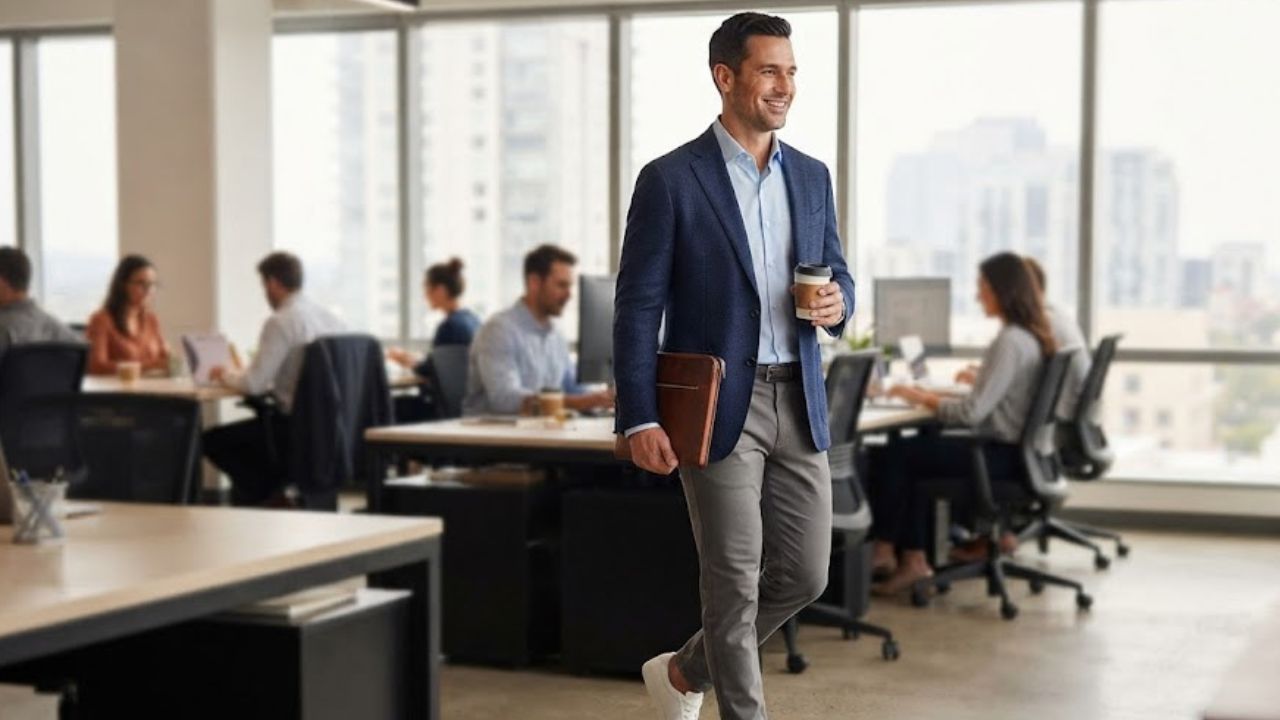
Business Casual for Men Finding the right balance between looking professional and feeling comfortable isn’t always straightforward. Business casual sits in that middle ground, but the definition changes from one workplace to another. A marketing agency may welcome clean white trainers and knit polos, while a law firm might expect tailored trousers and leather loafers every day. That’s why copying someone else’s outfit rarely works without considering your own office culture.
A well-planned business casual wardrobe gives you flexibility rather than limiting your choices. Instead of filling your wardrobe with clothes you rarely wear, you can invest in versatile pieces that work together in dozens of combinations. Fit, fabric and colour coordination usually make a bigger difference than buying expensive designer labels. Once you understand those fundamentals, getting dressed for work becomes quicker, easier and far more consistent. The goal isn’t simply to meet the dress code—it’s to look polished without appearing like you’re trying too hard.
What Is Business Casual for Men?
Business casual for men combines professional clothing with more relaxed pieces that still look neat and intentional. Think of it as dressing for the office without the formality of a full suit and tie. In most workplaces, this means replacing a matching suit with separates such as chinos, tailored trousers, Oxford shirts, knit polos and unstructured blazers.
The biggest mistake men make is assuming business casual means “casual with a nicer shirt.” That’s rarely true. Every item should still look clean, well-fitted and appropriate for a professional environment. A faded T-shirt, distressed jeans or worn trainers immediately shift the outfit from relaxed professionalism to weekend wear.
Business Casual for Men Office culture also plays a major role. Financial institutions usually expect a more polished interpretation of business casual than creative agencies or technology companies. Before buying new clothes, spend a few days observing what respected colleagues and managers actually wear. Their choices often tell you more than an employee handbook.
Another detail competitors often overlook is consistency. Looking sharp one day and careless the next sends mixed signals. Building a dependable wardrobe that works throughout the week creates a stronger professional impression than owning a few standout outfits.
Business Casual vs Smart Casual
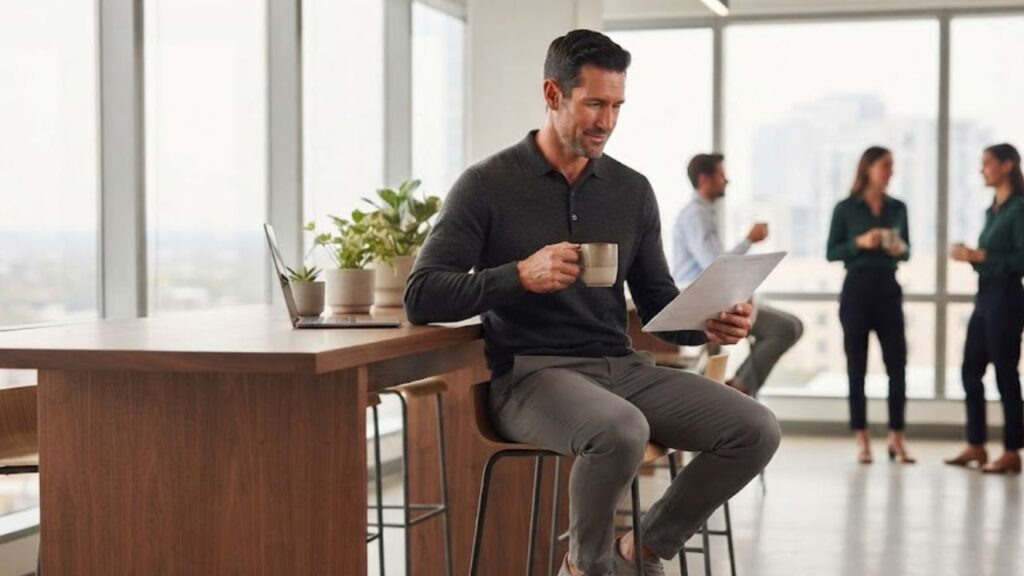
Business Casual for Men These dress codes are frequently confused because they share many wardrobe staples. The difference lies in their purpose.
| Business Casual | Smart Casual |
| Designed for professional workplaces | Designed for social occasions and flexible workplaces |
| Tailored trousers or chinos | Jeans may be acceptable |
| Leather loafers or dress shoes | Clean trainers often work |
| Structured appearance | More fashion-forward styling |
| Conservative colour palette | Greater freedom with colours and patterns |
If you’re unsure which direction to take, it’s usually safer to dress slightly smarter during your first few weeks at a new workplace. It’s easier to become more relaxed later than to recover from making a poor first impression.
Building a Business Casual Wardrobe That Actually Works
Business Casual for Men Many men believe they need dozens of outfits to dress well for work. They don’t. A smaller wardrobe built around versatile essentials creates more outfit combinations than a wardrobe full of trendy pieces that don’t coordinate.
Start with neutral colours. Navy, grey, white, light blue, olive and beige pair naturally with one another and remain stylish year after year. These colours also make getting dressed in the morning much simpler because almost everything matches.
Your core wardrobe should include:
- Oxford and button-down shirts in white and light blue
- Knit polo shirts
- Navy blazer
- Two or three pairs of chinos
- Tailored dress trousers
- Brown and black leather belts
- Loafers or Derby shoes
- Merino wool sweater
- Lightweight jacket for layering
Notice what’s missing from this list. There are no loud prints, flashy logos or seasonal fashion trends. Those pieces can be enjoyable, but they shouldn’t form the foundation of your work wardrobe.
Business Casual for Men Another overlooked point is fabric quality. Natural fibres such as cotton, wool and linen generally drape better, breathe more comfortably and age more gracefully than cheaper synthetic alternatives. Even moderately priced clothing looks noticeably more expensive when the fabric hangs properly and fits well.
Fit deserves equal attention. A reasonably priced shirt altered by a tailor often looks sharper than an expensive shirt that bunches around the waist or sleeves. Small adjustments can transform how clothing looks without requiring a complete wardrobe upgrade.
Choosing the Right Business Casual Shoes
Shoes quietly shape the entire outfit. People may not consciously study them, but they notice when footwear doesn’t match the rest of your appearance.
Leather loafers remain one of the safest investments because they work with chinos, dress trousers and many smart casual combinations outside the office. Business Casual for Men Brown loafers provide versatility, while black leather styles suit more conservative workplaces.
Derby shoes offer another reliable choice, particularly if your office leans toward traditional business attire. Their slightly more relaxed construction makes them easier to pair with business casual clothing than highly formal Oxford shoes.
Minimal white leather trainers have become increasingly acceptable in many modern offices, particularly within technology, media and creative industries. The key word is “minimal.” Clean leather trainers without oversized branding create a polished appearance. Running shoes, colourful athletic trainers or heavily cushioned sneakers belong somewhere else.
Chelsea boots also deserve consideration during colder months. Their sleek profile works surprisingly well with chinos, wool trousers and sport coats while providing more practicality than traditional dress shoes.
One detail experienced dressers rarely ignore is shoe maintenance. Business Casual for Men Well-polished leather shoes immediately elevate an outfit, while dusty or cracked footwear can undermine even an expensive wardrobe. Regular cleaning, conditioning and replacing worn soles often extends the life of quality shoes for years.
Business Casual Outfit Ideas for Different Situations
The best wardrobes adapt to different occasions instead of relying on one formula every day.
For a normal office day, try light blue Oxford shirt, navy chinos, brown loafers and a leather belt. It’s clean, timeless and appropriate for almost every workplace.
Client meetings usually call for slightly more structure. Add a navy blazer over a white shirt with charcoal trousers and brown Derby shoes. The outfit projects confidence without appearing overly formal.
Casual Fridays allow a little more personality. A fine-knit polo, tailored chinos and minimalist leather trainers create a relaxed appearance while remaining professional.
Business Casual for Men Business travel requires practicality as much as style. Wrinkle-resistant chinos, a breathable knit polo, lightweight blazer and Chelsea boots create an outfit that stays comfortable during long journeys while looking suitable for meetings after arrival.
Professionals who regularly attend networking events often benefit from subtle layering. A textured blazer over a merino crew-neck sweater and crisp Oxford shirt adds depth without becoming flashy. People tend to remember someone who looks effortlessly put together more than someone wearing the loudest jacket in the room.
Dressing for Every Season and Workplace
A business casual wardrobe should adapt to changing weather without sacrificing professionalism. Many men make the mistake of treating every season the same, swapping only short sleeves for long sleeves. Business Casual for Men Comfortable, polished dressing is more about choosing the right fabrics and layering intelligently.
During spring and summer, lightweight cotton shirts, breathable chinos and unlined blazers help you stay cool while maintaining a sharp appearance. Light blue, stone, beige and soft grey naturally reflect heat and create a fresh, seasonal look. If your office allows it, a knitted polo paired with tailored chinos and loafers offers a smart alternative to a dress shirt on warmer days.
Business Casual for Men Autumn and winter call for texture rather than simply heavier clothing. Merino wool sweaters layered over an Oxford shirt, flannel trousers and Chelsea boots create warmth without adding unnecessary bulk. A wool overcoat in navy, charcoal or camel finishes the outfit for commuting while remaining appropriate once you arrive at the office.
Industry expectations also influence how you interpret business casual. Corporate finance, law and consulting firms generally expect dress trousers, leather shoes and jackets more frequently. Technology companies often allow dark jeans, minimalist trainers and overshirts, while marketing and design agencies usually encourage a little more personality through colours and textures. The smartest approach isn’t following fashion trends—it’s dressing slightly above the average standard of your workplace.
Common Business Casual Mistakes Men Should Avoid

Business Casual for Men Good style isn’t only about choosing the right clothes. Avoiding common mistakes has an equally strong impact on your overall appearance.
The biggest mistake is wearing clothing that doesn’t fit properly. Oversized shirts, trousers that bunch around the ankles or jackets with sleeves that hide your hands instantly make even expensive outfits look untidy. Tailoring is often the best investment you can make because small alterations dramatically improve how clothes sit on your body.
Another frequent error is relying too heavily on trends. Fashion changes quickly, but business casual should feel timeless. A wardrobe built around classic colours, quality fabrics and clean silhouettes will still look appropriate years from now.
Many men also overlook grooming. Wrinkled shirts, unpolished shoes or an unkempt beard can distract from an otherwise well-planned outfit. Professional style is the result of many small details working together.
Avoid these common pitfalls:
- Graphic T-shirts, distressed jeans, athletic trainers and hoodies in professional settings.
- Loud logos, excessive accessories, overly strong fragrances or mismatched colours that draw attention for the wrong reasons.
Business Casual for Men A useful habit is preparing outfits the evening before. It removes rushed decisions in the morning and helps you spot combinations that don’t quite work before you’re heading out the door.
Expert Styling Advice That Makes a Difference
Stylists often talk about buying fewer, better clothes, and there’s good reason for that advice. A wardrobe filled with versatile, well-made pieces gives you more outfit options than a wardrobe packed with impulse purchases.
One practical strategy is to think in terms of outfit formulas rather than individual garments. For example, a navy blazer, white Oxford shirt, grey trousers and brown loafers can be mixed with several other shirts, trousers and shoes without looking repetitive. Once you recognise these combinations, getting dressed becomes almost automatic.
Business Casual for Men Colour coordination is another area where simplicity wins. Sticking to neutral shades for larger pieces such as jackets and trousers allows you to introduce subtle colour through knitwear, ties or pocket squares if your workplace permits them. This creates variety without making outfits feel busy.
Confidence also changes how clothing is perceived. Well-fitted clothes worn comfortably almost always look better than expensive outfits that feel awkward. If you’re constantly adjusting your jacket or worrying about whether your trainers are appropriate, it shows. Choosing clothing that matches both your workplace and your personality creates a more natural appearance.
Finally, remember that style evolves. As your career progresses, your wardrobe should develop with it. Promotions, leadership roles and increased client interaction often call for a slightly more refined version of business casual. Investing gradually rather than replacing everything at once keeps your wardrobe practical and cost-effective.
Final Thoughts

Business casual for men isn’t about memorising strict rules or copying every trend that appears online. It’s about understanding your workplace, choosing versatile clothing and paying attention to the details that create a polished appearance. A handful of quality shirts, tailored trousers, comfortable leather shoes and a well-fitted blazer will take you much further than a wardrobe full of fashionable pieces that rarely work together.
When you focus on fit, fabric and consistency, getting dressed becomes far less complicated. You’ll spend less time wondering what to wear and more time feeling confident that your appearance matches the professionalism you bring to your work.
Frequently Asked Questions
What is business casual for men?
Business casual is a workplace dress code that blends professional clothing with more relaxed pieces. Typical outfits include Oxford shirts, knit polos, chinos, tailored trousers, loafers and optional blazers instead of a full suit and tie.
Can men wear jeans as business casual?
Yes, but only if your workplace allows them. Choose dark, well-fitted jeans without rips, fading or distressed details, and pair them with smarter items such as a blazer or Oxford shirt.
Are polo shirts considered business casual?
A high-quality polo shirt, particularly a knit or structured cotton style, is widely accepted in many business casual offices. It should fit well and be free from large logos or bold graphics.
What shoes work best with business casual outfits?
Leather loafers, Derby shoes, Chelsea boots and minimalist leather trainers are among the most versatile choices. Athletic running shoes and heavily branded sneakers are generally unsuitable for professional environments.
How many business casual outfits do I need?
Most men can build a practical business casual wardrobe with around 12–15 versatile pieces. When chosen carefully, those essentials can create dozens of outfit combinations suitable for meetings, everyday office wear and business travel.