

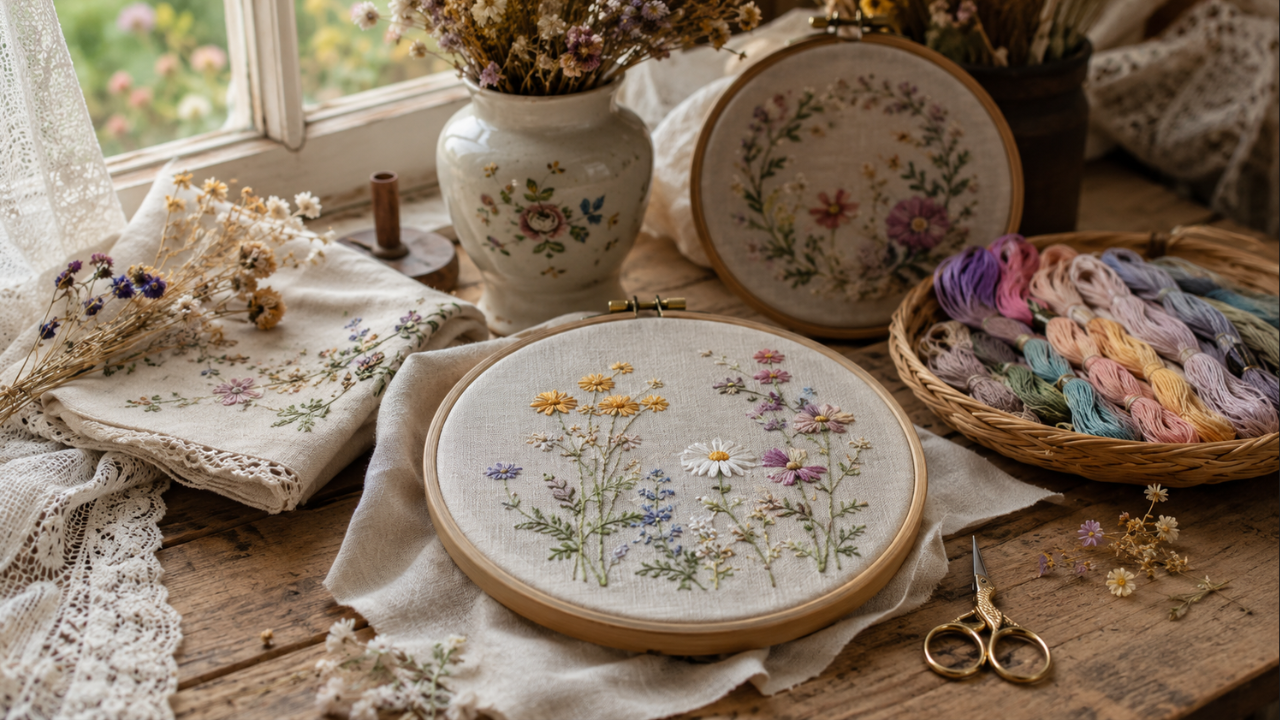
Cottagecore DIY & Crafts Some decorating trends disappear almost as quickly as they arrive. Cottagecore has done the opposite. What began as an online appreciation for country living has grown into a creative lifestyle centred on slowing down, making things by hand, and surrounding yourself with objects that tell a story. A hand-stitched table runner, a pressed flower bookmark, or a linen apron often feels more meaningful than something mass-produced because every stitch and brushstroke reflects the maker’s personality.
One reason cottagecore DIY has remained popular is its flexibility. You don’t need a countryside cottage or an expensive craft room to enjoy it. A small apartment, a handful of basic tools, and a little patience are enough to begin. Many experienced crafters will tell you that the most satisfying projects aren’t always the most complicated—they’re the ones that become part of everyday life. A handmade tote bag that gets used every week or embroidered pillow covers that brighten your sofa often bring more satisfaction than elaborate showpieces tucked away on a shelf.
Why Cottagecore DIY Continues to Inspire Makers
Cottagecore DIY & Crafts At its heart, cottagecore celebrates craftsmanship over perfection. Small imperfections—a slightly uneven stitch or hand-painted lettering that isn’t perfectly straight—often add character rather than reduce value. That’s a refreshing change from the polished, factory-made products filling most shops.
Many people also discover that crafting naturally encourages slower, more mindful habits. Spending an evening embroidering wildflowers or sewing a simple linen napkin creates a welcome break from screens and constant notifications. The finished project becomes a reminder that good things usually take time.
Another reason the aesthetic appeals to so many people is sustainability. Instead of buying new decorations every season, many cottagecore enthusiasts repair clothing, repurpose vintage fabrics, and transform forgotten household items into beautiful décor. An old wooden tray can become rustic wall art, while worn linen curtains may find a second life as cushion covers.
Rather than chasing trends, cottagecore encourages collecting timeless pieces that continue looking beautiful for years.
Essential Supplies That Are Worth Buying
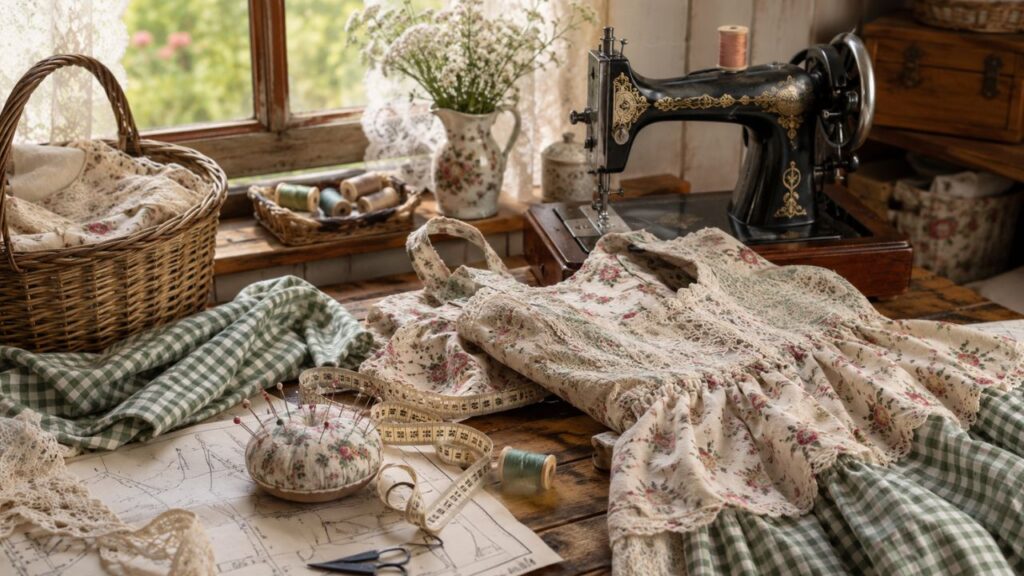
Cottagecore DIY & Crafts New crafters often make the mistake of purchasing dozens of supplies before completing their first project. Experienced makers usually recommend the opposite approach: buy fewer, better-quality tools and expand your collection only when you need to.
A practical beginner’s toolkit includes:
- Linen and cotton fabric, embroidery floss, fabric scissors, sewing needles, embroidery hoops, measuring tape, pins, natural lace, wooden buttons, and quality thread.
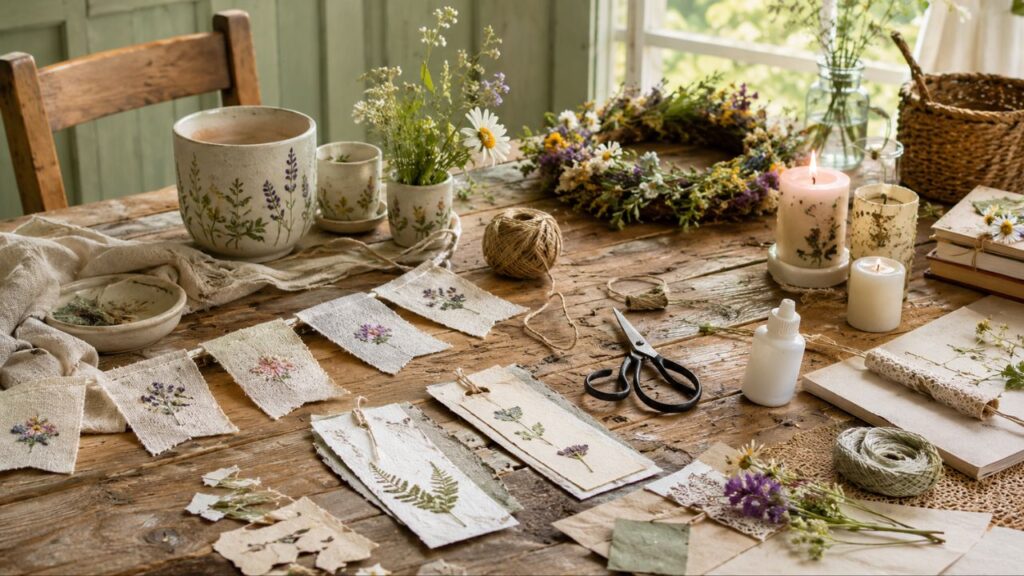
- Pressed flowers, dried lavender, twine, reusable glass jars, botanical prints, and water-based craft paint for decorative projects.
Good fabric scissors are particularly worth the investment. Cheap scissors quickly become frustrating because they snag delicate materials and produce uneven edges. Likewise, high-quality embroidery thread creates smoother stitches and richer colours that won’t fade after a few washes.
Natural materials also contribute to the authentic cottagecore look. Linen softens beautifully over time, unfinished wood develops character with age, and dried botanicals create gentle textures that artificial decorations rarely achieve.
Cottagecore DIY Projects That Build Confidence
Cottagecore DIY & Crafts Beginners sometimes assume they should start by sewing dresses or quilting blankets. Those projects can certainly come later, but confidence grows much faster through smaller successes.
Pressed flower bookmarks are an excellent first project. They require very few materials while teaching careful placement, composition, and preservation techniques. Once finished, they make thoughtful gifts that people genuinely use.
Fabric bunting is another favourite because it introduces basic sewing skills without requiring complex measurements. Small mistakes disappear among colourful fabric patterns, making the project surprisingly forgiving.
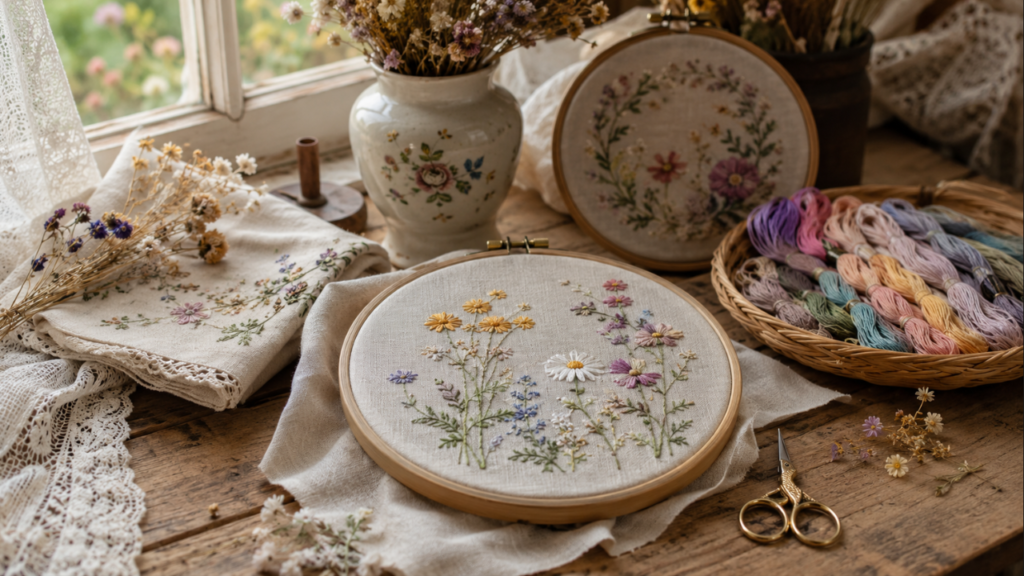
Simple embroidered hoop art is equally rewarding. Instead of attempting detailed botanical scenes immediately, begin with individual wildflowers such as daisies, lavender, or simple leaves. Mastering a handful of stitches creates a stronger foundation than rushing into complicated designs.
Cottagecore DIY & Crafts Mason jar lanterns remain popular for good reason as well. Soft candlelight reflecting through frosted glass wrapped with lace or twine instantly creates the cosy atmosphere associated with cottagecore interiors.
Many experienced crafters recommend repeating similar projects several times. Making three embroidered bookmarks often teaches more practical skill than struggling through one ambitious project that never quite feels finished.
Learning Cottagecore Embroidery Without Feeling Overwhelmed
Cottagecore DIY & Craftshas become one of the defining crafts within cottagecore culture because it combines creativity with remarkable accessibility. The equipment is affordable, projects fit into small spaces, and progress becomes visible surprisingly quickly.
The biggest mistake beginners make isn’t choosing the wrong thread or fabric. It’s selecting patterns far beyond their current skill level. A detailed woodland landscape filled with birds, mushrooms, and flowers may look inspiring on social media, but attempting it too early often leads to frustration.
Instead, build confidence by mastering a handful of versatile stitches before expanding your repertoire.
A simple progression might include:
- Running stitch
- Backstitch
- Satin stitch
- French knots
- Lazy daisy stitch
- Stem stitch
These few techniques can create hundreds of floral designs. Once they feel natural, larger botanical compositions become much easier to complete.
Cottagecore DIY & Crafts Colour selection matters too. Cottagecore embroidery usually relies on soft, muted shades inspired by nature rather than bright primary colours. Sage green, dusty rose, cream, mustard, faded blue, lavender, and earthy brown work beautifully together without overwhelming the fabric.
Another professional tip that often goes unmentioned is learning when to stop. Beginners frequently continue adding leaves, flowers, and decorative details until a design feels crowded. Leaving small areas of negative space allows embroidered elements to stand out and gives finished work a quieter, more elegant appearance.
Cottagecore Sewing Projects That Become Everyday Favourites
Cottagecore DIY & Crafts Sewing is often where cottagecore moves beyond decoration and becomes part of daily life. Instead of making items that sit on a shelf, many sewing projects are designed to be used, washed, repaired, and enjoyed for years. That practical focus is one of the reasons handmade cottagecore pieces feel so personal.
A linen apron is an excellent example. It protects clothing while cooking or gardening, softens with every wash, and develops a relaxed texture that perfectly suits the cottagecore aesthetic. Drawstring produce bags, reusable tea towels, fabric coasters, and simple tote bags are equally satisfying because they replace disposable products with durable handmade alternatives.
Cottagecore DIY & Crafts As your skills improve, larger projects become less intimidating. Cushion covers teach accurate measuring, table runners introduce longer seams, and patchwork quilts help you understand colour balance and fabric placement. Many experienced sewists recommend keeping a notebook with fabric samples and project notes. It may seem unnecessary at first, but recording which needle, stitch length, or fabric combination worked well saves time on future projects and speeds up your learning far more than relying on memory.
Decorating Your Home with Handmade Cottagecore Style
Cottagecore DIY & Crafts The most inviting cottagecore homes rarely contain expensive furniture or professionally designed interiors. Instead, they feel collected over time. Handmade decorations, vintage finds, natural textures, and meaningful objects work together to create warmth without looking overly styled.
Start with one room rather than trying to transform your entire home at once. A reading corner can become surprisingly cosy with an embroidered cushion, a knitted blanket, dried flowers in a glass jar, and a small wooden side table. In the kitchen, handmade tea towels, ceramic mugs, herb pots, and woven baskets add charm while remaining practical. Bedrooms benefit from linen bedding, botanical artwork, lace curtains, and soft lighting that creates a calm atmosphere in the evening.
Try to vary materials as much as colours. Combining wood, linen, cotton, ceramic, glass, and woven fibres gives a room depth and texture that plastic décor often lacks. If everything matches perfectly, the space can feel more like a showroom than a lived-in home. Cottagecore is most successful when it feels authentic rather than carefully staged.
Sustainable Crafting Is More Than a Trend
Cottagecore DIY & Crafts One of the most overlooked parts of cottagecore DIY is its connection to sustainability. Long before “upcycling” became a popular term, people repaired clothing, reused fabric scraps, and found creative purposes for everyday household items simply because it made sense.
Old pillowcases can become shopping bags, worn denim can be turned into patchwork storage baskets, and vintage lace from second-hand shops often looks more beautiful than newly manufactured trims. Even leftover embroidery thread has value when used for decorative stitching, handmade gift tags, or small ornaments.
This approach also changes the way you shop. Instead of buying every new craft supply, you begin noticing possibilities in things you already own. A chipped teacup becomes a tiny planter, an old picture frame holds pressed flowers, and glass bottles become rustic vases. The goal isn’t to avoid buying new materials completely but to appreciate what already exists before purchasing something else.
Cottagecore DIY & Crafts Interestingly, many long-time crafters say that these limitations often encourage greater creativity. Working with available materials forces you to solve problems in original ways, leading to projects that feel genuinely unique rather than copied from an online tutorial.
Small Details That Separate Good Projects from Great Ones
Technical skill certainly matters, but thoughtful finishing touches often make a bigger difference than people expect. Pressing fabric before sewing creates cleaner seams. Trimming loose threads immediately keeps projects looking polished. Choosing matching thread colours instead of “close enough” shades gives finished work a more professional appearance.
Cottagecore DIY & Crafts Patience also deserves more credit than it usually receives. Many beginners rush through the final stages because they’re excited to finish. Ironically, those last ten minutes often determine how the entire project looks. Carefully attaching buttons, evenly spacing embroidery, or gently pressing finished fabric usually improves the result more than adding extra decorations.
Don’t compare your work too closely with carefully edited photographs online. Many beautiful handmade pieces reveal tiny imperfections when viewed up close. Those details aren’t flaws—they’re evidence that a real person created something with care. Over time, you’ll notice your stitches becoming neater, your colour choices more confident, and your projects more refined without consciously trying to achieve perfection.
Frequently Asked Questions
What is the easiest cottagecore craft for beginners?
Cottagecore DIY & Crafts Pressed flower bookmarks, embroidered hoop art with simple flowers, fabric bunting, and painted terracotta pots are excellent starting points because they require only basic materials and techniques.
Do I need a sewing machine for cottagecore projects?
No. Many popular cottagecore crafts, including embroidery, hand-sewn lavender sachets, fabric bookmarks, decorative napkins, and small pouches, can be completed entirely by hand. A sewing machine simply makes larger projects quicker.
Which fabrics best match the cottagecore aesthetic?
Cottagecore DIY & Crafts Natural fibres such as linen, cotton, muslin, canvas, and lightweight wool create the soft texture and timeless appearance most closely associated with cottagecore interiors and clothing.
How can I keep handmade projects looking beautiful for years?
Store textiles in dry conditions, wash delicate fabrics gently, repair small tears before they grow larger, and avoid prolonged exposure to direct sunlight, which can fade natural fabrics and embroidery thread.
Conclusion
Cottagecore DIY & Crafts isn’t about filling your home with handmade decorations as quickly as possible. It’s about enjoying the process of creating useful, beautiful things that become part of everyday life. A simple embroidered napkin, a carefully sewn apron, or a vase filled with dried wildflowers often carries more meaning than an expensive decorative item bought on impulse.
Start with one small project, learn a few reliable techniques, and allow your skills to grow naturally. Every finished piece teaches something new, and before long you’ll have a collection of handmade items that reflect your creativity, patience, and personal style. That’s what gives cottagecore its lasting appeal—it values craftsmanship, thoughtful living, and the quiet satisfaction of making something with your own hands.