

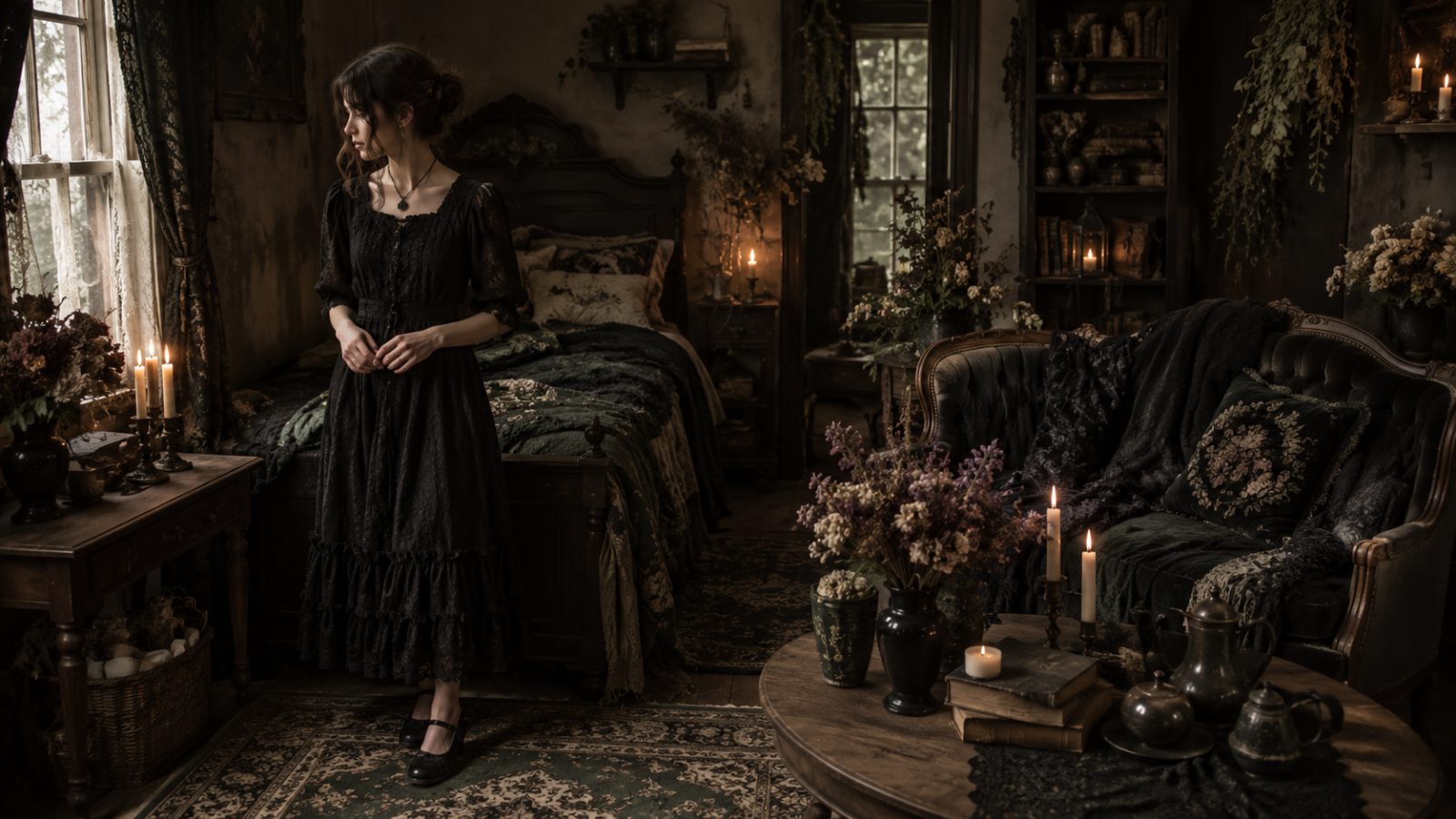
Dark Cottagecore takes the warmth and nostalgia of traditional Cottagecore and adds a quieter, moodier personality. Imagine an old stone cottage tucked into a misty forest, shelves lined with worn books, dried herbs hanging from wooden beams, and candlelight reflecting off dark oak furniture. It’s romantic without feeling overly polished and dramatic without becoming gloomy. That balance explains why the aesthetic continues to attract people looking for interiors and clothing that feel timeless rather than trend-driven.
One of the biggest misconceptions is that Dark Cottagecore is simply Gothic décor with plants or black-painted farmhouse furniture. It isn’t. The style still celebrates nature, craftsmanship, vintage finds, and slow living. The difference lies in the atmosphere. Instead of bright florals and sunlit rooms, Dark Cottagecore leans into woodland colours, rich textures, antique pieces, and softer lighting. The result is a home and wardrobe that feel deeply personal rather than staged for social media.
What Makes Dark Cottagecore Different?
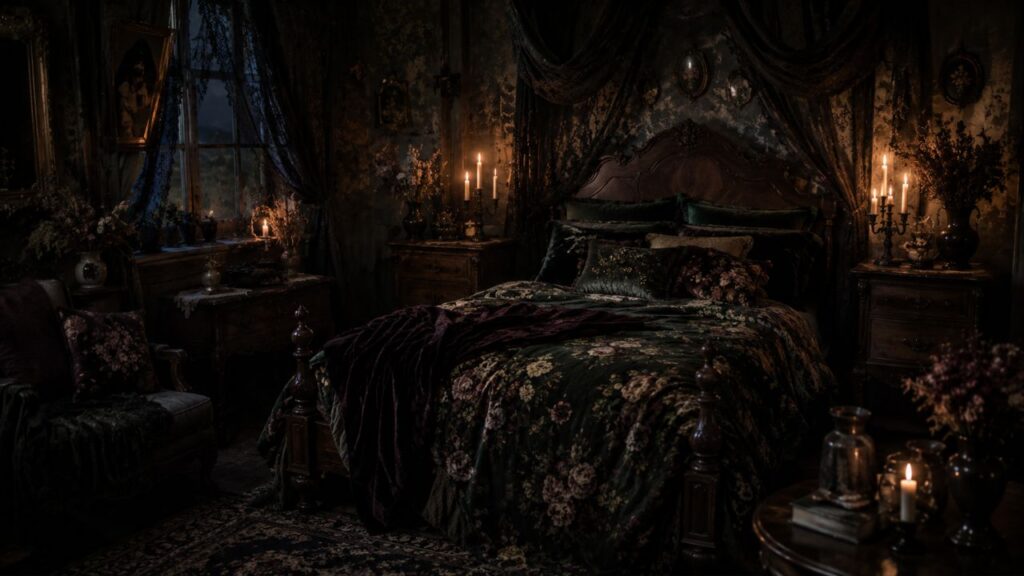
Dark Cottagecore shares the same roots as classic Cottagecore, but the emotional tone changes completely. Traditional Cottagecore often embraces soft whites, pastel flowers, and cheerful country gardens. Dark Cottagecore replaces those elements with forest greens, deep browns, burgundy, charcoal, and weathered wood. The feeling is closer to walking through an old woodland after rain than enjoying a sunny picnic in a meadow.
That difference isn’t just about colour. It’s about storytelling. Many beautifully designed rooms fail because they combine expensive furniture without creating a sense of history. Dark Cottagecore works best when a space looks collected over time. A slightly worn wooden table, vintage botanical illustrations, cast-iron candle holders, and linen curtains often create more character than buying an entire matching furniture collection.
It’s also easy to confuse Dark Cottagecore with Gothic Cottagecore. Gothic Cottagecore borrows heavily from Victorian architecture, cathedral-inspired details, and dramatic Gothic fashion. Dark Cottagecore stays connected to rural life. Nature remains the centrepiece, even when the palette becomes darker and richer.
| Traditional Cottagecore | Dark Cottagecore | Gothic Cottagecore |
| Soft pastels | Earthy dark colours | Black and dramatic contrasts |
| Bright natural light | Warm candlelight | Ornate lighting |
| Wildflowers | Ferns, ivy, dried flowers | Roses and Gothic florals |
| Rustic simplicity | Vintage woodland charm | Victorian elegance |
Building a Dark Cottagecore Wardrobe
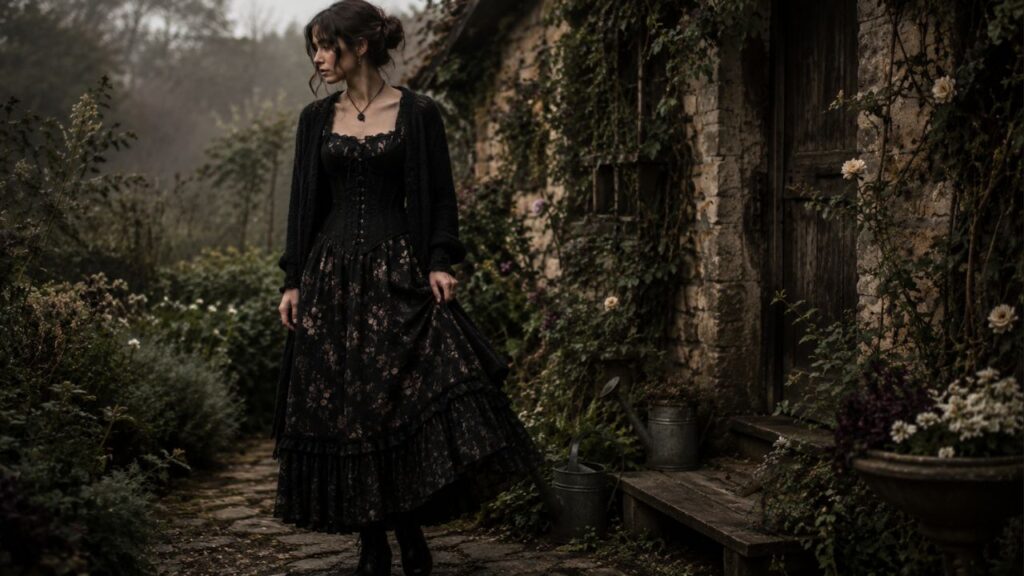
Clothing should feel comfortable before it feels theatrical. Many newcomers make the mistake of dressing entirely in black because they assume darkness equals authenticity. In reality, the most convincing outfits mix earthy shades and natural fabrics that appear lived in rather than costume-like.
Linen, cotton, velvet, wool, and lace all work beautifully because they develop character with age. A forest-green linen dress paired with worn leather boots often captures the aesthetic more effectively than an elaborate Gothic outfit covered in accessories. Texture matters just as much as colour.
Instead of chasing every seasonal trend, think about building a small collection of versatile pieces that work together throughout the year. A practical wardrobe usually includes:
- Linen dresses in earthy colours, wool cardigans, long skirts, leather boots, vintage-inspired blouses, velvet jackets, knitted scarves, antique jewellery, woven bags, and simple leather belts.
- Natural fabrics, muted prints, handcrafted accessories, and quality vintage finds instead of fast-fashion statement pieces.
Autumn naturally complements the style, but Dark Cottagecore doesn’t disappear in spring or summer. Lighter linen fabrics in olive, moss green, muted brown, or dusty plum maintain the same aesthetic while remaining comfortable in warmer weather. Seasonal adaptation often looks more authentic than wearing heavy velvet throughout the year.
Creating a Dark Cottagecore Home
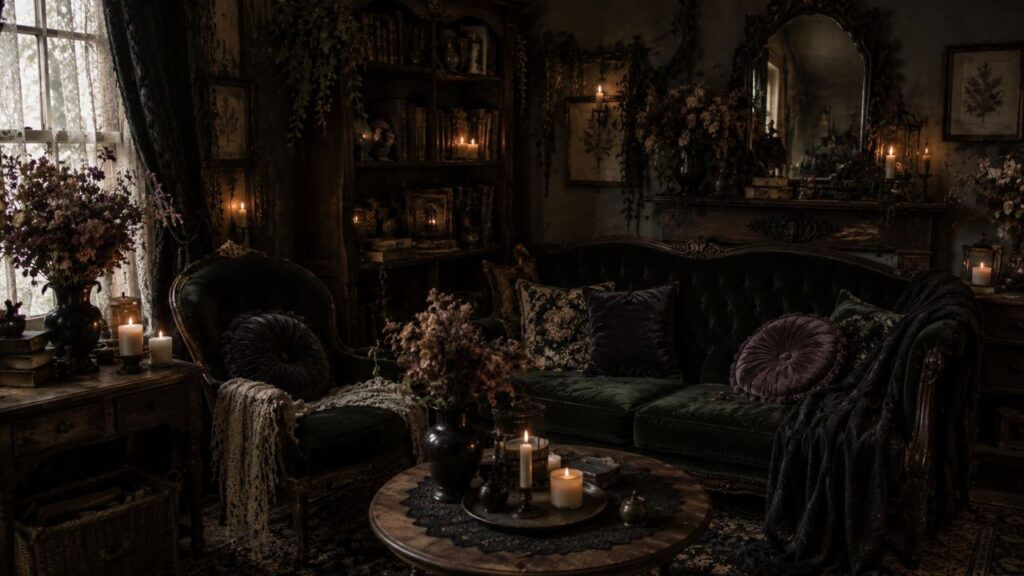
The strongest Dark Cottagecore interiors rarely begin with expensive renovations. They begin with restraint. Instead of filling every corner, they leave enough breathing room for individual pieces to stand out. This creates the quiet atmosphere that many people associate with old countryside homes.
Wood plays a significant role, particularly darker species such as walnut or aged oak. Vintage furniture often adds more authenticity than brand-new replicas because natural wear tells its own story. Small imperfections become part of the room rather than flaws to hide.
Lighting deserves just as much attention as furniture. Bright white ceiling lights immediately remove the atmosphere Dark Cottagecore depends on. Warm table lamps, lanterns, wall sconces, and candlelight create softer shadows that highlight wood grain, books, dried flowers, and textured fabrics.
Many professional interior designers also recommend limiting glossy surfaces. Matte finishes absorb light more gently and make natural materials feel richer. That’s why linen curtains, untreated wood, woven baskets, and stone accessories often work together so well.
A few carefully chosen botanical elements complete the look. Ferns, ivy, eucalyptus, dried lavender, and moss arrangements introduce greenery without making the room feel overly colourful. Fresh flowers certainly have a place, but slightly wild arrangements usually fit the aesthetic better than perfectly symmetrical bouquets.