

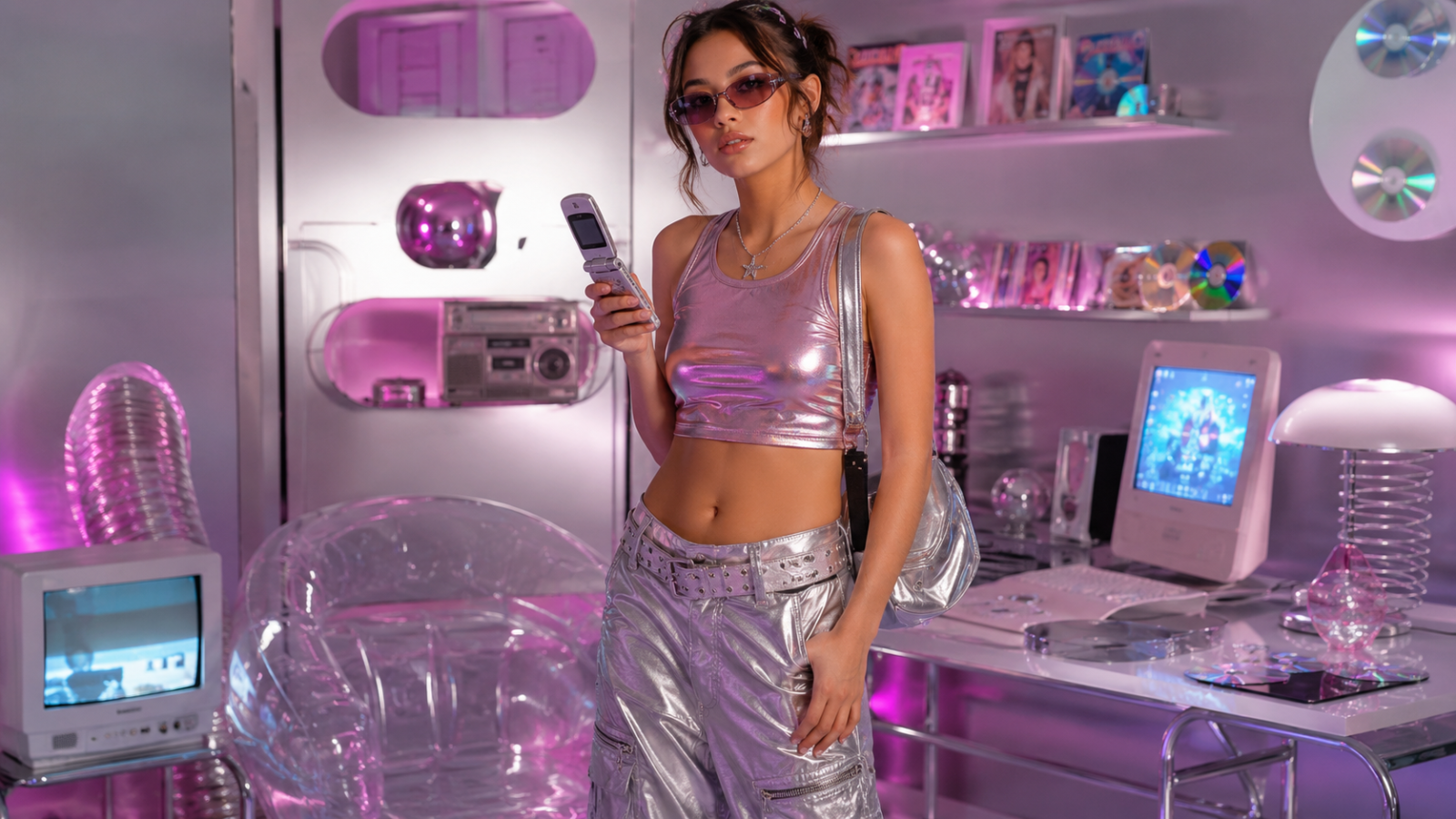
The Y2K Aesthetic & Design Style has become one of fashion’s most surprising comebacks. What many people dismissed as tacky in the late 2000s is now influencing runways, street style, graphic design, and social media feeds across the United States. Low-rise jeans, metallic fabrics, tiny handbags, chrome graphics, and butterfly motifs have returned with remarkable force.
Part of the appeal lies in nostalgia, but nostalgia alone doesn’t explain why the aesthetic continues to grow. Y2K emerged during a period shaped by optimism about technology, celebrity culture, and the early internet. That combination created a visual language unlike anything before it: futuristic yet playful, glamorous yet slightly chaotic.
Y2K Aesthetic & Design Style Many people recognise Y2K fashion when they see it, but struggle to explain exactly what makes something feel authentically early 2000s rather than simply retro. The difference comes down to specific colours, silhouettes, materials, and design principles. Understanding those elements makes it much easier to recreate the look without ending up in costume territory.
What Is the Y2K Aesthetic?
The Y2K Aesthetic & Design Style refers to the fashion, design, and cultural style associated with roughly 1998 to 2005. The term “Y2K” originally referred to the Year 2000 computer bug scare, but it has since evolved into a broader aesthetic movement inspired by the era surrounding the new millennium.
What makes Y2K distinctive is its fascination with the future. Designers at the time imagined a world shaped by rapidly advancing technology, the internet, and digital communication. As a result, many visual elements borrowed heavily from science fiction, cyber culture, and futuristic imagery.
Y2K Aesthetic & Design Style Unlike the minimalist trends that dominated much of the 2010s, Y2K embraced excess. Shiny materials, rhinestones, bold logos, glitter, playful graphics, and exaggerated accessories were all celebrated. Fashion wasn’t meant to look understated. It was meant to attract attention.
Pop culture amplified the trend. Celebrities such as Britney Spears, Christina Aguilera, Jennifer Lopez, and Paris Hilton became style references for millions of teenagers and young adults. Music videos, celebrity paparazzi photos, teen films, and reality television transformed Y2K fashion into a global phenomenon.
The Defining Characteristics of Y2K Style
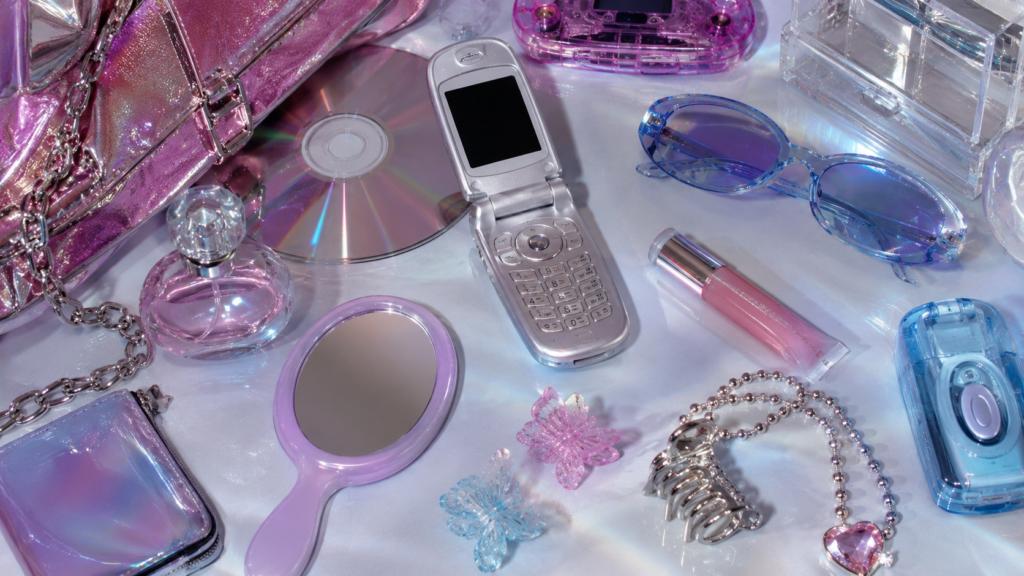
Competitors often describe Y2K as simply “colourful and nostalgic,” but that barely scratches the surface. Authentic Y2K style relies on several distinct characteristics working together.
Y2K Aesthetic & Design Style First, there is the futuristic influence. Chrome finishes, metallic silver, holographic fabrics, transparent materials, glossy surfaces, and cyber-inspired graphics appeared everywhere. Designers genuinely believed technology would shape everyday life in dramatic ways.
Second, Y2K embraces maximalism. Modern fashion often values restraint, whereas early 2000s style celebrated layering and decoration. A single outfit might include low-rise jeans, a baby tee, tinted sunglasses, chunky jewellery, a logo handbag, and platform shoes.
Third, there is an unmistakable sense of playfulness. Butterflies, hearts, stars, airbrushed graphics, cartoon motifs, and bubble typography frequently appeared in both fashion and graphic design. The aesthetic rarely takes itself too seriously.
Several signature fashion pieces define the look:
- Low-rise jeans and cargo trousers
- Baby tees and fitted tank tops
- Mini skirts and velour tracksuits
- Platform shoes and chunky trainers
- Tiny shoulder bags and coloured sunglasses
- Butterfly clips, belly chains, and rhinestone accessories
Y2K Aesthetic & Design Style One mistake people often make is assuming every item from the early 2000s qualifies as Y2K. In reality, authentic Y2K style balances futurism with glamour. Ordinary early 2000s basics without those visual cues usually don’t capture the aesthetic.
Y2K Colours, Patterns, and Visual Identity
Colour plays a major role in creating the Y2K aesthetic. Certain shades immediately evoke the era because they reflect both technological optimism and pop culture influences.
Y2K Aesthetic & Design Style Metallic silver arguably serves as the unofficial colour of Y2K. It symbolised the future and appeared in clothing, accessories, electronics, and graphic design. Alongside silver, vibrant shades such as hot pink, baby blue, lavender, lime green, and glossy black became staples.
The table below highlights some of the most recognisable Y2K colours.
| Colour | Common Use |
| Metallic Silver | Clothing, accessories, graphic design |
| Hot Pink | Fashion, logos, accessories |
| Baby Blue | Casual wear, beauty aesthetics |
| Lavender | Feminine fashion and beauty |
| Lime Green | Cyber-inspired designs |
| Chrome Black | Futuristic graphics and styling |
Y2K Aesthetic & Design Style Patterns and textures were equally important. Butterflies remain one of the strongest symbols of Y2K fashion because they represented transformation, femininity, and fantasy. Stars, flames, hearts, camouflage prints, and graffiti-inspired artwork also appeared frequently.
Texture often matters more than pattern. A simple garment instantly feels more Y2K when produced in metallic fabric, glossy vinyl, velour, satin, or embellished with rhinestones. That’s an insight many modern recreations miss. The materials themselves carry much of the aesthetic weight.
Y2K Design and Art Style Explained
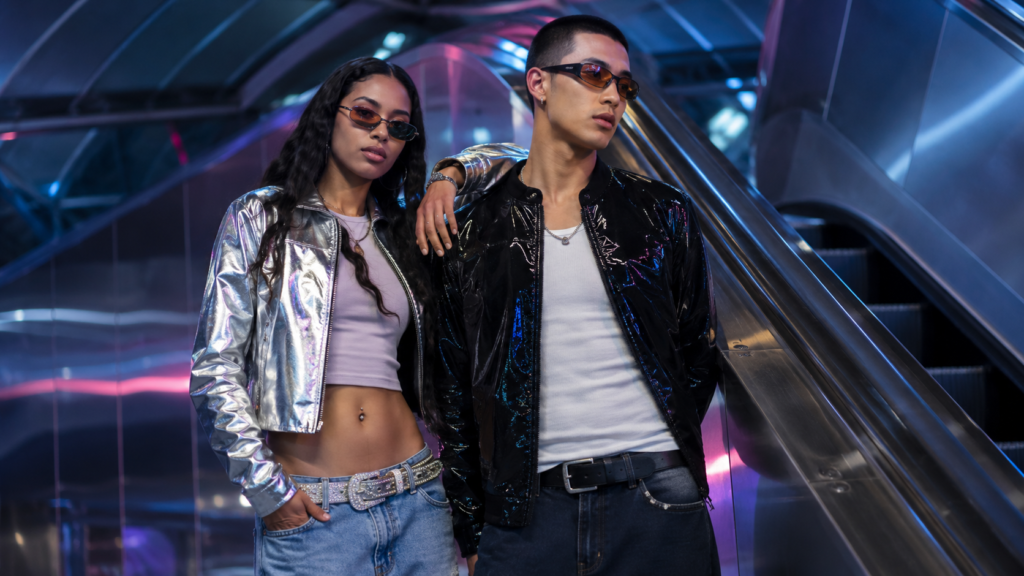
Y2K wasn’t confined to clothing. It also transformed graphic design, digital art, advertising, and early web aesthetics.
Y2K Aesthetic & Design Style Graphic designers working during the late 1990s and early 2000s experimented aggressively with emerging digital tools. The result was a distinctive visual style characterised by chrome effects, translucent interfaces, glowing gradients, futuristic typography, and three-dimensional graphics.
Several design elements appear repeatedly across authentic Y2K visuals:
- Chrome typography and metallic lettering
- Glossy buttons and transparent interface elements
- Bubble fonts and futuristic typefaces
- Iridescent gradients and lens flares
- Pixel-inspired graphics and digital textures
Early websites provide particularly fascinating examples. Internet speeds were limited, yet designers attempted to create immersive digital experiences filled with animation, shiny icons, and experimental layouts. Looking back, some of these websites appear cluttered. However, they perfectly captured society’s excitement about the internet’s future.
Y2K Aesthetic & Design Style Modern designers increasingly revisit these visual ideas. Contemporary Y2K design appears on album covers, fashion campaigns, social media branding, and packaging design. The difference is that today’s designers often refine the aesthetic, combining nostalgic elements with cleaner, more functional layouts.
The resurgence of chrome graphics across social platforms demonstrates this perfectly. What once seemed outdated now feels fresh again precisely because design trends tend to operate in cycles.
Y2K Fashion in the Modern Era
The current Y2K revival differs significantly from the original movement. Very few people dress exactly as they did in 2002. Instead, modern interpretations selectively borrow elements from the era.
Y2K Aesthetic & Design Style Gen Z, in particular, has reimagined Y2K through a contemporary lens. Social media platforms accelerated this process by making archival celebrity imagery widely accessible. Viral videos showcasing vintage outfits, thrift hauls, and styling transformations introduced younger audiences to early 2000s fashion.
Modern Y2K styling often follows a “one statement piece” rule. For example, pairing low-rise cargo trousers with an otherwise minimal outfit creates a nod to Y2K without overwhelming the look.
Fashion enthusiasts hoping to create an authentic aesthetic should focus on proportions rather than purchasing every trend simultaneously. Consider starting with a few foundational pieces:
- A fitted baby tee
- Relaxed cargo trousers or low-rise denim
- Platform footwear
- A small shoulder bag
- Metallic or tinted accessories
Y2K Aesthetic & Design Style Thrifting remains one of the best ways to source authentic Y2K pieces. Vintage shops, resale platforms, and second-hand marketplaces frequently offer original garments from brands such as Juicy Couture, Baby Phat, Ed Hardy, Von Dutch, Diesel, and Guess.
Sustainability is another factor driving the revival. Many consumers appreciate that shopping vintage reduces dependence on fast fashion while allowing them to build more distinctive wardrobes.
Y2K vs 90s Fashion and McBling
Confusion between Y2K, 1990s fashion, and McBling is extremely common.
Nineties fashion generally leaned toward minimalism, grunge, and relaxed silhouettes. Neutral colours, slip dresses, oversized flannel shirts, and understated styling dominated much of the decade.
Y2K shifted dramatically toward glamour, futurism, and visible branding. Clothing became shinier, tighter, and more experimental.
McBling, meanwhile, emerged during the mid-2000s as an even more extravagant evolution of Y2K. Think oversized designer logos, velour tracksuits, rhinestone-covered everything, and unapologetic luxury aesthetics.
A simple way to distinguish them is this: if it looks futuristic, playful, and technology-inspired, it’s probably Y2K. If it centres heavily on glamour, celebrity excess, and conspicuous luxury, it likely falls into McBling territory.
Understanding these distinctions helps create more accurate styling choices and prevents aesthetic confusion.
Final Thoughts
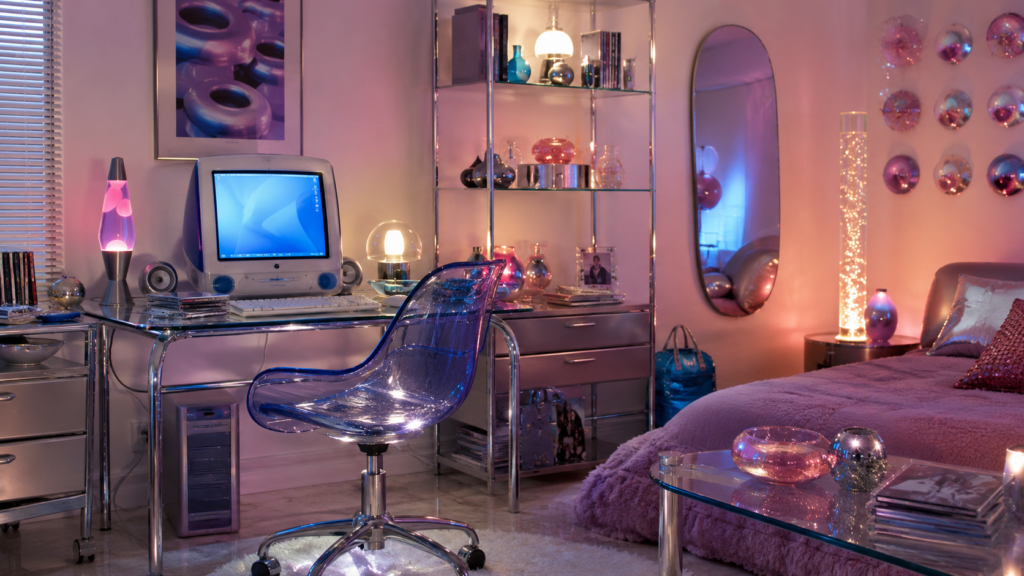
The enduring appeal of the Y2K aesthetic comes from its optimism. The era imagined the future as exciting, glamorous, and full of possibility. That spirit still resonates, especially during periods when people crave nostalgia and self-expression.
Authentic Y2K style isn’t about copying old celebrity photographs piece for piece. It’s about understanding the era’s visual language—its fascination with technology, love of excess, and playful approach to fashion and design. Once those principles are understood, recreating the aesthetic becomes much more natural and personal.
Frequently Asked Questions
What is the Y2K aesthetic?
The Y2K aesthetic refers to the fashion, design, and cultural trends popular from approximately 1998 to 2005, characterised by futuristic influences, metallic colours, playful graphics, and bold styling.
Why is Y2K fashion popular again?
Nostalgia, social media influence, celebrity inspiration, and growing interest in vintage fashion have all contributed to the revival of Y2K trends.
What colours are associated with Y2K style?
Metallic silver, hot pink, baby blue, lavender, lime green, and glossy black are among the most recognisable Y2K colours.
How can I create a modern Y2K outfit?
Start with one statement piece, such as cargo trousers or a baby tee, then add accessories like platform shoes, small handbags, or tinted sunglasses.
Is Y2K fashion sustainable?
It can be. Shopping second-hand, thrifting vintage pieces, and purchasing resale items are environmentally friendlier alternatives to buying fast-fashion reproductions.