

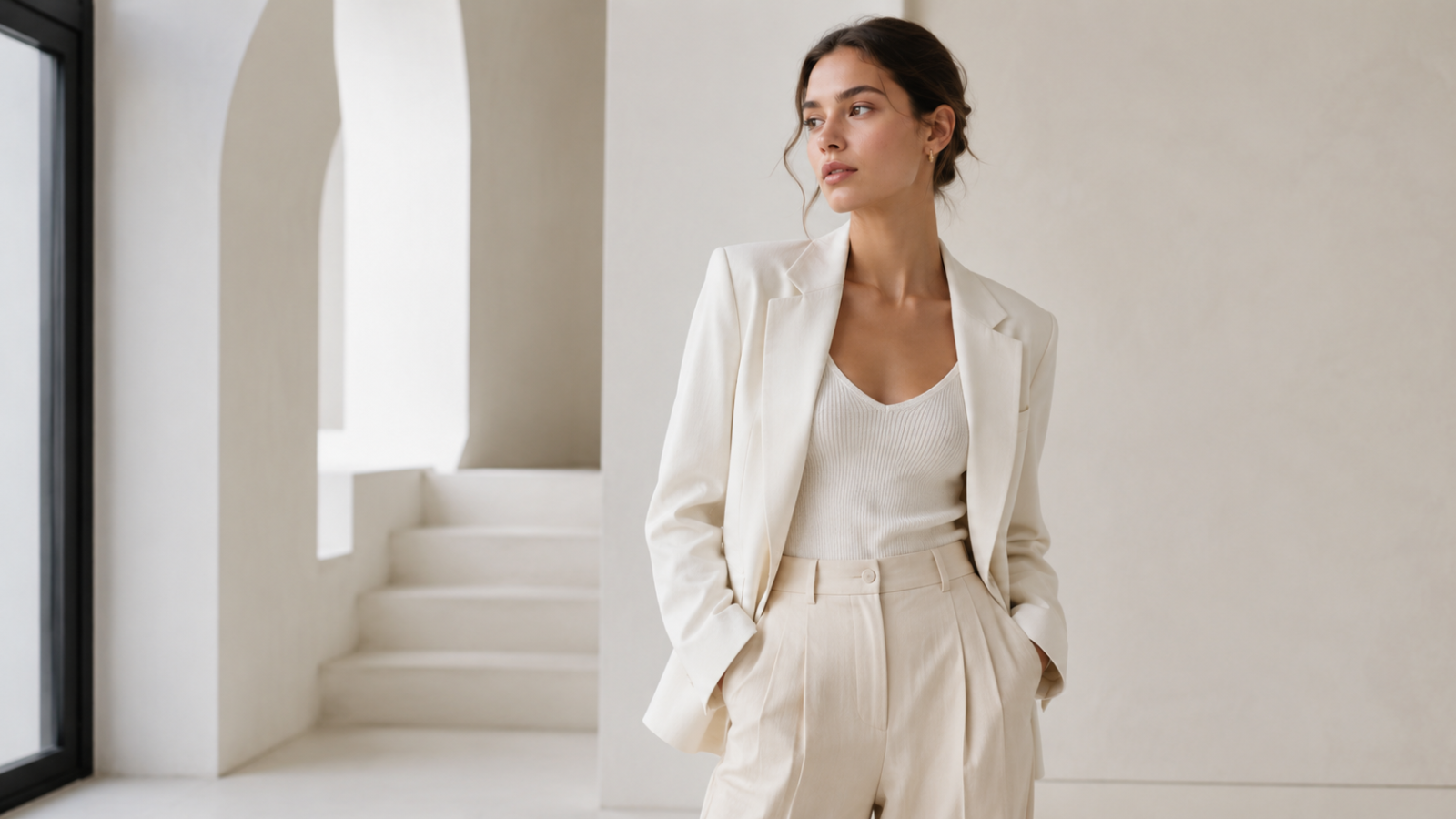
Minimalist Fashion Open almost any closet and you’ll find the same pattern: clothes squeezed onto crowded rails, forgotten purchases with tags still attached, and plenty of items that rarely get worn. Yet many people still feel they have “nothing to wear.” That’s one reason minimalist fashion has gained such a loyal following.
Minimalist style isn’t about owning ten pieces of clothing or dressing exclusively in black and white. It’s about creating a wardrobe filled with items you genuinely enjoy wearing and can combine effortlessly. The emphasis shifts from quantity to versatility, quality, and personal style.
Some people come to minimalist fashion because they’re tired of impulse shopping. Others are motivated by sustainability or simply want less stress when getting dressed each morning. Whatever the reason, the result is often the same: a wardrobe that feels intentional rather than overwhelming.
Interestingly, many long-term minimalists discover that simplifying their closets doesn’t reduce creativity. It often enhances it. When every piece works together, putting outfits together becomes easier and, surprisingly, more enjoyable.
What Minimalist Fashion Really Means
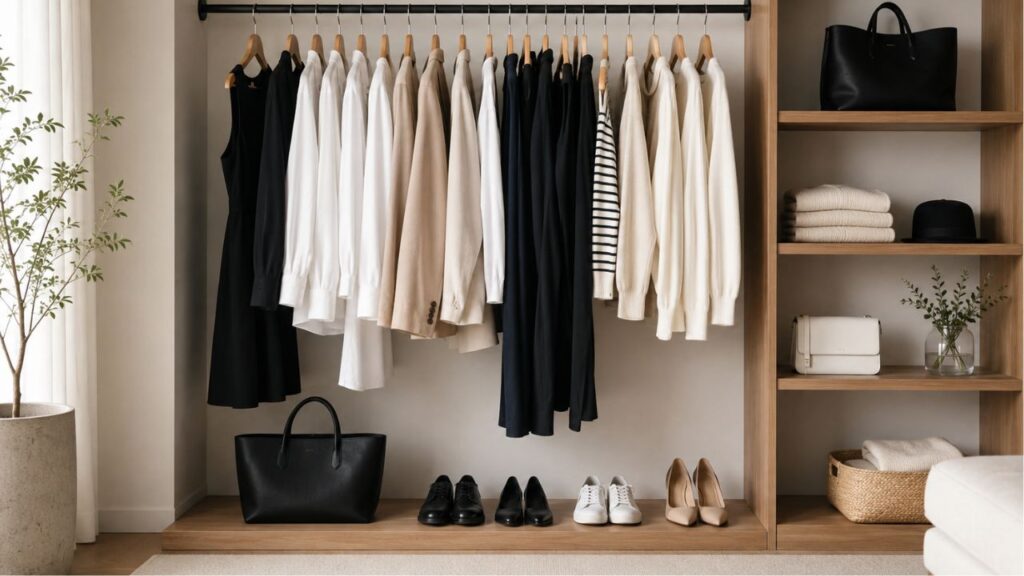
Minimalist fashion is frequently misunderstood. Many assume it requires strict rules, neutral colours only, or a wardrobe consisting solely of expensive designer basics. In reality, minimalist dressing is highly personal.
At its core, minimalist fashion revolves around three principles: versatility, longevity, and intentionality. Every item should serve a purpose, coordinate with other pieces, and reflect your lifestyle.
A lawyer working in a corporate office will need a very different minimalist wardrobe from someone working remotely in a creative field. Minimalism isn’t a uniform; it’s a system.
The idea also overlaps with the concept of a capsule wardrobe. A capsule wardrobe is essentially a curated collection of clothing designed to mix and match easily. Minimalist wardrobes often function as capsules, although not every minimalist follows a fixed item count.
Fashion movements influenced by Scandinavian style have helped popularise minimalist aesthetics. Clean silhouettes, simple lines, and restrained colour palettes remain common, but personal expression still matters. A minimalist wardrobe can include colour, patterns, and statement pieces as long as they’re worn consistently and intentionally.
Why So Many People Are Embracing Minimalist Fashion
The most immediate benefit of minimalist fashion is mental clarity. Decision fatigue is real. Studies on consumer behaviour consistently show that excessive choices can increase stress and reduce satisfaction.
A streamlined wardrobe removes much of that daily friction.
Beyond convenience, minimalist dressing can dramatically reduce unnecessary spending. Many people underestimate how much they spend on trend-driven purchases that receive little wear. Adopting a “cost per wear” mindset changes shopping habits completely. Spending $180 on a coat worn hundreds of times often proves more economical than repeatedly purchasing cheaper alternatives.
Minimalist fashion also aligns naturally with the growing slow fashion movement. The fashion industry produces enormous amounts of textile waste annually, and consumers are becoming increasingly conscious of their purchasing decisions. Choosing fewer, better-made garments often leads to reduced consumption overall.
Another overlooked benefit is style consistency. People who cultivate a clear personal aesthetic frequently appear more polished because their wardrobes are cohesive. There’s no need to reinvent yourself every season.
How to Start Building a Minimalist Wardrobe
The biggest mistake beginners make is throwing everything away and starting from scratch. That’s rarely necessary and often expensive.
Start by evaluating what you already own. Pull out the clothes you wear repeatedly. Those items reveal more about your authentic style than any fashion trend ever will.
Ask yourself a few straightforward questions:
- Which clothes make me feel confident?
- Which items haven’t been worn in the past year?
- What pieces do I repeatedly buy?
- Which garments fit my current lifestyle?
After identifying favourites, examine colour patterns. Most successful minimalist wardrobes rely on a cohesive palette because coordination becomes effortless. Neutral colours such as black, navy, white, beige, grey, and olive remain popular because they’re highly versatile. However, if you consistently wear jewel tones or pastels, those colours should absolutely remain part of your wardrobe.
Next, identify gaps. Many wardrobes contain multiple versions of the same item while lacking true essentials.
A balanced minimalist wardrobe often includes:
- Well-fitting T-shirts and shirts
- High-quality denim or tailored trousers
- Versatile outerwear
- Comfortable everyday shoes
- A few elevated pieces for formal occasions
Quality matters, but perfection isn’t required immediately. Build gradually.
Essential Pieces Every Minimalist Wardrobe Should Include
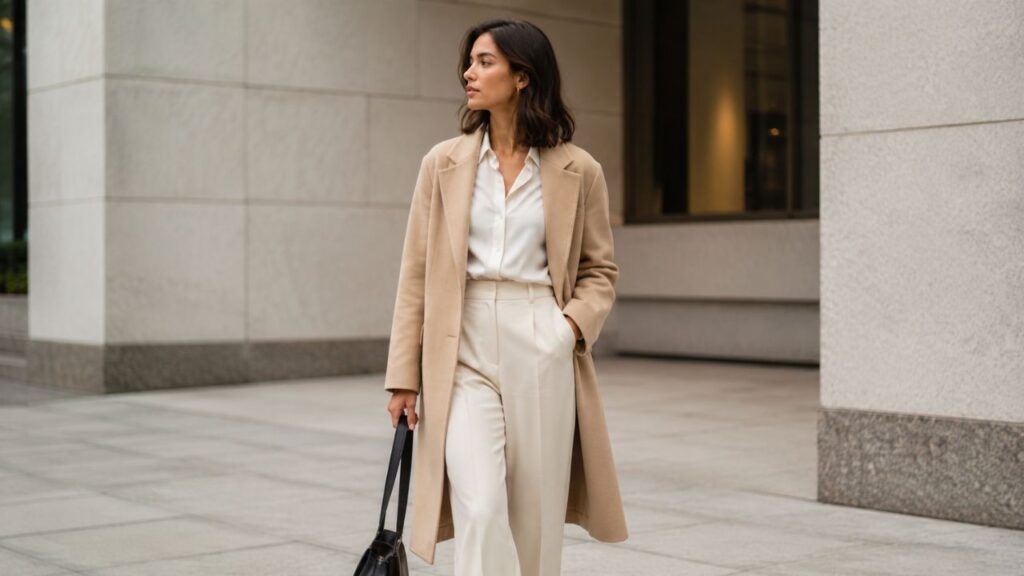
Minimalist wardrobes differ between individuals, yet certain staples repeatedly prove their value because of their adaptability.
| Category | Timeless Essentials |
| Tops | White shirt, fitted T-shirts, knitwear |
| Bottoms | Dark denim, tailored trousers, versatile skirts |
| Outerwear | Structured blazer, classic coat, lightweight jacket |
| Shoes | White trainers, loafers, ankle boots |
| Accessories | Leather belt, simple jewellery, quality bag |
Fabric choice deserves more attention than many fashion articles give it. Garments made from natural fibres such as cotton, linen, wool, and cashmere generally age better, feel more comfortable, and often look more refined over time.
Fit matters even more than brand names. An inexpensive blazer tailored properly usually looks better than a luxury garment with poor proportions.
Experienced stylists often recommend creating outfit formulas rather than individual outfits. For example:
“Trousers + knit jumper + loafers” or “straight-leg jeans + white shirt + structured blazer.”
These formulas simplify dressing dramatically while preserving personal style.
Minimalist Fashion Without Spending a Fortune
One common misconception is that minimalist fashion is expensive. It can be, but it doesn’t have to be.
The real objective is intentional purchasing rather than constant purchasing.
Before buying anything, consider implementing a waiting period. Many seasoned minimalists use a 30-day rule for non-essential purchases. If the item still feels necessary after thirty days, it’s probably a thoughtful purchase rather than an impulse.
Second-hand shopping is another effective strategy. Vintage stores, consignment shops, and online resale platforms frequently offer exceptional quality at reduced prices. Older garments often feature superior construction compared with modern fast-fashion alternatives.
Brands such as Uniqlo, Everlane, and COS have become popular among minimalist dressers because they prioritise versatile basics and timeless silhouettes. However, brand loyalty shouldn’t replace critical evaluation. Always assess fit, fabric, and versatility before purchasing.
A practical shopping rule used by many stylists is the “rule of three.” If you cannot immediately create three different outfits with a potential purchase, reconsider buying it.
That simple habit alone prevents many regrettable purchases.
Advanced Minimalist Styling: Moving Beyond Basic Outfits
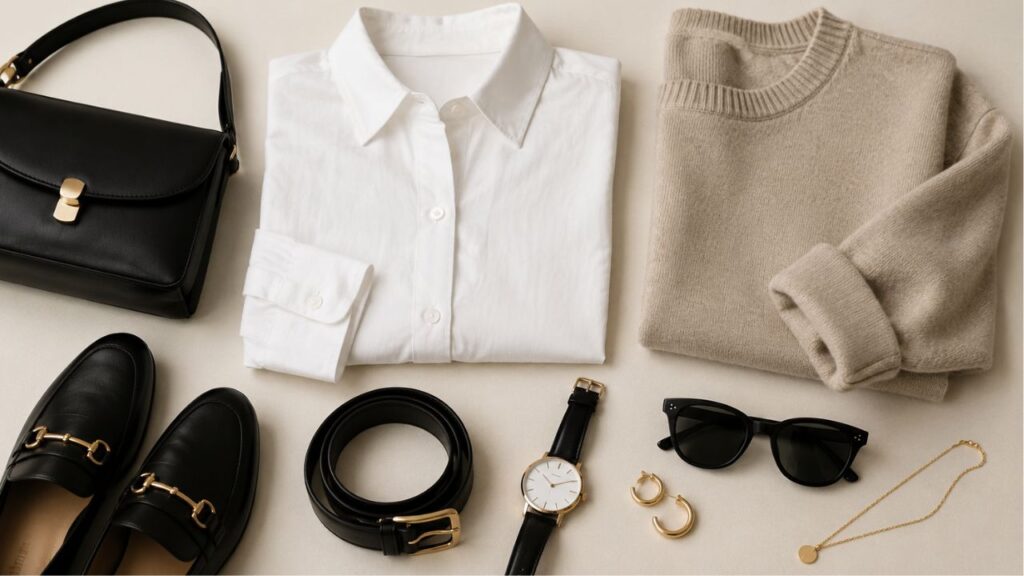
Once the foundations are established, minimalist fashion becomes less about owning fewer clothes and more about styling them intelligently.
Texture plays a major role here. Combining wool, linen, denim, leather, silk, or knitwear creates visual interest without relying on loud prints or excessive accessories.
Monochromatic dressing offers another sophisticated approach. Wearing different shades within the same colour family creates a polished appearance while maintaining simplicity. A camel coat layered over beige knitwear and cream trousers, for instance, feels refined rather than boring because the textures provide contrast.
Accessories should support outfits rather than dominate them. A quality watch, structured handbag, or understated jewellery often has greater impact than numerous statement pieces.
Minimalists also tend to develop a personal “style uniform.” This isn’t about dressing identically every day. Instead, it means identifying silhouettes and combinations that consistently work.
Fashion editors frequently adopt versions of this approach. Some rely on blazers and tailored trousers. Others wear dresses almost exclusively. The consistency reduces decision-making while strengthening personal style.
Perhaps the most valuable insight is this: successful minimalist wardrobes evolve continuously. They aren’t static collections frozen in time. Lifestyle changes, climate shifts, and personal preferences all influence wardrobe adjustments. Minimalism should adapt to your life, not the other way around.
Frequently Asked Questions
What is minimalist fashion?
Minimalist fashion focuses on owning versatile, timeless clothing pieces that can be mixed and matched easily while reducing unnecessary consumption.
How many clothes should a minimalist own?
There is no universal number. Some people thrive with 30 pieces, while others need significantly more due to work requirements, climate, or lifestyle. The ideal amount is simply what you regularly wear.
Is minimalist fashion only about neutral colours?
No. Neutral palettes are common because they’re versatile, but minimalist wardrobes can include colour and patterns if they align with personal style.
Is minimalist fashion sustainable?
It can be. Purchasing fewer, higher-quality garments and extending their lifespan generally supports more sustainable consumption habits.
What’s the difference between a capsule wardrobe and minimalist fashion?
A capsule wardrobe refers to a curated collection of clothing designed to work together. Minimalist fashion is a broader philosophy centred on intentional dressing and reduced excess.