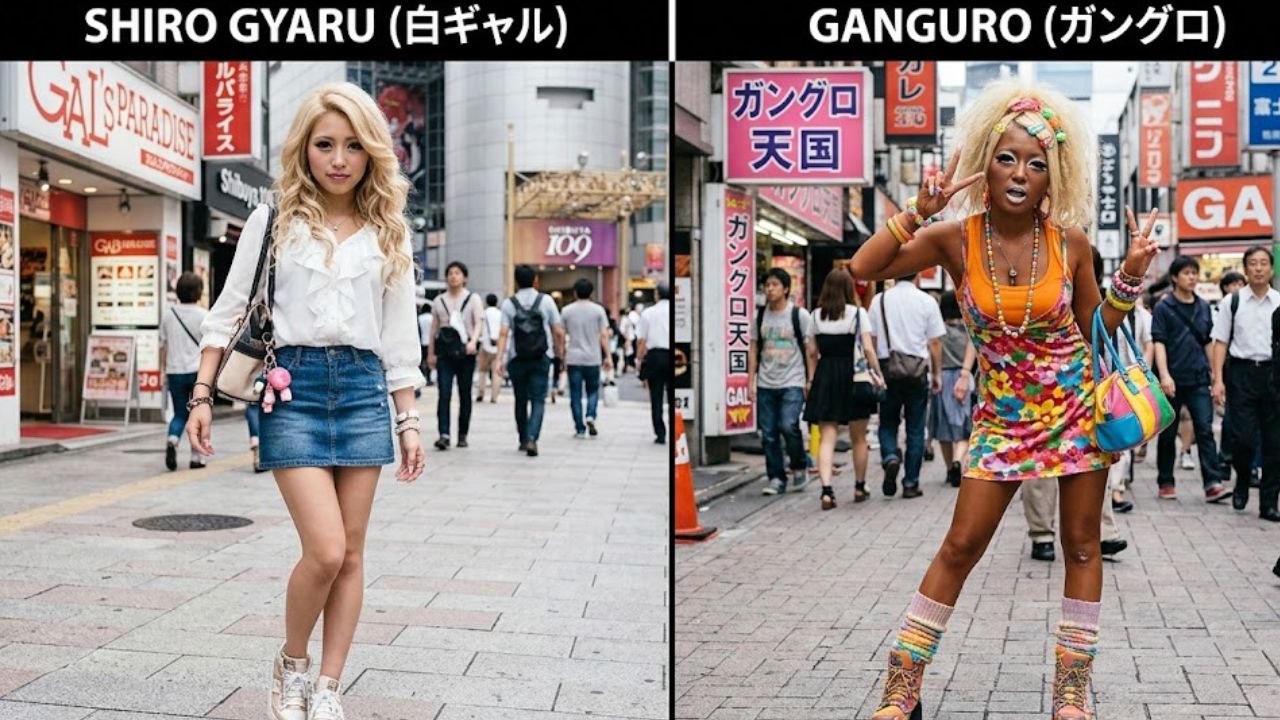
Shiro Gyaru vs Ganguro often get lumped together as “just extreme Japanese fashion,” but that misses the point entirely. They actually sit on almost opposite ends of the Gyaru spectrum, especially when you look closely at hairstyles and how they frame the entire aesthetic.
Ganguro is loud, sun-bleached chaos—hair pushed big, textured, sometimes almost rebellious in its messiness. Shiro Gyaru, on the other hand, feels more controlled. It still carries volume and drama, but it’s cleaner, softer, and more “styled” in a deliberate way. The interesting part is that both styles use similar tools—bleach, extensions, heavy styling—but the intention behind them changes everything.
In modern fashion circles, especially in the USA where Y2K and Harajuku aesthetics keep resurfacing on TikTok and Instagram, people are rediscovering these styles without fully understanding their roots. And hair is usually where the confusion starts. Once you break that down, the differences become a lot clearer.
The Gyaru Foundation That Connects Everything
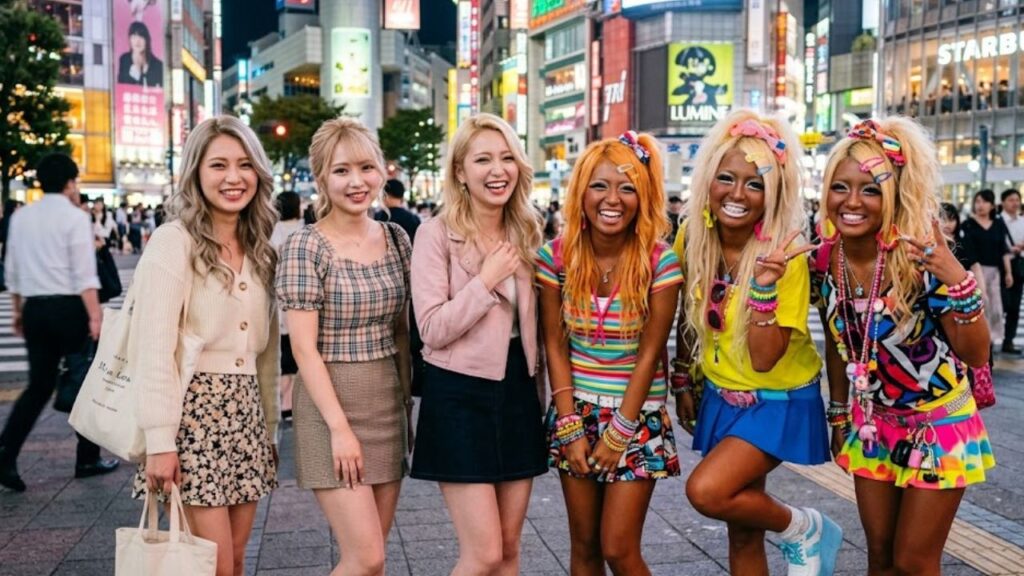
Before comparing Shiro Gyaru vs Ganguro, it helps to understand what both come from. Gyaru isn’t just a “look,” it’s a reaction. In Japan during the late 90s and early 2000s, young women started rejecting traditional beauty expectations—fair skin, dark straight hair, subtle makeup. Instead, they leaned into artificial tanning, dramatic hair, and exaggerated styling.
What people miss today is how intentional that exaggeration was. Nothing in Gyaru is accidental. Even when it looks messy, there’s usually structure underneath.
Hair became one of the strongest identity markers. Big volume, heavy bleaching, extensions that didn’t try to hide themselves—it was all part of creating a visual “statement first, explanation later” kind of energy. That foundation is what both Ganguro and Shiro Gyaru build on, even if they take it in completely different directions.
Ganguro Hair: Controlled Chaos That Looks Uncontrolled
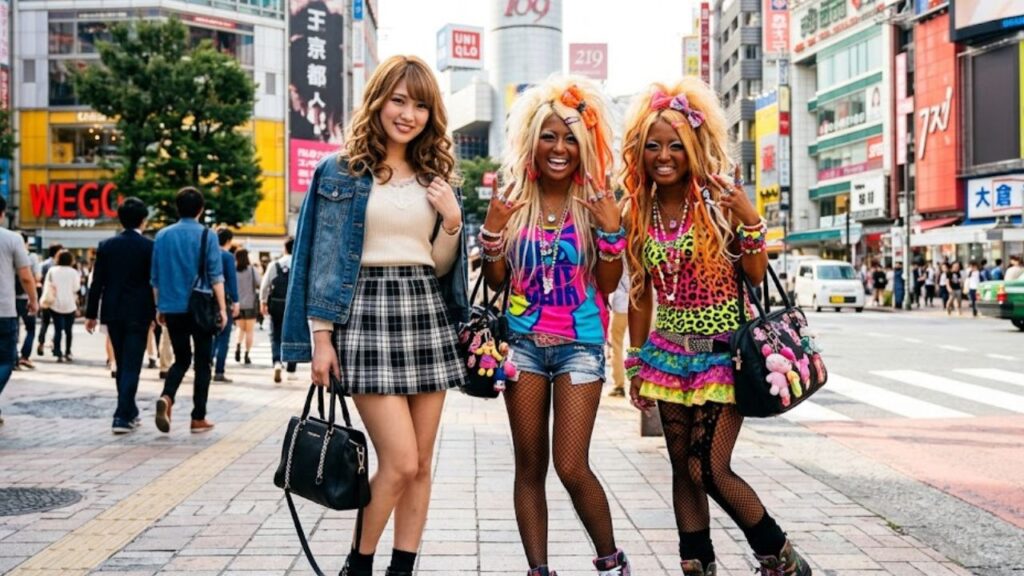
Shiro Gyaru vs Ganguro If you had to describe Ganguro hair in one phrase, it would be “engineered chaos.” At first glance, it looks messy, but that’s misleading. The volume, the texture, even the unevenness is usually intentional.
Ganguro hairstyles typically rely on heavily bleached or bright blonde tones, often paired with aggressive teasing at the roots. Extensions are common, not for length alone but for bulk. The goal isn’t elegance—it’s impact. Hair is meant to feel like it’s taking up space, almost challenging the viewer.
One thing stylists often point out is that Ganguro hair behaves more like performance styling than everyday hair. It’s closer to editorial fashion than streetwear in execution. There’s also a cultural layer here: the exaggerated hair and tan-heavy makeup worked together as a rejection of “polished femininity” in Japan at the time.
From a modern USA perspective, you can almost compare it to certain festival aesthetics or hyper-styled rave culture, where perfection is not the goal—presence is.
Shiro Gyaru Hair: Soft Control With a Deliberate Finish
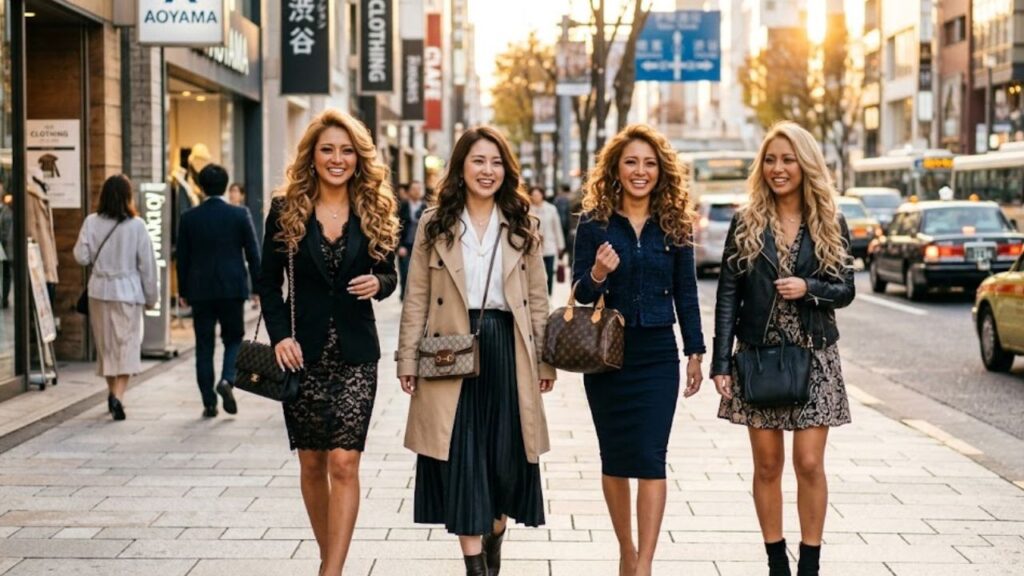
Shiro Gyaru vs Ganguro Shiro Gyaru flips that energy completely. The word “shiro” means white, and while it doesn’t literally mean pale skin in practice, it does signal a softer, cleaner aesthetic direction.
Shiro Gyaru hairstyles still use bleach, still rely on volume, and still embrace curls or extensions—but everything is more refined. The hair is usually styled to look “expensive,” even if the structure underneath is complex. Think smooth waves instead of aggressive teasing, balanced volume instead of uneven bulk, and shine instead of matte texture.
What stands out most is restraint. Shiro Gyaru hair doesn’t try to overwhelm you. It frames the face in a more intentional way, often working with makeup rather than competing against it. That coordination is what makes it feel more modern and wearable, especially for people outside Japan trying to adapt the look today.
In a way, Shiro Gyaru is closer to how Western beauty influencers style “soft glam waves,” except pushed slightly further into a fashion subculture identity.
The Real Difference Between Shiro Gyaru vs Ganguro Hair
Shiro Gyaru vs Ganguro When you strip away the fashion layers and look only at hairstyles, the difference becomes surprisingly clear. It’s not about color or even volume—it’s about control versus expression.
Ganguro hair is expressive first. It prioritizes energy, texture, and visual disruption. It doesn’t care if everything is symmetrical or polished, as long as it feels bold. Shiro Gyaru hair does the opposite. It prioritizes structure, even when it looks voluminous or dramatic. The goal is harmony, not shock value.
This is where most online explanations miss the point. People often say Ganguro is “messy” and Shiro Gyaru is “pretty,” but that’s too shallow. A better way to understand it is intention:
- Ganguro: hair as rebellion and exaggeration
- Shiro Gyaru: hair as styling discipline and aesthetic balance
Shiro Gyaru vs Ganguro Even the way both styles use bleach tells a story. In Ganguro, bleach is part of transformation and identity disruption. In Shiro Gyaru, it’s part of refinement and visual cohesion.
Styling Reality: What It Actually Takes to Achieve These Looks
Most tutorials online oversimplify Gyaru hair into “just curl it and tease it,” but that misses the maintenance side completely. These styles are high-effort, and the hair health aspect is something people don’t talk about enough.
Ganguro styling often involves heavy teasing, strong hold sprays, and extensions that are meant to hold structure through movement. It’s not unusual for the style to be rebuilt frequently rather than preserved for long periods. Shiro Gyaru, however, leans more on controlled curling techniques, smoothing products, and maintaining shine through consistent care.
If you look at real stylists who work with Gyaru-inspired looks today, they’ll often say the same thing: the difference is not the tools, it’s the finish. One style is “set and disrupt,” the other is “set and refine.”
Shiro Gyaru vs Ganguro That distinction matters if someone in the Shiro Gyaru vs Ganguro USA is trying to recreate these looks for fashion content or cosplay. Without understanding the finish goal, the hairstyle can easily end up looking unfinished rather than intentional.
Modern Gyaru Revival and Why This Comparison Matters Now
Gyaru styles didn’t disappear—they shifted. On platforms like TikTok, you’ll see references to both Ganguro and Shiro Gyaru, but often stripped of their original context. What’s interesting is how Western creators tend to gravitate more toward Shiro Gyaru without realizing it. It’s simply more adaptable to modern beauty standards.
Ganguro, meanwhile, appears more in experimental fashion circles or themed content. It’s harder to wear casually because it breaks so many conventional beauty expectations at once.
Shiro Gyaru vs Ganguro Still, both styles are influencing modern hair trends. Big-volume curls, bold bleaching, and exaggerated silhouettes are everywhere in Y2K-inspired fashion right now. The difference is that people are borrowing the visuals without always understanding the structure behind them.
That’s where this comparison becomes useful. It’s not just about history—it helps explain why certain hairstyles feel “balanced” while others feel intentionally chaotic.
FAQ
What is the main difference between Shiro Gyaru and Ganguro hairstyles?
Shiro Gyaru focuses on controlled, polished volume with a soft aesthetic, while Ganguro emphasizes bold, messy, and highly expressive styling with exaggerated texture.
Is Ganguro hair harder to maintain than Shiro Gyaru hair?
Yes. Ganguro styles usually require more teasing, stronger products, and more frequent restyling due to their intentionally chaotic structure.
Can you wear Shiro Gyaru or Ganguro hairstyles in everyday fashion?
Shiro Gyaru vs Ganguro is easier to adapt for everyday wear, especially in modern Western fashion. Ganguro is more suited for editorial, cosplay, or statement looks.
Do both styles use hair extensions?
Yes, both often rely on extensions, but Ganguro uses them more for volume exaggeration, while Shiro Gyaru uses them for balanced length and shape.
Conclusion
Shiro Gyaru and Ganguro might come from the same cultural umbrella, but their hairstyles tell completely different stories. One leans into control, softness, and aesthetic balance, while the other embraces exaggeration and visual disruption. Once you understand that contrast, it becomes easier to see why Shiro Gyaru feels more modern in today’s fashion space, while Ganguro remains iconic for its fearless originality.
Both still influence how people experiment with hair volume, bleach tones, and styling extremes—even if they don’t realize where those ideas came from.