Few Japanese fashion movements have achieved the cultural impact and global recognition of gyaru. Over the past several decades, this vibrant fashion subculture has evolved from a youth rebellion against traditional beauty standards into one of the most influential style movements in Japanese street fashion. Today, gyaru continues to inspire fashion enthusiasts across the United States, Europe, and Asia, attracting people who appreciate bold self-expression, dramatic beauty techniques, and highly personalized styling.
For newcomers, however, gyaru can feel overwhelming. A quick search reveals countless makeup tutorials, fashion guides, historical references, and substyles ranging from glamorous Hime Gyaru to edgy Tsuyome Gyaru. Many beginners struggle to understand where to start, how the different styles relate to one another, and what truly makes a look “gyaru.”
The reality is that gyaru is much more than a specific outfit or makeup routine. It represents a mindset centered on confidence, individuality, and self-expression. Throughout its history, the subculture has encouraged people to challenge conventional expectations and create their own identity through fashion. This spirit of creativity is one of the main reasons gyaru remains relevant even decades after its emergence.
In this comprehensive gyaru style guide, you’ll learn the history of gyaru fashion, the core elements that define the aesthetic, and the cultural influences that shaped its evolution. Whether you’re completely new to Japanese street fashion or looking to deepen your understanding of gyaru culture, this guide will provide the foundation needed to explore the style with confidence and authenticity.
What Is Gyaru Style?
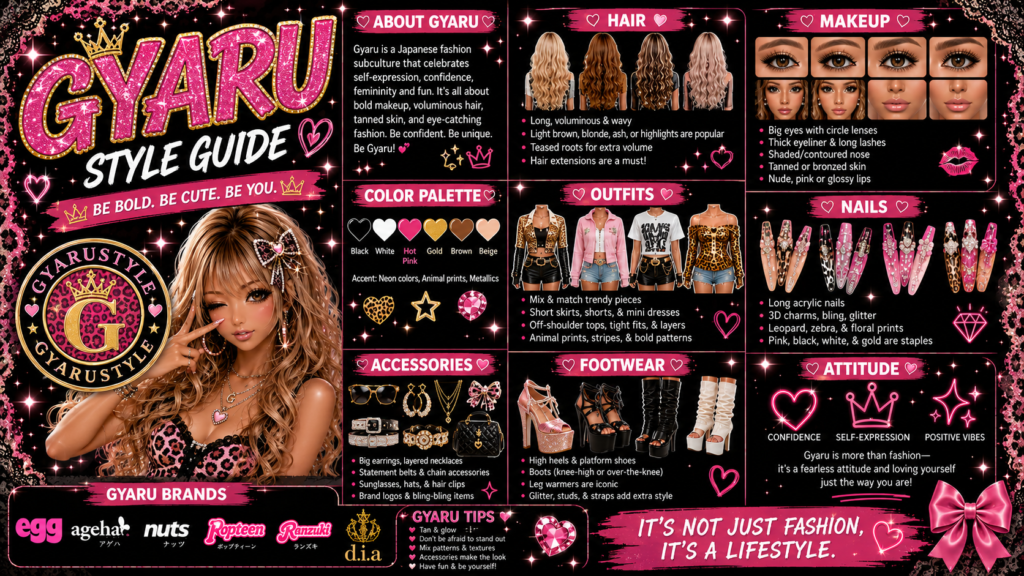
Gyaru is a Japanese fashion subculture that emerged during the late twentieth century and became particularly influential during the 1990s and early 2000s. The word itself originates from the English term “gal,” which was adapted into Japanese and eventually became associated with a distinct fashion movement focused on individuality and self-expression.
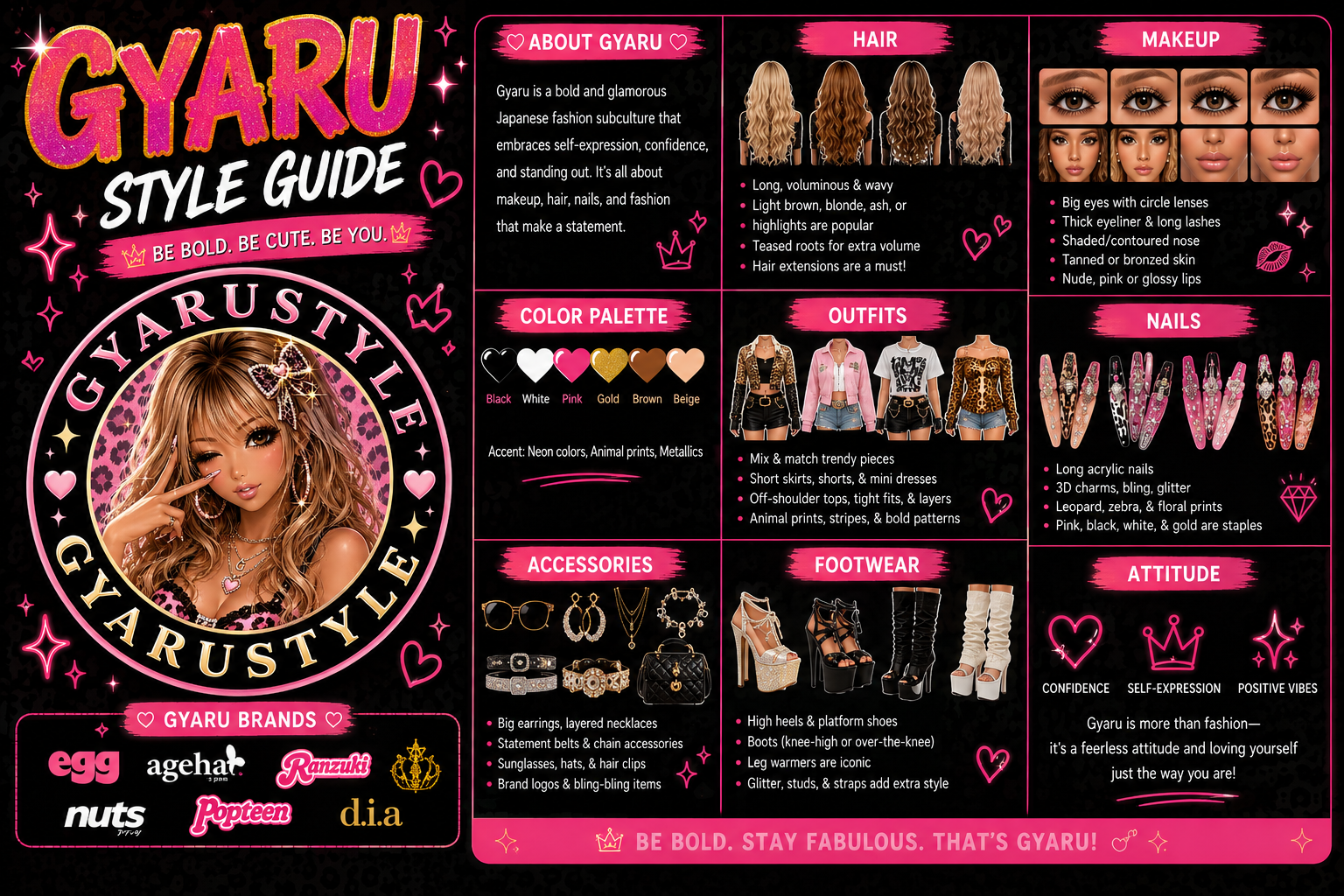
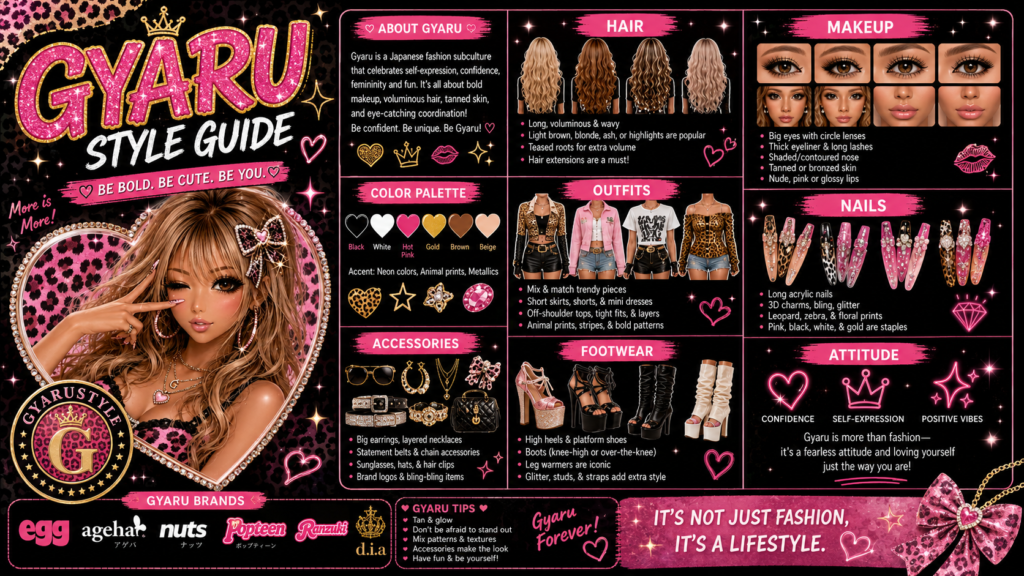
Unlike many fashion aesthetics that revolve primarily around clothing, gyaru is built upon a complete visual transformation. Makeup, hair styling, clothing, accessories, nails, and attitude all play essential roles in creating the overall look. This holistic approach distinguishes gyaru from many other fashion trends and helps explain why it has maintained such a passionate following over the years.
One common misconception is that gyaru has a single appearance. In reality, gyaru encompasses numerous substyles that can look dramatically different from one another. A Hime Gyaru enthusiast may embrace lace dresses, curls, and princess-inspired fashion, while an Amekaji Gyaru fan might prefer casual American-inspired outfits. Despite these differences, both styles remain connected through the shared values of confidence, creativity, and visual impact.
Another defining feature of gyaru is its relationship with beauty standards. Historically, the style challenged conventional Japanese ideals that emphasized modesty, natural makeup, and pale skin. By embracing dramatic makeup, dyed hair, and highly stylized fashion, gyaru created an alternative vision of beauty that resonated with many young people seeking greater freedom of expression.
Today, modern gyaru continues to evolve. Social media platforms have introduced the style to global audiences, allowing enthusiasts to reinterpret traditional elements while preserving the subculture’s core identity.
The Meaning Behind the Gyaru Aesthetic
Understanding gyaru requires looking beyond the visual elements and exploring the philosophy that shaped the movement. At its core, gyaru has always represented a desire to stand apart from societal expectations. Rather than accepting established standards of beauty and behavior, gyaru encouraged young people to define themselves through fashion and personal expression.
This emphasis on individuality helps explain why the subculture developed so many variations. Unlike rigid fashion movements with strict rules, gyaru thrives on creativity. Members often adapt trends to suit their own preferences, resulting in a wide spectrum of interpretations that remain connected through a shared cultural foundation.
Fashion historians frequently describe gyaru as a response to social pressures surrounding appearance and femininity. During its rise, many young women viewed the style as an opportunity to challenge traditional norms and create a stronger sense of personal identity. This rebellious spirit remains one of the most important aspects of the movement, even as specific trends and aesthetics continue to evolve.
The History of Gyaru Fashion
To understand modern gyaru style, it’s important to examine the cultural and historical forces that shaped its development. The movement did not appear overnight. Instead, it emerged gradually through a combination of economic change, youth culture, media influence, and evolving attitudes toward fashion.
Early Origins
The roots of gyaru can be traced to Japan’s rapidly changing social landscape during the 1970s and 1980s. As consumer culture expanded and fashion became increasingly accessible, young people began seeking new ways to express individuality. International influences, celebrity culture, and fashion magazines introduced alternative aesthetics that differed significantly from traditional Japanese expectations.
The term “gyaru” itself gained popularity through advertising campaigns and youth-oriented media. Over time, it became associated with fashionable young women who embraced modern trends and rejected conservative standards of appearance.
The Rise of Shibuya Culture
During the 1990s, Tokyo’s Shibuya district emerged as the epicenter of gyaru fashion. Shopping destinations such as Shibuya 109 became gathering places for trendsetters, while magazines like Egg and Popteen documented emerging styles and helped spread them throughout Japan.
This period saw the rise of Kogal fashion, characterized by modified school uniforms, loose socks, designer accessories, and carefully styled hair. Kogal served as an early gateway into the broader gyaru movement and helped establish many of the fashion principles that would later define the subculture.
As media coverage increased, gyaru gained visibility across the country. New trends appeared rapidly, and the movement expanded beyond a single aesthetic into a collection of interconnected substyles.
The Golden Era of Gyaru
The early 2000s are widely considered the golden age of gyaru fashion. During this period, substyles such as Ganguro, Hime Gyaru, Agejo Gyaru, and Tsuyome Gyaru gained widespread recognition.
Fashion magazines played a major role in shaping trends, while influential brands created products specifically for gyaru consumers. Makeup techniques became increasingly sophisticated, hairstyles grew more elaborate, and fashion choices became more diverse. Rather than following mainstream trends, gyaru established its own ecosystem of magazines, brands, influencers, and communities.
This era also cemented gyaru’s reputation as one of Japan’s most distinctive youth subcultures. Its influence extended beyond fashion and helped shape broader conversations about beauty, identity, and self-expression.
The Modern Revival
Although gyaru’s mainstream popularity declined during the 2010s, the subculture never disappeared. Dedicated communities continued to preserve traditional styles while adapting to changing fashion landscapes. In recent years, renewed interest in Y2K fashion and Japanese street culture has introduced gyaru to a new generation.
Social media platforms have played a crucial role in this revival. TikTok, Instagram, YouTube, and online communities allow enthusiasts to share tutorials, outfit inspiration, historical information, and styling advice with audiences around the world.
As a result, gyaru has become increasingly global. Modern enthusiasts often combine classic elements with contemporary influences, creating fresh interpretations that honor the style’s history while embracing new ideas.
The Core Elements of Gyaru Style
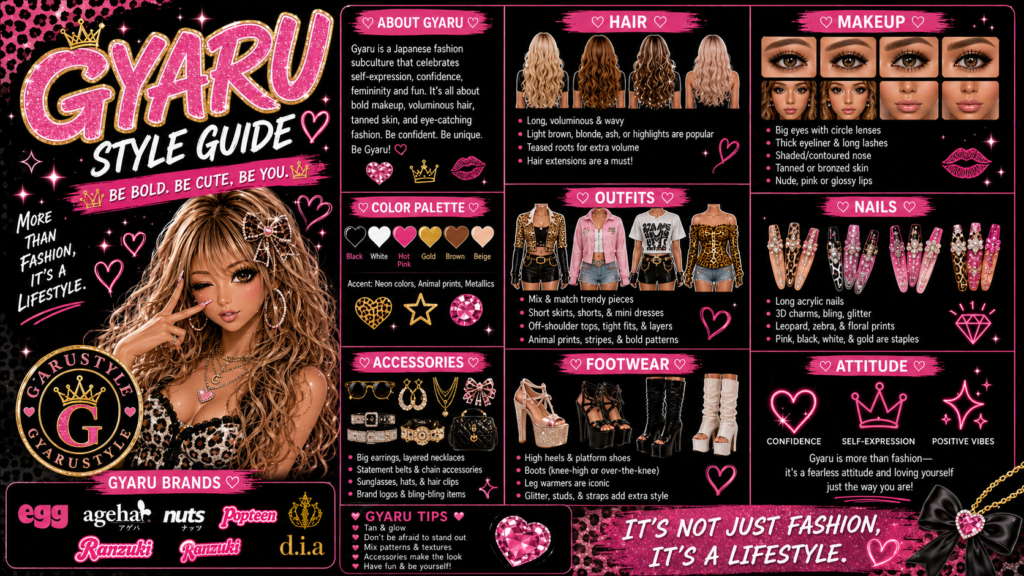
Despite the diversity of gyaru substyles, several key elements remain consistent throughout the movement.
Fashion
Fashion serves as the visual foundation of gyaru. While clothing choices vary depending on the substyle, gyaru outfits generally prioritize impact, coordination, and personal expression. Whether someone prefers glamorous dresses, edgy streetwear, or casual American-inspired fashion, the goal is to create a cohesive look that reflects their chosen aesthetic.
Makeup
Makeup is often considered the defining feature of gyaru style. Enlarged eyes, dramatic lashes, eyeliner techniques, contouring, and carefully structured facial proportions all contribute to the signature look. Even within more casual interpretations of gyaru, makeup remains one of the most important tools for creating the desired visual effect.
Hair
Hair styling plays an equally important role. Dyed colors, curls, extensions, volume, and elaborate styling techniques help complete the overall appearance. Throughout gyaru history, hair has been viewed as an essential part of the transformation process.
Accessories and Details
Accessories help unify the entire look. Bags, jewelry, nails, shoes, belts, and other details often reflect the chosen substyle and contribute to the overall aesthetic. Experienced gyaru enthusiasts understand that small details frequently make the difference between an outfit that feels incomplete and one that appears fully realized.
Most importantly, gyaru style is ultimately about confidence. Fashion, makeup, and accessories provide the tools, but personal expression remains the true heart of the movement.
Frequently Asked Questions About Gyaru Style
What is gyaru style?
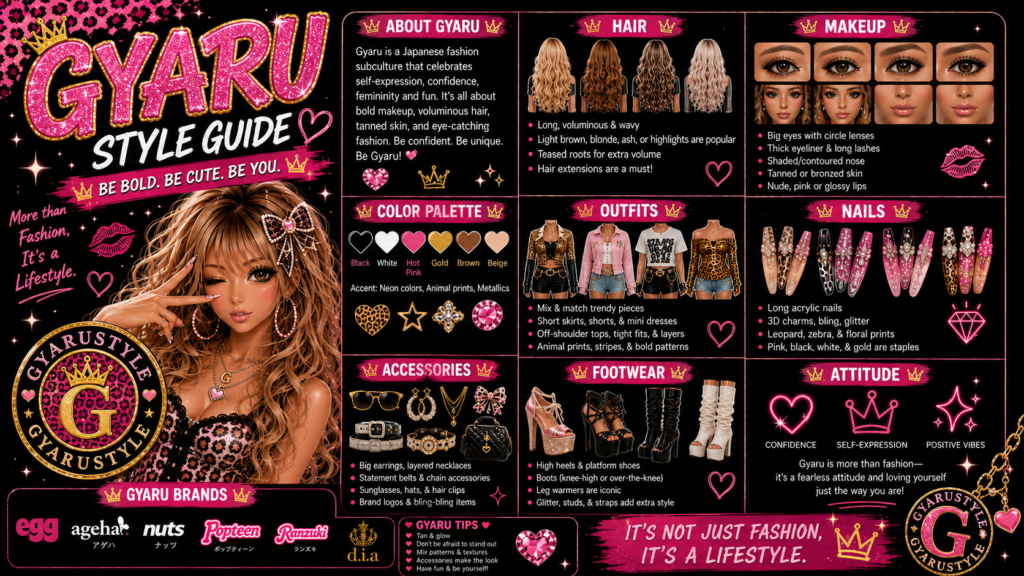
Gyaru style is a Japanese fashion subculture known for bold self-expression, dramatic beauty techniques, and highly personalized fashion. Unlike many fashion aesthetics that focus only on clothing, gyaru combines makeup, hairstyling, accessories, nails, and attitude to create a complete look. The style emerged as a challenge to traditional beauty standards and became one of the most influential movements in Japanese street fashion.
Today, gyaru includes many different substyles, ranging from the glamorous elegance of Hime Gyaru to the casual influences of Amekaji Gyaru. While these styles may look different on the surface, they all share the same emphasis on confidence, creativity, and individuality.
Is gyaru fashion still popular today?
Yes. Although gyaru is no longer the dominant youth trend it was during the early 2000s, it remains active and continues to attract new followers worldwide. The rise of Y2K fashion, social media platforms, and renewed interest in Japanese street fashion has helped introduce gyaru to a new generation.
Modern gyaru communities thrive on TikTok, Instagram, YouTube, Discord, and dedicated fashion forums. These communities share tutorials, outfit inspiration, styling advice, and historical knowledge, ensuring that the culture continues to evolve while preserving its roots.
What are the most popular gyaru substyles?
Some of the most recognizable gyaru substyles include Hime Gyaru, Ganguro, Kogal, Agejo Gyaru, Tsuyome Gyaru, Onee Gyaru, Amekaji Gyaru, and Rokku Gyaru.
Each substyle has its own unique approach to fashion and beauty. Hime Gyaru focuses on feminine elegance and princess-inspired fashion, while Ganguro is known for bold tanning and dramatic makeup. Agejo Gyaru embraces glamorous nightlife fashion, and Amekaji Gyaru incorporates casual American-inspired influences. Understanding these differences can help beginners choose a style that aligns with their personal taste.
Do you need makeup to be gyaru?
Makeup has traditionally been one of the most important elements of gyaru fashion. While clothing helps establish the aesthetic, makeup often creates the distinctive visual transformation associated with the style.
That said, modern communities tend to be more flexible than earlier generations. Beginners frequently start by exploring gyaru-inspired fashion and gradually develop their makeup skills over time. Most experienced enthusiasts recommend focusing on eye makeup, lashes, eyeliner, and overall coordination before attempting more advanced techniques.
Where can I buy gyaru fashion in the USA?
Finding gyaru fashion in the United States is easier today than it was in the past. Online marketplaces such as Depop, Mercari, eBay, and Etsy frequently feature vintage gyaru items and pieces inspired by the aesthetic. Japanese secondhand marketplaces and proxy shopping services can also provide access to iconic brands that are no longer widely available.
Many experienced gyaru enthusiasts also recommend thrifting. Since Y2K fashion has returned to mainstream popularity, it is often possible to find clothing that works well within various gyaru substyles without spending a large amount of money.
Is gyaru the same as Y2K fashion?
No. While there is considerable overlap between gyaru and Y2K fashion, they are not the same thing. Y2K fashion is a broad trend inspired by styles from the late 1990s and early 2000s, while gyaru is a specific Japanese fashion subculture with its own history, beauty standards, magazines, brands, and cultural significance.
Many modern Y2K trends borrow elements from gyaru aesthetics, but gyaru remains a distinct movement with a deeper cultural foundation and a stronger emphasis on transformation, makeup, and community.
Conclusion
Gyaru fashion has earned its place as one of the most influential and recognizable Japanese street fashion movements of all time. What began as a response to conventional beauty standards evolved into a diverse and creative subculture that continues to inspire fashion enthusiasts around the world. From its origins in the bustling streets of Shibuya to its modern revival through social media, gyaru has consistently celebrated individuality, confidence, and self-expression.
One of the reasons the style remains relevant is its remarkable flexibility. Whether you are drawn to the romantic elegance of Hime Gyaru, the glamorous appeal of Agejo Gyaru, or the casual influences of Amekaji Gyaru, there is space within the community for personal interpretation and creativity. Rather than forcing people into a rigid set of rules, gyaru encourages experimentation and self-discovery.
For beginners, the most valuable lesson is that authentic gyaru style is not about purchasing expensive clothing or perfectly recreating someone else’s look. It is about understanding the culture, learning the fundamentals of styling, and gradually developing a visual identity that feels authentic to you. Fashion, makeup, hair, and accessories all contribute to the aesthetic, but confidence is ultimately what brings the look to life.
As interest in Japanese street fashion continues to grow globally, gyaru remains a powerful reminder that fashion can be more than clothing. It can be a form of self-expression, creativity, and personal empowerment.
Ready to Start Your Gyaru Journey?
Choose a substyle that inspires you, begin experimenting with makeup and styling techniques, and explore the rich history behind the movement. The more you learn about gyaru culture, the easier it becomes to create looks that are both authentic and uniquely your own.
Fashion trends come and go, but confidence, individuality, and creativity never go out of style—and those qualities have always been at the heart of gyaru.