

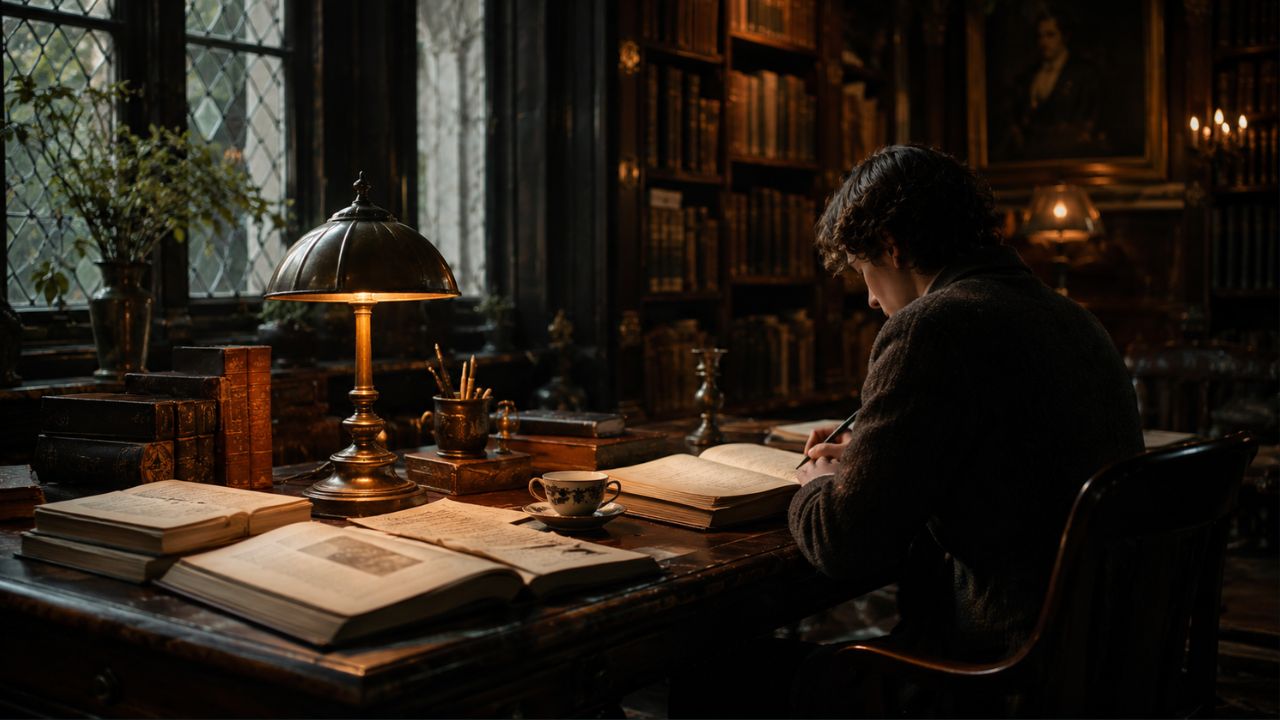
Dark Academia Libraries & Study Spaces There is something undeniably compelling about walking into an old library lined with dark wooden shelves, worn leather chairs, and towering stacks of books. The appeal goes beyond decoration. A well-designed dark academia library creates a feeling—part intellectual retreat, part personal sanctuary.
Many people are drawn to dark academia because it romanticises learning, literature, and quiet reflection. Yet recreating that atmosphere at home often proves harder than expected. People buy antique-looking décor, add a few candles, and still feel that something is missing. Usually, the missing element is intention.
Authentic dark academia study spaces aren’t simply collections of vintage objects. They are carefully layered environments that support reading, writing, studying, and thinking. The best spaces feel lived in rather than staged for social media. They invite you to sit down, open a book, and stay awhile.
Creating that atmosphere doesn’t require a mansion or floor-to-ceiling bookshelves. A small apartment corner, dorm desk, or spare bedroom can capture the same scholarly mood when designed thoughtfully.
What Makes a Dark Academia Library Feel Authentic?
Dark Academia Libraries & Study Spaces library aesthetic draws inspiration from historic universities, classical literature, Gothic architecture, and traditional reading rooms. Think rich colours, natural materials, aged textures, and objects associated with scholarship.
The strongest dark academia interiors share several characteristics:
- Dark or muted colour palettes dominated by brown, forest green, burgundy, charcoal, and cream.
- Furniture made from natural materials such as oak, walnut, or leather.
- Warm, layered lighting rather than harsh overhead fixtures.
- Books displayed prominently and intentionally.
- Personal objects that suggest intellectual curiosity, such as maps, journals, framed art, or antique-inspired accessories.
One detail competitors often overlook is scent. Historic libraries possess a distinctive atmosphere partly because of old paper, wood, leather, and wax. Reproducing this sensory layer with cedar, sandalwood, tobacco, or library-inspired candles can dramatically strengthen the aesthetic.
Dark Academia Libraries & Study Spaces Another overlooked element is imperfection. Spaces that appear excessively coordinated often feel artificial. A slightly worn desk, mismatched vintage frames, or books with visible age create authenticity that brand-new décor rarely achieves.
Essential Design Elements for a Dark Academia Study Space
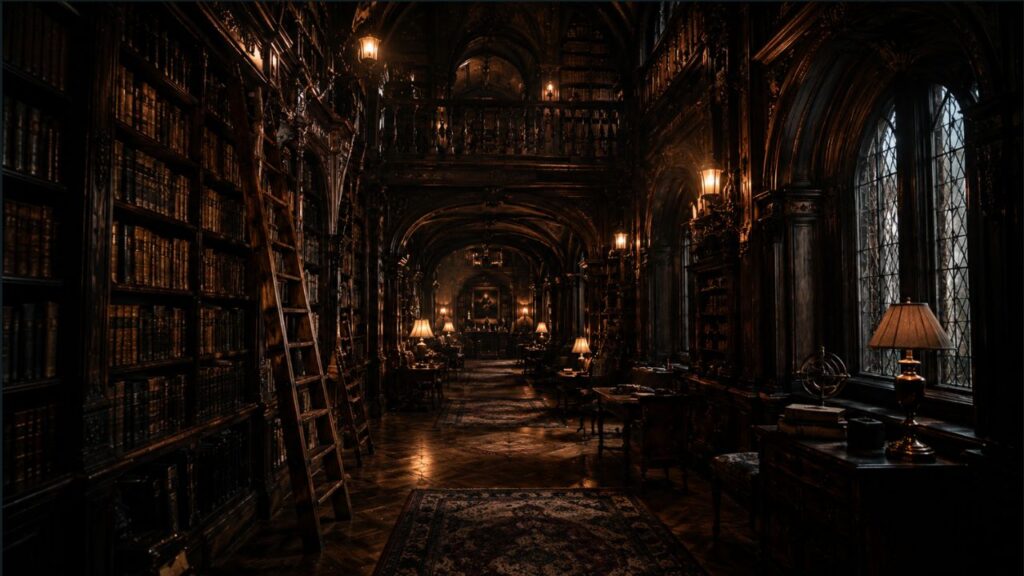
Dark Academia Libraries & Study Spaces Colour establishes the emotional foundation of any aesthetic library. Dark academia interiors typically rely on deep, moody shades, but balance matters. Entirely dark rooms can quickly become oppressive, especially in smaller homes.
A practical approach is to use darker tones on large furniture pieces while incorporating lighter accents through walls, textiles, or artwork. Cream-coloured pages, aged brass, and warm wood finishes soften the overall look.
Furniture choices should prioritise both atmosphere and usability. A beautiful desk becomes frustrating if it is uncomfortable after an hour of studying. Ergonomics matter.
Dark Academia Libraries & Study Spaces A traditional wooden writing desk remains the centrepiece of most dark academia study rooms. Pairing it with a supportive chair—perhaps upholstered in leather or textured fabric—helps preserve comfort without sacrificing style.
Bookshelves naturally define the space. Built-in shelving creates a grand library effect, but freestanding bookcases work equally well. Styling shelves thoughtfully makes a significant difference. Instead of arranging every book uniformly, vary orientations. Stack some horizontally, display framed artwork, and leave small areas of negative space.
Lighting deserves special attention because it influences both mood and concentration.
| Lighting Type | Best Use |
| Brass desk lamp | Focused reading and writing |
| Wall sconces | Ambient evening lighting |
| Floor lamp | Reading corners |
| Candles or LED candles | Atmosphere and decorative layering |
Dark Academia Libraries & Study Spaces Many people make the mistake of relying solely on overhead lighting. Historic libraries rarely feel inviting because of ceiling fixtures alone. Layered lighting creates depth and softness, making study sessions more enjoyable.
Creating a Dark Academia Library at Home
Dark Academia Libraries & Study Spaces A common misconception is that achieving a library aesthetic requires an entire room. In reality, successful spaces begin with understanding how you actually work.
Start by observing your study habits. Do you primarily read physical books? Write extensively? Use multiple screens? Your daily routine should shape the layout.
For smaller homes, dedicating a single corner to the aesthetic often produces better results than attempting to transform an entire room. A comfortable chair, side table, lamp, and bookshelf can establish a compelling reading nook within only a few square feet.
Dark Academia Libraries & Study Spaces When selecting furniture, prioritise timeless pieces over trend-driven purchases. Vintage desks, second-hand wooden shelves, and thrifted accessories usually provide more character than mass-produced décor.
Budget-conscious decorators frequently overlook estate sales, flea markets, and local charity shops. Some of the most convincing dark academia interiors contain inexpensive finds collected gradually over time rather than expensive matching furniture sets.
Dark Academia Libraries & Study Spaces Building a personal library should also happen gradually. Authentic collections reflect genuine interests. Fill shelves with books you intend to read, revisit, annotate, or display proudly.
Classic literature naturally complements the aesthetic, but personal relevance matters more. Philosophy, poetry, history, art, science, and even contemporary nonfiction can coexist beautifully within a dark academia home library.
Finally, introduce texture. Persian-style rugs, velvet cushions, linen curtains, wool throws, and aged leather accessories create warmth that photographs alone cannot capture.
Designing Study Spaces That Encourage Productivity
Dark Academia Libraries & Study Spaces A visually striking room means little if you avoid studying there.
Research consistently suggests that thoughtfully designed environments can influence concentration, motivation, and overall satisfaction with work. Yet many aesthetic spaces prioritise appearance at the expense of functionality.
The most productive dark academia study spaces share several practical characteristics:
- Adequate task lighting for reading and writing.
- Comfortable seating that supports long sessions.
- Organised storage systems.
- Minimal visual distractions around the primary work area.
- Accessible supplies and reference materials.
Dark Academia Libraries & Study Spaces One expert observation rarely discussed in aesthetic content is cognitive clutter. Shelves overflowing with objects may look impressive in photographs but can create mental fatigue during demanding work.
Curate instead of accumulating.
Reserve decorative displays for peripheral areas while keeping the immediate workspace relatively clear. A desk containing a lamp, notebook, current reading material, and a few meaningful objects generally supports focus better than elaborate styling.
Technology integration presents another challenge. Laptops, monitors, and charging cables can easily disrupt the old-world atmosphere.
Dark Academia Libraries & Study Spaces Rather than hiding technology entirely, blend it thoughtfully. Use leather desk mats, brass accessories, wooden monitor risers, and cable management solutions to reduce visual clutter. Vintage-inspired keyboards and speakers can also help modern devices feel less intrusive.
Students living in dormitories face additional limitations. Temporary wallpaper, removable shelving, framed prints, and layered textiles allow substantial aesthetic transformation without violating housing policies.
Famous Libraries That Inspire the Dark Academia Aesthetic
Dark Academia Libraries & Study Spaces Many visual elements associated with dark academia originate from historic academic libraries around the world.
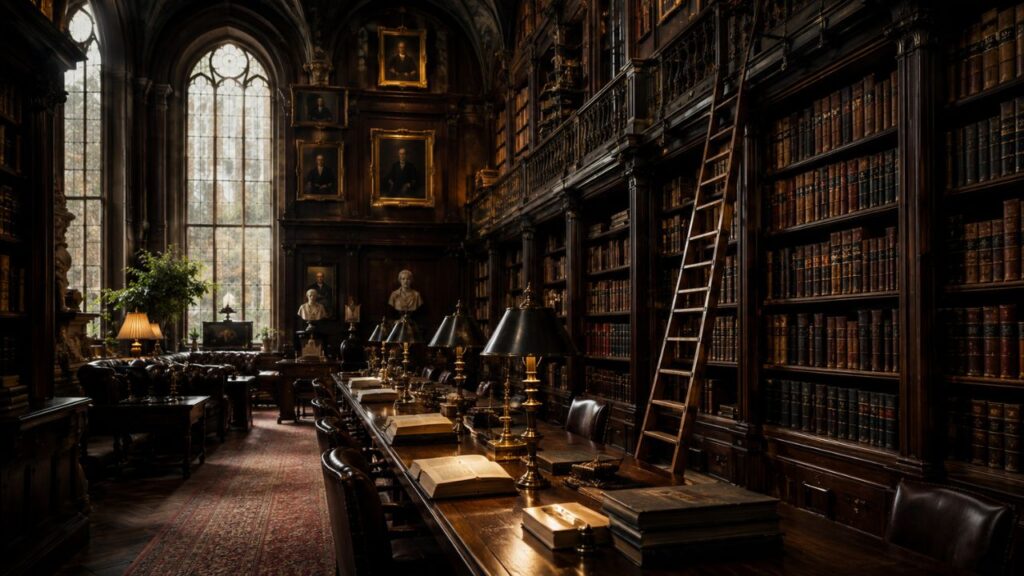
The Bodleian Library, with its centuries-old architecture and scholarly atmosphere, remains one of the strongest influences on the aesthetic. Long reading tables, dark wood panelling, and historic details exemplify the traditional academic environment many enthusiasts attempt to recreate.
Trinity College Library is equally iconic. Its soaring shelves and dramatic perspective demonstrate how vertical space contributes to visual impact. Even modest homes can borrow this principle by using tall bookcases that draw the eye upward.
American readers often find inspiration in institutions such as the New York Public Library and university reading rooms featuring neoclassical design elements, marble detailing, and quiet study zones.
Dark Academia Libraries & Study Spaces Fortunately, reproducing these spaces at home does not require architectural grandeur.
Borrow individual principles instead:
Use symmetry when arranging shelves or furniture. Incorporate natural materials. Introduce classical artwork, framed sketches, or vintage maps. Prioritise quietness and intentionality.
What makes historic libraries memorable is not merely their appearance. It is the atmosphere of focused intellectual activity. Replicating that feeling should remain the ultimate goal.
Dark Academia Library Ideas for Every Budget
Luxury interiors dominate social media, but dark academia can be surprisingly affordable.
A modest budget often produces more authentic results because it encourages creativity and patience.
For under $200, focus on foundational elements: a second-hand wooden desk, warm lighting, thrifted books, and a few carefully chosen accessories. Even simple additions such as framed botanical prints or brass candle holders can transform a space.
Mid-range budgets allow greater investment in furniture quality. Solid wood bookshelves, vintage rugs, and upholstered seating significantly elevate the room’s character.
Luxury budgets may support custom shelving, antique furniture, architectural modifications, or extensive book collections. Yet expense alone never guarantees authenticity.
Some of the most compelling dark academia libraries evolve slowly over years. They accumulate memories, annotations, favourite books, travel souvenirs, and meaningful objects. That personal history cannot be purchased.
A useful rule is to buy slowly and edit frequently. If an object contributes neither function nor atmosphere, reconsider its place in the room.
Common Mistakes to Avoid
Dark academia interiors often fail for surprisingly predictable reasons.
The first mistake is creating spaces that are too dark. Atmospheric lighting should never compromise readability. If you strain to read comfortably, additional task lighting is necessary.
Another frequent issue is overcrowding. Every empty surface does not require decoration. Historic libraries succeed because they balance richness with restraint.
Many people also underestimate comfort. Beautiful chairs designed purely for appearance rarely support serious reading or study. Test furniture before committing whenever possible.
Finally, avoid purchasing large quantities of inexpensive imitation antiques. A handful of genuine vintage pieces usually looks more convincing than dozens of artificially distressed accessories.
Frequently Asked Questions
What is a dark academia library?
A dark academia library is a study or reading space inspired by classical education, historic libraries, literature, and vintage interiors. It typically features dark wood furniture, warm lighting, books, and scholarly décor.
Can a small room become a dark academia study space?
Absolutely. Even a single corner containing a desk, lamp, bookshelf, and comfortable chair can capture the aesthetic effectively.
Which colours work best for dark academia interiors?
Deep browns, forest greens, burgundy, charcoal, black, cream, and warm neutrals are commonly used throughout dark academia spaces.
How can students create the aesthetic on a budget?
Start with second-hand furniture, thrifted books, warm lighting, and inexpensive framed artwork. Building the space gradually often produces the most authentic results.
Does dark academia still remain popular?
Yes. Interest continues because the aesthetic combines timeless interior design with a broader appreciation for reading, learning, and intentional living.
A memorable dark academia library does more than photograph well. It encourages curiosity, concentration, and reflection. When your study space genuinely supports the way you read, think, and work, the aesthetic stops feeling like decoration and becomes part of everyday life.