

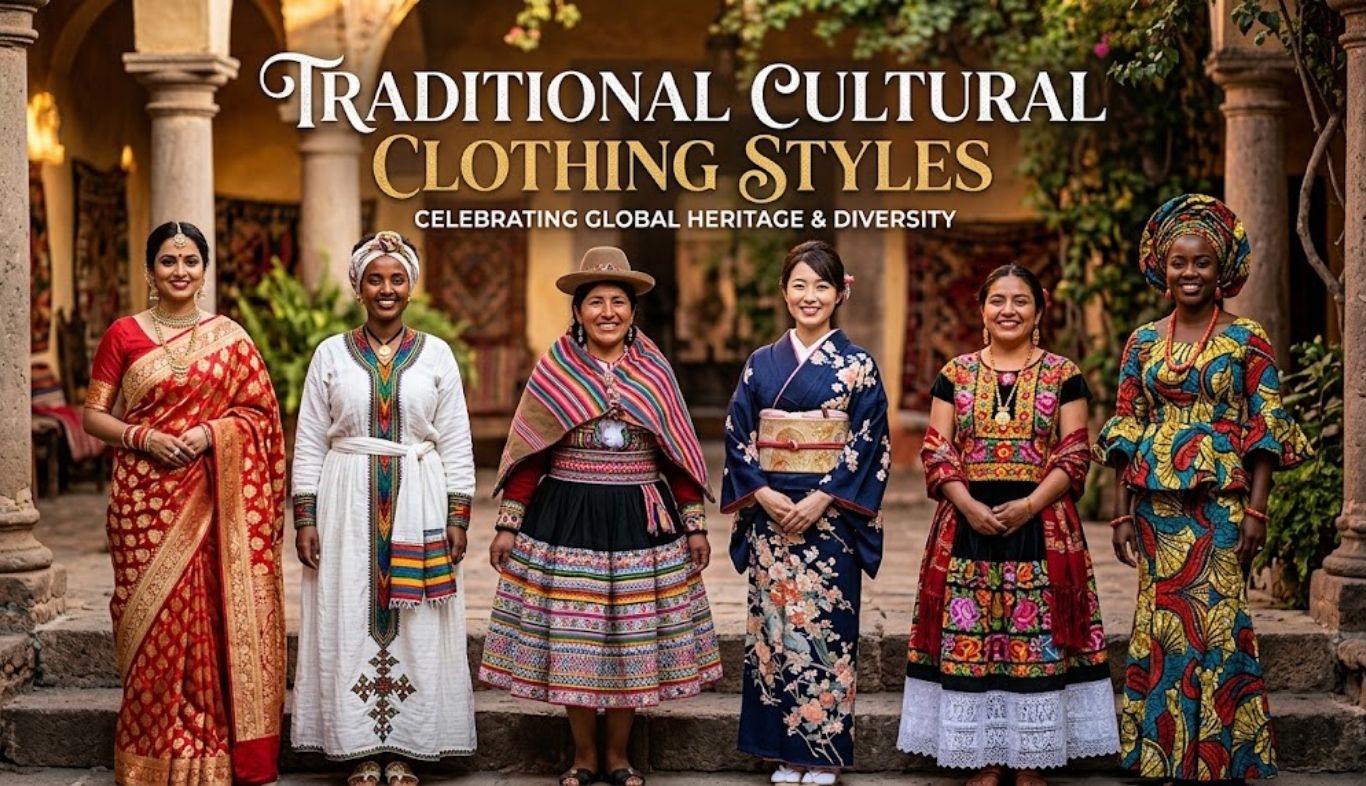
Traditional Cultural Clothing Styles offer a fascinating way to understand societies beyond their clothing itself. A garment may reveal where a community lives, what materials are available, which events are important, and how generations have preserved artistic traditions. From the Japanese kimono and Indian saree to the Korean hanbok and West African textiles, traditional garments can carry centuries of knowledge. Their colors, construction methods, embroidery, weaving techniques, and accessories often have meanings that aren’t immediately obvious to outsiders. What’s more, traditional dress continues to evolve. Many designers combine heritage techniques with modern silhouettes, while younger generations are finding new ways to wear historic garments for weddings, festivals, cultural celebrations, and everyday occasions.
However, appreciating cultural clothing requires more than admiring beautiful designs. Context matters. A particular garment might have religious, ceremonial, regional, or social significance. Understanding that background makes appreciation more meaningful and helps prevent cultural traditions from being reduced to costumes or trends. This article explores major traditional clothing traditions around the world, their distinctive characteristics, their symbolism, and their influence on contemporary fashion.
What Are Traditional Cultural Clothing Styles?
Traditional cultural clothing styles are garments and accessories historically associated with a particular community, region, ethnic group, or cultural tradition.
These styles can develop because of many factors, including:
- Climate and geography
- Available natural materials
- Religious traditions
- Social customs
- Historical events
- Occupation and lifestyle
- Ceremonies and festivals
- Status and family traditions
- Local artistic practices
For example, clothing in hot climates may use lightweight, breathable fabrics, while clothing developed in colder regions may emphasize layers and insulation. Likewise, ceremonial garments can be considerably more detailed than everyday clothing because they may be worn only during weddings, festivals, religious events, or important community occasions. Traditional dress also isn’t necessarily frozen in time. Styles change as societies change. Fabrics, colors, tailoring methods, and accessories may evolve while maintaining recognizable cultural characteristics.
Why Traditional Clothing Matters
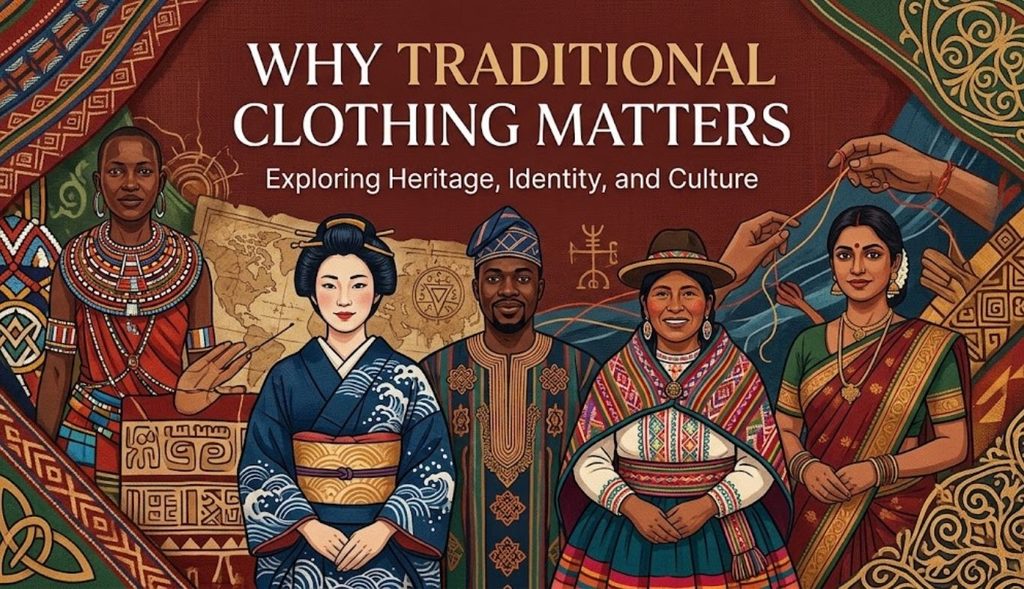
Clothing can function as a visual form of cultural memory. A woven pattern may preserve an old artistic tradition, while a particular garment shape may reflect centuries of regional development. Traditional clothing can also strengthen community identity. People may wear heritage garments during national celebrations, weddings, religious ceremonies, or family gatherings to maintain a connection with their ancestors.
Craftsmanship is another important element. Hand embroidery, weaving, dyeing, beadwork, metalwork, and textile printing can require substantial skill. In many communities, these techniques are taught between generations.
The preservation of such techniques therefore protects more than clothing. It helps preserve knowledge, craftsmanship, and cultural history.
1. Asian Traditional Cultural Clothing Styles
Asia contains an enormous variety of traditional clothing traditions. Because the continent includes different climates, religions, languages, and historical civilizations, there’s no single definition of Asian traditional dress.
Instead, the region offers hundreds of distinctive approaches to clothing. Japanese kimono, Indian sarees, Korean hanbok, Chinese hanfu, Vietnamese áo dài, and Indonesian batik traditions demonstrate just a small part of this diversity.
Japanese Kimono
The kimono is one of Japan’s most recognizable traditional garments. Its straight-line construction, overlapping front panels, wide sleeves, and obi belt create a distinctive silhouette.
Different types of kimono are associated with different occasions and levels of formality. Patterns may include flowers, birds, seasonal imagery, landscapes, or geometric designs.
Seasonality is especially important in Japanese textile culture. Certain motifs can evoke particular times of year, creating a relationship between clothing and the natural world.
Kimono craftsmanship can involve weaving, dyeing, embroidery, and highly detailed pattern placement. Accessories such as obi, footwear, and hair ornaments complete the overall presentation. Today, kimono remains associated with formal cultural occasions while also inspiring contemporary Japanese designers.
Indian Saree
The saree is among the world’s most recognizable traditional garments. It’s generally a long piece of fabric wrapped and draped around the body, with regional variations in technique, fabric, ornamentation, and styling.
One reason the saree is so interesting is its enormous diversity. Silk sarees, cotton sarees, embroidered styles, handwoven textiles, printed fabrics, and region-specific traditions can look dramatically different from one another.
Indian textile traditions also demonstrate sophisticated craftsmanship. Weaving, block printing, embroidery, dyeing, and decorative techniques have developed across many regions. The saree can be worn for everyday activities as well as weddings, festivals, religious occasions, and formal events.
Chinese Hanfu and Traditional Dress
Hanfu refers broadly to traditional clothing associated with Han Chinese cultural history. Historical examples demonstrate changing silhouettes, layering methods, sleeves, collars, and textile decoration across different periods.
Chinese clothing traditions also include other important styles that developed through different historical and regional contexts. Silk has played a particularly important role in Chinese textile history. Decorative motifs can include flowers, animals, clouds, landscapes, and symbolic objects.
In recent years, interest in historical Chinese clothing has grown among younger people, particularly through cultural events, photography, media, and online communities.
Korean Hanbok
The hanbok is known for its graceful proportions, vibrant colors, and distinctive construction. Traditional women’s hanbok commonly includes a jeogori jacket and a full skirt called a chima, while men’s styles include a jeogori with trousers called baji.
Modern hanbok designers increasingly experiment with shorter lengths, contemporary fabrics, simplified structures, and practical silhouettes. Nevertheless, the recognizable balance of the garment remains important. Hanbok demonstrates how traditional design can adapt without completely losing its visual identity.
Vietnamese Áo Dài
Vietnam’s áo dài is another highly recognizable cultural garment. Its long, fitted tunic is typically worn over trousers and creates a streamlined silhouette.
The style has evolved considerably over time. Modern versions can use different fabrics, colors, prints, and decorative techniques. Áo dài is commonly associated with formal occasions, celebrations, schools, and cultural events, making it an excellent example of traditional clothing that continues to have a visible role in contemporary life.
2. South Asian, Middle Eastern, and African Clothing Traditions
South Asian, Middle Eastern, and African regions contain some of the world’s richest textile traditions. Clothing can combine practical construction with extraordinary decorative detail.
South Asian Traditional Dress
Beyond the saree, South Asia includes numerous traditional garments.
Examples include:
- Salwar kameez
- Sherwani
- Lehenga
- Kurta
- Dhoti
- Shalwar
- Dupatta
- Regional woven garments
The salwar kameez, for example, can be found in many regional variations and may be worn casually or formally. Fabrics and decoration can change depending on climate, occasion, region, and personal preference. Wedding clothing often demonstrates especially elaborate embroidery, beadwork, metallic thread, and luxurious fabrics.
Middle Eastern Clothing
Traditional clothing across the Middle East varies significantly from country to country and community to community. Common garments and concepts include long robes, tunics, head coverings, embroidered dresses, cloaks, and layered garments. However, these shouldn’t be treated as one uniform regional style.
Climate has played an important role in garment development. Loose silhouettes can provide comfort in hot environments, while layering can provide protection from sun, wind, and changing temperatures.
Embroidery is particularly important in several communities. Decorative stitching can communicate regional identity and preserve patterns passed from one generation to another.
African Traditional Clothing
Africa has an extraordinary range of traditional clothing traditions. Different regions have developed distinctive approaches to weaving, dyeing, embroidery, beadwork, and garment construction.
West African textile traditions are especially well known internationally. Fabrics such as kente and wax-print textiles are frequently associated with bold colors and expressive patterns.
However, African fashion shouldn’t be reduced to a handful of famous textiles. The continent includes thousands of communities with their own histories and clothing practices.
Beadwork, leatherwork, woven fabrics, raffia, natural dyes, embroidery, and printed textiles can all contribute to regional dress.
The Importance of Textile Patterns
Patterns aren’t merely decorative.
They can communicate:
- Community identity
- Social status
- Family heritage
- Regional origin
- Religious meaning
- Historical stories
- Celebration
- Artistic traditions
That means a pattern that looks like a simple geometric design to an outsider may carry a much deeper meaning within its original community.
Clothing and Climate
Climate strongly influences traditional dress. In warm regions, loose garments and breathable textiles can help with ventilation. In colder environments, layered clothing, wool, fur, leather, and heavier woven fabrics may provide protection.
Traditional clothing therefore often represents practical problem-solving as much as artistic creativity.
3. European and Indigenous Traditional Clothing
European traditional clothing is often associated with folk costumes, regional festivals, national celebrations, and historical reenactments. Indigenous clothing traditions, meanwhile, can carry profound connections to land, ancestry, spirituality, and community.
European Folk Clothing
Europe includes an enormous variety of regional dress traditions.
Examples include:
- Scottish tartan garments
- Bavarian and Alpine dress
- Norwegian folk costumes
- Ukrainian embroidered clothing
- Spanish regional dresses
- Greek traditional garments
- Eastern European embroidered blouses and skirts
These garments often differ even between neighboring communities. Tartan, for instance, has become strongly associated with Scotland, while regional folk costumes across Eastern Europe frequently feature intricate embroidery. Traditional European dress is often especially visible during festivals, national holidays, cultural performances, and weddings.
Indigenous Clothing Traditions
Indigenous clothing deserves careful consideration because garments can carry meanings that outsiders may not immediately understand.
Across Indigenous communities worldwide, clothing can incorporate:
- Beadwork
- Feathers
- Natural fibers
- Leather
- Shells
- Woven materials
- Embroidery
- Paint
- Symbolic motifs
Some objects may be ceremonial or restricted rather than ordinary fashion accessories. For this reason, Indigenous clothing shouldn’t automatically be treated as a costume or fashion trend.
Traditional Clothing and Identity
For many communities, clothing can help maintain a visible connection to heritage.
Someone may wear traditional clothing because of:
- Family heritage
- Religious observance
- Cultural pride
- Weddings
- Festivals
- National celebrations
- Community gatherings
- Artistic expression
Modern life hasn’t necessarily eliminated traditional dress. Instead, many people use it selectively according to occasion.
Symbolism of Color
Color symbolism varies dramatically between cultures. A particular color may represent celebration in one society and mourning in another. Red, white, black, gold, blue, and green can all carry different meanings depending on cultural context.
Therefore, it’s risky to assume that a color has one universal interpretation. The meaning should be understood within its specific cultural setting.
Traditional Clothing in Modern Fashion
Traditional cultural clothing styles have strongly influenced contemporary fashion.
Designers may draw inspiration from:
- Draping techniques
- Handwoven textiles
- Embroidery
- Traditional silhouettes
- Decorative patterns
- Natural dyes
- Historic tailoring
- Regional craftsmanship
However, inspiration should be handled thoughtfully. There is a significant difference between appreciating a textile tradition and removing culturally meaningful symbols from their original context. Fashion becomes more responsible when designers collaborate with craftspeople, acknowledge sources, and support the communities whose techniques inspire their work.
4. How to Appreciate Traditional Clothing Respectfully
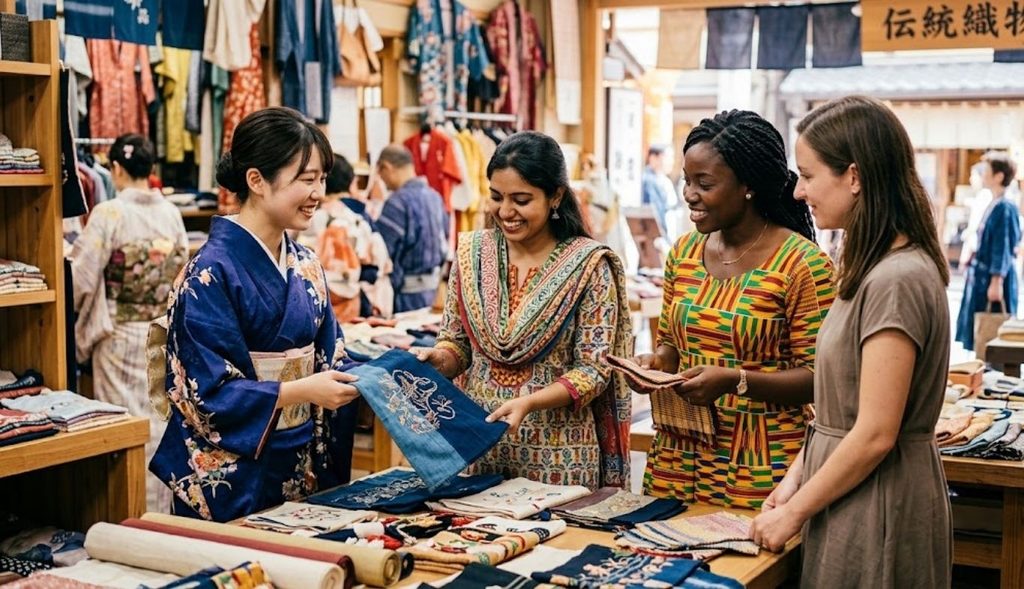
Appreciation begins with curiosity and respect. Before wearing a traditional garment from another culture, learn about its history and purpose. Find out whether it’s everyday clothing, ceremonial clothing, religious clothing, or something reserved for particular members of a community.
Research the Garment
Look for reliable cultural and historical sources. Museums, cultural institutions, academic publications, and community organizations can provide useful background.
For a broader look at global cultural heritage, resources from UNESCO can help explain how traditional crafts and cultural practices are preserved.
Avoid Treating Cultural Dress as a Costume
One of the biggest mistakes is wearing sacred or ceremonial clothing as a novelty costume. Instead, consider whether the garment is appropriate for the occasion and whether you understand its cultural significance.
Support Skilled Craftspeople
When possible, purchase authentic textiles and handmade garments from artisans, cooperatives, or businesses connected to the relevant community. This can help traditional craftsmanship remain economically sustainable.
Learn About Construction
Understanding how a garment is made increases appreciation.
Ask questions such as:
- Who traditionally makes it?
- What fibers are used?
- Is it woven or embroidered?
- How long can production take?
- Are natural dyes involved?
- Does the design vary by region?
- Is the garment ceremonial or everyday?
- What occasions is it associated with?
These questions transform clothing from a visual object into a cultural story.
Choose Modern Adaptations Carefully
Contemporary adaptations can be appropriate when they respect the source tradition. For example, a designer might use a traditional weaving technique while creating a modern jacket. That’s different from copying sacred symbols without understanding their meaning. The goal should be collaboration and appreciation rather than simple extraction.
Common Mistakes to Avoid
When learning about traditional cultural clothing styles, keep these mistakes in mind:
1. Assuming One Garment Represents an Entire Culture
Countries and cultural groups are rarely uniform. Regional differences can be enormous.
2. Ignoring Historical Context
A garment’s design may be connected to history, religion, migration, social change, or political events.
3. Treating Ceremonial Clothing as Everyday Fashion
Some garments have specific purposes and shouldn’t be casually repurposed.
4. Calling All Regional Clothing “Traditional Costumes”
The word “costume” can sometimes make living cultural traditions sound like museum objects.
5. Copying Symbols Without Understanding Them
Patterns and motifs can have meanings that aren’t obvious from their appearance.
6. Focusing Only on Appearance
The beauty of a garment matters, but craftsmanship, history, community, and meaning are equally important.
Frequently Asked Questions
1. What are traditional cultural clothing styles?
Traditional cultural clothing styles are garments associated with particular communities, regions, ethnic groups, historical traditions, or cultural practices. They can reflect climate, history, craftsmanship, religion, social customs, and identity.
2. Why is traditional clothing important?
Traditional clothing helps preserve cultural identity, craftsmanship, history, and community traditions. It can also connect modern generations with earlier generations.
3. What is the most famous traditional clothing in the world?
There isn’t one universally “most famous” style. Kimono, saree, hanbok, áo dài, kente textiles, and Scottish tartan are among the internationally recognizable examples.
4. Is traditional clothing still worn today?
Yes. Many traditional garments continue to be worn for weddings, festivals, religious occasions, cultural celebrations, national events, and sometimes everyday activities.
5. What makes traditional clothing different from modern fashion?
Traditional clothing usually has a strong historical and cultural connection to a particular community or region. Modern fashion tends to change more quickly and often crosses cultural and geographic boundaries.
6. Why are traditional textiles important?
Traditional textiles preserve techniques such as weaving, embroidery, dyeing, printing, and beadwork. They can also communicate regional identity and historical knowledge.
7. Can traditional clothing influence modern fashion?
Absolutely. Contemporary designers frequently draw on traditional draping, textile techniques, embroidery, silhouettes, and craftsmanship.
8. How can I wear traditional clothing respectfully?
Research the garment first, understand its purpose, avoid sacred or restricted items, credit the culture from which the design originates, and consider purchasing from authentic craftspeople or community-connected sellers.
9. Does traditional clothing always have symbolic meaning?
Not always. Some garments are primarily practical or everyday clothing, while others have strong symbolic or ceremonial meanings. Context is important.
10. How can traditional clothing be preserved?
Traditional clothing can be preserved through teaching craft skills, supporting artisans, documenting techniques, maintaining museum collections, encouraging responsible use, and keeping cultural practices active within communities.
Conclusion
Traditional cultural clothing styles are much more than collections of beautiful fabrics and distinctive silhouettes. They represent history, creativity, craftsmanship, identity, geography, and community. From the kimono and hanbok to the saree, áo dài, African textiles, European folk dress, and Indigenous clothing traditions, every region offers a unique story. What makes these traditions especially valuable is that they continue to evolve. Modern designers, artisans, and younger generations are finding ways to keep heritage relevant while responding to contemporary life.
The best way to appreciate traditional clothing is to look beyond appearance. Learn who created it, why it exists, what its patterns mean, how it’s made, and when it’s traditionally worn. When we approach cultural clothing with curiosity and respect, fashion becomes more than personal style. It becomes a way to understand people, preserve craftsmanship, and celebrate the remarkable diversity of human culture.