
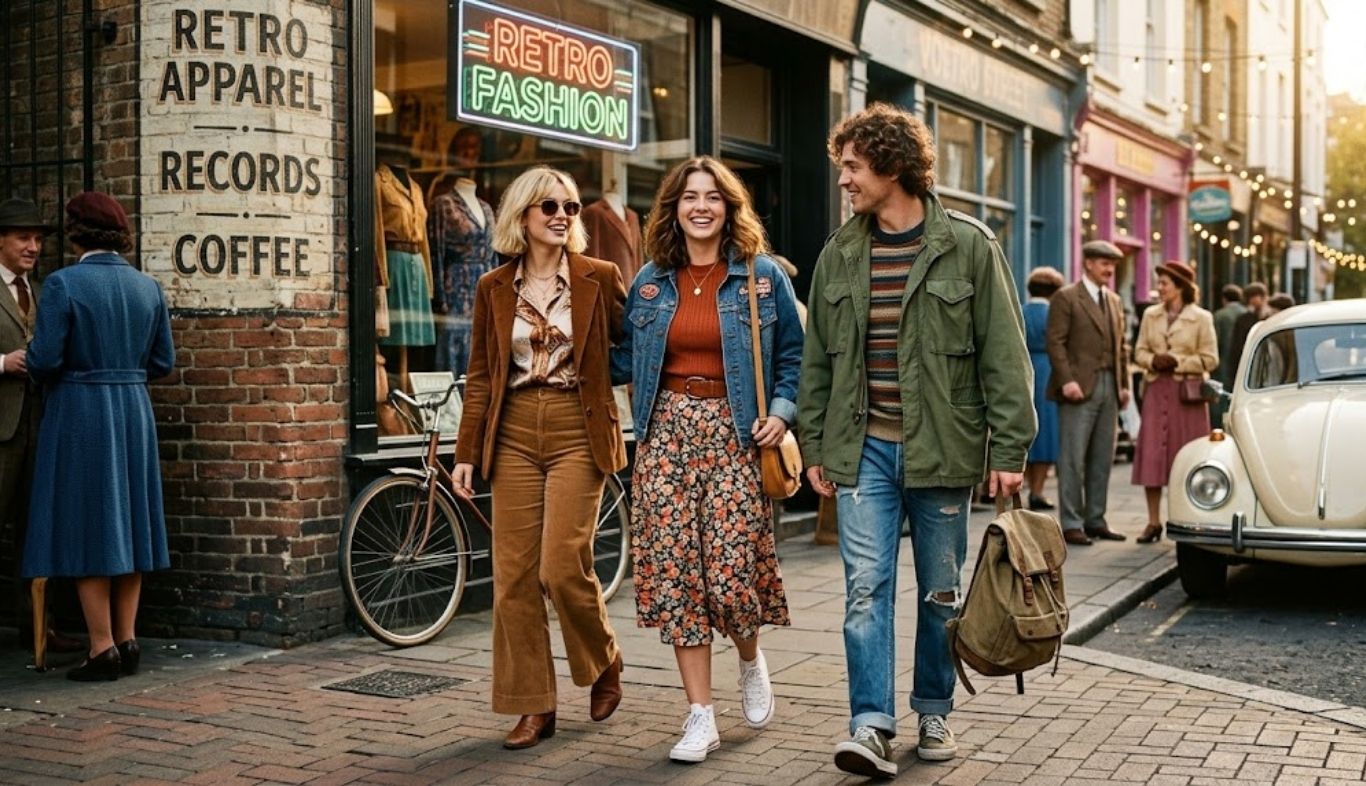
Retro Fashion has a special ability to make old styles feel fresh again. From polished 1950s dresses and colorful 1970s prints to oversized 1980s jackets and relaxed 1990s denim, fashion history provides endless inspiration for modern wardrobes. The word “retro” generally describes a contemporary style that looks back at earlier periods. Unlike simply wearing an old garment, retro dressing often involves intentionally borrowing recognizable details from the past and adapting them to today’s lifestyle. That’s part of what makes retro fashion so enjoyable. You don’t have to dress like you’re attending a historical costume party. Instead, you can take one or two classic elements and mix them with modern basics.
Fashion is also famously cyclical. Trends disappear, return, and get reinvented in unexpected ways. Recent interest in Y2K clothing, vintage denim, archival pieces, and earlier decades shows how strongly nostalgia continues to influence modern style. Vogue has also documented the continuing popularity of vintage and retro-inspired dressing. Whether you’re building a complete retro wardrobe or simply want to add personality to your everyday outfits, understanding the foundations can make styling much easier.
What Is Retro Fashion?
Retro fashion is modern clothing, styling, or accessories inspired by the visual language of previous decades. It can reference a specific era, such as the 1960s, or combine details from several periods. A modern outfit might include high-waisted trousers inspired by the 1940s, a 1970s-style printed shirt, and contemporary sneakers.
Common characteristics include:
- Vintage-inspired silhouettes
- Bold or nostalgic prints
- High-waisted trousers and skirts
- Denim
- Statement collars
- Polka dots
- Plaid
- Leather accessories
- Cat-eye sunglasses
- Loafers and boots
- Classic handbags
- Retro graphic T-shirts
The important point is that retro doesn’t necessarily mean authentic vintage. A newly produced dress can be retro-inspired if its shape, fabric, colors, or details reference an earlier era. This distinction gives you plenty of freedom. You can shop secondhand, buy modern reproductions, customize existing clothes, or simply style contemporary pieces in a nostalgic way.
Retro vs. Vintage Fashion
The terms retro and vintage are often used interchangeably, but they aren’t exactly the same. Vintage fashion usually refers to an authentic garment from an earlier period. Vogue describes vintage broadly as clothing that is at least 20 years old but less than 100 years old. Retro fashion, meanwhile, refers more broadly to modern clothing that imitates, references, or celebrates an earlier style.
| Retro Fashion | Vintage Fashion |
|---|---|
| May be newly produced | Originally produced in the past |
| Inspired by earlier styles | Authentic historical clothing |
| Easy to find in modern stores | Often found through resale or vintage sellers |
| Can combine multiple eras | Usually tied to a specific period |
| Often easier to wear daily | May require special care |
For example, a modern polka-dot dress with a 1950s-inspired waist is retro. An actual dress manufactured during the 1950s is vintage. Both can be stylish, and there’s no rule saying you must choose one.
Why Retro Fashion Keeps Returning
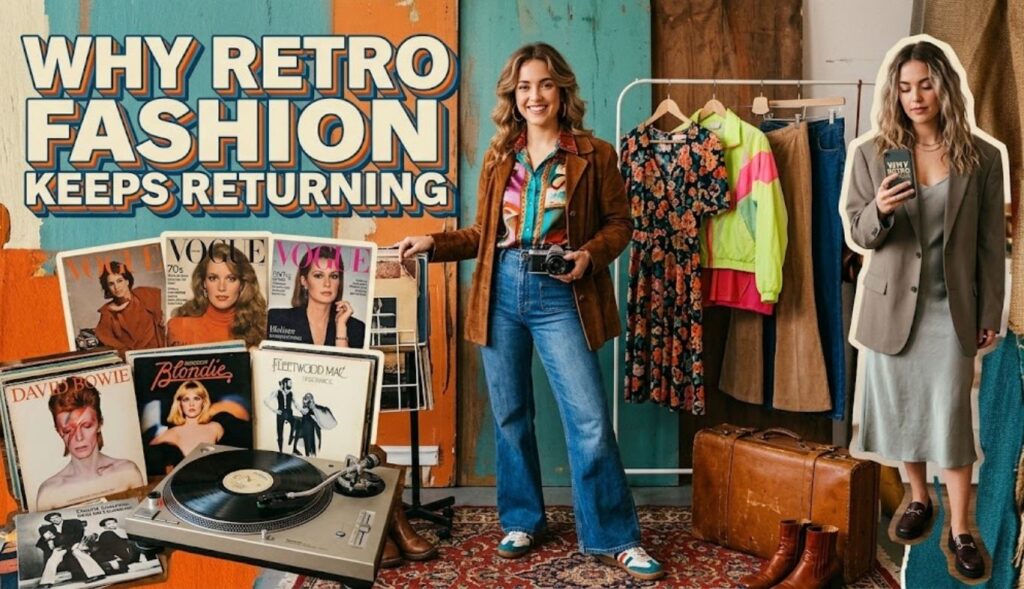
Fashion doesn’t move in a straight line. Instead, designers, celebrities, musicians, and consumers repeatedly revisit previous decades. Nostalgia is one major reason.
People often associate clothing with music, movies, television, family photographs, or important cultural moments. As those memories return, their visual styles can become fashionable again. Media also plays a major role. Movies, television shows, music videos, social platforms, and celebrity outfits can introduce older aesthetics to new audiences.
The 1990s are a good example. Minimalism, grunge, baggy denim, slip dresses, and understated tailoring became defining references during the decade, and many of those elements have returned repeatedly. The same thing has happened with Y2K fashion. Low-rise jeans, crop tops, small bags, metallic details, and playful accessories have returned to popular culture. In other words, old doesn’t necessarily mean outdated.
11 Powerful Retro Fashion Style Secrets
1. Start With One Retro Statement
You don’t need a completely retro outfit. Instead, choose one standout piece.
Try:
- A vintage-inspired jacket
- Cat-eye sunglasses
- High-waisted trousers
- A printed blouse
- Retro sneakers
- A classic leather bag
Then keep the rest of the outfit simple. This approach makes the look feel intentional rather than costume-like.
2. Choose the Right Silhouette
Silhouette often communicates an era faster than color. A fitted waist and full skirt can immediately suggest the 1950s. Wide-leg trousers can evoke the 1940s or 1970s. Oversized shoulders may remind people of the 1980s. Before buying anything, ask yourself what shape you’re trying to create.
3. Use Retro Prints Carefully
Prints are another quick way to introduce nostalgia.
Popular choices include:
- Polka dots
- Plaid
- Florals
- Paisley
- Geometric patterns
- Stripes
- Checkerboard designs
If your clothing already has a strong print, keep accessories relatively quiet.
4. Don’t Ignore Accessories
Accessories can completely change an outfit.
A simple modern dress can become retro-inspired with a structured handbag, headband, sunglasses, belt, or classic shoes. For men, watches, leather belts, loafers, suspenders, and vintage-inspired eyewear can have a similar effect.
5. Mix Decades
There’s no requirement to choose only one decade.
You could pair: 1970s blouse + 1990s jeans + modern sneakers or: 1950s skirt + contemporary T-shirt + minimalist handbag Mixing eras creates a more personal appearance.
6. Pay Attention to Color
Each era has recognizable color associations, although none are absolute.
For example:
| Era | Common Style Colors |
|---|---|
| 1940s | Navy, cream, olive, brown |
| 1950s | Red, pastel pink, mint, blue |
| 1960s | Orange, yellow, black, white |
| 1970s | Mustard, rust, brown, green |
| 1980s | Bright pink, purple, electric blue |
| 1990s | Black, gray, denim, white |
| Y2K | Silver, pink, metallic tones |
Use these colors as inspiration rather than strict rules.
7. Balance Old and New
This is perhaps the most useful trick. If your jacket looks strongly vintage-inspired, pair it with modern trousers. If you’re wearing retro jeans, use a contemporary top. The contrast keeps the outfit fresh.
8. Experiment With Denim
Denim has survived almost every major fashion cycle.
Depending on the decade you’re referencing, try:
- Straight-leg jeans
- Wide-leg jeans
- Mom jeans
- Denim jackets
- Denim skirts
- Patchwork denim
- Relaxed jeans
Denim is especially useful because it works naturally with both vintage-inspired and modern pieces.
9. Choose Shoes Carefully
Shoes can reinforce your chosen decade. Loafers, Mary Janes, platform shoes, boots, canvas sneakers, and classic pumps can all contribute to a retro aesthetic. However, comfort still matters. There’s no point creating a great outfit if you can’t comfortably wear it.
10. Make Hair and Makeup Part of the Look
Clothing isn’t the only part of fashion. Hair and makeup can strengthen the overall aesthetic.
Examples include:
- 1950s-inspired waves
- 1960s eyeliner
- 1970s natural textures
- 1980s volume
- 1990s minimal makeup
- Y2K glossy details
You don’t need to recreate a complete beauty look. One subtle reference is often enough.
11. Make It Personal
The strongest retro outfit isn’t necessarily the most historically accurate. It’s the one that feels like you. Choose pieces that fit your lifestyle, body, comfort level, and personality. Fashion history should provide inspiration, not restrictions.
1940s Retro Style
The 1940s produced a practical yet elegant approach to clothing. World War II affected materials, manufacturing, and everyday dress, while the decade eventually transitioned toward the dramatic New Look after the war.
For a 1940s-inspired outfit, look for:
- High-waisted trousers
- Structured jackets
- Tailored skirts
- Button-up blouses
- Simple dresses
- Shoulder emphasis
- Practical leather shoes
The key is structure. A tucked-in blouse with wide-leg trousers can create a strong period-inspired silhouette without looking old-fashioned.
1950s Retro Style
The 1950s are often associated with feminine silhouettes, defined waists, full skirts, fitted dresses, and polished accessories.
Try combining:
- A fitted cardigan
- A-line skirt
- Waist belt
- Polka-dot blouse
- Mary Jane shoes
- Small structured handbag
For men, 1950s-inspired fashion can include tucked-in shirts, pleated trousers, leather jackets, loafers, and clean-cut casualwear. The trick is to avoid turning every element into a historical reproduction. One strong silhouette paired with modern basics usually works better.
1960s Retro Style
The 1960s introduced a youthful, experimental attitude.
The decade is famous for:
- Mini skirts
- Shift dresses
- Bold geometric patterns
- Knee-high boots
- Graphic prints
- High-contrast colors
- Mod-inspired styling
The Youthquake transformed fashion by placing youth culture at the center of style. Designers also experimented with futuristic shapes and space-age materials. A simple modern interpretation might be a geometric dress with ankle boots and a contemporary handbag.
1970s Retro Style
The 1970s offered one of the richest sources of retro inspiration.
Think:
- Flared trousers
- Suede jackets
- Paisley
- Bohemian dresses
- Platform shoes
- Crochet
- Earth tones
- Wide collars
- Statement accessories
The decade can be interpreted in several ways. You can choose glamorous disco style, relaxed bohemian clothing, rock-inspired outfits, or polished tailoring. For everyday wear, flared jeans with a simple fitted top are an easy starting point.
1980s Retro Style
The 1980s were all about confidence and visual impact.
Popular elements included:
- Oversized blazers
- Shoulder pads
- Bright colors
- Leg warmers
- Bold jewelry
- High-waisted trousers
- Statement belts
- Athletic-inspired pieces
You don’t need to wear everything at once. A large blazer over a simple T-shirt and straight-leg trousers can provide an understated 1980s reference.
1990s Retro Style
The 1990s remain one of the most influential decades for modern fashion. The decade moved between minimalism, grunge, hip-hop, preppy style, and emerging digital aesthetics.
Common pieces included:
- Slip dresses
- Baggy jeans
- Flannel shirts
- Graphic tees
- Simple blazers
- Sneakers
- Chokers
- Leather jackets
Vogue’s history of 1990s fashion highlights both minimalist designers and the influence of grunge and streetwear on mainstream clothing. A relaxed T-shirt, straight jeans, sneakers, and an oversized jacket can capture the decade without looking like a costume.
Y2K and Early-2000s Revival
Y2K fashion has become one of the most recognizable modern retro revivals.
Its visual language includes:
- Low-rise jeans
- Crop tops
- Mini skirts
- Metallic fabrics
- Tiny handbags
- Chunky sneakers
- Rhinestone details
- Butterfly accessories
- Glossy textures
Y2K style reflected excitement and uncertainty surrounding the new millennium and the rise of digital culture. Today, you can modernize the aesthetic by choosing one or two Y2K elements instead of recreating an entire early-2000s outfit.
For example: Modern tank + low-rise-inspired denim + simple sneakers + small shoulder bag That’s enough to communicate the reference.
How to Build a Retro Wardrobe
You don’t need dozens of specialized pieces. Start with versatile basics.
Clothing Essentials
Consider adding:
- High-waisted trousers
- Straight-leg jeans
- A structured blazer
- A printed blouse
- A simple cardigan
- A-line or midi skirt
- Graphic T-shirts
- A denim jacket
- A classic button-up shirt
- One statement dress
Accessory Essentials
Then add:
- Sunglasses
- Belts
- Watches
- Structured handbags
- Scarves
- Simple jewelry
- Classic shoes
- Hair accessories
Build slowly. A carefully chosen wardrobe will usually be more useful than a closet filled with pieces that only work for one theme.
Retro Fashion for Men
Retro fashion isn’t limited to women’s clothing. Men can easily create nostalgic outfits through classic silhouettes and accessories. For a 1950s-inspired look, try: Polo shirt + pleated trousers + loafers + leather belt
For a 1970s outfit: Patterned shirt + flared or straight trousers + suede-inspired jacket
For a 1990s look: Graphic T-shirt + relaxed jeans + sneakers + overshirt
For Y2K: Relaxed denim + fitted or layered top + chunky sneakers + statement sunglasses Fit matters more than chasing historical accuracy.
Retro Fashion for Women
Women can explore virtually every decade through dresses, skirts, denim, tailoring, accessories, and footwear.
For a simple retro-inspired everyday outfit, try: High-waisted jeans + tucked blouse + belt + loafers
For a more feminine look: A-line skirt + fitted cardigan + simple flats
For a 1970s-inspired outfit: Flared jeans + printed blouse + platform shoes
For a 1990s-inspired outfit: Slip dress + oversized jacket + sneakers The best option depends on your lifestyle and personal taste.
How to Wear Retro Fashion Today
Modern retro dressing is mostly about balance. Instead of copying an entire outfit from an old photograph, identify the elements you love.
Maybe you like:
- The 1950s waistline
- The 1960s print
- The 1970s trousers
- The 1980s jacket
- The 1990s denim
- The Y2K accessories
Then combine those ideas with modern clothing. Vogue has similarly recommended using cues from different eras rather than creating a head-to-toe period look.
A useful formula is: 70% modern + 30% retro This isn’t a strict fashion rule. It’s simply a practical starting point.
Common Retro Styling Mistakes
Wearing Too Many Era-Specific Pieces
If everything looks like it came from the same decade, the outfit may resemble a costume.
Ignoring Fit
Even beautiful retro clothing can look awkward if the proportions aren’t right.
Overusing Accessories
Statement accessories are powerful, but several competing pieces can make the outfit visually confusing.
Forgetting Comfort
Style should work in real life.
Copying Instead of Adapting
The goal isn’t to become a historical replica. Use the past as inspiration and create something personal.
Sustainable Benefits of Retro Style
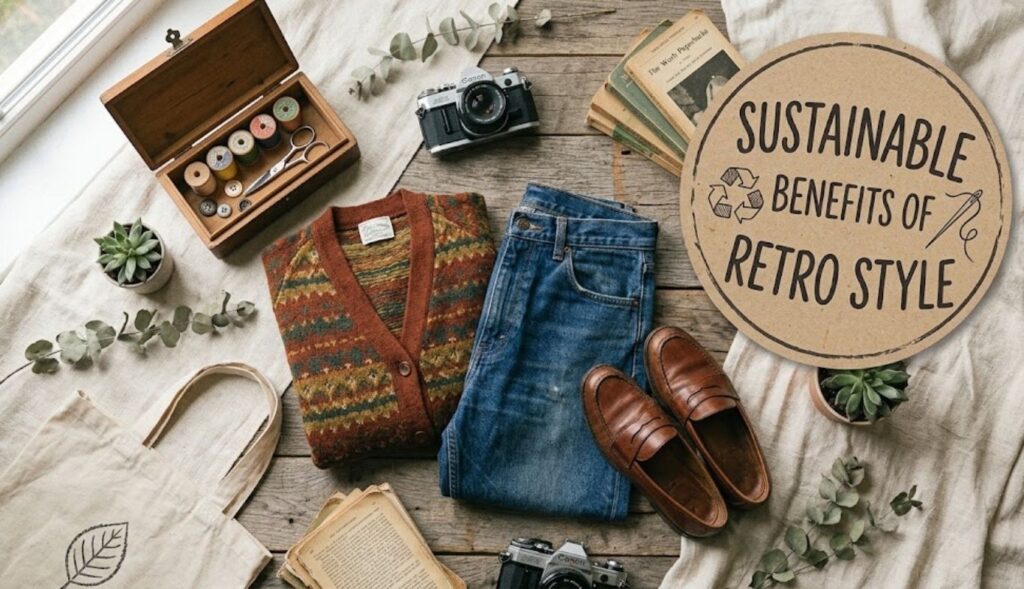
Retro fashion can also encourage more thoughtful consumption. Buying secondhand, repairing clothing, reusing old garments, and choosing durable pieces can extend the life of clothing.
Vintage and resale culture also gives consumers opportunities to find garments outside conventional fast-fashion cycles. However, sustainability isn’t automatically guaranteed simply because something looks retro. The most responsible approach is to consider garment quality, longevity, reuse, repair, and how often you’ll actually wear the piece.
Where to Learn More About Vintage and Retro Fashion
For additional fashion-history context, Vogue’s guide to vintage clothing explains how vintage, archival, and antique fashion differ and provides useful clues for identifying older garments.
Frequently Asked Questions
1. What is retro fashion?
Retro fashion is modern clothing inspired by styles from previous decades. It can reference one particular era or combine elements from several periods.
2. Is retro fashion the same as vintage fashion?
No. Vintage generally refers to authentic older garments, while retro fashion can include newly made clothing designed to resemble earlier styles.
3. Which decades are most popular for retro fashion?
The 1950s, 1960s, 1970s, 1980s, 1990s, and early 2000s are especially popular sources of inspiration.
4. How can I wear retro fashion without looking outdated?
Mix retro pieces with modern clothing. For example, pair vintage-inspired trousers with a contemporary top and modern shoes.
5. Is retro fashion suitable for everyday wear?
Absolutely. Simple elements such as denim, loafers, structured jackets, printed tops, or retro sunglasses can easily work in everyday outfits.
6. What are the easiest retro fashion pieces to style?
High-waisted jeans, graphic T-shirts, blazers, cardigans, loafers, denim jackets, and sunglasses are excellent starting points.
7. Can men wear retro fashion?
Yes. Men’s retro style can include tailored trousers, leather jackets, polos, graphic tees, denim, loafers, boots, and vintage-inspired accessories.
8. Is Y2K fashion considered retro?
Yes, increasingly so. As the early 2000s become more distant, Y2K styles are increasingly treated as nostalgic and retro-inspired fashion.
9. How do I choose a retro decade?
Start with the silhouettes, colors, music, movies, or cultural references you naturally enjoy. Your favorite visual details are a good guide.
10. Can retro fashion be sustainable?
It can be. Buying secondhand, repairing garments, reusing clothing, and choosing durable pieces can support a more conscious approach to fashion.
Conclusion
Retro fashion proves that great style doesn’t have to stay trapped in the past. The best retro outfits borrow recognizable details from previous decades while remaining comfortable and relevant today. Whether you’re attracted to 1950s elegance, 1960s mod style, 1970s bohemian clothing, 1980s maximalism, 1990s minimalism, or Y2K nostalgia, there’s plenty of room to experiment.
Start small. Choose one retro statement piece, balance it with modern clothing, and build your wardrobe gradually. Most importantly, make the look your own. Fashion is always evolving, but its history gives us an enormous creative toolbox. With the right balance, retro inspiration can turn an ordinary outfit into something memorable, personal, and timeless.