

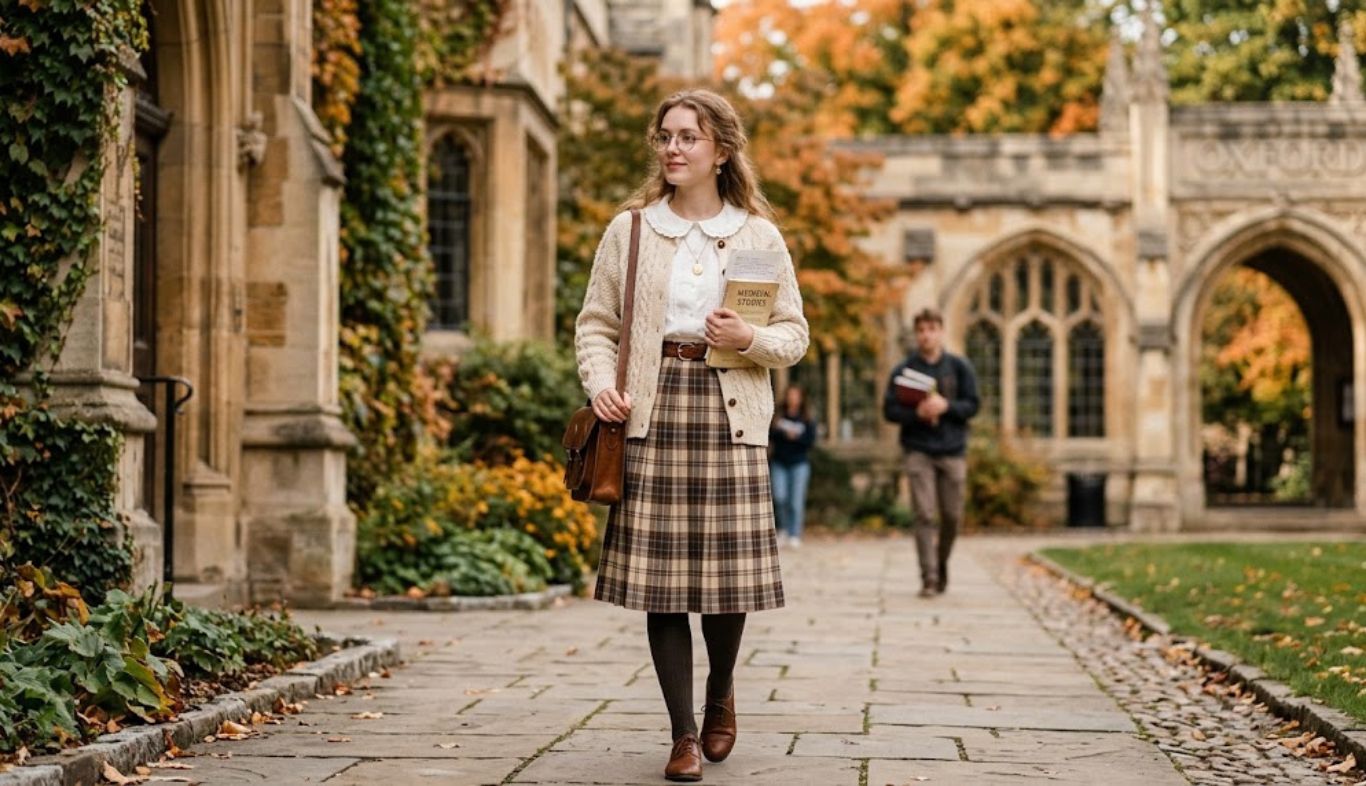
Light Academia Fashion is more than a collection of beige sweaters and old-fashioned books. It’s a style built around intellectual curiosity, timeless clothing, soft colors, classic tailoring, and the romantic atmosphere of libraries, universities, museums, and quiet cafés. The aesthetic feels refined without looking overly formal, making it surprisingly practical for everyday wardrobes.
Unlike fast-moving trends, light academia draws inspiration from traditional menswear, vintage fashion, European university style, classical art, and literature. Think Oxford shirts, pleated trousers, wool cardigans, loafers, trench coats, tweed, knitwear, leather accessories, and flowing skirts. The color palette usually stays soft and understated, with cream, ivory, camel, tan, brown, gray, navy, dusty blue, and muted green. The good news? You don’t need an expensive wardrobe to achieve the look. With a few versatile pieces and thoughtful styling, you can create outfits that feel scholarly, polished, comfortable, and personal.
What Is Light Academia Fashion?
Light Academia Fashion is an aesthetic inspired by academic life, classical literature, art, architecture, and vintage European style. It shares some DNA with dark academia, but the mood is noticeably brighter. Where dark academia often uses black, charcoal, burgundy, forest green, and dramatic silhouettes, light academia favors sunlight, warm neutrals, cream, soft brown, pale blue, and gentle textures.
At its heart, the aesthetic combines three ideas:
- Classic clothing: Tailored trousers, blazers, button-down shirts, loafers, and structured coats.
- Romantic details: Pleated skirts, knit cardigans, ribbon accents, delicate jewelry, and vintage-inspired accessories.
- Academic influence: Oxford shirts, sweater vests, leather satchels, glasses, notebooks, and other scholarly references.
The goal isn’t to look like you’re wearing a costume from a fictional university. Instead, it should feel like a natural extension of your personality.
Light Academia vs. Dark Academia
These two aesthetics are often confused because they share many foundational pieces. Both celebrate traditional clothing, literature, learning, vintage influences, and intellectual culture. The biggest difference is mood and color.
| Feature | Light Academia | Dark Academia |
|---|---|---|
| Main mood | Bright, romantic, optimistic | Mysterious, dramatic, moody |
| Colors | Cream, beige, tan, ivory, pale blue | Black, charcoal, burgundy, dark brown |
| Fabrics | Cotton, linen, wool, cashmere | Wool, tweed, leather, corduroy |
| Outerwear | Trench coats, camel coats | Dark overcoats, leather jackets |
| Footwear | Loafers, oxfords, Mary Janes | Boots, brogues, loafers |
| Inspiration | Classical art, poetry, sunny libraries | Gothic architecture, old libraries, philosophy |
You can also combine both aesthetics. For example, a cream cable-knit sweater with dark brown trousers creates a light academia foundation, while black loafers and a charcoal coat add a darker edge.
11 Powerful Ways to Create a Light Academia Wardrobe
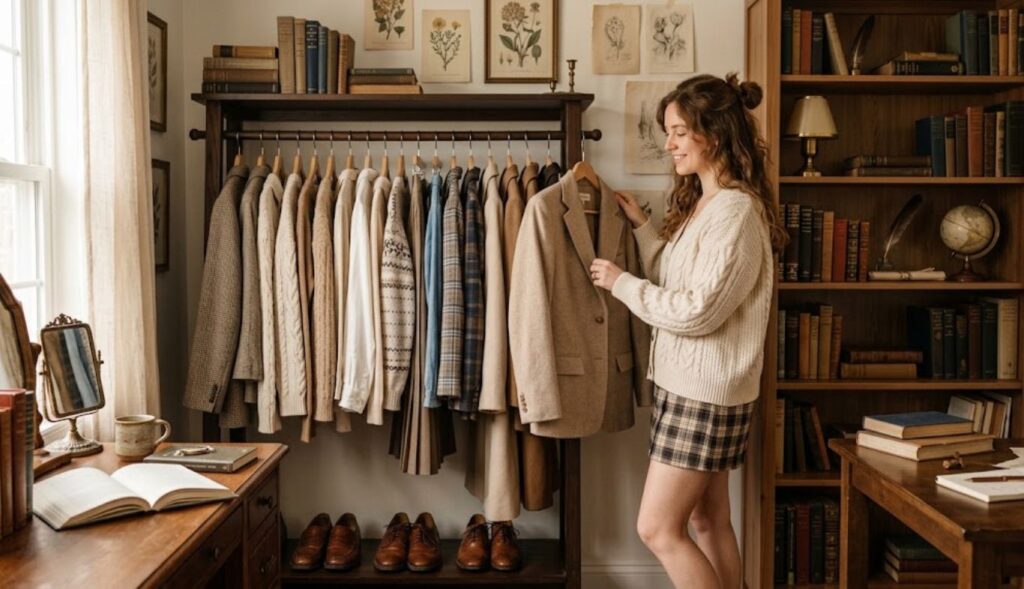
Building the aesthetic becomes much easier when you focus on individual elements rather than trying to purchase an entirely new wardrobe.
1. Start With a Soft Neutral Color Palette
Color is one of the fastest ways to establish the aesthetic.
Begin with versatile shades such as:
- Ivory
- Cream
- Beige
- Camel
- Oatmeal
- Taupe
- Warm gray
- Chocolate brown
- Dusty blue
- Muted sage
- Navy
White can work, too, but slightly warmer shades often create the cozy vintage feeling associated with light academia. Try building outfits around two or three neutral colors. For example, pair cream trousers with a pale blue shirt and camel cardigan. Another option is chocolate-brown trousers, an ivory blouse, and a tan coat.
The trick is restraint. You don’t need every piece to match perfectly. A slightly varied neutral palette can actually make an outfit look more sophisticated.
2. Invest in Oxford Shirts and Classic Blouses
A crisp button-down shirt is practically a foundation piece for this aesthetic. For a traditional look, choose white, cream, pale blue, or subtle stripes. Cotton and linen are excellent choices because they look polished without feeling too stiff.
For a more feminine interpretation, consider:
- Peter Pan collars
- Puff sleeves
- Tie-neck blouses
- Lace-trimmed collars
- Soft ruffles
- Embroidered details
Pair an Oxford shirt with pleated trousers for a straightforward scholarly outfit. Alternatively, wear it beneath a sweater vest or cardigan for added texture.
Don’t worry if the shirt isn’t perfectly fitted. Slightly relaxed tailoring can make the outfit feel more contemporary.
3. Make Knitwear a Core Layer
Knitwear gives light academia outfits their cozy character.
Look for:
- Cable-knit sweaters
- Fine-gauge crewnecks
- V-neck sweaters
- Cardigans
- Sweater vests
- Argyle knits
- Ribbed turtlenecks
Cream, oatmeal, camel, and soft brown are particularly versatile. Layering is where knitwear really shines. A white shirt under a cream sweater vest creates an academic feel, while a cardigan over a floral dress gives the outfit a softer vintage quality. For warmer weather, lightweight cotton or linen knitwear can deliver the same aesthetic without excessive warmth.
4. Choose Tailored Trousers and Pleated Pants
Tailoring is essential because it provides structure. Wide-leg trousers, high-waisted pleated pants, straight-leg trousers, and cropped tailored pants all work well. Look for fabrics such as wool blends, cotton twill, linen, and corduroy.
Classic colors include:
- Beige
- Brown
- Cream
- Gray
- Navy
- Olive
For a simple everyday outfit, try high-waisted brown trousers with a tucked-in cream blouse and loafers. A belt can help define the waist and add another traditional detail. Leather belts in brown or tan tend to work especially well.
5. Add Skirts and Dresses With Vintage Shapes
Light academia isn’t limited to trousers. Pleated skirts, midi skirts, A-line skirts, plaid skirts, and simple floral dresses can all fit beautifully into the aesthetic. Look for silhouettes that feel classic rather than aggressively trendy. Midi lengths are especially useful because they’re easy to style across seasons.
A cream blouse with a brown pleated skirt creates a traditional academic outfit. For something more relaxed, combine a floral midi dress with a knitted cardigan and loafers. You can also use tights during colder months. Brown, cream, gray, and subtle patterned tights can add visual interest while maintaining the vintage mood.
6. Select Classic Shoes
Shoes can transform an ordinary outfit into an academia-inspired look.
The strongest options include:
- Penny loafers
- Leather loafers
- Oxford shoes
- Mary Janes
- Ballet flats
- Simple ankle boots
- Classic riding boots
Brown leather tends to feel particularly warm and traditional, while black shoes create a sharper appearance. If comfort matters, choose footwear with supportive construction and a practical heel height. There’s no point looking scholarly if your feet are begging for mercy after ten minutes.
7. Layer With Structured Outerwear
Outerwear is one of the easiest ways to make the aesthetic look intentional.
Consider:
- Camel wool coats
- Trench coats
- Tweed blazers
- Corduroy jackets
- Harrington-style jackets
- Cropped wool jackets
- Classic peacoats
A camel coat over a cream sweater and brown trousers is an almost effortless light academia combination. Blazers are especially useful because they bridge casual and formal clothing. You can wear one over jeans, trousers, skirts, or dresses. Choose simple patterns such as herringbone, subtle plaid, or windowpane checks if you want a little more personality.
8. Use Accessories to Tell the Story
Accessories shouldn’t overwhelm the outfit. Instead, they should support the aesthetic.
Useful choices include:
- Leather satchels
- Structured tote bags
- Silk scarves
- Simple watches
- Leather belts
- Minimal gold jewelry
- Pearls
- Hair ribbons
- Classic sunglasses
- Vintage-style eyeglasses
A leather bag can instantly add an academic quality to an otherwise simple outfit. Books, journals, and stationery can also complement the visual atmosphere, but remember that genuine personal interests matter more than accessories. The aesthetic works best when it reflects something you actually enjoy.
9. Experiment With Texture
A monochromatic outfit can become much more interesting when you mix textures.
For example, combine: Cotton + wool + leather A cotton Oxford shirt, wool cardigan, and leather loafers create contrast without relying on bold colors.
Other useful combinations include:
- Linen + knitwear
- Corduroy + cotton
- Tweed + silk
- Wool + leather
- Denim + cashmere
Texture also helps make neutral outfits feel richer. This is particularly important because light academia relies heavily on understated colors.
10. Build Seasonal Light Academia Outfits
The aesthetic can work throughout the year.
Spring: Choose linen shirts, floral skirts, loafers, lightweight cardigans, and pastel shades.
Summer: Try cotton dresses, linen trousers, woven bags, ballet flats, and lightweight button-down shirts.
Autumn: Bring out corduroy trousers, wool cardigans, tweed blazers, loafers, and camel coats.
Winter: Layer turtlenecks, wool trousers, long coats, scarves, leather boots, and chunky knitwear. Seasonal dressing prevents the aesthetic from becoming repetitive. It also makes your wardrobe more practical.
11. Personalize the Aesthetic
Perhaps the most important rule is that you don’t need to follow every aesthetic convention. If you love sneakers, wear them with tailored trousers. If you prefer denim, add straight-leg jeans to your wardrobe. If you like bright colors, introduce one muted accent rather than abandoning color completely.
Fashion becomes more convincing when it feels authentic. The objective isn’t to become a character from an imagined 19th-century university. It’s to borrow elements of that world and reinterpret them for your own life.
Essential Light Academia Wardrobe Checklist
You don’t need dozens of pieces. A compact wardrobe can provide plenty of combinations.
| Clothing Category | Recommended Pieces |
|---|---|
| Shirts | White Oxford, pale blue shirt, striped shirt |
| Knitwear | Cream cardigan, sweater vest, cable-knit sweater |
| Bottoms | Pleated trousers, tailored pants, midi skirt |
| Dresses | Floral midi dress, simple neutral dress |
| Outerwear | Camel coat, tweed blazer, trench coat |
| Shoes | Loafers, Mary Janes, Oxford shoes, ankle boots |
| Accessories | Leather belt, structured bag, simple watch |
| Jewelry | Pearls, delicate gold or silver pieces |
Start with pieces you can wear in multiple combinations. Versatility will give you more value than buying clothing simply because it looks aesthetic in a photograph.
How to Style Light Academia Fashion on a Budget
You don’t need designer clothing to create this look. Start by checking what you already own. A plain white shirt, neutral cardigan, brown trousers, simple loafers, and structured bag may already provide the foundation.
Secondhand stores can be particularly useful for finding:
- Tweed blazers
- Wool coats
- Leather bags
- Vintage scarves
- Pleated skirts
- Button-down shirts
- Classic sweaters
When shopping, focus on fabric, fit, and construction instead of labels. A simple well-fitting blazer can look more sophisticated than an expensive jacket with poor proportions. You can also create variety through accessories. Changing a belt, scarf, bag, or shoes can make the same basic outfit feel completely different.
Light Academia Fashion for Different Personal Styles
One of the strengths of the aesthetic is its flexibility.
Feminine Light Academia
Try:
- Pleated midi skirts
- Floral dresses
- Cardigans
- Mary Janes
- Pearl jewelry
- Ribbon hair accessories
Keep colors soft and silhouettes gently structured.
Masculine Light Academia
Try:
- Oxford shirts
- Pleated trousers
- Sweater vests
- Tweed blazers
- Loafers
- Leather belts
- Wool coats
Traditional tailoring works especially well here.
Minimalist Light Academia
If you dislike busy outfits, simplify the palette. Choose cream, beige, brown, navy, and gray. Focus on high-quality basics and clean silhouettes rather than decorative details.
Modern Light Academia
Mix traditional pieces with contemporary clothing. For example, wear a cropped knit sweater with tailored trousers, or combine classic loafers with straight-leg denim. The contrast keeps the aesthetic from looking dated.
How to Build Light Academia Outfits
A useful formula is: Base + Layer + Texture + Classic Accessory
For example:
Base: White Oxford shirt
Layer: Camel cardigan
Texture: Brown corduroy trousers
Accessory: Leather loafers and a structured bag
Another formula is: Neutral Dress + Cardigan + Loafers + Simple Jewelry
For colder weather: Turtleneck + Pleated Trousers + Wool Coat + Leather Shoes These formulas aren’t strict rules. Think of them as starting points when you’re standing in front of your closet thinking, “I’ve got nothing to wear.”
Common Light Academia Fashion Mistakes
Even a beautiful aesthetic can become awkward if it’s treated too literally.
Wearing Too Many Costume-Like Pieces
A vintage-inspired outfit doesn’t need to look like historical clothing. Combine older references with modern basics.
Using Only Beige
Neutrals are important, but an entirely beige wardrobe can become flat. Add pale blue, sage, muted navy, or subtle patterns.
Ignoring Fit
Fit matters more than branding. Clothing should sit comfortably on your shoulders, waist, and hips and allow natural movement.
Buying Pieces You Won’t Actually Wear
Aesthetic clothing still needs to fit your lifestyle. If you work in a casual environment, build casual versions of the look.
Overloading on Accessories
One structured bag and a simple watch may be more effective than six accessories competing for attention.
The Role of Sustainability in Academic-Inspired Fashion
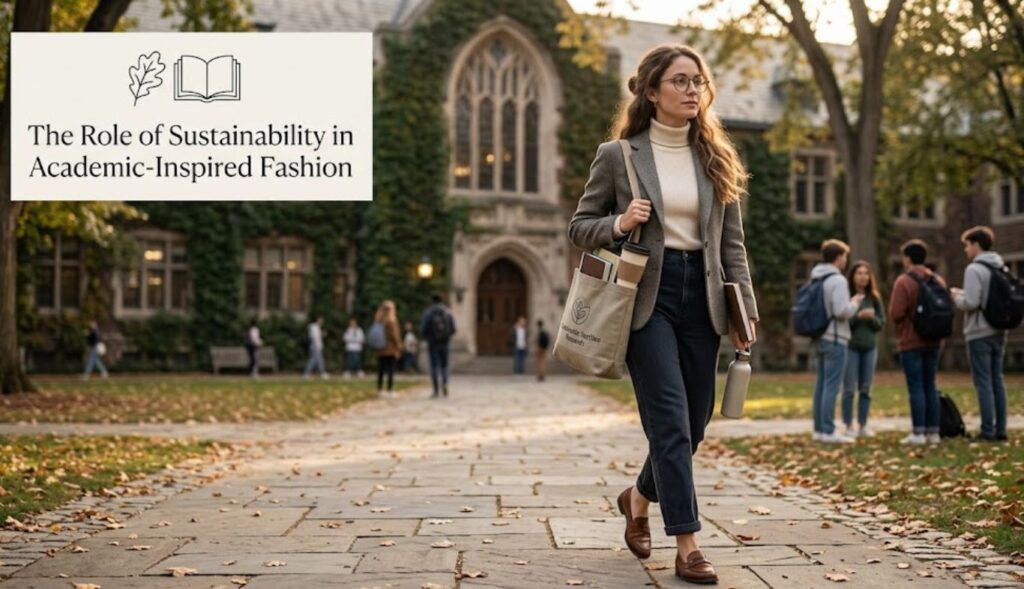
Because light academia relies heavily on timeless pieces, it can naturally support a more thoughtful approach to shopping. Instead of replacing your wardrobe every season, choose pieces that can be worn for years. Look for durable fabrics, classic silhouettes, and clothing that works with several outfits.
Secondhand shopping is another useful option. Vintage clothing can provide authentic textures and details while extending the life of existing garments. A useful principle is buy less, style more.
Before purchasing something, ask:
- Can I wear it with at least three existing pieces?
- Is the fabric appropriate for my climate?
- Will I still like the design next year?
- Is the garment comfortable?
- Does it fit my actual lifestyle?
If the answer is yes to most of these questions, it’s more likely to become a useful part of your wardrobe.
Light Academia Beauty and Hair Ideas
Clothing creates the foundation, but beauty choices can reinforce the aesthetic.
For makeup, consider a natural approach:
- Soft brown eyeliner
- Neutral eyeshadow
- Light blush
- Natural-looking skin
- Muted rose or nude lipstick
Hair can be equally simple.
Try:
- Loose waves
- Low buns
- Braids
- Half-up styles
- Simple ribbons
- Natural texture
The goal is polished but not overly elaborate.
Creating a Light Academia Lifestyle Atmosphere
Although fashion is the main focus, the aesthetic is connected to a broader appreciation for learning and creativity. You might enjoy visiting museums, reading classic or contemporary literature, keeping a journal, writing, sketching, studying languages, listening to classical music, or spending time in historic spaces.
However, none of these activities are mandatory. Aesthetic trends are most meaningful when they encourage genuine interests rather than replacing them. You don’t have to pretend to enjoy a particular book simply because it looks good beside your coffee. The underlying spirit is curiosity.
Recommended Resources for Fashion Research
Studying real historical garments can also help you understand why certain details—such as tailoring, pleats, collars, and natural fabrics—continue to influence modern fashion.
Frequently Asked Questions
What is Light Academia Fashion?
Light Academia Fashion is a clothing aesthetic influenced by academia, classical literature, art, vintage style, and traditional tailoring. It usually features soft neutral colors, knitwear, Oxford shirts, tailored trousers, skirts, loafers, blazers, and classic accessories.
What colors are used in light academia?
Common colors include cream, ivory, beige, camel, brown, taupe, gray, navy, dusty blue, and muted green. The palette tends to be softer and brighter than dark academia.
Can I wear light academia fashion casually?
Absolutely. Pair straight-leg jeans with a button-down shirt, cardigan, loafers, and a structured bag for an easy casual interpretation. The key is combining classic elements with comfortable everyday clothing.
Is light academia only for women?
No. Anyone can wear the aesthetic. Tailored trousers, Oxford shirts, knitwear, loafers, coats, and vintage-inspired accessories work across different personal styles and genders.
How can I dress light academia in summer?
Choose breathable fabrics such as linen and cotton. Linen trousers, lightweight button-down shirts, midi dresses, ballet flats, and thin cardigans can create the look without heavy layers.
Is light academia expensive?
It doesn’t have to be. Focus on versatile basics and shop secondhand where practical. The aesthetic depends more on color, texture, proportions, and styling than on expensive brands.
Can I wear black with light academia?
Yes. Although lighter colors dominate, black can provide contrast. Try black loafers, a black belt, or a small black bag with otherwise warm neutral clothing.
What shoes are best for light academia?
Loafers, Oxford shoes, Mary Janes, ballet flats, and simple ankle boots are excellent choices. Brown and black leather are especially versatile.
How do I make light academia look modern?
Combine classic pieces with contemporary silhouettes. Straight-leg jeans, modern trousers, clean sneakers, cropped knitwear, or minimalist accessories can prevent the outfit from feeling like a costume.
Do I need vintage clothing?
No. Vintage pieces can add character, but modern clothing with classic silhouettes works perfectly well. The objective is to capture the mood and styling principles rather than reproduce a historical wardrobe.
Final Thoughts
Light Academia Fashion succeeds because it balances elegance with comfort and tradition with individuality. Its strongest pieces—Oxford shirts, tailored trousers, cardigans, loafers, wool coats, pleated skirts, and structured bags—are useful far beyond an aesthetic trend. Start small. Choose a soft neutral palette, invest in a few versatile classics, experiment with layering, and pay attention to texture. Then add personal details that make the outfits feel like yours.
Most importantly, don’t let the aesthetic become a set of rules. Fashion should be enjoyable. Whether you’re studying in a library, heading to work, meeting friends for coffee, or simply enjoying a quiet afternoon at home, you can adapt the look to your real life. That’s the real power of light academia: it doesn’t require perfection. It simply invites you to dress with intention, appreciate timeless design, and bring a little more beauty into the everyday.