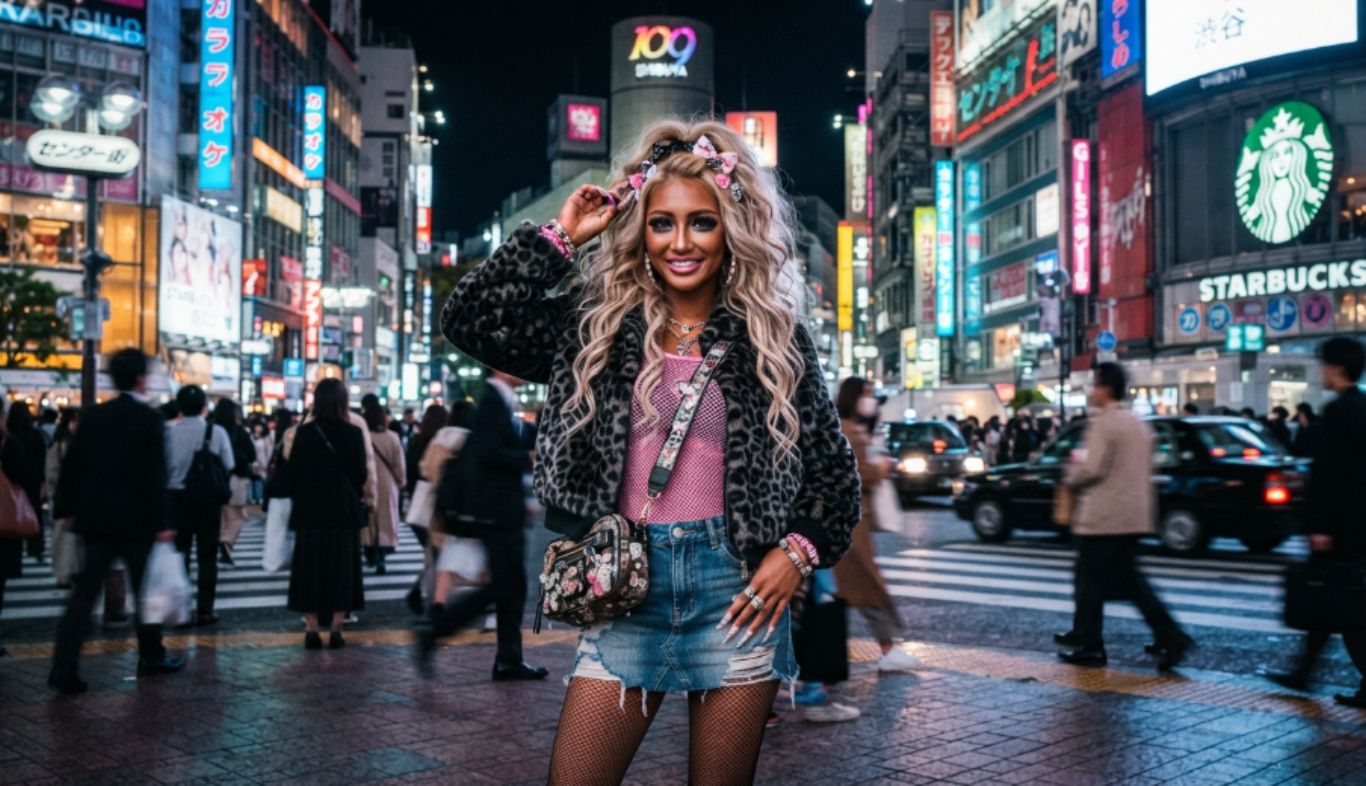
Shibuya gyaru is one of the most recognizable expressions of Japanese youth fashion. Developed around Tokyo’s Shibuya district, the style became famous for glamorous outfits, dramatic makeup, voluminous hair, statement accessories, and a confident attitude toward personal appearance.
But there’s more to it than simply wearing bold clothes. Gyaru, often romanized as gyaru, developed as a youth-oriented fashion and lifestyle culture that challenged conservative expectations about how young women should look and behave. Shibuya became one of its most important visual and commercial centers, especially through youth fashion stores, magazines, clubs, and gathering spots.
For many people discovering Japanese street fashion today, Shibuya gyaru can look like a time capsule from the late 1990s and 2000s. Yet its influence hasn’t disappeared. Elements of the aesthetic continue to inspire modern Japanese fashion, beauty trends, social media creators, and international alternative-fashion communities.
In this guide, we’ll explore the history, clothing, makeup, hairstyles, substyles, and cultural influence of Shibuya gyaru. We’ll also look at how you can understand or recreate elements of the style today without treating it as a simple costume.
What Is Shibuya Gyaru?
Shibuya gyaru refers broadly to gyaru fashion associated with Tokyo’s Shibuya scene. The term doesn’t describe one rigid uniform. Instead, it covers a wide range of looks connected by glamour, individuality, feminine styling, noticeable beauty techniques, and a willingness to stand out.
The Meaning of Gyaru
The Japanese word gyaru is derived from the English word “gal.” Over time, however, it developed its own meaning within Japanese popular culture.
Gyaru became associated with young women who experimented with fashion, beauty, hairstyles, tanning, accessories, and social identity. Different generations and communities interpreted the style differently, so there isn’t one universal gyaru appearance.
That’s important because calling every gyaru look “Shibuya gyaru” can oversimplify the culture.
Why Shibuya Became Important
Shibuya has long been associated with youth culture, entertainment, shopping, nightlife, and rapidly changing fashion trends. That made it a natural environment for experimental street styles to develop.
Young shoppers could find trendy clothing, beauty products, shoes, accessories, and magazines in one area. The neighborhood therefore became more than a location. It became a symbol of youthful fashion culture.
Shibuya 109 and Youth Fashion
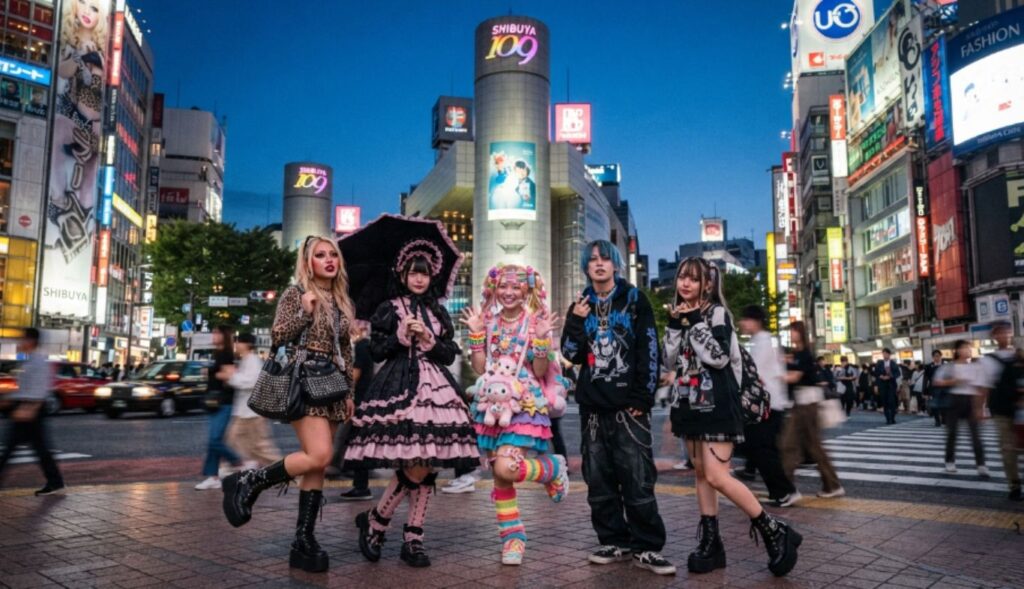
One of the most recognizable names connected to Shibuya fashion is Shibuya 109. The shopping complex became strongly associated with young women’s fashion and helped popularize many gyaru-oriented brands and trends.
Its importance wasn’t simply about shopping. Stores acted as trend laboratories. New silhouettes, colors, shoes, accessories, and beauty ideas could spread quickly from retailers to magazines and then into everyday street fashion.
This created a powerful cycle:
Shibuya streets → fashion stores → magazines → consumers → street trends
That’s one reason Shibuya gyaru became such a visually influential style.
The History of Shibuya Gyaru
The history of Shibuya gyaru is closely connected to the development of Japanese youth fashion during the 1990s and 2000s. Rather than appearing overnight, the aesthetic evolved through several stages and overlapping communities.
Origins in the 1990s
During the 1990s, Japanese youth increasingly experimented with fashion that contrasted with more traditional feminine ideals. Gyaru emerged as part of this wider movement.
Early looks could include lighter hair, strong makeup, short skirts, platform shoes, and highly coordinated accessories. Some variations also embraced darker tans and dramatic eye makeup.
The important point is that gyaru wasn’t simply copied from Western fashion. Although some influences came from Western pop culture, Japanese consumers adapted those influences into something distinctly their own.
The 2000s Gyaru Boom
The early and mid-2000s were particularly important for gyaru culture. Fashion became increasingly recognizable through dedicated magazines, clothing brands, beauty products, and celebrity figures.
During this period, the style could become extremely elaborate. Hair became bigger, eyelashes became more dramatic, and outfits often featured strong coordination between clothing, shoes, bags, and accessories.
The aesthetic also became more diverse.
Some people preferred cute and feminine looks. Others favored glamorous adult styling. Some embraced extreme tanning and dramatic makeup, while others preferred a softer appearance.
This variety produced numerous recognizable substyles.
Magazines and Gyaru Media
Fashion magazines played a major role in spreading gyaru trends.
Publications associated with youth fashion offered readers outfit ideas, makeup tutorials, hairstyle inspiration, interviews, shopping information, and photographs of fashionable people.
The magazine wasn’t merely a catalog. It was a cultural guide.
Readers could see how people dressed, what brands were popular, which hairstyles were trending, and how different communities interpreted gyaru.
This media ecosystem helped turn local street fashion into a broader cultural movement.
Shibuya Gyaru Fashion Essentials
A classic Shibuya gyaru outfit is usually recognizable because of its attention to styling from head to toe. The goal isn’t necessarily minimalism. Instead, the look often relies on coordination, polish, and visible effort.
Signature Clothing
Common clothing elements can include:
- Mini skirts
- Fitted tops
- Blouses
- Cardigans
- Denim
- Dresses
- Short jackets
- Faux-fur details
- Platform footwear
- Coordinated handbags
Animal prints, rhinestones, decorative details, feminine silhouettes, and noticeable textures may also appear depending on the substyle and era.
A key principle is coordination. A simple skirt can become much more gyaru when combined with styled hair, dramatic makeup, platform shoes, jewelry, and a carefully selected bag.
Shoes and Accessories
Shoes are often a major part of the silhouette.
Platform boots, platform sandals, heels, and embellished footwear can all work with gyaru-inspired outfits. The goal is often to create a longer, more dramatic visual line.
Accessories can include:
- Large hoop earrings
- Statement necklaces
- Hair clips
- Decorative belts
- Oversized sunglasses
- Handbags
- Bracelets
- Rhinestone accessories
The accessories don’t necessarily need to match perfectly. In fact, a little visual excess can be part of the appeal.
Hair and Hairstyles
Hair is one of the strongest identifiers of classic gyaru styling.
Voluminous curls, teased sections, highlights, extensions, side-swept bangs, and elaborate arrangements have all appeared in different gyaru eras.
The famous “big hair” effect is often created through several techniques rather than simply having naturally thick hair.
Volume can be built through:
- Layered styling.
- Curling or waving.
- Backcombing.
- Extensions.
- Strategic hair products.
- Decorative clips or bows.
Modern interpretations can simplify these techniques while preserving the overall silhouette.
Shibuya Gyaru Makeup
Makeup is arguably one of the most recognizable parts of Shibuya gyaru. The goal is generally more noticeable than a typical minimalist beauty look.
Eye Makeup
Classic gyaru eye makeup often emphasizes making the eyes appear larger and more defined.
Black or dark eyeliner can be used to create an extended shape. False eyelashes may add volume, while eyeshadow can create additional depth.
One important technique is controlling the balance between upper and lower eye makeup. Rather than simply applying more product everywhere, the placement can visually reshape the eyes.
Lashes and Contact Lenses
False eyelashes have historically played a major role in gyaru beauty.
Depending on the substyle, lashes can range from relatively natural-looking volume to highly dramatic, doll-like designs.
Colored contact lenses have also been associated with some gyaru looks, particularly styles focused on creating larger-looking eyes.
However, contact lenses should always be used safely and legally, with proper fitting and hygiene.
Lips and Face Makeup
Gyaru makeup can include defined eyebrows, sculpted cheeks, foundation with a polished finish, and noticeable lip color.
The exact complexion varies dramatically between substyles and historical periods. Some classic looks emphasized tanning, while other modern interpretations favor lighter or more natural skin tones.
This is another reason why there isn’t a single “correct” Shibuya gyaru makeup routine.
Popular Gyaru Substyles
One of the most fascinating things about gyaru culture is its variety. Different substyles can look completely different while still sharing a connection to the wider gyaru tradition.
Ko-Gyaru
Ko-gyaru is commonly associated with school-inspired youth fashion. Uniform modifications, loose socks, short skirts, and playful styling became recognizable parts of the aesthetic.
The look is strongly connected with teenage fashion culture and should be understood within its historical Japanese context.
Onee Gyaru
Onee gyaru, meaning an “older sister” style, generally presents a more mature interpretation.
Compared with youthful gyaru looks, it can feature:
- Elegant dresses
- Refined makeup
- Heels
- Sophisticated hairstyles
- Feminine silhouettes
- More restrained accessories
It demonstrates how gyaru could evolve with age rather than disappearing completely.
Hime Gyaru
Hime gyaru translates roughly to “princess gyaru.”
This style emphasizes romantic femininity, elaborate hair, bows, lace, pearls, pastel colors, and decorative details.
While it shares roots with gyaru, its visual language can be much more princess-like and ornate.
Ganguro and Manba
Ganguro and manba represent more extreme historical directions within gyaru culture.
Ganguro became known for deeply tanned skin, light or contrasting hair, and dramatic makeup. Manba pushed certain elements even further, especially through highly contrasting eye and lip makeup.
These styles became internationally recognizable symbols of Japanese street fashion.
However, they’re only part of the broader gyaru landscape. Treating them as synonymous with all gyaru would miss much of the culture’s diversity.
How to Create a Modern Shibuya Gyaru Look
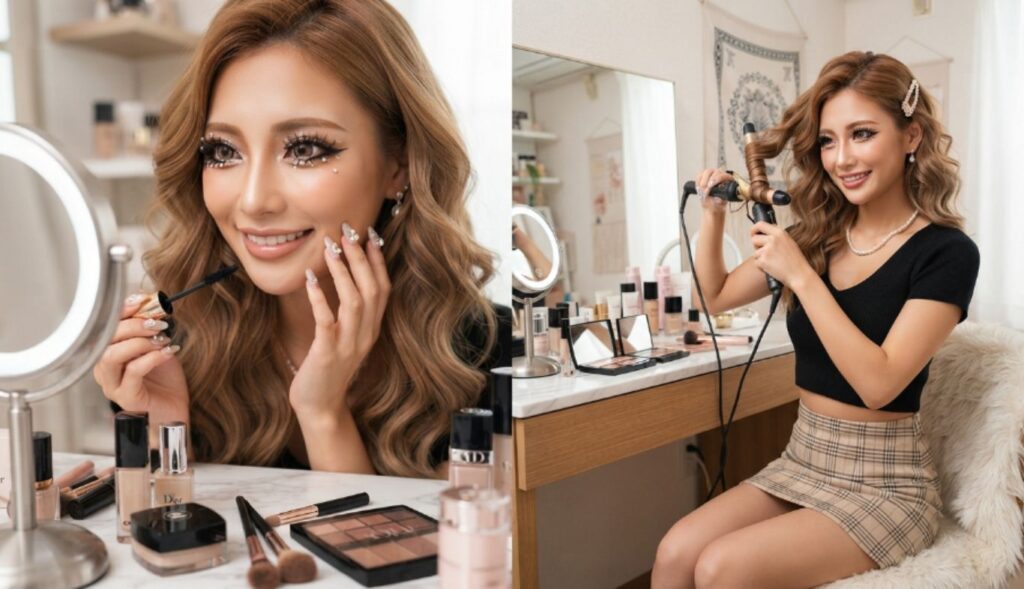
You don’t need to recreate a specific 2000s outfit from head to toe. A modern interpretation can borrow the principles of Shibuya gyaru while fitting today’s wardrobe.
Building the Outfit
Start with one statement piece.
For example, you could choose a mini skirt, fitted top, platform boots, or decorative jacket. Then build around it.
A simple formula might look like:
Feminine top + mini skirt + platform shoes + statement bag + jewelry
The exact colors are flexible. Pink, white, black, beige, denim, animal prints, and metallic details can all work depending on the desired era and substyle.
Creating the Makeup
For a wearable modern version, focus on the eyes first.
Try:
- Defined eyeliner
- Voluminous lashes
- Soft contouring
- Blended eyeshadow
- Glossy or defined lips
- Carefully shaped brows
You can make the look dramatic without necessarily using every traditional technique.
The trick is balance. If the eyes are extremely bold, keeping the rest of the makeup polished can prevent the result from becoming messy.
Styling the Hair
Hair should have visible volume and movement.
Loose waves, curled ends, a high-volume ponytail, or layered extensions can all create a gyaru-inspired silhouette.
If you want a subtle interpretation, focus on volume around the crown and face-framing pieces rather than creating an enormous hairstyle.
Shibuya Gyaru vs. Other Japanese Fashion Styles
Japanese street fashion includes many different communities, and gyaru shouldn’t be confused with all of them.
| Style | General Visual Direction | Common Features |
|---|---|---|
| Shibuya Gyaru | Glamorous and expressive | Big hair, makeup, feminine clothing |
| Hime Gyaru | Princess-inspired | Bows, lace, elaborate hair |
| Ganguro | Extreme gyaru | Tan, dramatic makeup, light hair |
| Lolita | Romantic and structured | Dresses, petticoats, lace |
| Harajuku Street Style | Highly experimental | Mixed colors, unusual layering |
| Mori Kei | Soft and natural | Earth tones, relaxed silhouettes |
| Visual Kei | Dramatic and theatrical | Dark styling, expressive makeup |
These categories can overlap, and fashion changes over time. They’re best viewed as broad cultural references rather than strict rules.
Why Shibuya Gyaru Still Matters
Shibuya gyaru remains important because it demonstrated how young people could use fashion as a form of self-expression.
The style wasn’t afraid of excess.
Instead of hiding behind neutral clothing, gyaru often embraced visible makeup, large hairstyles, high platforms, bright accessories, and strong femininity.
That confidence continues to resonate with people today.
Social media has also made historical gyaru easier to rediscover. Vintage magazine scans, archived photographs, fashion communities, and contemporary creators allow younger audiences to explore aesthetics from previous decades.
Modern gyaru may look different from its early-2000s predecessor, but the central idea remains familiar: fashion should be expressive, intentional, and fun.
Common Mistakes to Avoid
If you’re experimenting with Shibuya gyaru, a few mistakes can make the look feel disconnected from its roots.
Mistake 1: Focusing Only on Tanning
Gyaru isn’t synonymous with dark tanning. While tanning was important to specific historical substyles, many gyaru looks have always used different complexion approaches.
Mistake 2: Copying One Exact Outfit
Gyaru is a culture with many variations. Copying a single photograph doesn’t necessarily teach you how the style works.
Instead, understand the principles: glamour, coordination, confidence, volume, and personal expression.
Mistake 3: Ignoring Hair and Makeup
An outfit alone may not communicate the aesthetic.
Hair and makeup are often just as important as clothing, particularly in classic interpretations.
Mistake 4: Overloading Everything
More isn’t always better.
Even maximalist fashion needs visual structure. Choose a few strong focal points and make them work together.
Mistake 5: Treating Historical Styles as Modern Uniforms
Fashion evolves. A 2004 gyaru outfit doesn’t need to be recreated exactly in 2026.
Modern gyaru can borrow historical elements while using contemporary clothing, beauty techniques, and personal preferences.
Frequently Asked Questions
1. What is Shibuya gyaru?
Shibuya gyaru is a broad term for gyaru fashion and youth culture associated with Tokyo’s Shibuya district. It is known for glamorous clothing, dramatic makeup, voluminous hair, accessories, and confident self-expression.
2. Is Shibuya gyaru the same as gyaru?
Not exactly. Gyaru is the broader fashion and cultural category, while Shibuya gyaru generally refers to styles associated with Shibuya’s fashion scene. Different gyaru substyles developed across different periods and communities.
3. What makeup is typical of Shibuya gyaru?
Typical elements can include bold eyeliner, false eyelashes, defined eyes, polished complexion makeup, shaped eyebrows, and noticeable lip color. The exact makeup depends on the specific gyaru substyle.
4. What clothes do gyaru wear?
Gyaru fashion can include mini skirts, fitted tops, dresses, denim, heels, platform shoes, jackets, decorative accessories, and coordinated handbags. The exact outfit changes according to the era and substyle.
5. Was gyaru only popular in the 2000s?
No. Although the 1990s and 2000s were particularly influential periods, gyaru has continued to evolve. Contemporary communities reinterpret older styles and combine them with modern fashion.
6. What is the difference between ganguro and gyaru?
Ganguro is a specific, more extreme historical substyle within the broader gyaru sphere. It became associated with deep tanning, contrasting light hair, and dramatic makeup.
7. Can anyone wear Shibuya gyaru fashion?
Yes. Fashion can be explored by people from many backgrounds. However, it’s useful to learn the history and cultural context rather than reducing the style to a costume or a collection of visual stereotypes.
8. Is Shibuya gyaru still popular today?
Its visibility has changed from its peak eras, but gyaru continues to have dedicated communities and influence. Historical gyaru aesthetics have also experienced renewed interest through online fashion communities.
9. Do you need to wear a tan to dress gyaru?
No. Tanning is associated with certain historical substyles, but it isn’t a requirement for gyaru as a whole. Many gyaru looks use lighter or natural-looking complexions.
10. What makes Shibuya gyaru different from minimalist Japanese fashion?
Shibuya gyaru generally embraces noticeable glamour and styling, whereas minimalist Japanese fashion often focuses on simplicity, neutral colors, clean silhouettes, and understated details. They’re very different approaches to personal style.
Conclusion
Shibuya gyaru is much more than a colorful street-fashion trend. It represents a significant chapter in Japanese youth culture, particularly the fashion environment surrounding Shibuya during the 1990s and 2000s.
Its influence can be seen in dramatic makeup, oversized hairstyles, platform footwear, feminine clothing, statement accessories, and the broader idea that fashion can be a powerful form of personal identity.
What makes the style especially interesting is its diversity. Ko-gyaru, onee gyaru, hime gyaru, ganguro, manba, and other variations demonstrate that gyaru has never been one fixed look.
Whether you love the dramatic lashes, huge hair, glamorous outfits, or simply the confidence behind the aesthetic, there’s plenty to explore.
And that’s perhaps the biggest lesson of Shibuya gyaru: don’t be afraid to make your style noticeable.