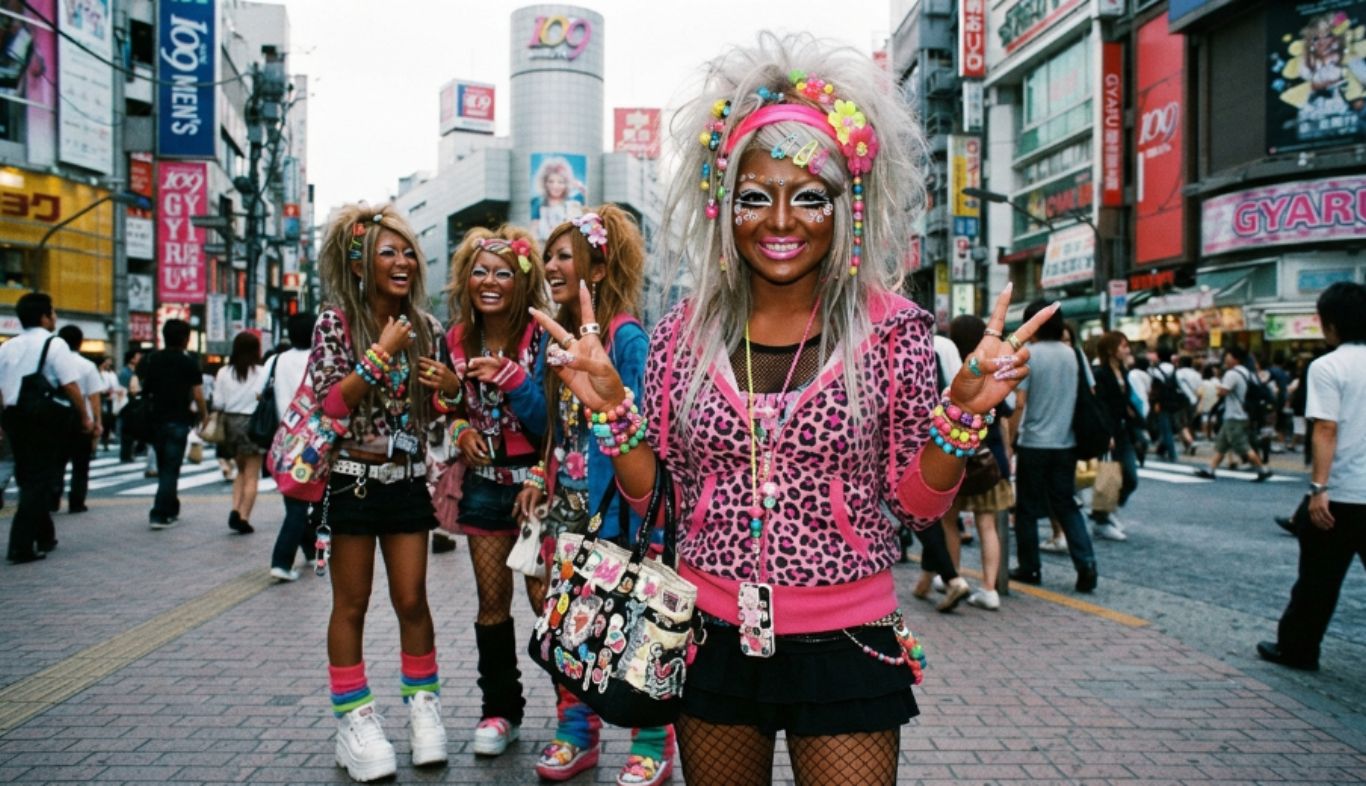
Few Japanese street-fashion movements have been as visually dramatic as yamanba gyaru. With intensely tanned skin, striking white makeup, colorful hair, bold clothing, and oversized accessories, the style was designed to stand out rather than blend in.
Yamanba developed from the broader gyaru fashion subculture and the darker, highly experimental ganguro trend that became prominent in Japan during the 1990s and early 2000s. Ganguro itself challenged conventional beauty expectations by combining tanned skin, bleached hair, dramatic makeup, and colorful clothing. Yamanba pushed those ideas even further.
The result was a look that could seem almost theatrical. Yet reducing yamanba to unusual makeup or a costume misses an important part of its history. It represented experimentation, group identity, youth culture, and a willingness to reject subtle beauty conventions.
Today, interest in classic gyaru fashion has returned in various online communities. Vintage photographs, old magazines, social media, and renewed interest in Heisei-era Japanese culture have helped introduce younger audiences to styles that were once strongly associated with the late 1990s and early 2000s.
Understanding yamanba gyaru therefore means looking beyond the surface. It means exploring where the style came from, why it looked the way it did, and how it fits into the larger story of Japanese street fashion.
What Is Yamanba Gyaru?
Yamanba gyaru is an extreme substyle associated with gyaru fashion. It developed from ganguro and became known for exaggerating many of ganguro’s recognizable features.
Typical elements included:
- Very dark-looking tans
- Strong white makeup around the eyes
- White or very light lipstick
- Bleached or brightly colored hair
- Colorful clothing
- Face stickers and decorative details
- Large accessories
- Platform footwear
- Tropical or beach-inspired motifs
- Highly visible nails and jewelry
Historical descriptions of the style commonly distinguish yamanba from broader ganguro through its darker tan and especially exaggerated white makeup.
The important point is that yamanba wasn’t simply a random collection of bright fashion pieces. The visual impact came from contrast.
Dark skin contrasted sharply with white makeup. Bright hair contrasted with colorful clothing. Large accessories competed for attention. Instead of aiming for understated elegance, the style celebrated excess.
That approach fits the broader rebellious character of gyaru. Gyaru developed as a Japanese fashion subculture associated with changing beauty ideals, dyed hair, makeup experimentation, and distinctive clothing.
Yamanba took that experimentation to an especially dramatic level.
The Origins of Yamanba Fashion
To understand yamanba, it’s useful to go back to the rise of ganguro during the 1990s.
Ganguro emerged as a highly visible fashion trend among young women in Japan, particularly around Tokyo neighborhoods such as Shibuya and Ikebukuro. The look challenged the conventional preference for pale skin, dark hair, and restrained makeup.
Instead, ganguro embraced:
- Deep tans
- Bleached hair
- Heavy eyeliner
- Light or white makeup
- Bright clothing
- Large nails
- Statement accessories
As some young women pushed these characteristics further, more extreme variations appeared. Yamanba became one of the most recognizable developments from that environment.
The evolution wasn’t necessarily a clean, official progression where one style suddenly ended and another began. Fashion subcultures naturally overlap. Individual wearers experimented with makeup, hair, accessories, and clothing, and labels developed around recognizable combinations.
This is one reason historical photographs can make the boundaries between ganguro, yamanba, and manba appear blurry.
The fashion was also closely connected to youth culture and the commercial street-fashion ecosystem of Tokyo. Magazines, shopping districts, photography, peer groups, and changing trends all helped spread visual ideas.
Yamanba should therefore be understood as part of a larger fashion conversation rather than an isolated trend.
Yamanba Gyaru and the Larger Gyaru Movement
Gyaru is the broader category, while yamanba is one of its more extreme historical styles.
The word gyaru is derived from the English word “gal” and became associated with a Japanese fashion and youth subculture. Over time, the category developed numerous substyles, including kogal, ganguro, hime gyaru, agejo, and yamanba.
This relationship can be simplified like this:
| Style | General Character |
|---|---|
| Gyaru | Broad Japanese fashion subculture |
| Kogal/Kogyaru | School-uniform-inspired gyaru styling |
| Ganguro | Tanned, bleached, colorful, dramatic |
| Yamanba | More extreme tan and highly contrasted makeup |
| Manba | Later development with even more exaggerated colorful styling |
| Hime Gyaru | Princess-inspired, feminine, ornate |
| Agejo | Glamorous, mature, highly feminine |
These categories aren’t always rigid. Fashion changes, and real people frequently mix elements from multiple styles.
Still, the distinction is useful for understanding where yamanba gyaru fits.
What Does the Name Yamanba Mean?
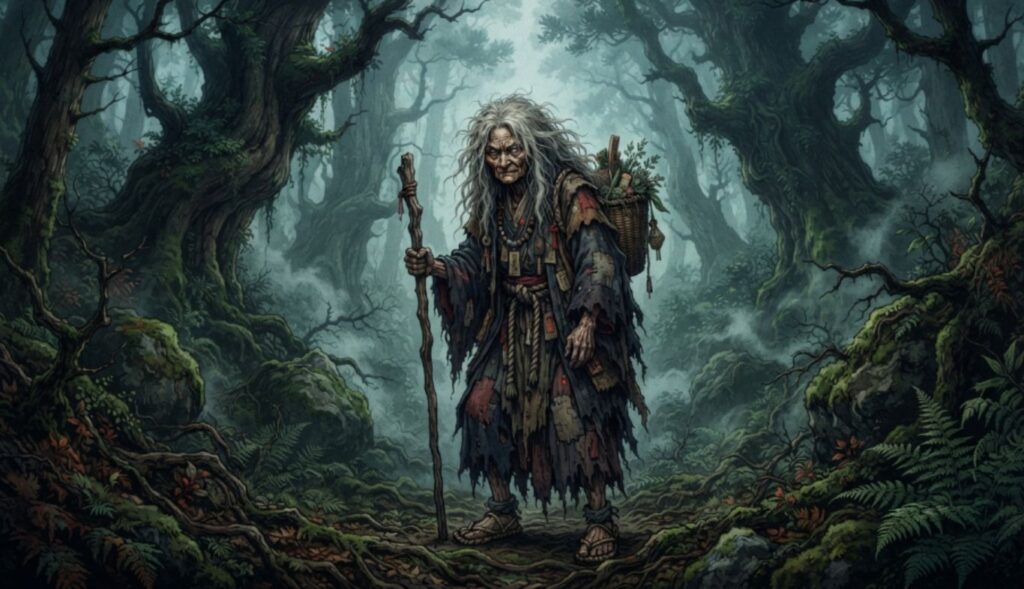
The name yamanba is connected to Yamauba, a figure in Japanese folklore traditionally described as a supernatural mountain woman or witch-like figure.
This association helped reinforce the style’s wild and unconventional visual identity. Ganguro and related styles have also been discussed in connection with Japanese folklore imagery, although the fashion should not be treated as a literal recreation of a folklore character.
The name is therefore better understood as a cultural reference that contributed to the style’s image.
It doesn’t mean that every person wearing yamanba intended to portray Yamauba.
Instead, the association evokes ideas such as:
- Wildness
- Unconventional beauty
- Exaggeration
- Rebellion
- Otherness
- Dramatic visual presence
That interpretation makes more sense when considering the wider gyaru tendency to challenge conventional expectations.
Yamanba Gyaru Makeup: The Most Recognizable Feature
Makeup is arguably the most immediately recognizable part of yamanba gyaru.
The objective wasn’t natural-looking enhancement. Instead, makeup was deliberately exaggerated to create strong visual contrast.
Darker Skin
A deep tan was one of the foundational characteristics.
Within the historical context of ganguro and yamanba, tanning directly challenged the preference for pale skin that was strongly associated with mainstream Japanese beauty ideals at the time.
Today, recreating the historical look doesn’t require unsafe tanning. A cosmetic body bronzer or temporary makeup can create a similar visual effect without deliberate UV exposure.
White Eye Makeup
Large areas of white makeup around the eyes became one of yamanba’s defining characteristics.
Rather than simply using a small amount of eyeshadow, the white pigment could be used to create a dramatic frame around the eye.
This produced a high-contrast effect:
dark skin + black liner + white makeup = unmistakable yamanba visual language
Dramatic Eyeliner
Black eyeliner helped define and enlarge the eyes visually.
False eyelashes could also contribute to the exaggerated appearance.
The overall goal was not subtle contouring. It was theatrical eye definition.
Pale Lips
Light or white lipstick was another recognizable feature. Historical descriptions of yamanba commonly mention white lipstick alongside white eye makeup.
Face Stickers
Decorative stickers could be placed around the eyes or cheeks.
These details added another layer of visual experimentation and helped distinguish the look from more conventional makeup.
Yamanba Hair: Bigger, Brighter, and More Dramatic
Hair played an equally important role.
Bleached blonde hair was common, but yamanba styling wasn’t limited to blonde. Bright colors and extensions could also be incorporated.
Later manba styling became particularly associated with colorful synthetic hair, extensions, and exaggerated volume.
Popular approaches included:
- Long extensions
- Voluminous hairstyles
- Blonde hair
- Pink accents
- Bright synthetic strands
- Decorative clips
- Braids or textured extensions
The key principle was maximum visual impact.
A simple hairstyle would generally feel disconnected from the intensity of the makeup and clothing. Hair acted as one more opportunity to create an exaggerated silhouette.
Yamanba Gyaru Clothing: Color Takes Center Stage
Yamanba clothing often embraced bright colors and playful summer-inspired styling.
Common visual elements included:
- Mini skirts
- Shorts
- Camisole-style tops
- Colorful dresses
- Platform sandals
- Bright accessories
- Tropical prints
- Layered pieces
Tropical motifs were especially associated with historical yamanba imagery. Hawaiian-style leis and flower motifs appeared in descriptions of the look, helping create the distinctive “summer” atmosphere often associated with the style.
This doesn’t mean every yamanba outfit looked identical.
Some outfits were relatively simple while the makeup and hair carried most of the visual weight. Others went all-in with colorful clothing and accessories.
The underlying principle remained consistent: don’t be afraid of boldness.
Yamanba Accessories and Statement Details
Accessories completed the transformation.
A yamanba outfit could include:
- Large earrings
- Colorful bracelets
- Layered necklaces
- Flower accessories
- Face decorations
- Hair clips
- Oversized bags
- Decorative nails
- Platform shoes
- Hawaiian-inspired pieces
These items weren’t necessarily selected to create a minimalist, coordinated outfit.
Instead, they helped build an intentionally excessive aesthetic.
That’s an important distinction when recreating the style today. If everything is too carefully coordinated, the result may look like ordinary modern fashion with a few yamanba-inspired details.
Yamanba historically worked because it embraced visual abundance.
The Role of Color in Yamanba Style
Color is one of the secrets behind the visual strength of yamanba.
The style frequently used combinations that would seem excessive in conventional fashion.
For example:
| Element | Typical Visual Direction |
|---|---|
| Skin | Deep tan |
| Eye makeup | White and black |
| Hair | Blonde or vivid colors |
| Clothing | Pink, yellow, orange, blue, green |
| Accessories | Bright and decorative |
| Nails | Long and embellished |
| Shoes | Platforms or sandals |
The contrast creates instant visual recognition.
A modern interpretation can tone down individual elements while keeping the same color philosophy.
For instance, someone might use:
- A warm bronzed base
- White graphic eyeliner
- Bright pink hair extensions
- A colorful mini dress
- Large flower accessories
The result would be inspired by yamanba without requiring a complete historical recreation.
Yamanba vs. Manba Gyaru
One of the most common questions about this fashion is whether yamanba and manba are the same thing.
They’re closely related, but they’re not identical labels.
Manba developed from yamanba and shares many characteristics with it. Historical descriptions identify manba as a later evolution that became particularly associated with colorful hair, pastel elements, and expanded white makeup.
A simplified comparison looks like this:
| Feature | Yamanba | Manba |
|---|---|---|
| Tan | Very dark | Very dark |
| White makeup | Strong | Often even more extensive |
| Hair | Blonde or colorful | Frequently highly colorful |
| Accessories | Loud and tropical | Loud, playful, colorful |
| Development | Earlier | Later |
| Relationship | Extreme ganguro development | Developed from yamanba |
There is considerable overlap, though.
That’s why photographs from the era can be difficult to classify perfectly.
The safest approach is to treat yamanba and manba as related stages or expressions within the broader evolution of extreme gyaru fashion rather than pretending there is always a perfectly clear boundary.
Yamanba vs. Ganguro
Ganguro is broader and generally predates yamanba.
Ganguro became prominent in the 1990s and was characterized by tanning, bleached hair, strong makeup, and bright clothing. Yamanba intensified those characteristics.
| Feature | Ganguro | Yamanba |
|---|---|---|
| Tan | Dark | Usually more extreme |
| Makeup | Bold | Highly exaggerated |
| White makeup | Present | Particularly prominent |
| Hair | Often bleached | Bleached or colorful |
| Accessories | Bold | Very exaggerated |
| Overall impression | Extreme gyaru | More theatrical extreme gyaru |
Think of ganguro as an important foundation for understanding yamanba.
Without the earlier development of experimental tanned gyaru fashion, yamanba would be difficult to understand historically.
Yamanba and Japanese Street Fashion
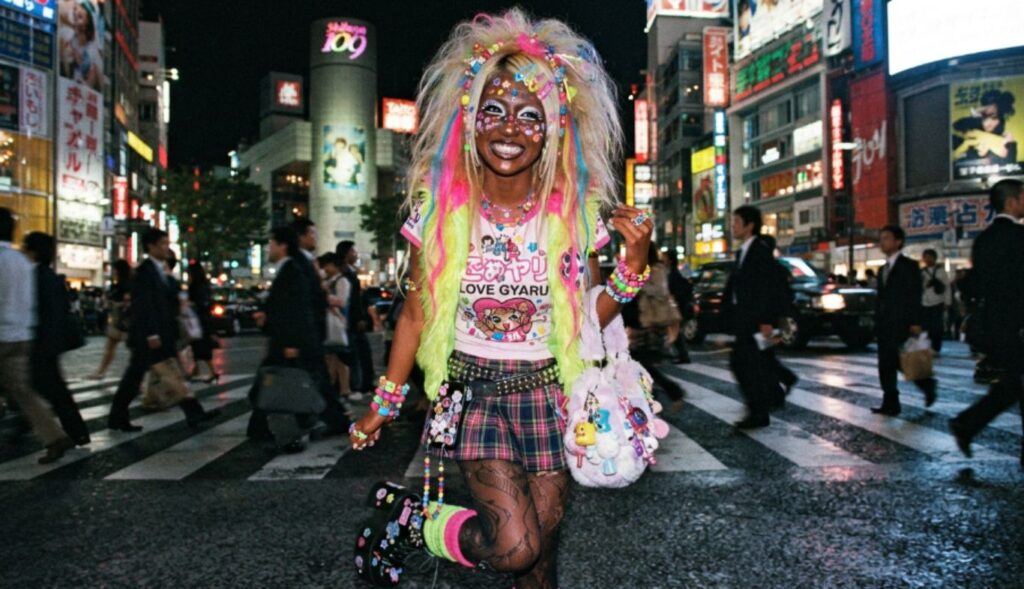
Yamanba is part of a larger tradition of Japanese street fashion in which young people use clothing to experiment with identity.
Japanese street fashion has produced many highly recognizable movements. Some emphasize elegance, others cuteness, rebellion, darkness, fantasy, or luxury.
Yamanba’s contribution was its willingness to make extreme visibility the point.
The style was not trying to disappear into the crowd.
Instead, it created a recognizable group identity through:
- Makeup
- Hair
- Clothing
- Accessories
- Shopping culture
- Photography
- Youth communities
Research into Tokyo street fashion has also demonstrated the value of documenting fashion geographically and historically, showing how street styles change over time.
For readers interested in the broader subject, the provides additional academic-oriented background.
Why Did Yamanba Gyaru Become Popular?
There wasn’t one single reason.
Fashion movements usually become popular through a combination of social, cultural, commercial, and personal factors.
For yamanba, several elements mattered.
1. Rebellion Against Conventional Beauty
The style challenged conventional expectations about skin tone, hair, makeup, and femininity.
2. Group Identity
A distinctive appearance can create a strong sense of belonging.
When several people share the same fashion language, the style becomes more than an outfit. It becomes a social identity.
3. Media Exposure
Japanese fashion magazines and street photography helped document and spread trends.
4. Experimentation
Gyaru culture encouraged people to change their appearance and try new combinations.
5. Visual Impact
Yamanba was extremely photogenic.
Its strong contrasts translated well into magazine photographs and street-fashion documentation.
6. Freedom of Self-Expression
For many fashion subcultures, the ability to decide how you look can be empowering.
This helps explain why extreme fashion trends can attract devoted communities even when mainstream audiences find them unusual.
Cultural Context, Criticism, and Common Misconceptions
Yamanba is sometimes discussed only through the lens of its unusual appearance.
That approach can oversimplify the culture.
The style existed within a particular Japanese social environment and interacted with changing beauty standards, youth identity, media, and consumer culture.
Ganguro and related styles have also attracted criticism because of their use of dark tanning and visual elements that some observers compare with blackface. Discussions of this issue are complex, and it is important not to erase the historical context or reduce the style to a single interpretation.
Another misconception is that every person wearing yamanba was trying to look like a supernatural creature because of the name.
That’s too literal.
The folklore reference contributed to the label, but fashion participants had their own motivations and interpretations.
A third misconception is that yamanba represents all gyaru fashion.
It doesn’t.
Gyaru is a broad subculture containing many styles, and yamanba represents only one particularly extreme historical direction.
How to Create a Modern Yamanba-Inspired Look
You don’t have to reproduce every historical element to capture the spirit of yamanba.
A modern interpretation can focus on the style’s main visual principles.
Step 1: Create a Warm Base
Use cosmetic bronzer or body makeup if you want a deeper appearance.
Avoid intentional UV tanning as a way to reproduce the historical look.
Step 2: Build Graphic Eye Makeup
Use black eyeliner and carefully placed white makeup or white eyeliner to create contrast.
Step 3: Add Dramatic Lashes
False lashes can make the eyes appear larger and more theatrical.
Step 4: Choose Bold Hair
Try:
- Blonde
- Pink
- Purple
- Blue
- Multicolor extensions
Temporary color products are useful if you don’t want permanent changes.
Step 5: Pick Bright Clothing
Choose colorful pieces rather than neutral basics.
A bright mini dress, skirt, crop top, or beach-inspired outfit can establish the right direction.
Step 6: Add Decorative Accessories
Flower clips, colorful jewelry, bracelets, statement earrings, and playful bags can reinforce the look.
Step 7: Finish With Nails
Decorated nails are an easy way to add another layer of visual detail.
The goal isn’t perfection.
It’s personality.
Common Yamanba Styling Mistakes
Modern recreations can easily lose the character of the original style.
Here are several mistakes to avoid.
Making Everything Too Minimal
Yamanba was not built around minimalism. If every element is subtle, the result may look like ordinary gyaru rather than yamanba-inspired fashion.
Using Only the Makeup
The makeup is important, but hair, clothing, and accessories complete the visual language.
Confusing Yamanba With All Gyaru
Yamanba is a specific historical substyle. Treating it as a synonym for every form of gyaru removes useful cultural distinctions.
Ignoring Historical Context
Understanding the origins makes the style more meaningful.
Copying Without Understanding
Fashion inspiration is more respectful when you learn about the culture, period, and people who created the style.
Treating the Look Like a Costume
For historical appreciation, focus on the fashion itself rather than exaggerating stereotypes about Japanese people or youth culture.
Is Yamanba Gyaru Still Around Today?
The original peak of yamanba belongs largely to the late 1990s and early 2000s. However, its visual influence has not disappeared.
Classic gyaru fashion has experienced renewed interest through nostalgia for the Heisei era, online communities, vintage fashion discussions, and social media.
Modern fashion enthusiasts may recreate older looks, mix yamanba-inspired makeup with contemporary clothing, or combine elements from several gyaru substyles.
That means the style can exist in two ways today:
Historical yamanba:
A recreation of the recognizable late-1990s/early-2000s aesthetic.
Yamanba-inspired fashion:
A contemporary interpretation that borrows the dark tan, white makeup, colorful hair, dramatic accessories, and fearless attitude without reproducing every historical detail.
This distinction is useful because fashion is constantly evolving.
Yamanba Gyaru Style Checklist
If you’re researching the style or planning an inspired outfit, use this checklist:
- Dramatic eye makeup
- White graphic makeup
- Deep-looking tan created cosmetically
- Bold eyeliner
- False lashes
- Bright or bleached hair
- Colorful extensions
- Vibrant clothing
- Tropical-inspired details
- Large accessories
- Decorative nails
- Platform footwear
- Playful attitude
- Strong color contrast
- Awareness of the style’s history
You don’t need every item.
The strongest modern looks usually identify the key visual features and adapt them creatively.
Frequently Asked Questions
What is yamanba gyaru?
Yamanba gyaru is an extreme historical substyle of Japanese gyaru fashion. It developed from ganguro and became known for very dark-looking tans, dramatic white makeup, colorful hair, bright clothing, and oversized accessories.
Is yamanba the same as ganguro?
No. Ganguro is an earlier and broader style that helped create the environment from which yamanba developed. Yamanba generally pushed the tan, makeup, and overall visual exaggeration further.
What is the difference between yamanba and manba?
Manba developed from yamanba and shares many of its features. Manba became particularly associated with highly colorful hair, playful accessories, and extensive white makeup. The two styles overlap considerably.
Why is yamanba called yamanba?
The name is associated with Yamauba, a supernatural mountain woman or witch-like figure from Japanese folklore. The connection contributed to the wild and unconventional image of the fashion.
What makeup does yamanba gyaru use?
Traditional yamanba makeup commonly includes a deep-looking tan, strong black eyeliner, large areas of white makeup around the eyes, pale or white lips, false lashes, and sometimes decorative face stickers.
Did yamanba gyaru originate in Japan?
Yes. Yamanba developed within Japanese gyaru fashion culture, particularly in the context of Tokyo’s street-fashion scene during the late 1990s and early 2000s.
Is yamanba still popular?
The original trend is no longer at the same mainstream level it reached during its historical peak. However, yamanba and related gyaru aesthetics continue to influence online fashion communities, nostalgic fashion, and modern reinterpretations.
Can someone wear yamanba-inspired fashion today?
Absolutely. A contemporary version can use temporary hair color, cosmetic bronzer, graphic makeup, colorful clothing, and statement accessories. You can adapt the aesthetic while avoiding unsafe tanning practices.
Is yamanba a type of gyaru?
Yes. Yamanba is generally described as a substyle or extreme expression within the broader gyaru fashion culture.
Why did yamanba use so much white makeup?
The white makeup created a strong visual contrast against the dark-looking tan and helped produce the exaggerated eye appearance that became one of the style’s defining features.
Conclusion
Yamanba gyaru remains one of the most recognizable examples of extreme Japanese street fashion.
Its importance isn’t simply that it looked unusual. The style demonstrates how fashion can challenge beauty standards, create community, communicate identity, and transform everyday clothing and makeup into a powerful visual statement.
Born from the broader gyaru movement and influenced by ganguro, yamanba intensified the use of tanning, white makeup, bright hair, colorful clothing, and oversized accessories. It eventually influenced related styles such as manba and became part of the fascinating history of Japanese youth fashion.
Although the original trend belongs to a specific historical period, its influence can still be seen today. Vintage gyaru enthusiasts, fashion creators, photographers, and online communities continue to revisit the aesthetic.
The biggest lesson from yamanba isn’t that fashion has to be extreme.
It’s that fashion can be personal, experimental, expressive, and unapologetically bold.
And that’s precisely why this striking chapter of Japanese street style continues to capture attention decades after its peak.