

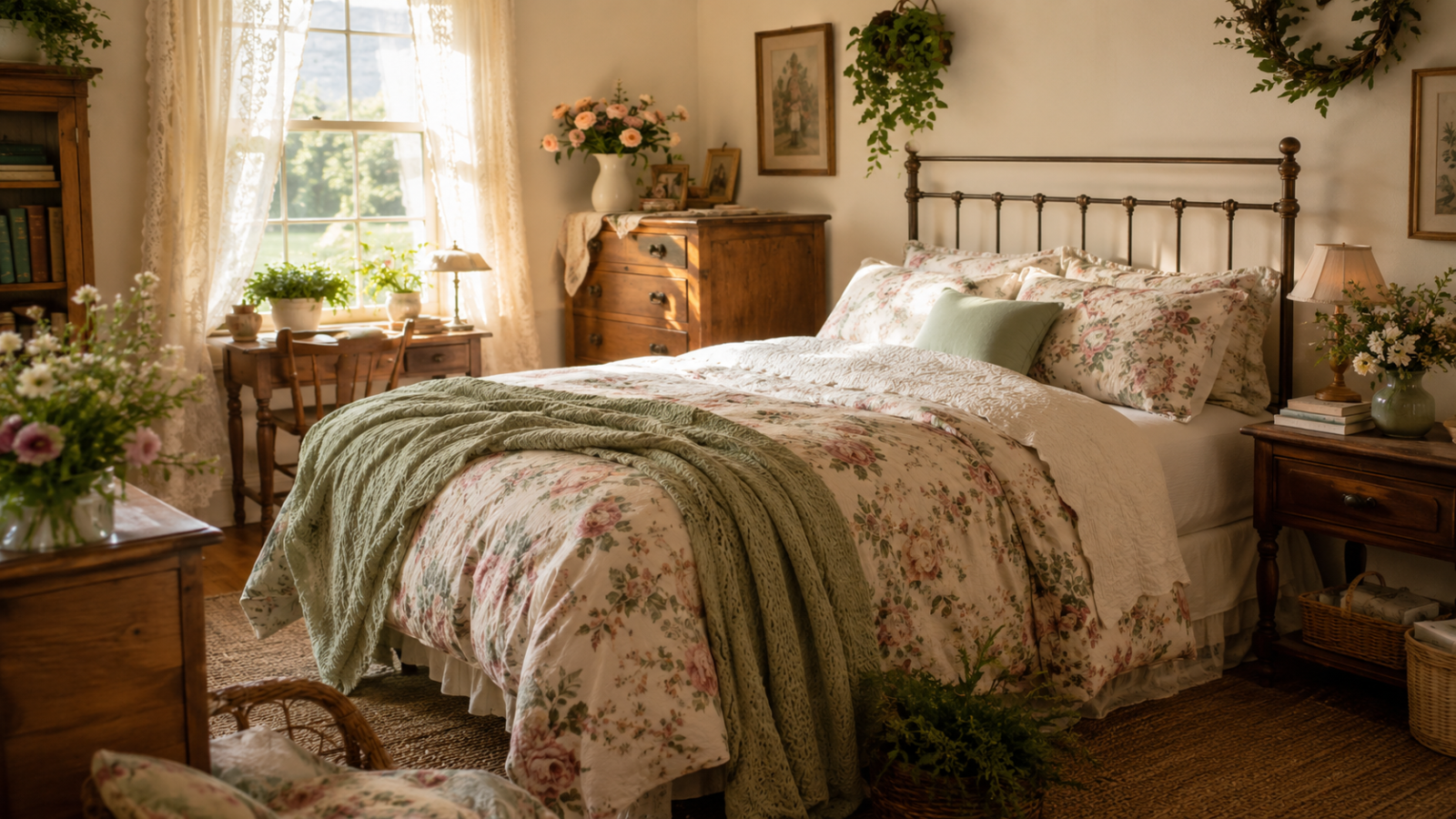
Cottagecore Bedroom Design A cottagecore bedroom isn’t defined by expensive furniture or perfectly coordinated décor. The charm comes from the feeling the room creates. It should feel peaceful, lived-in, and connected to nature, as though every item has a story behind it. That’s one reason the style has become so popular across the United States. People are looking for interiors that slow life down rather than speed it up, replacing cold minimalism with warmth, texture, and personality.
Cottagecore Bedroom Design One mistake many people make is assuming cottagecore means filling every corner with vintage objects and floral prints. In reality, restraint often produces a more authentic result. A carefully chosen wooden dresser, soft linen bedding, a vase of dried wildflowers, and warm lighting can have a greater impact than a room crowded with decorative pieces. Cottagecore celebrates comfort first and aesthetics second. Once you understand that idea, decorating becomes much easier—and far more enjoyable.
What Makes a Cottagecore Bedroom Feel Authentic?
Cottagecore Bedroom Design The most memorable cottagecore bedrooms don’t look like showroom displays. They feel collected over time instead of purchased in a single weekend. Antique-inspired furniture, natural fabrics, handcrafted decorations, and botanical details all contribute to the atmosphere, but balance is what ties everything together.
Natural materials deserve special attention because they age beautifully. Solid wood furniture develops character with use, linen becomes softer after every wash, and woven baskets add texture without overwhelming the room. These elements create visual warmth that synthetic materials often struggle to achieve.
Another detail that experienced designers pay attention to is imperfection. Slightly weathered wood, vintage picture frames with tiny scratches, handmade pottery, and embroidered cushions introduce authenticity. A perfectly polished room rarely captures the relaxed countryside feeling that cottagecore is known for.
Instead of chasing perfection, think about creating a bedroom that feels welcoming at every hour of the day.
Choosing Colours That Feel Calm and Timeless
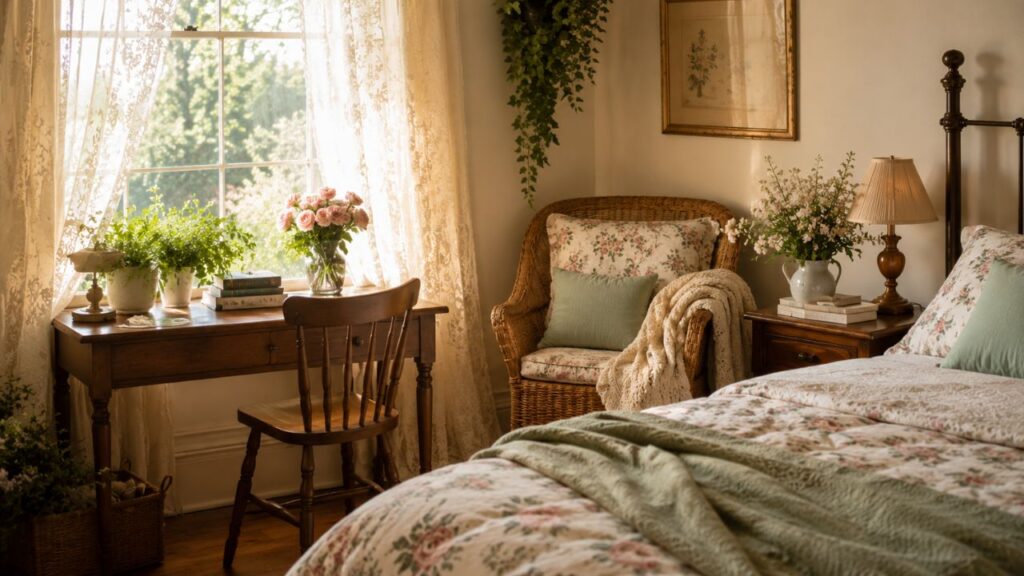
Cottagecore Bedroom Design Colour shapes the mood of a bedroom more than almost any other design choice. Cottagecore spaces usually rely on soft, muted shades inspired by nature rather than bold, high-contrast palettes.
Gentle cream walls remain one of the safest choices because they allow vintage furniture and floral accessories to stand out without competing for attention. Sage green continues to be a favourite because it reflects the colours of gardens and forests while creating a peaceful backdrop. Dusty rose, pale lavender, butter yellow, warm beige, and soft blue also complement the aesthetic beautifully.
Darker colours have their place as well. Deep forest green, rich olive, charcoal, and muted navy create what’s often called a dark cottagecore bedroom. When paired with warm wooden furniture, candlelight, and brass accents, these deeper tones feel cosy rather than gloomy.
Cottagecore Bedroom Design A simple rule many interior stylists follow is to combine three levels of colour: a light base for walls, medium natural wood tones for furniture, and small accent colours introduced through bedding, artwork, or fresh flowers. This layering keeps the room visually interesting without making it feel busy.
Furniture That Builds the Cottagecore Look
Furniture forms the backbone of the entire bedroom. Instead of focusing on matching sets, look for pieces that complement one another while maintaining individual character.
Cottagecore Bedroom Design bed frames with simple craftsmanship often work better than highly ornate designs. Oak, pine, and walnut all fit naturally into the cottagecore aesthetic. Vintage dressers, painted nightstands, and slightly distressed wardrobes introduce personality that flat-pack furniture sometimes lacks.
One of the biggest advantages of cottagecore decorating is that second-hand furniture often looks better than brand-new alternatives. A dresser found at a local antique market or thrift shop may only need gentle sanding and a fresh coat of paint to become the room’s focal point.
Storage should also feel intentional. Wicker baskets tucked beneath a bench, wooden crates used as bookshelves, or woven hampers provide practical organisation while reinforcing the rustic atmosphere.
Cottagecore Bedroom Design Experienced decorators also avoid overcrowding the room with furniture. Leaving open space allows natural light to travel through the bedroom and prevents vintage pieces from competing with one another.
Layering Bedding and Textiles for Comfort
Few elements influence the overall feeling of a bedroom as much as the bed itself. Cottagecore bedding isn’t about perfectly coordinated sets. Instead, it’s about combining different textures that invite you to slow down and relax.
Cottagecore Bedroom Design Linen duvet covers remain one of the most popular choices because they develop a relaxed appearance over time instead of looking worn out. Cotton sheets, quilted blankets, crocheted throws, embroidered pillowcases, and knitted cushions create layers that feel both practical and visually rich.
Rather than choosing identical pillows, mix different sizes and fabrics. A floral cushion beside a plain linen pillow often creates a more natural appearance than matching decorative sets.
Window treatments deserve equal attention. Sheer lace curtains soften sunlight during the day while adding movement whenever a breeze enters the room. Their gentle texture complements the handmade quality that defines cottagecore interiors.
Cottagecore Bedroom Design Small decorative details also matter. Folded blankets at the end of the bed, a handmade quilt passed through generations, or a simple knitted throw casually draped over a reading chair can transform the room from attractive to genuinely inviting.
Even scent contributes to the atmosphere. Lavender sachets tucked into drawers or dried eucalyptus hanging near a window subtly reinforce the connection to nature without adding visual clutter.
Decorating with Nature Instead of Plastic
Nature has always been at the heart of cottagecore. That doesn’t mean every room needs dozens of houseplants, but bringing organic elements indoors creates a sense of calm that artificial decorations rarely achieve.
Cottagecore Bedroom Design Fresh flowers from a local market instantly brighten a bedside table. During colder months, dried lavender, wheat stems, eucalyptus, or wildflowers continue to provide texture and colour with almost no maintenance.
Botanical artwork offers another way to introduce nature. Vintage flower illustrations, pressed leaves displayed in wooden frames, or landscape paintings inspired by the countryside add personality without dominating the walls.
Small ceramic vases, handmade pottery, stone candle holders, and woven baskets help reinforce the connection between natural materials and everyday living. Many homeowners discover that replacing plastic accessories with wood, clay, or wicker makes the room feel noticeably warmer, even when the layout remains unchanged.
Cottagecore Bedroom Design Plants such as pothos, English ivy, peace lilies, or small ferns also work beautifully in cottagecore bedrooms because their soft greenery complements the muted colour palette while improving the feeling of freshness inside the space.
DIY Ideas and Personal Touches That Make the Room Yours
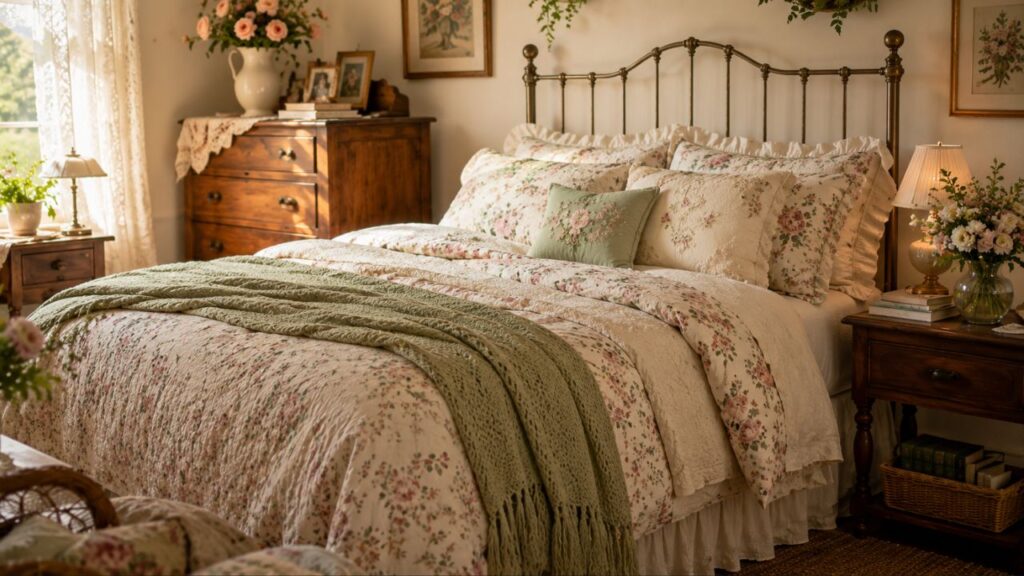
The most memorable cottagecore bedrooms rarely come straight from a catalogue. They reflect the personality of the person who lives there. Handmade details, family heirlooms, and second-hand finds often become the features guests notice first because they give the room a sense of history.
Simple DIY projects don’t need advanced skills or expensive tools. Framing pressed flowers collected from a walk, painting an old bedside table in a soft sage green, or sewing pillow covers from floral fabric can completely change the mood of a room. Even repurposing glass jars into candle holders or flower vases adds charm while reducing waste.
Another overlooked idea is creating a reading corner. A vintage chair, a small wooden side table, a warm lamp, and a stack of favourite books can turn an unused corner into the cosiest part of the bedroom. That quiet space reflects the slower pace associated with cottagecore far better than decorative accessories alone.
Instead of trying to copy a photo exactly, borrow ideas from different rooms and adapt them to your own space. That’s how cottagecore stays authentic rather than looking staged.
Cottagecore Bedroom Ideas for Small Spaces
Cottagecore Bedroom Design A small bedroom doesn’t limit your creativity. In fact, cottagecore often works exceptionally well in compact rooms because the style is built around comfort rather than excess.
Start by choosing furniture with exposed legs instead of bulky solid bases. It creates the illusion of more floor space and allows natural light to travel across the room. Light wall colours paired with wooden furniture also help a small bedroom feel open without losing warmth.
Storage should be both attractive and practical. Consider using:
- Wicker baskets beneath the bed, floating wooden shelves, vintage trunks for blankets, hooks behind doors, and woven wall organisers to reduce clutter while maintaining the cottagecore aesthetic.
- Multipurpose furniture such as a storage bench, a bedside table with drawers, or a dresser that also serves as a display surface for candles, books, and dried flowers.
Cottagecore Bedroom Design Mirrors deserve more attention than they usually receive. A vintage-style mirror positioned opposite a window reflects daylight throughout the room, making the space appear larger while complementing the traditional cottage look.
Perhaps the biggest lesson from experienced decorators is knowing when to stop. Leaving empty space is just as valuable as adding beautiful décor. A crowded room quickly loses the calm atmosphere that makes cottagecore so appealing.
Creating the Look Without Spending a Fortune
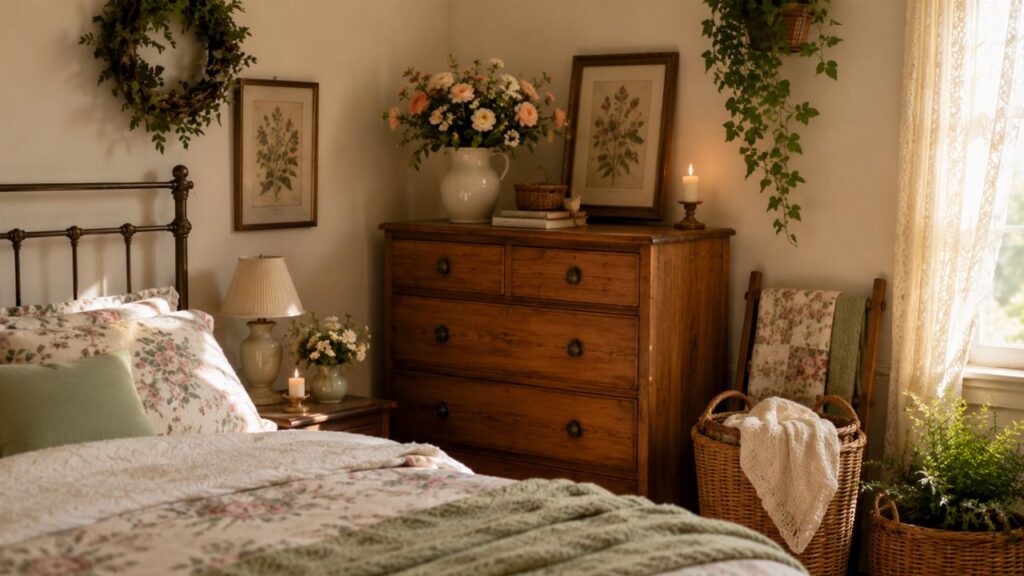
One of the biggest misconceptions about cottagecore is that it requires expensive antiques and designer furniture. In reality, some of the most charming rooms are built almost entirely from thrift shops, flea markets, estate sales, and carefully chosen budget purchases.
Cottagecore Bedroom Design Before buying anything new, look around your home. A forgotten wooden chair, an old picture frame, or a woven basket stored in the attic may fit perfectly after a little cleaning or refinishing. Repurposing existing items often creates a more personal result than buying everything new.
If you’re working with a limited budget, prioritise the pieces that make the greatest visual impact.
| Budget Priority | Why It Matters |
| Bedding | Instantly changes the look and comfort of the room. |
| Curtains | Soften natural light and add texture. |
| Wooden furniture | Creates the foundation of the cottagecore style. |
| Lighting | Warm light makes the room feel inviting. |
| Decorative accents | Add personality without overwhelming the space. |
Many experienced decorators recommend spending more on quality bedding and solid wood furniture while saving money on accessories that can easily be updated over time. This approach creates a room that feels timeless rather than trendy.
Styling Tips That Competitors Often Overlook
Cottagecore Bedroom Design Many online decorating articles focus almost entirely on what to buy. Professional stylists, however, spend far more time thinking about how objects relate to one another.
Texture is often more influential than colour. A room filled with smooth surfaces can feel flat, even if the colours are beautiful. Mixing linen, cotton, knitted wool, wicker, unfinished wood, ceramic pottery, and soft rugs creates visual depth without relying on bold patterns.
Lighting also changes everything. Rather than depending on one bright ceiling fixture, combine several softer light sources. A bedside lamp, a reading lamp, and candles or warm fairy lights create layers of illumination that make the room feel comfortable throughout the evening.
Another expert trick is decorating in odd numbers. Three candles on a dresser or five small framed botanical prints usually appear more balanced than perfectly symmetrical arrangements. These subtle details aren’t immediately obvious, but together they make a bedroom feel thoughtfully designed instead of artificially styled.
Finally, don’t rush the process. The most beautiful cottagecore bedrooms often evolve over months or even years as meaningful pieces are discovered along the way.
Frequently Asked Questions
What is the easiest way to start decorating a cottagecore bedroom?
Cottagecore Bedroom Design Begin with neutral walls, natural bedding, wooden furniture, and one or two vintage-inspired decorative pieces. Once those foundations are in place, gradually add plants, artwork, and handmade accessories.
Can modern furniture work in a cottagecore bedroom?
Yes. Modern furniture with simple lines can blend beautifully with vintage décor when softened by natural fabrics, warm lighting, and rustic accessories. Mixing old and new often creates a more practical and unique space.
Which colours work best for a cottagecore bedroom?
Soft shades inspired by nature are the most popular choices. Sage green, cream, beige, dusty rose, pale blue, lavender, and warm white all complement the aesthetic while creating a relaxing atmosphere.
How can I decorate on a tight budget?
Shop at thrift stores, flea markets, estate sales, and local antique shops. Repurpose furniture you already own, create DIY decorations, and invest first in bedding and lighting, which have the greatest impact on the overall look.
Is cottagecore still a popular interior design style?
Yes. While design trends continue to evolve, cottagecore remains popular because it focuses on comfort, craftsmanship, sustainability, and a connection to nature rather than short-lived fashion trends.
Conclusion
Cottagecore Bedroom Design A cottagecore bedroom isn’t about recreating a picture from social media or filling every corner with vintage treasures. The rooms that feel the most inviting are usually the simplest. They combine natural materials, comfortable textiles, thoughtful lighting, and meaningful objects collected over time. Whether you’re refreshing a single corner or redesigning an entire bedroom, focus on creating a space that reflects your own personality. When comfort, craftsmanship, and nature work together, the result is a bedroom that feels timeless—one you’ll enjoy long after decorating trends have changed.