

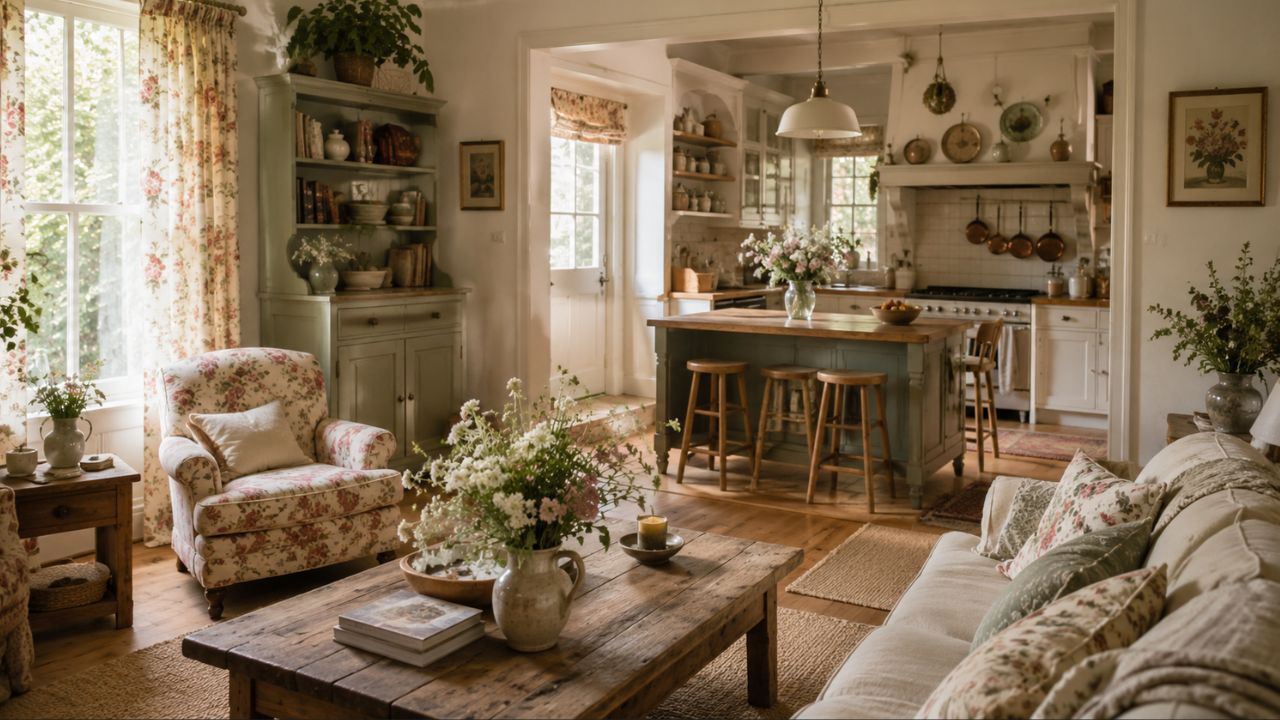
Cottagecore House & Interior Design There’s a reason cottagecore continues to capture people’s imagination. It offers something many modern homes struggle to provide: warmth, personality, and a sense of calm. Rather than chasing the latest decorating trend, cottagecore celebrates homes that feel lived in, loved, and connected to nature. A room doesn’t need expensive furniture or perfect styling to fit the aesthetic. A weathered wooden table with fresh flowers can feel more authentic than a showroom filled with designer pieces.
Many people assume cottagecore only works in countryside cottages, but that’s one of the biggest misconceptions about the style. A suburban house, a city apartment, or even a small rental can embrace cottagecore with thoughtful choices. It’s less about architecture and more about atmosphere. Soft textures, vintage finds, natural materials, and meaningful objects combine to create spaces that invite you to slow down and enjoy everyday life.
What Makes a Cottagecore House Feel Authentic?
Cottagecore House & Interior Design The biggest difference between an authentic cottagecore home and one that simply copies the look from social media is intention. Experienced interior designers often point out that the best cottage-inspired interiors evolve over time instead of being purchased all at once. Every piece should feel like it has a story.
Natural materials form the backbone of cottagecore interior design. Solid wood, linen, cotton, wicker, stone, and ceramic surfaces create visual warmth because they show texture instead of hiding it. Small imperfections become part of the home’s charm rather than flaws to correct.
Cottagecore House & Interior Design Colour also plays a surprisingly important role. While many people immediately think of floral wallpaper, successful cottagecore interiors usually begin with quiet, earthy shades. Cream, warm white, sage green, dusty blue, butter yellow, muted pink, and soft beige create a peaceful backdrop that allows vintage furniture and decorative accessories to stand out naturally.
Another overlooked detail is balance. Some homes become overcrowded with antique décor until they feel cluttered rather than cosy. Cottagecore isn’t about filling every shelf. Empty space allows treasured objects to receive attention and keeps each room comfortable to live in.
A useful rule is to ask yourself whether each item adds either beauty or function. Ideally, it should do both.
Designing Each Room with Cottagecore Character
Cottagecore House & Interior Design Every room serves a different purpose, so cottagecore shouldn’t look identical throughout the house. The aesthetic adapts to how each space is used.
Living Room
A cottagecore living room should immediately feel inviting. Comfortable seating matters more than matching furniture sets. Instead of buying everything from one collection, mix vintage armchairs, wooden coffee tables, woven baskets, handmade pottery, and soft throws. Books, candles, and fresh flowers help create a lived-in atmosphere that feels genuine rather than staged.
Cottagecore House & Interior Design Lighting deserves just as much attention as furniture. Warm table lamps often create a more relaxing environment than relying solely on bright ceiling lights. During the evening, layered lighting transforms an ordinary room into one that feels peaceful and welcoming.
Kitchen
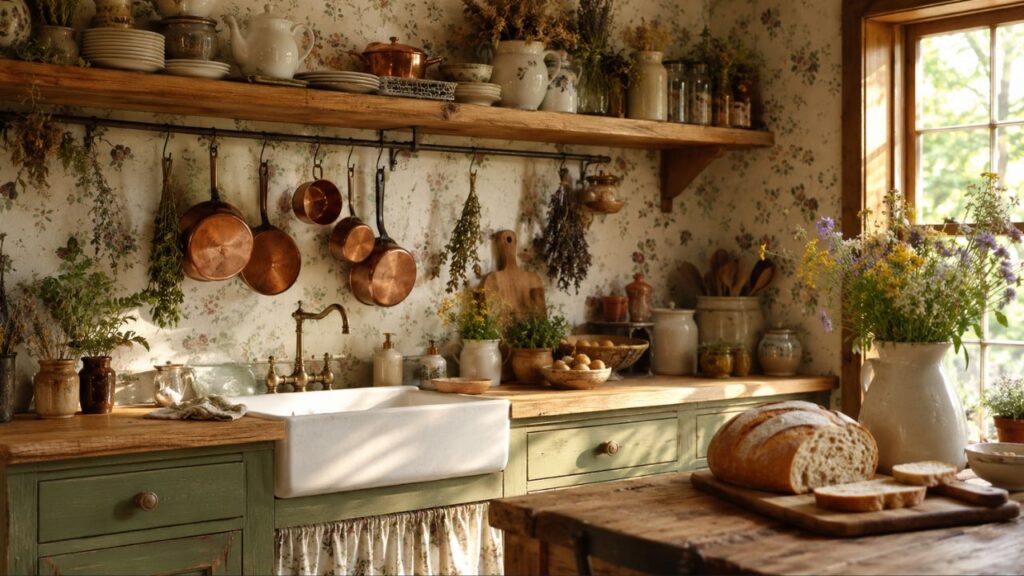
The kitchen naturally becomes the heart of a cottagecore home. Open wooden shelves displaying everyday dishes, ceramic bowls, copper cookware, glass jars filled with baking ingredients, and fresh herbs growing near a sunny window all contribute to the aesthetic while remaining practical.
Many homeowners make the mistake of hiding everything behind cabinet doors. Cottage kitchens traditionally celebrated useful objects by displaying them beautifully. Wooden cutting boards, cast iron cookware, woven bread baskets, and vintage teapots all become part of the decoration.
Cottagecore House & Interior Design Instead of chasing perfection, embrace signs of daily life. A bowl of seasonal fruit or freshly baked bread often creates more character than expensive decorative accessories.
Bedroom
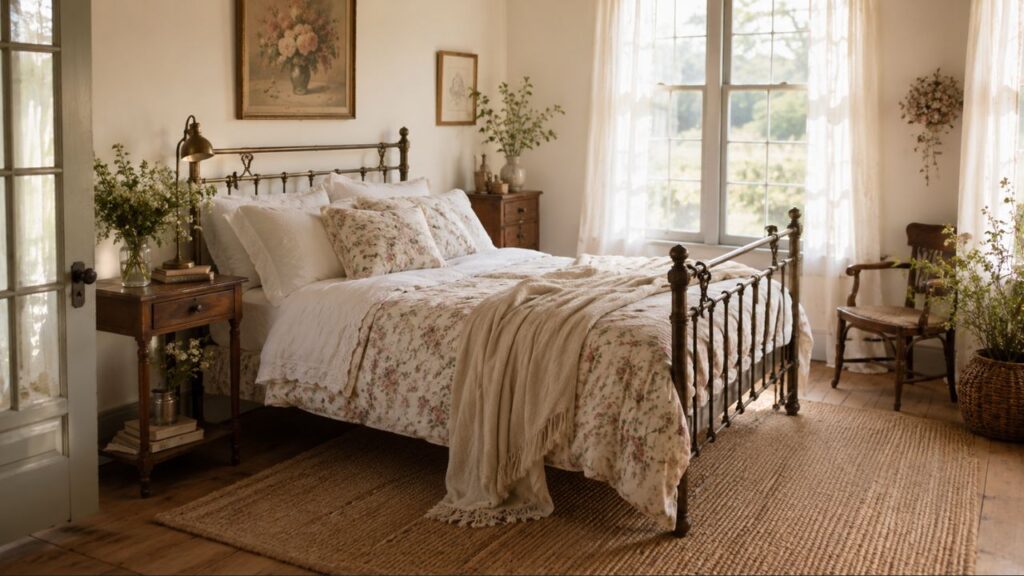
The bedroom should feel restful above everything else. Natural linen bedding, floral quilts, vintage bedside tables, soft curtains, and gentle lighting work together to create comfort without excess.
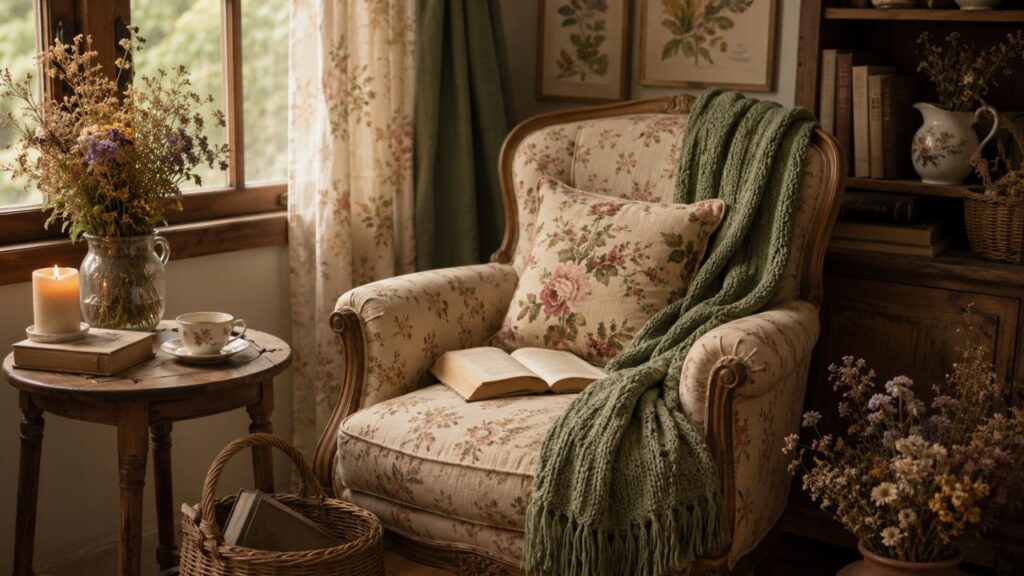
Rather than filling every wall with artwork, consider creating a reading corner with a comfortable chair, a woven blanket, and a small bookshelf. These quiet spaces often become the most enjoyable part of a cottagecore home because they’re designed around everyday routines rather than appearances.
Modern Cottage Interior Design Doesn’t Mean Giving Up Comfort
Cottagecore House & Interior Design One misconception is that cottagecore requires living exactly as people did a century ago. In reality, modern cottage interiors blend traditional charm with contemporary convenience.
Hidden storage, energy-efficient appliances, underfloor heating, and smart home technology can all exist within a cottagecore house. The goal isn’t historical accuracy; it’s creating an atmosphere that feels comfortable and welcoming.
Modern furniture can also work surprisingly well when chosen carefully. Clean-lined sofas upholstered in natural fabrics pair beautifully with antique wooden tables or vintage cabinets. This contrast prevents interiors from feeling overly themed while allowing older pieces to become focal points.
Cottagecore House & Interior Design Many designers recommend following roughly an eighty-twenty balance. Around eighty percent of the room should remain timeless through neutral colours, quality furniture, and natural materials. The remaining twenty percent can introduce seasonal decorations, textiles, artwork, and smaller accessories that are easier to change over time.
Cottagecore House & Interior Design This approach makes decorating more affordable because the largest investments remain relevant for many years.
Decorating on a Budget Without Losing the Cottagecore Feel
Creating a beautiful cottagecore home doesn’t require an expensive renovation. In fact, some of the most charming interiors rely on patience rather than large budgets.
Cottagecore House & Interior Design Look beyond traditional furniture shops. Antique markets, estate sales, charity shops, flea markets, and family heirlooms often provide pieces with far more personality than mass-produced alternatives. Small scratches, faded paint, and worn edges usually enhance the overall appearance instead of reducing it.
Simple improvements can dramatically change a room:
- Replace synthetic cushions with linen or cotton covers.
- Display wildflowers or seasonal branches in ceramic vases.
- Swap plastic storage baskets for wicker alternatives.
- Add vintage-style brass hardware to existing cabinets.
- Layer knitted throws over sofas and reading chairs.
Cottagecore House & Interior Design Plants also contribute far more than decoration. Ferns, ivy, lavender, rosemary, and small flowering plants soften hard surfaces while strengthening the connection between indoors and nature—a defining feature of cottagecore living.
Perhaps the most valuable decorating advice is to resist rushing. The most memorable cottage interiors rarely appear finished. They continue evolving through travel, family memories, thrift-shop discoveries, and handmade projects collected over many years.