


Smart Casual vs Business Casual Dress codes used to be straightforward. A suit meant business, jeans meant casual, and there wasn’t much room in between. Then workplaces changed. Startups challenged traditional office culture, hybrid work blurred professional boundaries, and many companies relaxed their dress expectations. As a result, two terms now dominate workplace fashion conversations: smart casual and business casual.
The problem is that these labels aren’t universal. What counts as business casual in a law office may look overly formal in a tech company. Likewise, smart casual at a creative agency can differ dramatically from smart casual at a corporate networking event.
Smart Casual vs Business Casual Most people don’t struggle because they lack clothing. They struggle because they misread context. Dressing well for work isn’t about owning expensive pieces from brands like J.Crew or Banana Republic. It’s about understanding the message your outfit sends. Once you grasp the difference between smart casual and business casual, building a versatile wardrobe becomes much easier.
Smart Casual and Business Casual: What’s the Difference?
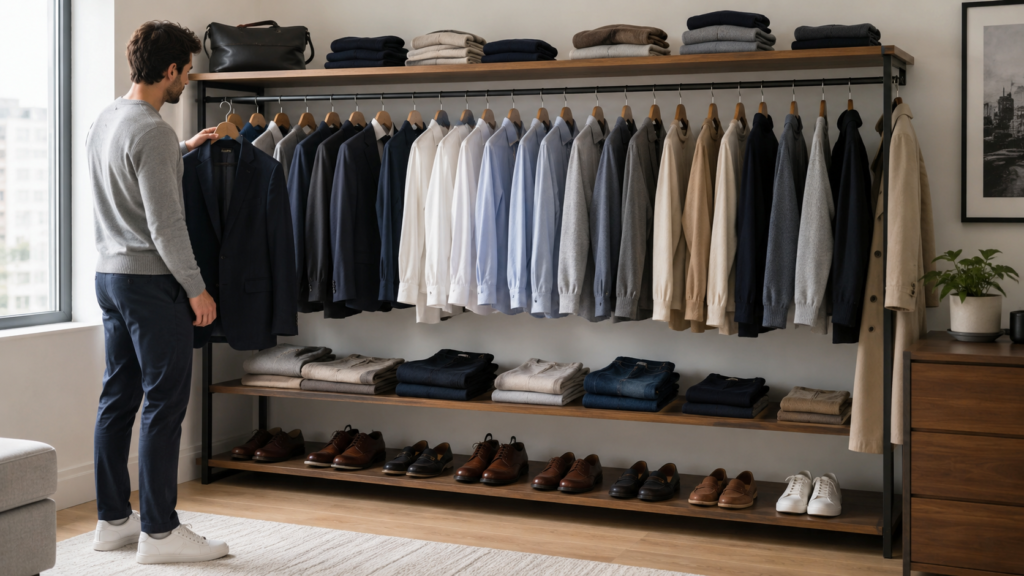
Smart Casual vs Business Casual At first glance, the two styles appear nearly identical. Both aim for a polished appearance without requiring formal business attire. The distinction lies primarily in structure and professionalism.
| Feature | Smart Casual | Business Casual |
| Formality | Relaxed but refined | Professional with some flexibility |
| Typical Pieces | Chinos, dark jeans, knitwear, blazers | Dress trousers, button-down shirts, blazers |
| Footwear | Loafers, minimalist sneakers, Chelsea boots | Loafers, Oxfords, dress shoes |
| Best For | Social events, creative workplaces | Offices, meetings, corporate settings |
| Denim | Often acceptable | Depends on company culture |
A useful rule many image consultants recommend is this: business casual prioritises professionalism first, comfort second. Smart casual reverses that order while still maintaining sophistication.
If you’re unsure which dress code applies, slightly overdressing is usually safer than appearing too casual.
Understanding Smart Casual Style
Smart casual is probably the most misunderstood dress code in fashion. Many people interpret it as “wear anything except sportswear.” That approach rarely works.
Smart casual succeeds when outfits combine relaxed pieces with structured elements. Think tailored chinos paired with a fine-gauge knit sweater, or dark denim worn beneath an unstructured blazer. The outfit should look intentional rather than accidental.
Fit matters enormously here. A well-fitted Oxford shirt from Uniqlo often appears more sophisticated than an expensive designer shirt that’s too large. Tailoring, even minor adjustments such as hemming trousers or shortening sleeves, can dramatically improve appearance.
For men, smart casual staples usually include:
- Chinos, dark jeans, polo shirts, Oxford shirts, knitwear, loafers, Chelsea boots and lightweight blazers.
- Women often rely on tailored trousers, midi skirts, blouses, cardigans, structured blazers and elegant flats.
Smart Casual vs Business Casual Colour also plays a significant role. Neutral shades such as navy, grey, beige and olive create cohesion while allowing easy mixing and matching.
One mistake frequently seen in smart casual settings is combining too many relaxed items at once. Sneakers, distressed jeans and a hoodie rarely look polished together. Introduce one casual element at a time and balance it with tailored pieces.
What Business Casual Really Means

Business casual emerged as a compromise between formal corporate attire and everyday casual clothing. Although standards differ across industries, the core principle remains consistent: you should look ready for professional interaction at any moment.
Business casual wardrobes rely heavily on structured garments. Dress trousers, button-down shirts, blouses, tailored skirts and blazers remain foundational pieces. Clothing should communicate competence and reliability.
A common misconception is that business casual means boring. In reality, subtle personal style often stands out more in business environments than in social settings. Texture, quality fabrics and thoughtful accessories can add personality without compromising professionalism.
Smart Casual vs Business Casual For men, a typical business casual outfit might include navy chinos, a light blue dress shirt and leather loafers. Adding a blazer instantly increases formality for client meetings.
For women, tailored ankle trousers paired with a silk blouse and structured cardigan create an outfit suitable for most professional environments.
Industry culture influences expectations considerably. Finance, legal and consulting firms generally maintain stricter standards than technology companies or creative agencies. Employees entering a new workplace should observe colleagues during the first few weeks before expanding wardrobe choices.
Building a Practical Work Wardrobe
Smart Casual vs Business Casual Many professionals overspend because they purchase individual outfits rather than building a cohesive wardrobe system. A capsule approach is far more efficient.
Start with versatile essentials that work across both smart casual and business casual settings. These pieces create dozens of combinations while minimising unnecessary spending.
Essential wardrobe pieces include:
- Two or three blazers in neutral colours.
- Several button-down shirts or blouses.
- Tailored trousers and chinos.
- Dark, non-distressed denim if workplace policies permit.
- Quality loafers or dress shoes.
- Knitwear for layering.
- A structured coat for cooler seasons.
A navy blazer deserves special mention. Few garments transition as effortlessly between dress codes. Pair it with chinos and loafers for business casual, or combine it with dark jeans and minimalist sneakers for smart casual occasions.
Smart Casual vs Business Casual Fabric quality matters more than brand names. Natural fibres such as cotton, wool and linen typically drape better, breathe more effectively and maintain a polished appearance longer than inexpensive synthetic alternatives.
Professionals working in hybrid environments should prioritise adaptability. Clothing that transitions seamlessly from home office video calls to in-person meetings offers exceptional value.
Dressing for Different Workplaces and Situations

Smart Casual vs Business Casual Context determines appropriate attire far more than written dress codes.
Corporate offices usually expect classic business casual. Men may wear dress trousers, Oxford shirts and leather shoes daily. Women often choose tailored separates, dresses and blazers.
Technology companies frequently embrace relaxed interpretations. Dark jeans, smart sneakers and knitwear are often acceptable, although senior leadership and client-facing employees tend to dress more formally.
Creative industries offer greater flexibility, yet presentation still matters. Fashion professionals often express individuality through accessories, colour or silhouette while maintaining polished overall styling.
Job interviews deserve special consideration. Candidates regularly make the mistake of dressing according to their current workplace rather than the prospective employer’s culture. Research company photographs, LinkedIn profiles and corporate social channels beforehand.
Smart Casual vs Business Casual For networking events, slightly elevate your usual office attire. A blazer, refined accessories or upgraded footwear can communicate professionalism without appearing overdressed.
Remote work introduces unique challenges. Many professionals dress professionally only from the waist up during video meetings. While practical, this habit can influence mindset. Several workplace psychologists suggest that dressing intentionally, even at home, improves focus and productivity.
Common Mistakes That Undermine Professional Style
Some wardrobe errors appear repeatedly across workplaces.
The most damaging mistake is ignoring fit. Oversized blazers, excessively slim trousers or shirts with incorrect sleeve lengths instantly reduce polish.
Another frequent issue involves footwear. Shoes often determine whether an outfit feels intentional. Worn trainers, scuffed leather or inappropriate sandals can undermine otherwise strong outfits.
Excessive casualness also creates problems. Graphic T-shirts, athletic hoodies, ripped denim and gym shoes rarely belong in professional environments, regardless of workplace flexibility.
Accessories deserve moderation. Statement pieces can enhance personal style, but too many competing elements often distract rather than impress.
Smart Casual vs Business Casual Finally, avoid copying social media outfit inspiration without considering workplace realities. An influencer’s office outfit photographed for content may not suit your specific professional environment.
Experienced dressers understand that successful workplace style isn’t about trends. Consistency, fit and context matter far more.
Smart Casual vs Business Professional
Many professionals confuse business casual with business professional attire.
Business professional remains significantly more formal. Traditional suits, ties, conservative dresses and classic dress shoes dominate this category. Industries such as law, banking and executive leadership often still expect business professional standards.
Business casual relaxes these requirements by removing the need for full suits while retaining professional structure.
Smart casual sits one level below business casual on the formality scale.
Smart Casual vs Business Casual When uncertain, consider the occasion. Client presentations, interviews and executive meetings often justify business professional attire. Regular office days may only require business casual, while after-work networking events frequently suit smart casual styling.
Frequently Asked Questions
Is smart casual more formal than business casual?
No. Business casual is generally more formal because it prioritises workplace professionalism over personal expression.
Can jeans be considered business casual?
Smart Casual vs Business Casual Sometimes. Dark, non-distressed denim may be acceptable in relaxed offices, particularly within technology or creative industries. Traditional corporate environments often prohibit jeans.
Are sneakers appropriate for smart casual outfits?
Minimalist leather or clean white sneakers can work well within smart casual wardrobes. Athletic running shoes usually do not.
What colours work best for professional wardrobes?
Navy, charcoal, grey, black, beige and white remain the most versatile options. Accent colours can be introduced through accessories or layering pieces.
Do I need expensive brands to dress business casual?
Smart Casual vs Business Casual No. Proper fit, quality fabrics and thoughtful styling matter far more than designer labels. Affordable retailers can provide excellent wardrobe foundations when pieces fit well.